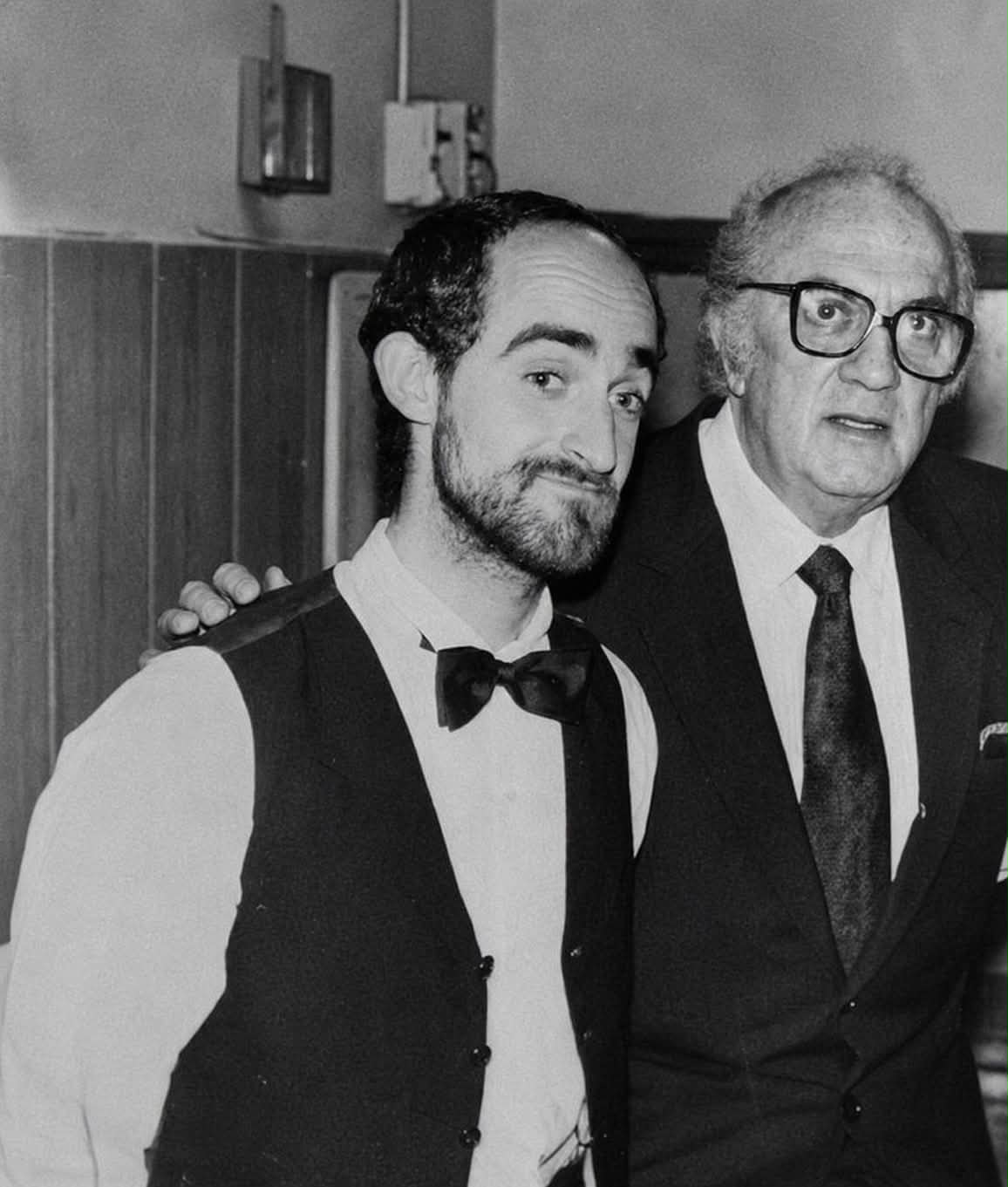
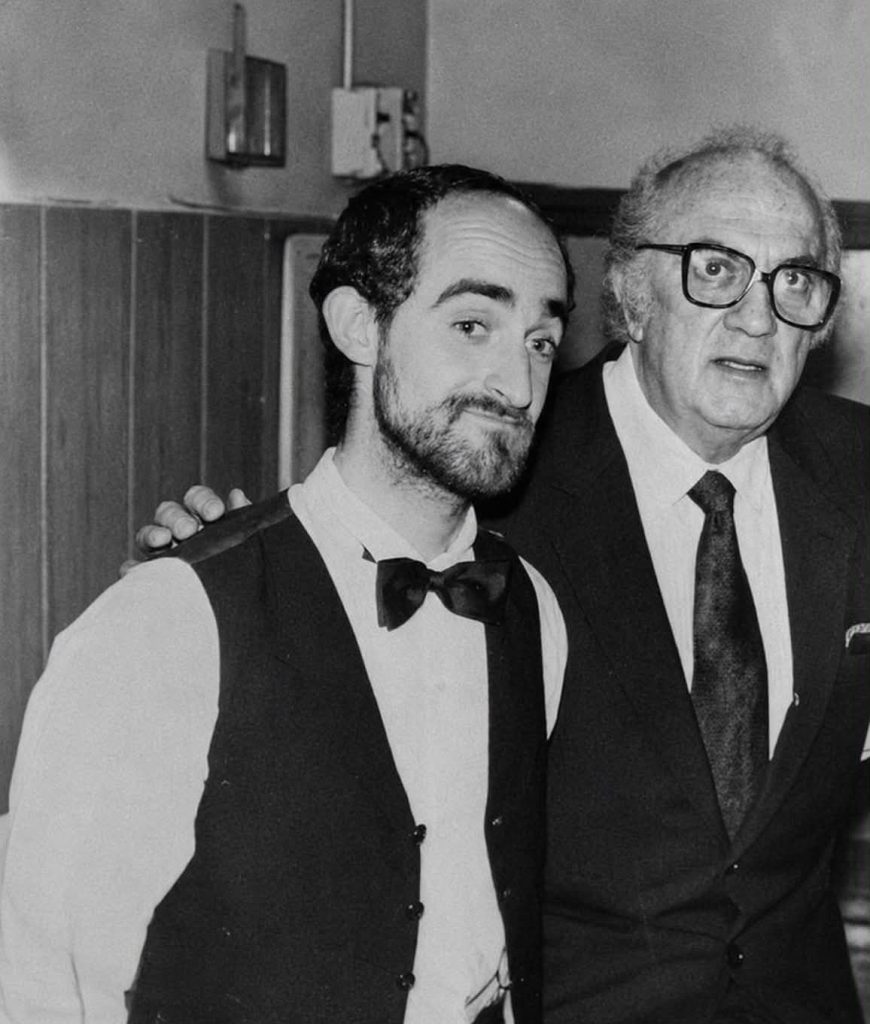
Who is Angelo Orlando?
I’ve been asking myself that question for quite some time. I think I’ve come up with an answer after all these years spent in this strange reality, but I’d be curious to hear what another Angelo Orlando would say about me. Maybe the one who lives in a parallel timeline, the one who solved all the problems that this Angelo keeps stubbornly collecting. Perhaps he would say that I’m an actor who tried to become a director, a director who tried to become a writer, a writer who tried to understand human beings, and a human being who, in the end, still understands very little. Or perhaps he would simply say that I am an observer. As a child, I observed people. Then the characters I realized were living inside people. Then films. Then dreams. Then coincidences. And at a certain point I understood that the most interesting thing was not observing the world, but realizing that the world was observing me. Since then, I have continued making films, doing theater, and writing for the same reason: trying to understand what we are doing here, telling each other stories. For now, I still haven’t found a definitive answer. But I must admit that the search is still a lot of fun.
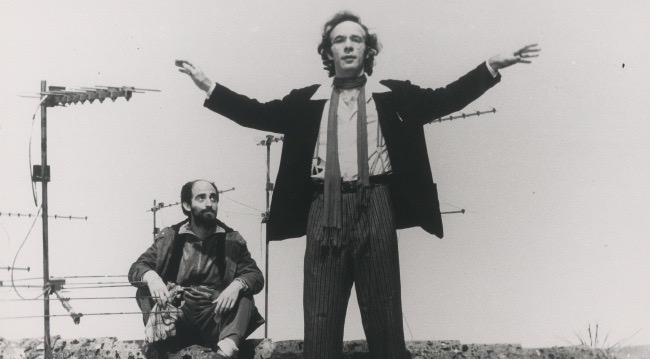
You were part of the cast of Federico Fellini’s last film, “The Voice of the Moon.” How did your collaboration with the Mozart of the Seventh Art begin and develop?
In reality, the story is both simpler and more mysterious than it seems. I wasn’t looking for Fellini. And, to be honest, at that time I wasn’t even thinking about cinema in a rational way. I loved it, of course, but my world was elsewhere: theater, comedy, variety shows, television. I was working a great deal and had the good fortune of collaborating with Renzo Arbore. It was Fellini who found me. He came to see me perform in the theater and wanted to meet me. Shortly afterward, he invited me to the studios on the Pontina highway, where they were building the set for The Voice of the Moon. He talked to me about the character, explained his vision, and immediately made me feel part of that world. The extraordinary thing is that I continued working simultaneously on the television show with Arbore. I even had special permission to leave the set and go record the program. Today it sounds unbelievable, but at the time I experienced it all quite naturally. Perhaps because I was young and had not yet developed the reverence that comes later. Fellini wanted me there. And that is one of the things that still strikes me today. Sometimes I would spend hours doing nothing. Observing. Waiting. Wandering around the set. Yet I always had the feeling that my presence was important to him, as if he were building something that went beyond a single character. Only many years later did I understand that the true privilege was not having acted in a Fellini film. It was having been able to observe up close the way he looked at the world. Because Fellini wasn’t merely directing a film. He seemed to be listening to something others could not hear. And every now and then, when I find myself doubting reality or following some apparently absurd coincidence, I realize that a part of that gaze has remained with me.
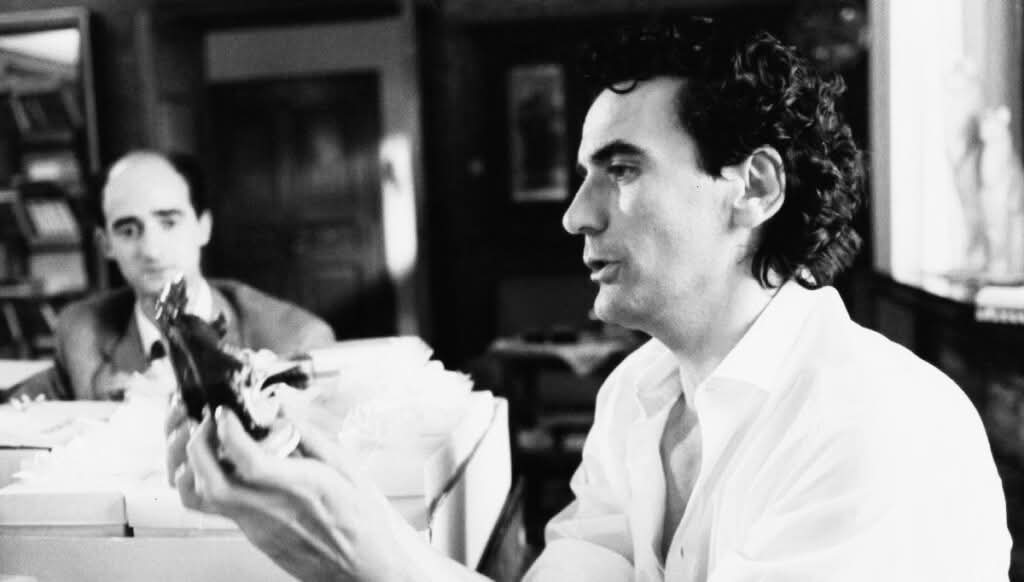
Shortly afterward, you became the co-star of one of the most beloved comedies of the last half-century of Italian cinema, “I Thought It Was Love… Instead It Was a Carriage,” directed by Academy Award nominee Massimo Troisi. Could you tell us how legendary lines such as “Cecilia, Cecilia, Cecilia…” were born, and what your relationship with Troisi was like on set?
Massimo always repeated one thing to me: “You have to annoy me.” He wanted the audience, looking at Amedeo, to think: “My God, how annoying this guy is…” And that was exactly the heart of the character. Amedeo was the essence of contradiction. A man who hid behind words, theories, and intelligence. A writer who seemed to have an explanation for everything and who, precisely for that reason, could not understand the only thing that truly mattered: love. He talked about love constantly but could not live it. He built universal theories that ended up who knows where, argued, reasoned, explained. He was a man who used thought as a defense against life. Massimo understood perfectly who Amedeo was and constantly guided me in that direction. He was an extraordinary perfectionist. He would make me repeat a scene ten, twenty times until he found the right rhythm. But it was never a technical search. He was searching for truth, for naturalness. He was looking for that moment when a line stops feeling written and seems to be born there, for the first time. Many scenes were the result of a sort of controlled improvisation. We would lock ourselves in the dressing room. He would arrive with a pen in hand. He would write, erase, adjust. Then we would go to the set and change things again. A word, a pause, a glance. And then again. Until everything seemed to flow naturally. The famous “Cecilia, Cecilia, Cecilia…” scene was my true baptism of fire. Massimo was lying on a hospital stretcher, poisoned by my diabolical little sister. I was beside him. It was one of the most important scenes in the film and, for me, the very first one I shot. I never wanted to work with Massimo Troisi because I always knew that I would work with him. I remember the excitement, the responsibility, the fear of being up to the task. But above all, I remember him: calm, attentive, amused. He knew exactly what he wanted and managed to convey that confidence to everyone. He never imposed. He guided. He made you feel part of something that was being born in that very moment. It is an extremely rare quality. Many directors direct scenes. Massimo directed the energy that allowed scenes to exist. That is what I feel as an inheritance, and what I always try to seek whenever I find myself directing a film that I have imagined.
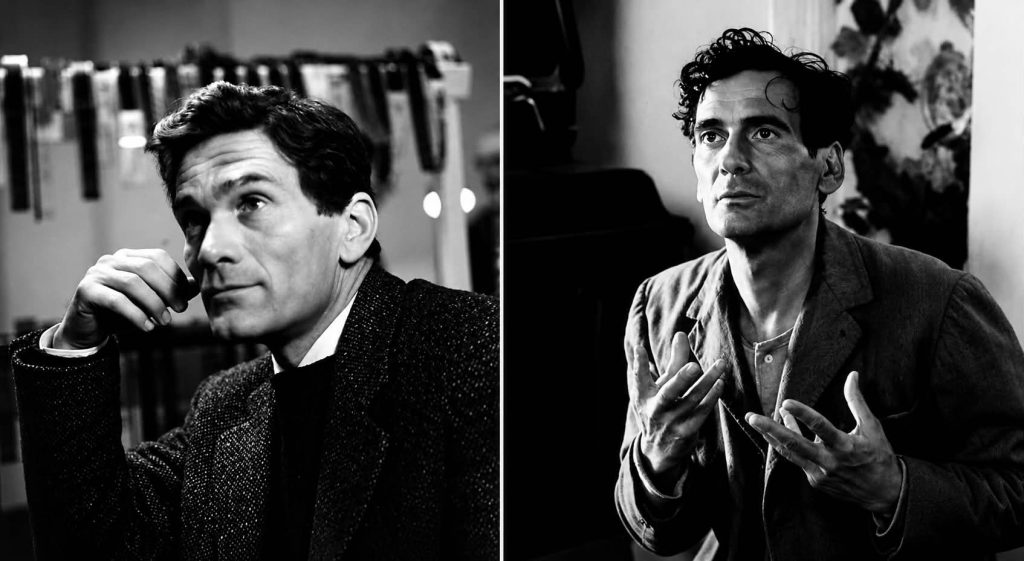
In the final months of his life, Massimo Troisi’s face came to resemble that of Pier Paolo Pasolini. They seem like very different artistic personalities, yet I have always perceived a profound affinity between them in terms of intuitive ability and independent analysis free from external influences. In short, two pure thinkers. What is your opinion?
I believe the comparison makes sense, even though they belonged to worlds that appeared very distant from one another. There is one thing I can say because I lived it: Massimo loved Pasolini. How do I know? He told me himself. He often called me on the phone. He always asked the same question: “What are you doing?” Whatever I was doing, he would reply: “All right… come over.” And the incredible thing is that I really went. One day at his house, I asked him which Italian films he had loved the most. He didn’t even think for a second.
“La Ricotta,” he replied. “Pasolini’s La Ricotta.” At the time I didn’t even know what it was. I had never seen it. Only many years later did that conversation come back to me, and I went looking for it. I discovered that it was not a feature film, but one of the episodes of Ro.Go.Pa.G., a collective film directed by several filmmakers. Looking back on it today, that answer tells me a lot about Massimo. Behind the image of the popular actor, the comedian, the poet of irony, there was a man with profound intellectual curiosity and extraordinary sensitivity for everything authentic. Perhaps this is where I see the meeting point with Pasolini. Both were independent thinkers. Both observed the world without allowing themselves to be guided by fashions, affiliations, or convenience. Naturally, they did so in different ways. Pasolini sought conflict. He confronted it head-on. Massimo sought the human being. He observed people with tenderness. But both possessed that rare quality of seeing something before everyone else. Once Massimo told me something I have never forgotten: “Now I enjoy myself. Before, I didn’t even know I would make films.” It struck me deeply. He learned to love cinema by making it. Not by studying it. Not by chasing it. By living it. And over the years, that sentence has often returned to me because, ultimately, the same thing happened in my own journey. Today I enjoy it. And perhaps the greatest privilege is not understanding cinema. It is continuing to discover it.
What don’t you like about the world, and how would you change it?
I don’t like cynicism. I don’t like the degradation I see on social media. I don’t like the ostentatious vulgarity that has almost become a form of social intelligence. I believe instead that the world changes when people stop considering inevitable what is not inevitable. Every collective transformation begins with an individual transformation. It is not a spectacular answer, but it is the one I consider most truthful.
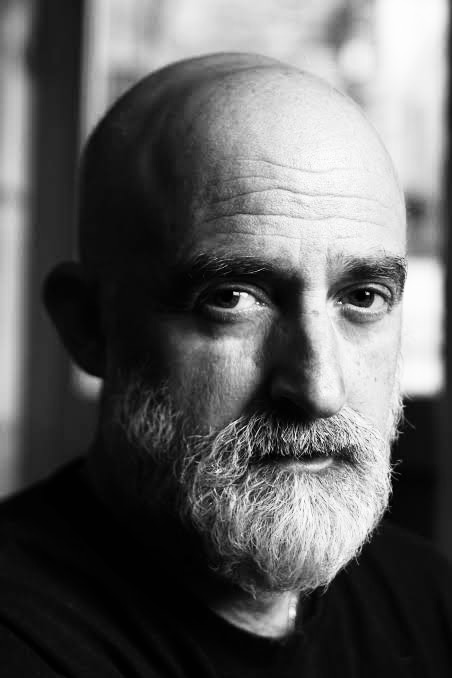
How do you imagine cinema one hundred years from now?
I have absolutely no idea. And every time I think I understand where cinema is heading, cinema changes direction. Probably, in a hundred years, screens will be different. Perhaps movie theaters as we know them today will no longer exist. Perhaps images will be three-dimensional, immersive, generated by artificial intelligences or even directly from our thoughts. Perhaps the viewer will enter the film. But I do not believe that this will change its deepest function. For thousands of years, human beings have sat around a fire telling stories. Cinema is merely the latest form that fire has taken. That is why I think that in a hundred years cinema will continue doing what it has always done: helping human beings remember who they are. Or who they could become. For me, the real question is not what cinema will be like in a hundred years. It is what the human being watching it will be like.
What is your impression of WILD FILMMAKER?
My first impression is that you possess a rare quality: enthusiasm. In independent cinema, people often talk about budgets, markets, platforms, algorithms, and strategies. All important things. But sometimes we forget that cinema is born from a much simpler act: someone falls in love with a story and decides to tell it. WILD FILMMAKER probably comes from that spirit. I like the idea that there is an international community of people who continue to believe in auteur cinema, creative risk, and stories that do not always follow the rules of the market. Because cinema is a very serious matter. But it should never be taken too seriously.