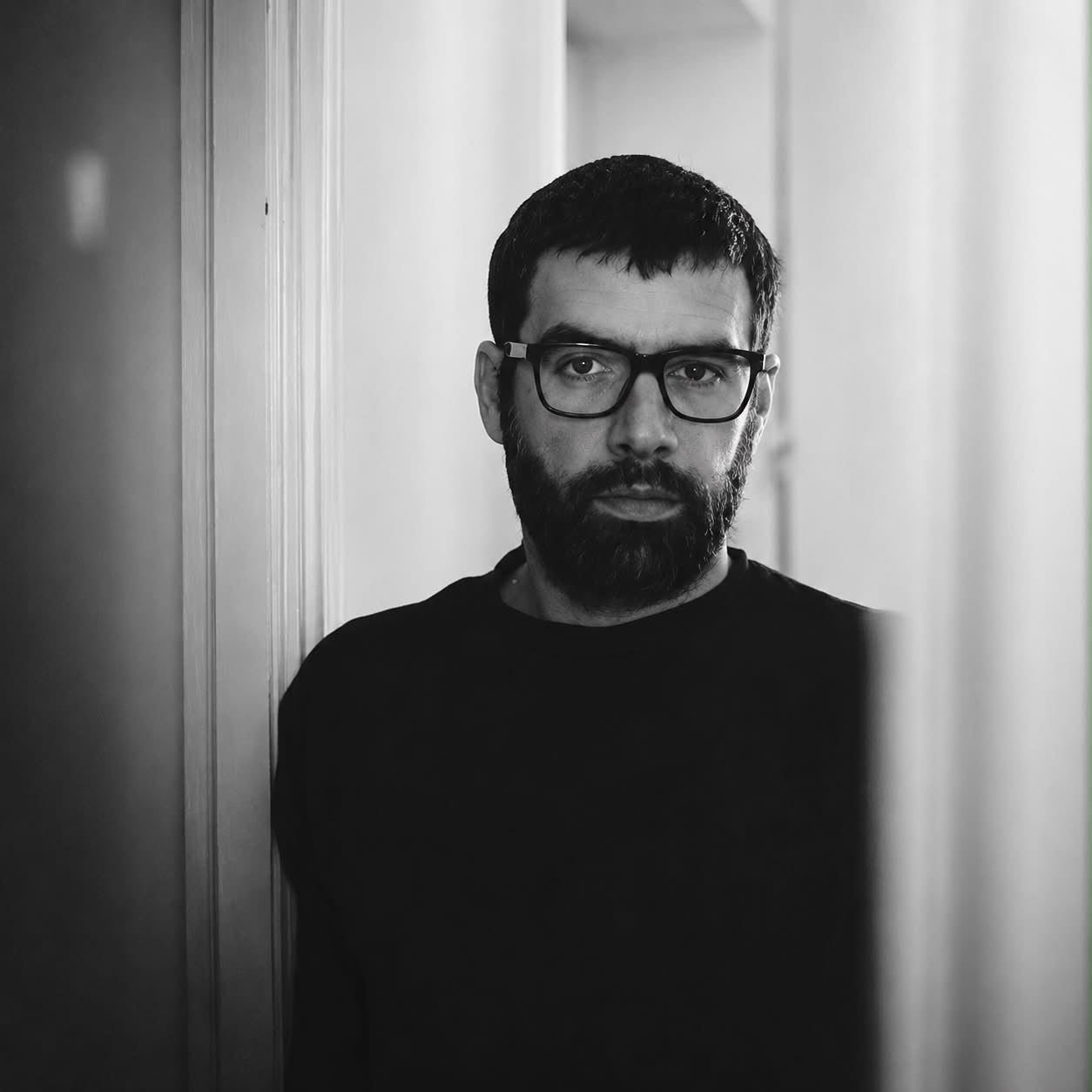
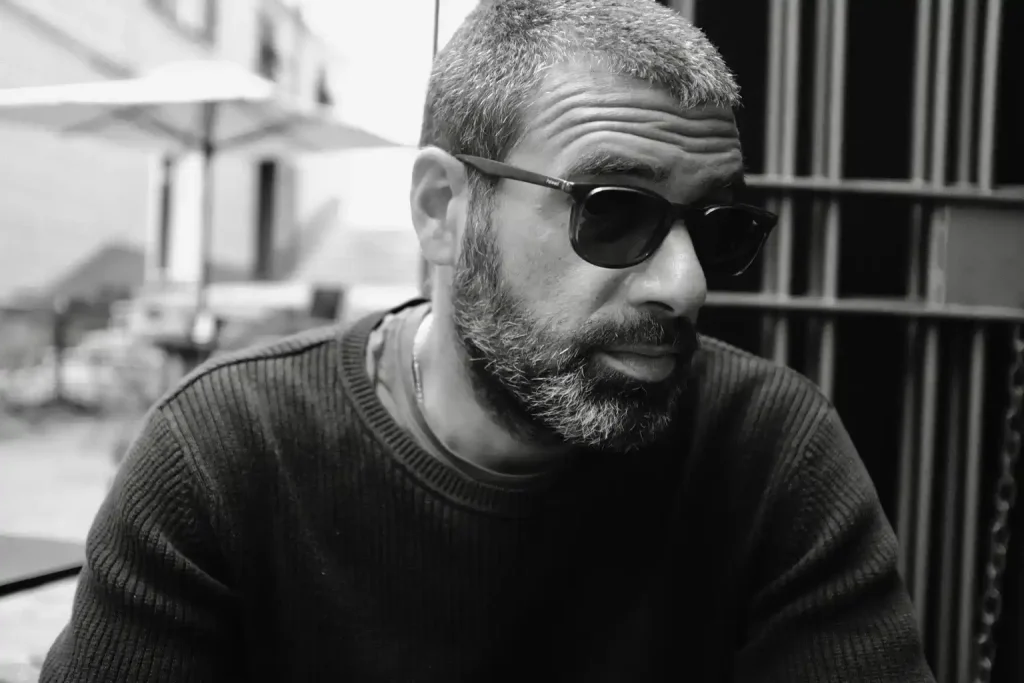
-Who is Matteo Cerami?
I’m a screenwriter, director, writer and creative writing teacher. Alongside my artistic and professional work, I collaborate with my mother Maria Grazia Chiarcossi, Pier Paolo Pasolini’s heir, in the care, preservation and promotion of the poet’s literary legacy, organizing seminars, workshops and open lectures on his work, in Italy and abroad.
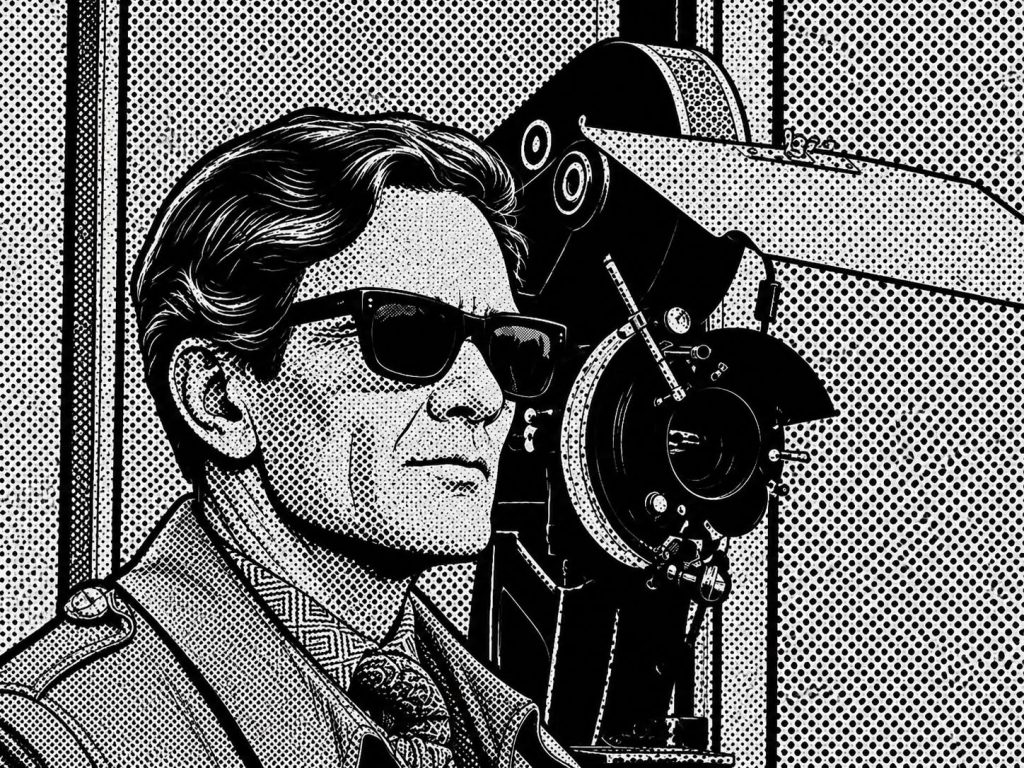
-More than fifty years after his death, what does Pier Paolo Pasolini represent today for Italian society and for younger generations? // In your opinion, is Pasolini today a figure who is truly understood and studied, or has he become a symbol that everyone interprets according to their own perspective?
To answer this question, we must first clarify what we mean when we talk about Italian society. Formed barely a century ago on the ruins of the postwar period, it is a provincial by-product of the great European bourgeoisies. It came into being through inertia, modelling itself on them, but without any history behind it, no shared zodiac of values, no cultural consciousness. That is why it has never been able to place any brake on the dehumanization that capitalism has provoked in the West. When it could, it has even done the opposite: invoked it as a blessing. Its defining characteristics have always been conformism and philistinism, and in a century of existence it has produced very few intellectuals of substance. The one and only figure who continues to carry enormous weight in the nation’s conscience – or perhaps, I should say, in its unconscious – is Pier Paolo Pasolini. But his work is complex, powerful, contradictory; it forces you to question yourself, and the average Italian flees from complexity and from confrontation with his own contradictions as he would flee from death, for fear of losing the small privileges to which he clings tooth and nail. He prefers escapism. Through television first, and now the anonymous, impalpable and magmatic virtual world of the web, capitalism has entered the psyche of individuals, into their deepest imaginaries, poisoning their capacity for fantasy and judgment. A textbook example of this involution is escapism. Mystification. Unreality. Pasolini’s cultural legacy has also fallen into unreality. Today his figure is miraculous, his words prophetic, his tragic fate the fruit of some dark conspiracy, a purely symbolic event, if not an outright sought-after destiny. If his contemporaries failed to defuse the explosive charge of his words by demonizing him while he lived, his successors have succeeded by deifying him in death. The logical consequence of all this is that in the age of profound cultural and ideological regression in which we live, almost no one in Italy is any longer capable of perceiving the protest that runs through every line of his immense work, let alone reckoning with it. Even Pasolini’s poetry has become Poetry
with a capital P, collapsing into a purely intimate, individual experience, detached from any immediate utility, urgency, or practicality. In other words, outside of History. Young people, who are still on the threshold of social life and see only its purest ideals, are not yet contaminated, corrupted, or mortified by petty-bourgeois cowardice and hypocrisy. They are generally
adorable beings, full of hope and goodwill. They are still free, available. They can believe. On them, Pasolini’s words still have a real, overwhelming effect. They remain perhaps the only true resource, the only valid instrument for developing critical consciousness and civic sense. Unfortunately, the vast majority of them, through fragility, loneliness, and abandonment, succumb very quickly to conformism and consumption. But in my personal experience, in my small, humble, laborious work of spreading the poet’s thought, there is never a shortage of young people capable of listening to his words, making his worldview and his rage against injustice their own. For how much longer will they be able to resist those invisible forces that try in every way to occupy their judgment and their imagination? On this I will not venture an opinion. All my hope rests in the new generations. For better or worse, it all depends on them.
-Pasolini was often described as a controversial and prophetic intellectual: which of his analyses on politics, consumerism, and cultural change do you believe remain relevant today?
What strikes readers approaching Pasolini’s work for the first time is the precision with which he was able to describe the transformations of society at the exact moment they were occurring. If we were to take all his works, from the first poem he wrote at the age of seven to Salò, his last film, and arrange them in chronological order, we would have a portrait of Italian history from the end of the fascist years to the mid-1970s, day by day. After his death, the world changed, and with him disappeared, at
least in Italy, an intellectual capable of narrating it to us. But his work remains indispensable for understanding the complex web of reasons that has brought us to where we are. His analysis of cultural homogenization through consumption and television remains entirely valid today – a diagnostic instrument for measuring the health of society that is perhaps even more powerful
in our present, in which the same logic has reached a global scale. His denunciation of “development without progress” remains entirely valid, now that the relationship between productivity and wellbeing has been inverted and means have achieved overwhelming primacy over ends. His attack on the false tolerance of power – which integrates what it once repressed, reducing identity, sexuality, and marginality to pure commodity – also remains entirely valid. I could go on at length, but verifying whether his analyses are still current or not is a pastime that doesn’t particularly excite me, because it conceals something rather base: the secret hope of discovering sooner or later that he was, after all, wrong, that the world is fine as it is, that there is nothing we can do
to change it, that one might as well enjoy life, that one can be happy even when others are not. And yet the opposite is true. Pasolini’s most important legacy lies precisely here: in hurling himself with all his strength against the injustices and the violence of power over the weakest, never letting his guard down, even at the cost of contradicting himself, even at the cost of exposing himself personally, even at the cost of his life.
-What don’t you like about the world, and what would you change?
This question too, unwittingly naive, springs from a completely mistaken ideological premise. For better or worse, there is no perfect world to aspire to. It is perhaps the most powerful illusion to which human beings fall victim, one that drives them, in all manner of ways, even the most inhuman, to impose their own idea of what is just, what is good, and what is beautiful upon others. Every individual is unique and unrepeatable: it would be enough to learn to live together respecting this principle, in peace. That,
perhaps, is the only wish I feel able to express regarding the fate of the world: a wish for peace. But what is peace?
For Pasolini, peace was not a state of serenity or restored normalcy after war. He abhorred what the world calls “normality”. “In the state of “normality” – he said – man tends to fall asleep; he forgets to reflect, loses the habit of judging himself, no longer knows how to ask who he is. And it is precisely during this “normality” that a state of emergency must be artificially created. And it is the poets who create it. The poets, those eternal indignants, those champions of intellectual rage, of philosophical
fury. What makes the poet discontented? An infinity of problems that exist and no one is capable of solving. And without whose resolution, peace – true peace, the poet’s peace – is unachievable.” And he added: “As long as man exploits man, as long as humanity is divided into masters and servants, there will be neither normality nor peace. The source of all the evil of our time lies here.”
-WILD FILMMAKER is a global community of Arthouse film producers, a movement inspired by the Nouvelle Vague but on a worldwide scale. Do you think it is still possible today for an independent movement to prevail over the distribution power of the major companies?
It would be wonderful, but it would presuppose a genuine revolution. And it is very difficult to imagine a revolution – a concrete one: economic, social, and cultural – in the traditional sense of the word, because revolution implies a struggle against those in power. And today power has no centre, no name, no face, no masters. It corrupts and devours everything, even the movements that reject it. Currently the most subversive forces running through the West come from within it, from the most reactionary, extremist, and fanatical fringes of society. A phenomenon destined, in the best-case scenario, to implode the system rather than revolutionize it. The only true revolutions today are being made by machines. Hoping that from the four corners of the planet a healthy subversive impulse might arrive, capable of opposing all this and overturning the balance of power overnight, might still have
made sense in the last century. Today I fear it is a vain illusion. But we must not surrender to despair. We live in an unjust society. But within this society our lives and our work unfold. So we live and work contributing to its sustenance. It compensates us poorly, worse, in a certain sense, it persecutes and humiliates us. So we criticize it, accuse it, oppose it. And this only worsens our practical situation, in terms of both life and work. Yet our criticisms, our accusations, our opposition do not prevent us from
living and working within and for this society. They are even its principal nourishment. All of this is absurd. So what is left for us to do? Push the protest to the point of breaking the law? Or organize a kind of moral strike, isolate ourselves in voluntary exile, observe a symbolic fast, oppose a categorical refusal, a definitive, almost mystical “no” to the world around us? Taking our dissent to its ultimate consequences, these are the only two solutions, in the end. Artists possess, fortunately for them, one weapon: that of poetic expression. With it they can fight, in a certain sense, outside the law. But everyone else? Everyone else is forced to split themselves, to dissociate into two different people. By day, to work for society. In the evening, at the bar or on social
media, to criticize it, accuse it, condemn it. It is the long tragedy in which entire lives are spent. But this tragedy, amid all the tragedies of the modern age, is the only one that presupposes a genuine hope. Perhaps independent artists should start over from here: fighting to put the human back at the centre, one battle at a time.