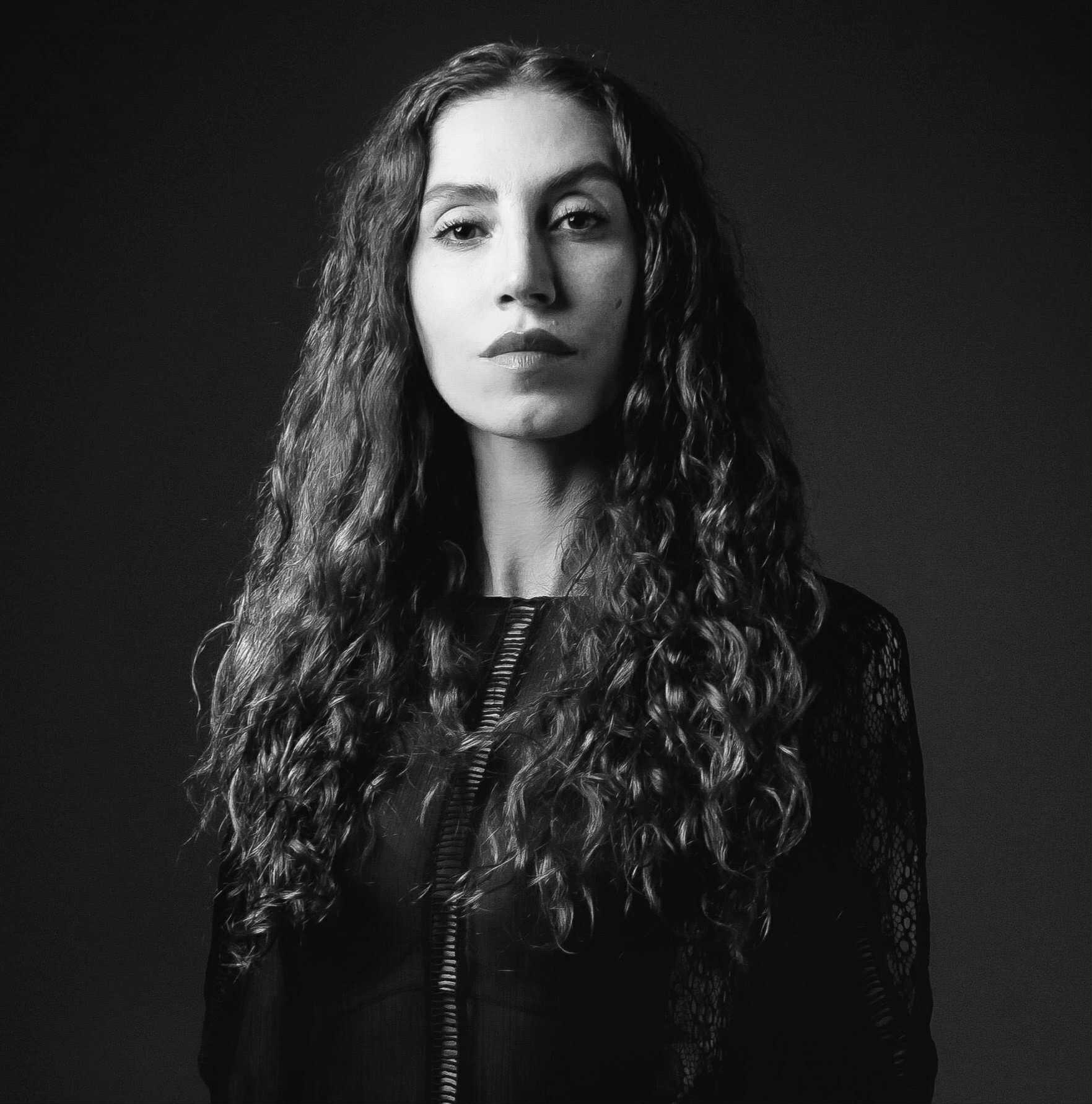

Who is Rossella Ambrosini?
Rossella Ambrosini is an actress who works with intensity and transformation. She is an eternal dreamer, yet determined and ambitious.
Half Florentine, half Romagnola, Roman by adoption, she moves between cinema, television, and theatre. Alongside her acting work, she is also active as a voice-over artist, dubbing actress, model, and host.
When did you first realize that acting was your path?
From an early age, I was drawn to disguise and change. I loved transforming myself, inventing characters, and inhabiting different identities. Even a box of diapers could become a fashionable hat. My maternal grandfather, joking when I cried over childhood dramas, used to call me “a great actress.” Perhaps those words stayed with me and worked within me toward this goal more than I ever imagined.
As I grew up, I understood that this drive was not a game, but a vocation, a necessity.

What role did theatre play in your personal and artistic growth?
As an adult, I went through a very intense and painful emotional experience. Theatre became a true form of therapy for me, a way to return to life. That is where I realized I could no longer do without it: being on a stage or on a set makes me feel alive.
How would you describe your approach to acting?
Since 2008, I have continued to study and work between Florence and Rome, driven by what I perceive as an inner fire, a great tangle of emotions that I seek to understand and give back through my characters.
For me, acting is a vital act: a hymn to life, a way to be useful, to place myself at the service of the audience, to explore the human being between light and shadow.
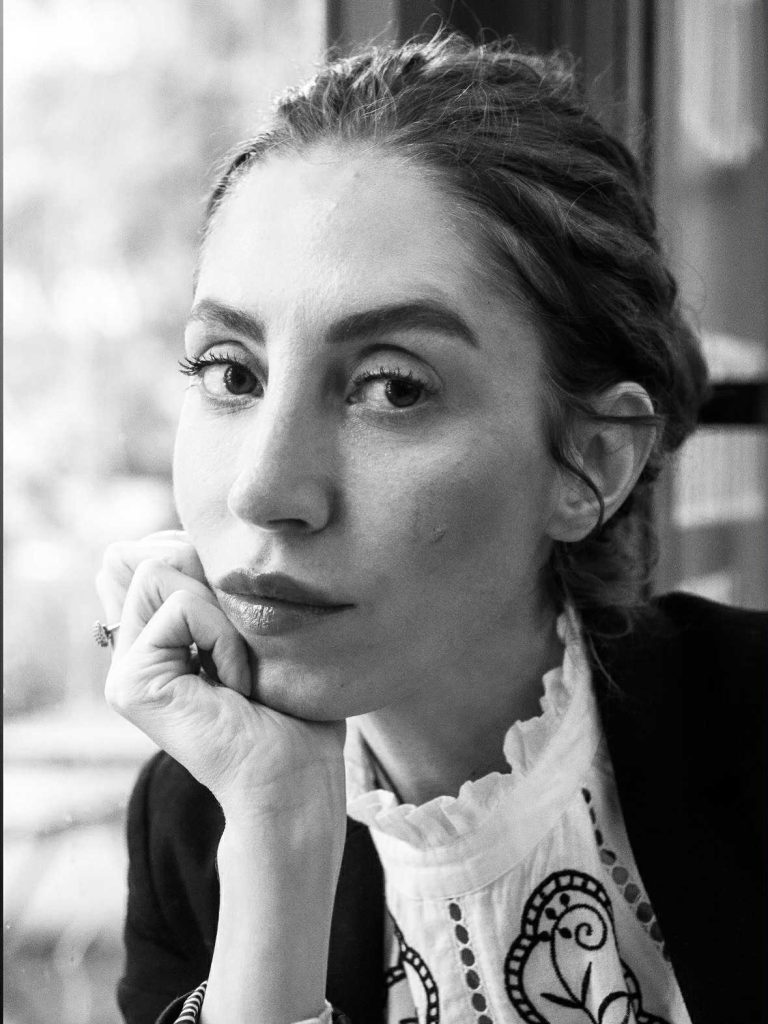
What does cinema represent for you?
Cinema is pure magic: living many lives in one, crossing stories, eras, and identities, immersed in a sea of shared emotions.
Your name and identity are deeply connected to cinema history. Can you tell us more about that?
On the back of my neck, hidden beneath my hair, I have my name tattooed in English: Scarlett. Before I was born, my mother said, “I will have a daughter, she will have red hair, and I will call her Rossella,” inspired by Scarlett O’Hara from Via col vento and by the legendary actress Vivien Leigh.
Do you also explore comedy in your work?
My work is rooted in listening and emotional truth, but I also love exploring the comic register, a territory I find extremely complex and stimulating. I believe that comedy, when sincere, is one of the deepest and most powerful ways of portraying the human experience.
Over time, I have received very positive feedback precisely for my ability to combine intensity and lightness, moving seamlessly from drama to irony.
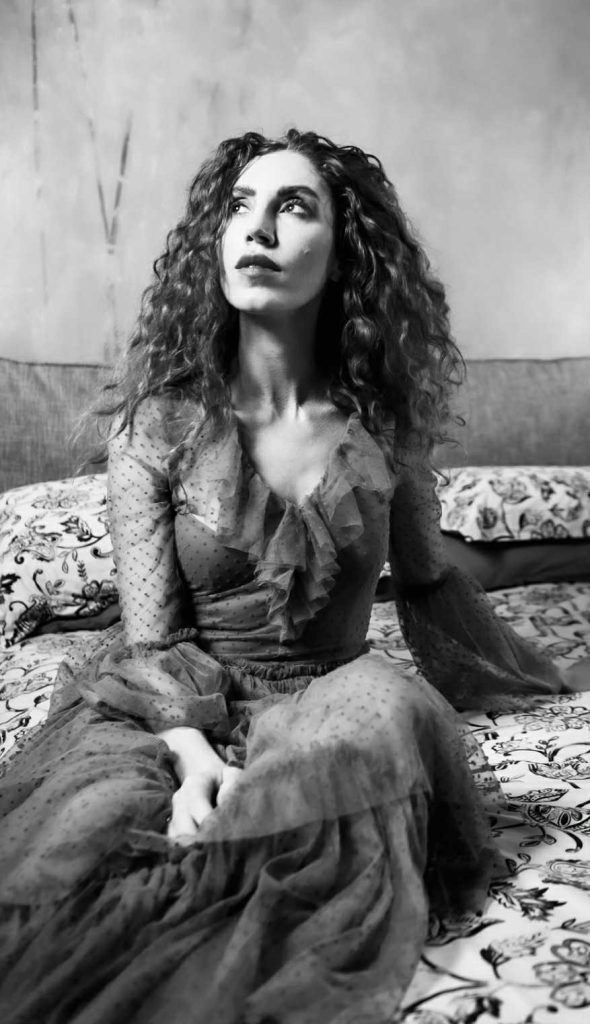
What other artistic disciplines are part of your journey today?
My work also includes singing and dancing, disciplines I consider an integral part of emotional expression. I am currently completing a master’s degree in dubbing at the CSC in Rome. I enjoy improving, learning, and continuously adding new skills.
Tell us what you love to express through art.
Through art, I love to explore emotions in their most authentic form. I am interested in relationships, fragility, silences—everything that is not said but still carries weight. I enjoy an understated style of acting, built on subtraction, on the gaze, on physical presence. But I also deeply love words. At the same time, I very much enjoy challenging myself with comedy, where rhythm, listening, and truth are just as essential as they are in drama. Whether dramatic or ironic, I believe that the most powerful stories are those that manage to tell the truth, sometimes even through a smile. Cinema, for me, is life. It is the possibility to process emotions and give them back, to convey messages, to spark reflection and empathy. But it is also entertainment, lightness, a breath of fresh air. As Monica Vitti, one of my greatest muses, once said, being an actress can be a way not to die, to heal, to live. I believe deeply in this. “My work is a psychodrama. I work to help myself live, to heal.” — Monica Vitti I also recognize myself in the words of Maurice Merleau-Ponty: “Acting means living many other lives.” And that is exactly what I feel every time I work on a film set or on a stage. In my most recent projects, I have delved into intense female characters, often connected to profound social, historical, and human themes.
ZORAIDE
In the short film Zoraide, directed by Emiliano Galigani and produced by 9 Muse and Kahuna, my character exists on a double narrative plane: on one side, a fairy-tale creature—seductive and mysterious—who guides a little girl through the woods; on the other, a real-life collaborator who assists the Nazis. This duality—between appearance and truth, fantasy and reality, good and evil—was the most stimulating acting challenge of the project. Working in Tuscany, in the actual locations where the historical events took place, was emotionally powerful. Zoraide had its international premiere at the Lucca Film Festival to a completely sold-out audience, and was later screened at the Terra di Siena Film Festival and other international festivals, receiving a strong response from the public. I have a deep love for period costumes and a passion for the fantasy genre: I feel that, by wearing a costume, the body and soul naturally find their language. It is a vocation I have carried with me since childhood and continue to cultivate with passion.
THE WORD OF TOMMASO
On January 15, the film The Word of Tommaso, by Matteo Vanni, produced by Kahuna and Dado Production, will be released at Cinema La Compagnia in Florence and subsequently in many other theaters across Italy. In the film—the story of the first biographer of Saint Francis, set in the 1200s—I play a beggar mother who loses her child: a role built on subtraction, on the body, where motherhood becomes absence and memory. An emotionally powerful, essential piece of work that required deep inner immersion.
THE TENDERNESS OF THE SERPENT
This summer I had the pleasure of working on the third film (currently in production) by the multi-award-winning director Samantha Casella, The Tenderness of the Serpent, which will conclude her “Trilogy of the Unconscious.” Samantha is one of the directors who are part of the Wild Filmmaker Community and is highly appreciated and admired both internationally and nationally. It was a wonderful encounter, like blue and red intertwining—intense and profound—just like this on-set experience with the visionary, intense, attentive, and exceptionally talented Samantha: an emotion that lingers. My character, a purifier, a priestess of passage, oscillates between spirituality and darkness, between care and death, between the sacred and the terrifying. A film rich in intensity, with many friends and colleagues. I can’t wait to see the film!
HELL’S COMMANDOS
By Mattia Sarao, Insurgence Productions, Extreme Video Produzioni. It was very interesting, as I play a Nazi killer: a role developed primarily through expressions, in which I also took on physical action work.
What don’t you like about the world, and how would you change it?
I don’t like falsehood and the oversimplification of reality. We live in a time that tends to make everything fast and superficial, including emotions and relationships. I believe change comes through sincerity, listening, and the ability to tell stories that are not afraid of complexity. Empathy is essential.
How do you imagine cinema in 100 years?
I imagine a cinema that is technologically ever more advanced, but—given what we are experiencing—also ever more hungry for humanity. The means and forms of consumption will change, but the need to tell stories, to live other lives, and to recognize ourselves in others will remain unchanged. Stories capable of moving us, unsettling us, creating empathy. A cinema that doesn’t merely entertain, but leaves a trace and invites reflection. Or at least, that’s my hope.
What impression do you have of WILD FILMMAKER?
WILD FILMMAKER gives me the idea of a free, authentic, untamed space, attentive to personal and unconventional voices. A project that seems to value artistic research, risk, and the truth of the gaze, exploring the relationship between traditional cinema and new forms of visual storytelling, while also giving space to independent, experimental, and innovative works. In a panorama that is often standardized, it is important that there are realities that still believe in cinema as a creative and human act—celebrating the great masters of the past in dialogue with new voices of contemporary cinema, not only through large productions but also through the creativity of individual visions. Behind this international project one senses dedication and vision: for this reason, I admire it greatly and wish the very best to all the people who are part of it. Thank you for this wonderful space, Wild Filmmaker—see you soon!