Who is Davi Kinski?
Self-definition is always a delicate gesture. But if I had to summarize who I am, I would say that I am, above all, a poet. A poet who moves between languages.
My work unfolds between cinema, literature, and music, but it is in the audiovisual realm that I find my most intense field of experimentation. For me, cinema is not merely narrative—it is the construction of thought through image. It is rhythm, silence, tension between the real and the imagined. It is the space where aesthetics and politics inevitably collide.
I am the author of published books and a biographical essay on Pier Paolo Pasolini, in which I examine his break with Italian Neorealism and his search for what he called “cinema of poetry.” This concept has profoundly shaped my artistic vision. Like Pasolini, I believe that cinema must abandon the illusion of neutrality and embrace its subjective, lyrical, and ideological condition.
I am also deeply influenced by Glauber Rocha and the radical gesture of Cinema Novo—the idea that form itself is political. Rocha’s urgency, his baroque excess, his refusal of comfort, resonate with my understanding of cinema as an act of confrontation. From Andrei Tarkovsky, I inherited the belief in cinema as sculpture in time—as spiritual investigation through duration. And from Eduardo Coutinho, the courage to confront reality without embellishment, allowing presence and speech to reveal their own dramaturgy.
Beyond cinema, I have collaborated on musical projects and worked in curatorial contexts. I don’t see rigid boundaries between artistic disciplines; I see continuities. Each medium is simply another surface upon which poetic tension can manifest itself.
Being a poet, for me, is not about belonging to a literary genre. It’s an existential stance. It’s the freedom to move between platforms without losing the coherence of an inner vision.If I had to define myself in one sentence:
I am a poet of image and word, committed to transforming contemporary unease into aesthetic experience.
Do you remember the exact moment you fell in love with cinema?
Yes. I was seven or eight years old when my mother took me to see Walt Disney’s Alice in Wonderland.
The experience was almost cathartic. I wasn’t just watching a movie—I felt like I had entered another dimension. The colors, the absurd logic, the fluid transformation of reality affected me deeply. I asked my mother to record it on VHS and I watched it obsessively. I memorized every line.
Looking back, I understand that what captivated me wasn’t just the story, but the feeling that cinema could reorganize reality—that it could be dreamlike, irrational, poetic. That moment transformed me into a voracious cinephile. I watch everything—from big box office hits to radical independent films—because I believe that cinema is bigger than categories. What matters is the vision and the intensity. To this day, I remain faithful to this language. Cinema still offers depth. It still allows us to confront silence, vulnerability, and what is fundamentally human. And perhaps that child, sitting in the dark, discovering other worlds through images, is still guiding me.
Tell us about your projects “POEMARIA” and “ALICE, FIVE MINUTES BEFORE SUNSET”.
Let me start with POEMARIA.
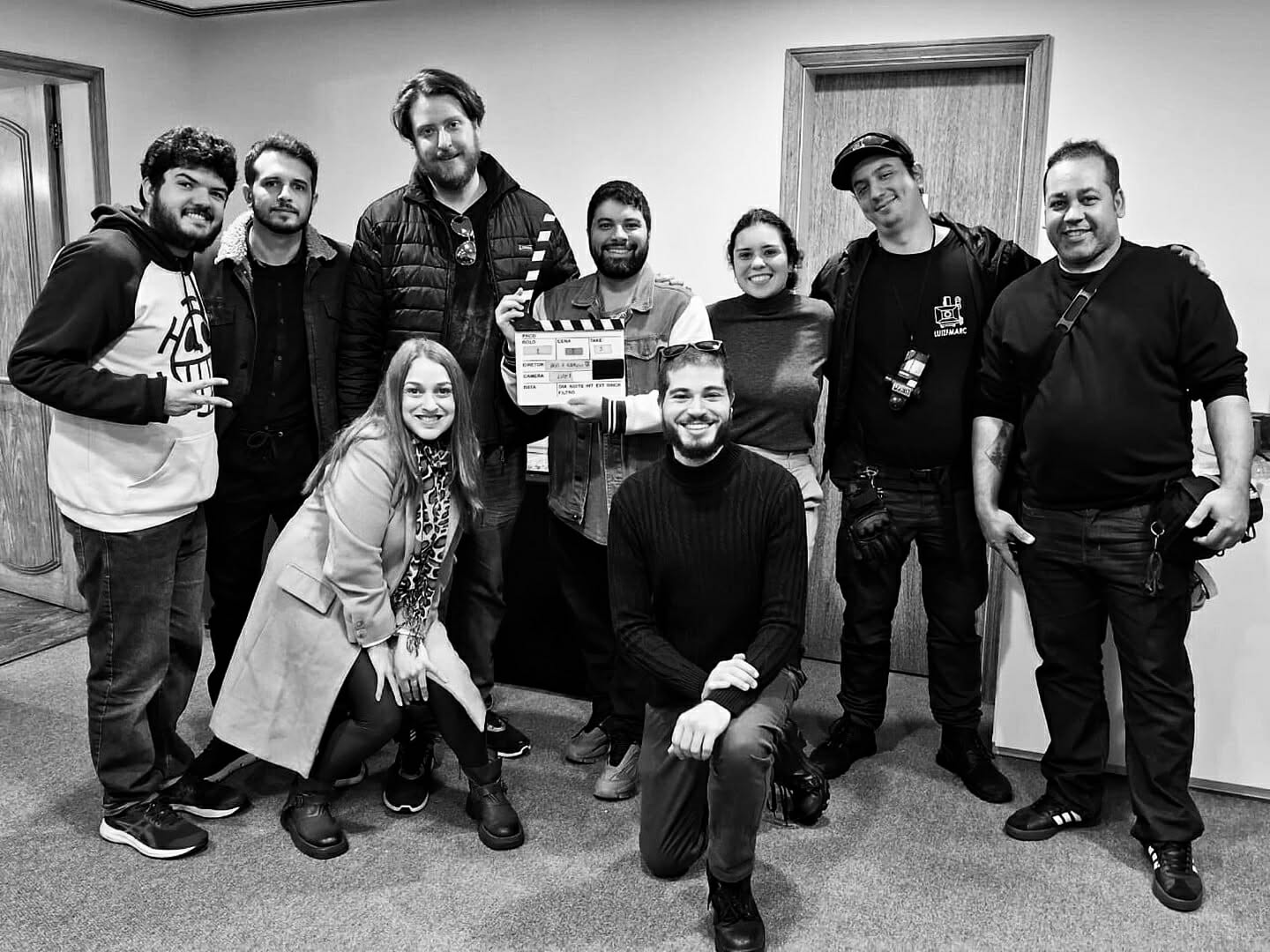
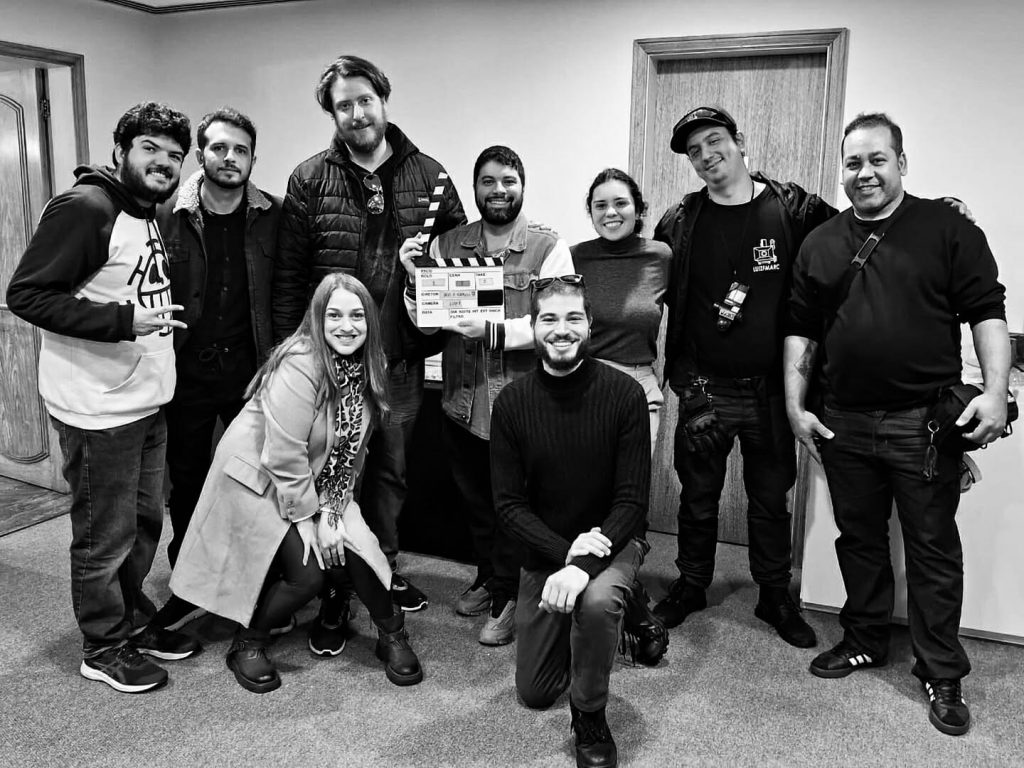
POEMARIA is a feature-length documentary that I developed over nine years. It emerged from a long process of listening—researching and filming poets, artists, and ordinary people throughout Brazil whose lives are deeply connected to poetry.
Although filmed primarily in São Paulo, the documentary expands to a broader Brazilian panorama—culturally and emotionally. It combines intimate testimonies about art, society, and personal survival with poetic performances of verses that shaped the lives of each participant.
The film doesn’t treat poetry as an academic form—it treats poetry as a necessity. As resistance. As memories.
What moved me most was its international reception. POEMARIA has already been screened at about thirty festivals and has received several awards, including Best Documentary and Best Director. The film traveled to India, Thailand, Italy, France, Germany, Russia, and the United States—proving that something deeply rooted in Brazilian and Lusophone tradition can still resonate universally.
In many ways, the film echoes the documentary humanism of Eduardo Coutinho, while also carrying an underlying belief—inherited from Pasolini and Glauber Rocha—that art is never neutral. Form is always political. Even when it speaks of intimacy.
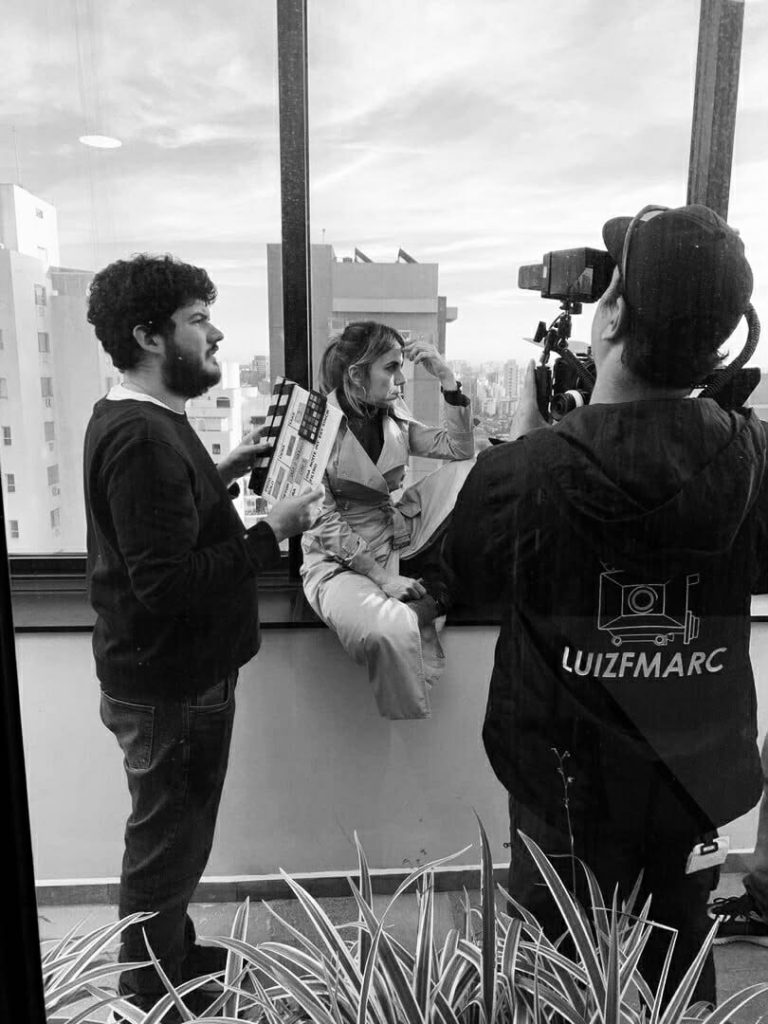
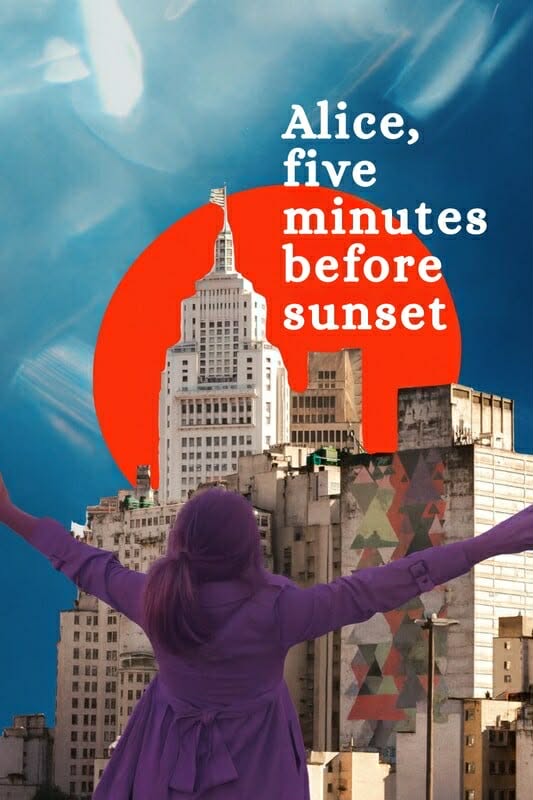
ALICE, FIVE MINUTES BEFORE SUNSET is a short film I co-directed with Rodrigo Ferraz, written by Ryan Ruiz.
It is a minimalist and poetic work, structured largely through voice-over narration and silence. The film follows a woman walking through São Paulo, and through this simple gesture we explore absence, memory, and inner fracture.
The aesthetic was influenced by Chantal Akerman’s use of duration and space, as well as the emotional restraint present in filmmakers like Sofia Coppola. Silence becomes dramaturgy.
Despite being a completely unbudgeted production, built entirely through artistic collaboration, the film is having a solid run at festivals. It premiered at the Culver City Film Festival in Los Angeles (Amazon Studios), was screened at the Indie Short Fest also in LA where we were finalists, and has already received two awards in India. In just a few months, it has reached about twelve festivals.
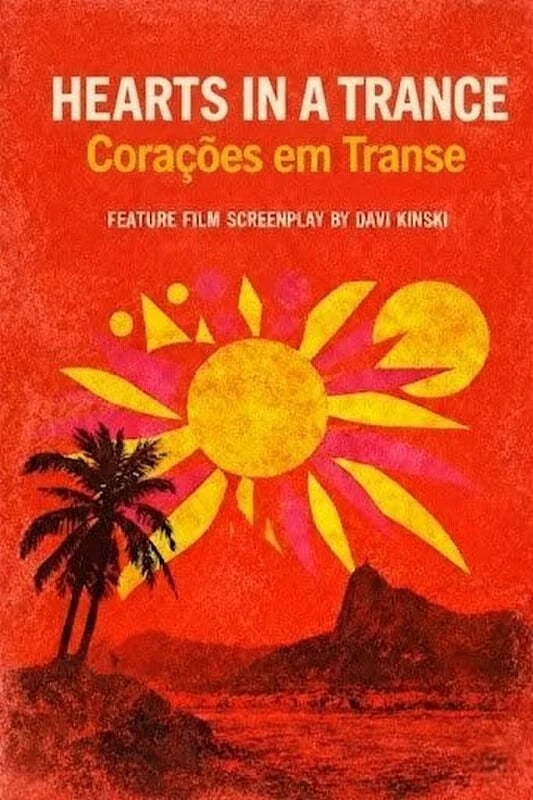
This journey reinforces my belief that cinema doesn’t depend on scale—it depends on conviction. At the same time, I am developing a screenplay for a feature film entitled “Hearts in Trance.”
It is an intimate drama set in contemporary Brazil, exploring ideological polarization, political tension, and the fragility of intimacy in an era shaped by spectacle and surveillance. Influenced by the urgency of Glauber Rocha and the political sensuality of Pasolini, the project examines how private relationships become battlegrounds for historical forces.
Winner of the Best Original Screenplay award at the New York Movie Awards and the Best LGBTQIA+ Screenplay award at the Caravan Film Festival in Kolkata, India.
Which director inspires you the most?
It’s difficult for me to name just one director, but if I had to start somewhere, it would be Pier Paolo Pasolini.
He occupies a unique place in my formation—not only as a filmmaker, but as a thinker. It’s no coincidence that I wrote a book about him. Pasolini moved through poetry, literature, philosophy, and journalism before arriving at cinema, and when he did, he transformed film into the ultimate synthesis of his language. This multidisciplinary trajectory resonates deeply with me.
What fascinates me most is not only his aesthetics—the “cinema of poetry”—but his intellectual courage. As early as the 1970s, Pasolini diagnosed what he called a new form of fascism, a new power structure rooted in consumerism, the media, and ideological manipulation. When we revisit him today, he seems almost prophetic. His work remains disturbingly contemporary in a world marked by polarization, extremism, and the erosion of critical thinking—in Brazil, in the United States, in Europe, everywhere. But my influences don’t stop there.
Ingmar Bergman was fundamental in shaping my understanding of intimacy and existential tension. Eduardo Coutinho, one of Brazil’s greatest documentary filmmakers, profoundly influenced my approach in POEMARIA—especially his belief in the power of presence and speech. I’m also inspired by Pedro Almodóvar’s emotional audacity and his ability to blend melodrama with psychological complexity.
If I were allowed, I could cite fifteen directors. Cinema is a constellation of influences.
But Pasolini remains, for me, both an artistic compass and an intellectual provocation—someone who reminds us that cinema should not only be beautiful, but necessary.
What do you hate about the world and what would you change?
What worries me most about the world today is the erosion of empathy.
When empathy disappears, dialogue also disappears. And when dialogue disappears, bridges break. What remains is polarization, intolerance, extremism—the fragmentation we witness globally. Wars, ideological radicalization, the inability to listen—these are symptoms of a deeper disconnection from what is fundamentally human.
Pasolini warned about this decades ago. He spoke of a new form of power—subtle, omnipresent, that shapes consciousness through media and consumer culture. His films, from *Teorema* to *Salò*, were not provocations to shock; they were diagnoses. He understood that when a society loses its moral and emotional imagination, it begins to repeat its darkest cycles.
We live in a paradoxical era: never before have we had so much access to information, so much global connectivity—and yet, we seem increasingly isolated within ideological bubbles. Technology connects us structurally, but empathy connects us ethically. Without it, progress becomes regression.
If I could change something, it would be this:
I would restore the capacity for deep listening—for recognizing the vulnerability of others. Because without this recognition, history tends to regress instead of advance.
And cinema, for me, remains one of the few spaces where empathy can still be practiced—where we are invited to inhabit lives that are not our own.
How do you imagine cinema in 100 years?
In a hundred years, cinema will undoubtedly transform in its form—new technologies, immersive environments, expanded realities, perhaps even dissolving the traditional boundaries between spectator and image. The relationship between screen and spectator may become more fluid, more interactive, perhaps even more individualized.
But I believe its essence will remain intact.
From the first screenings by the Lumière brothers to the radical reinventions of filmmakers like Dziga Vertov, Andrei Tarkovsky, or Agnès Varda, cinema has always been less about machines and more about perception. It’s a way of organizing time, of sculpting memory, of confronting reality. Technologies evolve; the human need to see ourselves reflected does not.
Even in an era increasingly shaped by artificial intelligence and algorithmic consumption, cinema will survive if it preserves what made it powerful in the first place: the ability to create interruptions. To slow us down. It forces us to encounter—silence, contradiction, vulnerability.
The format may expand beyond the dark movie theater. The image may become holographic, immersive, decentralized. But as long as there are human beings searching for meaning, cinema—like literature, theater, or music—will reinvent itself around that search.
A hundred years from now, cinema may seem strange.
But if it continues to question who we are, it will still be cinema.
What are your thoughts on WILD FILMMAKER?
I was truly honored by the invitation from WILD FILMMAKER. It’s a respected platform in the international film scene, and seeing the variety of filmmakers who have shared their work and ideas through the magazine, I felt both humbled and grateful to be among them.
As a filmmaker still at the beginning of my feature film journey, this recognition has a special meaning. It suggests that attentive curators are looking beyond established circuits and connecting with emerging voices—especially those from Latin America who propose a more auteur-driven and poetic approach to cinema.
I believe that platforms like WILD FILMMAKER play an important role in connecting different film cultures and expanding dialogue across borders. If Brazilian and Latin American cinema has something urgent and poetic to say, it is through spaces like yours that these voices can resonate globally.
Therefore, I sincerely thank you for the opportunity and wish the magazine continued growth, relevance, and longevity in the international film community. Brazilian kisses and hugs.