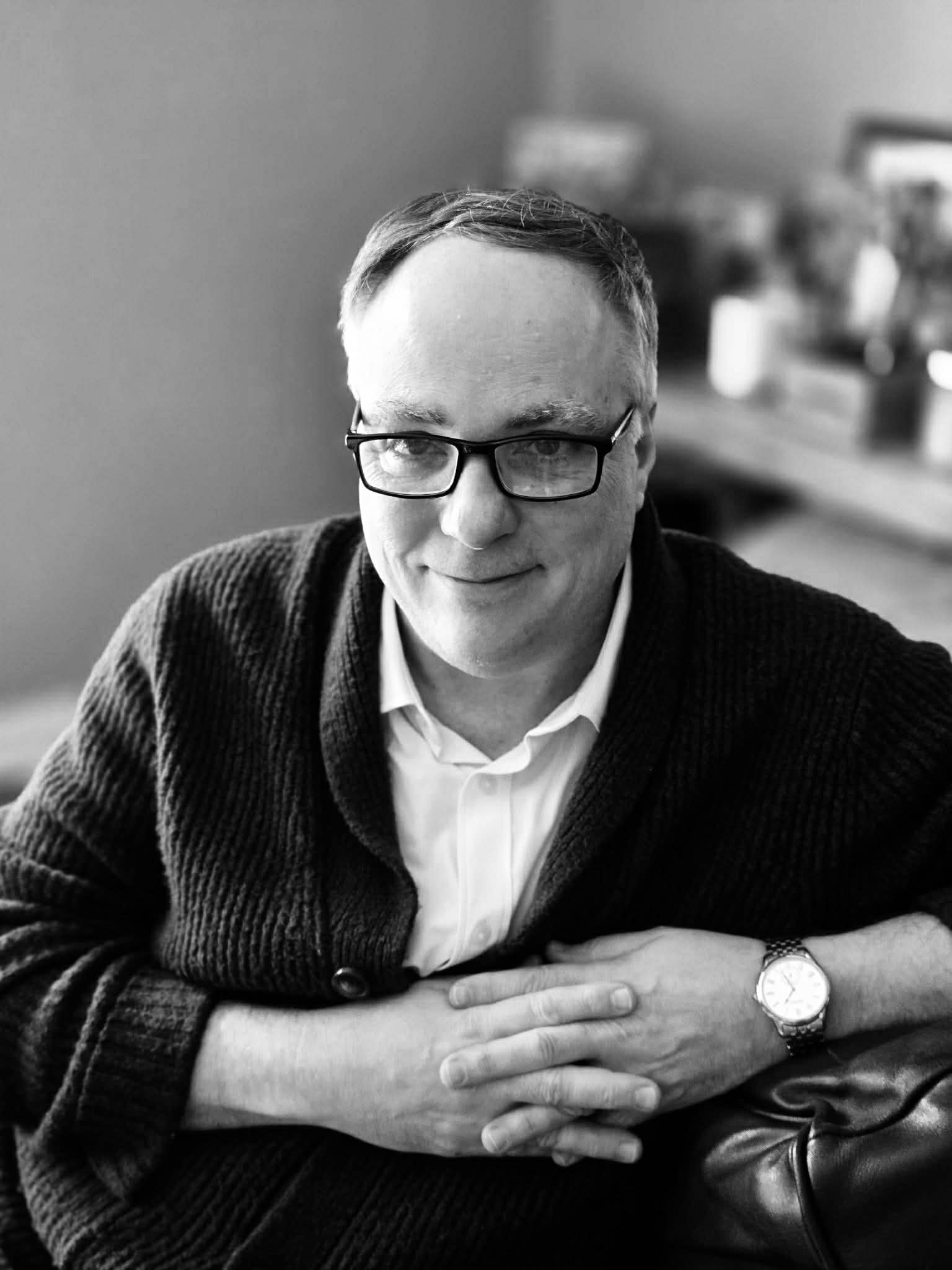
Who is Craig Graaff?
I’m a writer focused on serialized storytelling that examines how systems—intelligence, finance, and political institutions—shape individual lives over time. I’m particularly interested in placing ordinary people inside those systems and exploring how they respond when circumstances become far larger than they can control. My work is built around causality, where decisions made within those structures reverberate across decades, often in ways the characters themselves don’t fully understand.
Do you remember the exact moment you fell in love with cinema?
What drew me in wasn’t a single moment, but the realization that film could operate simultaneously as intimate character study and as a way to explore larger historical forces. I’m particularly interested in stories where cause and consequence unfold over long periods, revealing how personal lives are shaped by events far outside a character’s immediate awareness.
Tell us about your project “American Mythos”.
American Mythos is a serialized Cold War psychological thriller told across three decades, where a covert rivalry between Len, a U.S. intelligence officer, and Marguerite, a KGB strategist, embeds itself deep within American life. As their decisions ripple forward, an unsuspecting generation in the 1980s is drawn into the system they built.
The series unfolds across interlocking timelines, revealing how quiet, strategic decisions made during the Cold War resurface years later in unexpected and deeply personal ways. At its center are individuals who begin as ordinary participants in their own lives, only to find themselves shaped by forces they neither see nor fully understand—where what appears local and personal is ultimately part of something much larger.
Which Director inspires you the most?
I’m particularly influenced by filmmakers like Michael Mann and David Fincher, whose work demonstrates a high level of structural precision and control. One of the things I find most compelling in their films is the use of tonal layering—where procedural detail, psychological tension, and atmosphere operate simultaneously rather than in isolation.
Their stories often balance a grounded, almost clinical realism with an underlying sense of unease, allowing meaning to build through accumulation rather than exposition. That approach is central to how I construct American Mythos, particularly in maintaining tension across timelines and allowing larger systemic forces to emerge through character-driven moments.
What do you dislike about the world and what would you change?
There’s a tendency to reduce complex systems into simplified narratives, particularly when it comes to history and power. That simplification can obscure how decisions actually get made and how long their effects persist. I’m interested in creating work that reflects that complexity rather than resolving it too cleanly.
How do you imagine cinema in 100 years?
The tools will change, but the underlying purpose will remain—understanding human behavior through story. What I think will continue to evolve is the scale of narrative structure, with more emphasis on long-form storytelling that can reflect the layered, interconnected nature of real-world systems.
What is your impression of WILD FILMMAKER?
Platforms that provide visibility for structurally ambitious and independent work play an important role, particularly at early stages of development. Creating space for projects that operate outside traditional models allows those ideas to begin finding an audience and identity before entering larger systems.