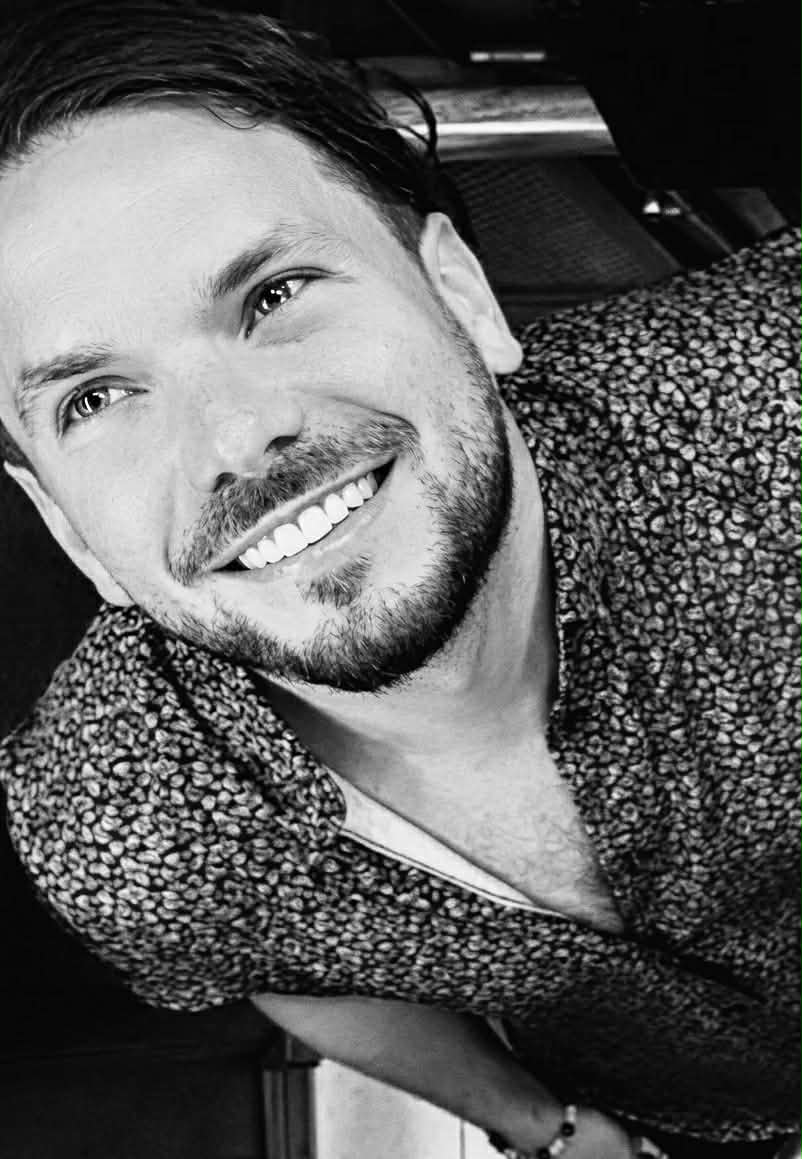
-Who is Walter Maduro?
Walter Maduro is a Panamanian hotel entrepreneur and creative producer best known for founding and operating Nitro City Action Sports Resort for 8 years, a unique collaboration with Nitro Circus and Travis Pastrana. When the resort was forced to close during the global lockdown, Walter seized the unexpected pause to pursue a long-held creative vision, the development of his original anime saga, Godhood.
After completing the full narrative outline, Walter traveled to Anime Expo in Tokyo, where he met Mr. Junichi Kawamura, former Head of R&D at Bandai Namco and a key creative behind major franchises such as Tekken and Soul Calibur. Mr. Kawamura has since become Walter’s mentor in Japan’s media arts industry, guiding the production network of Godhood.
Driven by his passion for storytelling, philosophy, and cinematic world building, Walter continues to bridge Panamanian creativity with Japan’s anime legacy, bringing Godhood one step closer to reality.
-Do you remember the exact moment you fell in love with cinema?
Two distinct experiences shaped my creative DNA. The first was at age 13, when my father introduced me to the silent, black-and-white masterpiece Nosferatu. I was struck by how a silent stare in a monochromatic film could create such an intense atmosphere of vulnerability. It was a lesson in suspense, proving that the most impactful stories are often the most focused in it’s presence.
The second pivotal moment was in 1999, watching The Matrix at a local cinema here in Panama. I left the theater feeling a rare combination of hope and intellectual hunger to understand the architecture of storytelling. It was the first time I realized that cinema could be a philosophical playground as much as a visual one. That day sparked a lifelong commitment to researching the craft and, eventually, building my own world.
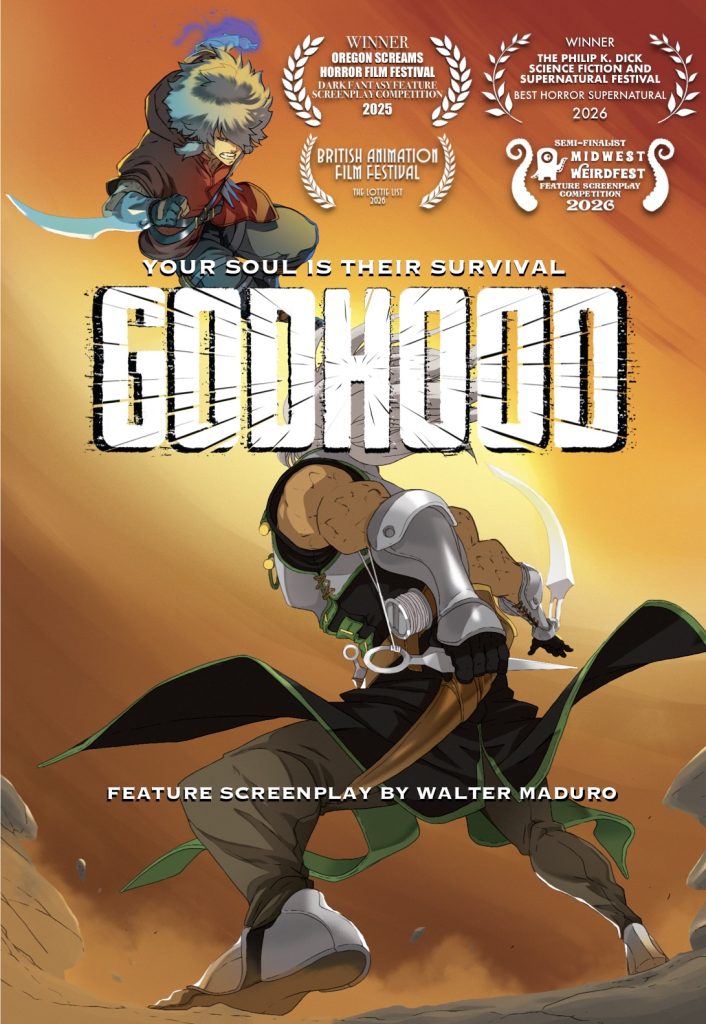
-Tell us about your project “Godhood”.
Godhood is an anime epic saga that fuses mythology, science, and existential horror into an emotional and visually striking story about identity, fear, and creation.
The series follows Raiko, a God among humans, burdened by how others see him as a freak of nature due to his wooden skin. For centuries, the Gods have been absent, leaving mankind to evolve freely. But now, as humans reach unprecedented power, the Gods return to discover a civilization that has grown far beyond their control, threatening a cosmic balance no one on Earth fully understands.
After surviving a brutal clash between other Gods visiting Earth, Raiko forms an uneasy alliance with Dr. Jessie Higgs, a brilliant scientist whose skepticism complicates her trust. Together, they uncover the truth of humanity’s rapid evolution, it was never natural. It is the result of a secret experiment, a symbiosis of souls between Gods and men, were their survival depends solely on our existence.
Our heroes will commit mortal mistakes, while villains are much more merciful than one could expect. Grey characters that explore the human heart and the conflict with itself. Raiko is further tested by Enlil, his manipulative mentor, who guides while deceiving him, and by allies whose motives are never certain.
The primary antagonist is the Lord of Fear, Hurukan. He threatens to unleash judgment upon mankind, forcing Raiko to choose between obedience to his kind or compassion for humanity. Yet Hurukan’s reverence for knowledge draws him to Higgs, making her an important asset that earns his respect.
Their conflicts balances philosophical depth with fast-paced supernatural action, political tension among Gods, and the personal cost of knowledge. It becomes a meditation on creation, purpose, and the fear of the unknown.
-Which Director inspires you the most?
My north star has always been Katsuhiro Otomo, specifically for his work on Akira. In 1988, Otomo set a benchmark for technical fidelity that, in many ways, remains the industry’s impossible challenge. Beyond the staggering detail density of his urban landscapes, the pioneering use of custom color palettes, and his commitment to a fluid 24 frames per second, what inspires me most is his mastery of adaptation.
Distilling a sprawling, six volume manga epic into a single feature film required an incredible sense of narrative economy. He managed to capture the philosophical essence of the source material while elevating the vibe through an iconic, haunting soundtrack. For me, Otomo is the architect of modern sci-fi aesthetics.
-What do you dislike about the world and what would you change?
I was fortunate to grow up in a family that respected different beliefs. I experienced religious prayer, atheistic reasoning, and spiritual metaphors for a better way of life. From that, I learned that every faith and theory can serve as a personal path toward inner peace.
But I also witnessed the danger of blind faith, the harm that comes when belief is used to control instead of enlighten. Because of that, I believe in questioning tradition. Aditionally, we stand at a defining turning point in human evolution where technology and artificial intelligence are reshaping our understanding of consciousness and purpose. Like my characters, we are beginning to confront our own makers, ourselves.
Therefore, through Raiko, I explore the myth of “the chosen one” and examine how individuals and institutions use the promise of absolute answers to manipulate others. My story stands where belief and science meet in conversation, not conflict.
-How do you imagine cinema in 100 years?
As the technical barriers to entry for fantasy and sci-fi continue to dissolve, the value of the production pipeline will shift. I believe storytellers with refined taste and a distinct creative eye will become the most valuable assets in the industry. We are moving toward a transition as profound as the jump from theatre to film.
We will see a dual reality: Fast Cinema that allows users to prompt their own stories in real-time, and event cinema that mirrors the theatre and theme parks. Cinemas will become specialized environments as an independent horror sanctuary or a curated Disney venue, these spaces will provide a full sensory experience, with rotating decor, artisanal food, and custom clothing that changes with every premiere. Cinema will go beyond just a screen you look at, it will be an environment you inhabit.
-What is your impression of WILD FILMMAKER?
WILD FILMMAKER serves as a necessary disruptor in an industry that often feels gate kept by traditional, rigid structures. I value efficiency and the courage to spotlight projects based on their raw vision rather than just their studio backing.
To me, your platform feels like a home for the cinematic vanguard. I’m focused on high fidelity storytelling and creating immersive worlds. You provide a global stage for creators who are more interested in the museum grade integrity of their art than in following a safe, corporate formula.
It’s about visibility for the unconventional. As someone currently bridging the gap between Latin American narratives and international animation pipelines specifically working with partners in Japan I appreciate a space that recognizes the wild nature of independent creation.