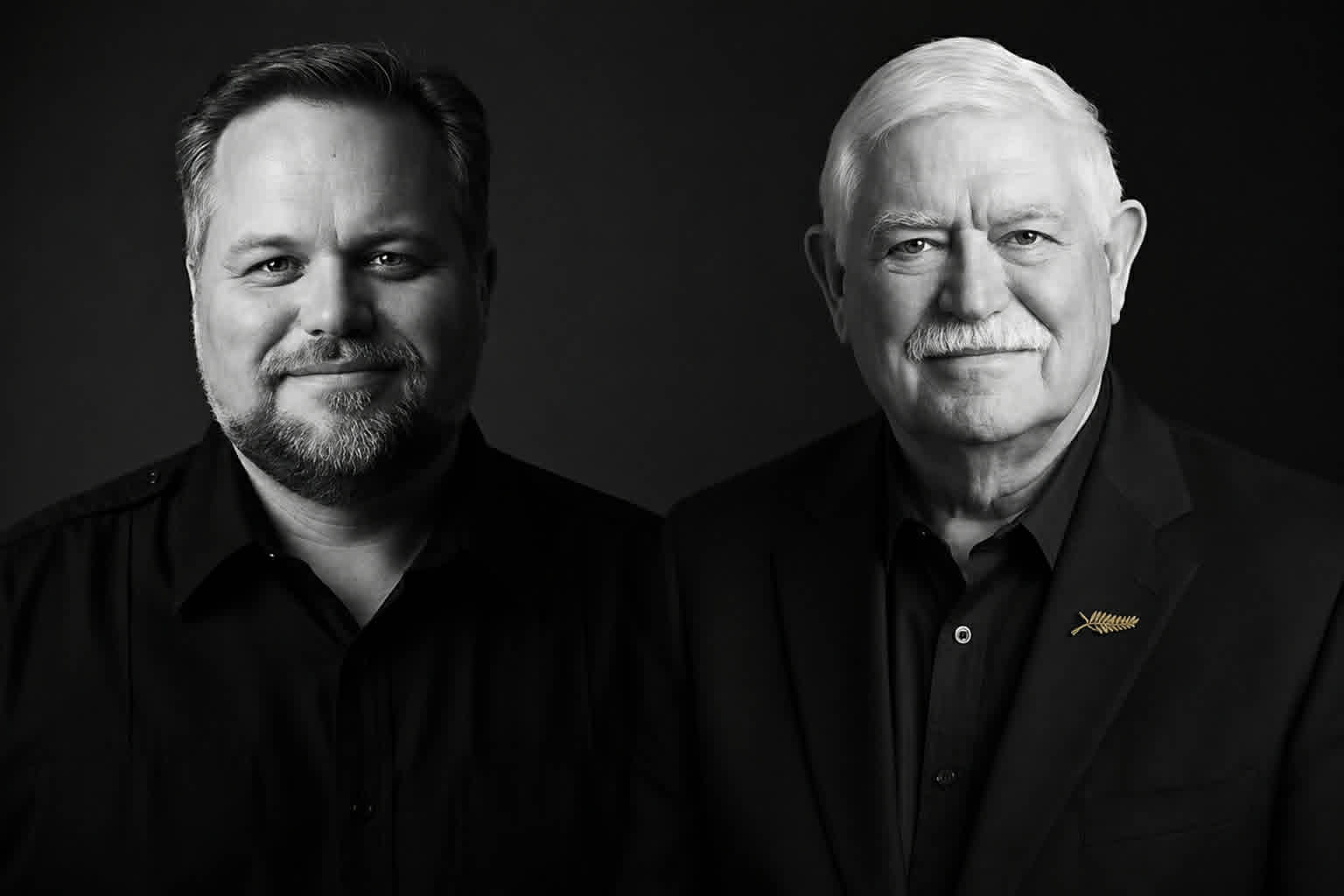
When you plan the realization of a film project, what are your objectives?
At Paradigm, every project begins with what we call the synergistic cooperation between art, science, and business — the three pillars on which our entire philosophy rests. Great films, in our experience, emerge only when artistic vision, technical craft, and commercial discipline are pulled into balance. Any one of those elements working in isolation produces something incomplete, and the audience always feels it.
Our objectives, then, are straightforward but uncompromising. We set out to make films that advance the art and language of cinema rather than imitate it; that transcend the ordinary in story and execution; that are produced with the kind of fiscal rigor that keeps creative ambition tethered to reality; that carry keen public appeal across cultures and generations; and that ultimately deliver strong returns to the people who invest in them. Anything less, in our view, is a missed opportunity — both for the audience and for the medium itself.
With Artificial Intelligence, cinema is undergoing a phase of transformation even more radical than the one that occurred in the 1920s with the transition from silent films to sound. What is your opinion on this?
The comparison to the silent-to-sound transition is apt, and we welcome it. We have always been firm proponents of the synergistic cooperation between art, business, and science in filmmaking, and AI is simply the newest expression of the science side of that triangle. We have incorporated it into our process— in previsualization, in archival enhancement, in workflows that would have required months of labor a decade ago. As a tool, it is genuinely thrilling, and filmmakers who refuse to engage with it will find themselves left behind.
But it is a tool, and it must be regarded as one. AI can simulate the surface of human expression with impressive fidelity, but it does not possess — and in our view will never possess — the lived humanity required to strike the universal chords that reside at the core of our being. Great cinema speaks to something deeper than pattern recognition; it speaks soul to soul. The danger is not that AI will be used; the danger is that filmmakers will forget that the human element is the thing being communicated, and that no degree of computational sophistication can substitute for it. Our position is therefore clear: embrace the tool, and never confuse it for the artist.
To which production or distribution company would you like to propose your new project? Give us a profile, including some examples.
Our slate is positioned for the major streaming distributors — Netflix, Hulu, Disney+, Amazon, — each of which is actively seeking premium documentary and narrative work that travels internationally. We have three productions currently in play.
AMERICA BOXED IN
A feature documentary directed by Casey G. Williams and Ian S. Williams that uses the freight container — that unassuming steel box — as a lens through which to examine the seismic consequences of globalization. The film traces how the container has compressed the world, transferred power from governments to non-state actors, fractured political systems, and shifted wealth and influence from West to East. It is a meditation on the architecture of the modern world, told through the object that built it. The film has earned more than 100 awards worldwide.
THE WOVEN PATH
A Chinese scholar retraces the extraordinary journey of William Taylor — the only American POW to escape Japanese captivity and traverse occupied China during the Second World War, rescued and protected by Mao Zedong’s Eighth Route Army. The film weaves together a story of courage, cross-cultural compassion, and the enduring human threads that bind China and America across generations — a timely meditation on what the two nations once shared, and what they might share again.
THE ORNAMENT: A Christmas Story of Forgiveness and Redemption
In 1959 small-town America, a bitter, childless shopkeeper — whose wife was killed decades earlier by a drunk driver — receives a mysterious crystal ornament from a young boy. As the ornament gradually reveals a personalized vision of Christ’s compassion, culminating in the healing of Malchus’s severed ear, it awakens in the old man a capacity for forgiveness he had thought long dead. The story crests when he surrenders everything he has — including the ornament itself — to the very man who destroyed his life. It is a Christmas story about forgiveness and redemption.
WILD FILMMAKER can now “sit at the table with the big players” alongside The Hollywood Reporter and Variety during the Cannes Film Festival, but we have chosen to continue being a Global Cultural Movement with an ethical mission: to bring democracy into cinema, placing the Work of Art at the center of our project rather than Marketing. Do you think we are doing a good job?
Unequivocally yes. In an industry increasingly dominated by algorithms and marketing departments, no organization matches Wild Filmmaker’s commitment to placing the work of art at the center of the conversation — and no one matches your support for independent filmmakers. The decision to remain a global cultural movement with an ethical mission, rather than be absorbed into the trade-press establishment, is precisely what makes your voice indispensable. We hope to remain aligned with Wild Filmmaker, in any capacity that proves useful, for many years to come.