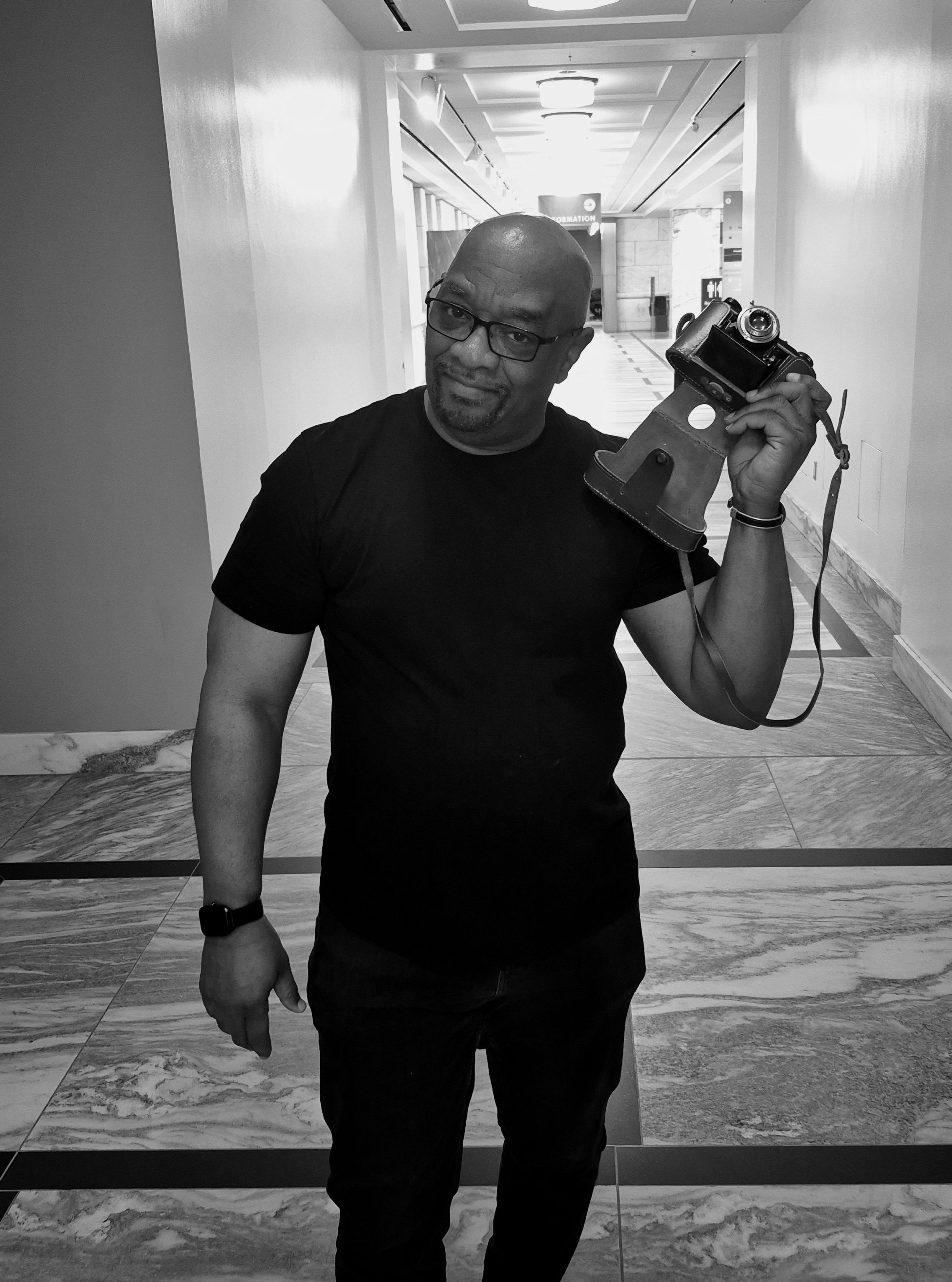
Who is Timothy Myrick?
Timothy Myrick is an architect of memory.
I’m building a world of cinema and screenwriting that drives the viewer to look at who we were, so we can understand who I have become.
My current project, In the Waters of My Mind, began as a book. That book evolved into an investigation of what happened in my early life. Instead of answers, it led me down a rabbit hole. So, I adapted my book into a script and used FOIA to chase lingering questions. Then a friend, a playwright, read my script and urged me to start filming shorts from it.
Consider the odds: I studied computer science. No writing experience. No film work. No connections to a vast industry I knew nothing about. And yet, I have produced six movie shorts so far, not in chronological order, excavating pieces of my childhood: Detroit in 1967, Hamtramck, our family’s grocery store that survived the riots, a bank robbery my brother was duped into, and the murder of my father, exactly two years to the day after that robbery which unraveled our entire lives.
I realized I would never get simple answers. I became interested in the messy, painful, beautiful truth of what happens when ambition, betrayal, and love collide inside a single family. I had to morph into something entirely different from what I trained for. I became a modern-day Oscar Micheaux using every tool available to tell my story. A Black story. But much more than that. My story, on my own terms.
That meant acting, directing, editing, and sometimes filming. Learning the business side of film. Understanding that the industry is going through a metamorphosis, one that has allowed me to produce my work. Technology has given me opportunities a single person could hardly have dreamed of. Twenty years ago, I could never have made what I’ve made so far.
Memory is not linear. It’s tidal. It comes in waves. The past lives in us whether we want it to or not. I didn’t write my book in linear fashion. I wrote what I felt in each moment of it handwritten. I still have those pages.
In the Waters of My Mind is more like a lake than a river. A lake has different parts: vast, shallow, deep, clear, murky. And it’s there, in what we can’t forget, in what I can’t forget.
Do you remember the exact moment you fell in love with cinema?
I was born in 1961 into a strong Christian home. Television was a privilege, not a right. My parents limited what we watched and when, but limits can be a gift they taught me to be intentional. We spent plenty of time outside, socializing, playing sports.
My brother and sister were nine and six years older, so their movies became mine by osmosis: “The Ten Commandments”, “Ben-Hur”, “The Greatest Story Ever Told”. Those epics felt like scripture. Unlike my siblings, I attended parochial school, St. Philip Lutheran, the first Black Lutheran church in Michigan. The stakes were cosmic, biblical. The moral lines were clear. I didn’t just watch those films. I absorbed them.
Then I discovered Hitchcock. He taught me that the most important battles aren’t fought with armies, but in a single room, with a single glance, with a key turning in a lock. That felt truer to my world. Several of my favorites: “North by Northwest”, “Dial M For Murder”, “The Birds”, “Rear Window”. Then came the ultimate scary film: “Night of the Living Dead” a strong Black man trying to survive a zombie apocalypse, only to be tragically killed at the end.
Then the 1970s arrived, and with them, Blaxploitation: “Shaft”, “Superfly”, “Across 110th Street”, “Claudine”. I listened to the soundtrack before I could see the films, my parents would never have allowed in the house. When I finally watched them, I didn’t know what to make of them. These weren’t the Black historical figures my mother read to me about weekly: inventors, activists, artists, people with dignity in the face of humiliation, grace in the face of violence. Dr. King, Malcolm X, Patrice Lumumba, Dr. Charles Drew, Booker T. Washington, George Washington Carver. That was my Black education.
So, when I saw “Shaft”, he was totally different. Cool clothes. A thrill to watch because the lines were blurred the good guy could be as ruthless as the bad guy. Raw, complicated, unapologetic Black power. It took me a while to understand what Blaxploitation was about, and who funded it. Those films were ancestors and orphans: the dignified and the defiant, the respectable and the real. They reached an audience Oscar Micheaux knew years earlier. Only later did I learn that “Shaft” saved MGM, on the brink of bankruptcy, rescued by a Black movie with an awesome Isaac Hayes soundtrack, and directed by Gordon Parks.
But nothing resonated like “The Godfather”. Absolutely nothing. I didn’t see it until after my father died. Here was a fictional story by Mario Puzo, brought to the screen, and it struck me because my own story was similar, but real.
My project, In the Waters of My Mind, is my attempt to bring all these influences into the same room: the moral weight of my Christian upbringing, the story echoes of “The Godfather”, the psychological suspense of Hitchcock, the raw complexity of Blaxploitation. And underneath it all, the true story of my father, mother, brother, and me people who survived things they shouldn’t have, and those who didn’t.
That’s when I fell in love with cinema. When I realized it could hold all my contradictions without breaking.
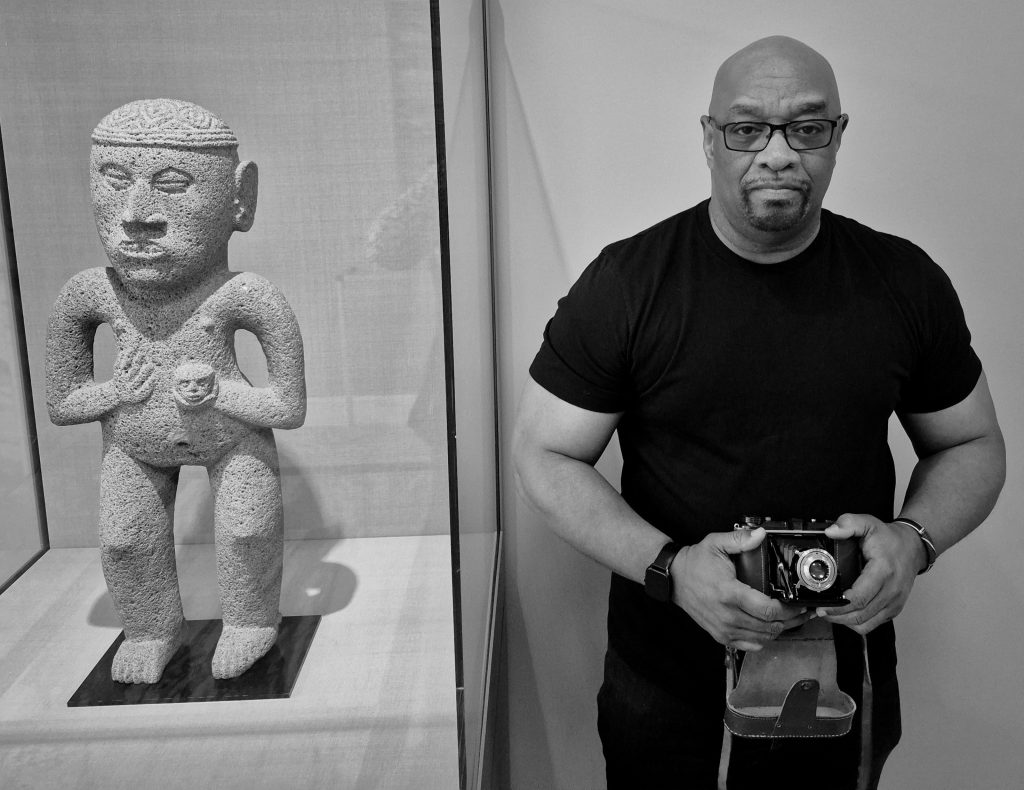
Tell us about your project Of Who We Were.
Of Who We Were is my longest short film to date, 35 minutes. It’s essentially a subset of my inaugural episode, The Past That Will Not Die, a 55-page script that kicks off the series. Due to logistics, time, and budget, I had to scale it down to fit the standard 40-minute-or-under format required for festival judging as a short.
Of Who We Were is a chapter in my larger story, going back to 1967, the year everything came together for me as a child. So much happened that year: the traditional sixth birthday party my siblings and I would receive, my father purchasing our grocery store in Detroit at the corner of Broadstreet and Elmhurst, and, ironically, the Detroit riot.
Many of my shorts begin with references to past family photos or a significant event. Of Who We Were opens with an interview and a voiceover I recorded in 2007 with NPR for the 60th anniversary of the riot. Before the video begins, I start with a song: “He’s My Everything,” a song my mother played in our home and that my sister and brother sang as a duet in church. My sister and I later sang it in remembrance of that time, accompanied by family photos.
The video then moves to a dinner prepared by my mother, where her sister, Aunt Bessy, my godmother Aunt Ester, and our neighbor Ms. Land break bread together. They speak of many things, but mostly the store.
The next scene shows young Timmy listening through the furnace ducts to the room next door, where his brother Henry, cousin Jerome, and Robert are talking. His sister Rena catches him, asks what he’s doing, and eventually convinces him to join them. They talk about their lives and their challenges as kids in a loving family.
Then we see Henry working at the store, chatting with a friend, and meeting a young woman he will eventually date. Timmy faces a challenge with a neighborhood girl who likes him. Their father, Joseph, sets up a deal with the local Black Muslims to sell their bean pies, distribute their newspaper, and secure their protection. Meanwhile, Joseph’s wife voices her concerns about the arrangement.
This episode is about family, love, respect, and the new challenges that come with owning the store. It allows the viewer to develop relationships with all the family members, a sharp contrast to my other shorts.
Ultimately, Of Who We Were seeks to earn the viewer’s investment. Events will challenge what the audience is presented with here, and I wanted to build an emotional arc for the things that will eventually happen.
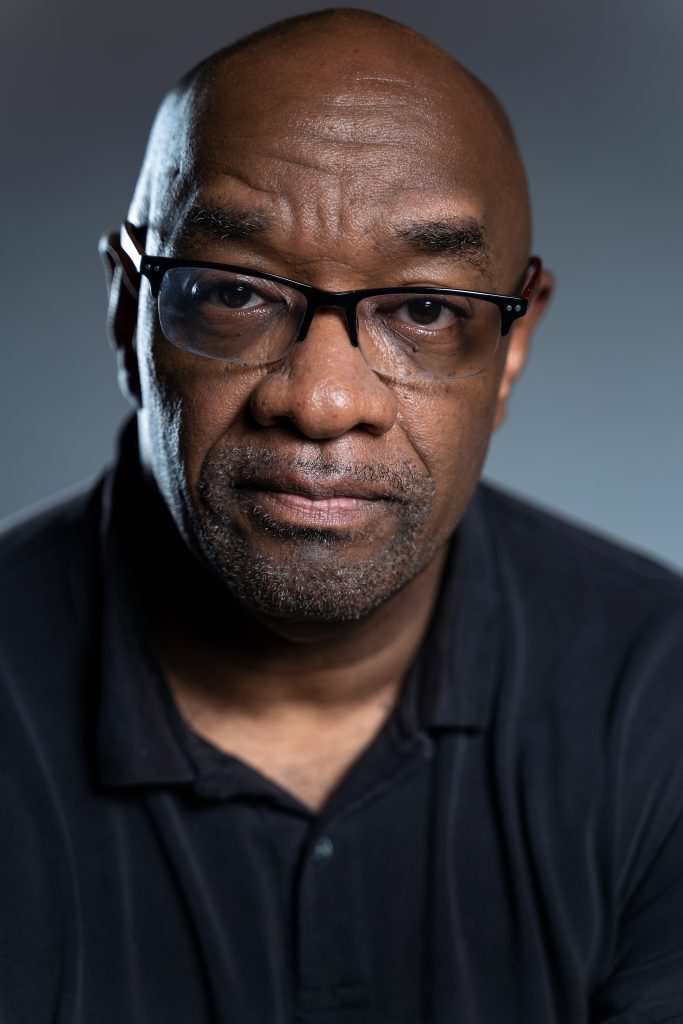
Which director inspires you the most?
I can’t name just one. Here are the directors who have shaped me.
Spike Lee – I’ve watched almost all his work. I’ve seen his development, his journey, and how he broke down barriers for Black film in every role: directing, acting, casting new and unknown stars, and integrating music that speaks directly to a scene or sets the tempo of his films. He enlisted his father to do the music for She’s got to have it.
Francis Ford Coppola – How do you top The Godfather trilogy? To be frank, Godfather Part II is two films in one. His ability to move back and forth in time, finding compelling moments in both timelines, was amazing. And then there’s Apocalypse Now.
Stanley Kubrick – His films weren’t always my favorites, but Full Metal Jacket was a tour de force. An awesome screenwriter as well.
Alfred Hitchcock always found a way to create suspense with great dialogue. North by Northwest, Dial M for Murder, The Birds, Rear Window, Psycho. Writer, director, multi-talented.
John Singleton – Boyz n the Hood was amazing. A powerful cast. No one else could have written and directed that film the way he did. He encompassed Black culture and the age-old struggle of getting out of the hood before it’s too late. And he had a string of hits: Rosewood, Higher Learning, and more.
Oscar Micheaux – The G.O.A.T. of Black film. Unstoppable. He found a way when every roadblock was in front of him. Wrote, directed, and produced 44 films. Segregation? No problem – he worked the system. Black people wanted to see themselves on screen, so he made his deals and traveled from theater to theater. He was the equivalent of Too Short and Master P before they existed, only better. A self-published author. I’ve taken a page from him.
What do you dislike about the world and what would you change?
The more you read, the more the illusion shatters. The world is a lie dressed up as opportunity.
People chase the 1% with their last breath, then turn around and whine about the same oligarchs who own the game. They want to be the boot yet complain about the stomped on. It shows you have only one value… conforming.
And let’s talk about being Black in America. You’re told you’re unique, but the same damn hierarchy eats us from within at times. We can be extremely resourceful under extreme and unfair conditions at times, given a fair playing field, the sky can be the limit. Yet, we are bound by the colonizer’s religion. Severed from our heritage by the Atlantic slave trade. Rudderless, not just because they push us down, but because too often we won’t grab the wheel.
So, what would I change? Everything.
What did integration get us when bought into a society that has never wanted us, not truly, not beyond what we can provide or entertain. I would gather my own like-minded people. Educate our own children. Build our own tables instead of pleading for a seat at theirs. Be self-sufficient. Work the land ourselves and watch it prosper under our own hands, not someone else’s. And… tell our own stories.
No more asking. No more performing respectability for a master who doesn’t respect us.
We can change the world by leaving their version of it behind.
How do you imagine cinema in 100 years?
Technology has made our cinematic entertainment individualistic. We interact with each other less, so we have fewer stories to build from. Gone are the days of intellectual stimulation or playful physical interaction. Now everything is transaction-based: How do I monetize sitting in my bedroom, playing video games with strangers around the world? How do I build the next AI-bot that creates millions?
Within 100 years, I see a backlash against AI, against tech, against the isolation masquerading as connection. People are and will hunger for something real. They’ll want to see films again. Real stories. Fiction and nonfiction that breathe that require a room full of strangers, something created by real people. It doesn’t mean that you can’t use technology at all, but more as a tool to use for creativity and not just empty entertainment.
Technology won’t disappear, but it will be forced to find a balance: individual experiences alongside the communal. Because cinema without a shared audience isn’t cinema. It’s just content.
And content doesn’t change anyone.
What is your impression of WILD FILMMAKER?
WILD FILMMAKER wants to find the heartbeat of filmmakers from every walk of life. They’re just as comfortable interviewing a Scorsese as they are finding someone like me—to get a read on the pulse of an evolving industry.
Technology has displaced what was once a stable pillar of media. Filmmakers have no choice now: we must embrace technology, use it to our advantage, and shed any trepidation.
Wild Filmmaker seeks out the people who have been in the trenches—and who have made cinema that moves audiences, entertains them, and perhaps even sparks change.
I’m humbled and thankful they chose me to offer my insight.