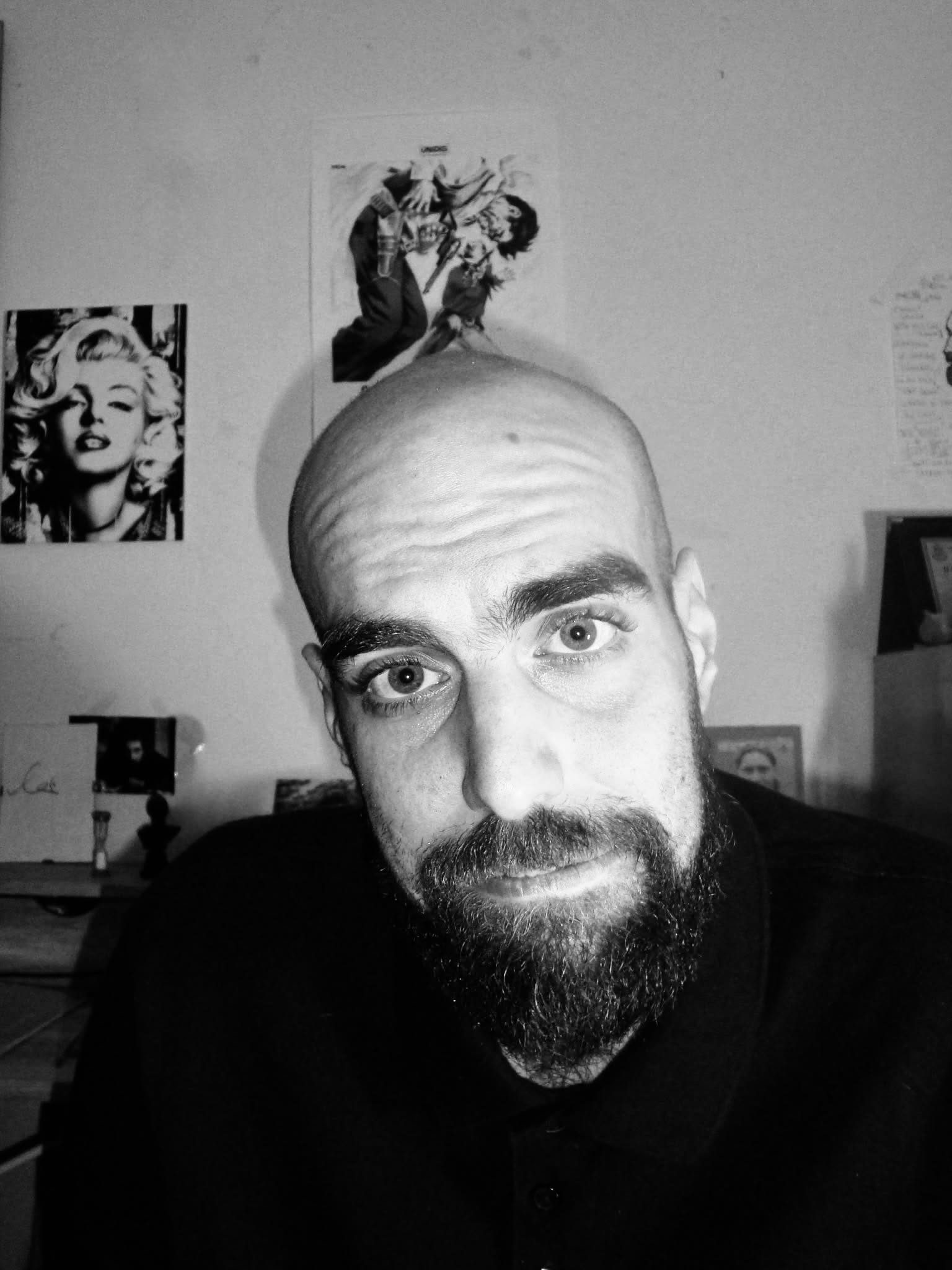
What are your goals when you plan a filmmaking project?
“I always aim for projects that go beyond my reach, even knowing full well that I won’t have the necessary skills or the right budget for them. By doing this, I’m forced to learn quickly and to use my imagination to make do with the resources that are available to me. Eventually I always get into the worst kind of trouble: I try climbing a mountain that’s far too steep, but if I’m lucky, once I reach that peak, I can get the answers I’m looking for. Answers to questions like, “Why the hell am I setting all my scenes in green spaces?” “Why are my words so violent?” “Can you still see my personality in what I do, or is my need for appreciation the only thing left?”
This is my ultimate goal: to answer the thousands of questions that arise during my journey to the top.
In the film I directed, “We Love Everywhere”, the actor Henoc Mboyo and I improvised every scene with the passersby of Trastevere. I plunged into total chaos, with no scripts and no opportunity for multiple takes. I was in the worst trouble, the worst mess, but once I finished shooting, I managed to find the answers I was looking for.”
AI is transforming filmmaking. What is your opinion on AI’s role in filmmaking?
“At the moment, I’m undecided, because you can still tell when an actor is AI generated in a movie. I wonder whether in a year or two the situation will be different. Even though various organizations and movements try to protect actors, I don’t know how long it’s going to be possible to keep this up. I hope the actor keeps living forever, but at the same time, I appreciated Scorsese’s “The Irishman”. In that case, it was one of the first times technology had managed to overhaul an actor’s interpretation in such a profound way, and I found the result fantastic. If AI went in that direction—that is, not demolishing the actor’s role but changing parameters to make their acting more credible, from a storytelling point of view—then I’d be in favor. For independent creatives, AI is an excellent tool for editing and for reducing costs. But it must remain in service to the story. When it comes to writing, I’m very critical about its use: AI might be useful for research and grammar, but I’d never entrust my dialogues to an algorithm. My dialogues come from shards of my soul and memory. How can an algorithm sense and see what I’ve lived? It can’t, just like any another fellow human being can’t.”
Which production or distribution company would you like to suggest your work to?
“In “We Love Everywhere” we asked passersby to improvise with us. I’d like to work with someone who understands, on a profound level, this adventure and our total immersion in the story. Trastevere is utter chaos: that day we didn’t just film a movie, we murdered our cowardice too, by filming wildly, by embracing risks and by feasting on that indomitable force. If someone watching this movie understood the potential behind it…I’d be wholly in favour of talking about this possibility. I’d even accept criticism. At the moment, I’m filming a TV show called “Directed by Woman”. I changed my approach here: there’s still a lot of experimenting, but I always write the screenplay before filming. I film a lot, maybe too much: a thousand different narrative choices, but I end up discarding most of them. It’s a different journey than “We Love Everywhere”, but at the same time it’s also similar: another mountain to climb, another story to understand. If someone is interested in what I do, someone who works in the field of cinema, I’d be happy to talk about this possibility. Otherwise, I’ll keep climbing to the next peak, knowing that someone is going to notice sooner rather than later and will tell me, ‘You’re crazy, man. I like you. Do you want to create a movie with us?’”
WILD FILMMAKER, you can now sit down with the big protagonists, right next to The Hollywood Reporter and Variety during the Cannes Film Festival, but we have chosen to remain a Global Cultural Movement with an ethical mission: to bring democracy in the movie industry, by putting art first, at the core of our project, instead of marketing. Do you think we’re doing a good job?
“I’m going to say a few concise words about this: from what I can see, you’re the only ones still interested in another kind of filmmaking, in looking into dark spaces with the intent of finding hidden talents.”