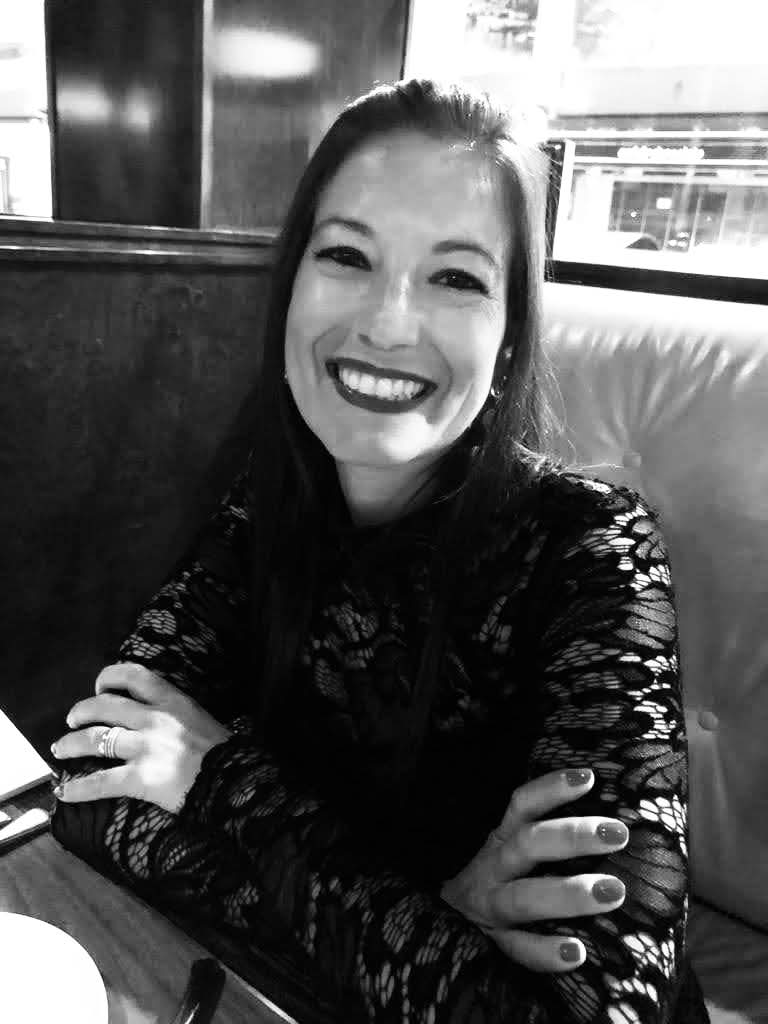
– Who is Anna Blackblum?
I’m Anna Blackblum, a Portuguese screenwriter currently based in Singapore. After years of keeping my stories to myself, I finally decided to bring them to life.
I naturally gravitated toward psychological and supernatural horror because I’ve always been fascinated by mystery, the occult, and what lies beyond what we can explain. My studies in criminology heavily influence my writing, allowing me to explore trauma, human behavior, and morality with a deeper edge. Today, I focus on creating atmospheric, emotionally driven thrillers and horror stories that connect ancient folklore with real human struggles.
– Do you remember the exact moment you fell in love with cinema?
I don’t think there was one exact moment, but I vividly remember becoming completely obsessed with Carrie as a child (I must have watched it more than twenty times, usually when my parents weren’t home).
Also, my grandfather deeply loved cinema, and we used to go to the 3 p.m. matinees together whenever we could. Those moments felt magical, and I was fascinated by the entire experience, the darkness of the room, the silence before the screen lights up, and the feeling of entering another world. Around that same time, I also watched Audrey Rose starring Anthony Hopkins, who remains my favorite actor of all time. Together, those films truly shaped my imagination and deeply influenced the spiritual, emotional horror I am drawn to today.
– Tell us about your project “THE SHADOW VERSE”.
The Shadow Verse is a psychological supernatural horror screenplay inspired by the legends surrounding the Book of Saint Cyprian.
The story follows Catherine Thorne, a woman whose life is collapsing when she inherits a mysterious occult book connected to her bloodline. Desperate to change her fate, she begins performing rituals from the book until she breaks its only forbidden rule, unleashing an ancestral entity tied to her family for generations.
What makes the project unique is that it explores horror through Spiritist doctrine (Allan Kardec) and the folklore surrounding Saint Cyprian, themes that are still rarely explored in international horror cinema.
The story draws inspiration from European and Brazilian spiritual folklore rather than traditional demonology.
– Which Directors inspire you the most?
My favorite director is James Wan because his films completely capture your attention; they are filled with emotion, tension, and an atmosphere that keeps you tethered to the screen from beginning to end.
Another filmmaker who deeply inspires me is Mike Flanagan, because of the way he crafts mystery and suspense while keeping his stories profoundly emotional and human.
I am also inspired by Christopher Nolan for his psychological depth and complex storytelling structures. Films like Inception completely changed the way I look at dreams, imagination, and narrative form itself.
– What do you dislike about the world and what would you change?
What troubles me most about the world is inequality, violence, corruption, war, and the lack of opportunities that many people face simply because of where they were born. Many of my stories explore these themes because I’m fascinated by the contrast between chaos and order, and by how different society could be if more countries genuinely invested in education, safety, and human potential. Living in Singapore also changed my perspective. Seeing how a country transformed itself into one of the safest and most developed societies in the world made me reflect on the incredible outcomes that are possible when there is long-term vision and investment in people.
– How do you imagine cinema in 100 years?
I think cinema will become far more immersive and technologically advanced, likely combining artificial intelligence, virtual reality, and interactive storytelling in ways we can barely conceive today. But despite all technological evolution, I believe the essence of cinema will remain the same: human emotion. People will always search for stories that make them feel fear, hope, grief, love, or wonder. Technology may change the way we experience cinema, but emotion will always remain its soul.
– What is your impression of WILD FILMMAKER?
What draws me most to Wild Filmmaker is your dedication to the post-cinematographic era and your mission to champion independent, raw voices. In a landscape often dominated by mainstream commercial tropes, having a platform focused on true auteur cinema is invaluable.