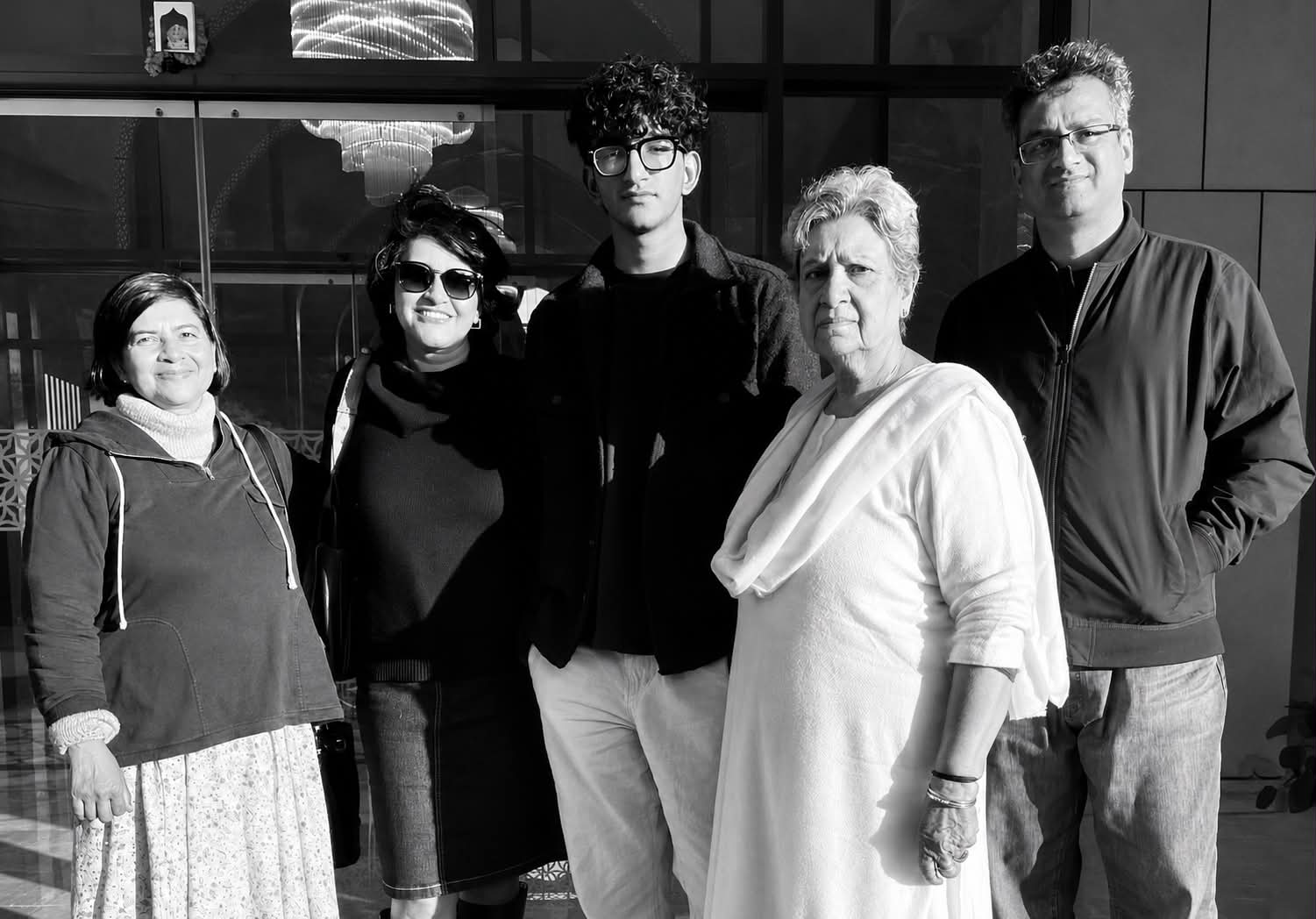
Who is Neha Srivastava?
I wish I knew. She makes me work like a writer, a filmmaker, a mother, a daughter, and a wife—all at once. An erratic human being with endless whims and fancies. I simply live in her body and try to keep up.
Do you remember the exact moment you fell in love with cinema?
Yes. It was watching Roman Holiday. Princess Ann and Joe Bradley fell in love with each other, and I fell in love with the art of storytelling.
I began writing short stories when I was eight and made my first film at fifty.
I consider myself a student of cinema for life. I studied screenwriting under Carl Schoenfeld at Oxford and continue learning from Boman Irani in India.
Tell us about your project, Tena Tyaktena Bhunjitha.
The title may sound like a tongue twister, but it carries a profound meaning: “Live life fully, yet with renunciation.” It is a quote from the Isha Upanishad.
Tena Tyaktena Bhunjitha is a collection of short stories available on Amazon. Several of these stories have been adapted into award-winning short films.
The book was nominated at the Greek Eyelands Book Awards and won the Short Story category at the International Impact Book Awards in the United States.
The Short stories filmed from this book, Orange Sun, Mukti, Game, Menism, and Sabina have received numerous international film festival selections and awards, including the prestigious Remi Award. Together, my screenplays and short films have earned 54 international selections and awards.
Which director inspires you the most?
Satyajit Ray. He portrayed human emotions with extraordinary sensitivity and grace. His visual storytelling was remarkable, and his use of light and shadow remains timeless. Every frame carried both beauty and meaning.
What do you dislike about the world, and what would you change?
“Dislike” is a strong word. What worries me is the growing intolerance around us. The strange want of some humans to dominate other humans is scary. How and why are some Sapiens more relevant than others?
I don’t want to sound preachy, so I’ll simply say this: I am here on Earth as an observer, not a judge. No two people share the same fingerprints, yet everyone deserves the right to leave their own unique footprint.
How do you imagine cinema in 100 years?
I hope cinema becomes more sensitive than futuristic, more creative than AI-generated, and more human than mechanical.
As filmmakers, we have a responsibility not only to entertain but also to remind people of empathy, compassion, and the softer side of life.
What is your impression of WILD FILMMAKER?
It is a wonderful platform that gives creative voices the opportunity to share their ideas, perspectives, and passion for cinema. It is run by an efficient and empathetic team that genuinely cares about filmmakers and the growth of the art form.