-Who is Emily Y Adams?
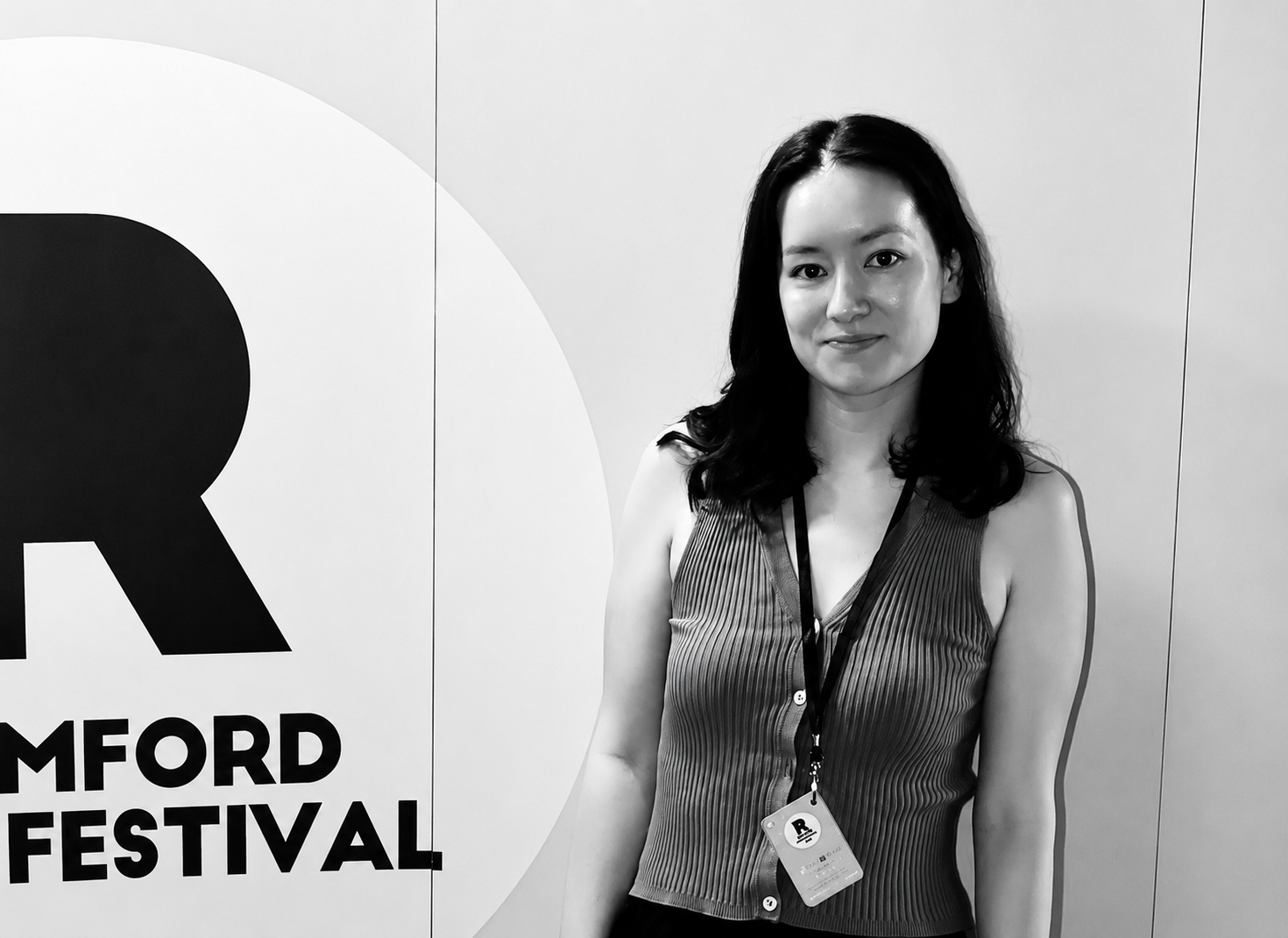
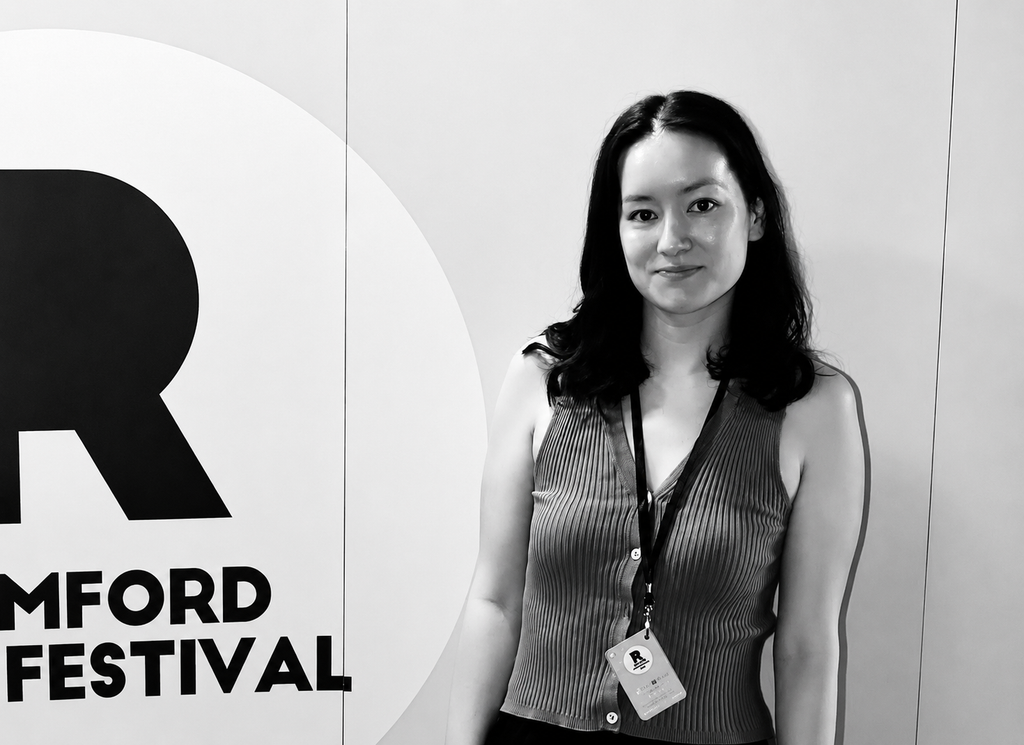
I am an English-Japanese director, choreographer and filmmaker from Essex, who fell in love with the power of cinematography during my contemporary dance training. Through the art of Screendance, I discovered a passion for merging movement, dance and film to create meaningful narratives, emotional storytelling and creative twists that relate and resonate with audiences. I draw from my own experiences, emotions and relationships to create stories for film. I believe the most powerful art is made from the worst pain.
-Do you remember the exact moment you fell in love with cinema?
I grew up with a book constantly in my hand, and always lost myself into the world of stories to escape my childhood. I filled up many notebooks with story and character ideas and would write down all of my wildest nightmares and dreams. I have always been more selective with cinema and tend to see films that really draw me to watch them. Mostly films and TV shows well adapted from books. My most memorable film growing up was Matilda (1996). As a child, it was exciting to see someone like me, a shy bookworm in a helpless situation, be able to fight back against cruel adults. I related to the little girl on screen. It taught me the power of film to tell shared human experiences. It helped me feel seen and less alone in the world.
-Tell us about your project “Emma”.
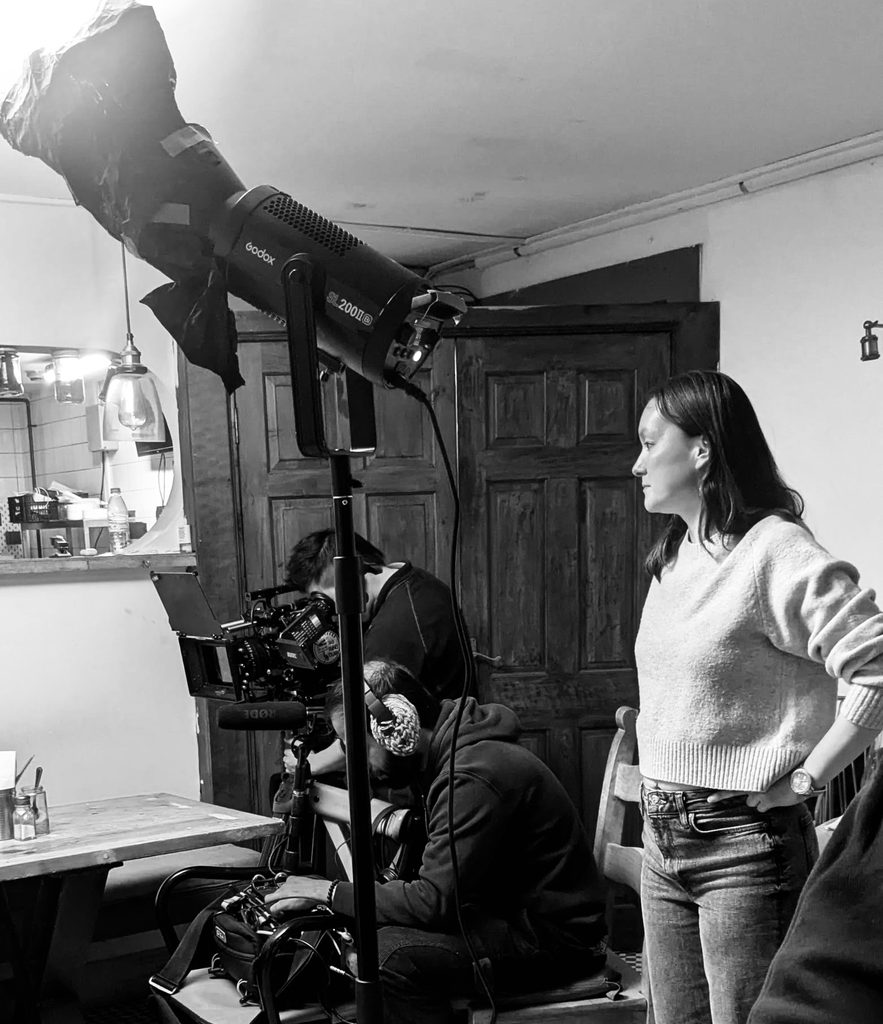
My short film “Emma” is a one-location slice of life, but there’s a quiet sense that something is not quite right. You see Emma typewriting diary entries and spending her days with Nelly. Playing Jenga, watching a film, dancing about the dining room together. [Spoiler Alert] But a knock of old entries reveals that Nelly has never been there. And Emma was alone all along.
This story was inspired by the loss of my mum, which occurred 3 years before the film. I wanted to portray a warm female connection to reflect our familial relationship and the joyful moments of spending time together. However, I intentionally tried to keep the relationship ambiguous so audiences could relate to the characters in their own way. We all have different people we’ve lost. We all have different stories of loss.
“Emma” is set post-covid, in a time when people were just coming out of isolation. Emma experiences the loss of Nelly a year before and covid becomes her way to not only isolate in her house, but isolate in her mind, and hide from reality. She never passes the first stage of grief – denial. And that bubble is never broken in the film. The loss of Nelly is revealed to us. But we leave Emma still believing she is there. I focused on the feeling of wanting someone who is gone, to still be here. And desperately holding onto those memories after they’ve left.
The emotional reveal sequence was inspired by The Sixth Sense and Mr Robot. I wanted the audience to also believe that Nelly was there and emotionally shock them with the reality. I repeated scenes of Emma and Nelly together and revealed Emma alone. Nelly was only real in Emma’s mind. She was never there.
I also played with different hints in the film. A candle – representing the loss of Nelly – is in shot for most scenes. Emma calls Nelly from the bath for a towel. But it drops into frame from the door. Nelly’s clothes never change as that’s how Emma last remembers her. And Nelly is never in shot on her own. As she only exists when Emma is there.
-Which Director inspires you the most?
I am hugely inspired by Chloé Zhao and her visually and emotionally beautiful storytelling. I connected deeply with the intense emotion of “Hamnet” and the quiet poignancy of “Nomadland”, which both explore very human themes of loss and grief, similarly explored in my own work. She brings the actor’s truth into the story. Which is a method I resonate with and used to create “Emma”. I learned what was true to my actors; how they deal with loss, what they would say or wear, to create characters they could connect with. Through learning who they are and bringing them into the story, I found that both actors shared the same favourite song, creating a heartwarming moment of singing and dance in the film.
To see Zhao, a woman storyteller and director create powerful work in cinema, and become the first woman of colour and the second woman in history to win the Academy Award for Directing, gives me – a woman of Asian heritage – the courage, fire and belief that it is possible for women like us to tell our stories and be recognised for it. I feel female voices are often overlooked, overshadowed and have a tougher fight for being seen. In “Nomadland”, Zhao gave voice to an older woman’s story – another rarely seen perspective on screen – and showed the power of slow, tender, reflective cinema.
-What do you dislike about the world and what would you change?
I dislike all the harm and suffering caused by a patriarchal society on every body across the world. The oppression, toxic culture, dehumanisation and violence, especially towards women and transgender people. Which seeps into our everyday life, cinema, TV, news and social media. I would change society to a matriarchal one. A world with more empathy, peace, and support, with a system that nurtures all people. And then certain dangerous people would not be in power…
-How do you imagine cinema in 100 years?
The huge technological developments over the past 100 years mean cinema could go anywhere in the next 100. It saddens me, but I imagine cinema will be lazy for short attention spans and AI ridden. However, I believe the power of human storytelling will always survive, as that is how we truly connect to one another. Through our human creativity, experiences and emotions.
The accessibility and affordability of some technology has also meant that anyone can be a filmmaker. So, I hope the stories platformed in the industry will become more inclusive of marginalised voices. As I, quite frankly, am tired of the same narratives and remakes. Some of the most brilliant stories come from the most unexpected voices.
-What is your impression of WILD FILMMAKER?
It is an amazing and important platform that gives a voice to filmmakers and provides an opportunity for them to be recognised and share their work. I appreciate the care and consideration for showcasing different artistic perspectives. It is wonderful to have this space in an industry where there is little support and platforms for independent filmmakers. Through WILD FILMMAKER we can continue to re-discover the art of cinema – through the eyes of different storytellers.