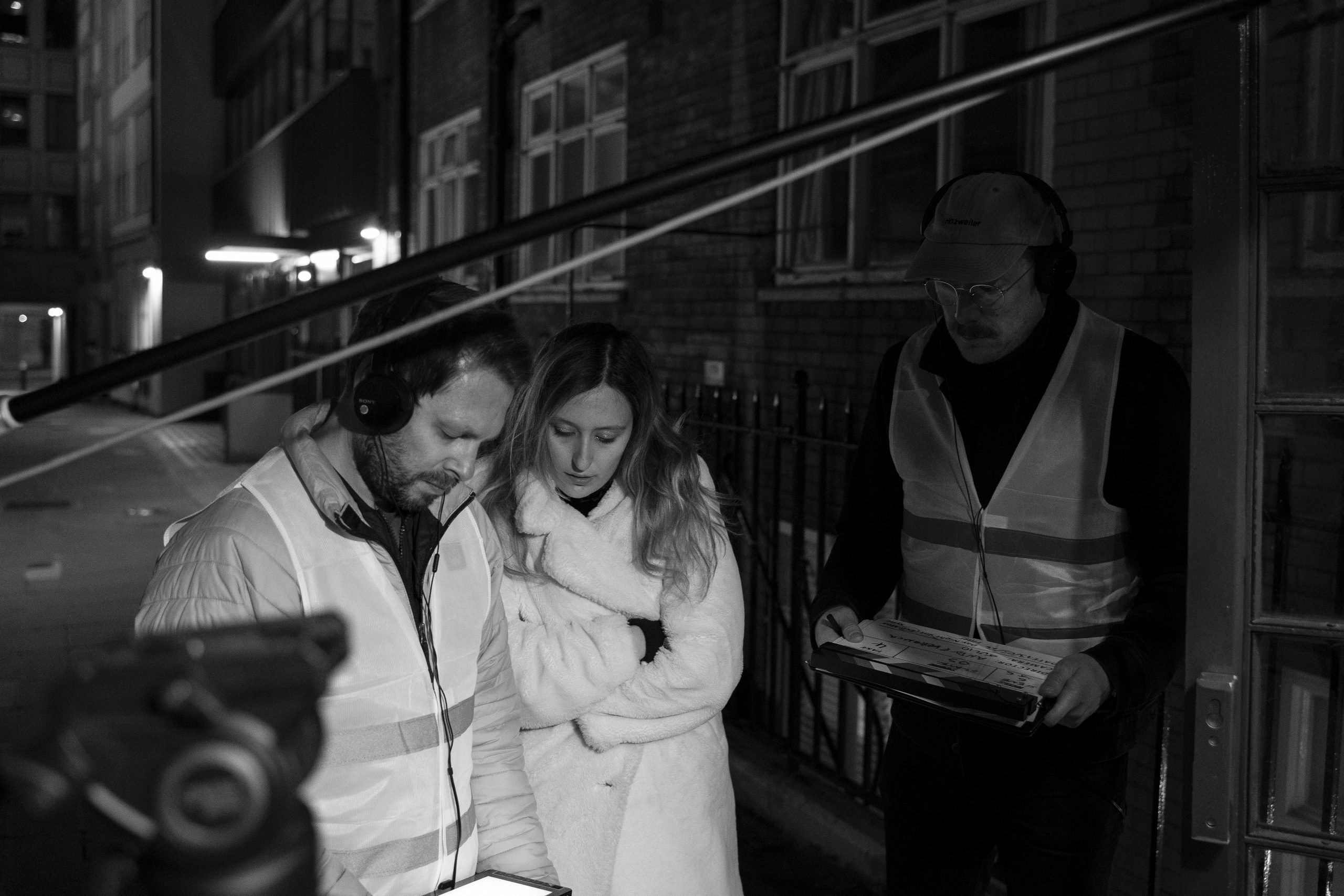
-Who are Veronica Orciari and Andrew Short?
We are a filmmaking duo.
ANDREW: I’m Andrew Short, an independent writer and director from Liverpool. My first short film, Fragile Reflections, explored a troubled relationship through what begins as a simple, almost trivial argument and gradually descends into something much more profound and intense.
VERONICA: I’m Veronica Orciari, an Italian film critic and writer. I regularly write about cinema for publications including Cineuropa, The Animation Journal, Licensing Magazine, and Filmexplorer. I’m also an editor, contributor, and translator for the English edition of Cinecittà News, and I work as a programmer for the Torino Film Festival. My writing has also appeared in Modern Times Review, postPerspective, and Horror Movie Blog, and I’m currently a staff writer at Directors Notes. My work has given me the opportunity to approach cinema from many different perspectives — as a critic and a programmer — and that
experience has naturally shaped the way I think about and engage with films.
-Do you remember the exact moment you fell in love with cinema?
It’s always difficult to remember one precise moment, because in our case there was never a real “lightbulb” moment, a point when we suddenly thought, “This is it.” It was more of a slow falling in love, what one would call a slow burn. I think it started for both of us when we were around twelve. For me, in particular, I remember the summer between the first and second year of middle school: I spent so much time watching films in their original language and getting lost in behind-the-scenes footage, directors’ commentaries, and interviews with actors. What started simply as a way of getting to know the films I loved eventually taught
me English and, more generally, sparked a huge passion for languages. From there, almost without realizing it, I started building my own little “cinema room.” To this day, I have around 1000 DVDs and VHS in there. I know it’s probably a slightly old-fashioned tradition, especially for my generation, Gen Z, at a time when everything is available at the click of a button. For Andy, that was definitely true too. The AFI Top 100 list from 1998 was kind of his gateway into great cinema — a sort of seed list that gave him a place to start. He quickly found himself watching films like Taxi Driver, Apocalypse Now, and One Flew Over the
Cuckoo’s Nest, and from there, the rabbit hole just kept getting deeper.
-Tell us about your project “SATORU”.
The project was born out of a desire to tell a story rooted in an urban legend. We are fascinated by popular stories, folklore, and narratives that emerge from the people themselves and then develop, change and transform as they are passed from person to person. We started with a real Japanese urban legend, which we adapted and modified, while also drawing inspiration from J-horror more broadly. At the same time, we wanted to give it a slightly more British sensibility, using the classic red telephone box as the setting for the ritual. From there, we tried to find a story that could serve as the foundation for the fictional world in
which we would adapt the urban legend. We began thinking about an often-overlooked kind of horror: the horror of people disappearing. Every year, countless people go missing, particularly children, in many parts of the world. We wanted to tell the story of a mother who is willing to overcome any obstacle to discover what happened to her daughter. That became the starting point from which we developed the short. For us, the real horror of the story lies in the fact that this woman is desperate and willing to do anything to uncover the truth. There are, of course, elements of the horror genre throughout the film, but we see it as being closer to a drama than to pure horror. We sincerely hope the film finds an audience, because we believe it can appeal to people who enjoy different genres and, above all, that it can be appreciated as a deeply human story regardless of its genre context. Of course, we also wish that the film’s technical elements and the atmosphere we worked to create will resonate with audiences.
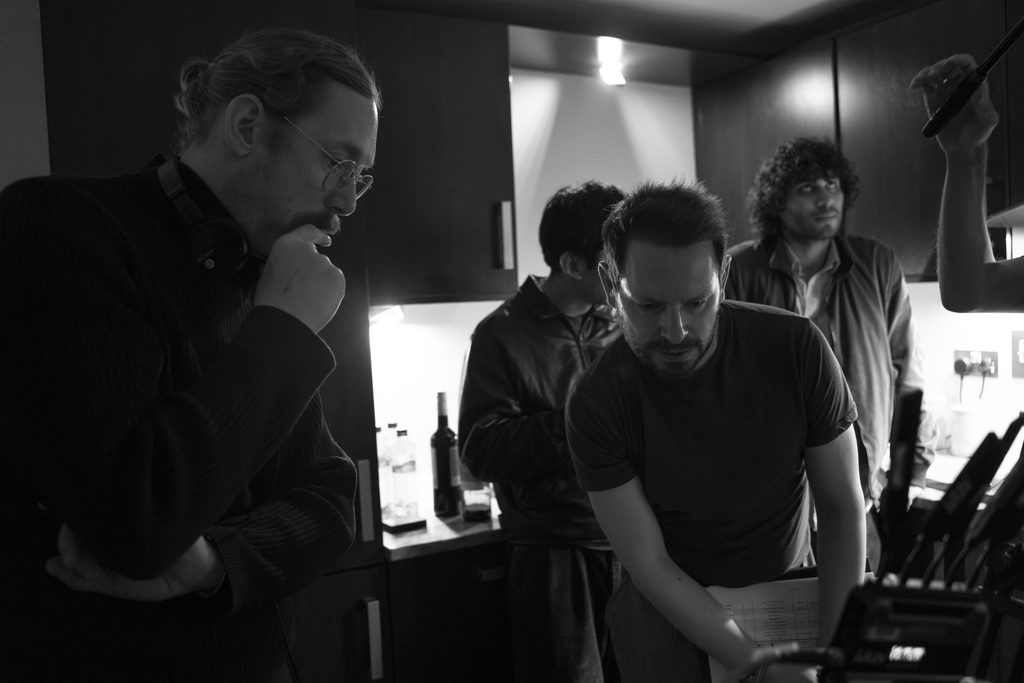
-Which Director inspires you the most?
There are so many directors who inspire us that it would be difficult to name them all in one answer. We definitely both have our own preferences and films that hold a special place in our hearts. For example, I particularly love Mike Nichols’ films. I think he was an incredibly talented director who was able to work across so many different genres, and The Graduate and Closer are two of my favorite films of all time. For Andrew, on the other hand, Sergio Leone’s films have been particularly important, especially Once Upon a Time in the West. Without a doubt, he really loves Italian cinema: he’s also a huge fan of films by Dario Argento and Mario Bava, and the same is true for me. For Saturo in particular, we drew on films that inspired us both aesthetically and in terms of the story. We’re talking about Don’t Look Now, The Vanishing, and Ring. These are films we’ve watched many times, and they
really influenced what eventually became the final structure and shape of Saturo. In general, we believe cinema is something you watch, talk about, and draw inspiration from. So, for us, it’s really important to have those points of reference and to pay tribute to the filmmakers and films that have inspired us over the years.
-What do you dislike about the world and what would you change?
It’s a very difficult question. There are so many things about the world that we don’t like. If I had to sum one of them up, it would probably be indifference — indifference toward others, and the tendency to, so to speak, turn away when it comes to having empathy. I think that is perhaps the worst thing of all. Unfortunately, social inequality, wars, and injustices in general have always existed, ever since human beings first appeared on Earth. Obviously, it would be right for them not to exist. The problem is that there seems to be a kind of human tendency toward cruelty, domination, and the pursuit of profit. And I believe that the way to prevent these things from happening is to eliminate indifference. But in order to eliminate indifference, we need to be aware. We need to learn, to inform ourselves, to understand. And cinema is fundamental in this sense, just like all the other arts. Cinema doesn’t simply entertain; it allows us to dig deeper into the problems of contemporary and past society, and even to anticipate those of the future. We’re working on a new short film titled Chalk Beach that fits very well into this discussion because it tells a story about immigration. What we wanted to do was shed light on a situation that exists and is extremely important in our
everyday lives and in the contemporary world. Immigration is an anthropological element that has been part of humanity forever, but it is constantly brought into political discourse and instrumentalized for political purposes. We want to bring it back to the fundamental question:
“What would I do if I found myself in the same situation?” We want to shed light on the journeys people undertake, the importance of human understanding in the search for a new sense of stability, and, ultimately, the possibility of moving beyond prejudice.
-How do you imagine cinema in 100 years?
Technology will certainly change, but the core of the story and the heart of storytelling will remain the same, in the sense that the key elements of any story have always been the same for centuries. Just think of the success Christopher Nolan has had with his version of The Odyssey: bringing back to life a type of story that worked thousands of years ago and continues to work today, despite the fact that the technology has changed. Once, stories were told orally, and today, they’re told on an IMAX, but their power remains the same. So, we’re curious to see how the world of cinema will evolve, obviously with the necessary caution
when it comes to the use of new types of artificial intelligence or innovative production systems. But there’s no doubt that cinema, being such a young art form, is inevitably subject to an evolution that is much faster than that of traditional arts—and that’s part of its beauty. At the same time, we can see that, much like what happened with vinyl in music, there’s been a return to shooting on film rather than digitally for many filmmakers. So, despite all the innovations, there can also a return to the past when it comes to certain aesthetic styles.
-What is your impression of WILD FILMMAKER?
Our impression of Wild Filmmaker is that it is a community, and “community” is one of the key words when we talk about cinema. Of all the arts, cinema is perhaps one of those that requires the greatest sense of unity, a shared vision, a collaborative effort, and a group of people working in unison. In many other art forms, it’s possible to grow and develop on your own, individually. In cinema, however, there is always a strong emphasis on the collaborators you have the opportunity to work with, because, as we all know, the joint effort of many different people is necessary to make a good film. Just think about the length of the credits at the end of most films you see in theaters. That said, “community” isn’t the only keyword. There is also discovery and research, meaning that we shouldn’t limit ourselves to mainstream cinema, but remember that mainstream cinema itself was once experimental cinema. The names we see today on cinema marquees were once unknown names, and they were discovered along the way. So the purpose of a community like this is precisely to give independent filmmakers a platform. Finally, we would like to thank Wild Filmmaker for giving us the opportunity to do this interview, and we congratulate the organization on its work.