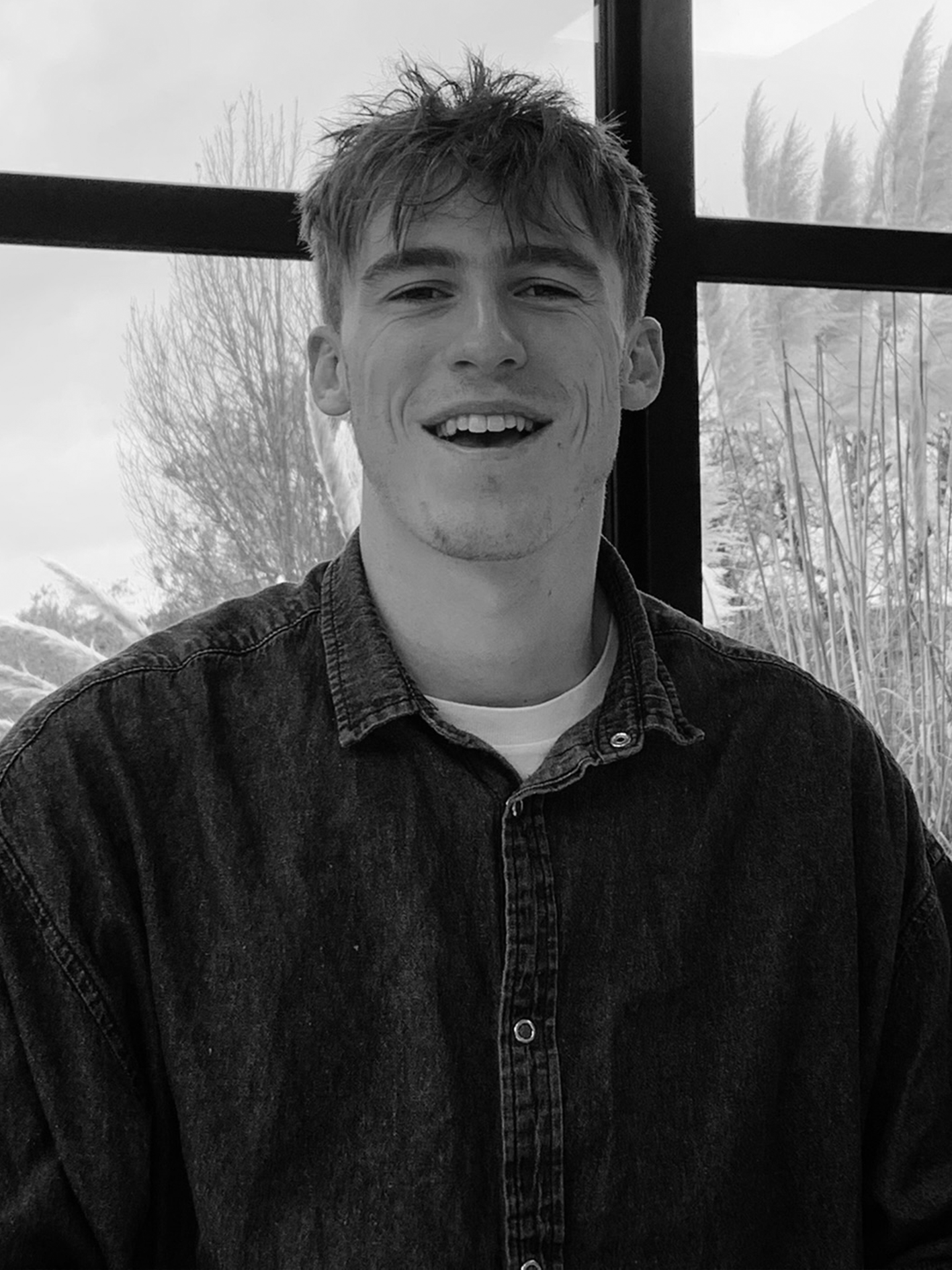
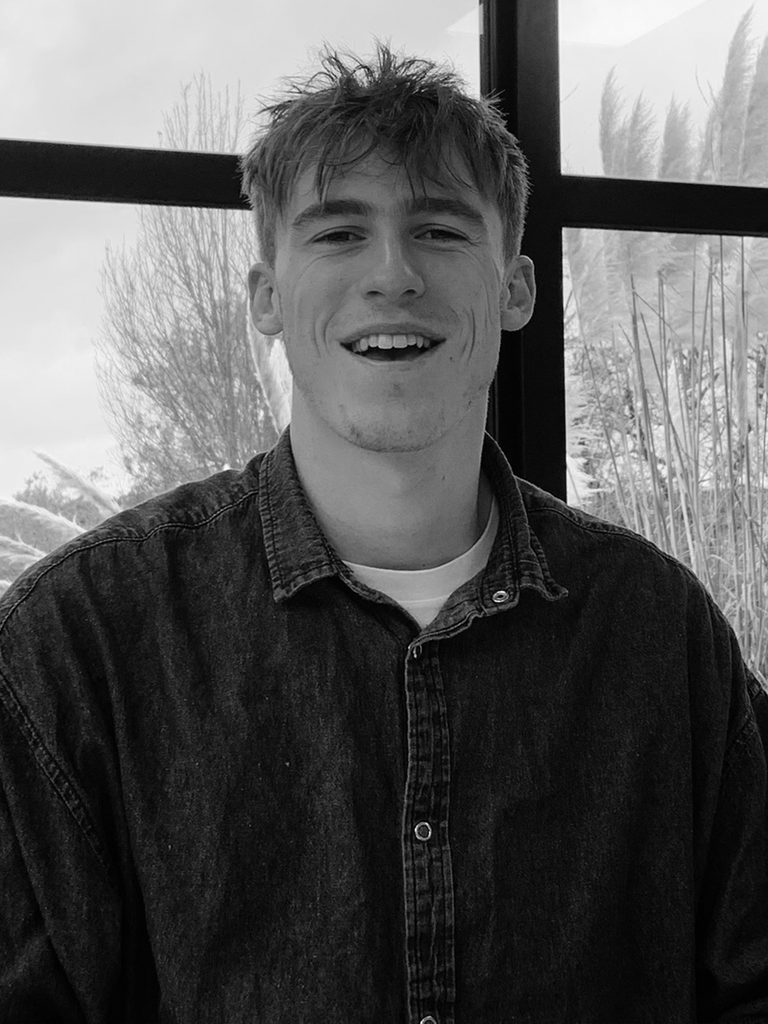
–Who is Alex Cheesbrough?
I’m a guy who feels incomplete without the creative experience. I just love it, and I’m fuelled by it. When life feels confusing and I’m lost in the muck of it all, making films is the way I clamber out.
I’m 22 years old and finished my studies in Film and TV at Bristol University last year. I currently have a film, These Quiet Creatures, in the festival circuit. I’m by no means ‘successful’ in the industry, or even a part of it yet, and I have a great deal to learn. But I’ve always lived by the belief that if I want to make something, I’m not going to sit around waiting for someone to give me permission. I’m going to get on with it and do it.
Filmmaking has felt like my calling since I was about 6 years old. In everyday life I can struggle with confrontation and with feeling that my voice matters, but when I’m making a film, something changes. I have a clear sense of purpose. The insecurities wash away. Problems on set aren’t things that make me anxious; they give me energy. They push me into a kind of flow state where I can solve them because I know the story inside and out. For that period of time, I know exactly what I’m meant to be doing.
I try to surround myself with as much art as possible. My room is filled with DVDs, Blu-rays and vinyl, physical reminders of the things that inspire me. There’s something intimate about choosing a Blu-ray from my collection, flicking through the artwork, putting the disc in and losing yourself in it. But of course, nothing compares to the cinema: sitting in that darkness, wrapped in a soundscape with a screen filling your eyes. In that space, anything can happen.
I love music too, despite having absolutely no musical talent. Seeing a band live or popping a new vinyl on the record player is just another source of inspiration and a way for me to process all of life’s ups and downs.
I also find peace in nature. When the city becomes overwhelming, I often find myself imagining the countryside and wanting to disappear into it for a while. Nothing beats a hike with a friend up in the mountains. It’s out in the wild where you realize what your real problems are.
I’d say I’m put off by the idea that films merely help us escape the world. I think the best films do the opposite. They bring us closer to it, to its meanings, its mysteries and the things we can’t quite explain.
A truly powerful film can take me somewhere indescribable. Somewhere that feels completely true and yet ultimately unknowable. That is the place I want to find as a filmmaker, and my ambition is to make films that can take others there too.
-Do you remember the exact moment you fell in love with cinema?
I started making little films for class projects when I was about 7 years old with my dad, simply because I wanted to entertain people and thought making a film was the coolest way to do it. I knew next to nothing about the technical side of things, but my dad helped me through every step of the process. He taught himself how to edit, how to green screen, how to do all sorts of things because he knew how badly I wanted to make a film.
But it was around a year later, when I was 8, that I properly fell in love with cinema. My school set us a challenge to write a review for a film, and I chose Jaws. Like it has for so many people, it completely changed the way I saw what a film could be.
What really blew my mind was the research I did afterwards. It peeled back the curtain on how films were made. They were no longer just stories that magically appeared in front of my eyes, but something constructed by a team of people, piece by piece. Reading about the process and seeing how Jaws was actually made fascinated me.
I became obsessed with the construction of the shark and how Spielberg had to film around its constant failings. The fact that the shark barely worked had somehow led to a masterwork in creativity. It was an early lesson for me that creativity excels under limitations.
I remember asking my parents, “Who gets to come up with all the ideas and be in charge of it?” And that was when I realised that this was actually something I could do. I could be a writer. I could be a director.
I think that was the moment cinema stopped being something I simply watched and became something I wanted to understand, make and dedicate my life to.
-Tell us about your project “These Quiet Creatures”.
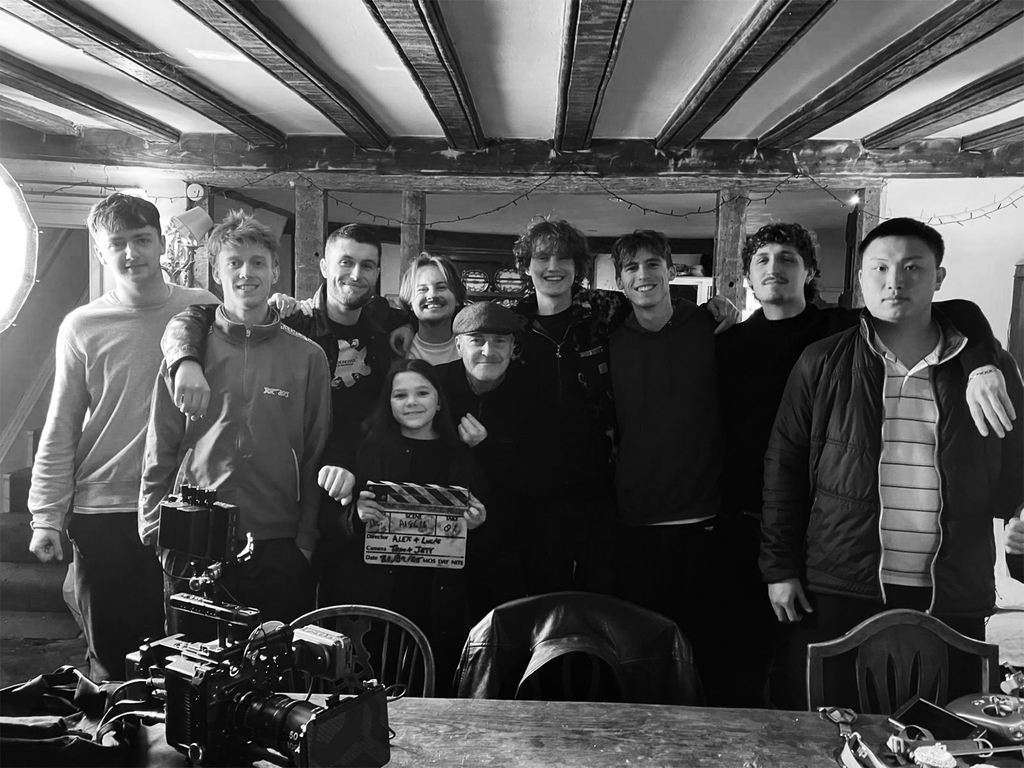
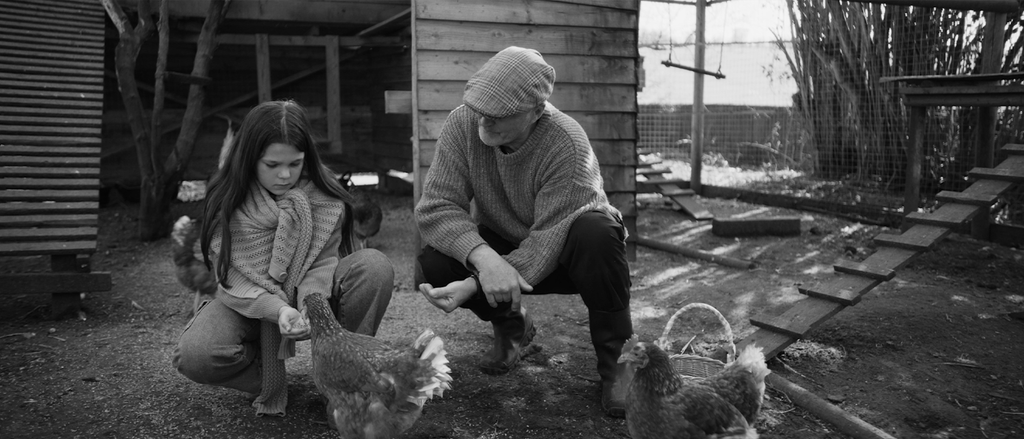
These Quiet Creatures tells the story of a young girl who, after the sudden loss of her mother, is sent to live with her estranged grandfather, a solitary farmer. Having never met, the two are bound together by a vow of silence and slowly begin to build a relationship whilst tending to the land. The film is rooted in the British countryside, shooting in both Suffolk and Surrey, with the landscapes playing an important role in the film’s visual language.
I wrote and co-directed the film with Lucas Molyneux and a group of great friends I met at university. We crowdfunded a budget of £4,000, which mainly went towards actors, catering, props and costume, with our locations kindly granted to us for free.
As with any shoot, we had our problems. One morning, just before shooting a key sequence involving some chickens, we somehow managed to get our ARRI camera locked inside a car. Luckily, even on a Sunday, there was a man you could call who would come and unlock it in seconds – although not for cheap!
The actors we worked with were incredibly talented, particularly the young girl Aurélie Edwards, who played Elsie. She amazed the entire crew, especially because it was her first ever film performance. One of our biggest fears when casting the child role was overacting. Children can sometimes give too much, but Aurélie never overplayed anything. Every direction she was given, she took on board without fear, with just a calm understanding of the character.
With barely any dialogue in the film, sound and music became vital. We were incredibly lucky with our composer, Liam O’Connell, who created a beautifully delicate score that never forced emotion but always understood the mood of the story. His music cast a gentle melancholy over the entire film.
One of the most important lessons I learnt making the film was a classic but brutal one, the art of cutting the shots you love. We had plenty of shots that were time-consuming to get and looked visually impressive, but ultimately didn’t serve the story and infected the pacing. Entire scenes had to go. The film is deliberately slow and allowed to meander at times, but if every scene meanders, then none of them have any impact. It all comes down to finding the balance. I guess sometimes the shot you’re most proud of is the one that needs to disappear.
Overall, we wanted to tell a story that would cast away dialogue. A film that would force us to work out how to tell a story visually with no words at our disposal. Film after all is a visual medium and we wanted to challenge ourselves to tell a story this way. The result is a picture that asks for your attention but will reward you with the beautiful ways in which people can speak without words.
-Which Director inspires you the most?
David Lynch.
I discovered this artist when I was about 15, when I watched Eraserhead for the first time. It completely blew me away. I had never realised a film could behave like this, feel like this. I was transported into a world that felt strangely distant and yet somehow familiar. The soundscape, the performances, the cinematography and the sense of place all felt revolutionary to me. After that first watch, I set out to see everything the man had created.
The reason he inspires me is because of his dedication and wholehearted belief in the creative process. He trusted his own intuition about whether an idea was worth following, catching the big fish, as he would say. He dedicated his life to art: painting, filmmaking, music, sculpture, all of it equally important. That level of devotion to creativity is what inspires me. I had never heard anyone talk about art with such passion and belief, as if they would genuinely die if they didn’t create.
Like anyone I can struggle to motivate myself. I know all I need to do is to create and I’ll feel fulfilled, yet sometimes a dark pressure pulls me back. Makes me think I’m not good enough. Then I’ll watch an interview with Lynch and suddenly I’m off to work. There’s something about his attitude towards creativity that cuts through all the bullshit and sets me on the right path.
Lynch also made me realise that I don’t have to understand everything about a film. If I feel it, that can be the most important thing. That is something I will always take forward with my own films. Ambiguity is okay as long as it makes sense on a deeper level. You don’t have to explain everything to the audience. Sometimes the mystery is the beauty.
People often say there is an awful lot of irony in Lynch’s films. But from my experience of watching them, and from reading countless interviews with the man himself, I really can’t find this to be true. I think he has such a genuine curiosity and deep love for the world and humanity. Yes his films can be extremely dark, take Frank Booth in Blue Velvet, huffing on whatever that canister is yelling ‘MUMMY!’ – but they can also be profoundly beautiful. Think of the final moments of The Elephant Man, the robins of Blue Velvet, or the entirety of The Straight Story. There is often a balance between the darkness and the light (don’t get me wrong though it can get pretty fucked up).
Lynch made me embrace the unknown. He taught me to trust myself and that strange intuition deep down that tells you when something is worth pursuing.
And most importantly of all, he taught me to create, and create, and create.
-What do you dislike about the world and what would you change?
Our overuse of phones.
Yes it’s talked about all the time but it really is something that concerns me, particularly in my generation. We’ve almost been forced into an addiction by social media apps designed to lure us in and keep scrolling. When I’m out on the street and I see half the people walking with their heads down looking at a little screen, we’re losing a genuine connection with the world around us. When someone had a long journey or a walk 30 years ago they had to be present with their thoughts. Nowadays we’ll do whatever we can to distract ourselves and the phone is the easiest fix. We’re no longer spending the valuable time inside our own heads (and subsequently the world around us) that we really should be.
Seems to me like phones are the largest addiction problem we have in the world right now and nothing’s really being done about it.
Don’t get me wrong, there are so many benefits to having a phone. I love being able to listen to music on the train, and I wouldn’t have been able to make films when I was younger without the iPhone 5 in my pocket. But I also find myself spending hours a day on social media looking at things I’ve forgotten within seconds. I mean nowadays I don’t know what’s real. I saw an AI video of the Queen wrestling Stephen Hawking. I’m sure it fooled someone.
Even having headphones on can remove those wonderful sounds that are going on around us all the time and I’m saying this as someone who loves music. I walked past a house the other day and heard a lady singing gloriously from her window and it was magical. Thank god my headphones were out of battery.
I currently use an app that blocks other apps for periods of the day, which is pretty mental when you think about it. I’m using an app to stop myself using another app, but hey, that’s where we’re at.
I don’t think enough is being done to question how much screen time we’ve come to see as normal. We don’t really know what constantly scrolling is doing to our minds, but honestly, it can’t be good. Sometimes I just think, fuck it, should we all go back to having a BlackBerry?
It’s a difficult one because I don’t want to get rid of phones. I love the ability to take photos, the music, the communication and so many other things they offer us. I just think we’ve completely lost the balance.
Perhaps there need to be stronger laws around how addictive social media platforms are allowed to be. Even going back to when Instagram could actually finish scrolling at a certain point would be better. There used to be an end to it. You could reach the bottom. Now there is no bottom.
I say all this because it genuinely affects my day-to-day life. I have to actively try to cut it out of my day, and I know a lot of people my age feel the same way.
I’d like to see a culture where putting your phone away becomes something to celebrate. Where being bored is okay again. Where we’re encouraged to sit with our thoughts, look around us and actually be present for a while.
I don’t think we need to reject technology. We just need to stop allowing it to take away the parts of life that were never meant to be replaced.
-How do you imagine cinema in 100 years?
In 100 years, I believe we’ll see a return to form.
The world is constantly making technological advancements that supposedly make our lives easier, and cinema has always been swept up in this. But advancements aren’t always for the better. Take 3D, a gimmick of cinema that studios have tried to push for decades, yet it never stuck. It could neve prove itself to be better than the traditional 2D experience.
I think the same could happen with AI, VR, holograms and whatever new ways of watching films we haven’t even imagined yet. Technology will keep advancing, but eventually I think younger generations will push back. They’ll look to the history of cinema and realise there’s something there worth returning to.
I don’t think we’ll all be shooting on large, clunky film cameras (although that would be pretty cool) and making silent films again. It will be more about bringing practical filmmaking back into the process. We’re already seeing filmmakers do this, Mark Jenkin with his Cornish trilogy all shot on film, or Nolan blending practical effects with CGI. It’s about finding that sweet spot: not rejecting the new, but not allowing it to completely replace what came before.
Don’t get me wrong, technological advancements are incredible. I wouldn’t have been able to make nearly as many films without digital filmmaking. But I think technology can take us too far away from the medium’s original purpose. If we keep pushing forward while ignoring the roots of cinema, we risk ending up with something unrecognisable, something that has lost some of the magic that made us fall in love with it.
There’s something particularly interesting about the idea that AI could remove all limitations from creativity. We’re told that anything we can imagine can now be put on screen. But some of the greatest films ever made were great because of their limitations. Limitations force creativity out of the shadowy corners of our minds. They make us find solutions.
I mean, what would Jaws be if the shark actually worked? Honestly, nowhere near as interesting if you ask me.
Many of my generation are already fascinated by the history of cinema. We love to see grain on screen and get excited by the knowledge that a director actually shot something for real, that those extras weren’t CGI, they were actually there. There’s something undeniably impressive about that. I think my generation will help ensure we don’t move too far away from the things that make the medium so beautiful.
Cinema itself is still an incredibly young medium. The camera has only existed for a couple of centuries, which, in the grand scheme of things, is nothing. So no one truly knows what cinema will become in another hundred years. But I hope that, whatever technology we have, we don’t lose sight of why we watch films in the first place: to be taken by a story, swept up by images and sound, and made to feel something, made to think – not too marvel at some new gimmick.
-What is your impression of WILD FILMMAKER?
I think Wild Filmmaker is a great community for filmmakers who don’t want to fully comply with the studio system, who put the art first. It provides opportunities and connections that may otherwise never have been formed, whilst creating a space for people who genuinely love cinema. In a world where so many things can become about money it’s refreshing to see a community of artists who seem to genuinely care about the medium and, as Lynch would say, live the ‘art life’.
What particularly appeals to me is that Wild Filmmaker doesn’t seem interested in simply looking backwards or forwards. It seems to understand that both are important. As I mentioned before when talking about technology, I love their ethos of respecting cinema’s past whilst finding new ways to move it forward. There is so much to learn from the history of the medium, but I don’t think that means we should simply recreate what has already been done before. It’s about taking those ideas, techniques and values and finding something new within them.
I also really like the idea of Wild Filmmaker as a community rather than just a platform. Filmmaking can be a very isolating thing, particularly when you’re working independently, and being surrounded by people who are equally obsessed with cinema can be incredibly valuable. The opportunity to meet filmmakers, share ideas, collaborate and simply talk about films with people who care as much as you do is something I’d really value.
Ultimately, my impression is that Wild Filmmaker is trying to protect something that can easily get lost in the modern film industry: the idea that making films can be an artistic pursuit in itself. Not everything has to be about chasing the biggest audience or making the most money. Sometimes you can just make something because you have an idea that won’t leave you alone.
And I think that’s a pretty good reason to make a film.