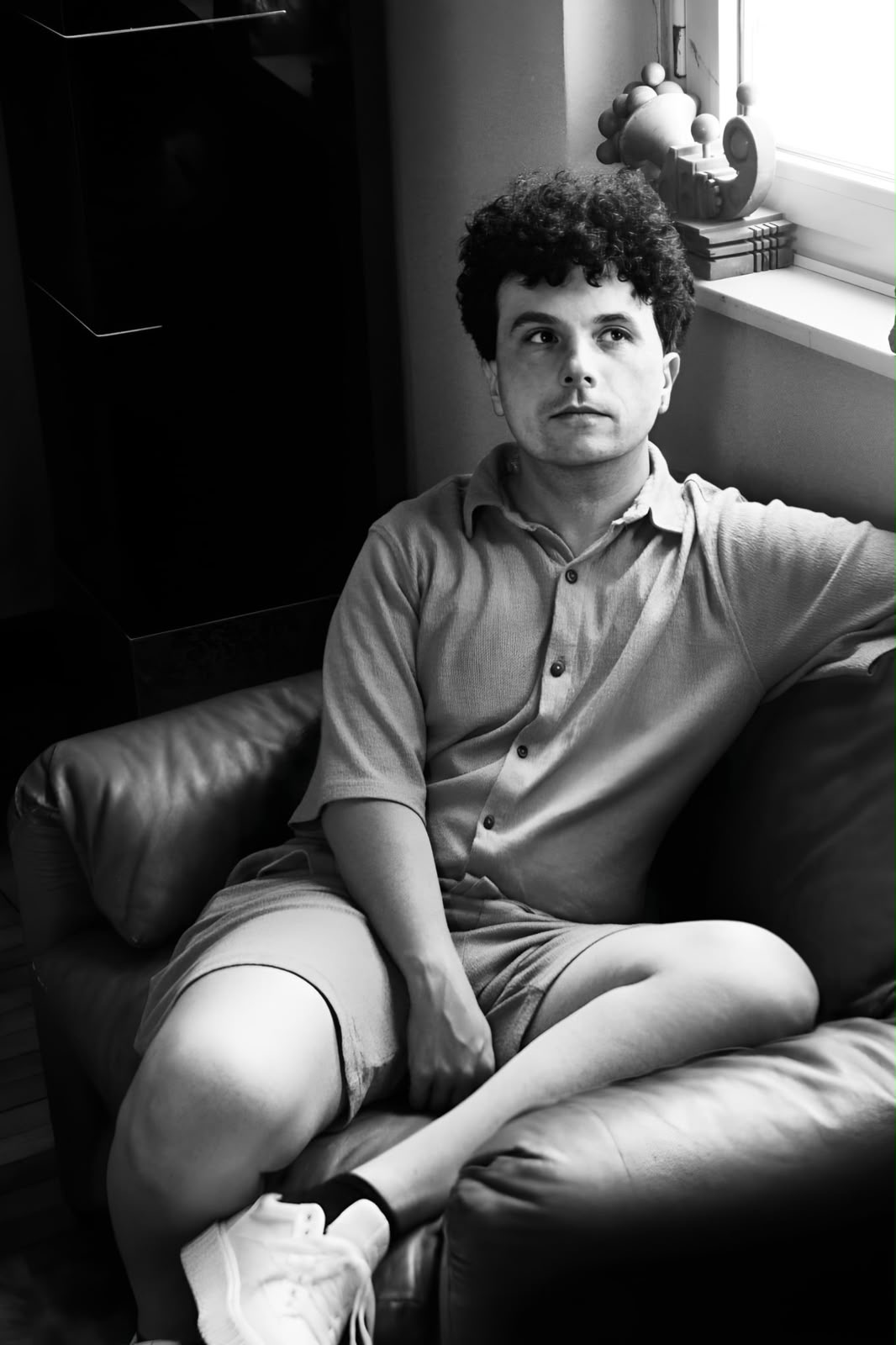
–Who is Alberto De Venezia?
Alberto De Venezia is an Italian film producer. He graduated in Performing Arts and Sciences from Sapienza University of Rome and received further training at the Rosebud Academy.
Throughout his career, he has worked on numerous projects, including short films, documentaries, and feature films, moving seamlessly between arthouse cinema and independent filmmaking.
Through his production company, Ipnotica Film, he advocates for a model of filmmaking free from the constraints of mainstream commercial distribution, aiming to provide a platform for distinctive artistic voices and experimental visual languages within Italian independent cinema.
His most recent projects include Dodo e la principessa, Ancora un altro Inferno, Pasolini Stories, Come il giorno e la notte (the latter having been released), and Stalking.
-The Moment You Fell in Love with Cinema
A love for the seventh art rarely emerges overnight. Rather, it develops gradually through watching films that leave an indelible mark during childhood or adolescence.
For a filmmaker and producer, that “defining moment” often coincides with discovering the magic of the darkened movie theater and the evocative power of moving images — their ability to tell stories and convey emotions that reality alone cannot fully encompass.
-The Project “Stalking”
Genre cinema and social commentary often intersect to bring urgent and contemporary issues to the big screen.
Exploring psychological tension, obsession, and complex interpersonal relationships allows filmmakers to delve into the darkest corners of the human psyche, keeping audiences on the edge of their seats while encouraging deeper reflection on the fragile boundaries between individuals.
Stalking, directed by Erica Irene Di Veroli and produced by Alberto De Venezia through Ipnotica Film, places gender-based violence at the very heart of its narrative.
The film belongs to a tradition of socially conscious cinema and psychological exploration, addressing with raw realism and sensitivity the dynamics of persecution, the victim’s profound emotional trauma, and the complex, toxic patterns that characterize stalking and violence against women.
-Your Cinematic Role Model
Every filmmaker has essential aesthetic and narrative influences.
The great masters of the past — those who successfully combined visual experimentation with narrative discipline — remain a constant source of inspiration for those who choose to make films today.
They provide models of style and artistic integrity to aspire to, serving as guiding lights in the pursuit of a personal cinematic vision.
-What Is Wrong with the World, and What Would You Change?
An artist’s perspective is, by its very nature, critical of the world around them.
Among the most troubling aspects of modern society are the loss of empathy, the fragmentation of human relationships, and systemic selfishness.
If there were something to change, the primary goal would be to restore the importance of listening, mutual respect, and the beauty of diversity, while working to reduce social and cultural inequalities.
-How Do You Imagine Cinema 100 Years from Now?
A century from now, cinema will inevitably have been transformed by technological advancements, including immersive realities, artificial intelligence, and fully personalized viewing experiences.
Nevertheless, the fundamental essence of the seventh art, humanity’s primal need to share stories, dreams, and collective emotions, will remain unchanged.
Technology will transform the ways stories are told and experienced, but the need to explore and portray the human condition through storytelling will endure.
-Your Impression of WILD FILMMAKER
Platforms and communities dedicated to independent filmmakers and emerging visual languages provide fertile ground for dialogue, creative exchange, and artistic growth.
Initiatives such as WILD FILMMAKER offer an essential space for visibility, connection, and collaboration for those who approach cinema with passion, perseverance, and an innovative spirit.
They represent a valuable alternative to the purely commercial dynamics of mainstream film distribution, supporting filmmakers who believe in cinema as a form of authentic artistic expression and creative freedom.