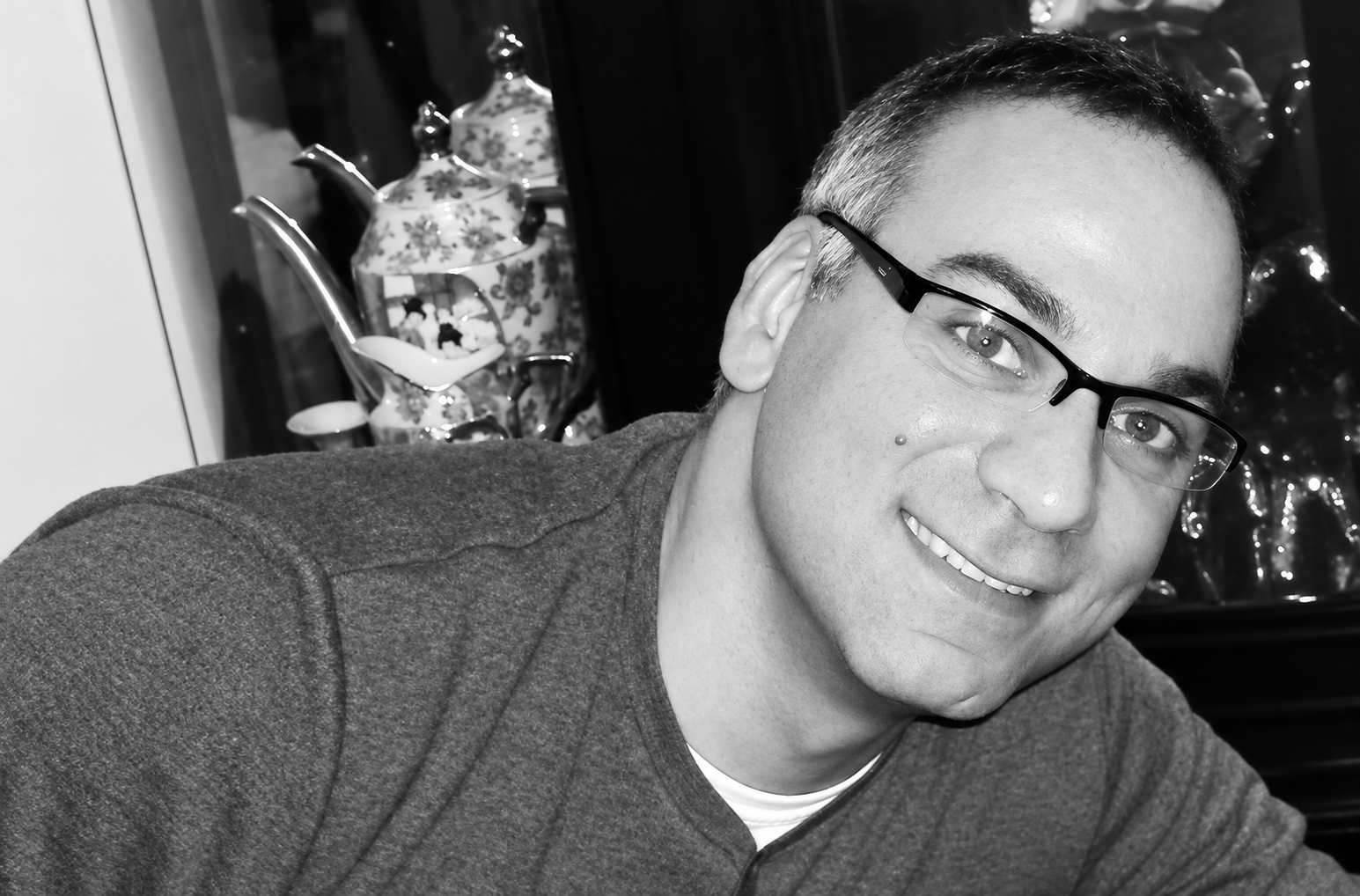
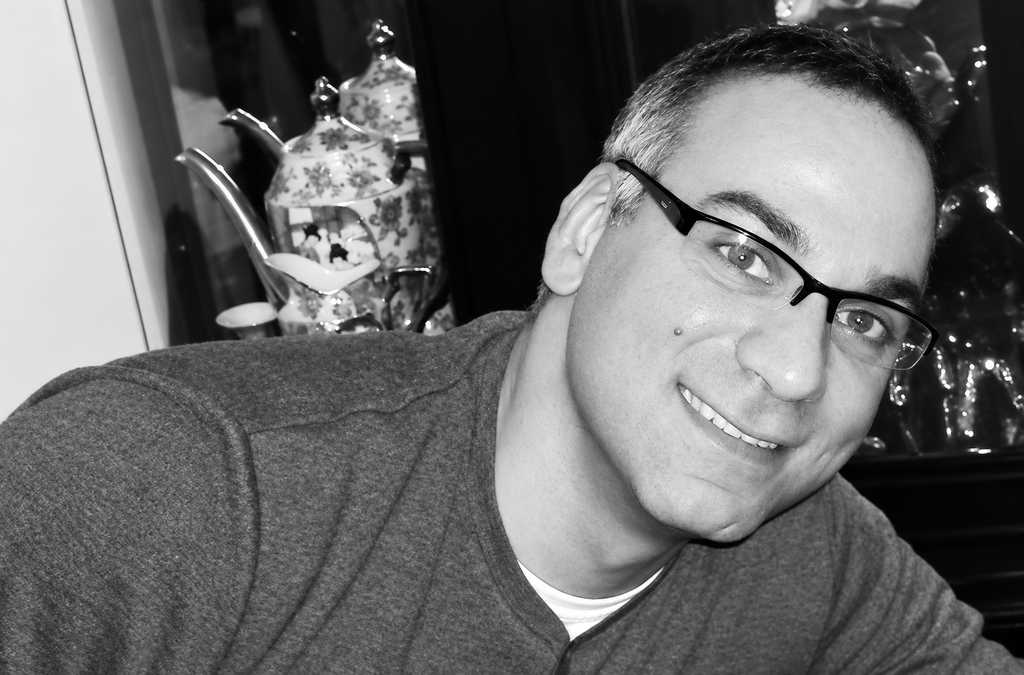
-Who is Ehsan Aslani?
Ehsan Aslani is a filmmaker, director, and visual storyteller whose work has always been driven by curiosity about people, identity, and the invisible forces that shape our lives.
Academically, I hold a Master’s degree in Architecture, which I studied in Iran, and a Bachelor’s degree in Cinema, which I studied in France. These two disciplines have profoundly shaped the way I see: architecture taught me to understand space, proportion, structure, light, and form, while cinema gave me a language through which those elements could become emotion, time, and human experience.
My background has taken me through architecture, television, documentary, broadcast production, education, and digital media. These different worlds have shaped the way I look at cinema. Architecture taught me to think about space, proportion, light, and silence. Television taught me discipline and immediacy. Documentary taught me to observe. And cinema taught me that sometimes the most important things are precisely those that cannot be explained directly.
But beyond titles, professions, or disciplines, I am, above all, a lived experience carrying millions of questions and constantly searching for answers.
If I had to define myself, I would probably say that I am a seeker: someone in pursuit of meaning, of answers, and of what exists beneath the visible surface of things.
I did not exactly choose cinema. In many ways, cinema chose me, and I had little choice but to accept it. And perhaps there could have been no better language for me than the image.
I often say that there are places in life that no word can reach. Moments when language becomes insufficient and we fall into silence. Sometimes even movement itself freezes within the passage of time. Perspective breaks apart, and everything begins to speak through form, surface, light, shape, and presence.
That is where I exist.
That is where cinema and I meet.
Beneath all of my experiences, the same search has always remained: to understand people, time, memory, identity, and the invisible forces that shape our lives.
Today, I see myself less as someone who simply makes films and more as someone who uses images, sound, time, and human presence to explore questions.
So, who is Ehsan Aslani?
A person still searching, still questioning, still becoming and someone who found in cinema the closest possible language to what words could never fully express.
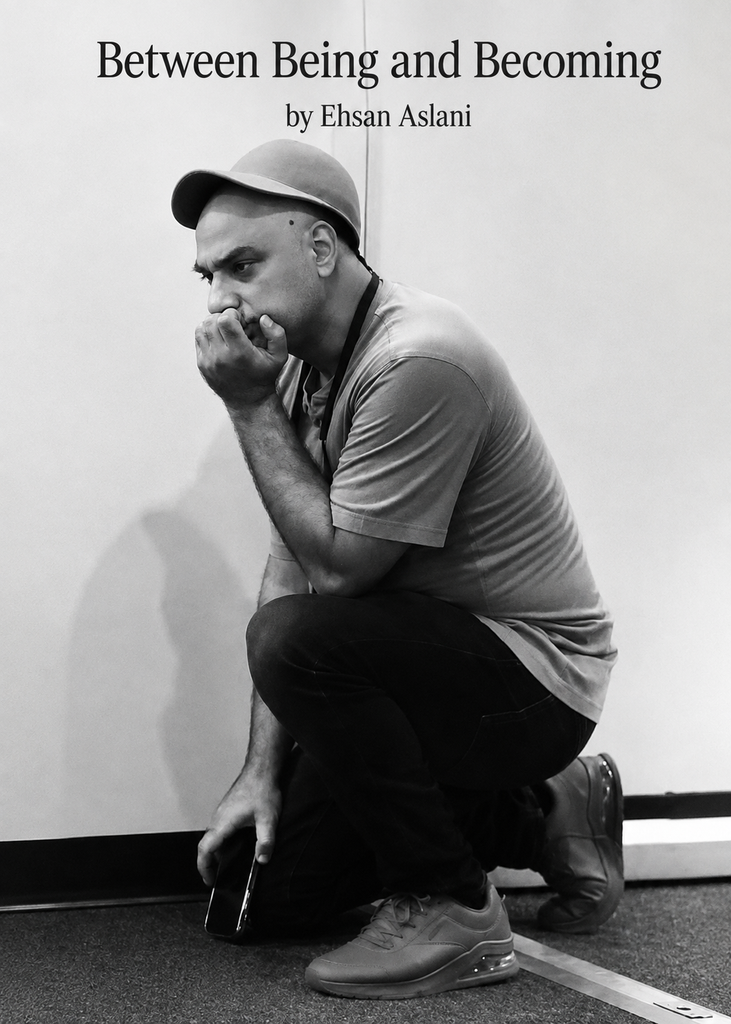
–Tell us about your project Between Being and Becoming?
Between Being and Becoming is a cinematic documentary about Habitat 67 in Montreal and, more specifically, about what we still do not know about it.
I have spent almost ten years researching this project. It has become far more than a film idea for me; in many ways, it is the point where my two worlds architecture and cinema finally converge.
The film begins with the extraordinary ideas of Moshe Safdie, the architect who conceived Habitat 67, but it does not stop at the iconic image of the building that most people already know. I want to explore the entire journey: from the original vision and theoretical principles, to the process of realization, and finally to the reality of what Habitat 67 has become after decades of being lived in.
There is a fascinating distance between what was imagined, what was built, and what ultimately became. And this distance is exactly where the title Between Being and Becoming comes from.
Safdie established extraordinary architectural principles ideas about density, individuality, community, light, privacy, gardens, and a different possibility for urban living. On the theoretical level, many of these ideas were remarkable. But architecture does not exist only in theory. Once architecture enters the real world, it encounters culture, climate, urban context, economics, human behaviour, political decisions, interventions, time, and everyday life.
And this is where the film begins its real investigation.
I don’t want simply to photograph Habitat 67 from the outside. We have already seen those images thousands of times. I want to understand what it means to live inside an architectural idea.
For that reason, one of the essential conditions for making this film properly would be to have access to a unit inside Habitat 67 for a period of time. I want the camera to experience daily life there morning light, silence, movement, neighbours, interior and exterior spaces, seasons, private life, communal life. Only then can we begin to understand the distance between architectural theory and lived experience.
My ten years of research have produced an enormous archive of ideas, questions, documents, observations and connections. I sometimes think of that research as a locked treasure. The material is there; the door simply needs to be opened through cinema.
But this is also an ambitious film, and ambition in cinema requires more than enthusiasm.
I am waiting for the opportunity to work with a strong Canadian or Quebec producer who genuinely understands architecture, urbanism and cinema someone who understands both cinematic technique and architectural thought, who knows why this film requires a serious production approach, where the investment needs to go, and also understands the extraordinary cultural and international potential of such a project.
For me, this film represents a kind of personal debt to both architecture and cinema.
I want it to be a dignified, thoughtful and enduring work of cinema not only a film for festivals or theatrical audiences, but something that could eventually live within universities, schools of architecture, cultural institutions, cinematheques, archives, and organizations dedicated to the preservation and understanding of modern heritage.
It is probably the film I most deeply wish to make.
There are significant obstacles between the project and its realization, and I know that I cannot cross all of them alone. It needs a producer who understands Quebec beyond its surface, who understands the cultural significance of Habitat 67, and who is willing to explore this extraordinary subject with me rather than simply package it.
Perhaps speaking about it here, through wild filmmaker, can help the project find the right person.
Perhaps this interview becomes the starting point.
Perhaps not.
But cinema has taught me that sometimes the most important journeys begin with something very small: an image, a question, a conversation or simply someone, somewhere, deciding to listen.
-Which Director inspires you the most?
It is very difficult for me to answer this with a single name.
Personally, I have a deep affection for Buster Keaton and Rainer Werner Fassbinder and I mean Fassbinder, of course, not Werner Herzog. Fassbinder is probably one of the filmmakers closest to me emotionally.
At the same time, I cannot speak about my own understanding of cinematic narrative without mentioning Abbas Kiarostami, who was my teacher and had a profound influence on the way I learned to look at storytelling, reality, silence, and the relationship between cinema and life.
But then, how can one speak about cinema and forget Last Year at Marienbad? How can I ignore Theo Angelopoulos, Sergei Parajanov, or Akira Kurosawa?
And even that would still be incomplete.
Can we really speak about cinema while overlooking Indian cinema? Chinese cinema? Soviet cinema? Vietnamese cinema? Turkish cinema? Nigerian cinema? Of course not.
They are all extraordinary in completely different ways.
So perhaps the most accurate answer is this:
Cinema itself inspires me more than any single filmmaker.
I have spent my life watching films from different countries, periods, cultures, and cinematic traditions. Every serious encounter with cinema has added something to the way I see.
Some filmmakers taught me rhythm. Some taught me silence. Some taught me framing, duration, movement, absurdity, politics, poetry, or simply how to look at a human face.
I do not want to belong to one cinematic school or imitate one master.
For me, cinema is an enormous collective memory created by thousands of filmmakers across the world.
And that entire memory inspires me.
-What do you dislike about the world and what would you change?
To be honest, the world feels very dark at the moment at least my world does.
I am not a particularly charming person. I am probably too serious, a little repellent, sometimes boring, and, like my films, rather dark. But perhaps that darkness does not come entirely from me. Perhaps it comes from the world I have experienced.
And this is exactly why I have difficulty with the question.
I am not sure there is such a thing as one world.
Each of us lives in a slightly different one, built from our memories, our upbringing, our fears, our education, our culture, our failures, our privileges, and the accidents that happened to us along the way. So when we ask, “What do you dislike about the world?”, we are already pretending that we are all standing inside the same reality.
We are not.
What I certainly dislike in some people’s worlds is a certain combination of arrogance, stupidity, and fundamentalism that wonderful human tendency to become absolutely certain about things we barely understand, and then to reorganize everybody else’s life accordingly. History has demonstrated the results rather efficiently.
But even here there is a problem.
Imagine that every one of us were suddenly given the power to keep everything we like about the world and delete everything we dislike. Within twenty-four hours, we would probably create an unbelievable catastrophe.
Because perhaps you are exactly the thing someone else would like to delete.
So what do you do then?
This is why, with respect to the question, I am not sure I want the power to change the world. That sounds dangerously close to the beginning of every bad utopia.
What we can probably change is much smaller and much less glamorous: ourselves, our behaviour, and perhaps the tiny circle of influence around us.
That may sound disappointingly modest, but we are modest creatures.
We appear for a very short time on a very small planet, make an extraordinary amount of noise, develop extremely confident opinions about everything, and then disappear.
So perhaps the first thing I would change about the world is our obsession with changing the world.
Maybe we could begin by becoming slightly less certain, slightly less arrogant, and slightly more curious about the reality of the person standing next to us.
Let us remain humble, my friend.
The universe will probably survive without our management.
-How do you imagine cinema in 100 years?
I don’t know. I don’t even know what tomorrow will look like, so I would have to be wonderfully naïve to tell you what cinema will look like in a hundred years.
The speed of change is enormous. Human beings have changed, machines have changed, the way we live has changed, and almost everything around us is radically different from what it was a century ago.
So, no I really don’t know.
Maybe in a hundred years cinema will be called “sausage,” and sausage will be called “school.” Why not? We already live in a world full of arbitrary structures, labels, and conventions that we treat as if they were eternal truths.
Much of the world we live in is shaped by systems, agreements, markets, and formulas created by people with power and money, and then the rest of us learn to live inside those formulas as though they were natural laws.
So perhaps instead of predicting what cinema will become, I can say what I hope it becomes.
I hope cinema can move toward a place where it no longer needs to obey somebody else’s formula.
Where the filmmaker is not constantly calculating what the market wants, what the algorithm wants, what the platform wants, or what a committee believes an audience should want.
I would love cinema to rediscover its own formula a formula born from the mind of a human being in the purest possible sense.
Not pure because that person is innocent or perfect, but because, for a moment, the image comes before the market, the question comes before the answer, and creation comes before calculation.
Maybe cinema in a hundred years will be completely unrecognizable.
I just hope there will still be a human being somewhere behind it, looking at the world and saying:
This is how I see it.
-What is your impression of WILD FILMMAKER?
To be honest, I have only recently become familiar with WILD FILMMAKER.
But I believe that any organization that is genuinely faithful to what it claims to represent will naturally attract independent artists. Independence is built on trust, and trust begins when words and actions remain close to one another. From what I have seen so far, I have had that impression of WILD FILMMAKER, and I congratulate you for it.
I would genuinely like to learn more about your work, your practical activities, and especially the ways in which you support independent filmmakers. These kinds of platforms are valuable because independent cinema often needs precisely this: visibility, connection, dialogue, and people willing to take filmmakers seriously outside the usual commercial structures.
Of course, supporting independent cinema may not always be the easiest or most immediately profitable path. But with the right structure, community, and long-term vision, I believe cultural value and sustainability do not necessarily have to oppose one another.
I am very happy to have had this conversation with you, and I sincerely appreciate the invitation and the opportunity to share some of my thoughts.
Thank you, humbly, for having me.
Cheers!