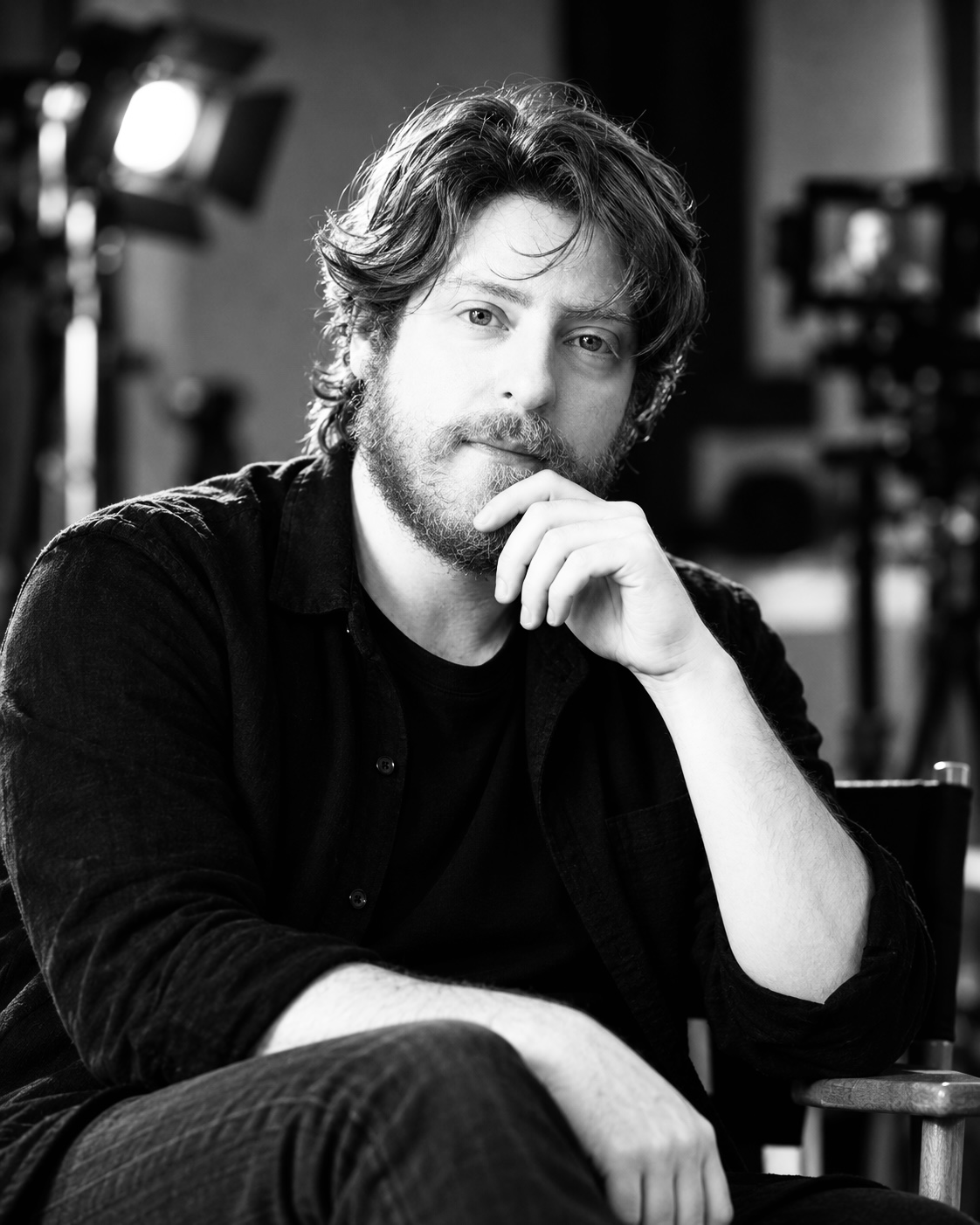
The Brazilian filmmaker discusses his new feature project, a psychological and political drama about intimacy, ideology, surveillance, and the fragile boundaries between love and power.
Brazilian filmmaker and writer Davi Kinski works across cinema, theater, and literature. His debut feature documentary, Poemaria, premiered in competition at the 52nd Gramado Film Festival and later received international awards, including Best Feature Documentary Director at the Tokyo Film Awards, Best Documentary at the Search Light International Film Festival in Mumbai, and the Audience Award at Cinema e Transcendência in Brasília. His short film Alice, Five Minutes Before Sunset also built an international festival career, earning awards abroad and nominations in Los Angeles. In 2026, Kinski was twice highlighted by The Hollywood Reporter among independent filmmakers during the Cannes and Venice film festival periods.
He is now developing Hearts in a Trance, his new fiction feature — a psychological, political, and erotic drama set between Ipanema, in Rio de Janeiro, and the idyllic coastal city of Maricá, in the state of Rio de Janeiro, where desire, ideology, and surveillance collide.

At the center of the story are Gabriel, a melancholic literary editor; Marina, a provocative filmmaker with whom he shares an open relationship; and César, an enigmatic former military man whose arrival disrupts their emotional balance. Marina begins a documentary experiment about the lives of the three of them, turning Gabriel’s home into a space where their intimacy is constantly filmed. As the experiment unfolds, desire, performance, and ideological tension begin to blur the boundaries between art and life, intimacy and control.
The screenplay has already won Best Original Screenplay at the New York Movie Awards and Best LGBTQIA+ Screenplay at the Indian Independent Film Festival, while also becoming a finalist at screenplay festivals in Cannes, Oxford, and Cambridge. The project is being developed with Rio de Janeiro-based producers Chris Mattos and Thales Calazans, with Ícaro Silva and Luísa Micheletti already confirmed for the cast. At this stage, the production is also open to new collaborations and international co-production partnerships.

Wild Filmmaker: Hearts in a Trance brings together sexuality, politics, surveillance, and cinema itself. How did the film begin for you?
Davi Kinski: It began with the feeling that, in today’s world, the political and the intimate can no longer truly be separated. Politics has entered our homes, our relationships, our language, and even the way we desire one another.
I wanted to make a film in which this fracture was not discussed from the outside, but experienced through three bodies sharing the same space. Gabriel, Marina, and César desire and provoke one another, and gradually become trapped in a relationship where affection, ideology, and control are almost impossible to distinguish.

So the film was born from a simple question: what happens when you invite into your intimacy someone who represents almost everything you believe you oppose?
That contradiction became the heart of the screenplay.
Wild Filmmaker: The film revolves around a bisexual and polyamorous relationship. Was it important not to make sexuality itself the central conflict?
Davi Kinski: Absolutely. Their sexuality is not the problem.
I was never interested in making a film in which bisexuality or polyamory had to be justified, explained, or punished.
For Gabriel and Marina, an open relationship is already part of their emotional vocabulary. César enters that space naturally, at least at first. What destabilizes them is not the fact that three people desire one another. The conflict comes from power, manipulation, jealousy, ideology, and the possibility that intimacy itself can become a tool of control.
The characters are free in their desire, but they are not necessarily free from fear, vanity, political violence, or the need to possess one another.
That distinction is fundamental to the film.
Wild Filmmaker: Marina is a filmmaker inside the story, and the camera gradually shifts from a creative tool to an instrument of surveillance. What interested you in that transformation?
Davi Kinski: Marina believes that filming is a way of understanding reality.
At first, her camera seems liberating. She records their intimacy almost as an artistic experiment and transforms Gabriel’s apartment into a laboratory where everyday life becomes performance.
But the film gradually questions that belief.
The more Marina films, the harder it becomes to know whether she is documenting reality or producing it. We are always performing to some degree — for lovers, friends, cameras, social media, and sometimes even for ourselves. The presence of a camera simply makes that performance visible.
Then surveillance appears without consent.
The same device that represented artistic freedom becomes an instrument of domination.
For me, the camera itself is morally neutral. What matters is who controls the image, who authorizes its creation, and who controls its meaning afterwards.
Eventually, the distinction between filmmaker, participant, and voyeur collapses completely.
Wild Filmmaker: The title clearly evokes Glauber Rocha’s Terra em Transe (Entranced Earth). What does that connection mean to you?
Davi Kinski: It is very important.
The title is both a tribute and a displacement.
Glauber’s Terra em Transe transforms political collapse into fever, theater, and delirium. I wanted to take that idea of political trance and bring it into the intimate sphere.
Instead of a country represented through politicians and revolutionaries, I have three people inside an apartment.
The country enters through their bodies.
Their desire becomes political. Their jealousy becomes political. Their fear becomes political.
So perhaps the film asks what happens when the historical trance of a country becomes an emotional trance.
That is where Hearts in a Trance comes from.
Wild Filmmaker: The screenplay has already received international recognition, and the project is now moving toward production. Where are you at this stage?
Davi Kinski: The international response has been very encouraging because the screenplay is deeply Brazilian, but its themes seem to resonate beyond Brazil.
It has won Best Original Screenplay at the New York Movie Awards and Best LGBTQIA+ Screenplay at the Indian Independent Film Festival, and was a finalist in Cannes, Oxford, and Cambridge.
We also have Ícaro Silva and Luísa Micheletti confirmed for the cast, which is very exciting because this film depends enormously on chemistry, silence, physical presence, and what happens between the lines.
I am developing the project with Chris Mattos and Thales Calazans, two Rio-based producers who are working closely with me on the production and financing structure.
This is precisely the moment when new partnerships can make a real difference. Collaborations and international co-productions are extremely welcome at this stage. We are open to conversations with producers, co-producers, financing partners, sales companies, and institutions interested in independent auteur cinema.
Wild Filmmaker: Besides Hearts in a Trance, what other projects are you currently working on?
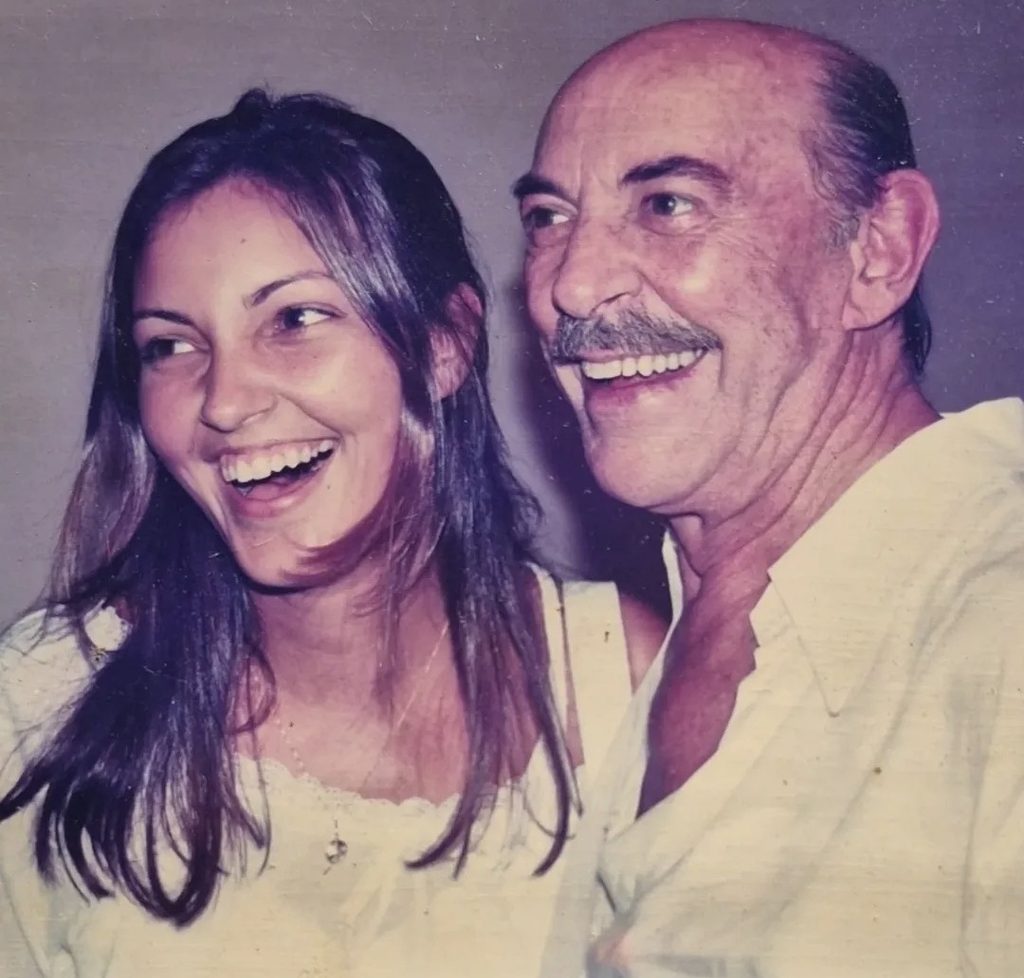
Davi Kinski: I am currently developing Cortez: No Coração do Palco (Cortez: At the Heart of the Stage), a documentary about Raul Cortez, one of the great actors of Brazilian theater, cinema, and television. In terms of presence, versatility, and artistic stature, I believe he occupied a place in Brazilian culture comparable, in many ways, to someone like Anthony Hopkins internationally
But the film is not intended simply as a portrait of his career. It will be narrated by his daughter, Maria Cortez, who, twenty years after her father’s death, begins with a question that is both simple and profound: who was this man, really?
Through her memories, the recollections of people who knew Raul, archival material, and his body of work, the documentary becomes an investigation into memory — into what remains after someone is gone, and into the way an absence can remain deeply present.
That idea fascinates me. Sometimes a person disappears physically but continues to inhabit spaces, affections, objects, stories, and even silences. In a way, the film is not only asking who Raul Cortez was, but how someone continues to exist in the lives of others after they are no longer here.
At the same time, I am in post-production on No Armário (In the Closet), my second feature documentary, co-directed with Franthiesco Ballerini. It is a film about sexuality, identity, and the different ways of living between visibility and concealment.
These projects are very different, but they all connect to questions that deeply interest me as a filmmaker: identity, memory, intimacy, absence, and the way we construct ourselves — and others — through images.