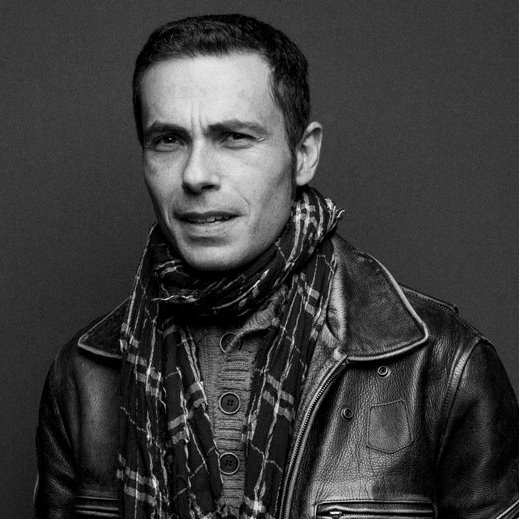
When you plan the realization of a film project, what are your objectives?
My main objective is always to tell a story that can speak to the spirit of as many people as possible.Of course, every film begins with something personal: a wound, a memory, a question, a face that refuses to disappear. But my goal is to transform that intimate starting point into something that can be shared. I am interested in stories that may be small in scale, but wide in emotional resonance.
With my new project, I would like to make a film that is intimate, human, and deeply accessible: a film about memory, family, lost dreams, friendship, and the possibility of reconnecting with the most fragile and luminous part of ourselves. I believe cinema can still move people without shouting. It can whisper, and sometimes that whisper stays with the audience longer than a scream.
With Artificial Intelligence, cinema is undergoing a phase of transformation even more radical than the one that occurred in the 1920s with the transition from silent films to sound. What is your opinion on this?
I believe Artificial Intelligence is already transforming cinema, and pretending otherwise would be useless. The real question is not whether we should accept it or reject it, but how we can integrate it ethically, legally, and creatively.
For me, the first essential step is to solve the issue of copyright and authors’ rights. I believe that companies offering AI services should pay fair compensation, possibly through a forfait system managed by collecting societies or other rights-management organizations. Creative work cannot become invisible raw material.
Once these problems are properly regulated, I am open to the use of AI as a tool of accompaniment in the creative process. Not as a replacement for the author, not as an artificial soul injected into a film, but as an assistant: a way to explore, test, visualize, compare, and accelerate certain stages of development.
Cinema has always been transformed by technology: sound, color, lightweight cameras, digital editing, visual effects. But technology becomes meaningful only when it serves a human gaze. AI can be useful, even powerful, but the heartbeat of cinema must remain human.
To which production or distribution company would you like to propose your new project? Give us a profile, including some examples.
For my new project, I would like to find a production company capable of embracing a small, intimate film that still wants to move a wide audience. I am not looking for a huge machine, but for the right human and artistic environment: a place where a personal story can be protected, shaped, and brought to the audience without losing its fragility.
This project also has a very personal meaning for me, because I have decided to return to directing after almost thirty years. So, in a way, I am not only looking for a producer for a film. I am looking for a partner who can understand the emotional weight of that return.
The film I have in mind lives somewhere between the emotional precision of Hirokazu Kore-eda, the nostalgic and cinematic power of Giuseppe Tornatore, and the independent humanism of Richard Linklater. It is a story about memory, friendship, family, unfinished dreams, childhood, cinema itself, and the strange beauty of looking back in order to move forward.
In terms of production, I would imagine a company with the sensitivity of producers such as Fandango, Indigo Film or Tempesta: companies that know how to support auteur-driven projects while still keeping a real relationship with the audience. I am thinking of producers able to defend personal cinema, but also to give it a shape that can travel beyond a purely niche circuit.
For distribution, I could imagine a profile close to companies such as Lucky Red, BiM Distribuzione, Tucker Film, I Wonder Pictures or Movies Inspired: distributors that have often worked with international, independent or auteur cinema, and that know how to accompany films whose strength is not noise, but emotional persistence.
What I am looking for is not simply a company with resources. I am looking for a production and distribution partner that believes a small film can still create a large emotional echo. A film does not always need to be loud to reach people. Sometimes it only needs to be honest enough to stay with them.
WILD FILMMAKER can now “sit at the table with the big players” alongside The Hollywood Reporter and Variety during the Cannes Film Festival, but we have chosen to continue being a Global Cultural Movement with an ethical mission: to bring democracy into cinema, placing the Work of Art at the center of our project rather than Marketing. Do you think we are doing a good job?
Yes, I do. And I think this mission is especially important today.
Cinema is often dominated by visibility, algorithms, market positioning, and promotional noise. Of course, marketing is part of the life of a film, and nobody can pretend it does not matter. But when marketing becomes more important than the work itself, something essential is lost.
What I appreciate about WILD FILMMAKER is the idea of putting the Work of Art back at the center. This means giving space to films that may not have huge budgets, famous names, or powerful campaigns behind them, but still carry a genuine artistic necessity. In that sense, bringing more democracy into cinema is not just a beautiful slogan. It is a concrete cultural act.
If WILD FILMMAKER can sit at the table with major industry players and still remain faithful to an ethical and artistic mission, then yes: I believe you are doing a meaningful job. Because cinema needs markets, but it also needs places where fragile, personal, imperfect, passionate works can be seen, discussed, and protected.
That is where real discovery can still happen.