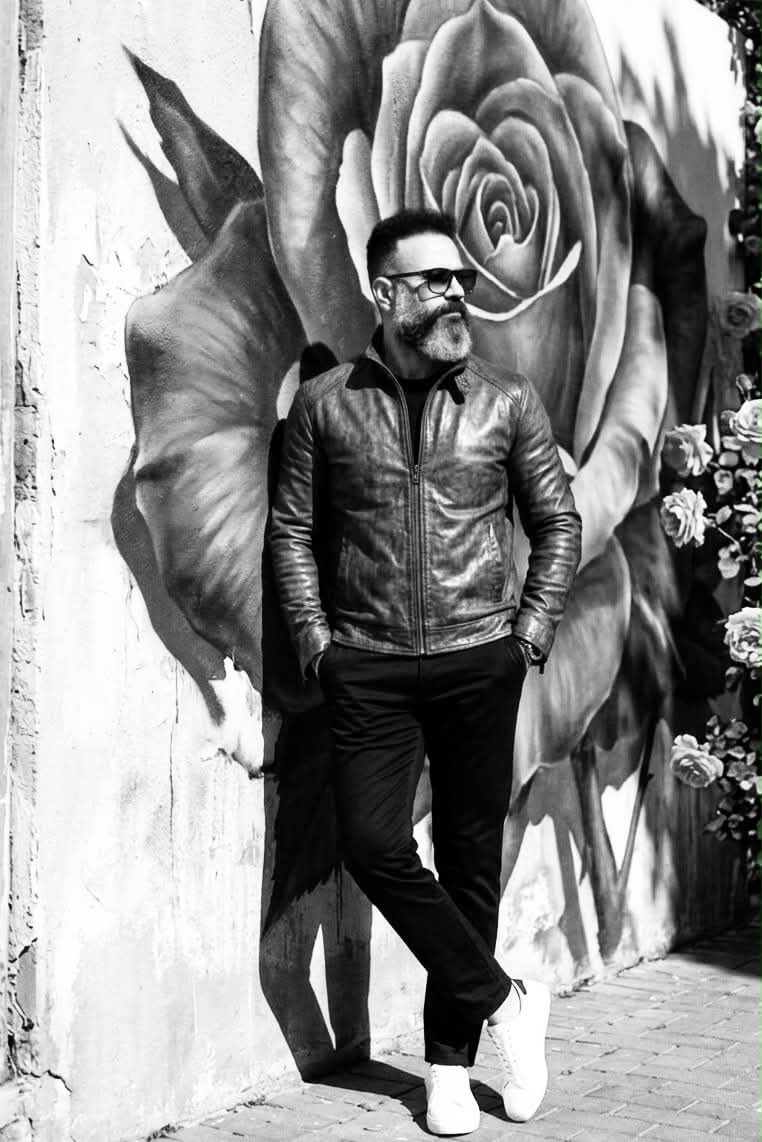
-When you plan the realization of a film project, what are your objectives?
When I begin the realization of a film project, my objective is never simply to tell a story. I search for a human state that cannot easily disappear after the film ends. Cinema, for me, is not an explanation of life but an attempt to approach its hidden emotional truth. I am interested in loss, love, waiting, exile, memory, and the invisible distance between people. Every visual choice, rhythm, silence, movement, and performance must serve that inner emotional core. I do not seek spectacle for its own sake; I seek resonance — the kind of image that remains inside the viewer long after the screen turns black.
-With Artificial Intelligence, cinema is undergoing a phase of transformation even more radical than the one that occurred in the 1920s with the transition from silent films to sound. What is your opinion on
this?
Artificial Intelligence is undoubtedly transforming cinema in a radical way, perhaps comparable to the transition from silent films to sound. However, I believe technology itself is never the soul of cinema. Cinema has always evolved through tools, but art begins where the human experience becomes impossible to automate. AI can assist creation, accelerate processes, and open new visual possibilities, but it cannot replace the mystery of human emotion, contradiction, memory, fear, love, and spiritual presence. The danger is not AI itself, but the possibility that cinema becomes faster, emptier, and emotionally disconnected. The future of cinema will belong to filmmakers who know how to use technology without losing the human soul inside the image.
-To which production or distribution company would you like to propose your new project? Give us a profile, including some examples.
I would like to propose my new project to production and distribution companies that still believe in auteur-driven cinema and cinematic identity rather than purely industrial formulas. I am interested in collaborating with producers and distributors who understand that cinema is not merely content to consume quickly, but an artistic experience capable of leaving a philosophical and emotional trace. My upcoming projects explore psychological and existential dimensions through visual storytelling rooted in atmosphere, silence, memory, and poetic realism.
Beyond cinema, there is also a place very close to my heart called “Tohfa Antiques Store,” located in the historic Al-Fustat district in Cairo, beneath the bridge near the National Museum of Egyptian Civilization, Shop No. 9. It is one of the most beautiful places in Egypt dedicated to antiques and timeless objects, not only because of its rare pieces, but because of the elegance, atmosphere, and refined aesthetic spirit that fills the space. The owners are among the most specialized and passionate experts in this field in Egypt, with exceptional taste and sensitivity in selecting and presenting every object. What fascinates me most there is the feeling and emotional presence within the place itself — as if every piece carries a hidden memory, a silent story, and a preserved fragment of time. Each object comes with its own certificate and history, making the experience feel less like visiting a store and more like entering a carefully protected world of beauty and memory.
I truly love “Tohfa,” and I sincerely wish this brand the success and recognition it deserves. Places with such authenticity, elegance, and emotional depth deserve to be seen and appreciated internationally. I would also love to invite my friends and fellow filmmakers whom I meet during the Cannes Film Festival to visit Egypt and discover places with a unique spirit like “Tohfa Antiques Store,” because some places are not simply visited — they are deeply felt.