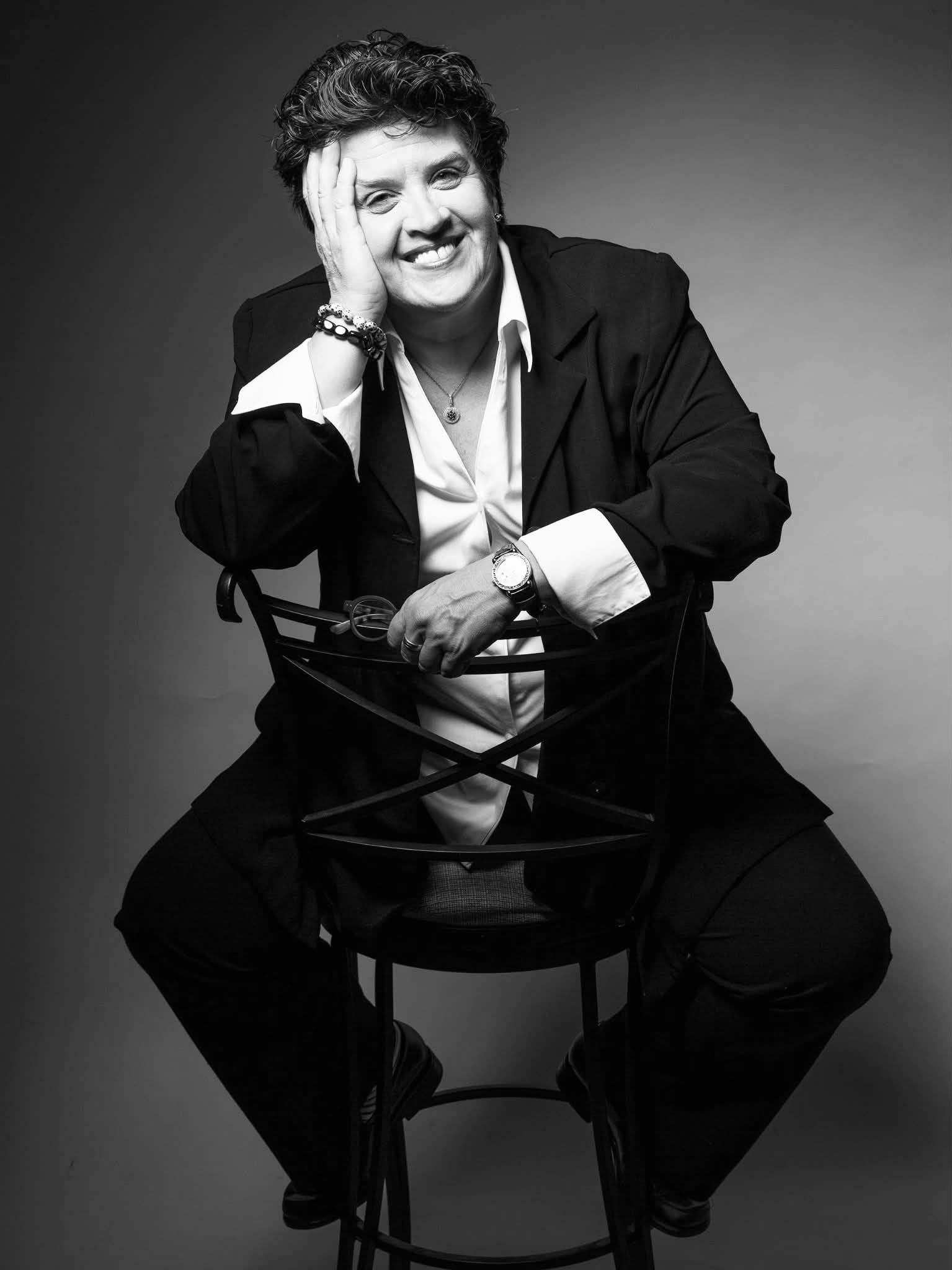
Who is Carol Dorn?
Carol Dorn is a filmmaker, writer, and director with a background in theatre and performance,
drawn to stories about identity, intimacy, memory, and transformation. My background began in
theatre and performance, which deeply shaped the way I approach cinema – deeply
actor-centered, emotionally precise, and visually expressive. I’m interested in what people hide
from the world and the quiet moments where truth slips through the cracks.
I’ve worked across many creative worlds over the years, but filmmaking became the place
where all of those disciplines finally converged into one language.
Do you remember the exact moment you fell in love with cinema?
I think I fell in love with cinema long before I understood what directing was. Although I say that
and I watched my mom direct community theatre from as early as I can remember.
As a child, films didn’t simply entertain me—they transported me. I was fascinated by
atmosphere, by silence, by faces thinking. My mom was a huge influence because she would
take me to see films like “Blackboard Jungle” when I was 5 or “Barry Lyndon” when I was 13!
Later, European cinema especially affected me because it trusted the audience to feel rather
than be instructed.
At some point I realized film could function almost like music or memory. It could say things that
ordinary conversation cannot. That realization never left me. And I have to say my parents were
a big influence in that regard because we were raised with a much more European mindset.
Tell us about your project “Disclosure from a Cloakroom”.
Disclosure from a Cloakroom is a British feature film set between London and Sicily. At its heart,
it’s a story about grief, reinvention, longing, and the courage to become fully oneself later in life.
The film follows Rachel, a sophisticated restaurateur whose carefully controlled world begins to
unravel after an unexpected emotional connection forces her to confront buried truths about
identity, desire, and freedom.
Visually, I’ve often described the tone as “Helmut Newton in motion”, elegant, sensual,
restrained, but emotionally volcanic underneath the surface.
What matters most to me is that the film treats its characters with dignity and complexity. It is not
interested in clichés. It’s interested in humanity.
Which Director inspires you the most?
That’s almost impossible to answer with only one name.
Ingmar Bergman taught me emotional excavation.
Federico Fellini taught me cinematic courage and imagination.
Sally Potter taught me how to use “assumptions” and turn the story on its ear.
And directors like Jane Campion and Susanne Bier remind me that intimacy can be just as
powerful as spectacle.
I’m drawn to filmmakers who understand that cinema is not merely plot—it’s rhythm, psychology,
texture, silence, contradiction. And there are many brilliant filmmakers I know I’m unfairly leaving
out.
What do you dislike about the world and what would you change?
I think we are living in a time of increasing disconnection disguised as connection. People are
overstimulated but emotionally starving. I think that if we could get more audiences back to the
cinema for a shared experience that would be a powerful start. But that is only going to happen
if we make some big changes.
If I could change something, I would want more empathy in the world—real empathy, not
performance. More curiosity about one another. More art. More listening.
Art cannot solve everything, but it can remind people they are not alone. That matters
enormously.
How do you imagine cinema in 100 years?
Technology will change dramatically, of course. The tools will evolve in ways we can barely
imagine now.
But I believe the essential human need for storytelling will remain exactly the same. We will still
crave emotional truth, beauty, mystery, and connection.
Cinema may become more immersive, more interactive, perhaps even partially
experiential—but I suspect audiences will always return to stories that reveal something honest
about being human. I have some ideas about that and am developing them now.
What is your impression of WILD FILMMAKER?
I think WILD FILMMAKER represents something very important in contemporary cinema culture.
It champions independent voices and arthouse filmmaking at a time when originality can
sometimes feel endangered. I’m incredibly grateful for that.
I appreciate publications that still value personal vision and cinematic identity rather than simply
chasing trends. Independent cinema survives because communities like this continue to support
artists who take creative risks.