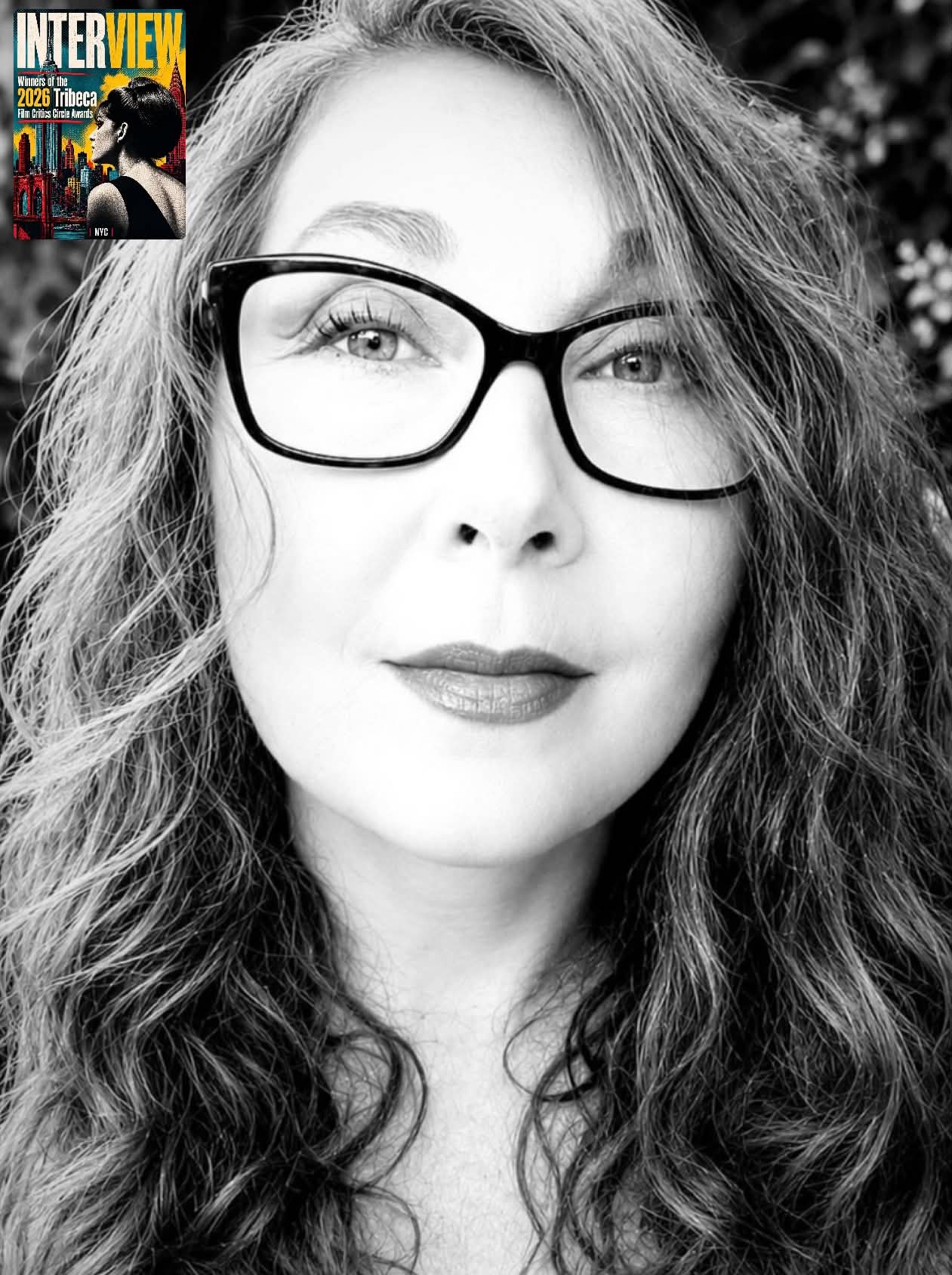
-With this victory, you have achieved an important milestone and have become an authoritative voice in international independent cinema. What are your next projects?
At present, I am preparing a larger and more comprehensive solo exhibition and film project entitled In the Artist’s Eye, which will be presented together with a catalogue at the Royal Academy of Fine Arts in Stockholm, Sweden, from 20 March to 1 May 2027.
I have also had the great fortune of collaborating with brilliant actors throughout my artistic practice — individuals who have enriched and coloured my works with the depth of their lived experiences. Most recently, I have worked with the artist and actress Ebba Melber, who performs the lead role in the film The Rorschach Test.
Simultaneously with the development of the solo exhibition at the Royal Academy of Fine Arts, I am creating new short films. These will primarily be presented at film festivals and in cinemas, in order to achieve the most optimal and resonant environment for this particular kind of cinematic work. We shall see what unfolds; perhaps a new documentary will also emerge within this framework. In this endeavour, I am seeking visionary collaboration partners who can help realise this journey on both a financial and structural level.
All my artistic works require considerable time to create, even though some of them are short films such as The Rorschach Test, Not Without Gloves, and The Aesthetics of Failure, with which I proudly won the TriBeCa Film Critics Circle Award 2026. My films are always meticulously tailored to the contexts in which they will be shown — whether in cinemas and festivals, outdoors on cliffs, islands, buildings, and houses, or within art institutions such as galleries, art halls, and museums, where I frequently work sculpturally with the moving image. For me, there are no boundaries to what film and art can be.
I always depart from the inherent poetry of a given place when creating my works. Now, as I begin this exhibition at the Royal Academy of Fine Arts in Stockholm — having carried out thorough research and carefully studied the spaces and site — my mind begins to work frenetically with ideas, scripts, filming, editing, and the complete visualisation of the spatial experience. One should step into the work and be enveloped by it as a viewer. I always strive to create a space for reflection. For me, it is of the utmost importance to artistically craft a multifaceted moving-image project that touches the depths and opens pathways for profound reflection upon what one sees — or perhaps does not wish to see. To penetrate beneath the surface is, I believe, what I continually strive for when creating new works. Perhaps I may succeed in opening the door to that which cannot be described in words, only experienced.
It is profoundly important to me that my works and films pose questions, becoming an open dialogue with the audience in which the answer perhaps always resides in the beholder’s eye. The new work will illuminate that which we may prefer not to see — the things we entirely close our eyes to.
I always work subliminally and poetically, and I am deeply grateful to collaborate with a truly remarkable individual who creates magical music for my works and films — the exceptionally gifted composer, critic, art historian, philosopher, musician, and visionary artist Conny Malmqvist. He has composed the music for several of my internationally awarded works as well as my monumental site-specific pieces.
For me, when creating new cinematic works, the intellectual discourse, rhythm, and image within the film are of vital importance. I edit for months, sometimes years, on a new piece or a larger exhibition comprising several works before I allow the public to encounter it. I am extremely self-critical — a blessing as much as a curse. Art is difficult; remember this when you encounter a work you do not immediately understand. The simple is often the most difficult. I am not personally interested in creating mainstream film or art. For me, film is art, not entertainment; it is pure magic in its truest form.
My great passion in life is art, film, poetry, literature, and music. I am deeply engaged with our contemporary moment, yet I root my works in the past. If we are to learn anything about the present, we must know and understand history rather than censor it. Knowledge is the only true power the individual possesses. I stand for free art. Life has not been a bed of roses for me; violence, death, and illness have coloured my palette, yet instead of becoming bitter, I can transform these experiences in the hope that they may resonate with another person’s reflections. As an artist and filmmaker, it is essential to me to pose the difficult questions about life and death, about what it means to be human with all our faults and shortcomings. To gaze into our multifaceted psyche, to look at life and illuminate nature as a treasure we must protect — indeed, all living things — while death and the departed whisper in our ears if only we listen and open the window to the inarticulable.
-Describe yourself with three adjectives that best reflect your vision of the world.
Reflective visionary filmmaker, curator, and artist who does not shy away from the difficult questions of life and art.
-WILD FILMMAKER is, above all, a space for freedom of thought and sharing. Who would you most like to find yourself in front of, and what would you say to them?
You may include figures from the present or the past, from Julius Caesar to Marilyn Monroe, just to give an example.
I have no specific question for any historical figure. For me, it is more about learning from the past in order to understand the time in which we live and how the future might possibly take shape, in both positive and negative terms. It concerns seeing — or rather daring to see — the uncomfortable, daring to be critical of norms, looking beneath the surface, and attempting to transform the negative into something positive. To strive towards a world that is more inclusive and permissive. Perhaps it is a utopia, yet together we can try to change the rules of the game and make visible other ways of seeing the world — where power, money, war, and violence do not reign as the dominant ideology.
-Through the WILD FILMMAKER Community, we have succeeded in bringing independent filmmakers under the same spotlight as mainstream industrial cinema. How do you evaluate our work and activities?
I am deeply grateful and proud to be part of Wild Filmmaker, where I have had the pleasure of encountering remarkable artists and filmmakers who burn with passion for their craft. I have personally witnessed brilliantly accomplished films of the highest quality that could not have been created here in Sweden owing to the extensive economic cutbacks in culture. This is entirely the wrong path; one should invest in culture, film, art, literature, poetry, music, theatre, research, and more. That is how one creates a creative, sustainable, and reflective society.
In this regard, Wild Filmmaker is truly magnificent. You create opportunities for filmmakers across the world and bring their works to a larger audience. Therefore, I wish to offer you all a great tribute for your visionary work. Special thanks to editor-in-chief Michele Diomà and his international team, and of course I want to thank all the inspiring artists, screenwriters, and filmmakers, as well as all the international collaboration partners Wild Filmmaker has across the globe. It is a great honour to be part of this visionary journey. Only together can we change the rules of the game. Forward with new visionary film without physical boundaries — where art is free in spirit and soul.