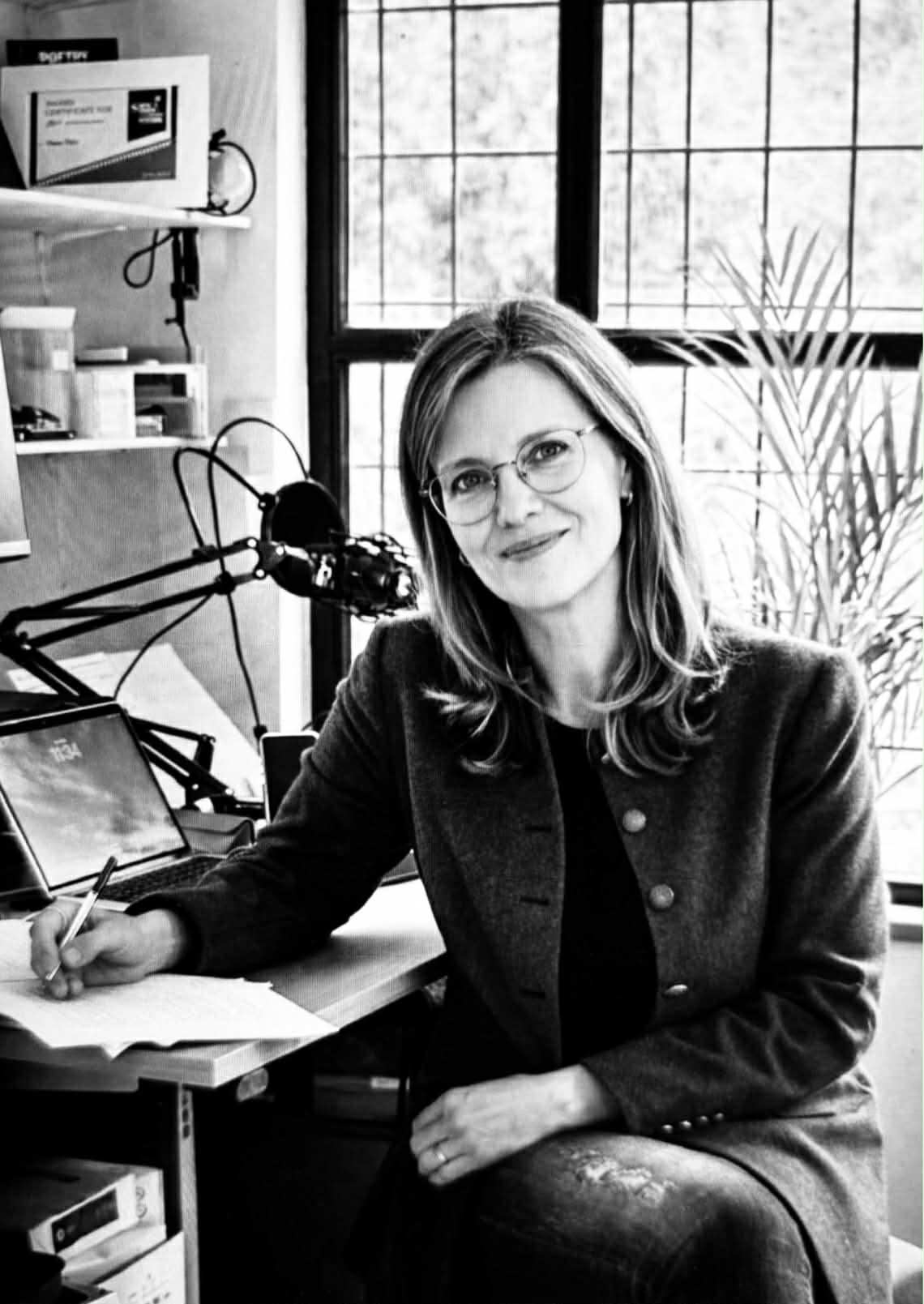
Who is Emily Joshua?
I’m a screenwriter drawn to stories about ‘survival despite the odds’; the outsider’s perspective on longing, identity, power and belonging. I write inclusive, character-led genre drama for television and film, and I’m especially interested in the tension between what people feel and what they are either permitted or able to reveal. My background is in theatre, music, and BBC research and broadcast, so I came to screenwriting through performance. My disabilities prevent me from performing now, so screenwriting enables me to be a part of the stories that I want to see. As a disabled and neurodivergent writer, that perspective is central to how I create character narratives. I want to write work that is entertaining, emotionally rich and socially aware, where underrepresented audiences are included on screen without the storytelling ever becoming didactic.
Do you remember the exact moment you fell in love with cinema?
As a small child, I used to write and illustrate my own little books, and I was allowed to use the dining room for my artwork. An old black and white television lived in the corner of that room. So, I used to create my own stories whilst I watched and listened to other people’s tales. Everything was monochrome, so I became habituated to seeing black & white films as equally important to colour. My love of film grew from listening to perfect clipped post-war received pronunciation and watching the crazy stunts by Harold Lloyd as much as through going to large cinemas to see the latest films. When I switched on the old black & white TV, I never knew what sort of world I would enter before I was immersed in it… and it captivated me. In my mind… I could be anyone anywhere, anytime.
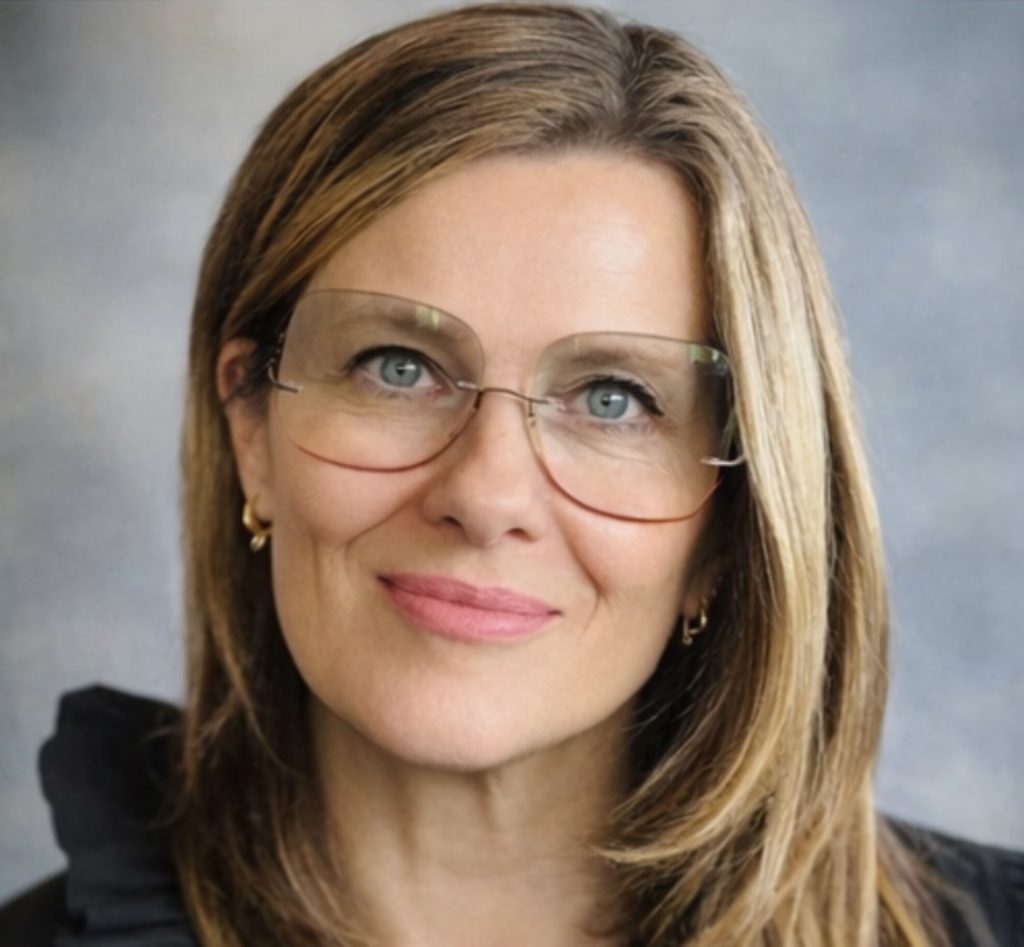
Tell us about your project “Foxton Hall.”
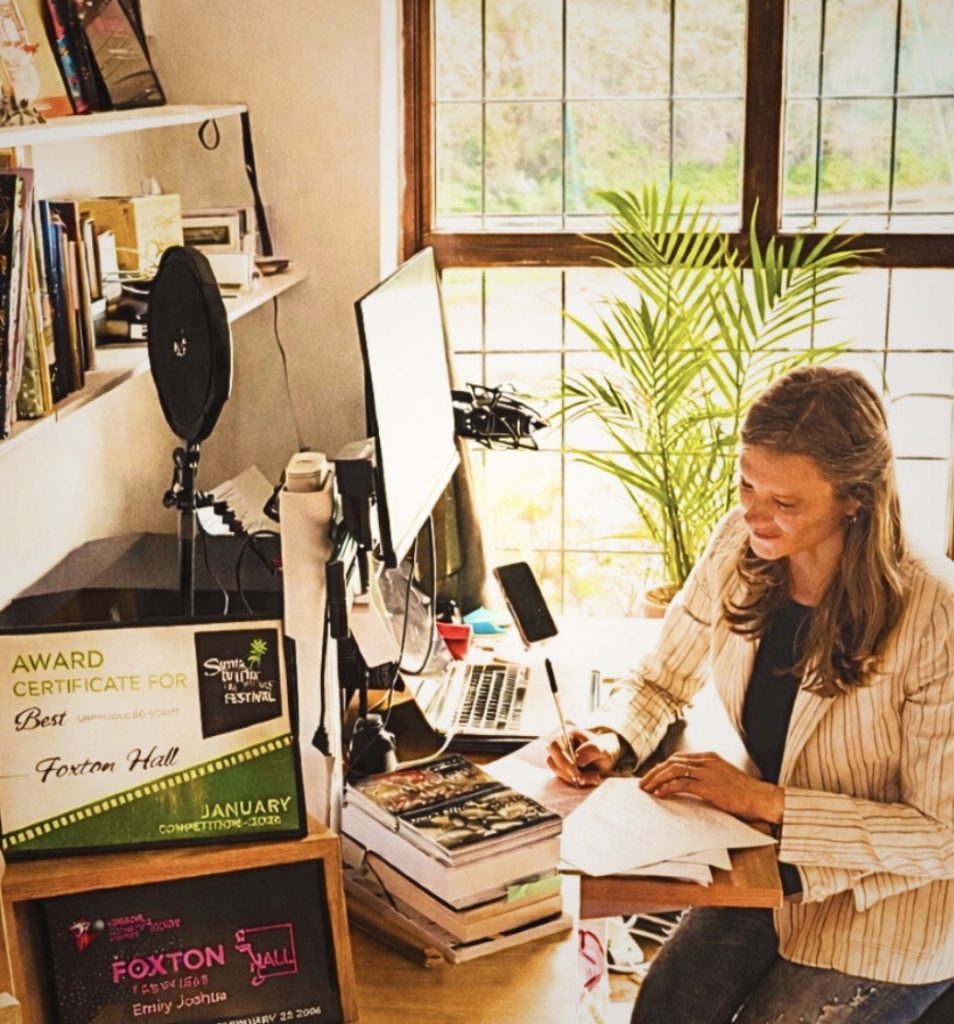
Foxton Hall is an eight-hour coming-of-age Regency romance set in 1807, where love, scandal and underhand deals collide in the ruthless world of the debutante society. At its heart is the relationship between Phoebe, a wealthy heiress and young woman of colour, and Amelia, the housekeeper’s daughter, who has been raised beside her almost like a sister. When Phoebe enters London society and insists Amelia masquerade as a lady to accompany her, their friendship is tested inside a world built to divide women by class, race and marriage value. The cost to Amelia for being found out is not only social, but also physical and mental injury. What interests me is the tension between intimacy and competition, the emotional cost of trying to belong in a society shaped by exclusion and how we overcome these obstacles whilst still positively seeking love.
Foxton Hall has specifically been written as a returnable / infinite serial for streaming platforms with interweaving narratives built on intrigue, lies and the desperate desire to succeed at any cost.
Which Director inspires you the most?
Steven Spielberg. I love the emotional and tonal range of his large portfolio of filmmaking. The fact that the same filmmaker could create something as viscerally gripping as Jaws and something as devastating and humane as Schindler’s List deserves my admiration. He understands our need for family, our desire for love and success, compassion and, for some, cruelty. He understands that audiences want a depth of feeling that will leave the cinema with them. That’s inspiring.
What do you dislike about the world and what would you change?
There are 2 things:
Firstly, I dislike exclusion masquerading as normality. So many systems still quietly decide who belongs, who is valued, who is heard, and who is expected to adapt in silence, without discussion, notification or choice. I want a world where difference is not treated as a problem to explain but is viewed as part of the diverse experience of being human and is embraced.
Secondly, I dislike the mindset that chooses money over humanity. I would like to see more support for the climate clean-up (like the Earth Shot Prize) and help for those suffering through man-made climactic disasters. I have written an Indie Horror Sci-Fi television series (Last Apocalypse) that suggests where we are headed if we don’t sort things out… but let’s hope that over the long term it proves less prophetic than it has been over the past few years!
How do you imagine cinema in 100 years?
Story telling will always exist. It’s an important part of the human narrative: it’s how we learn, share and connect. But 100 years into the future is hard to predict. Thinking positively, I would love cinema to continue to develop technologically. Perhaps it would become fully immersive, or even holographic, with the audience walking into the action, like theatre in promenade. But I can also imagine the future ‘us’ having to go back to reels of film, edited with sticky tape, projected onto a wall from a bunker under a wasteland…
What is your impression of WILD FILMMAKER?
I think WILD FILMMAKER plays an important role in championing independent voices. It opens filmmaking up to more than just the large studios, which brings a culturally rich and diverse perspective to the industry. I value spaces that promote artistic identity, creative process and cinematic ambition. Publications like this matter because they give filmmakers and writers room to speak about what drives the work beneath the surface. Any platform that supports arthouse cinema, bold perspectives and an international creative community is doing something vital for underrepresented storytelling.