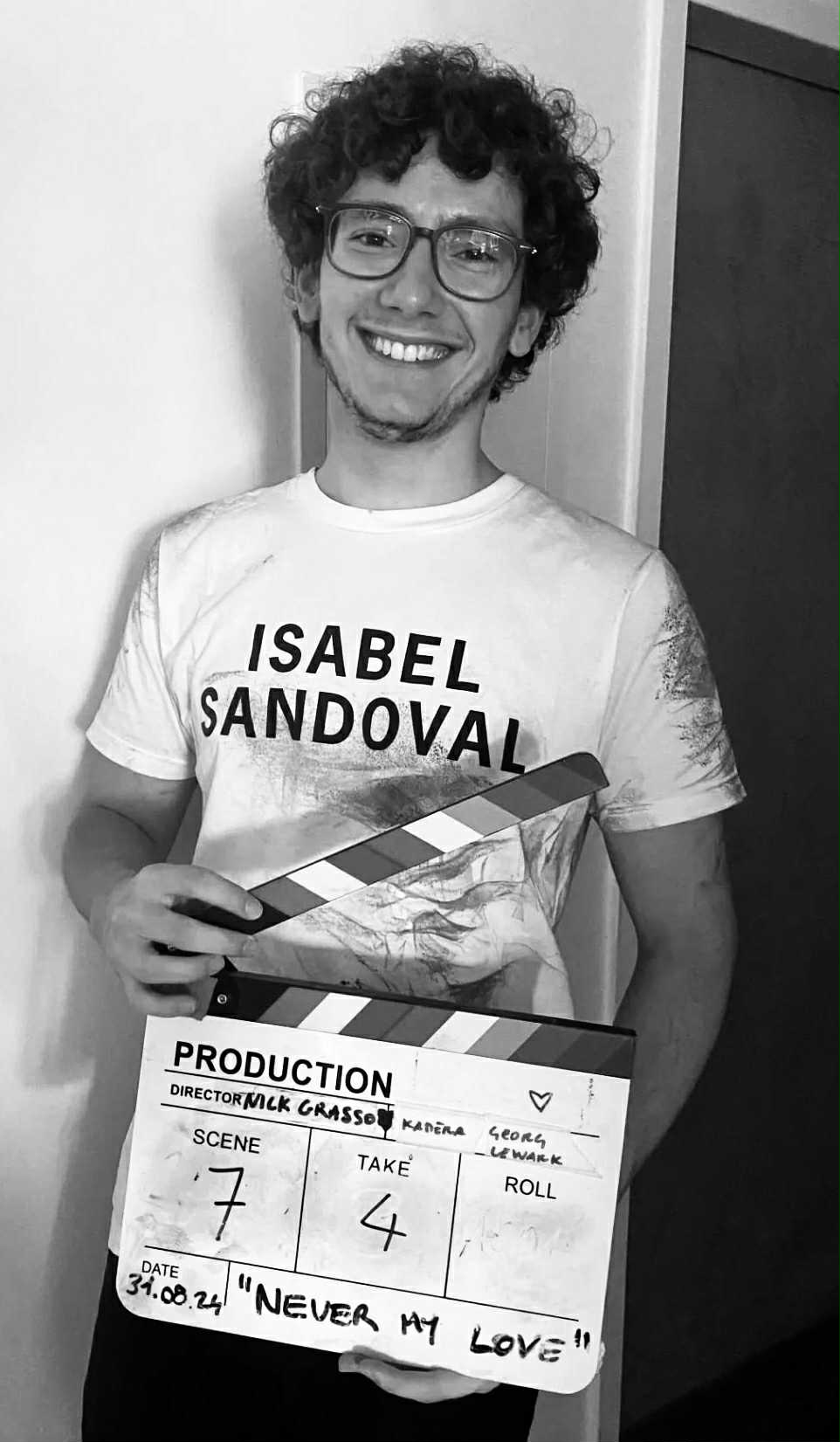
-Who is Nicolò Grasso?
I am an independent Italian filmmaker, currently residing between Venice, Italy, and Berlin, Germany. Whilst studying Philosophy, Politics & Economics in Venice, I decided to pursue my interest in filmmaking by creating a short film celebrating the 150th anniversary of my university. Winning a prize for this scrappy production gave me the motivation to embark on this journey as film director. I finished a Master’s degree in Film Production at Solent University, in Southampton, UK, and now I work as a film director and film editor.
-Do you remember the exact moment you fell in love with cinema?
Though cinema has been a constant throughout my life, watching many family and adventure classics ever since I was 3 years old, there is one key moment that made me realize cinema was more than just entertainment, but an art form. In 2010, I caught on TV Tom Ford’s “A Single Man”: through its shifting use of color, meditative pacing and mournful performances, it hit me that film could be so much more than just a pastime or a comforting bedtime story. It was art, maybe the definitive art form, uniting so many talents and crafts to convey emotions and feelings through sound and images. In a way, I have been chasing the high of watching that film, experimenting myself with different cinematic techniques, ever since.

-Tell us about your project “Never My Love”.
Originally envisioned as a feature film, in its current form “Never My Love” is an abridged version of the opening scene, working as both a standalone short and a proof of concept.
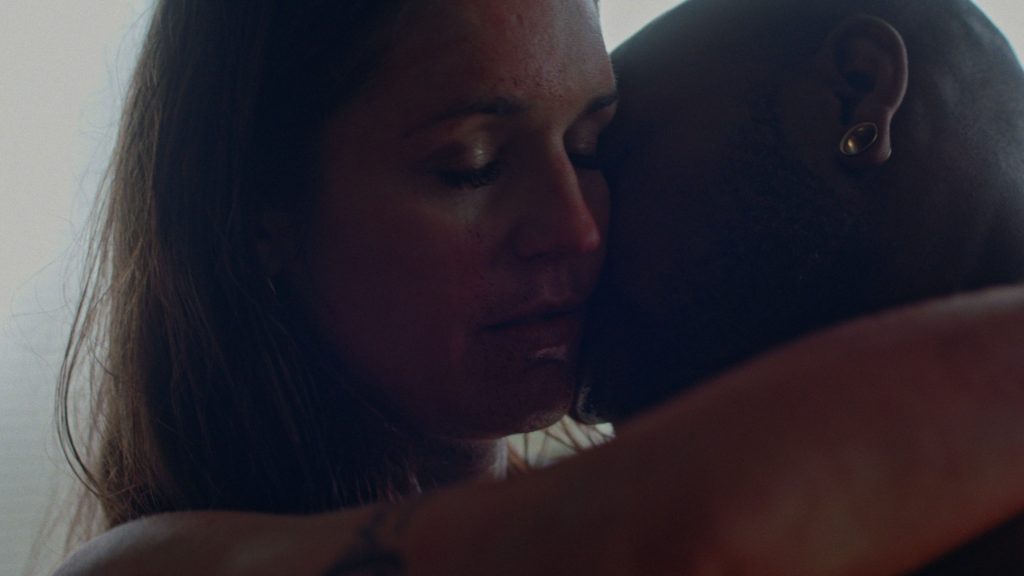
The story is set in Berlin. In a nightclub, a lonely man, David (played by Jonte Fra), is seduced by a mysterious person, Jules (Bishop Black). After seducing him, Jules takes David back to their place to meet their partner, Hanna (Jasko Fide), to spend an unforgettable night together.
The story was born from an inherent sadness that can be felt in nightclubs: all these people and bodies colliding together, strangers meeting in one place, fighting the daily emptiness of life by drowning in noise and sweat. What if, in one of these places, you met someone that can give meaning to your life? Someone that will remember you forever?
Playing with both horror and queer tropes surrounding hook-up culture and “stranger danger” narratives, “Never My Love” does not aim to disturb or generate distrust. If anything, the desired effect is opposite: despite leading to a bloody sensual climax, what Hanna and Jules offer David is a symbol of true love, acceptance, and belonging. It is Georges Bataille’s idea of cannibalism, more philosophical than literal, wherein the act of consuming one’s flesh is the ultimate assimilation of who that person is.
As this is quite the balancing act and a difficult tone to convey through words alone, I ended up mostly self-financing the film with some help through crowdfunding. The cast features actors with a background in adult filmmaking, showcasing their genuine acting talent and commitment to the craft, while the crew was primarily made of queer individuals, most of whom work in Berlin.
The dream is that the short version of “Never My Love” can be used to develop the feature-length version, which would explore themes of finding and losing love, remembrance, and accepting one’s mortality. But, as of now, the short film stands on its own two feet: I am proud of everyone’s work in making this project come to life, and I believe it showcases my own range as a filmmaker, having previously directed smaller projects leaning more towards video art.
-Which Director inspires you the most?
It is a tie, as my two main inspirations complement each other: David Lynch and Maya Deren. Through their knowledge and passion for art forms other than filmmaking (primarily painting and dance), they managed to tap into the subconscious with their works. They are a reminder to embrace metaphors and allegories, to be intuitive in my craft without over-analyzing every step. Film is such a complete medium with the power to overwhelm the senses, and both of these artists’ works can conjure dreams and nightmares alike, making viewers get lost in distorted versions of reality.
My favorite David Lynch film remains “Blue Velvet”, with its exploration of sex and violence bleeding into the DNA of “Never My Love”, while for Maya Deren I will often go back to “Meshes of the Afternoon”, its loop structure and affordable means of production making it an inspiring watch each and every time I see it.
-What do you dislike about the world and what would you change?
We are witnessing so much violence and hatred in all forms of life: from the return of fascism and spread of extremist ideologies, to the many wars and genocides happening around the world supported by Western governments, it is easy to feel like there is no hope for the future. I think that all forms of art, not just film, can help bring change in small ways. A powerful song, a moving film, or a rousing poem can inspire one, ten, one hundred, one thousand individuals to do good, be good, support the oppressed, and believe in the future. After all, if we completely lose faith that things can change and get better, what is the point of going on? In my own small way, through my art I want to be politically involved, starting with telling openly queer stories as certain governments push back against equal rights, and continuing with upcoming projects about the immigrant experience and the need for supportive communities.
-How do you imagine cinema in 100 years?
As cinema is a little over 100 years old already and it has undergone significant changes, I believe we will see big leaps with technological means, more affordable access to cinema-grade equipment, but also a proliferation of anti-art films, from soulless AI-generated productions to even more mind-numbing films by committee produced exclusively to make a quick buck. True cinema though will endure, the one made by humans, to tell personal, intimate stories that will connect with many around the world, and ways of distributing it will only get easier. In my opinion, cinema in 100 years will be in a complicated spot, but not a hopeless one where hand-crafted films do not exist anymore.
-What is your impression of WILD FILMMAKER?
I am happy to have discovered this worldwide community of filmmakers and film lovers that champions both independently made films like “Never My Love” as well as true artists of their craft. I look forward to connecting with more people inside this network, and to hopefully meet some at upcoming film festivals.