Where does your desire to express yourself through art come from?
As a child, I was always deeply interested in movies. What was behind them? Who told them? How were they filmed? Who wrote the stories? And how did they make the message connect with thousands of people?
Each film left a positive message in me and, therefore, made me a better person every day. When I was a teenager, I went to the movies a lot and discovered what we call “The Magic of Cinema.” My determination at that moment was absolute. I wanted to do exactly the same thing: tell stories through a camera. I wanted to be a filmmaker to tell stories that evoke emotion and convey ideas that connect with people.
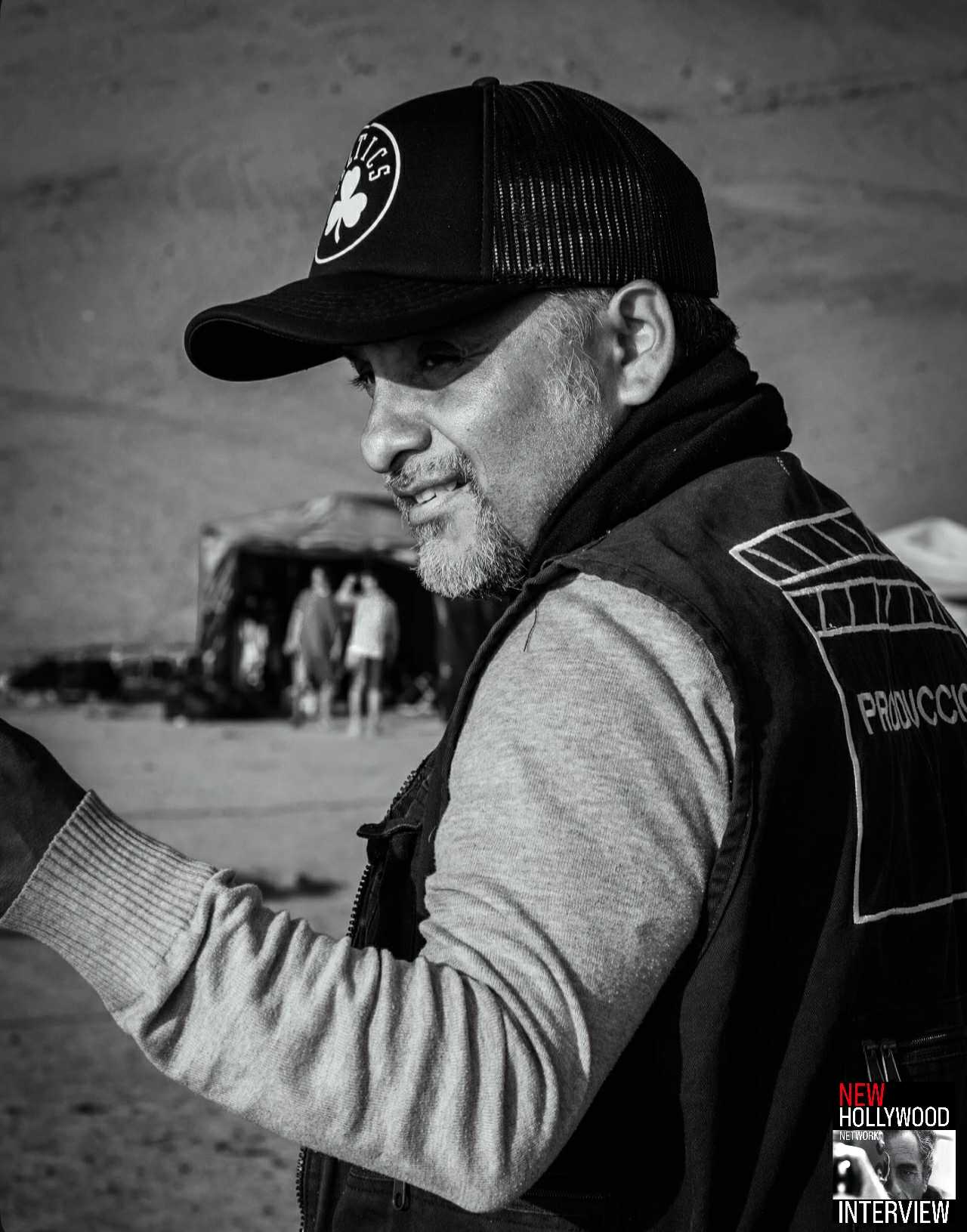
I first started as a producer and director at Gato Pardo Producciones, where I learned everything about the audiovisual world and advertising, and later made a leap into film directing my own projects.
The art of cinema isn’t just about telling a story; it’s about speaking another language, about speaking with the camera, with music, sound, color, acting, and many other factors. All that composition was an art that until now I feel as my own voice, my own feeling and my own expression.
What are your goals as an artist?
My goal as a filmmaker is to be a good communicator in my country (Peru), to get people to reflect, to receive a good message, to be moved, to be entertained, to relax, to cry, to laugh, to know who they are and who they want to be tomorrow, regardless of the theme of my projects, whether social, political, or cultural.
Our society today needs more art, more cinema, to educate our environment, generate conversations, recognize our values, question our beliefs, and connect with many people with rich experiences to share.
Now, I also have a personal and professional goal as an artist: to be the first film director in Peru to successfully tell three stories in a different way. “LA HORA ROJA” was the first Peruvian film I shot in a single sequence shot; to date, no one has done this. My second film is already in pre-production and will be the first to be shot with “ONLY ONE ACTRESS.” Finally, my third film is a film with “NO DIALOGUE.” These films don’t exist in Peru, and it would be great for me to tell these stories.
What is your opinion on the cultural industry?
In Peru, we have an arthouse and film industry that is growing little by little. We are releasing more films every year, but unfortunately, many of them only stay in theaters for a few weeks and are gradually becoming mainstream films. Some of them choose to be shown at International Film Festivals, and after winning several awards, our theaters only give them a certain amount of leeway to premiere.
Our productions are subsidized by my country’s Ministry of Culture, but few of the more than 100 films that participate receive this financial support. That’s why many independent films seek their own financial resources, and I am one of them, since I had to produce “LA HORA ROJA” with my own money, and therefore the mission to achieve a better film law is still ongoing.
The good thing about all this is that cinema as a place of entertainment has never stopped functioning; it has never been replaced by television or streaming platforms.
Cinema continues to maintain its unique charm as a social experience, where people go to learn, grow, and dream.
Do you think independent artists today have enough opportunities to share their creativity?
Of course, nowadays there are many avenues available to promote art and film. Independent artists now not only have the technology and originality to create freely, but also multiple networks for greater visibility for their projects; we didn’t have those conditions before. Today, everything is globalized; your art can be seen not only in your country but in any country you want, thanks to many distribution and exhibition platforms.
There are also many film festivals where you can showcase your work and receive recognition that can give you a greater opportunity. This is how I showed, for example, my first film, “LA HORA ROJA” (THE RED HOUR). In a short time, I began to be invited to many important festivals that recognized the film as original and I won 33 awards (laurels and a statuette) such as “Best Experimental Film”, “Best Photography”, “Silver Award”, “Excellence Award”, “Finalist for Best Director”, “Semi-finalist for Best Film” and several “Official Selections”.
What new project are you currently working on?
I like projects that present challenges, which is why the first film I shot was a “ONE-STOP SEQUENCE SHOT,” where the challenge was not only for me as the director but also for the crew and, above all, the actors.
I’m currently in pre-production on my second film, “SOLA.” It’s the first Peruvian film made with “ONE ACTRESS,” where her challenge will be to sustain the action and the audience’s interest for more than 70 minutes. This film is about a Peruvian scientist who one day wakes up alone on the top floor of an abandoned building in the middle of Lima. She doesn’t remember her name or how she got there, and worst of all, she’s tied up with no way out. The adversity and struggle that will ensue will be to survive in a post-apocalyptic Lima where everyone is dead and she is the only survivor. I will be releasing the teaser very soon, seeking funding.