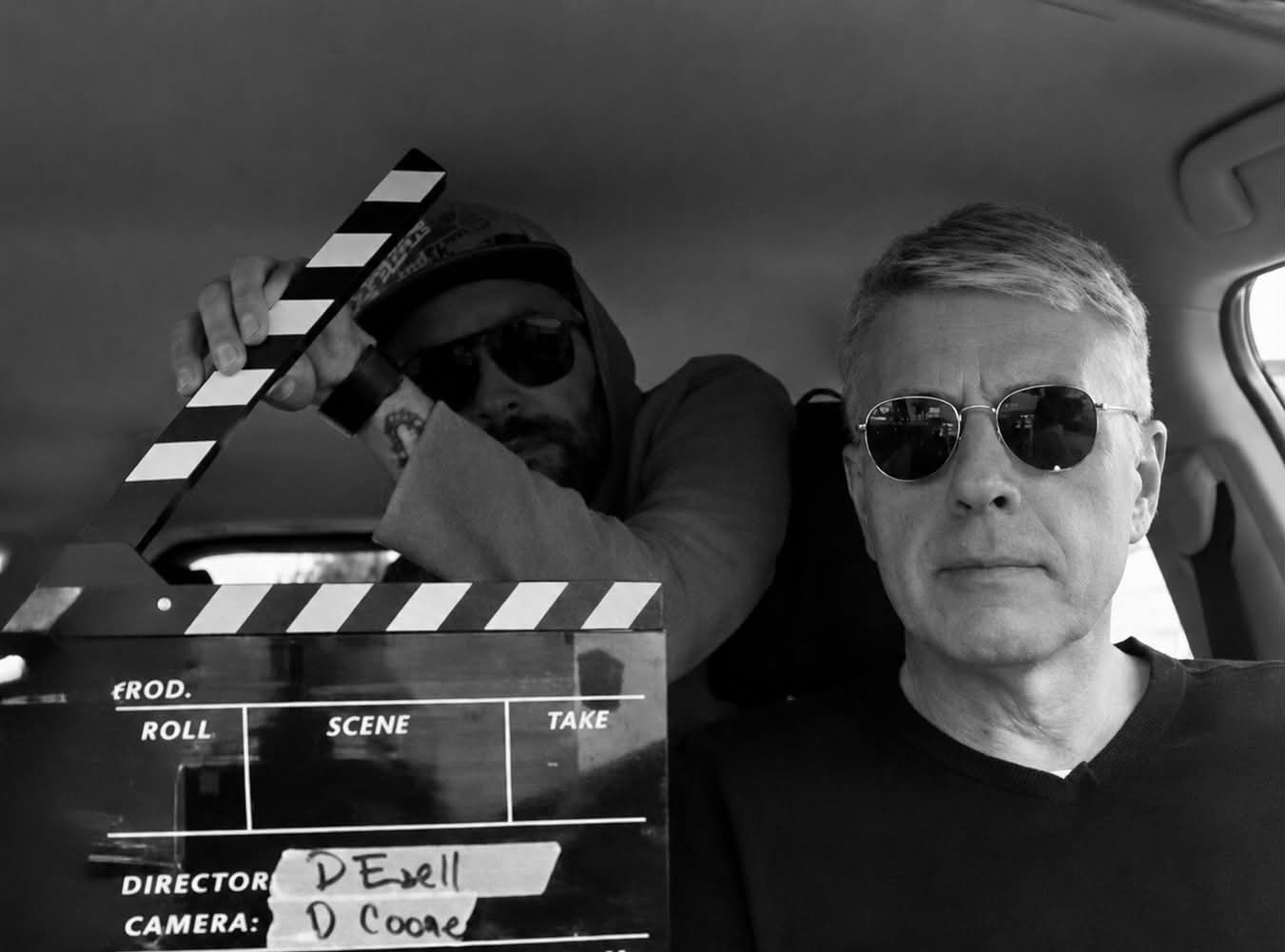
Who is David Ezell?
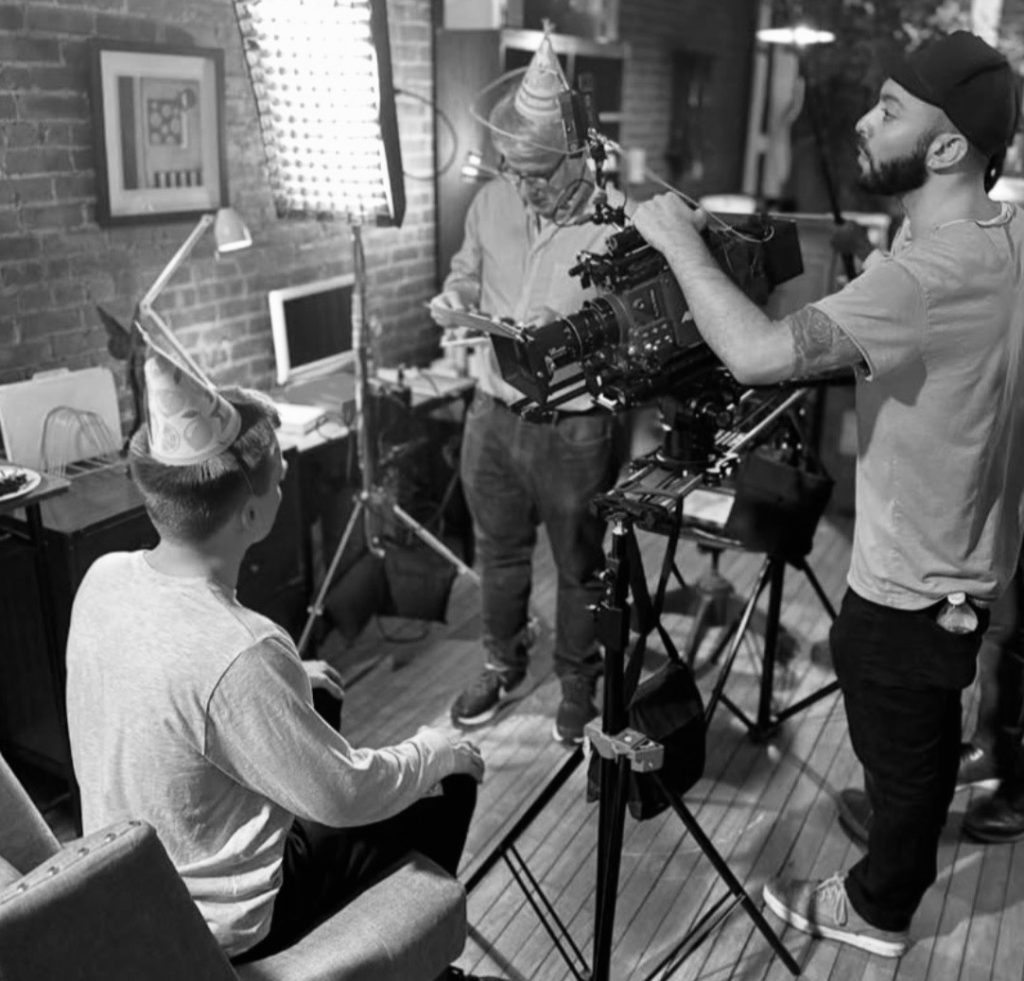
I am first and foremost a raconteur. When I was a boy, my friend and I used to play in Flannery O’Connor’s yard. Her mother, Miss Regina, would come outside and yell at us. Perhaps something rubbed off on me while I hid in the shrubs waiting for her to go back inside. I love telling stories. I am also a screenwriter, filmmaker, playwright, entrepreneur, and educator who has spent most of his life trying to better understand people. Before moving into filmmaking, I trained as a historian and therapist and eventually founded Darien Wellness, a behavioral health organization dedicated to helping people navigate life’s challenges. Looking back, whether in business, education, psychology, or filmmaking, I’ve really been doing the same thing all along: listening to stories and trying to tell them well. As a filmmaker, I’m particularly interested in the intersection of memory, identity, perception, and human behavior. Whether I’m making my documentary like PAPER MOON Rise or a psychological thriller like Occam’s Beard, I’m drawn to stories that challenge audiences to question what they think they know.
Do you remember the exact moment you fell in love with cinema?
I was pre-verbal—or perhaps just a child of few words—but I remember using movies, and to a lesser extent television, as an escape from my parents’ very unhappy marriage. Movies were a place I could run into and become totally absorbed. I was especially fascinated by films of the 1930s and 1940s. Many decades later, I figured out why. Most of those films were relatively short, and my undiagnosed ADHD worked well with that format. Long before I understood anything about attention or psychology, those movies were holding my interest in a way that many other things couldn’t.
Tell us about your project “Occam’s Beard”.
Occam’s Beard is a psychological thriller about a former child star who becomes convinced that his longtime psychiatrist has been replaced by an impostor. What begins as a routine therapy session slowly unravels into a confrontation about memory, grief, identity, and the stories we tell ourselves in order to survive. The title is a play on Occam’s Razor. The screenplay asks what happens when the simplest explanation is actually the wrong one. At its core, Occam’s Beard is about perception. Every character believes they understand what is happening, and every character, to some extent, does.
Which Director inspires you the most?
Wow. That’s an impossible question. F. W. Murnau, George Lucas, John Cassavetes, James Whale, Martin Scorsese, Woody Allen, Spike Jonze, Richard Linklater, Sam Mendes… please stop me. I can go on for a very long time if you let me. The truth is that I don’t really have a single favorite director. Different filmmakers inspire me for different reasons. Murnau’s visual storytelling, Lucas’s world-building, Cassavetes’ emotional honesty, Whale’s humanity, Scorsese’s energy, Linklater’s naturalism, Mendes’ precision—each reminds me that there are countless ways to tell a story well. If there’s one lesson I’ve taken from all of them, it’s that great filmmaking isn’t about following a formula. It’s about finding the approach that best serves the story you’re trying to tell.
What do you dislike about the world and what would you change?
That they charge so much for really good coffee. If I ruled the world, I’d introduce an inverse pricing system. The better the coffee, the less it costs. The finest cup of coffee on Earth would be about fifty cents, while terrible coffee would cost twenty dollars.
How do you imagine cinema in 100 years?
It will be charcoal drawings on cave walls (again)
What is your impression of WILD FILMMAKER?
I think Wild Filmmaker is an amazing place to be—and to be seen. I recently read an article about Martin Scorsese and thought, “Well, I guess this is as close as I’m ever going to get to Scorsese.”
Sharing the pages of the same magazine with him is a real honor. As a first-time filmmaker, that’s pretty remarkable company to keep.