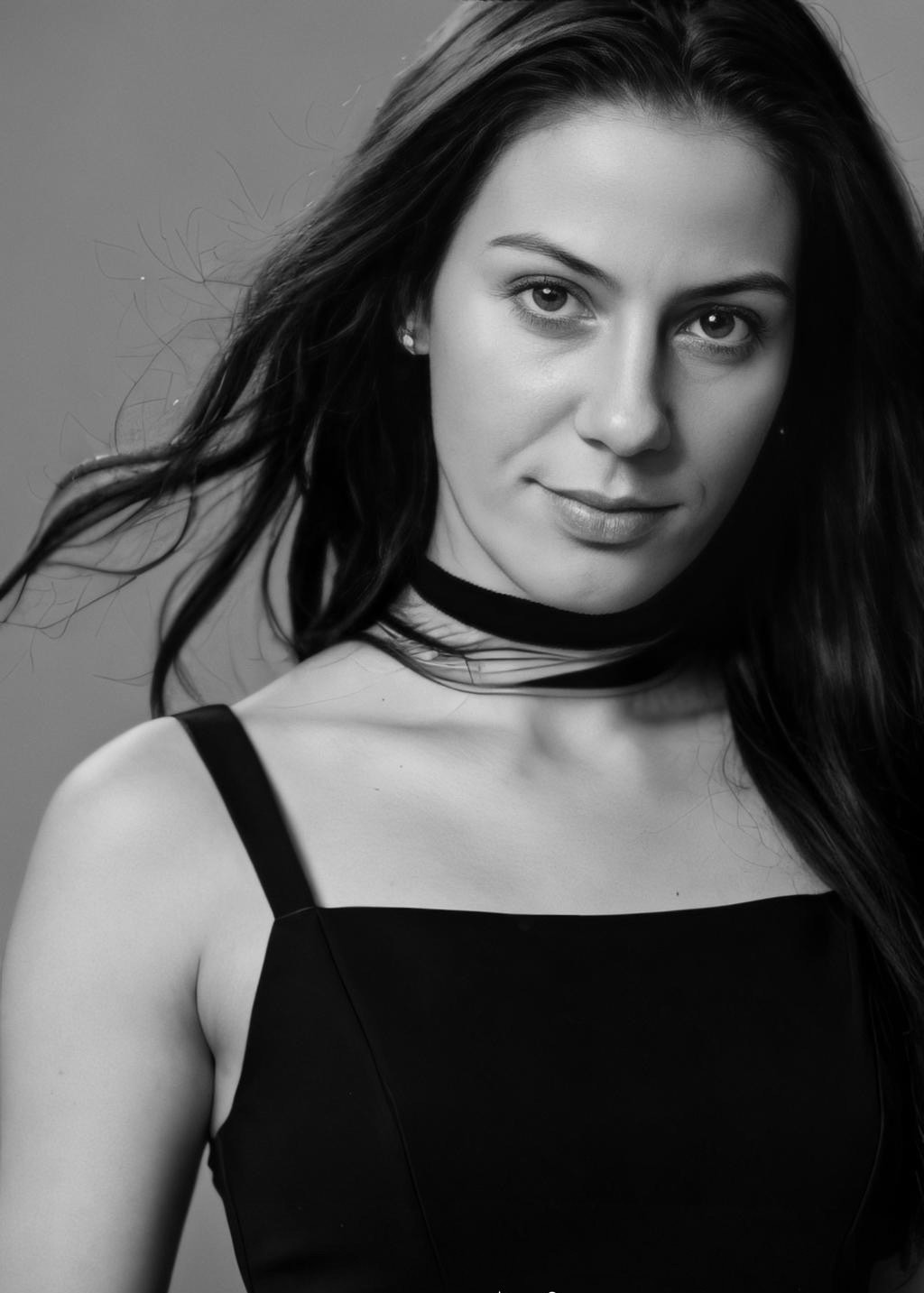
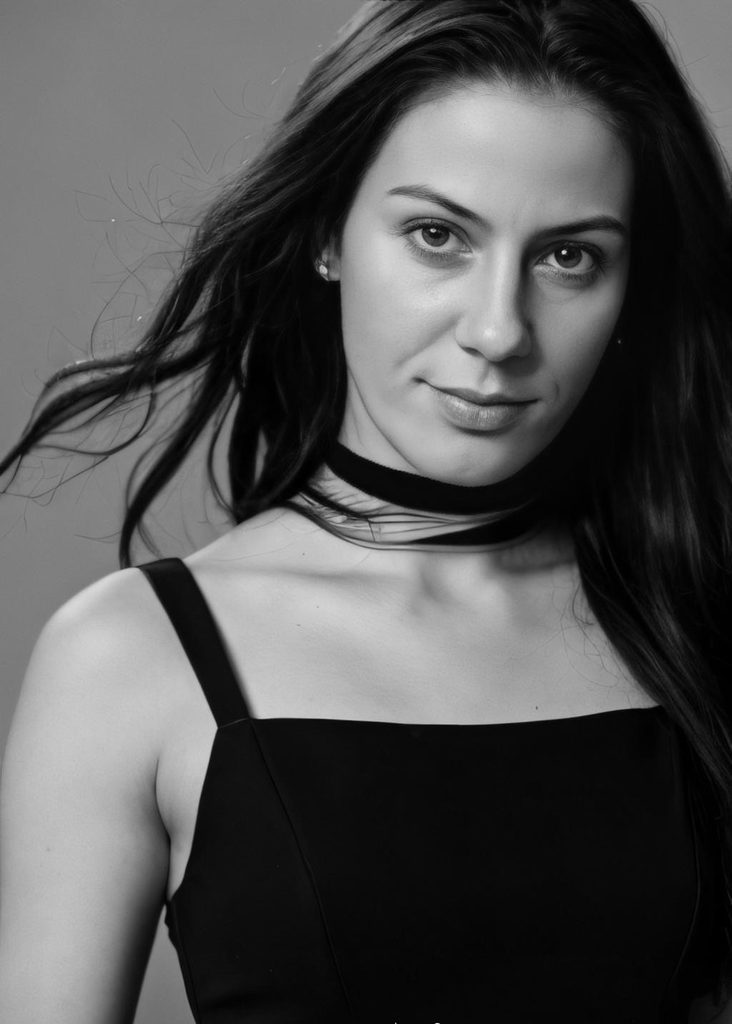
-Who is Patrycja Skawska?
I am a Polish director and filmmaker, but above all, a curious observer of life. I am fascinated by people who devote themselves to something with extraordinary passion, especially those whose stories might otherwise remain unnoticed. My films often explore loneliness, the need for belonging, human connection and the search for meaning. I am particularly drawn to people who create their own worlds through their passions, sometimes in circumstances that seem impossible to overcome. My path to filmmaking began with a background in acting, followed by a professional course in directing and cinematography. Working across different countries and cultures has shaped the way I see the world and deepened my curiosity about how we experience life, find meaning and relate to one another. My directorial debut, Rap Like Grandma: Suni & 7 Princesses, took me to South Korea, where I encountered a group of elderly women who, after learning to read and write later in life, began transforming their poetry into rap. The documentary has received numerous international awards, including the Audience Choice Award at the Vindhya International Film Festival, Best Documentary Short at the Milestone International Film Festival and Best Women Empowerment Film at the Milan Indie Film Festival. In Greece, I directed Like a Rolling Stone, a documentary about Panagiotis Manikis and his lifelong dedication to natural farming. The film explores our relationship with nature and reflects on contemporary ideas of progress, consumption and the ways we choose to live. It received the Grand Prize at the International Taygetos Film Camp. My third documentary, Passions, brought me back to Poland and to the story of Tadeusz Modrzejewski, who spent more than thirty years hand-copying the works of Nobel Prize-winning author Władysław Reymont. His extraordinary devotion became a starting point for a reflection on artistic vocation, cultural memory and what it means to dedicate a life to something deeply personal. The film has received three international awards at the Pageant Film Festival, London Indie Film Festival and Mei International Film Festival. Although these stories unfold in different countries, cultures and circumstances, they are connected by my fascination with people who follow their own paths and remain deeply devoted to what gives their lives meaning. I am interested in lives that are not necessarily defined by conventional ideas of success or recognition, but by commitment, curiosity and a sense of purpose.
I believe documentary cinema can preserve not only stories, but also memories, values and ways of seeing the world that might otherwise disappear. Through my films, I want to create space for voices that are rarely heard and invite audiences to reflect on their own ideas of purpose, belonging and the different ways a meaningful life can be lived.
-Do you remember the exact moment you fell in love with cinema?
I fell in love with cinema relatively late, and it happened gradually rather than in one particular moment. For half of my life, I didn’t have the opportunity to watch films, and cinema was never my favourite art form. I started with short documentaries, then moved on to psychological films and longer forms, which expanded my perception of the world. Through paintings, art exhibitions and photography, I began to see reality in frames, experimenting with images myself and carefully observing the world around me.
What fascinates me about cinema is its limitless creative potential. It allows multiple narratives to unfold simultaneously, exploring various issues and events through different layers. Sound, imagery, screenplay and narration offer distinct ways of conveying meaning, while metaphors introduce additional depth. Cinema can evoke emotions in countless ways and stimulate the imagination, allowing viewers to discover interpretations that the filmmaker may never have consciously intended.
-Tell us about your project “Passions”.
“Passions” is a documentary about Tadeusz Modrzejewski, a man who devoted more than thirty years of his life to hand-copying the works of Polish Nobel Prize-winning writer Władysław Reymont and bringing the world of his novels to life through painting. I met Tadeusz just three months before his death. What began as a film about an extraordinary dedication to literature became something much more personal: a reflection on solitude, the passage of time, the meaning of creation and the invisible forces that guide our lives.
The story begins with a dream, which becomes the first thread connecting two lives separated by time. Reymont, who preserved the spirit of rural Poland through his writing, and Modrzejewski, who devoted decades to preserving and reinterpreting those words, enter into a quiet dialogue. Built around Tadeusz’s last recorded interview, the film is not a conventional reconstruction of his life, but an exploration of the choices, beliefs and passions that shaped it.
I was fascinated by the question of what makes someone dedicate decades to an activity that may never bring recognition or material reward. Where does such devotion come from? Is it passion, a sense of mission, a spiritual calling, or perhaps something we cannot fully explain? How does passion become a way of living rather than simply an interest?
The film moves between memory, imagination and reality, exploring the relationship between an individual and their inner world. Solitude becomes the beginning of creation, while the candle, a recurring visual motif, symbolises both the fragility of life and the persistence of the creative spirit.
For me, “Passions” is also a story about cultural memory. Tadeusz’s work became an act of preserving not only literature, but also the Polish language, traditions and a vision of life rooted in simplicity and a profound connection with nature. Every culture survives because there are people who quietly decide that it is worth carrying forward. At the same time, the film raises questions that extend far beyond one man’s story. What gives life direction? Is creative freedom still possible in a world increasingly shaped by visibility, constant noise and the need for approval? What does it mean to follow one’s own path, even when it leads away from
conventional ideas of success?
One sentence accompanies the entire film: “In hopelessness, there is hope.” I have never understood it as blind optimism. For me, it speaks about the courage to keep searching for purpose, even when the way forward is uncertain. It reminds me that life is never simply black and white, and that meaning can sometimes be found where we least expect it.
Ultimately, “Passions” is an invitation to slow down and look at a life measured not by recognition, but by dedication. It is a reflection on creative independence, the preservation of memory and the courage to remain faithful to one’s own values. Above all, it asks a question that has no single answer: what gives a human life meaning?
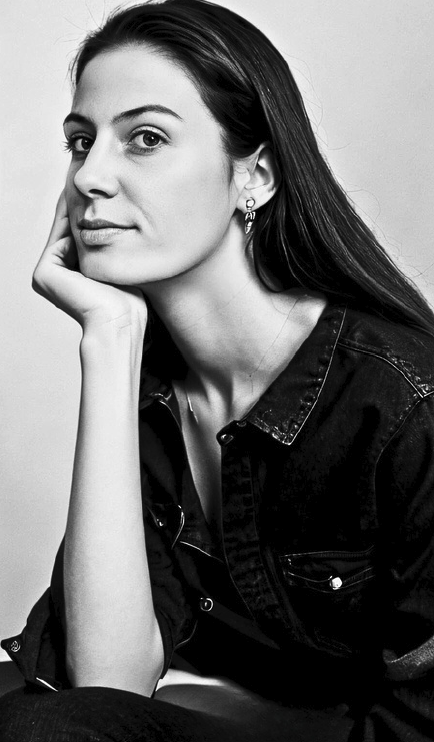
-Which director inspires you the most?
I admire Almodóvar for his unconventional visual language, bold use of colour and expressive compositions. His ability to combine melodrama with dark humour while exploring human relationships, desire, identity and the contradictions of human nature makes his films particularly compelling to me. I appreciate how he uses imagery to express emotions that dialogue alone cannot capture. On the other hand, there is Miyazaki, who inspires me through his approach to storytelling, the construction
of his screenplays and the way he guides the unfolding of events. His films are rich in metaphors, symbolism and hidden messages. I particularly appreciate how he portrays reality through his unique visual language, exploring profoundly human experiences, our relationship with nature and the delicate boundaries between good and evil. His stories embrace the complexity of life, leaving room for mystery, reflection and meanings that reveal themselves differently to each viewer.
-What do you dislike about the world and what would you change?
What troubles me most is the system that shapes modern life. How time is spent, the lifestyles that are encouraged, and how the human mind responds to activities and forms of entertainment designed to capture its attention. I find it disturbing how little space is left for searching for truth, connecting with nature or questioning the purpose of existence. So much time is devoted to choosing professions, pursuing careers and building social status that the spiritual journey and the fundamental questions of why we are here and what gives life meaning can easily be forgotten.
I believe in our capacity for self-sufficiency, yet the pursuit of wealth, power and social status has led us to spend much of our lives earning money only to buy things that, at least in part, we could provide for ourselves. Growing food, cultivating plants for natural remedies, making cosmetics or simply understanding what the earth can offer us are examples of knowledge and independence that have gradually been pushed aside. Instead, consumption has become an integral part of everyday life, while our connection with and responsibility towards the very thing our existence depends on, the nature, has weakened.
I believe there is room to reconsider this relationship, to understand the value of the soil beneath our feet and recognise how closely our own well-being is connected to the health of the planet. These questions are also reflected in the stories I search for in my films. I am drawn to individuals who follow their inner calling, question conventional definitions of success and refuse to let material possessions determine the meaning of their existence. Their dedication, independence and search for purpose fascinate me, particularly when their choices challenge the expectations of the society around them.
If I could change something, I would want to challenge the systems that shape our desires and our relationship with time, creating more space for reflection, independence and a renewed connection with nature.
-How do you imagine cinema in 100 years?
I imagine cinema becoming increasingly immersive, with technologies allowing audiences to experience stories in ways we can barely imagine today. The boundaries between film, virtual reality and other artistic forms may gradually disappear, opening entirely new possibilities for storytelling. At the same time, I wonder whether technological progress will make us appreciate simplicity even more. Perhaps, surrounded by increasingly sophisticated images and artificial creations, we will develop a deeper
longing for authenticity, imperfection and genuine human experiences. I hope cinema will remain a space for experimentation, artistic freedom and personal expression, rather than becoming entirely shaped by algorithms and commercial expectations. Whatever form it takes, I believe its essence will remain connected to our desire to understand ourselves and others, to imagine what we have never experienced and to discover new ways of perceiving reality.
-What is your impression of WILD FILMMAKER?
What I appreciate most about WILD FILMMAKER is that it gives independent filmmakers a voice and creates opportunities for their work to be seen and heard beyond traditional industry structures. I particularly value the space it offers to share not only films, but also the ideas, experiences and personal perspectives behind them. Through its interviews and international community, it allows us to discover filmmakers more deeply, understand their creative journeys and encounter different ways of seeing the world. I believe there is great value in exchanging ideas, learning from one another and finding inspiration in perspectives we might never otherwise encounter. For me, WILD FILMMAKER represents something important: a space where cinema is not simply about recognition, but also about connection, dialogue and the freedom to express an individual artistic vision.