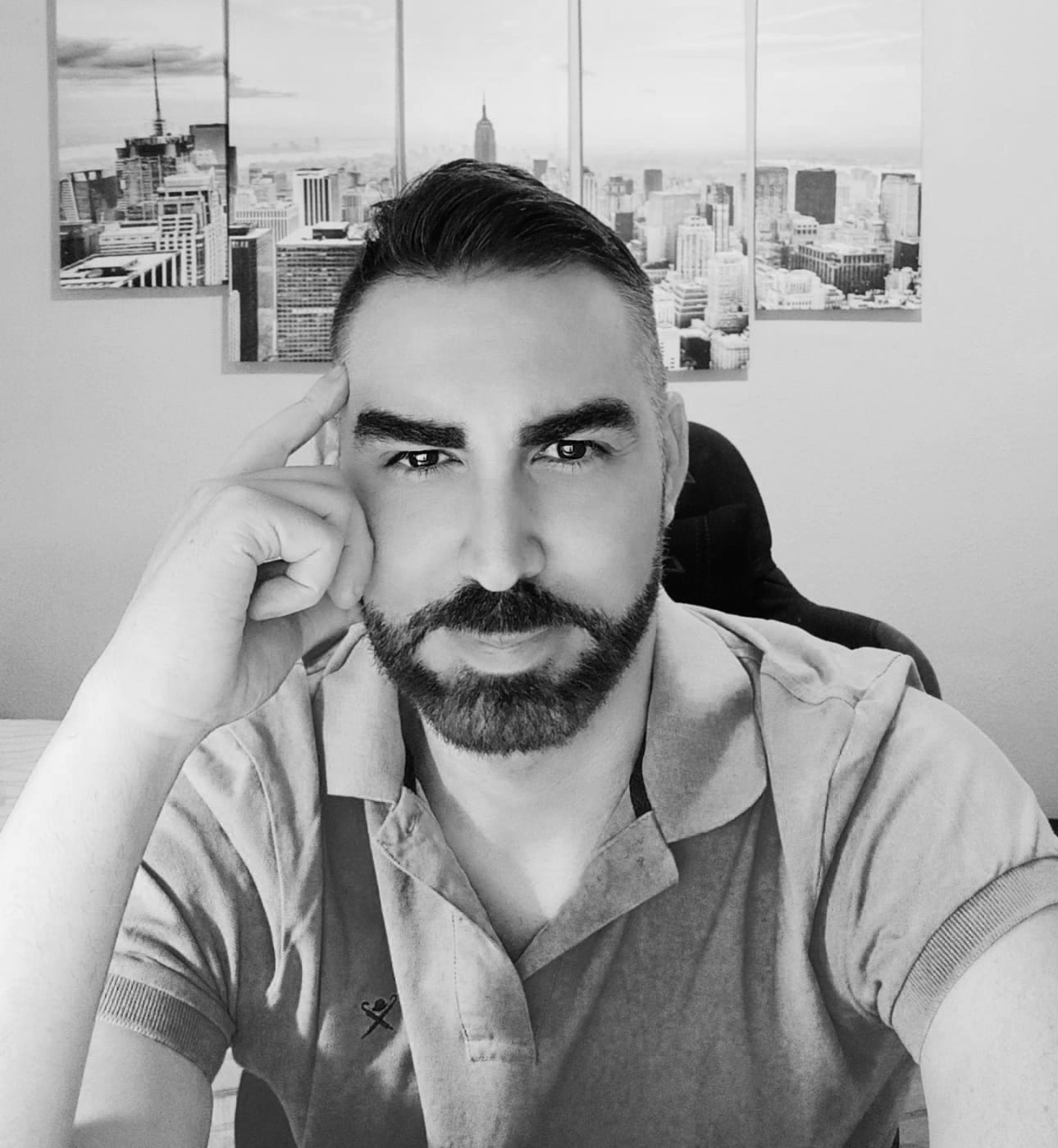

Who is Javier Hinojosa Allely?
I am a Spanish screenwriter who understands cinema as a way of touching the invisible. I am drawn to stories that are not only seen, but deeply felt—stories capable of leaving a wound, a caress, or a question within the viewer. I write from emotion, but also through a deeply visual gaze. I have always believed that a glance, a silence, or a gesture can say far more than a long speech. My pursuit as an author is to find a human truth that lingers in the person who watches.
Do you remember the exact moment when you fell in love with cinema?
I could not point to a single exact moment, because cinema entered my life little by little, like a silent revelation. But I do remember discovering that a story could change you from within and continue living inside you long after it had ended. That was when I understood that cinema was not merely entertainment, but memory, emotion, identity, and refuge.
Tell us about your project “SYNNOIA”?
SYNNOIA is a story of love, loss, and identity wrapped in an intimate and emotional science fiction atmosphere. It begins with a question that has long obsessed me: how far would we be willing to go to hold on to the person we love? In SYNNOIA, technology makes an impossible kind of closeness possible, but it also opens the door to a form of intimacy that is as profound as it is dangerous. Beyond its futuristic dimension, the story speaks of the fear of letting go, the pain of accepting an absence, and the way love, when it clings too tightly, can become a prison. It is a very visual, deeply sensory, and profoundly human work.
Which director inspires you the most?
If I had to name a particularly strong influence, I would say Robert Zemeckis. I have always been fascinated by his ability to unite emotion, storytelling, and spectacle without ever losing humanity. I also deeply admire Stanley Kubrick for his visual ambition, his precision, and his ability to turn every image into something unforgettable. In a way, I am drawn to that union between the emotional power of Zemeckis and the cinematic force of Kubrick.
What do you dislike about the world, and what would you change?
What pains me is the coldness with which we so often coexist with the suffering of others, the speed at which everything is consumed and forgotten, and the loss of emotional depth in so many aspects of life. I would change that disconnection. I would like to see a world that is more sensitive, more aware, and more capable of looking at others with genuine humanity. Cinema, precisely, has the power to restore what the world sometimes numbs.
How do you imagine cinema in 100 years?
I imagine a form of cinema that will be technically unrecognizable to us, with tools and modes of immersion that we can barely begin to imagine today. But I also believe that, if it remains true cinema, it will preserve what is essential: the human need to tell stories, to remember ourselves, and to move one another through them. Technology will change, formats will change, but the need for an image that reveals something profound will remain untouched. As long as human beings continue to seek meaning, cinema will continue to exist.
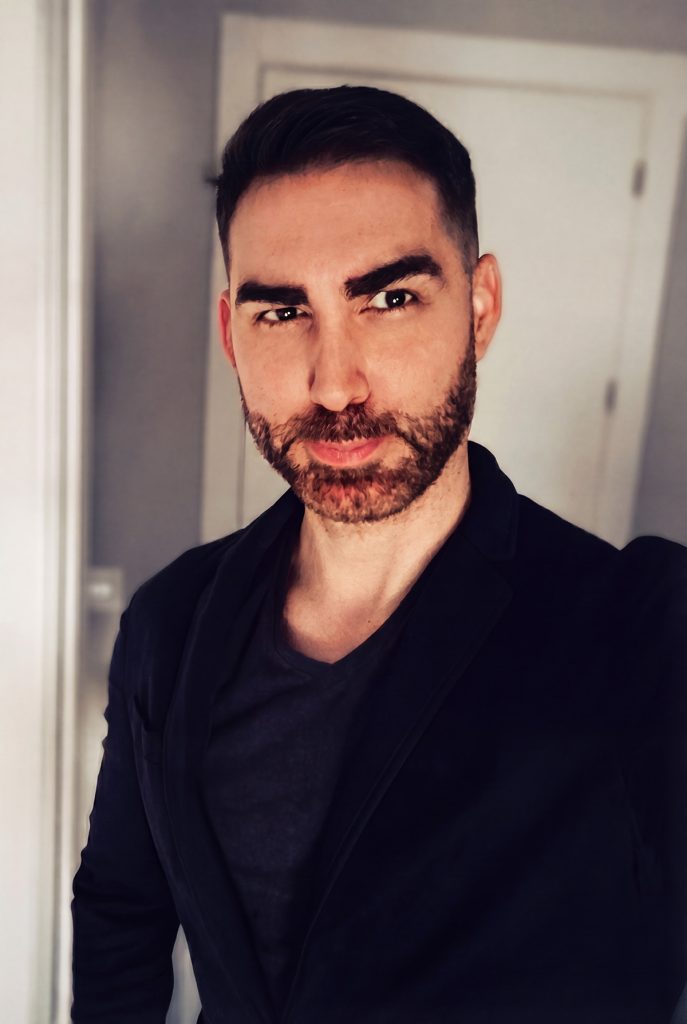
What is your impression of WILD FILMMAKER?
My impression is very positive. I believe it is always valuable to find spaces that support independent cinema and authorial voices. In such a saturated landscape, giving visibility to creators and their stories feels truly important to me. I appreciate the opportunity to share my perspective as an author and to speak about SYNNOIA.