By Michele Diomà
Nearly seven years after the founding of WILD FILMMAKER, I feel a special sense of excitement in publishing this interview. Not only because it is dedicated to one of the films I love most, The Last Temptation of Christ, but also because it explores a subject that I consider to be at the very heart of our editorial identity: freedom.
Freedom of expression is the essential foundation of every genuine work of art. Yet cinema, more than most other art forms, has often had to contend with limitations imposed by its very nature. Making a film has always required significant financial resources and, as a result, has often involved compromises, constraints, and external pressures. Fortunately, this reality is changing. Technological progress and the gradual reduction of production costs are giving filmmakers ever greater creative independence. And with that comes the possibility of a truly free cinema.
In my view, The Last Temptation of Christ stands as one of the finest expressions of that freedom. It is a masterpiece of cinematic art not only for its extraordinary visual and narrative power, but also because it embodies the courage of an artist who chose to remain faithful to his vision despite the controversy it provoked. Martin Scorsese demonstrated that creative freedom is not a privilege, it is a responsibility.
I would therefore like to thank Martin Scorsese for the courage with which he brought this remarkable work to life; all those who, often behind the scenes, believed in the film and made its existence possible; Father Antonio Spadaro, who met with Scorsese and presented him with the book at the center of this interview; and, of course, Pierluigi Di Pasquale, author of this outstanding volume devoted to The Last Temptation of Christ.
Enjoy the interview.
-What inspired you to dedicate a book to Martin Scorsese’s film The Last Temptation of Christ?
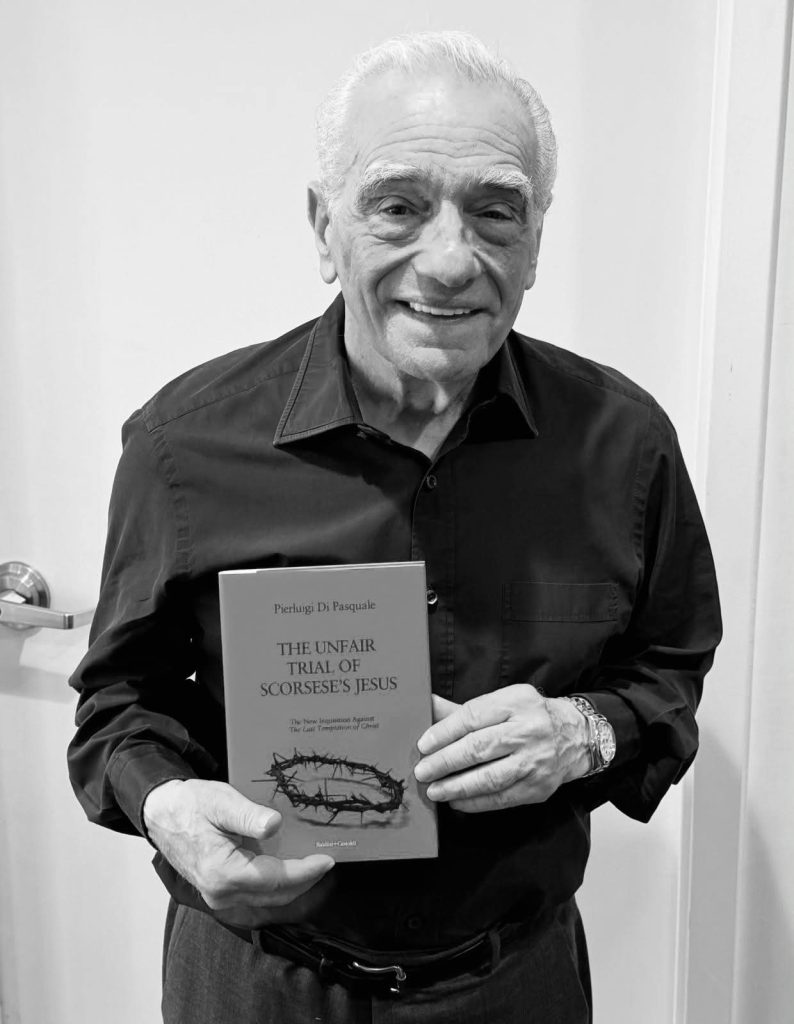
My initial idea was actually to write the screenplay for a documentary to be produced for the fortieth anniversary of The Last Temptation of Christ and its controversial presentation at the Venice Film Festival. During the research phase for the documentary, I found information about the story in many books and countless newspaper articles published at the time, but no Italian publication devoted entirely to the controversy surrounding this film. Moreover, in one of the books I consulted, I read that the film had such a complicated and convoluted history that it deserved a book of its own. In the United States, a few books were published when the film was released in theaters, but they deal only with the events that took place overseas, and I naturally cite them in my essay. Above all, however, I wanted to write a defense of Scorsese’s film, which scandalized Christian fundamentalists and sparked an intense controversy over its alleged blasphemy, ultimately becoming the subject of what was, in every respect, an unjust trial.

–What new or previously undiscovered insights emerged from your research into the challenges and controversies surrounding The Last Temptation of Christ when it was released in 1988?
For The Last Temptation of Christ, Martin Scorsese endured vicious accusations and boycotts, often from people who had never even seen the film, and this began long before he was able to make it. In fact, in 1983, just four days before principal photography was due to begin, and despite five million dollars already having been spent, Paramount, intimidated by the protests and threats of Christian fundamentalists, decided to cancel the project. Even when Scorsese finally managed, five years later, to make his long-desired film about Jesus, violent demonstrations by fanatics followed: cinema screens were slashed, film prints were burned, and theaters showing the movie were even set on fire. In some countries, the film was never authorized for distribution. The controversy continued in Italy when The Last Temptation of Christ was included in the program of the Venice Film Festival by its then director, Guglielmo Biraghi, who declared that he considered it “a very Catholic film.” The uproar was further fueled by a complaint alleging contempt for the state religion, which was, of course, immediately dismissed by the public prosecutor’s office. However, the Italian Episcopal Conference (CEI) issued an official condemnation and, in an attitude reminiscent of the Holy Office, urged the faithful not to see what it described as “an unacceptable and morally offensive” film. Fortunately, many distinguished theologians, intellectuals, and film critics defended the sincerity of Scorsese’s intentions and found nothing scandalous in his work. Lino Miccichè went so far as to describe the film as one of the most incandescent acts of faith ever produced by American cinema. Tullio Kezich, writing in la Repubblica, also came to Scorsese’s defense, suggesting that even a work like this could bring people closer to faith.
-Thanks to Father Antonio Spadaro, Martin Scorsese recently received a copy of your book and expressed his appreciation for it. Do you think this could be the first step toward developing a documentary based on your book?
Now that Martin Scorsese has received a copy of my book thanks to our mutual dear friend Antonio Spadaro, and after recording a video in which the director expressed his appreciation and thanked me for writing it, I am pursuing the documentary project with even greater enthusiasm.
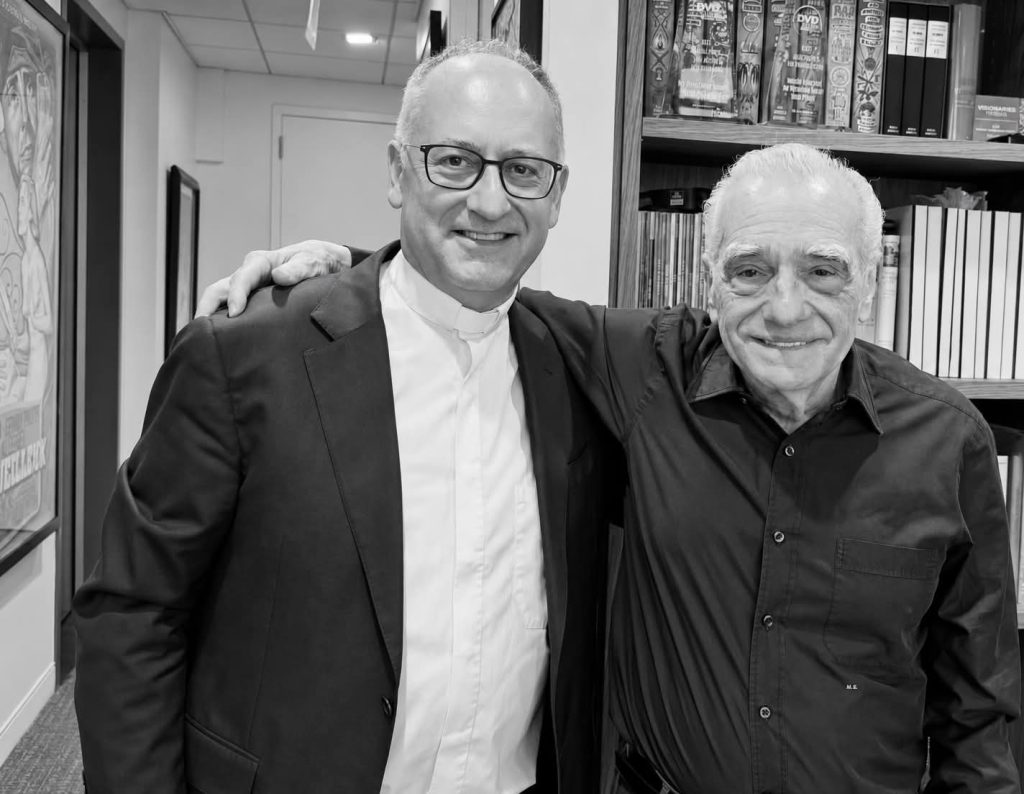
-As part of the reappraisal of The Last Temptation of Christ, the Church has also recognized both the artistic and theological value of the film. Could you tell us more about this important shift in perspective?
Thanks once again to Father Antonio Spadaro, Scorsese’s film has finally been rehabilitated by the Church. Spadaro, who serves as Undersecretary of the Vatican Dicastery for Culture and Education, described The Last Temptation of Christ as a Christologically sound film. He wrote this in a beautiful article published in the May issue of La Civiltà Cattolica, with the approval of the Secretariat of State of the Holy See. This represents a complete reversal of the sentence of condemnation that the Church had pronounced, even in official forms, against the film. This recognition of its Christological correctness amounts to an acquittal that comes almost forty years later. Naturally, all of this will be included in the documentary, which will recount the unjust trial the film endured in the 1980s, the reopening of the case following the publication of my book in 2024, and this rehabilitation, which has made Martin Scorsese extremely happy. Thirty-eight years later, the hope that Scorsese expressed the day after the film’s premiere in Venice has finally come true: “I continue to hope that, in time, the Catholic Church will be able to see the film in the spirit in which it was made. At first, I dreamed that the clergy would appreciate the film and that it would encourage a positive dialogue.”
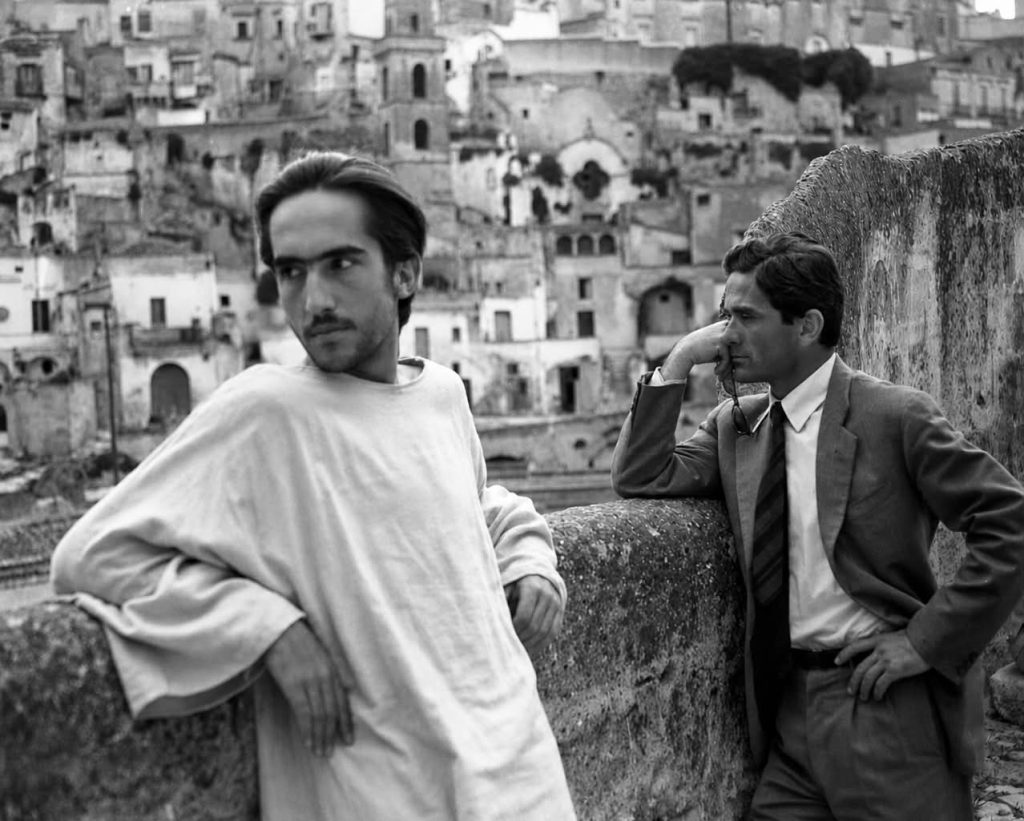
-The Last Temptation of Christ has always reminded me of the atmosphere of Pier Paolo Pasolini’s The Gospel According to St. Matthew. What similarities do you see between these two films?
In the first chapter of my book, I briefly retrace the history of films devoted to the figure of Jesus, highlighting the movies Martin Scorsese watched from childhood onward. Among all the films about Christ, the one that had the greatest impact on him was Pier Paolo Pasolini’s The Gospel According to St. Matthew. Scorsese confirmed this once again during a conversation with Antonio Spadaro at an event held in Rome last December to mark the fiftieth anniversary of Pasolini’s death. This film departs from the grandeur of Hollywood biblical epics and avoids turning the story into a spectacle. Like Scorsese’s work, it emphasizes the humanity of Jesus more than His divinity. Pasolini restores the disruptive power of Jesus’ words without the embellishments of traditional religious iconography. During the event in Rome, Scorsese repeated a statement he had already made many years earlier in an interview that I quote in my book: “Christ is the God-Man for us believers, but for everyone He is the man who gave us the most important message for the survival of our race on earth.”
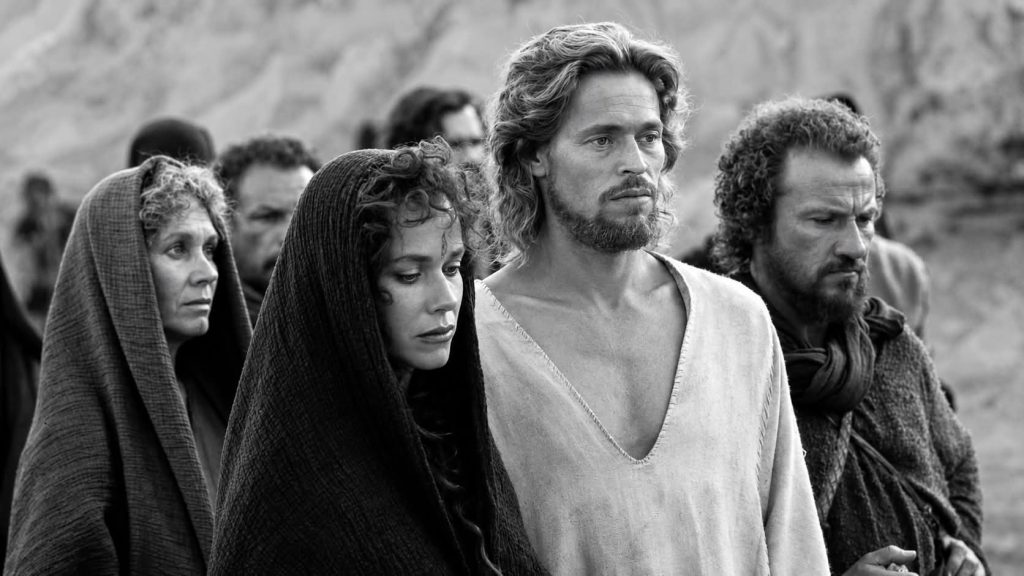
-The Last Temptation of Christ has long represented a battle for freedom of expression in cinema. WILD FILMMAKER, now the world’s largest community of independent film producers, has made freedom of speech its core principle. Do you believe it is important to have an international platform where artists can express themselves freely, without constraints?
Absolutely. The freedom of expression fostered by a community such as WILD FILMMAKER is of tremendous importance. Despite the rehabilitation of Scorsese’s film, many issues still remain. This story should renew attention to the freedom to express one’s ideas and to the right to profess one’s religious faith. At the time, the only production company that refused to be intimidated by the protests and threats of Christian fundamentalism was Universal, which invoked constitutional protections. Fortunately, these freedoms are also guaranteed by our magnificent Italian Constitution, which deserves to be defended because it protects us.