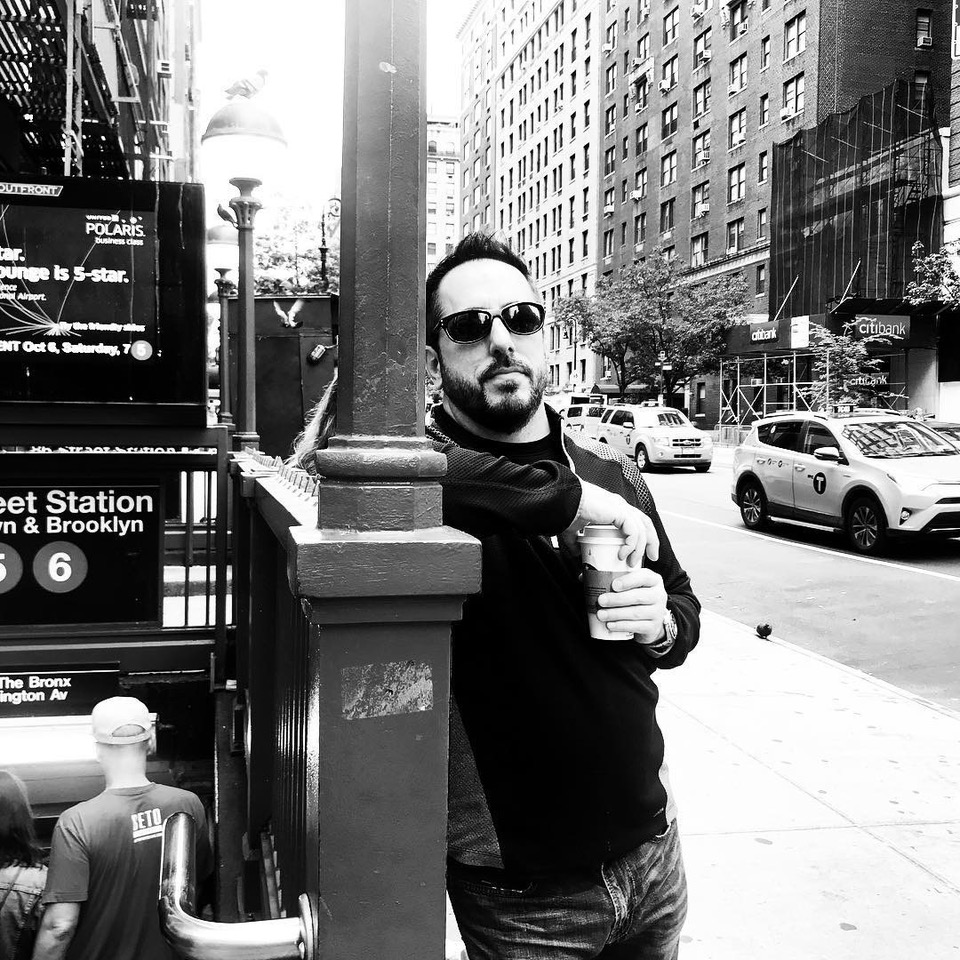
Who is Tom Lonero?
I am a father, a grandfather, and a recovering addict. Those experiences motivate my filmmaking – to search for wonder, walk through pain, hope for love, and explore the world with a wide lens. We only have so much time to figure this all out. The days get shorter – not longer.
Do you remember the exact moment you fell in love with cinema?
I do, It was Jaws – though probably not for the reasons most people cite. Of course, the Indianapolis speech is incredible, but I didn’t fully appreciate what Robert Shaw accomplished there until much later in life. As a kid, when I first watched Jaws, it was the quiet moments that I later realized stayed with me. The evening ocean cinematography – even filtered – still evokes wonder. Those scenes invite your mind to search for what you don’t know. Then the music hits.
Tell us about your project “Vagabond In Red: Iquitos“.
As a recovering addict with decades clean, I’ve experienced a lot of loss and hundreds of deaths. Being part of a 12-step program gave me a good life, and I’m grateful. But each day is a choice – I choose life. Even after working the steps and following suggestions, I’ve still had dark moments and times where I felt I held myself back. I’ve watched friends with decades of sobriety relapse and die.
Over time, treatment has changed. Doctors now often prescribe medication immediately after rehab – something that wasn’t common during the first decades of my recovery. At the same time, many institutions designed to support people with mental health conditions were closed because medications were believed to solve many issues – but addiction hasn’t disappeared. New street drugs seem to have made it worse, and new street drugs will continue to evolve. Homelessness has only grown, and many people struggle to stay on medications, with some even hitting a wall many years later where existing medications no longer seem to be effective.
So – what is the sixth and final episode of Vagabond in Red about? Besides looking at the commonality that a location like the Peruvian jungle shares with the rest of humanity – it really centers on healing trauma. I hope it asks whether there are ways beyond pharmaceutical medicine to address our shared traumas and the broader human condition. Is every prescribed medication the answer? What really is medicine? As a person in recovery, it took a lot of soul searching and decades of research for me to get to the point where I was willing to do some investigative work outside of my own realm of understanding. I walked away believing I did the right thing.
Which director inspires you the most?
Spielberg, obviously – because of Jaws. But I’m also deeply influenced by Tarantino’s use of soundtrack to evoke feeling. Music in film – like in Jaws and others – creates three-dimensional visions in my head. Images drive music choices, and music drives imagery. Then there’s an additional four-dimensional element that hits when making film. My own emotions, past trauma, and inner life, and maybe soul, mixed with the beats, lived experiences, and images, help put my thoughts to film.
What do you dislike about the world, and what would you change?
There’s a lot. But if we could move from inequality toward equality, that would change everything. It would bring hope and reduce the fear that so many people live with. That said, if you want to experience the best the world has to offer, you have to go out and experience it directly. There are wonders far outside our normal scope of lived experience. Get off the couch! Don’t use cruise ships to expand your mind. Take risks.
How do you imagine cinema in 100 years?
I think concerns about AI creating instead of humans are valid. The path I’ve chosen – documenting lived experience – is relatively safe for now. There’s still so much of the world and culture that needs to be documented before it disappears. Cinema won’t disappear, but the way it’s packaged and presented will evolve. I’d be lying if I didn’t say putting on that Apple headset didn’t blow my mind.
What is your impression of WILD FILMMAKER?
I like what WILD FILMMAKER is doing. It’s making shared ideas and connections more accessible within the filmmaking community. I believe strongly in shared connections. I think both Vagabond in Red and my current project Nunnehi – which uses the Appalachian Basin as a microscope to explore human traumas and connections over the last couple hundred years – hopefully reflect some of what WILD FILMMAKER is accomplishing by touching on connection.
Keep up what you’re doing. We need more voices in the world. Maybe now more than ever.