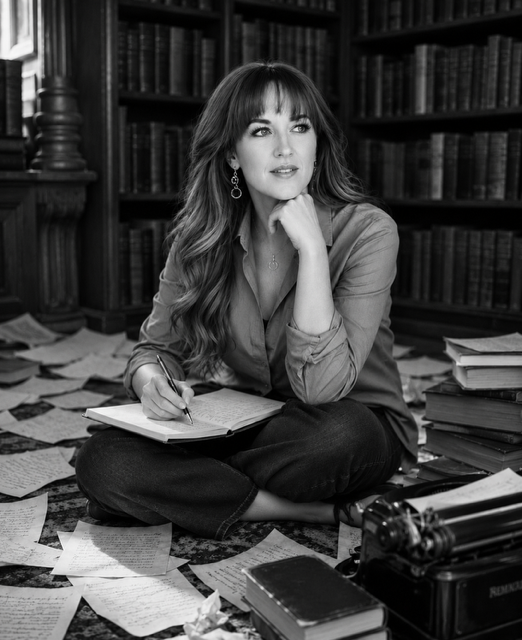
Who is Leslie Lee?
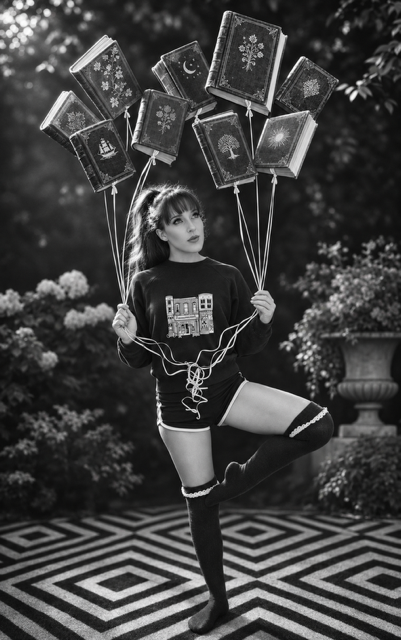
I am a storyteller. Before anything else, before the titles of author, screenwriter, director, or film critic, I am someone who has always believed that stories possess the extraordinary ability to reach places within us that ordinary conversation cannot.
I am the author of the epic fantasy series Legends of the Vale and its prequel series, Age of Gods. My work explores mythology, forbidden love, sacrifice, redemption, and the sometimes devastating consequences of being human. I have a particular affection for morally complicated characters, especially those whom the world has already decided are monsters.
My screenplay adaptation of Child of Dawn, the first novel in Legends of the Vale, has received recognition at international film festivals, including numerous screenplay awards. I also founded The Cinematic Quill, where I review films and interview filmmakers, and host The Written World, a podcast devoted to literature and the creative process.
My background in theatre and filmmaking has shaped the way I approach every story. I don’t simply imagine what characters say. I see how they move, how the light falls across their faces, and what remains unspoken when the dialogue ends.
Ultimately, I am a woman who has spent much of her life creating imaginary worlds in order to better understand the real one.
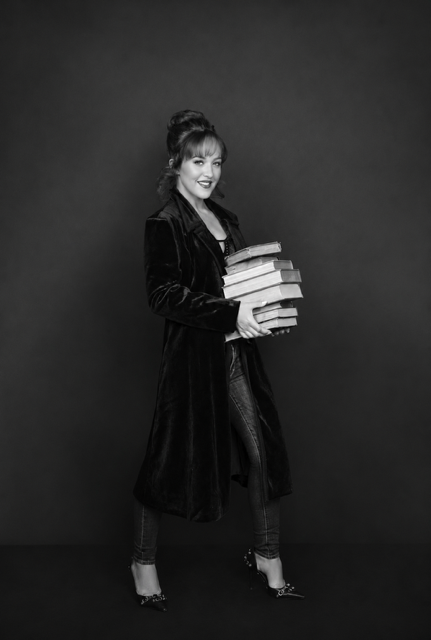
Do you remember the exact moment you fell in love with cinema?
I cannot pinpoint a single moment, because I think my love affair with cinema happened gradually, almost without my realizing it. There is something extraordinary about sitting in the darkness of a theatre and allowing another person’s imagination to become your reality for two hours.
What captivated me was never simply the spectacle. It was the emotion. The ability of a single image, a musical phrase, or an actor’s expression to communicate something that a thousand written words might struggle to convey.
I have always loved literature, but cinema introduced me to an entirely different language of storytelling. It taught me that silence can be dialogue, that shadows can become characters, and that the smallest human gesture can carry the weight of an entire narrative.
I think what truly made me fall in love with cinema was realizing that a filmmaker could make me mourn someone who had never existed, long for a place I had never visited, or recognize a part of myself in a complete stranger.
That is a remarkable kind of magic, and I have been chasing it ever since.
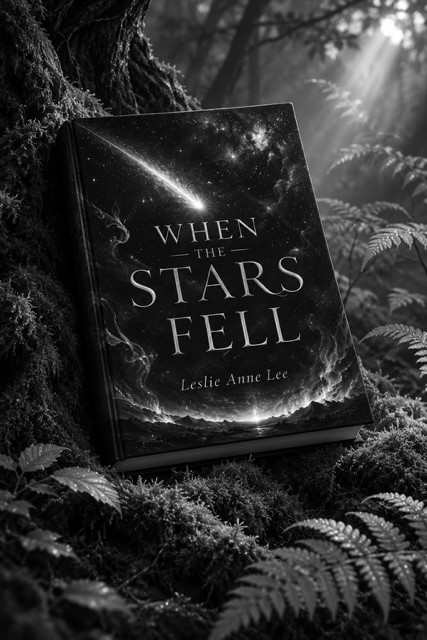
Tell us about your book “When the Stars Fell“.
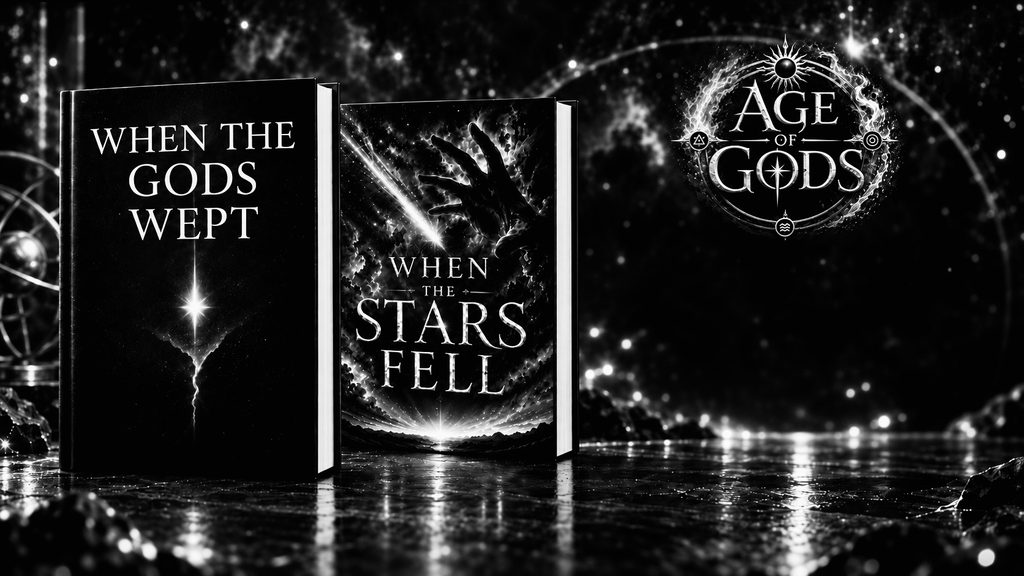
When the Stars Fell is the second book in my Age of Gods series, which serves as the mythological foundation for Legends of the Vale.
It is an epic dark fantasy rooted in the tragedy of immortality, the corruption of love, and the terrible consequences of choices made by beings who possess extraordinary power but remain vulnerable to very human emotions.
At the heart of the story are gods, fallen stars, ancient betrayals, and the origins of a darkness that will haunt the Vale for generations.
One of the central figures is Morwen, a fallen star whose love for Vaelric, the first vampire, becomes entangled with ambition, sacrifice, and devastating consequences. Their relationship reflects one of the recurring themes throughout my writing: love is an extraordinarily powerful force, but it is not always a benevolent one.
I have never been particularly interested in portraying immortality as something desirable. To me, there is an inherent tragedy in living forever while everything and everyone around you changes or disappears.
The gods in my world are not infallible. They are capable of jealousy, cruelty, tenderness, regret, and extraordinary acts of self-destruction. They have the power to shape worlds, yet often cannot govern their own hearts.
When the Stars Fell is ultimately about the moment when love, grief, and pride become so entangled that even the heavens cannot escape the consequences.
It is dark, romantic, mythological, and deeply tragic. And like much of my work, it asks whether love ultimately saves us or destroys us.
Perhaps the answer is that it can do both.
Which director inspires you the most?
Guillermo del Toro is a director whose creative philosophy resonates deeply with my own.
What I admire most about his work is his understanding that monsters are rarely the most monstrous things in a story. Often, the true horror resides in ordinary human cruelty, while the creatures we have been taught to fear possess an extraordinary capacity for tenderness, loyalty, and love.
His films embrace darkness without surrendering beauty. There is an almost literary quality to the worlds he constructs, where mythology, sorrow, innocence, and brutality coexist.
Pan’s Labyrinth is a particularly powerful example of the kind of storytelling I admire. Its fantasy elements do not exist merely to entertain. They illuminate the emotional and moral realities of the characters.
As a fantasy author, I find that profoundly inspiring. I have never believed that fantasy should function solely as escapism. At its best, it allows us to confront truths that might otherwise be too painful to examine directly.
I also admire directors who are unafraid of silence, ambiguity, and emotional complexity. I don’t want every question answered when a film ends. Sometimes the stories that remain with us longest are the ones that leave something unresolved.
What do you dislike about the world, and what would you change?
I think what troubles me most about the world is how easily we have learned to dehumanize one another.
We have become extraordinarily efficient at reducing human beings to labels, opinions, appearances, and affiliations. We decide who deserves compassion and who does not, often without taking the time to understand the story behind the person.
Perhaps that is why I write so frequently about outcasts, misunderstood creatures, and individuals who have been condemned before they have been heard.
I am particularly troubled by indifference. Cruelty is devastating, certainly, but indifference allows it to flourish. There is something profoundly heartbreaking about a world in which people can witness suffering and simply look away.
If I could change one thing, I would restore our willingness to see the humanity in others, particularly those who are different from us.
I would also like to see a world that values art, imagination, and creativity as essential parts of human existence rather than luxuries.
Stories cultivate empathy. They allow us to inhabit lives we will never live and understand perspectives we might otherwise dismiss.
I don’t believe art can solve every problem facing humanity. But I do believe it can make us more reluctant to inflict suffering upon one another.
And perhaps that is where meaningful change begins.
How do you imagine cinema in 100 years?
I imagine cinema will be almost unrecognizable technologically, yet remarkably familiar emotionally.
We are already witnessing extraordinary changes in how films are conceived, produced, and experienced. Artificial intelligence, virtual production, and immersive technologies are challenging our traditional understanding of the medium.
A century from now, audiences may no longer simply watch films. They may step inside them, explore their environments, and experience narratives through technologies we cannot yet comprehend.
The boundaries between cinema, literature, gaming, and virtual reality may disappear entirely.
But I hope that, amid all this innovation, we never lose sight of the most important element of filmmaking: the human imagination.
Technology can reproduce an image, create extraordinary spectacles, and make previously impossible visions accessible. What concerns me is the possibility that we may begin to confuse technical sophistication with artistic substance.
A beautiful image is not necessarily a meaningful one.
Cinema must remain a place where human experience, vulnerability, and imagination matter.
I also hope the next century brings greater opportunities for independent filmmakers. Some of the most extraordinary stories are currently being imagined by people who lack the resources or industry connections to bring them to the screen.
If technology can help remove those barriers without sacrificing artistic integrity, that would be a remarkable achievement.
In 100 years, the cameras may be gone, the screens may be obsolete, and the theatres may have transformed into something beyond our imagination.
But I suspect people will still fall in love with fictional characters, weep over imaginary tragedies, and search for pieces of themselves in the stories of strangers.
Because technology will change.
Human longing will not.
What is your impression of WILD FILMMAKER?
What I appreciate about WILD FILMMAKER is its recognition that cinema belongs to storytellers, not simply to institutions or those with the largest budgets.
The film industry can sometimes become so preoccupied with commercial viability, celebrity, and marketability that the actual artistry of filmmaking is pushed aside.
Independent cinema is important because it offers an alternative. It allows for unconventional narratives, difficult subjects, experimental approaches, and voices that might otherwise remain unheard.
I admire WILD FILMMAKER’s commitment to celebrating that independence and creating an international community in which filmmakers can share their work, experiences, and creative philosophies.
As both a screenwriter and someone who interviews filmmakers through The Cinematic Quill, I understand how meaningful it can be to have a platform that takes an artist’s work seriously.
Recognition is wonderful, of course, but genuine engagement with the creative process is something even more valuable.
We live in a time when creating content has become easier than ever, but being truly seen and understood as an artist can still be remarkably difficult.
Platforms that encourage thoughtful conversation about cinema help preserve its identity as an art form rather than simply another commodity.
And I believe that is worth celebrating.
After all, the future of cinema should not belong exclusively to those who can afford to make films.
It should belong to those who have something meaningful to say.