I could never narrow it down to just one writer. Aaron Sorkin always amazes me, as nobody can write smart and snappy dialogue like that man. And I love the way Joel and Ethan Coen perfectly mix the totally strange or evil with the absolutely hilarious. I’ve been an enormous fan of William Goldman my entire life. He wrote screenplays as diverse as “Butch Cassidy and the Sundance Kid” and “All the President’s Men” and then turned to something as beloved and timeless as “The Princess Bride”. Really, all you have to say is, “rodents of unusual size” and the entire world recognizes and adores the source. I’m also tremendously inspired by Martin McDonagh’s work. He develops moving characters in situations that are dark and disturbing, yet manages to make them amusing and touching at the same time. I love that!
-What is the main challenge you encountered while writing your work?
The main challenge for me is always the actual physical act of writing. For some reason, I find the computer screen somewhat intimidating, and, if I had to just stare at it until an idea formed, blood would probably start to pour from my eyes. The only way I can get started is by scribbling notes on paper until I get a sense of where the story is heading. Then I switch to three by five cards, old school but it works for me. Once I have all the scenes on cards, I finally go to my computer to enhance the characters and dialogue. Cards are helpful, as well, when the scene sequence doesn’t seem quite right. Then I just give them a little shuffle and see what happens. Once I dropped all of them on the floor, but when I picked them up the new order was so much better.
Another challenge for me is to eventually let the characters go, as I tend to get attached to some. There was an endearing old couple in the script of my first feature, “The Sanctuary”, who nattered away at each other constantly. Even when I had a final draft and we were heading into production, Harley and Edna were still with me blathering away at night when I was trying to sleep. They were exhausting!
-Every screenwriter needs feedback after completing their project. Is there someone you always turn to for their opinion as soon as you finish writing?
I prefer not to talk to anyone while I’m writing because I find it distracting, not just because others offer opinions and advice, but because I often don’t know where the script is going myself. I always think I do in the beginning, and then it takes on a life of its own and changes in unexpected ways, and I want that to play out fully before showing it to anyone else. Once I have a solid first draft, I show it to Allen Kool, who’s the producer and director of AKool Film Company. He’s particularly effective in pointing out potential problems with logistics and production I might not have considered, which helps me streamline the script to keep the budget and shooting days under control. After that we’ll meet with Michael Charbon, our executive producer, Yaz Lachporia, our assistant director, and Andrew Brown, our editor and head of post. All of these people are experienced and highly skilled, so I value their ideas and suggestions tremendously.
-Are you currently working on a new screenplay? If so, can you tell us more about it?
I’m excited to be writing a series at the moment called “Noose: The Hangman’s Tale” about hangings in Canada since Confederation. It’s a drama covering the crimes and subsequent trials of those who were eventually sent to the gallows, as seen through the eyes of the hangman hired to perform the grim deed.
-If you had to describe your writing style using three adjectives, which ones would you choose?
Cristina Liberatore is a passionate and versatile professional in theater and film, dedicated to bridging the gap between art and education. With over twenty years of experience, she founded a theater production and distribution company focused on the educational sector. Her eclectic background, encompassing skills in strategic planning, sales, and organization, has allowed her to bring high-quality performances to theaters across Italy, aiming to inspire young audiences and foster a love for theater.
-How did your career in the entertainment world begin?
My professional journey has been driven by a deep passion for storytelling and a desire to make the arts accessible, especially to younger generations. About 20 years ago, I transitioned from a career as a marketing manager in the United States, where I worked in the construction, real estate, and candy industries. These diverse experiences provided me with essential skills in strategic planning, sales, and organization, which I later applied to the theater world. Being an eclectic person, I’ve always enjoyed exploring different professional paths, and this adaptability helped me find my place in the theater industry. I founded my own theater production and distribution company, with a focus primarily on the educational sector. Over time, in addition to distributing my own productions, I began collaborating with other theater companies, bringing performances in both Italian and English to the stage. The most rewarding part of this work has been bridging the gap between art and education, offering performances that inspire young audiences and promote a love for theater. I firmly believe that our work is essential for shaping the future, helping young people understand the value of culture and the beauty of the performing arts.
-If you could change one thing in the world, what would it be?
I would create a world where access to education and culture is universal. I believe that art and knowledge have the power to shape more empathetic, open-minded, and creative societies, and that every child should have the opportunity to experience this transformative force.
-Do you think that artists today have the freedom to express themselves?
Freedom of expression for artists is a complex issue. While we have more platforms and tools than ever, the pressure from social, political, and economic forces often hinders true creativity. It is essential for society to protect and celebrate the authenticity of artists, allowing them to challenge conventions and inspire change without fear of censorship.
-What do you think of WILD FILMMAKER?
WILD FILMMAKER stands out for its bold and innovative vision, celebrating the expressive freedom of independent cinema. With a provocative approach, it stimulates deep reflection on new forms of storytelling and the evolution of cinematic language, fully reflecting the dynamics of the contemporary context. It offers fresh perspectives, valuing raw and authentic creativity without filters. What makes Wild Filmmaker particularly commendable is its commitment to giving a voice to stories that would otherwise remain unheard, providing a platform for unconventional narratives.
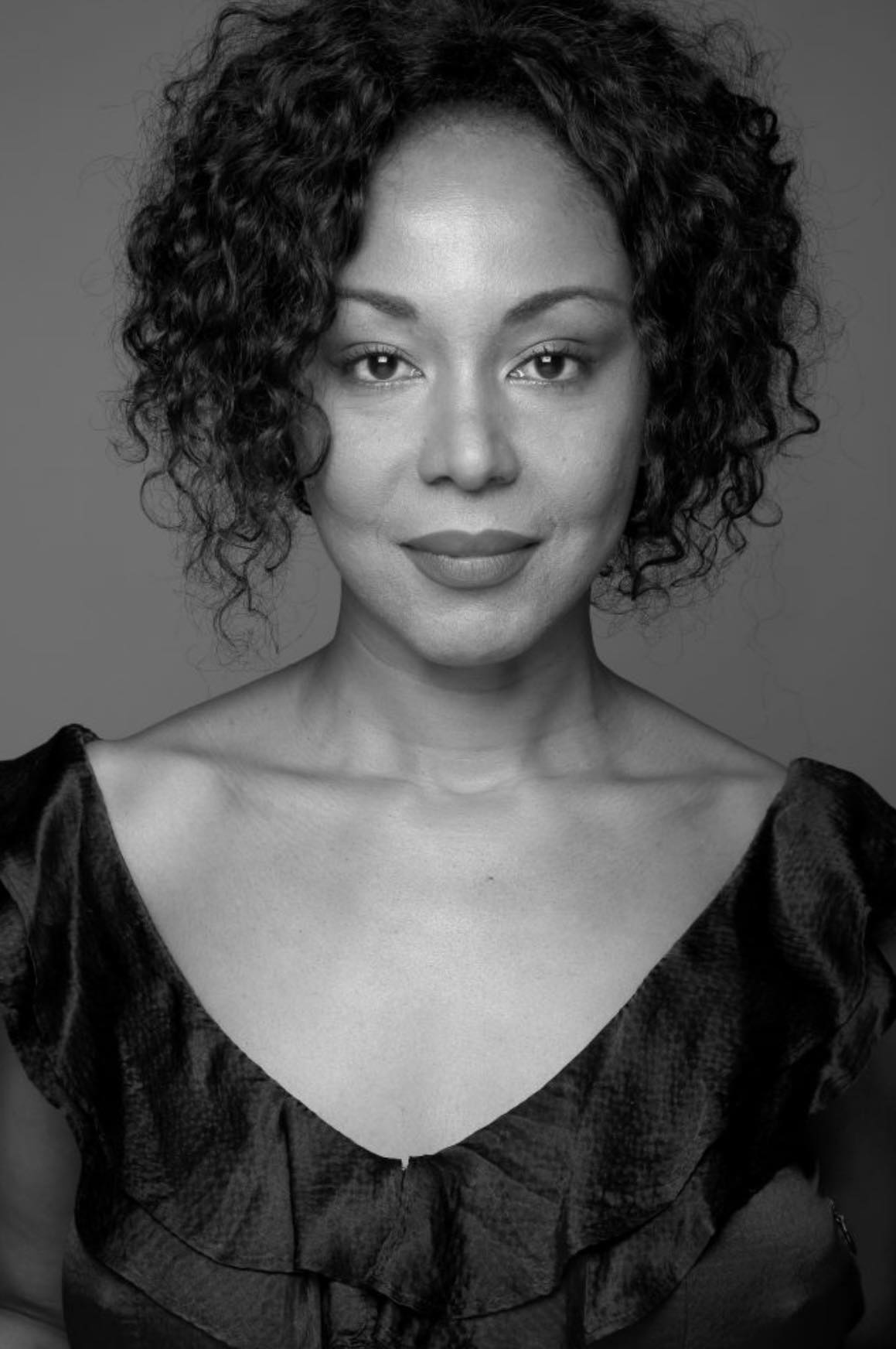
Ira Fronten is the stage name of Irma, who, as a child, discovered she was different and aspired to pursue a career beyond societal expectations. One day, Irma grew up and felt overwhelmed by an aggressive new world. To navigate it, she decided to reinvent herself as Ira Fronten: an actor, a warrior, a dreamer, and the creator of her own path because the world offered no space for people like her. People said to me Ira is aggressive, so I am thinking of signing my next projects as Ira Noemi Fronten.
Do you think the film industry today has been damaged by political correctness?
No, it didn’t. I believe the film industry, despite the wonderful films The Seventh Art has given us, has been damaged by making a large portion of the global audience feel insignificant, negative, or worse, invisible. For years, negative messaging, cultural appropriation, omission, and denigration were normalized.
Now, the industry has realized that overlooked audiences lack the motivation to buy tickets, go to theaters, subscribe to platforms, or watch certain TV shows. Marginalized groups are demanding respect and representation. People want their stories back. They want to correct historical inaccuracies—for instance, acknowledging that the real Cleopatra didn’t have violet eyes. After 129 years, the film industry still lacks a Black actress from South America. I come from a continent where nearly 200 million people identify as Afro-descendants. Yet, at this moment, there isn’t a single Black actress in Hollywood, born in South America, representing these people. While we have some amazing actresses, many of them were born in the United States, don’t speak Spanish, or are biracial. A fully Black actress born in South America, who has fought her way into the big industry and serves as a lead character in films and TV series—sending a positive message to Black girls—does not yet exist.
I was fortunate to work with Ridley Scott on House of Gucci. I was lucky that he received my casting tape. In contrast, another audition I submitted for a film starring Denzel Washington never made it to the director. If politically correct means “finding an open door,” then many people like me can still keep believing. If other aspects of political correctness could include addressing sexual harassment, closing the gender pay gap, and creating more equity for women and LGBTQ+ communities well, this can only benefit the industry.
What would you change in the world?
would replace hate with love. People need to discover the transformative power of love in every aspect of life, and for me, films are one of the many ways to experience that. You can’t create a film if you don’t love the process and the people who make it possible.
What was the greatest source of inspiration for creating your project?
When I was very young, I watched a film about Josephine Baker on TV. I thought to myself: I can be an artist too. I can find someone who loves me and change the world while being happy. Josephine Baker adopted many children. I have none and work tirelessly. I created the Italian Black Movie Awards for the 16-year-old Irma who struggled to be recognized. Through this initiative, I wanted to honor the sacrifices made by individuals who persevere in acting or filmmaking despite an entire world pushing against them daily. Perhaps, it is my way of expressing a maternal instinct.
If you could ask a question to a great director from the past, who would you like to talk to and what would you ask them?
I would love to have a long conversation with Gilbert Moses about his experience as the only Black director working on Roots. As for Alfred Hitchcock, I would ask him many questions. Today, more than anything, I would like to know if he were alive today, whether he would consider having me audition for his next film and what he thinks about vertical film festivals.
Where do you see the film industry going in the next 100 years?
I envision people preserving old movie theaters and building new ones everywhere. I foresee increased investment in high-quality projects and stories from historically marginalized communities. I also imagine that every public and private company will offer a ‘culture bonus’ to employees, encouraging them to go to the theater or cinema at least once a month. I see industry workers being treated as employees rather than freelancers. And finally, I see my name in the books of the greatest actresses in cinema history
-) When did you discover Charlie Chaplin’s cinema? Nourishing and flourishing speaking memories in this film. Golden beauty of this creation .
-) Do you think that today Charlie Chaplin’s cinema can be understood by younger generations?
Yes because the genius of Chaplin is recognized by identification of his I in all these art games where burlesque reigns . But also this serenity akin to peace exists outside of time and Chaplin found it . In Eternity it was already there in this moment where God has given his approval to us poor living as far as Chaplin sings by the grace of God and the luminosity of creation . And in this truth of Cosmos , all injustice does not exist where the marvelous reigns .
-) The pacifist monologue we can see in “The Great Dictator” is still very relevant today, as unfortunately, there are still many wars in the world. WILD FILMMAKER has a dream, which may remain only an utopia: our dream is to create Article 0 for all the constitutions in the world, in which to insert Chaplin’s pacifist monologue. Would you agree with this?
Yes I am agree .
Nothing ages in the red , behind the scenes of life , no more than in art . Everything is whispered, plays hide and seek . All life , all creativity board is a chance to continue the path of Humanity at the crossroads of our destinies who work for peace from this beauty chiseled by inspiration .
-) Charlie Chaplin was a revolutionary poet. How much has his art inspired you?
In this heart the beautiful moves through this music of Eternity . Indeed , beauty is anchored in the inkwell of day and night. I experience this immensely great relationship as a gift from heaven . I rise or low myself into the sublime all fire of truth more than crazy about truth . Secret of the scent of life . Harvests of ideas that blend with my deals . Marriage of beauty , ice and fire .Tens of thousands of desires that come to life under the sparks of my originality as Chaplin . Like a sponge exist ! Rebirth of dust and extreme emotion to give life and power to infinity .
Every poet as Chaplin cannot stand injustice and don’t forget the perfection is love !
And in the night I Prayed !
And in the day I created !
A world to change
Where the light shines
In eternal moment
Of magnificence , kindness and sharing !
Like in my novel and my screenplay : “ The New Triumph of Camille Claudel” published by Edilivre Editions .
Q: When did you realize that the story living in your heart had to be turned into a screenplay and then into a film project?
“Stories living in my heart”—that’s a great phrase because most of my stories live in my head long before they reach my heart. The idea for Cassandra Venice came to me in 2021. Each night after the Venice Film Festival, I’d return from the Lido to the city center, wandering through the silent labyrinth of streets and canals. The story started to take shape during those nocturnal walks.
By 2022, I had found the perfect leading lady, Polli Cannabis, during the Venice International Film Festival (VIFF). We booked a few days to film in Venice. In 2023, during the next VIFF, we shot the final footage and even tested the red carpet together. By 2024, the project had matured into its final form.
Venice itself was a major inspiration. Its labyrinthine canals, ancient architecture, and deep sense of history naturally evoke mystery and suspense—themes I’m passionate about. The city’s unique atmosphere, where beauty and decay coexist, was the perfect backdrop for exploring existential themes. Venice’s ability to blur the lines between reality and myth mirrors the internal conflicts and looming threats explored in the film.
Q: Is there a person you would like to thank for helping you bring your project to life?
Absolutely. When I create stories, I imagine an actual person who could embody the protagonist. Polli Cannabis was that person. Without telling her the exact story at first, I needed her to believe in my vision. Polli’s innate ability to convey depth and complexity made her perfect for the role of Cassandra. She brings a quiet intensity to the character, capturing her internal struggles with grace and nuance. Her ability to embody both vulnerability and strength was crucial for portraying a character who is both a prophetess and a victim of her own knowledge.
Polli went above and beyond, even helping with costumes and makeup, allowing me to focus on the camera, settings, and story twists. Her trust was vital, like during the scene where a character drinks from an imaginary coffee cup. I didn’t explain why at the time, but later clarified that it was a metaphor for the absurdity of life—going through motions while ignoring reality. She embraced it without hesitation.
Even when delays stretched the project into 2023, Polli remained patient and supportive. By the time we finished, the extra effort and time had paid off. I’ve always believed in her and our project, and that belief has a way of inspiring others.
Q: Which writer inspires you the most?
I’d rather talk about directors with unique visions than traditional writers. David Lynch, for instance, has influenced the surreal and dreamlike qualities in Cassandra Venice. Like Lynch, I’m drawn to exploring the darker, more mysterious aspects of human nature and the subconscious. In the film, this is evident in how reality and fantasy blur, creating a world where logic gives way to emotion and intuition. The symbolism, color, and sound design—essential for evoking unease and introspection—are inspired by Lynch’s storytelling approach.
M. Night Shyamalan’s use of plot twists and color symbolism has also shaped my work. I strive to create visually rich experiences that carry deeper meanings, much like his films.
Q: Do you think the Wild Filmmaker Community is helping to turn your dream into a reality?
I’m curious about that myself. I’ve just joined this community, so time will tell. But it wouldn’t be the first time a new project was born during a festival or industry event. Most of my projects have started this way. Meeting like-minded, motivated people is crucial, and I’m always open to collaboration.
Filmmaking began as a simple hobby but has grown far beyond what I expected. By sponsoring my own projects, I’ve gained the freedom to pursue ideas I truly believe in. While it’s not a path to wealth, that’s never been my goal. As the saying goes in the Bond movies: “Never say never.”
Traveling to festivals and connecting with creators worldwide is invaluable. Awards attract attention, foster collaboration, and offer recognition to the actors and crew involved. In the end, what more could I ask for?