“The Rorschach Test” – “Not without gloves” – “The Aesthetics of Failure” by Lena Mattsson

“The Rorschach Test” by Lena Mattsson

“The Rorschach Test” is a multifaceted film about life and its shortcomings. The film touches upon normative questions on what is considered sick or healthy in contemporary times. Lena Mattsson illuminates life, art and film history in a poetic and metaphorical way in the film “The Rorschach test”. The foundational question is; What is normal? Is the answer always in the eye of the beholder?

Actor: Ebba Melber 

Music: Conny C-A Malmqvist.

Synopsis

“Not without gloves” by Lena Mattsson

Lena Mattsson’s experimental film “Not without gloves” reveals the common identity that we share in the experience and memory of the landscapes we come from, which in this case is also Mattson’s own origin.

The film problematizes a romantic nature experience through various distortions, interpretations and questioning of the original place. Instead, we get to enter as visitors in a magical world. Where Mattsson in a poetic way highlights issues concerning the COVID-19 pandemic and global environmental changes in our time.

Music: Conny C-A Malmqvist.

Synopsis

“The Aesthetics of Failure” by Lena Mattsson

“The Aesthetics of Failure” is a short, experimental, and deeply poetic film where Lena Mattsson explores universal human reflections on failure. In black and white, the film illuminates the quiet courage to embrace the beauty of the imperfect.

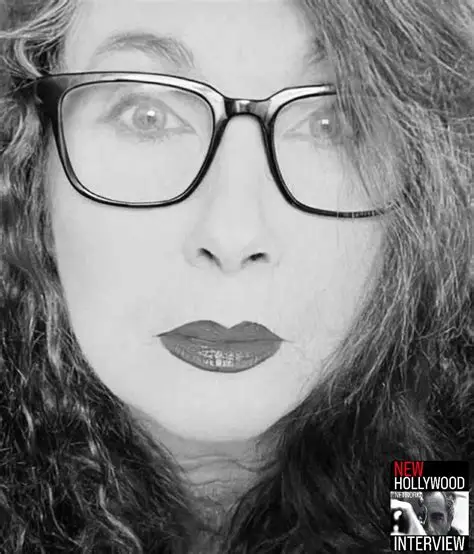
Lena Mattsson (b. 1966, Kungshamn) lives and works in Malmö, Sweden. She is primarily known for her work in moving image, yet her artistic journey began as a painter. She is also active as a curator of contemporary art. Mattsson’s own oeuvre frequently enters into a profound dialogue with art history and cinema, engaging in an intense, ongoing conversation with both the present moment and the depths of the past.

Trained at Målarskolan Forum—today the Malmö Art Academy—she has presented her art works, films, and video installations in numerous exhibitions across Sweden and the world. In Sweden, her work has appeared at, among others, Moderna Museet Malmö, Malmö Konsthall, Malmö Konstmuseum, the Nordic Watercolour Museum in Skärhamn, Nässjö Konsthall, Göteborgs Konsthall, Borås Konstmuseum, Island of Light in Smögen, and the art hall of Bohusläns Museum. Internationally, selected venues include Louisiana Museum of Modern Art in Humlebæk, the Museum of Contemporary Art in Santiago, Stedelijk Museum Amsterdam, the Museum of Contemporary Art in Roskilde, the National Art Gallery in Kuala Lumpur, the Metropolitan Art Museum in Pusan, South Korea, and many more. Her films have garnered awards at international film festivals worldwide; among the most celebrated are The Rorschach Test and Not Without GlovesThe Aesthetics of Failure. At present, Lena Mattsson is preparing and shooting new works that will be unveiled in a major solo exhibition at the Royal Academy of Fine Arts (Kungliga Akademien för de fria konsterna) in Stockholm, accompanied by a comprehensive catalogue. In Lena Mattsson’s artistic practice, borders dissolve; there are no fixed limits to what art, film, or the moving image may become. She continually stretches the boundaries of the possible, tailoring each film to its context and mode of presentation—sometimes as monumental projections flung across islands, cliffs, and façades in the public realm, sometimes as intimate, contemplative pieces screened at international festivals and art-house cinemas. Her works are almost invariably site-specific, responding to the particular spirit and history of the institutions and places that host them. At the heart of her inquiry lies the fragile relationship between perception, being, time, and space. Through a poetic and exquisitely sensitive visual language, she touches upon the existential themes that quietly haunt our lives. A subtle magical realism permeates her imagery: the seemingly obvious is gently tilted, revealing deeper dimensions and layers of symbolism. She weaves strands of her own lived experience into the fabric of the work, unafraid to pose the most difficult questions of existence, courageously opening the door to the shadowy, essential mysteries that dwell within us all.

“THE STONES OF ROME” By Sean Gregory Tansey

“The Stones of Rome,” is an enactment of Marc Antony’s famous speech at the Roman Forum.  Antony takes it to the people, delivers Caesar’s stirring requiem, and turns the tables on his assassins.  Starring  Sean Gregory Tansey as Marc Antony, and presenting the immortal text of William Shakespeare’s play, “The Tragedy of Julius Caesar.”

SEAN GREGORY TANSEY

Biography:  Sean Gregory Tansey is an actor, director, and producer of theatre and film.  His independent productions, “The Stones of Rome,” and “The Pathos of Hamlet,” have gained international attention and earned a multitude of awards and accolades from around the world.  His portrayal of Marc Antony in “The Stones of Rome.” and as Hamlet in “The Pathos of Hamlet,” have received a plethora of  spirited and gracious reviews.  His work has been featured in Variety, The Hollywood Reporter, MovieMaker Magazine, and American Cinematographer.  The Shakespeare Shorts Film Festival, organized by the Shakespeare Birthplace Trust in Stratford-upon Avon awarded  “The Stones of Rome,” as a top three finalist.  The prestigious Wild Filmmaker Magazine distinguished Sean as “Best Actor,” and “Best Indie Filmmaker” for their Special Event at the 81st Venice International Film Festival which was featured in Variety Magazine.  Sean’s production company is Samizdat X Productions, and he is based in Los Angeles, California and Chania, Greece.

(EXCLUSIVE) Interview with Jesus Schettino

Who is Jesus Schettino?

My name is Jesus Schettino. I was born and raised in Mexico City, and for as long as I can remember, I always wanted to be an artist—just like my great-great-grandfather, Quirino Mendoza y Cortés, the composer of the iconic song “Cielito Lindo.” I believe that’s where I inherited my talent. I often say that I didn’t choose acting—acting chose me. My mother loves to remind me that when I was four years old, she bought me a guitar. I used to sit at the entrance of our home, singing and pretending to play. The funny thing is… I’m still trying to figure out how to play it correctly. I moved to the United States at nineteen, searching for an opportunity to one day contribute something meaningful to this industry. Even though I started out washing dishes, with no papers and no money, I always believed anything was possible. “Yes we can”—because I’m a Mexican, not a Mexican’t.

Do you remember the exact moment you fell in love with cinema?

Yes. There’s a whole story behind it. As a child watching television, I used to wonder, “How do this people get inside the TV?” In the beginning that curiosity was my dream, which is why my career started in acting. But eventually, I grew tired of waiting for the right opportunity. So, I asked myself, “What if I create my own opportunities? What if I write my own stories? and to be honest I got tires of waiting for an opportunity, so I started thinking…
What if I start doing my own productions, what if I write my own stories? What if I direct?” That’s when I started paying real attention to films. The moment I watched “Amores Perros” By Alejandro Gonzales Iñarritu, I truly fell in love with cinema. I knew instantly: This is what I want to do for the rest of my life.

Tell us about your projects?


In 2019 I wrote and produced the horror short film TAMARA, which become an official selection at the Hollywood Reel Independent Film Festival. On 2020 I produced and directed the drama short film “ESPERÁNDOTE” This project has received numerous awards and recognitions across international film festivals. To name a few: three awards for Best Firs Time Director and two awards for Best Short Film, two
awards for Best Drama, Best Innovate Concept, a Lifetime Achievement Award, and the prestigious Satyajit Ray film award among many others.
Also in 2020, I co-produced and wrote the original concept for the film Clown & Out. Currently, in 2025, I’m producing and directing two new short films: “TAILLIGHTS” a horror mystery project and co-producing with Paralipsis Academy and Luz Cenital Teatro “BEHIND THE WALLS” a drama centered on the realities and struggles of immigration.

Which director inspires you the most?

The director who inspires most right now is Guillermo Del Toro, I truly admire him-not only for his incredible talent and creativity, but also for his authenticity and humility. Honestly…wow I think I really love this guy.


What do you dislike about the world, and what would you change?

There are many things in this world a dislike but, I’ll mention a few. Starting off with war, the loss of innocent lives caused by power and territorial conflict, moving forward into… I dislike racism because a believe that as human beings, we are the same. I dislike seeing the rich become richer while the poor become poorer. I hate how we are destroying our mother earth. And lastly… I hate how artificial intelligence is increasingly replacing human labor. If I could change the world, I would unify all cultures, end war, eliminate weaponry, and redirecting those resources to end world hunger.

How do you Imagine cinema in 100 years?

I’m honestly afraid for the future of cinema. I deeply respect what Guillermo Del Toro expressed regarding the Frankenstein movie when he said, “I rather die then use AI in my projects” He wants people working, creating, and building from scratch, because he believes that creativity is everything.
SAG and AFTRA, along with many actors and industry leaders, have also voiced strong opposition to AI replacing human performers-especially after the controversy surrounding the AI-generated character Tilly Nortwood. I share that fear. Cinema must remain human, creative, emotional, and real.


What is the impression of WILD FILMMAKER?

I believe this community of independent filmmakers and producers is a highly respected, well-established, and prestigious organization, it serves as an incredible platform for filmmakers like me to gain visibility with the industry, connect with others, and hopefully one day produce and direct major, impactful projects.
I want to thank WILD FILMMAKER for the honor of inviting me to his interview. It is truly a privilege to be part of such a magnificent project. I hope to one day officially join the wonderful organization-the sooner, the better.

“MR. SMITH GOES TO WASHINGTON” By Monte Albers de Leon

MR. SMITH GOES TO WASHINGTON (2025) Jefferson Jackson Smith is a small-town Illinois prosecutor and volunteer firefighter whose life changes in one brutal instant. During a historic 1000-year flood he rescues three children and their mother from a collapsing bridge nearly drowning in the process. Overnight he becomes a state hero.At the ceremony meant to honor him the governor blindsides everyone by appointing Jeff to fill the U.S. Senate seat left vacant by the sudden death of Senator John Drebin. Jeff never asked for this never trained for it and definitely never planned for it. His wife Debbie is wary. His son Rickie thinks it’s the coolest thing that’s ever happened. Jeff can barely tie his tie.Once in Washington Jeff is swept into the machinery of power before he can catch his breath. The President courts him. The Party showers him with gifts. A luxury apartment materializes out of thin air. His Senate office is mysteriously staffed furnished and surveilled before he even steps inside. Everyone insists they’re “helping.” No one explains why.Jeff soon learns what they actually want: his vote on HR 66 a radical bill that would let a president remove and replace a Supreme Court justice every term bypassing the Senate. Drebin had been blocking it. Now he’s gone and Jeff is the easiest vote to flip.Senator Sara Shimón one of the only genuinely decent people he meets warns him that nothing about this push makes sense. The bill is dangerous. The alliances behind it are unnatural. And Jeff’s sudden rise may not be an accident.Before she can tell him more her SUV is hit by a semi-truck in what looks less like an accident and more like a message.Jeff finds himself caught between a White House that expects obedience a party machine that already owns pieces of his life and the last fragments of his own conscience. He came to Washington by mistake. Now he has to decide what kind of senator he is going to be — and whether he’s willing to take on a system that has no intention of letting him think for himself.The story becomes a political thriller about an ordinary man dropped into extraordinary power surrounded by people who will test whether his better nature can survive the pressure the manipulation and the cost of choosing what’s right.

I was born in 1977 to a Guatemalan immigrant mother and a blue-collar Texan father who were both divorced and met at a singles party in Twin Peaks, San Francisco. I grew up in the rural hills near Napa, California, leaving at the age of 18 to earn a bachelor’s degree from Claremont McKenna College, and then a law degree from Harvard and a master’s degree in real estate from NYU. After taking the typical route of joining big law for a decade, I hung up my shingle and worked out of my own ship for another 12 years.

I was quite secure that would be the end of this bio until one very late night philosophical debate, some heavy IOS Notes scribbling and an introduction to Final Draft later, GOOD was born, and my 22-year legal career seems to have abruptly, universally and unexpectedly (my hand’s up too) come to an end.

I could not be happier.

We would also like to tell you that Monte’s family produces delicious olive oil, he is a husband and father of two beautiful boys and summers in the Hamptons.

“Colombano & the 21st Slice” By Paolo Pier Luigi Guglielmetti

Colombano & the 21st Slice weaves together multiple themes held together by a fantasy–comedy–detective storyline. A shady character, Lucifer, hires two petty criminals he knows to steal from the church museum an object that hides something unimaginable. Meanwhile, the guests at a dinner—famous historical figures beyond any suspicion, including Columbanus and his faithful Attala—let themselves be carried away by historical and non-historical reflections, while remaining grounded in the harsh reality of the suffering brought about by war. A dialogue between Jesus and Columbanus invites reflection on the spirit of humankind—blind, unwilling to see—and the scene in Piazza Duomo in Bobbio underscores this tendency to pretend not to notice the world’s suffering. Their thoughts are then interrupted by the theft of the mysterious object, and Columbanus and Attala set off in pursuit of the thieves, resolving the matter in a decidedly unconventional way. The ending is hopeful, with the villains’ repentance and thoughts about the future yet to come.

Paolo Pier Luigi Guglielmetti began his career as a photographer in 1980, gaining experience in industrial, advertising, reportage, and entertainment photography. From 1980 onward, he spent two years documenting major progressive rock and jazz concerts in Milan. Since 2012, he has been working as the producer and director of his popular series Fette di salame, with 33 episodes released to date and more planned through 2023. He also leads film workshops on mental health for middle school students. Guglielmetti has received more than 200 awards for his 15 short films and for works submitted to independent film festivals.

“AMERICA BOXED IN” By Casey and Ian Williams

AMERICA BOXED IN explores the impact of the intermodal container industry on the political, economic, and strategic landscape of the 21st Century. From the dispersion of global power to the incredible divisions in political systems to the meteoric rise of China, this simple steel box is dramatically changing every aspect of our globalized world. The film delves into the profound impact of the freight container on global dynamics. This unassuming metal box has not only revolutionized international trade by transforming distant nations into next-door neighbors but has also ushered in unparalleled economic prosperity.
However, this interconnectedness brings significant challenges, including power shifts from governments to non-state actors, political system divisions, and the transfer of wealth and influence from Western to Eastern states. The film critically examines these pivotal issues, shedding light on the complex consequences of globalization in our contemporary world.

Casey Williams is the President of Paradigm Motion Picture Company and is a noted screenwriter, producer, and director. His films have earned numerous international awards. It was in his hometown theater, during Saturday matinees, that he first fell in love with movies and knew that he had to be a part of the film business. Casey holds a BS degree from Brigham Young University in Psychology and an MA in Film from the University of Utah. He began his career as a consultant to Lucasfilm, NBC, and a variety of film companies seeking permission to film in China. He was a founding member of the Utah Film Front, served as the Associate Director of the Utah Film and Video Center for several years, and established the UFVC Outdoor Cinema Series. He is a member of the Artist Resource Center for the Utah Arts Council, Screenwriting and Media Arts Workshops, and serves on the Utah Arts Council Artist Grant Board. He was on location in Beijing, Shanghai, Shenzhen, and Hong Kong, filming  AMERICA BOXED IN, which has garnered numerous international honors in the festival circuit and was Academy Award-eligible. Casey’s next project is GROWING UP IN THE LAND OF KRYPTONITE.

He is uniquely prepared to tell the story of the international human toll of the people deemed expendable during the quest for nuclear superiority, who suffered unbelievable agony from exposure to ionizing radiation. He is the sole survivor of a family that perished from radiation exposure and is himself a cancer survivor. His mission is to raise public awareness of the human toll and to secure justice for a forgotten people.

Ian Williams is an acclaimed writer, producer, and director of documentary films and multimedia events. Ian began his film career by following his father with a film camera and assisting him in the production of his award-winning films. It was in the school of practical experience that he learned the art and language of cinema. Determined not to ride his father’s coattails, Ian went on to study film and communications. Ian became fascinated by advances in digital film production and immersed himself in emerging technologies. From motion graphics and compositing to 3D applications, he has proven a talent at each and is currently pioneering new techniques for presenting archival photographs in documentary filmmaking.

“Martin Scorsese and His Conversation on Faith” (EXCLUSIVE) Interview with Father Antonio Spadaro

By Michele Diomà

Today a great gift was given to the entire WILD FILMMAKER Community, since the early cinema of Martin Scorsese has been one of the main sources of inspiration for the birth of our International Movement. Films such as “Who’s That Knocking at My Door” and “Mean Streets”, made between the late 1960s and early 1970s with limited financial resources and tremendous creative courage, still stand today as proof that cinema can above all be a form of art. Spirituality and religion have always been central themes in Martin Scorsese’s filmography, and today we have the opportunity to discover exclusively how Conversation on Faith, the beautiful book written by the great director together with Father Antonio Spadaro, came to be.

-How did the project of writing the book “Conversation on Faith” with Martin Scorsese begin?

The dialogue began almost by chance, in March 2016, when I rang the doorbell of Scorsese’s home in New York for a simple interview about Silence. I was there for a journalistic assignment, and it could have been a one-off meeting. Instead, from that lunch a shared human and spiritual journey began, one that has lasted for years. We discovered we were “paisani”: his roots are in Polizzi Generosa, mine in Messina. This shared origin, combined with a passion for faith and for storytelling, melted the distance instantly. We didn’t talk only about cinema, but about life: his childhood as an altar boy in Little Italy, the tension between the dramatic beauty of the liturgy and the violence of the streets, the searing question of a boy who leaves Mass wondering why the world hasn’t changed after the Eucharist. From there the dialogue continued in stages: meetings in Rome, dinners at his home, his participation in the book Sharing the Wisdom of Time and in the Netflix series with Pope Francis, our correspondence during the pandemic, all the way to the Pope’s appeal to artists to “help us see Jesus in a new language,” which Martin took seriously by writing a first screenplay about Christ. The book “Conversations on Faith” is the fruit of this eight-year conversation: not a theoretical exercise, but the faithful record of a friendship in which faith, grace, and cinema have continually questioned one another.

-Cinema has often been a vehicle for spreading the Catholic faith; I’m thinking of Pier Paolo Pasolini’s “The Gospel According to Matthew”. What is your opinion of the film that will be discussed at today’s event in Rome with Martin Scorsese?

Pasolini recounts that Matthew’s text triggered in him a “terrible, almost physical energy,” an instinctive adhesion to the immediate moral beauty of the Gospel. This is crucial: his Christ is not tamed; he is a man who speaks against the wind, filmed in close-ups that cut through the gaze. He is an apocalyptic, piercing Jesus, close to the extreme anatomies of El Greco. For me, the peak of the film remains the scene of the Beatitudes: a young, hieratic face, eternal words spoken against a black, wind-swept sky. There is no sweetness, there is an almost unbearable tension, and it is precisely there that a beauty erupts which asks no permission. Pasolini, a secular Marxist, is not engaging in an ideological operation. He takes Matthew’s text as a ready-made screenplay, chooses to remain faithful to it word for word, and in a famous letter declares that he never wishes to wound the sensibilities of believers. His Christ is radical and uncompromising, but not opposed to Catholic tradition: he challenges it, forces it to take a stand. The December 5 meeting with Martin originates exactly here. Scorsese told me that when he was a student he dreamed of making a film about Jesus, but when he saw Pasolini’s Gospel he realized that what he had hoped to do had already been accomplished. For both of them, that film is a permanent provocation. The Roman event aims to show how a work born from the gaze of a restless secular artist has shaped the spiritual formation of a Catholic filmmaker like Scorsese and how cinema, when it seeks life in its naked truth, generates a form of spirituality.

-Cinema, often using a simple yet powerful language, has succeeded in conveying Christian values of hospitality and care for the weakest. I’m thinking of Federico Fellini’s La Strada, which was also Pope Francis’s favorite film. In which films in the history of cinema do you find these same Christian values?

Fellini’s “La Strada” -Pope Francis’s favorite film- is a foundational text: Gelsomina and the Fool are the “holy fools” of the Gospel, the little ones through whom the meaning of history passes. In that film, salvation hinges on the face of someone who counts for nothing, and this is profoundly evangelical. Throughout film history I see the same logic in many works. I’ll mention just a few, very different from one another: Roberto Rossellini’s “Open City”, where the everyday holiness of Pina and Don Pietro is born from sharing the fate of those most exposed to violence; Vittorio De Sica’s “Umberto D.”, with that elderly man who is almost invisible to the city yet becomes a living parable of dignity in poverty; Gabriel Axel’s “Babette’s Feast”, in which a free and undeserved banquet becomes an Eucharistic image of reconciliation; Clint Eastwood’s “Gran Torino”, with Walt’s final sacrifice that breaks the spiral of violence in the neighborhood. And of course many of Scorsese’s films, where grace enters “the territory of the devil,” to use Flannery O’Connor’s expression that Martin loves so much. In all these cases the language is simple and accessible, but the stakes are incredibly high: the aim is to show that a seemingly insignificant life can become a place of revelation, that welcoming the weakest is not an optional moral theme but the very center of the story.

-Artificial intelligence is profoundly affecting every sector, including cinema. I’ve read that you have recently worked on the topic of Artificial Intelligence, what is your opinion of this tool?

Artificial Intelligence is not just a new technical instrument; it is becoming an environment that shapes the way we perceive the world, how we narrate it, and how we imagine it. Having worked on this subject for years, first through my reflection on “cybertheology,” and later in my writings on AI and the human person, I have tried to show that digital technologies reshape both human action and human being, and therefore directly touch matters of faith, ethics, and freedom. In cinema, we can already see some effects: algorithms that suggest what to produce and what to watch, generative systems that create images and faces, tools that promise to “replace” certain stages of writing or post-production. This opens extraordinary possibilities – new languages, new ways of accessing materials, even creative approaches to archival restoration, but it also entails serious risks: flattening the imagination onto calculated tastes, homogenizing stories, eroding the creative work of millions of professionals. For me, the decisive question is: Who is guiding whom? If AI becomes a kind of “invisible director” that determines criteria of success, timing, and faces, then industrial logic risks suffocating artistic risk. If instead it remains a tool in the hands of free and responsible authors, it can help explore new narrative dimensions, make heritage more accessible, and improve work on image and sound. But the ultimate responsibility remains human: no algorithm can replace conscience, discernment, or a living relationship with reality.

Our magazine is dedicated to Independent Cinema, born from the production philosophy of Roger Corman’s New Hollywood and inspired as well by Martin Scorsese’s early films, such as “Mean Streets”. Today, the kind of cinema that in the United States is called “Arthouse” has less and less space to emerge in major festivals, where the economic interests of major companies and platforms prevail over the experimental spirit of young independent filmmakers, just as Martin Scorsese was in early 1970s New York. To what do you attribute this general cultural decline in the film industry, which seems to be increasingly business and less art?

I share this concern. The cinema we call independent, arthouse, or simply “research-driven” often arises from conditions similar to those of New Hollywood in the 1960s and ’70s: limited budgets, great formal freedom, and a strong connection to neighborhoods, bodies, and living languages. “Mean Streets” is a product of that world.
Today, the system of major festivals and streaming platforms is marked by a high concentration of economic power: what counts is the catalog, the brand, seriality, and audience data. The imagination risks becoming uniform because what prevails is what is easily exportable and lends itself to being replicated. Algorithms also tend to reward what “resembles” what has already been successful.
I would not speak only of “decline,” but of imbalance: cinema as an industry occupies almost all available space, while cinema as art struggles to find visibility and support. There are still festivals, theaters, film clubs, and circuits that take risks and defend research; there are foundations, schools, parishes, and universities that program challenging films and educate the gaze. But the pressure toward standardized products is evident.
In this context, the legacy of a producer like Roger Corman and of Scorsese’s early films is invaluable: it reminds us that a film can be made with very few resources, driven by a powerful inner necessity. I believe the answer is not nostalgia, but the creation of new “ecologies” of the image: networks of independent theaters, festivals truly open to risk, alliances among film schools, universities, and communities, believing or non-believing, seeking stories capable of questioning us rather than merely entertaining.
If cinema returns to “doing justice to life,” as Martin says, then even the industry will eventually have to reckon with this profound need for truth and beauty.

Here is the link to the book “Conversation on Faith” by Martin Scorsese and Father Antonio Spadaro: https://www.amazon.com/Conversations-Faith-Martin-Scorsese/dp/1538775387

A Seal on Samantha Casella’s Trilogy of the Subconscious

The Shadows Factory and Wild Filmmaker are proud to announce that Samantha Casella’s new film, Tetélestai, is currently in production, with release planned for 2026.

The third and final chapter of the Trilogy of the Subconscious—which began with Santa Guerra and continued with Katabasis—Tetélestai explores the hidden landscapes of the human psyche, blending horror, poetry, and dreamlike imagery to bring Casella’s vision to full expression.

The story follows two women, portrayed by Samantha Casella and newcomer Gina Rose Pieri, bound by an intense and almost morbid relationship. Casella plays an ambiguous and disturbing woman, taking on the form of a modern, female Nosferatu. Pieri, in her feature debut, brings a luminous vulnerability that conceals hidden depths, creating a striking contrast with Casella and transforming their bond into a whirlwind of desire, obsession, and psychological complexity.

The film also marks the return of Italian cinema icon Laura Trotter after thirty years, inspired to rejoin the screen after seeing Katabasis in theaters. Trotter is celebrated for her work in the films of Dino Risi, Marco Ferreri, Damiano Damiani, and Tinto Brass, as well as for her unforgettable appearance in Umberto Lenzi’s cult horror Nightmare City.

Filming is underway across evocative locations in Italy and France, including Faenza, Meldola, Sarsina, Riolo Terme, and Deauville, with a talented ensemble cast featuring Bruno Bilotta, Francesca Rettondini, Angela Tuccia, Vanessa Marini, Barbara Bovoli, Vincenzo Amoruso, Roberto Rizzoni, Rossella Ambrosini, Massimiliano Nocco and Michael Dallender.

Bruno Bilotta, an actor of remarkable versatility, is known for his work alongside international stars such as Denzel Washington, Anthony Hopkins, Ben Kingsley, and Stanley Tucci, bringing a commanding presence to the screen.

Francesca Rettondini, a familiar face on Italian television and an actress of great emotional depth and impact, further enriches the film’s intense psychological atmosphere.

In the coming months, new actors and actresses will join the cast, expanding the immersive and symbolic world of Tetélestai.

A strong visual dimension is added through original sculptures and artworks, prominently featuring young talent Cristian Cimatti, alongside pieces by Giovanni Scardovi, Federico Severino, Martino Neri, Domenico Baccarini and reproductions of masterpieces by Holbein, Magritte, Schiele and Böcklin executed by Claudia Drei, enriching the film’s dreamlike, symbolic universe.

The mystical and spiritually sensitive score is composed by Kim Allen Kluge and Kathryn Kluge, known for their work on Martin Scorsese’s Silence, perfectly complementing Casella’s poetic cinematic world.

With Tetèlestai, Samantha Casella puts a mark on the completion of her Trilogy of the Subconscious — a visionary exploration of the human psyche that confirms her singular presence in contemporary indie cinema.

“Nous deux / The two of us” (EXCLUSIVE) Interview with Emmanuel Gavart

Who is Emmanuel Gavart?

I am an independent filmmaker who wants to focus on emotions and humanity through films and fiction in general. I have had the chance to release an album and a novel. That is why writing is my favourite part in the making process of a film! Everything can be said with words (or with no words, it works better sometimes).

I am also a French teacher for adults who have recently arrived in France and want to learn the language. I meet a lot of interesting people from which I can learn. I must confess that some of them are my inspirations when I want to create a character for a story.

Do you remember the exact moment you fell in love with cinema?

I remember watching a lot of teen movies about high school and the process of growing up.

Those films are quite easy to relate to because they usually focus on the characters. I do believe that one cannot make a good film without a good script but the characters make the story credible and true. Somehow, the script is the brain and the characters the heart of the film.

Tell us about your project “Nous deux (The two of us)”.

I thought about this project during the spring of 2020. I heard on the news that domestic violence was increasing because of the lockdown due to the coronavirus. I was lucky enough to live in the countryside at that time and I could only imagine what it would be like to be stuck into your own house with a man who beats you. This is what I wanted to say in the film. But I quickly faced two problems for which I found a solution: first, I had never witnessed any kind of domestic violence around me, so I created the character of Gerald, the visitor, with that in mind: what are the signs of violence? How can one react when they see violence for the first time? How can one be sure that it is domestic violence? The second problem was that domestic violence is a topic that has been talked about and showed in many fictions again and again, so I wanted the film to be slightly different. That is why I decided to focus on the character of Gerald. It is he who witnesses the violence and chooses to react one way or the other.

Which Director inspires you the most?

Of course, many directors are absolutely fantastic when it comes to directing and filming but I would like to mention three here: Xavier Dolan, Wes Anderson and Park Chan-Wook. They have a very distinguished style though I must say I am not a great fan of every film they made. But what is special about them is that they all write and direct their films, and they stand by their style, whether you like it or not!

More recently, Luca Guadagnino made what I consider one of the best films of the last decade: Call me by your name. Both the story and the filming are fantastic (not to forget the actors and actresses…). Finally, I also have to speak about Gregg Araki and his film Mysterious Skin. A dark teen drama away from the stereotypes of the genre, depicting how child traumas have an influence when growing up.

What do you dislike about the world and what would you change?

I simply hate any kind of injustice. We are all equal facing the law. It is not just me saying this, believe me, it is written somewhere! I also cannot stand intolerance. It is a great shame that people are not free to be what they are and live the way they want to. Why is there always someone who has to say something offensive and hurtful?

That is why I think fiction should play a role in making a change. Films and series are accessible to everyone, they are the best way to make people think and reconsider what they are convinced of.

How do you imagine cinema in 100 years?

A difficult question… I want to say that things are changing but the truth is: it is hard to find money! We are all sure that our next film is going to be the best ever made but many of us won’t even have the chance to prove it to the rest of the world… In France, it is almost impossible to have any funds from anyone: if you want a grant from a producer, then you must get one from another producing company before and it goes on and on… Producing companies want films that people will like, so they put money into “easy” projects. Films that will speak to everyone. I am not planning on writing “easy” films, I want to make films that make people think and react. I want people to say “Woah, that was something!”

So, as you may understand, I am not very optimistic about the future of cinema. I believe that filmmakers will be more and more attracted to independent producing companies, which is a good thing because then, cinema will become more open and it will truthfully represent every aspect of our society.

What is your impression of WILD FILMMAKER?

Wild Filmmaker gives a chance for everyone to be heard. It is the kind of initiative that means something because wo do feel understood. I have to say, it is easy to be demotivated when you want to work in cinema, but people like you are trying to make a difference and that means a lot to me.

I am very grateful and honoured to be able to write a few words here knowing that we share the same passion and will to make a difference both in cinema and in our way to consider the world of tomorrow.