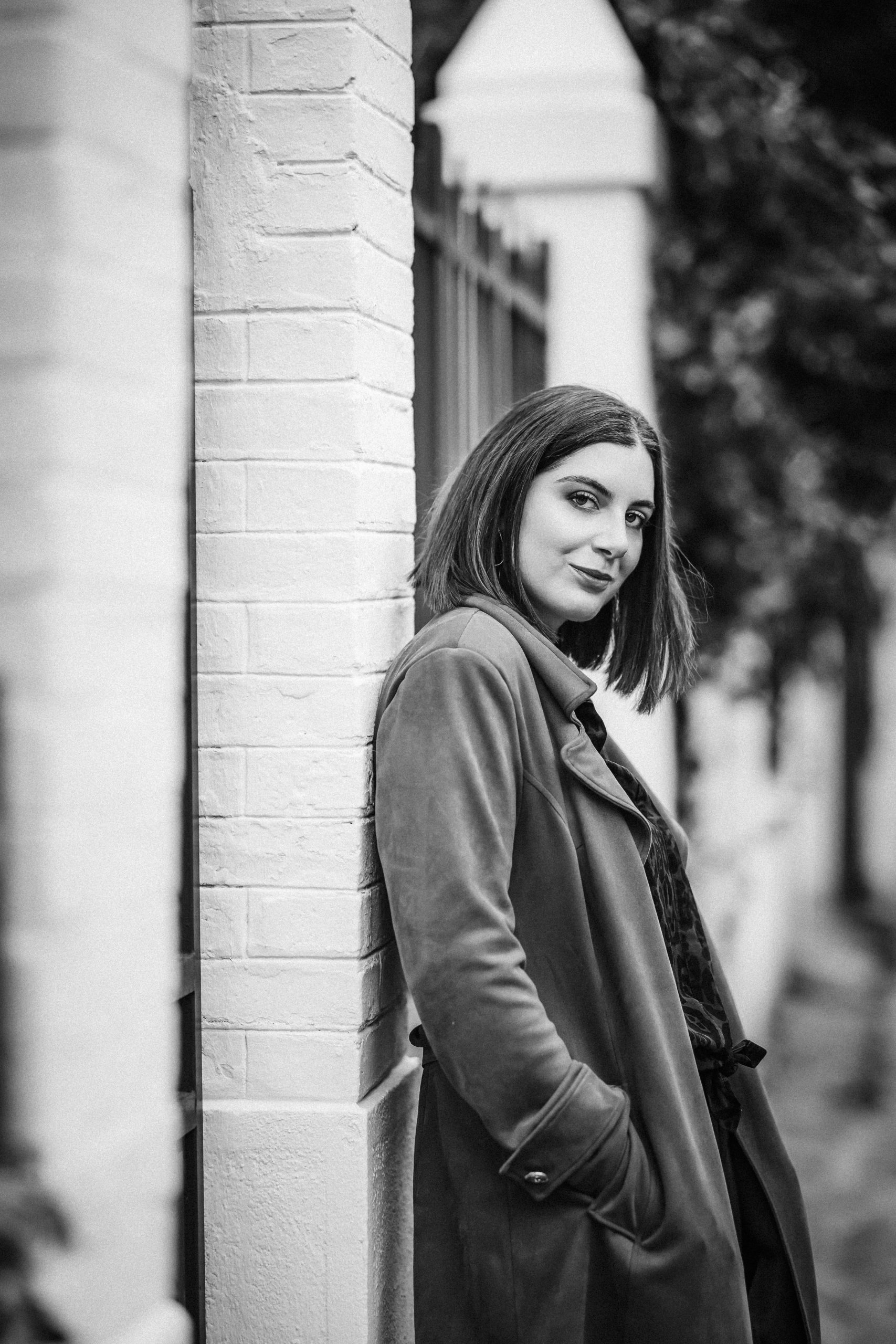
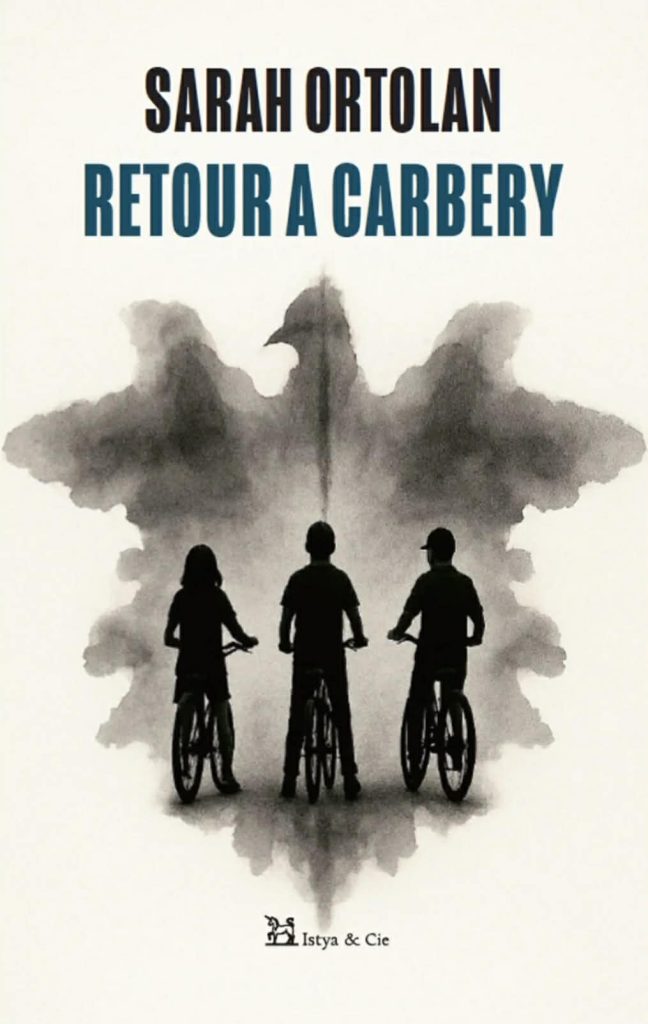
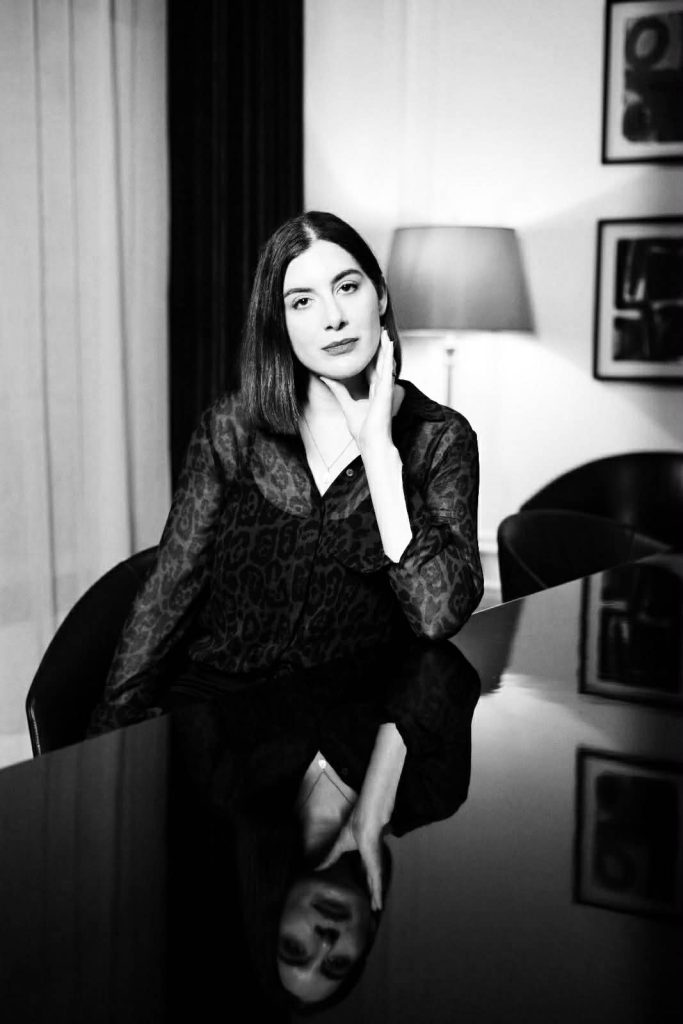
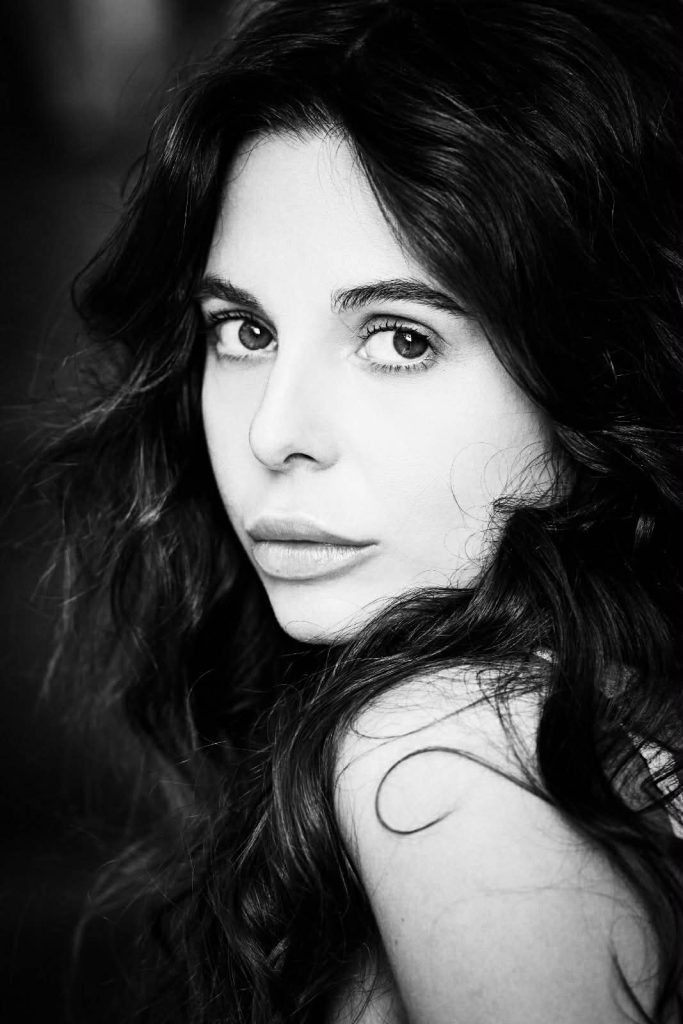
I am a trained psychologist specializing in autism. I have always written in my free time, and a few years ago I began publishing short stories in literary journals. When I had the opportunity to devote more time to writing, I completed my first novel, Return to Carbery, whose plot and characters had been haunting me for about ten years.
Tell us about your book: Return to Carbery.
It is a psychological thriller with a strong nostalgic dimension. The story follows three childhood friends—Stan, Alice, and Finch—who reunite as adults. They are confronted with a gruesome murder that takes them back to the summer of 1997, when they were tracking a mysterious “Thing” behind disturbing events in the seaside town where they spent their holidays. They begin to realize that this “Thing” may have grown along with them… and they resume their investigation where they left off.
The novel alternates between two timelines: 1997 and 2017. The chapters set in the past fully immerse the reader in the atmosphere of the 1990s, a period that coincides with my own childhood and that I am particularly fond of with its music, cultural references, games, advertisements, and more. It’s a kind of Proustian madeleine for my generation, but with a bitter aftertaste.
What particularly interested me was exploring the idea of the uncanny: something familiar that suddenly becomes disturbing, where discomfort arises from the shift between the known and the unsettling, between the lost paradise of childhood and what truly lies beneath it.
This may be linked to my background in psychology, but I feel that the past, with its share of trauma, buried or repressed memories, is always potentially dangerous, while at the same time exerting a powerful attraction on us.
Which writer inspires you the most?
Without hesitation: Stephen King. I discovered him at the beginning of my adolescence, at a time when I was shaping my personality and artistic universe, and it was a real shock. I feel as though I continue to live in some of his stories, or that they continue to live within me.
What I admire most about him is his ability to anchor completely wild plots in absolute psychological realism, and to create worlds so familiar that they feel like parallel versions of our own. We fully identify with his characters’ thoughts and emotions. We believe in them because they are sincere and deeply human.
His vision of childhood confronted with threat, and of summer as a threshold, a liminal space, an initiatory rite of passage, has greatly influenced me. In fact, the name Carbery is a tribute to Derry, the Maine town where the characters of his novel It return after twenty-seven years of absence and forgetting.
What do you dislike about the world, and what would you change?
I’m going to give a completely naïve but obvious answer: I would remove the existence of evil and all forms of suffering from this world. Of course, I would also be shooting myself in the foot creatively and probably signing the end of my career, since it is precisely the question of the evil lurking within each of us that obsesses me and that I explore in my thrillers.
How do you imagine cinema in 100 years?
I believe technological developments will allow for extremely advanced visual performances and immersive experiences, but also increasingly standardized ones. At the same time, I hope we will remain capable of returning to the essence of cinema: telling stories through images.
Because what truly matters and I think audiences recognize this is that these stories are good, sincere, and driven by a unique vision.
What is your impression of WILD FILMMAKER?
I believe that initiatives like WILD FILMMAKER are essential to keeping independent cinema alive outside the rules imposed by the industry, and to making it more accessible to everyone.
I also find it very valuable to bring together a strong community around a shared vision of artistic creation, and to give visibility to emerging authors like myself, who might not otherwise have access to these spaces. So, thank you.
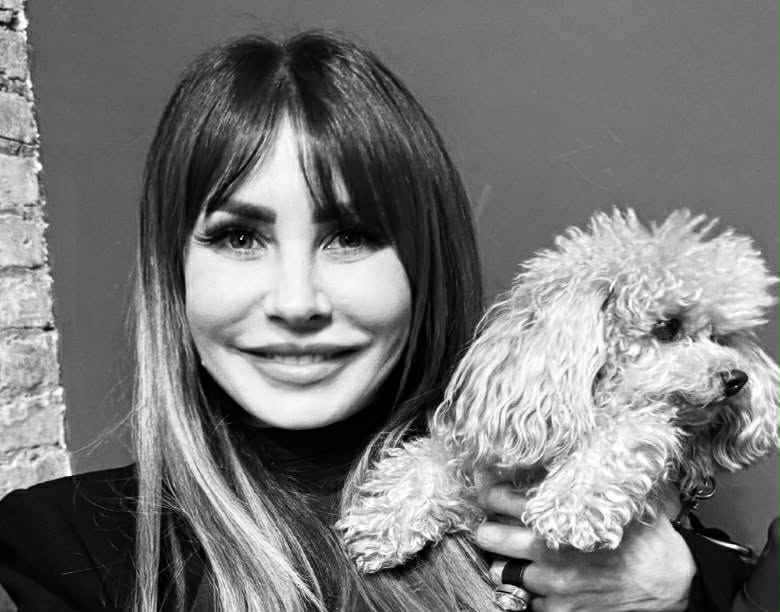
First, thank you very much for the opportunity to share my experiences in such a special and meaningful interview. I am a Puerto Rican filmmaker, writer, actor, composer, and psychologist who creates from the harmonious combination of cinema, creative writing, music, psychology, and technology. My work blends magical realism, Caribbean memory, and emotional depth, exploring the invisible presence of ancestry and the psychological landscapes that shape who we become. I am also passionate about themes of social consciousness and global impact: we make cinema with purpose, filled with poetry, visual richness, and musicality.
As a pioneer in traditional animation direction and AI-driven hybrid filmmaking in Puerto Rico, as well as in my earlier experiences in live action and hybrid live-action/animation formats, I have walked a wonderful path shaped by curiosity, discipline, and cultural responsibility. This journey has led to several historic milestones: becoming the first Puerto Rican finalist at the American Pavilion in Cannes; the first Puerto Rican animation director to present work at the Palais des Festivals during Animaze/Animation in Cannes; and the creator of Puerto Rico’s first extended multi-award-winning animated film to represent the island across international festivals.
As a great blessing, I am also the first Puerto Rican filmmaker to surpass more than 200 international laurels and more than 50 awards, integrating animated, hybrid, and live-action projects—recognitions evidenced across multiple festival platforms worldwide, with a presence spanning North America, South America, Europe, Asia, Africa, and Oceania. These achievements remind me daily of the importance of perseverance and the responsibility of representing my island with humility and integrity.
Thanks God, my work has also been recognized at the governmental level. I received the first Distinguished Filmmaker Medal awarded by the House of Representatives of Puerto Rico, alongside filmmakers such as Jacobo Morales, an Academy Award nominee. I have also been welcomed twice into the Office of the President of the Senate of Puerto Rico for my achievements in cinema, and I have received nominations and recognitions for my projects on social consciousness and global impact in Peru, Mexico, and the United Kingdom.
Every project I direct is fully authored by me, from concept to screenplay, as part of my dedication to elevating Puerto Rican storytelling while expressing my creative spirit from a universal perspective. My studies in psychology, natural sciences, communications, creative writing, cultural studies, and politics have enriched my vision: I have always sought to learn from every discipline I explore to make art a manifesto, a continuous ideal, and to remain an eternal learner.
Do you remember the exact moment you fell in love with cinema?
Yes, and in truth, it began long before I understood what cinema truly was. As a child, I felt the sensation of embodying different stories as a protagonist through imagination, sensing that stories could breathe and come alive. I saw myself immersed in film one way or another. I didn’t yet have the language for it, but I felt the call.
I began as an actor, entering the fascinating world of characters, the continuous search for verisimilitude, and the emotional architecture of performance. Over time, I discovered other roles—writing, composing, producing—until I finally reached the place where all those paths converged: directing. That early intuition, that childhood vision, became an internal compass. Without any doubt, this was my place.
Tell us about your projects: “OSKÄR” and “FOREVER PRINCËNEY.”
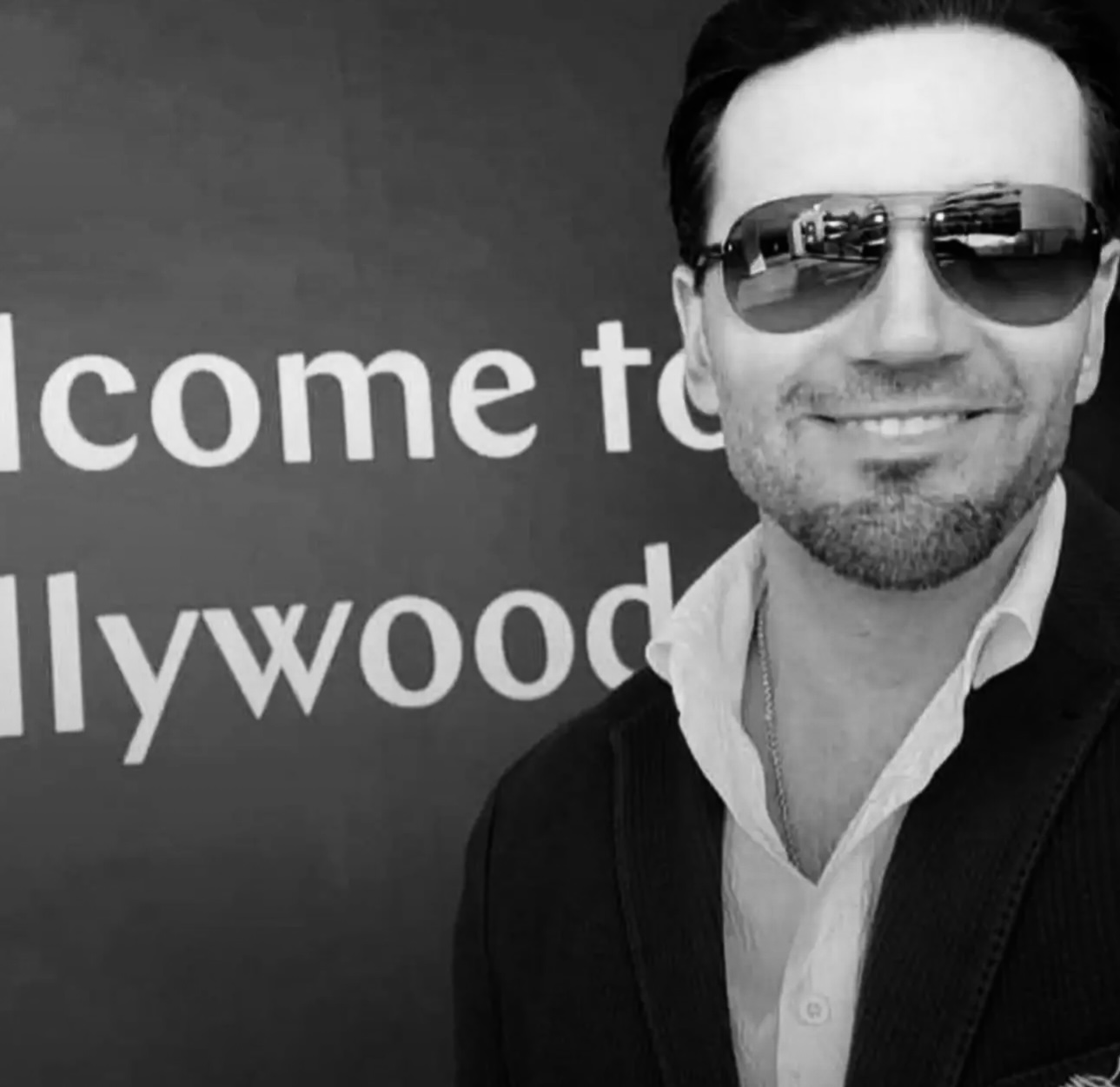
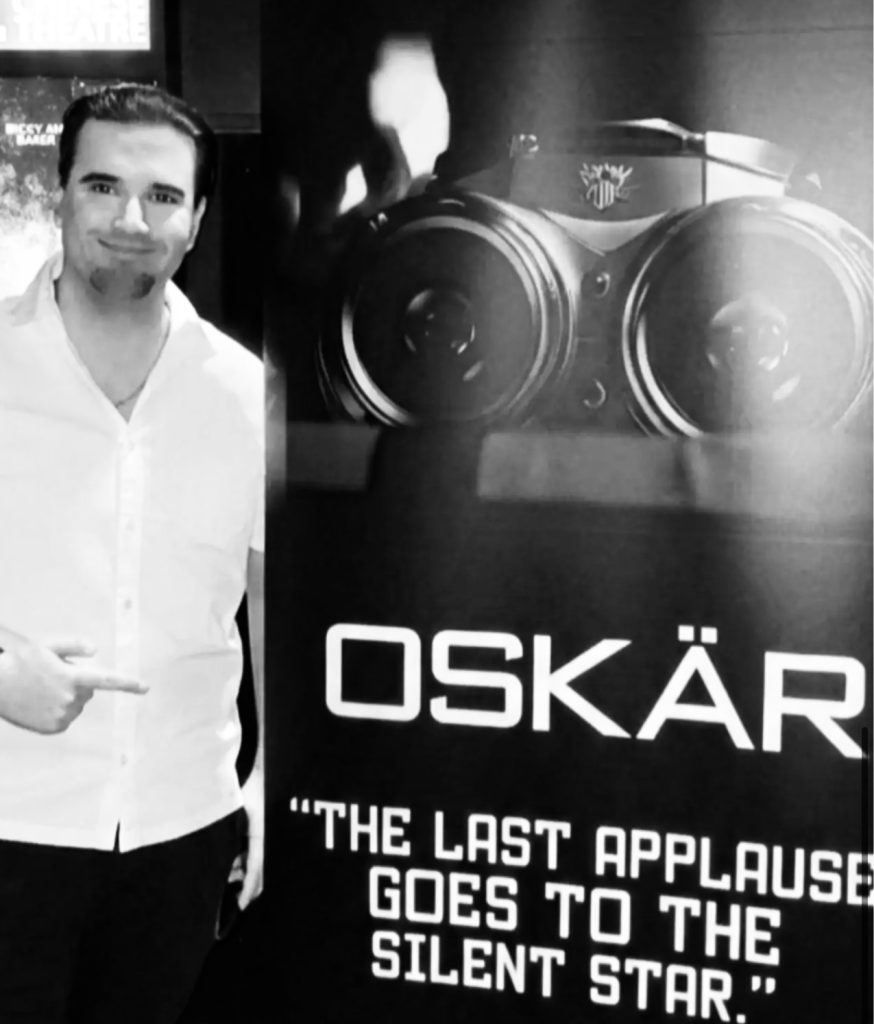
OSKÄR is a hybrid animated project that merges AI-assisted imagery with traditional cinematic sensibility. It explores the emotional journey of a character who moves through memory, identity, and the echoes of Mother Earth in labor pains whispering to the wind. The project has received international recognition, including a turning point in my trajectory: Best Animation Director at a screening at the Chinese Theatre in Hollywood, marking the first time an animated film produced in Puerto Rico was presented in this iconic venue.
The animator of OSKÄR is Jorge Dardo Cáceres, who is also the editor and sound designer of the project; he knows how to listen to my intuition when making decisions, works intensely to grow in his precious craft, and connects deeply with my vision of cinema.
We promised to make history, and we are doing it. From Bulgaria, Japan, South Korea, Ukraine, Uruguay, Türkiye, Hungary, Bali, London (twice), New York, Los Angeles, the Chinese Theatre in Hollywood, France, and Poland, OSKÄR continues to illuminate special screens around the world. One of the most meaningful recognitions came from Japan and South Korea, countries whose animation cultures are deeply respected. Likewise, the filmmaker who won the Goya Award for Best Animated Film 2025 and was selected for the Oscars 2026 praised our narrative for its social and human themes and our way of illuminating through experimental art, after we received several awards in Bulgaria.
Throughout this very special journey, OSKÄR has received Best Animated Story Toward the Future, Best Direction – Animation, Best Innovation (Technique) in Animation, Best Film of the Season, an Honorary Mention, and finalist distinctions in both London and Los Angeles, across four international AI festivals and numerous traditional international festivals. The journey of OSKÄR—especially its screening at the Chinese Theatre during the Golden State Film Festival, with the breeze of the Oscars less than a week away—has been one of firm and consistent steps, after years of hard work and dedication. And we return to the city of Cannes this May, after being accepted into a new venue parallel to the festival.
Meanwhile, FOREVER PRINCËNEY, an animated feature screenplay, contributed to achieving my 200th laurel in the period 2009–2026. Winning Best Animated Feature Screenplay in the city of Cannes reflects the immense value of this achievement, earned through hard work and dedication. Through our creative projects, Puerto Rico is now presenting itself as a cinematic production force in both AI-driven and traditional animation, with firm and consistent steps in independent festival circuits.
Together, OSKÄR and FOREVER PRINCËNEY form two parallel creative universes that converse with one another: one rooted in memory and tenderness; the other, in diversity and resistance.
Which director inspires you the most?
Hayao Miyazaki inspires me with his spiritual tenderness, his way of letting innocence breathe, and his respect for nature as a character. Guillermo del Toro captivates me through his devotion to monsters as metaphors for our wounds; his cinema is an ode to compassion from the rejected or marginalized. Pedro Almodóvar teaches me about masculinity and fragility, about the emotional architecture of men, desire, vulnerability, and the colors of the human heart. These three directors form an interesting triangle that I aspire to emulate.
What do you dislike about the world and what would you change?
I am deeply concerned by the speed with which the world forgets its own humanity. We live in a time where noise replaces meaning and where vulnerability is mistaken for weakness. There is also our deliberate act, at both personal and collective levels, of often forgetting what is essential or choosing not to listen. On the other hand, I would promote, through the art-science binomial, imagination directed toward social transformation and the indescribable value of cultural memory, because within it lies our ability to recognize ourselves, to heal, and to build more sensitive and more human futures.
How do you imagine cinema in 100 years?
I imagine cinema becoming profoundly immersive, a fusion of sensory, emotional, and technological dimensions where stories are not only watched but inhabited. Audiences would enter narratives, feeling them from within rather than observing them from afar. And even so, the essence would remain: the innate need to connect, to feel intensely, to witness the human condition with eyes tied to unconditional love.
What is your impression of WILD FILMMAKER?
WILD FILMMAKER feels like a manifesto that honors the seventh art, something difficult to find in the digital universe, expanding with the wings of a magazine of immense and yet selective reach. A space that celebrates creators who dare to break paradigms and embrace the disruptive spirit of purposeful, conceptual, soulful cinema. I am grateful, as an eternal learner, for the welcome into this distinguished editorial space of art-makers that does not bind itself to traditional color patterns. Because only in such unexplored corners are immortal realities created.
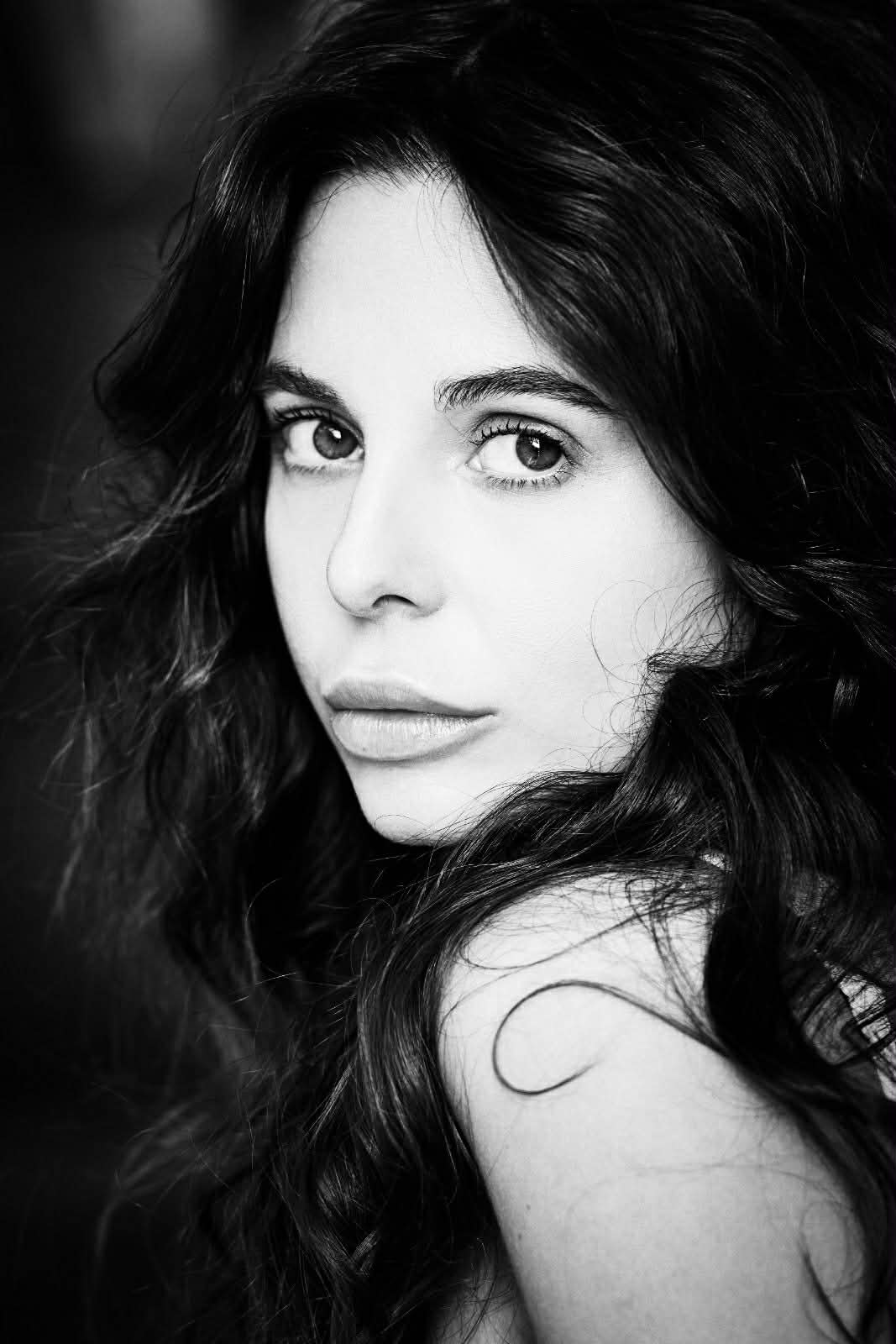
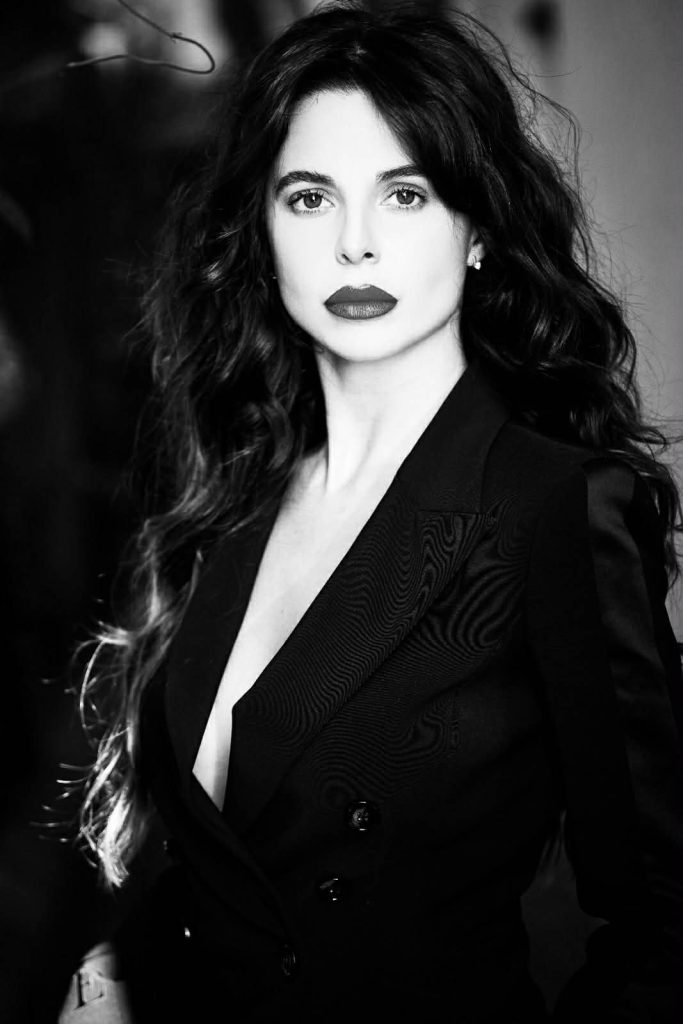
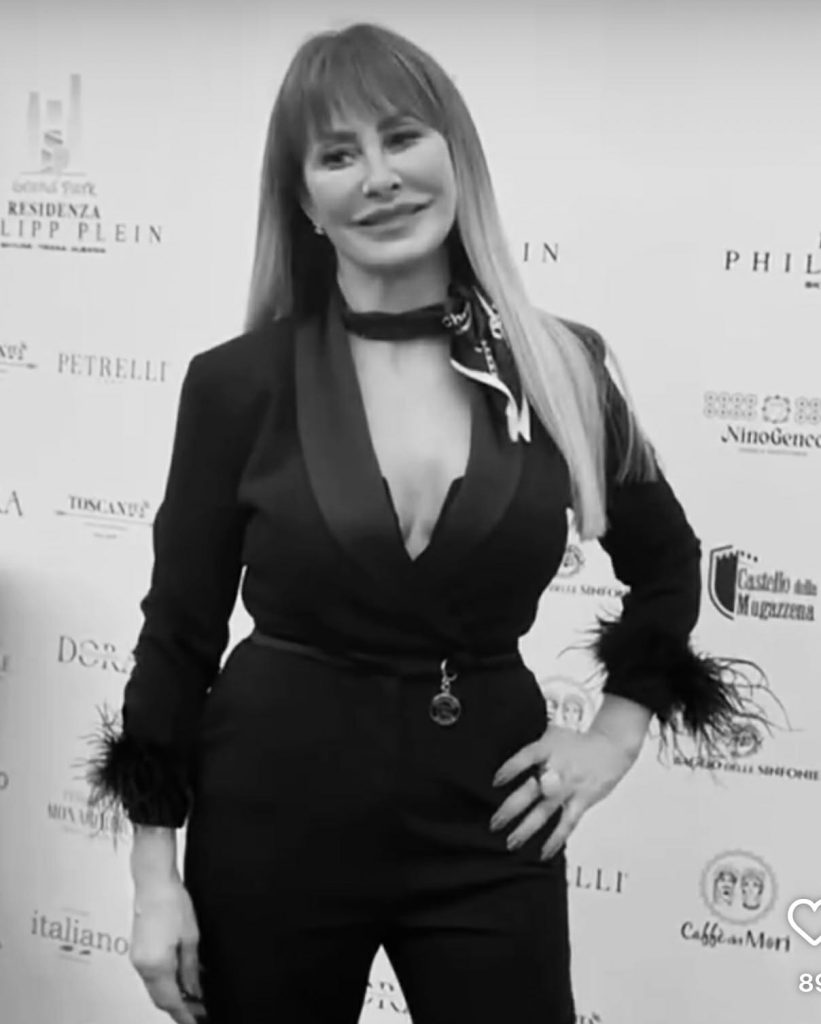
Who is Eleonora… Good question. I often ask myself the same. The automatic answer that would come to me is a woman who is trying to find her own place in a world deeply wounded and violated by a dysfunctional system, in which human beings have lost their own consciousness. If I were to be specific, I would define myself as a young artist who uses her art to leave something beautiful in the world. What I would like is to be able to leave a mark, a memory, and give rise to a change in a historical era in which intelligence has become a fault and sensitivity a flaw. We find ourselves at a moment when political correctness taken to the extreme has led to a real castration of art. What I would try to do through acting and directing is to tear off the so-called Veil of Maya… Today you can’t have an autonomous thought; if you’re outside the norm you become a problem and not an added value… Deep down, I would say I am a dreamer with an accountant’s mind.
When you hear the word “soul,” what immediately comes to mind?
When I think of the word ‘soul’, my mind travels between purely technical, philosophical notions that were part of my academic-university training, and what I feel intuitively. I believe that human beings are the product of a duality, from a nihilistic perspective, between their animist side—which falls within the realm of empathy—and the pragmatism that increasingly leads toward darkness, a darkness that, as a sentient being, hides; a darkness so deep that if nourished it completely annihilates the soul. Today, more than ever, the media and the puppeteers who hide behind governing powers are trying to distance us from our consciousness, in order to render us obedient marionettes and deeply apathetic. Therefore, today more than ever, we artists have the responsibility to bring humanity toward its transcendent part that lifts us toward ‘God’, understood as all that concerns love, beauty, culture, and eternity.
Tell us about your projects.
This has been a very important year for me because it was the year in which I was able to bring my debut work Blue to life, with a strong theme like that of online erotic platforms, and as an actress I finally ventured into comedy, having been among the protagonists of the film Prendiamoci una Pausa, directed by Christian Marazziti, in which I acted alongside big names such as Marco Giallini and Claudia Gerini. To date, I am working on my second project as a director, which will address the MeToo movement from another perspective.
What don’t you like about the world, and what would you change?
Actually, the world created by Mother Nature is the emblem of beauty and perfection; what I dislike is the system that created human beings, in which they have gradually moved further away from their origins… A system that has given rise to elites who rule through unacceptable and corrupt financial systems and with extreme violence. People seem almost numb; they do not often realize the historical-cultural decay we are living through. They seem to have lost their critical spirit, and when confronted with someone who, instead, holds an ideal, they become aggressive because they are struck at their core and lack the tools to express a meaningful concept. All of this is the result of years in which the media have carried out a meticulous job to distance us from our intimacies and drag us toward a materialism with very negative implications. Only a few today truly see and feel that something isn’t working, and they are considered anarchists, conspiracy theorists who are then systematically right.
When did you realize that Art would be at the center of your life?
From a very young age… At ten years old I began writing poems, and at eleven I started my artistic journey as a classical dancer, which from ages 15 to 18 became a real profession. Even in adolescence my interests were studying, culture, and art. I wasn’t interested in the more superficial aspects that a teenager usually pursues. I have always loved going to the theatre and reading books, rather than going to nightclubs. When I was eighteen, I discovered acting and directing, and understood that this would be my path.
What is your impression of WILD FILMMAKER?
In my view, it’s a smart move that keeps pace with the times. It manages to give voice to both the legends and emerging artists, and this is an extremely important aspect. Today more than ever it is crucial to give momentum to new voices without forgetting the past. Another important aspect is the clarity with which the content is presented, conveyed with great expertise and lucidity, so that it is accessible to everyone. The use of black and white automatically evokes a retro look that recalls the great post-neorealist cinema, placing you immediately in an elegant and refined world.
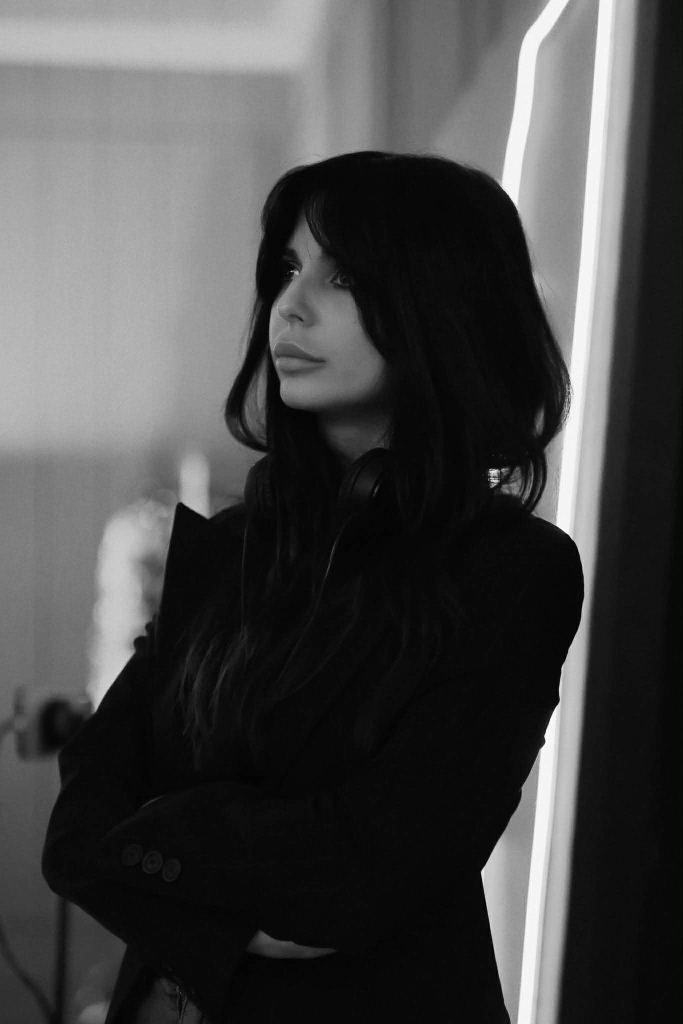
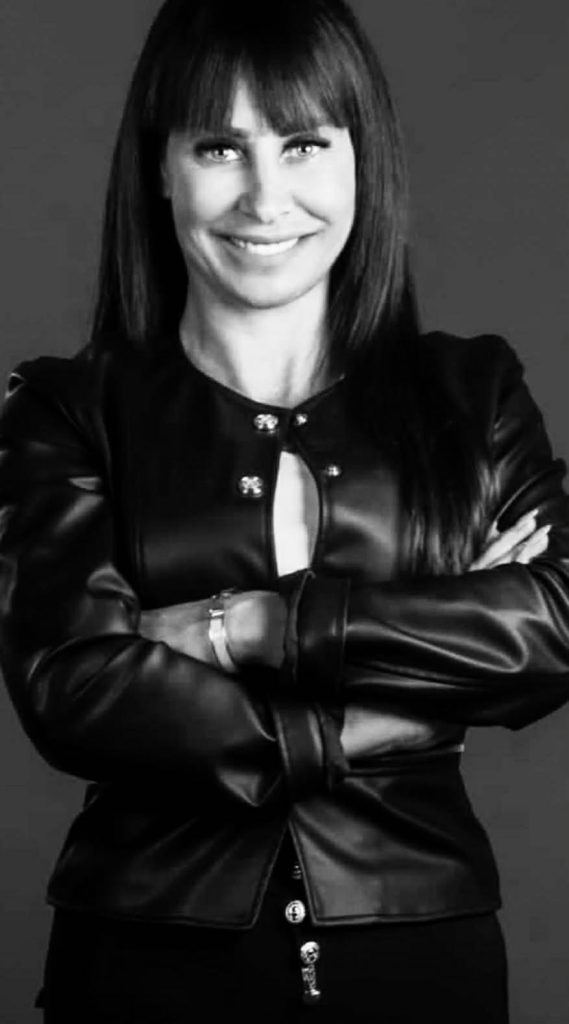
Monica Bartolucci is a film producer who has made her passion for storytelling and artistic vision the core of her career. She is a determined professional, with a careful and sensitive eye for stories and people, capable of turning ideas into concrete projects.
Her work stands out for a strong commitment to authenticity and for her desire to give space to new voices in the film industry. She deeply believes in the value of young talent and in the need to create real opportunities for those who want to enter this world, even when it is more difficult and risky.
For her, producing does not only mean making films, but building paths, enhancing people, and contributing to a freer, more inclusive cinema open to change.
2) Do you remember when you realized you wanted to dedicate your life to cinema?
It was an awareness that developed over time. I have always felt a strong connection with storytelling and the language of images.
At a certain point, I realized that I wanted to actively contribute to that world, transforming ideas into concrete projects. Production became my way of shaping stories and guiding them to the audience.
3) Tell us about your projects
Throughout my career, I have tried to develop projects that are different from one another, but always connected by a strong narrative identity.
Among the works I have produced are Nonna ci produce un film (directed by Walter Garibaldi), Un posto sicuro (directed by Luca Tartaglia), L’abito e l’anima, and Love Game – il gioco dell’amore, broadcast on Rai 2 and now available on RaiPlay.
Currently, the film Storia di una mistress, directed by Ciro Tomaiuoli and starring Alice Carollo, Reyson Grumelli, and Francesco Leone, is about to be released. It will be distributed both in cinemas and on Prime Video.
I am also working on new projects, including the docufilm Bubuset and Luxury Frames.
My goal is to continue creating opportunities for young actors and professionals, focusing on talent and fresh energy.
4) What don’t you like about the world, and what would you change?
I don’t like how difficult it is for young people to emerge, especially in a competitive field like cinema.
I would change this system by giving more space and trust to those who have talent but not yet visibility. I strongly believe that investing in young people means investing in the future of cinema.
5) How do you imagine cinema in 100 years?
I imagine a cinema that is increasingly advanced from a technological perspective, probably more immersive and interactive.
But I believe the true essence will not change: the need to tell stories and to evoke emotions will remain central. Cinema will continue to be a mirror of society, even in new forms.
6) What is your impression of WILD FILMMAKER?
WILD FILMMAKER is an extremely valuable reality in today’s landscape because it represents a concrete space for creative freedom and authentic expression.
At a time when cinema often risks becoming standardized, initiatives like this have the courage to give a voice to independent projects, new visions, and emerging talents. This is exactly the kind of platform that can make a difference, creating connections, opportunities, and new paths for those who want to tell stories outside the box.
I really appreciate that WILD FILMMAKER does not simply promote content, but actively contributes to the growth of the sector by supporting those who have something genuine to say. It is an important point of reference for the future of independent cinema.