I’m a writer, but I work mainly on projects about illustration and visual arts in general. My creative soul is in perfect balance with other activities I have carried out in the world of academic research, thanks to my socio-economic PhD with the aim of creating new business models following the community example of Adriano Olivetti and William Morris.
-WHEN’S BORN YOUR PASSION FOR FEDERICO FELLINI’S CINEMA?
I also studied film directing at university because I had the dream of becoming a director of photography. The lessons took place at the Cinema Meliere in Pisa, which was a very strong symbolic place, being the oldest cinema, the first theater in Italy where you could go to see the first films of the time. Shortly after, I started shooting my documentaries and a few years later I even became a journalist, creating reports for the tv-news.
My visceral passion for cinema began as early as childhood, when I watched hours and hours of films by Federico Fellini, Ettore Scola, Silvano Agosti, Dario Argento, Stanley Kubrick, Tim Burton, Francis Ford Coppola and many others, all night long.
-WHAT INSPIRED THE IDEA OF DEDICATING A BOOK TO THE ART AND PERSONALITY OF FEDERICO FELLINI?
Thirty years after the death of the great director Fellini, deeply in love with the Mystery that envelops life, my book “Federico Fellini researcher of the invisible” investigates the most intimate and hidden face of Federico as a man, immersed in an incessant research on the “invisible world” which involved every aspect of his days, between oriental disciplines and new frontiers of scientific discoveries. Nourishing his soul and his film with this wandering in magical and esoteric realities, outside and inside the film sets, Fellini studied tarot-cards and I-Ching, consulted the great psychic Gustavo Rol and mystical healers of the Emilian lands, wrote down dreams and mandalas, organized séances and psychoanalysis meetings, lost himself in Mexican shamanic journeys with the artist Milo Manara, immersing himself in mediumistic phenomena in every nuance. All aimed at revealing his deepest inner sky that would lead him to spiritual enlightenments and revolutions.
-DO YOU THINK THAT TODAY FEDERICO FELLINI WOULD BE ABLE TO MAKE HIS FILMS OR WOULD HAVE DIFFICULTIES DETERMINED BY POLITICALLY CORRECT?
Currently, art has been deprived of its most important component: dissent, revolutionize and form critical mass. It’s all standardized in suffocating constraints that don’t allow the development of personalities like Federico Fellini, a free thinker.
-PROJECTS YOU’RE WORKING ON?
Both in the artistic and corporate fields, I’m working on projects that can lead me to create my own cultural events company (also dedicated to cinema).
-IMPRESSIONS ABOUT WILD FILMMAKER?
It’s important the idea of creating a horizontal, artistic and professional community that challenges the classic system of production, because we have to find and help other directors as Fellini out there in the world.
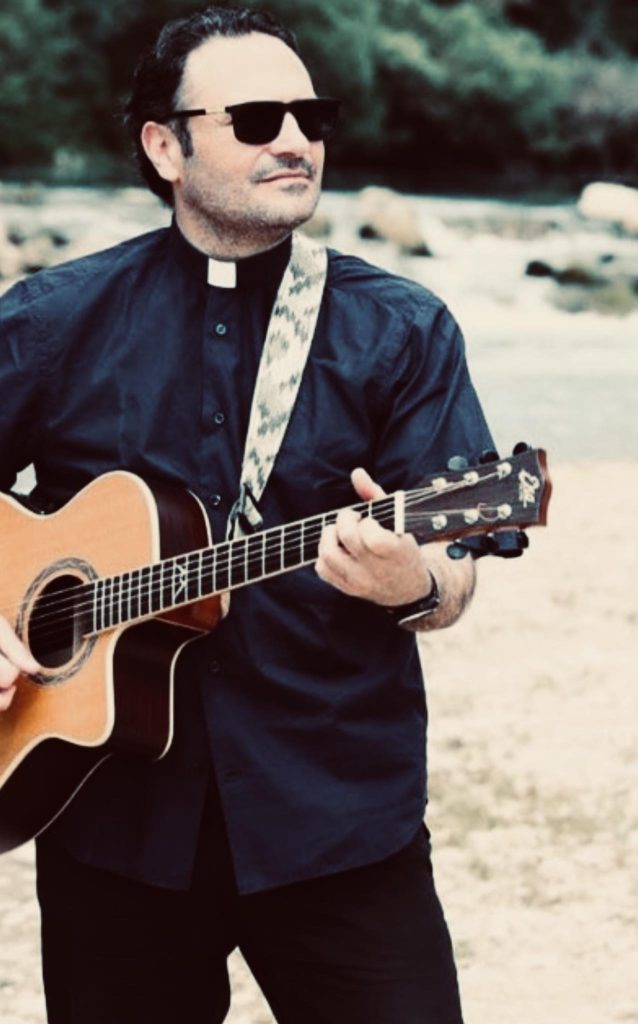
-What inspired the lyrics of your new song “Prodigio”?
The inspiration for the lyrics of the new song comes from the desire to communicate more and more the love for life and the joy of living it, with the awareness that life itself is a miracle, a wonderful thing, and worth living fully.
-The Catholic religion has always had a strong connection with music, which often becomes a means of spreading its message. Which classical composers have inspired you the most?
In reality, there are no classical composers who have inspired me, because, although I greatly appreciate their music and works, I don’t listen to classical music. However, I agree that classical music is of great value and brings many good things.
-Do you also listen to pop music and singer-songwriters? If so, which ones?
Of course, I often listen to pop music and singer-songwriters. I think it’s very beautiful and can convey important messages. I listen to many artists, including Ligabue, Pino Daniele, Pooh, and many others…
-We greatly admire your creative work, as we consider Art to be the main form of spiritual expression. What are you working on after the success of your songs “Canta la gioia,” “Il dono,” and others?
Currently, after the last song “Prodigio,” I am working on a piece that is as communicative as possible, and above all joyful and full of vitality. Of course, I am also, and most importantly, seeking the right inspiration, without which I risk being boring. In conclusion, I would like to thank all of you and my supporters who, with much affection, help me, through various means, to bring my songs to the world. Thank you all…
I was 14 years old when I received my first camera as a birthday gift from my brother, who had emigrated to Italy. From that day on, I started seeing the world through its lens. At that time, while my dream was to make films, most of my peers dreamed of escaping Albania, risking their lives on small boats to reach Italy or other European countries. Witnessing their struggles only strengthened my desire to stay and create something meaningful in my own country.
-When did you realize that cinema would become the protagonist of your life?
I grew up with this idea, as much as I could understand from television. In the village where I was born, there was no cinema. When I started high school, I had to leave my family and move to a larger city. There, I began working at a local TV station. After a few years, I decided to challenge myself further and moved to the capital, Tirana, where I worked in national television. I also pursued my studies in directing at the Academy of Arts. During my time there, I made my first short film, Gjyshja (Grandmother), which turned out to be very successful. From that moment on, my only focus was cinema and taking it to a higher level.
-What inspired the idea behind The Passport?
The Passport is based on a true immigration story that happened in recent years in Albania. I have always wanted to make a film about migration and the struggles of Albanians who left the country illegally, facing extreme difficulties. Coming from a family of emigrants myself, this subject has always been close to my heart. Through this film, I aim to send a message to young people who are still considering leaving Albania illegally. Not only do they put their lives at risk, but unintentionally, they also contribute to the financial growth of human trafficking networks.
-Tell us about the international success of The Passport.
The Passport is currently being screened in major European cities, including London, Rome, Athens, Zurich, Berlin, and Brussels. After Europe, the film will also reach audiences in the United States and Canada. It has been very well received by Albanian audiences, who see their own stories reflected in it, but also by international viewers who have found it compelling and eye-opening. Where does cinema stand today? I believe that cinema, in general, is not experiencing its best days. I think we are currently facing a crisis, as people are moving away from movie theaters. With declining viewership, the entire film industry suffers. Online streaming is taking over and, unfortunately, diminishing the beauty of traditional cinema. It is making people lazier, less willing to go to the theaters, and this is something we feel more and more every day.
-How do you imagine the world of cinema 100 years from now?
With the rise of artificial intelligence, I fear that films will lose their true essence. The magic of cinema that we grew up with and experienced firsthand will be gone, and everything will feel artificial. Unfortunately, I believe that movie theaters will eventually turn into museums. People will abandon them, and they will remain as symbols of the past. Cinema will primarily be consumed on smartphones, stripping it of the authentic experience that once connected audiences to the true art of filmmaking.
The P.R. project is actually a refinement, meaning the completion and natural extension of Risveglio Planetario, a multidisciplinary project that originated in its original form in Italian as a song in the years 2021/22. The current P.R. maintains its song form but in English, and the music video is adapted to the new version. This process involves the art of spirituality, photography, music, cinema, poetry, society, politics (understood as “polis”), philosophy, and the interconnectivity of all things.
The song format, combined with the video, is a strategic way to maintain the lightness and accessibility of concepts that would otherwise be less accessible, if not unattainable, to our contemporary audience. In fact, the song format serves as a true Trojan horse, allowing us to breach the walls of the city of Troy that imprison us within a pre-established reality, otherwise impenetrable. I use the metaphor of the impenetrable walls because it is a fact that we find ourselves in this condition both as individuals and as a society. Obviously, Planetary is in English to honor its planetary mission.
The inspiration for this work came from an intuition and personal sensitivity, from a vision ahead of its time and events. The observation of the acceleration of events at the expense of humanity’s culture, which in my eyes is neither credible nor conceivable, is a sign of weakness in an economic, political, and cultural system at its peak of fragility and obvious decline. This downward trajectory represents, in my view, the prelude to a new era: Risveglio Planetario – Planetary Rebellion. I believe this work will confirm the success of the Italian version.
The work that Wild Filmmaker is doing is and will increasingly be important and strategic for the world of cinema, offering crucial visibility to independent productions that are free from pre-established logics. Thank you, Wild Filmmaker, for your dedication and sensitivity.