The Best Independent Artists of the Year Make Their Voices Heard!

By Editorial Staff

Following the overwhelming success of our events in California—with over 40,000 participating artists and submissions from 32 countries—we’re proud to say it loud and clear: THE WILD FILMMAKER COMMUNITY is now the largest global platform for independent artists. Even Oscar-winning directors and screenwriters, along with the international press, have taken notice!

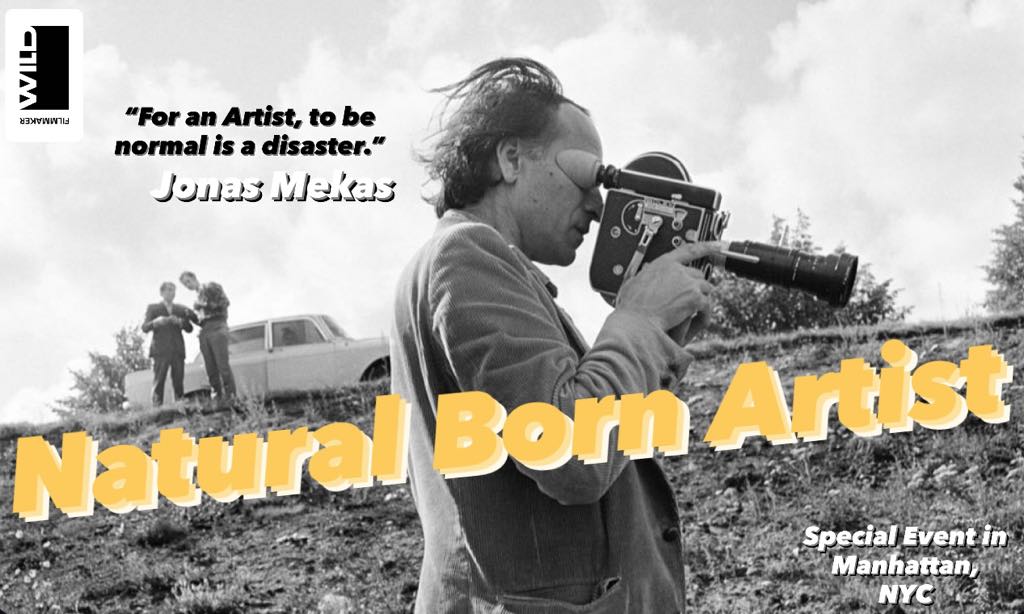
In just five years, we’ve achieved a remarkable milestone—and we’re celebrating it with what’s shaping up to be the biggest arthouse cinema event in Manhattan, New York City. The event is called NATURAL BORN ARTIST, and it’s our way of saying Happy Birthday to WILD FILMMAKER—since this extraordinary journey began exactly five years ago, in August.
To all the artists who believed in us, we owe you a heartfelt THANK YOU. Without you, WILD FILMMAKER wouldn’t include Academy members, wouldn’t be the most visible independent brand at major international festivals, featured in publications like The Hollywood Reporter and Variety, and we never would have had the honor of hosting film critics from The New York Times and IndieWire.

We’ve won—and we’re just getting started. Our mission remains unchanged: The poetry of free cinema will save the world.

Coming up next: the artists who joined our “MAKE YOUR VOICE HEARD!” project.

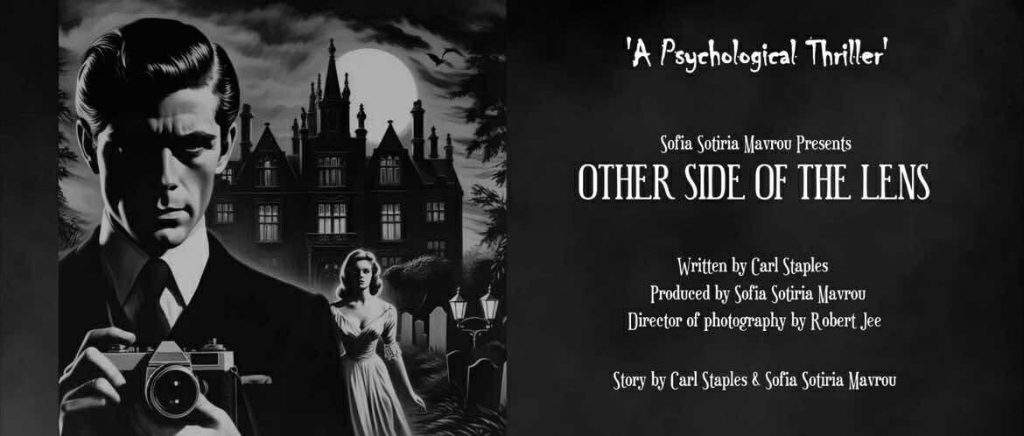
Other Side Of The Lens

By Sofia Mavrou & Carl Staples

BEST INTERNATIONAL SHORT SCRIPT 2025 & BEST ORIGINAL INDIE SCREENWRITER

Lambada The Dance Of Fate

By Kai Fischer

BEST WRITING STYLE, BEST INTERNATIONAL BIOGRAPHICAL SCRIPT & BEST INDIE WRITER

Asherah’s Colors

By Gary Mazeffa

BEST INDIE NARRATIVE SHORT FILM, BEST PRODUCTION COMPANY, BEST ARTHOUSE FILMMAKER & BEST ACTING

Sheldon Mashugana gets Stooged

By Dean Morgan

BEST AMERICAN COMEDY & BEST ORIGINAL ACTOR

Thankful

By Earnest Diaz

BEST HUMAN RIGHTS FEATURE SCRIPT 2025 & BEST INTERNATIONAL INDIE SCREENWRITER

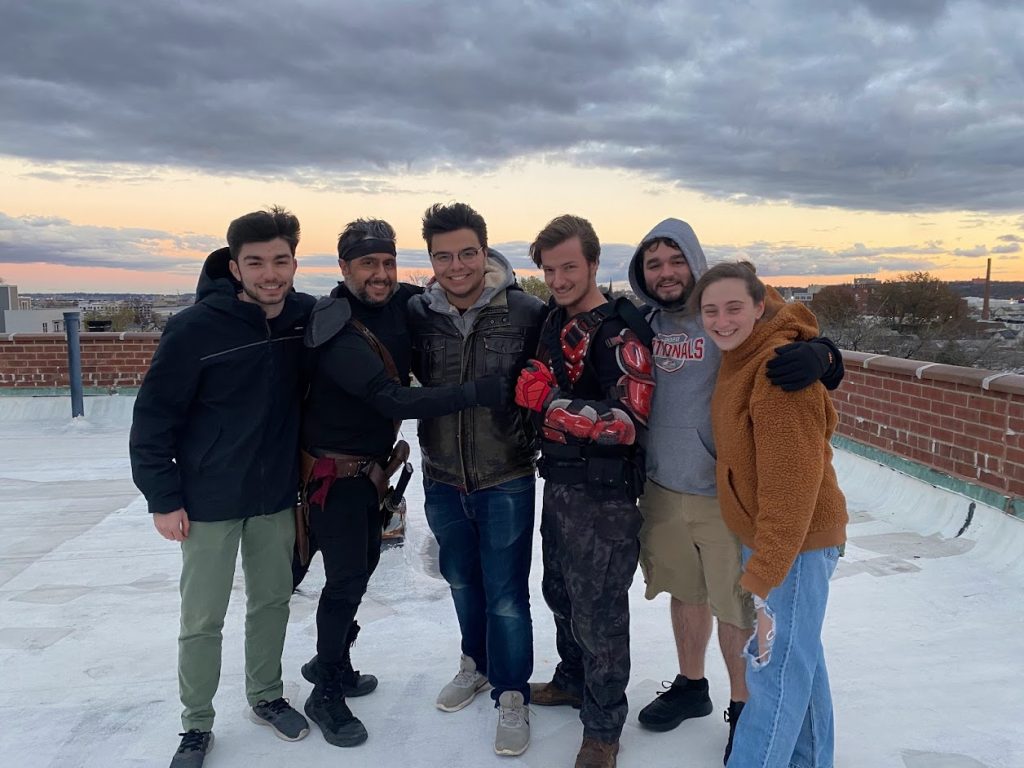
The Days of Knight: Chapter 1

By John Martinez

BEST DIRECTOR, BEST ARTHOUSE NARRATIVE SHORT 2025, BEST SCREENPLAY SHORT, BEST LOCATION & BEST VISUAL EFFECTS

Forevermore

By Danilo Del Tufo

BEST ANIMATED SHORT FILM, BEST ORIGINAL EDITING & BEST EUROPEAN INDIE FILMMAKER

Sequoia Spirits

By Cherie Carson

BEST INTERNATIONAL DANCE MOVIE 2025 & BEST ARTHOUSE FILMMAKER

Eye of the Storm

By Brooke Wolff

BEST INTERNATIONAL ARTHOUSE DOCUMENTARY FEATURE 2025, BEST BIOGRAPHICAL PROJECT, BEST PRODUCER, & BEST EDITING

Credo

By Don Pasquale Ferone

BEST EUROPEAN MUSIC VIDEO, BEST SPIRITUAL SONG & BEST INTERNATIONAL SINGER

Fear not, my child

By Michaela Kuti

BEST SONG 2025 & BEST SOUND DESIGN

Something ain’t right

By Susan Downs

BEST INTERNATIONAL ARTHOUSE DOCUMENTARY 2025, BEST STORYTELLING & BEST ORIGINAL MOVIEMAKER

Mecca

By Monte Albers de Leon

BEST LGBTQ+ & BEST INTERNATIONAL SCREENWRITER 2025

Monument to Love

By Jacob Comforty

BEST DIRECTOR, BEST PRODUCER & BEST ORIGINAL EDITING (Category: Documentary Feature)

Doctor Hyphoteses

By Vicentini Gomez

BEST ACTOR 2025 & BEST INDIE COMEDY 2025

Boxed In

By Steve Hunyi

BEST ARTHOUSE SHORT FILM, BEST CINEMATOGRAPHY, BEST SCREENPLAY SHORT & BEST INDIE DIRECTOR

Hot Afternoons Have Been in Montana

By Ken Kimmelman

BEST INTERNATIONAL EXPERIMENTAL FILMMAKER 2025 & BEST VIDEO POETRY

Fire Flies

By Larry Gene Fortin

BEST FANTASY SCRIPT 2025 & BEST ACTION SCRIPT

Effata

By Anaya Music Kunst

BEST ORIGINAL MUSIC VIDEO 2025 & BEST INTERNATIONAL VOICE

Noise

By R. Scott MacLeay

BEST ARTHOUSE DIRECTOR 2025 & BEST ORIGINAL EDITING

The Rorschach Test

By Lena Mattsson

BEST EUROPEAN DIRECTOR 2025 & BEST INSPIRATIONAL FILM

Not Without Gloves

By Lena Mattsson

BEST ARTHOUSE CINEMATOGRAPHY & BEST INTERNATIONAL ART FILM 2025

Katabasis

By Samantha Casella

BEST INDIE FILM, BEST CASTING DIRECTOR, BEST SCREENPLAY (Category: Narrative Feature) & BEST INTERNATIONAL ACTRESS

The Arcangel Of Death

By Vincenzo Amoruso

BEST INTERNATIONAL YOUNG ACTOR 2025, BEST EXPERIMENTAL SHORT FILM & BEST ORIGINAL ACTING

Routine

By Russell Emanuel

BEST AMERICAN FILMMAKER 2025, BEST NARRATIVE SHORT FILM, BEST SCREENPLAY SHORT & BEST EDITING

The Assassin’s Apprentice 2: Silbadores of the Canary Islands

By Russell Emanuel

BEST ARTHOUSE PRODUCER, BEST INTERNATIONAL INDIE SHORT FILM, BEST CAST, BEST ORIGINAL IDEA & BEST CINEMATOGRAPHY

In a Whole New Way

By Jonathan Fisher

BEST EDUCATIONAL FILM 2025 & 2025 FREEDOM OF EXPRESSION PRIZE

Wacko

By Matthew Roch

BEST AMERICAN NARRATIVE FEATURE 2025, BEST INDIE PRODUCER, BEST SCREENPLAY & BEST INTERNATIONAL INDIE MOVIEMAKER

Chateau De Tarot

By Reid Barwick

BEST ORIGINAL SCREENWRITER & BEST ARTHOUSE FEATURE SCRIPT OF THE YEAR

“Only You Can Save Her,” pilot teleplay of series THE BOY WHO EARNED HIS MAGIC

By Lynn Elliott

BEST INTERNATIONAL TELEVISION SCRIPT & BEST AMERICAN WRITER 2025

Alta California

By Lynn Elliott

BEST HUMAN RIGHTS FEATURE SCRIPT OF THE YEAR

The Dead Ringer

By Suzanne Lutas

BEST INTERNATIONAL ARTHOUSE SCREENPLAY

The Duchess

By C. Arnold Curry

BEST INDIE DRAMA 2025, BEST WRITING STYLE & BEST ORIGINAL IDEA

Omnipotent Resolution

By Uniqueness Heiress & Azia

BEST INTERNATIONAL DANCE FILM, BEST ARTHOUSE MUSIC VIDEO, BEST ORIGINAL EDITING & BEST INTERNATIONAL DIRECTOR (Category: Musical)

Precious the Baby Dragon

By Dawn Menge

BEST INTERNATIONAL ORIGINAL WRITER & BEST BOOK OF THE YEAR

The Priory of Sion and the treasure of abbey Sauniere of Rennes the Castle France

By Florence Cazebon-Taveau

BEST EUROPEAN SCREENWRITER & BEST HISTORICAL SCREENPLAY

I Just Want To Be With You

By Jeremy and Christine Stork

BEST INTERNATIONAL INDIE MUSIC VIDEO & BEST ORIGINAL SONG 2025

Queen: checkmate for the king

By Luca De Giorgi

BEST INTERNATIONAL DOCUMENTARY FEATURE, BEST DIRECTOR & BEST EDITING (Category: Documentary Feature)

The Stones of Rome

By Sean Gregory Tansey

BEST INTERNATIONAL ACTOR & BEST HISTORICAL SHORT FILM

The Pathos of Hamlet

By Sean Gregory Tansey

BEST INTERNATIONAL EXPERIMENTAL SHORT FILM & BEST ARTHOUSE ACTING

See me

By Anton Svantesson-Helkiö

BEST INTERNATIONAL ARTHOUSE NARRATIVE SHORT, BEST ORIGINAL SCREENWRITER, BEST DIRECTOR, BEST CINEMATOGRAPHY. BEST EDITING & BEST SCREENPLAY SHORT (Category: Narrative Short)

A Long Journey

By Mira Kim

BEST INTERNATIONAL DIRECTOR (Category: Experimental Film) & BEST ORIGINAL EXPERIMENTAL FILM

Heat and Love

By Michał Kucharski

BEST FILMMAKER OF THE YEAR (Category: Music Video), BEST ORIGINAL EDITING & BEST INTERNATIONAL INDIE MUSIC VIDEO

Bert the Singing Cat

By Darla Zuhdi

BEST HUMAN RIGHTS MUSIC VIDEO & BEST AMERICAN SINGER 2025

Virulence

By Christopher Pennington

BEST ORIGINAL FEATURE SCRIPT, BEST ORIGINAL WRITING STYLE & BEST ARTHOUSE SCREENWRITER

Get out Breathing

By Nathan Benham

BEST INTERNATIONAL DRAMA & BEST ORIGINAL INDIE DIRECTOR 2025

Colombano e la 21esima Fetta

By Paolo Pier Luigi Guglielmetti

BEST ORIGINAL FILM 2025, BEST ARTHOUSE SCREENPLAY & BEST EUROPEAN ARTHOUSE DIRECTOR

Black Wolf

By Jamie Sutliff

BEST INTERNATIONAL SHORT FILM OF THE YEAR, BEST INDIE MOVIEMAKER & BEST ORIGINAL SCREENPLAY SHORT

The Edge “Into The Past”

By Gary St. Martin

BEST INTERNATIONAL PILOT TV 2025 & BEST SCREENWRITER (Category: Pilot TV)

The Duchess

By Arnold Curry

BEST DIRECTOR, BEST SCREENWRITER & BEST INDIE PRODUCER (Category: Drama)

Urban Eats MTL

By Ioannis Koutroubis

BEST INTERNATIONAL WEB/TV SERIES, BEST ORIGINAL IDEA & BEST ARTHOUSE SCREENWRITER (Category: Web/Tv Series)

I Waited for You

By Jennifer Glee

BEST DIRECTOR, BEST CINEMATOGRAPHER & BEST ORIGINAL EDITING (Category: Experimental Film)

The G-Files

By John Johnson

BEST INTERNATIONAL DIRECTOR, BEST CAMERA OPERATOR (Category: Documentary Feature) & BEST ORIGINAL DOCUMENTARY FEATURE 2025

Louie (KR.ONE) Gasparro 5POINTZ

By Eirini Alligiannis

BEST ARTHOUSE MOVIEMAKER & BEST ORIGINAL IDEA

Nossos Caminhos

By Carla Di Bonito

BEST INTERNATIONAL SCREENPLAY, BEST DRAMA SCRIPT & BEST ORIGINAL INDIE SCREENWRITER

The Ghost and the Gold Louis

By Jamie Sutliff

BEST INTERNATIONAL FEATURE TV SERIES OF THE YEAR

Life Is Beautiful

By Dhanashree Ganatra

BEST INTERNATIONAL SONG 2025 & BEST SOUND DESIGN

The Mountain

By Ruth Finnegan

BEST INTERNATIONAL SHORT SCRIPT & BEST INTERNATIONAL SCREENWRITER

I Know What You Do When I Go to School

Written and illustrated by Siona Talekar

Published by Story Monsters Press

BEST ORIGINAL BOOK OF THE YEAR

Croix – The Prequel: Kiss The Ring

By Charli Brown

BEST INTERNATIONAL NARRATIVE SHORT, BEST AMERICAN DIRECTOR, BEST CASTING DIRECTOR & BEST ORIGINAL SCREENPLAY SHORT

Lucky in Long Island

By Michelle Lynn

BEST INTERNATIONAL FEATURE SCRIPT

An Ever After Drama

By Michelle Lynn

BEST ACTRESS OF THE YEAR

Silver Lights

By Michelle Lynn

BEST INTERNATIONAL INDIE WRITER & BEST INTERNATIONAL BOOK/MANUSCRIPT 2025

Medea

By Andronica Marquis

BEST DIRECTOR, BEST CINEMATOGRAPHER, BEST ORIGINAL SCREENWRITER & BEST ORIGINAL IDEA (Category: International Narrative Short)

Ghost Town, N.M.

By Lynn Elliott

BEST ORIGINAL INDIE SCREENWRITER WRITER (Category: FEATURE SCRIPT)

Alta California

By Lynn Elliott

BEST HUMAN RIGHTS SCRIPT & AMERICAN FEATURE SCRIPT 2025

Borderline Justice

By Lynn Elliott

BEST ARTHOUSE FEATURE SCRIP 2025

“Only You Can Save Her,” pilot teleplay of series THE BOY WHO EARNED HIS MAGIC

By Lynn Elliott

BEST INTERNATIONAL PILOT TV

Doctor Hyphoteses

By Vicentini Gomez

BEST INTERNATIONAL INDIE DIRECTOR & BEST ACTOR 2025

A Child’s Voice

By Karen Matthews

BEST SCREENWRITER (Category: International Television Script)

Dancing with Spies @Goddess

By Francis Billingsley

BEST INDIE BOOK/MANUSCRIPT 2025

The Golden Years

By Joe Starzyk

BEST INDIE SHORT FILM 2025, BEST FILMMAKER & BEST CINEMATOGRAPHER (Category: Narrative Short Film)

Walking With God

By Lois Banks

BEST INTERNATIONAL NARRATIVE FEATURE, BEST MOVIEMAKER & BEST SCREENPLAY

Flashes of Light (Bagliori)

By Mattia Paone

BEST ORIGINAL NARRATIVE SHORT, BEST INDIE PRODUCER & BEST EUROPEAN INDIE FILMMAKER

The Devil Wind

By Jamie Sutliff

BEST PICTURE OF THE YEAR & BEST INDIE DIRECTOR (Category: Narrative Feature)

Water

By Gary Beeber

BEST DIRECTOR, BEST CAMERA OPERATOR, BEST EDITING & BEST ORIGINAL IDEA (Category: Documentary Feature)

Passacaglia

By Ryosuke Handa

BES ORIGINAL ARTHOUSE NARRATIVE FEATURE, BEST CINEMATOGRAPHY, BEST INTERNATIONAL PRODUCTION COMPANY & BEST INTERNATIONAL MOVIEMAKER

Hollywood Elite Podcast Episode 2 Sir Earl Toon Jr Apr 2025

By Tommy Anderson & Sherry Severs

BEST INTERNATIONAL WEB/TV SERIES & BEST DIRECTOR (Category: Web/Tv Series)

The Invitation

By Thorsten Schade

BEST INTERNATIONAL HORROR OF THE YEAR, BEST DIRECTOR & BEST CINEMATOGRAPHY (Category: Horror)

Dinner With Dance

By Katherine Schimmel

BEST INTERNATIONAL SHORT SCRIPT OF THE YEAR, BEST WRITING STYLE & BEST ORIGINAL WRITER

Searching for Camelot

By Roger Paradiso

BEST INTERNATIONAL ARTHOUSE DIRECTOR 2025 & BEST AMERICAN SCREENPLAY

Cassandra Venice

By Hugo Teugels

BEST EUROPEAN FILMMAKER OF THE YEAR & BEST ARTHOUSE CINEMATOGRAPHY

Medea

By Andronica Marquis

BEST INDIE DIRECTOR, BEST SCREENWRITER, BEST CAST & BEST MAKE-UP ARTIST (Category: Narrative Short)

Fractures In Time

By Lesley Ann Albiston

BEST ORIGINAL WRITING STYLE, BEST INDIE SCREENWRITER & BEST INTERNATIONAL ARTHOUSE FEATURE SCRIPT

Emergency Musical Response: Part 1 – Journey to Netherworld

By Alexander Senicki

BEST INTERNATIONAL MUSICAL 2025

The Girl Made of Earth and Water

By Pamela PerryGoulardt

BEST DIRECTOR, BEST ORIGINAL IDEA, BEST EDITING (Category: International Super Short Film) & BEST SUPER SHORT 2025

Downriver

By Andea Boll

BEST DANCE FILM 2025 & BEST FILMMAKER (Category: International Dance Film)

I Swear

By Richard VanOverbroeck

BEST ORIGINAL MUSIC VIDEO & BEST FILMMAKER (Category: Music Video)

The New Immigrants- Hong Kongers

By Vivian Tsang

BEST INTERNATIONAL ORIGINAL DIRECTOR & BEST STUDENT FILM

A Lady’s Love

By Sonia Machado Hines

BEST INDIE NARRATIVE FEATURE & BEST SCREENPLAY (Category: Narrative Feature Film)

Brothers of Babylon

By Gabriel Womack

BEST AMERICAN SCREENWRITER & BEST ARTHOUSE FEATURE SCRIPT

Unmaskyourlife

By Bruno Marro

BEST EUROPEAN SONG OF THE YEAR & BEST INTERNATIONAL ARTHOUSE SINGER

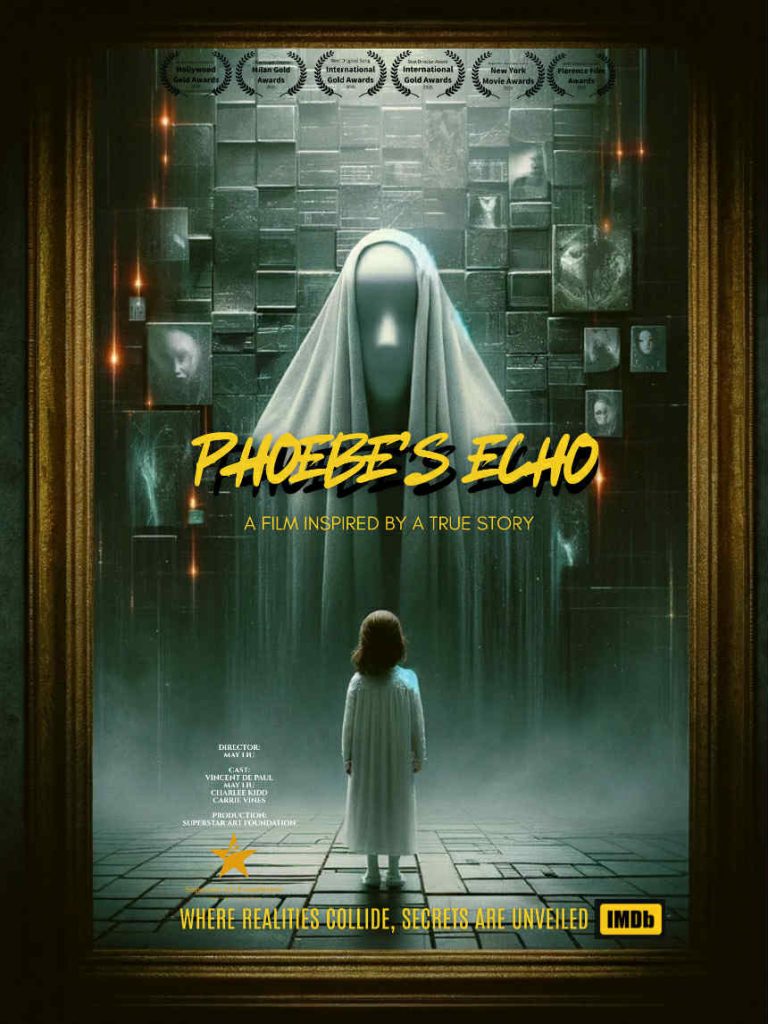
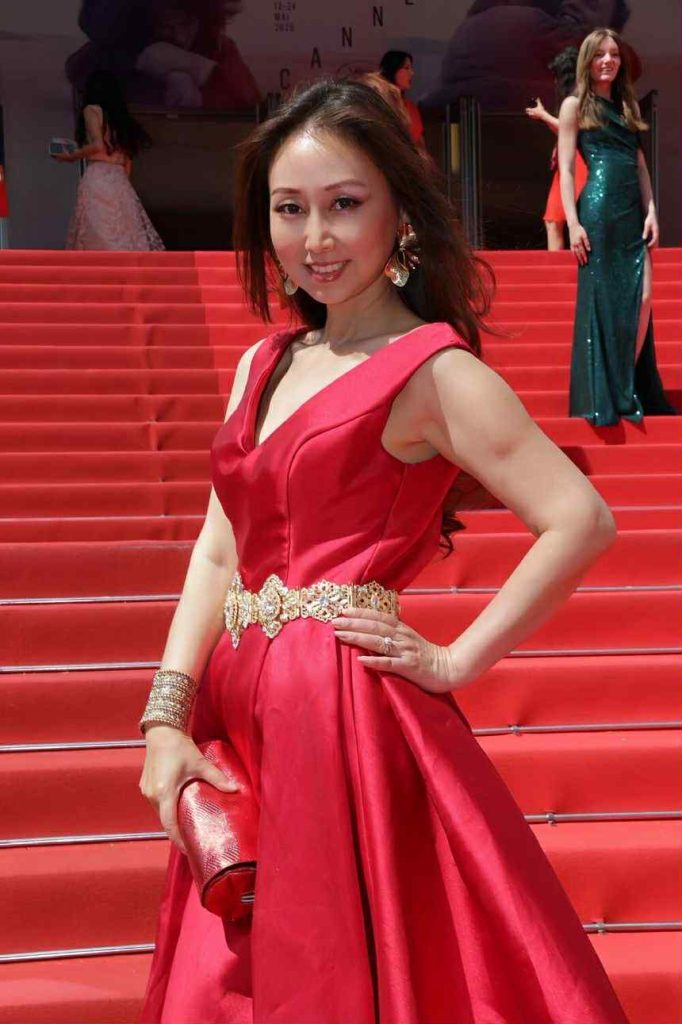
“Phoebe’s Echo” & “Blooming Sisters” (EXCLUSIVE) Interview with May Liu

-Who is May Liu?

I’m an writer, filmmaker, actress, producer, and philanthropist based in Dallas—honored with the Noble Chivalry Rank of Art & Humanity, the Presidential Lifetime Achievement Award, and descended from the Han Dynasty Liu royal family. I founded the Superstar Art Foundation and the Miss Economic World program to uplift emerging talent, was issued Global 100 successful woman honor, published 3 books in Amazon. “May Liu Artwork Collection” “Royal Family Liu’s History and Decryption of Han Culture”, “Blooming Sisters”. And I’ve produced, written, and directed movie “Lost In 24” (2023) “Blooming Sisters” (2024), “Phoebe’s Echo” (2025), which gained over 30 awards and nominations for my movies in multiple International film festivals,some recognized in Cannes and Rome, seen on FOX, NBC, and CBS  ( Refer to my IMDB link https://www.imdb.com/name/nm10699373/)

-What new projects are you working on?

I recently wrote, directed, and edited Phoebe’s Echo, a 2025 psychological thriller about a single mom and her daughter uncovering dark secrets behind an artist’s mysterious death. The film premiered February 28, 2025, and earned seven wins across festivals IMDb Pro. It’s a deeply personal exploration of memory, trauma, and artistic legacy. In this movie, I also played a role of Lisa Lee, who is a painter artist, I am happy to invite Emmy Award winner actor and producer Vincent De Paul to star in this movie with me. Carrie Vines play the role of Susan (the mom’s role), Charlie Kidd play the lead role Phoebe, I like their performance, I made a song with my musician Stephane Kara called “Light of Life”, I love this song a lot, it is a discovery of the value of life as an artist, which is my role in this movie.  We’ve taken it to Cannes Film Festival and screened Cannes, LA and Dallas, we are now taking it to multiple online platforms and cinema distribution. I hope more audience will see it soon!

I’m exploring a bunch of writing experiments—some short fiction around speculative scenarios, and even a small series of interactive story prompts for creative practice. I’m also building a prototype for a collaborative world‑building tool, aiming to help filmmakers and authors iterate on story worlds dynamically. It’s early days, but really exciting to merge narrative with collaborative tech!

-Which filmmaker inspires you the most?

 I’ll be honest—I draw inspiration from bold, visionary auteurs like Steven SpielbergQuentin Tarantino, and Christopher Nolan. Spielberg’s mastery of emotional storytelling, Tarantino’s fearless dialogue and genre subversion, and Nolan’s cerebral structure and thematic ambition all drive me to push narrative and visual boundaries. Their influence is woven through my work, especially in Phoebe’s Echo.  

-What do you dislike about the world, and what would you change?

What gets me fired up (in a not-so-great way): the widening empathy gap—where people cluster into tribes and shut out others. It’s tearing at communities globally. I’d change it by prioritizing systems that foster true connection and understanding across divides: in education, media, policy, paths to real human engagement. Bottom line: I’d build bridges instead of walls.

-How do you imagine cinema in 100 years?
Let’s speculate wildly:

Immersive, multi-sensory experiences—not just VR, but shared olfactory, haptic, maybe even taste-based narratives.

  • AI-driven co-creation, where machine intelligence helps design scenes, dialogue, or even character arcs in real time, responsive to audience feedback.
  • Collective storytelling platforms, where cinema becomes malleable and social, shifting and diverging based on who’s watching.
    It’ll be less “you sit in a dark room” and more “you live a story.”

-What is your impression of WILD FILMMAKER?

I love what Wild Filmmaker stands for—raw creativity, guerrilla-style production, and failure-as-learning. Their interview with me on Lost in 24 highlighted the power of resourcefulness and authenticity. They shine a spotlight on fearless creators willing to take risks outside traditional systems, and that’s exactly the energy I want to foster.

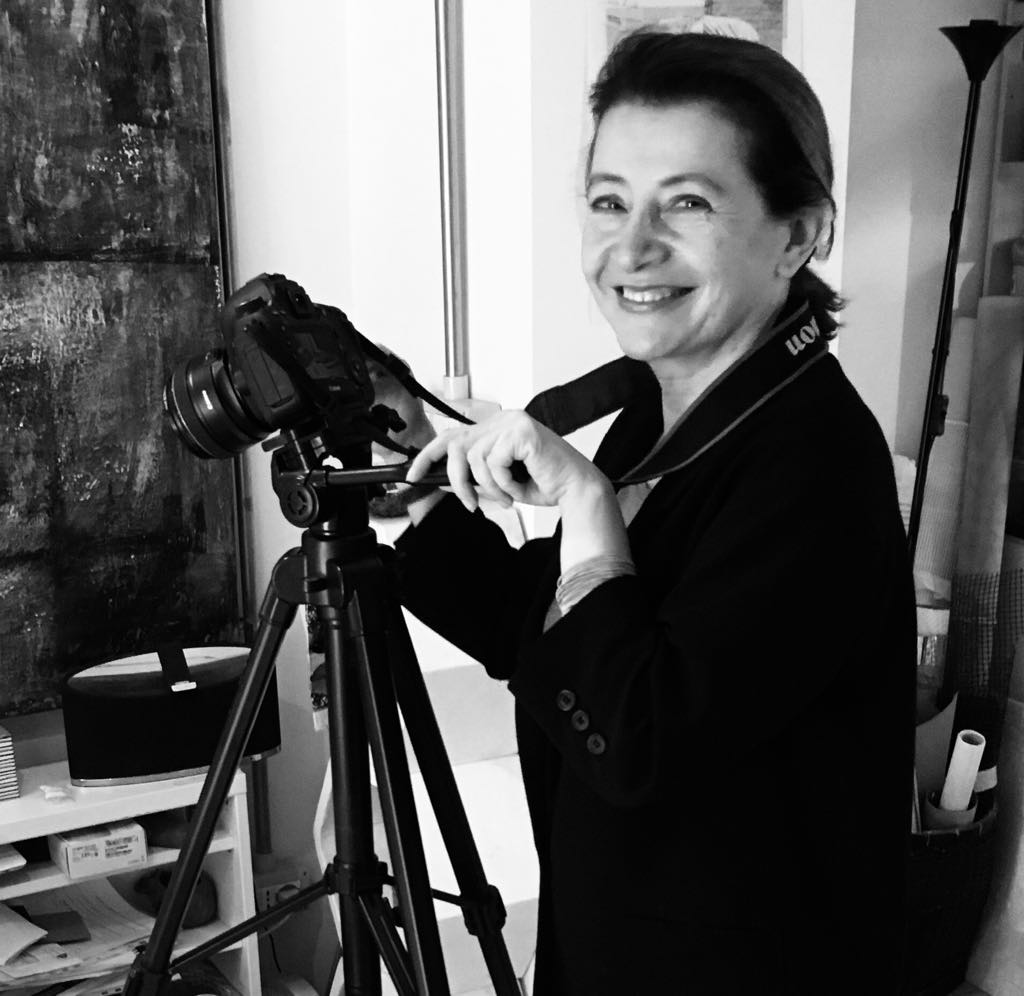
Catia Ott’s Prime Video Debut After WILD FILMMAKER’s International Success (EXCLUSIVE) Interview

Tell us about your projects that have recently debuted on Prime Video.

Space and Materia are two documentaries now available on Prime Video Italia, and I am very happy about their release. Space is a series of portraits of architects, while Materia is a series of portraits of designers and artisans in Rome. Both projects are ways of describing the city through the creatives who live and work in it, but also an opportunity to reflect on the meaning and role of architecture and design in contemporary culture.

WILD FILMMAKER has believed in your talent since its foundation five years ago. What is your opinion about our journey so far?

For me, Wildfilmmaker is an open space without hierarchy or preconceptions, where creativity can truly flourish. I was supported from the beginning, and this helped me greatly with my motivation and energy to continue my creative journey. The community gives exposure to all genres of films and documentaries, and it deserves its success for these reasons.

Who has supported you in the distribution of your projects?

I have been very lucky to find a distributor, Saturnia Pictures with Marco Amelia, who is supporting my documentaries on platforms and channels both in Italy and abroad. I also think working on “niche” documentaries can be an advantage because screenings can take place in museums, cultural institutes, universities, and art schools. You can also organise events in art galleries and look for sponsors. This brings documentaries to new and different audiences. You really have to create your own audience because the competition is so fierce.

We know that you have recently returned behind the camera; can you reveal something about your new project?

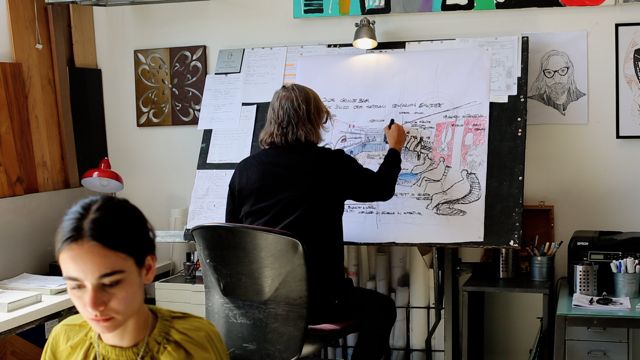
Strati/Layers is a short documentary on the painter Ivan Mangov that will be part of his exhibition begining of September at Palazzo Medici Riccardi in Florence. I am also working on a docu-animation about the Polish Baroque painter Tadeusz Kuntze, who studied and worked in Rome in the tradition of the Grand Tour (when foreign artists came to Italy during the 17th–19th centuries). I am collaborating with Konik Studio, with Kasia Zimnoch and Pawel Kleszczewski, two very talented artists and animators based in Poland. Additionally, I am working on two historical biographies using interviews and archival material.

It is very important to collaborate with other creatives outside your comfort zone!

What is your opinion about the current period that Independent Cinema is going through?

Today there are so many opportunities thanks to new technologies, but what really matters is having an original point of view. You still need to nourish yourself with literature, painting, and personal experiences. Recently, I saw an excellent movie called Ciao Bambino (directed by Edgardo Pistone), and seeing films like that gives me a lot of hope. It’s important not to let negative energy get to you or lose motivation.

What are Catia Ott’s goals?

To be surprised by each project!

Prime video Italia link:

Spazio: https://www.primevideo.com/detail/Spazio-Ritratti-di-Architetti/0KGHZPDEFITJI9X78R9K2HOY5K

Materia: https://www.primevideo.com/-/it/detail/0HXHCF6XTZBJSRLQZBUUO1PJZZ/ref=atv_dp_share_cu_r

(EXCLUSIVE) Interview with Eric Kohn – IndieWire’s Chief Film Critic (2010–2021), Now Artistic Director of the Southampton Playhouse

by Michele Diomà

I’ve been reading IndieWire with great interest for many years! I’ve always been excited by the idea of a magazine that openly prioritizes independent cinema over major studio projects. I firmly believe that all the major breakthroughs in film history have come from indie filmmakers-creators who, despite limited resources, brought original ideas and offered fresh perspectives on cinema. I’ve dedicated my professional life to the mission of discovering independent directors and screenwriters from every corner of the world, almost like a gold prospector in mid-1800s California. That’s why today I’m truly honored and thrilled to welcome Eric Kohn to the WILD FILMMAKER Community with this exclusive interview!

-Who is Eric Kohn?

I am a curator, critic, and producer who was born in Texas and raised in Seattle. I have lived in New York City for several decades and spend my summers in Southampton as the artistic director of the Southampton Playhouse. My interests in cinema are ambitious: I am constantly looking for ways to expand audience awareness for cinema, past and present, eliminating sociological barriers that often prevent some people from engaging more deeply with the art form.

-You were IndieWire’s chief film critic for over 10 years. Can you tell us about that experience?

At IndieWire, I set out to establish a trade-like identity for our reviews by fighting for access to early screenings, and developing a strong festival presence that influenced the life cycle of films around the world. With time, this paid off, though the entertainment landscape eventually became so overwhelmed with reviews and related content that such a competitive approach is irrelevant now. I learned that strong, authoritative perspectives hold more value than the rush to be first out of the gate.

-What does independent cinema mean to you?

It’s an flexible term with a lot of historical baggage, but to me it represents uncompromised filmmaking made outside of traditional commercial expectations.

-I currently read your articles on The Hollywood Reporter. What are the differences compared to IndieWire?

I have written for many publications over the years, from The New York Times to Filmmaker Magazine. More recently, I started a newsletter called The Playhouse Post, which is published by my theater, the Southampton Playhouse. Each publication has its own style guidelines and reader expectations, but I generally find that I can navigate these standards on my own terms.

-WILD FILMMAKER is inspired by the cinematic mission of Roger Corman. My goal is to bring new filmmakers and screenwriters to light on a global scale. Do you think this is still possible today?

Of course. Movies may not command the same cultural weight they once did — and certainly not ones lacking million-dollar marketing budgets — but there is still a global infrastructure for filmmakers with unique visions and the desire to get them into the world.

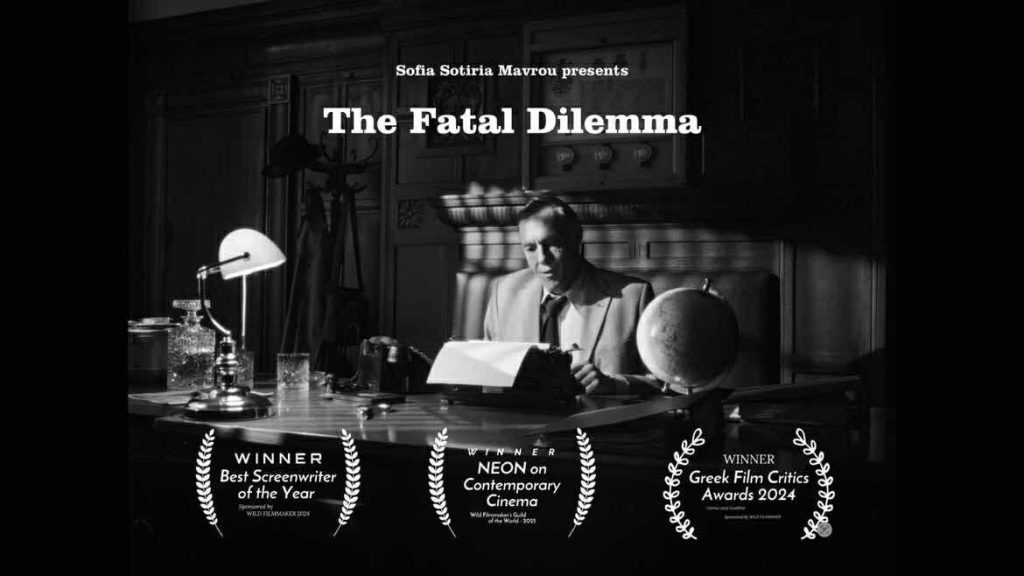
Other Side of the Lens – A New Psychological Thriller After The Fatal Dilemma (EXCLUSIVE) Interview with Sofia Sotiria Mavrou

Which writer inspires you the most? 

It’s hard to choose just one, as my influences are so diverse. I grew up immersed in the works of Homer, Sophocles, Charles Dickens, Jane Austen, Jules Verne, Dostoevsky, and Tolstoy, among others. My writing draws from ancient Greek drama, modern Greek literature, and a wide spectrum of global authors. Each one left a unique mark on the way I see storytelling.

What is the main challenge you encountered while writing your work?

Finding the time is always the greatest challenge. As a full-time working mother of two, life is often very busy. But when inspiration strikes, I’ll write well into the early hours—I follow the current of an idea wherever it leads, no matter how tired I may be.

Every screenwriter needs feedback after completing their project. Is there someone you always turn to for their opinion as soon as you finish writing?

Yes, I trust the feedback of my close friends and family. They know me well and aren’t afraid to offer honest, thoughtful input that pushes my work forward.

Are you currently working on a new screenplay? If so, can you tell us more about it?

I am currently in pre production stage of the ”Other side of the lens” . It’s heavily inspired by old-school noir and the French New Wave—so it’s moody, atmospheric, and full of layers. It follows a retired photographer who’s still grieving the loss of his wife. One day, he decides to revisit the house they once shared, and from there, things start to unravel. As he takes photos of the space, memories resurface—some tender, some much darker than he expected.
The film flips between black-and-white scenes set in the 1940s and widescreen color from the mid-’60s. That contrast really helps blur the line between what’s real and what’s remembered. As the story unfolds, you’re pulled into this psychological spiral along with him—where past and present start to collide, and buried secrets refuse to stay hidden.

If you had to describe your writing style using three adjectives, which ones would you choose?

Real, Passionate, Adventurous.

ESPERIA Urges Meloni Government to Open Inquiry into Italian Cinema – (EXCLUSIVE) Interview with Gino Zavalani

by Michele Diomà

For nearly ten years now, I have been producing my films exclusively in the United States, and I consider New York the most fitting backdrop for the stories I want to tell. I make independent films in English, with Oscar winners and major figures in cinema works intended for an international audience.

This was an artistic choice, but also born from a practical difficulty: making films in Italy. Unfortunately, for many years now, the Italian film industry has been run by a kind of “clan,” where about ten people maybe even fewer make all the important decisions. The result is that unless you become friends with those individuals who are, incidentally, paid with public funds you essentially have no right to exist.

Since I’m a free man, I chose to leave Italy. But I would love to one day help restore Italian cinema to a healthy environment where art, creativity, and pluralism can thrive. After all, we also have a responsibility Italy has produced the most original cinema in the world and is the country of Federico Fellini.

That’s why I enthusiastically welcomed ESPERIA’s proposal to Giorgia Meloni’s government to establish a parliamentary inquiry commission on Italian cinema.

Here is the exclusive interview with ESPERIA’s Editorial Director, Gino Zavalani.

-Who is Gino Zavalani?

First and foremost, I’m a curious person someone who doesn’t settle for official versions. My compass has always been a passion for communication and information. Today, I serve as the Editorial Director of Esperia, a media project born on social media with a clear ambition: to carve out a role in the Italian news landscape by offering an alternative perspective, free from stale rhetoric and convenient dogmas.

-Tell us about your proposal to create a parliamentary inquiry into Italian cinema

Between 2017 and 2025, Italy invested €7.26 billion in the film sector. Public money taxpayers’ money was too often used to finance films with little success, questionable artistic value, and worse still, to feed the same narrow radical-chic circuit. The scandal that recently came to light is even more serious: hundreds of millions of euros were funneled into projects for films that never even existed created solely to cash in on film tax credits. It’s fraud at the expense of the Italian people.

The most outrageous case is that of Francis Kaufmann, known to the public for the double homicide at Villa Pamphili, who in 2020 under the alias Rexal Ford, a self-proclaimed American director received one million euros for a phantom film.

For these reasons, Esperia has strongly called for the establishment of a parliamentary commission of inquiry. We want to know where that money went, who profited, who turned a blind eye and, above all, who will pay it back. Italy deserves a vibrant, honest film industry freed from the parasites that have drained it for decades.

-Why are the same people always rewarded in Italian cinema?

Because there’s a System behind it with a capital “S.” A mechanism that took root at least twenty years ago, one that anyone living in Italy knows all too well: a closed circle the so-called “radical-chic clique” made up of actors, directors, and producers from a self-proclaimed leftist elite, protected for years by politics and the mainstream press. It’s not an ecosystem based on merit or talent, but on friendships and favoritism.

The result? Truly talented young people flee abroad to pursue their careers, while here in Italy it’s always the same names getting the work and the awards regardless of box office performance or artistic quality. It’s a system that impoverishes Italian cinema while enriching the usual few.

-Does the media bear any responsibility?

Absolutely. The media, along with politics, has always been the main safety net for this system. For years, it remained silent or downplayed the issues but now something is beginning to shift. Prime Minister Giorgia Meloni has broken a taboo by publicly denouncing this waste. Even internationally renowned actors like Michele Morrone have had the courage to speak out against this untouchable clique.

And then there’s us Esperia: a free voice, followed by millions, exposing scandals and telling uncomfortable truths that, until recently, no one dared to address.

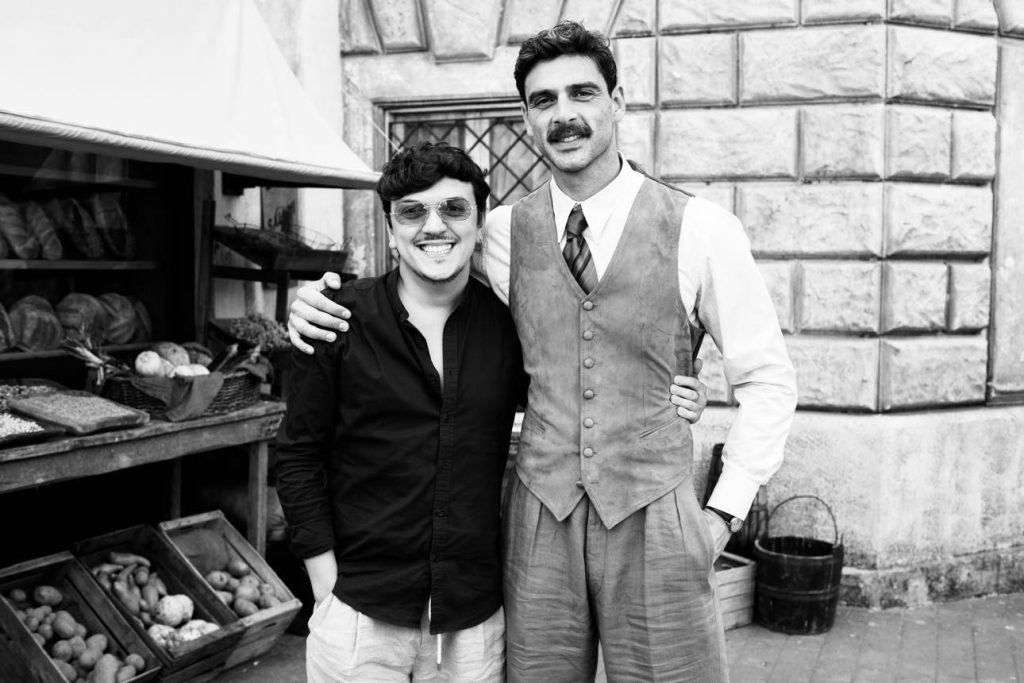
(ACTOR MICHELE MORRONE WITH ESPERIA’S EDITOR-IN-CHIEF GINO ZAVALANI)

What’s your opinion on the work done by WILD FILMMAKER?

I think WILD FILMMAKER is a bold and necessary project. In an era when the cultural industry tends to close in on itself, this magazine opens up space: it gives a voice to those creating outside the mainstream, to those who have no powerful backers but do have something to say.It’s exactly what the world of cinema and not just cinema needs right now: freedom, openness, passion. Telling art as it is, without filters, without censorship, without allegiance. In that sense, WILD FILMMAKER and Esperia share the same mission: breaking down barriers and letting fresh air in.

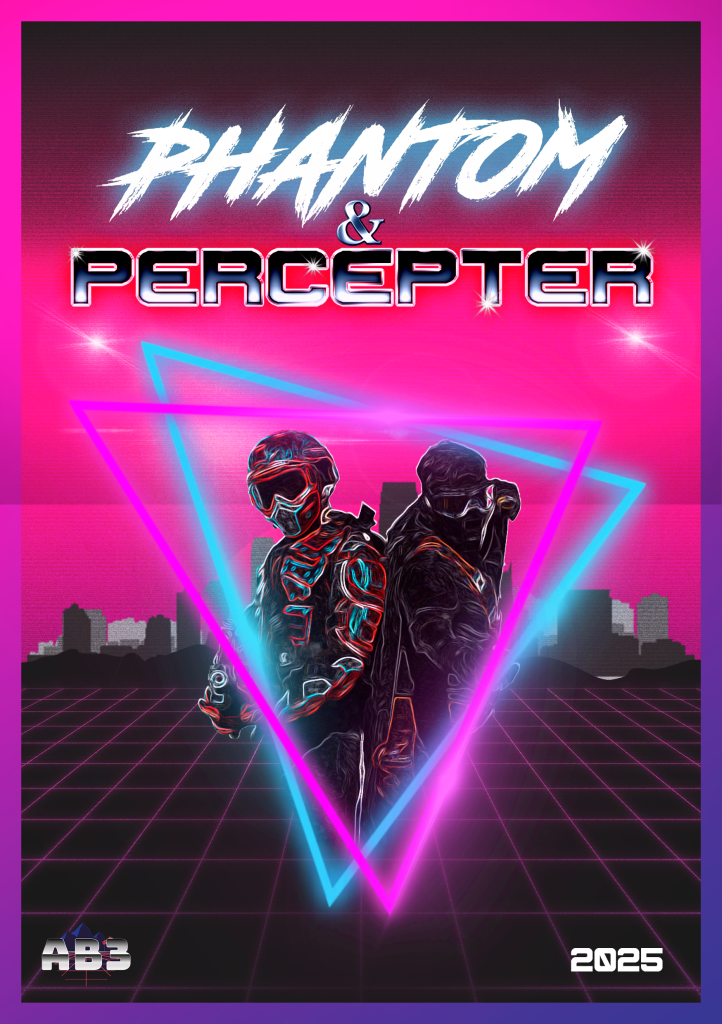
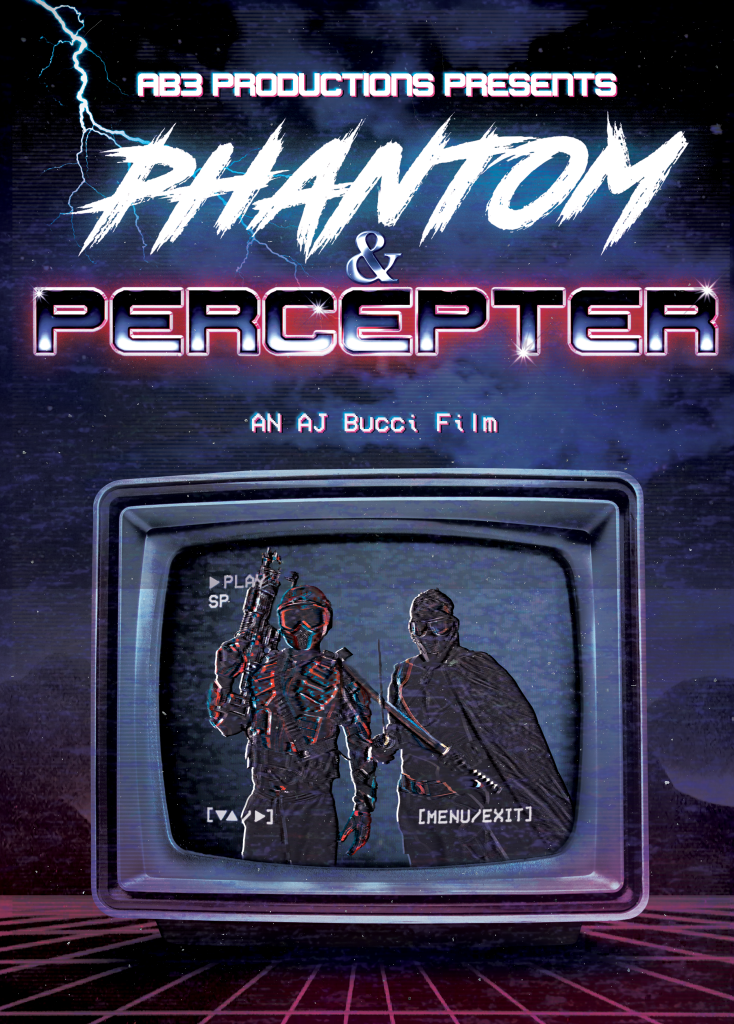
“Phantom and Percepter” (EXCLUSIVE) Interview with AJ Bucci

-Who is AJ Bucci?

I’m AJ Bucci, a storyteller, filmmaker, and entrepreneur from New Jersey. I was raised on Superman, Star Wars, comic books, and action figures. I’m the kind of guy who still watches movies on VHS, plays Super Nintendo, and gathers with my friends for long nights of HeroQuest. I’m obsessed with the mythological
power of story, especially the kind that mixes nostalgia, emotion, and epic stakes.
I graduated from Rowan University with a B.A. in Radio/Television/Film, with concentrations in production and film studies, and a minor in Creative Writing.
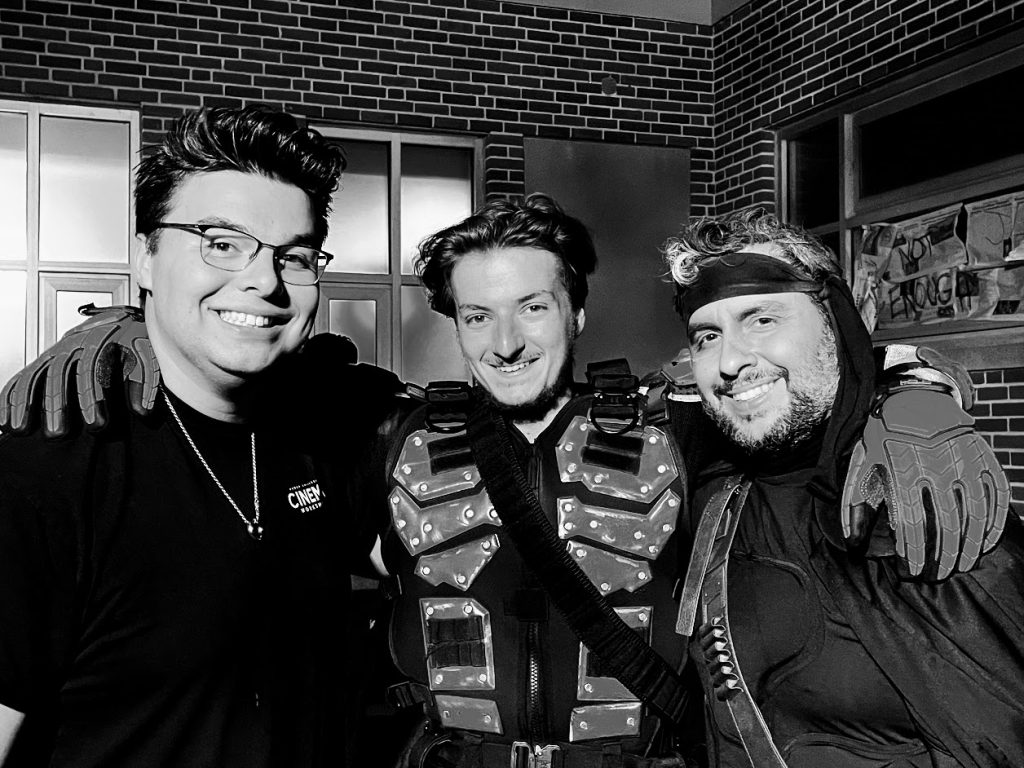
But truthfully, I’ve been making movies since I was four and telling stories since I could speak. I founded AB3 Productions to bring my visions to life and most recently, we completed our first feature film, Phantom and Percepter. What began as a childhood legend passed down from my dad has now become an indie film that’s been honored at multiple festivals. I’m beyond humbled by the response but more than that, I’m grateful. Grateful that audiences are connecting with something deeply personal, mythic, and handmade. That’s what filmmaking is to me, not just cinema, but legacy.

-Do you remember the exact moment you fell in love with cinema?

I can actually remember the exact moment I fell in love with cinema. A bit of context first; in the 90s and early 2000s, my uncle was going to film school and trying to break into the industry. I distinctly remember him and my dad working on a movie when I was four. They were shooting a scene in the basement. I didn’t totally understand what was going on. Why was my uncle holding a camera and filming my dad fake-punching someone?
Why was it so dark? Why did my dad start talking differently when the camera was rolling? I sat on the basement stairs and just watched, totally locked in. And then it happened the moment that changed everything. My uncle Anthony popped the tape out of the camera, loaded it onto the TV, and suddenly there it was. My dad is on screen in a movie. One I had just watched them make. I couldn’t believe what I was seeing. My dad was in a movie. A real movie. Okay, maybe it wasn’t really a movie, just something
fun they were doing but to my four-year-old brain, it was the coolest thing I had ever seen. I didn’t understand how it was any different from anything else I had seen on TV. I was four, what do you want from me? I finally worked up the nerve to ask about it and that’s when everything cracked open. They didn’t just shoot that one scene, they had years of characters, stories, and mythologies they’d built together.That was it. My life changed that day. I know it. How many people can say they knew what they wanted to do with their life at age four? They dug out this old Panasonic VHS camcorder that had to be plugged into the wall and handed me a couple of blank tapes. The first movie I ever made was a Godzilla movie where I set the camera on the floor and smashed action figures together. That was the whole plot. But when we played the tape back on the old CRT and those words popped up handwritten on a piece of notebook paper “An AJ Bucci Film”…Well, the spark was ignited. It’s a high I’ve chased ever since.

-Tell us about your project “Phantom and Percepter”.

Phantom and Percepter is a story that’s been a lifetime in the making. It’s steeped in family legacy and rooted in my love for mythological storytelling. To really understand what this project means not just to me, but to my dad ;I need to take you back to the 1980s.
My dad, Andrew Bucci, and his best friend, Stefan Squires, grew up in the Marion section of Jersey City. They had that classic North Jersey Italian upbringing, but they also came of age during the golden era of comics, cartoons, and over-the-top action figures. Think Batman ’89, GI Joe, Ninja Turtles, Transformers all that iconic ‘80s magic. Out of that energy and imagination, they created two characters: Phantom, a ninja vigilante, and Percepter, a super soldier from the future. They kitbashed action figures, made comics, and built an entire mythos never thinking it would go anywhere beyond their bedrooms.
But then, flash forward to the 2000s when I’m a kid, and they show me these old toys and drawings. My little brain couldn’t handle it. I thought it was the coolest thing in the world that my dad and his best friend had their own superheroes.
That idea never left me. In film school, I worked on some smaller projects, but one night during a film club meeting, everything changed. Our advisor came in and gave us a much-needed wake-up call. Productions were down, attendance was low, morale was worse. I don’t know what came over me, but all I could think
about was Phantom and Percepter. I pitched it, made a ten-minute student film, and something clicked. The premiere broke attendance records. Film club morale soared. And that little short kind of scrappy, kind of silly sparked something.
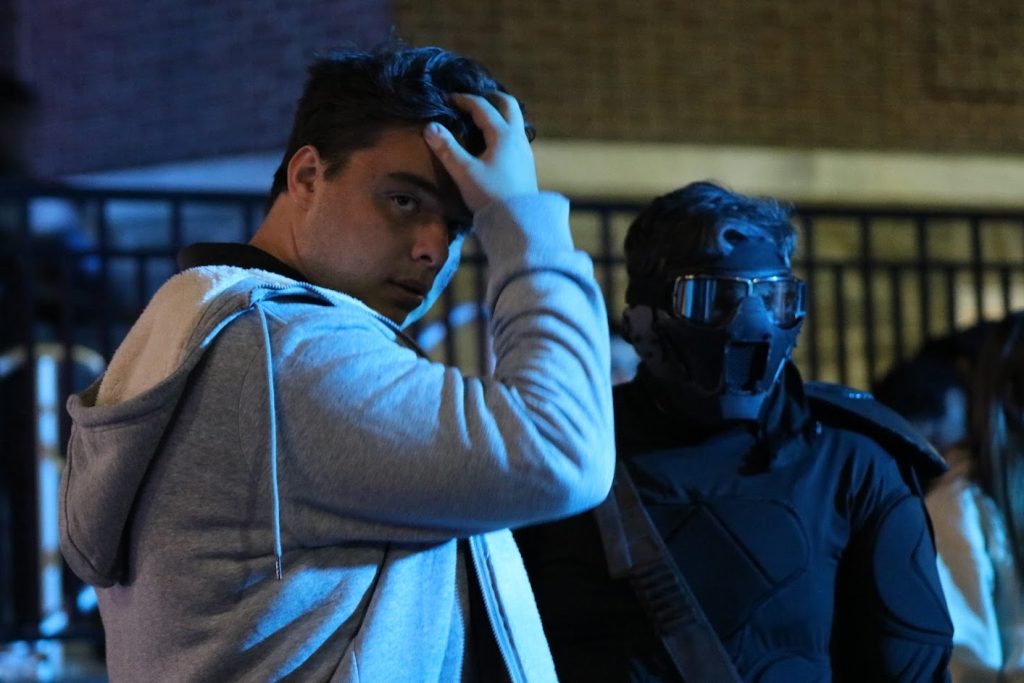
Especially Taylor Forte, who played Percepter. He got it. He saw the same world I saw as a kid. He believed in it as much as I did. He pushed me to go all in. And from that day on, we didn’t stop. Just months
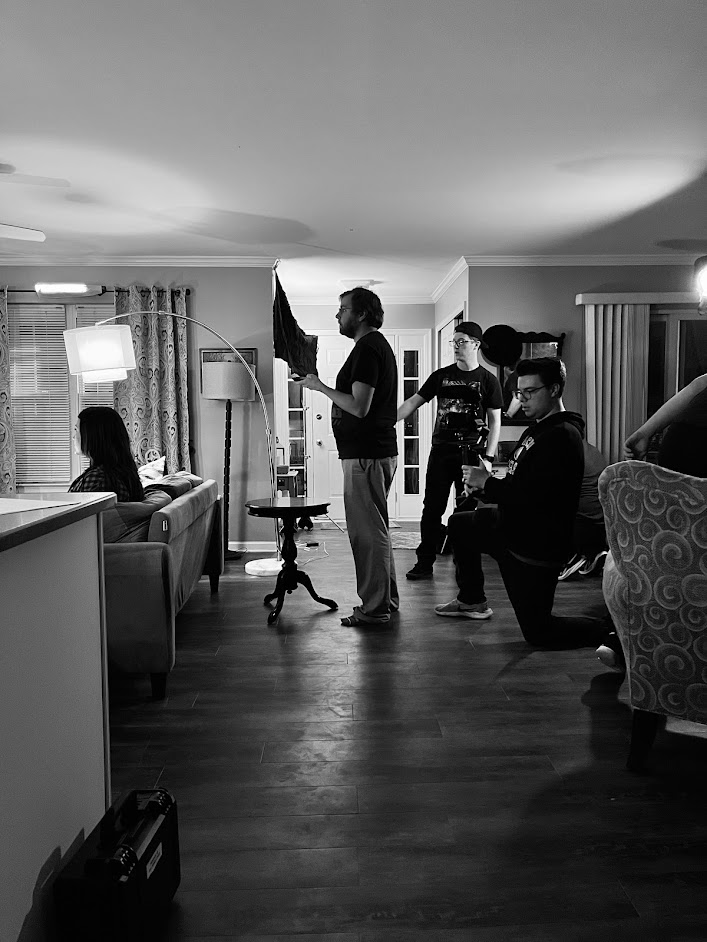
after graduation, we began principal photography on Phantom and Percepter: The Feature. We self-funded the whole thing with no investors, no backing, just passion, friendship, and stubborn determination. And the best part? My dad got to play Phantom.
After three years of blood, sweat, and actual tears it’s finally done. It’s ready for the world.
Now, for the story itself: Phantom and Percepter is a mythological superhero film that deconstructs the myth just to rebuild it. Phantom is a washed-up ninja vigilante from the ‘80s jaded, drunk, and long past his prime. On the night he’s killed by his arch-nemesis Warbaron, Percepter, a super soldier from a dystopian future, comes back in time to save him, believing Phantom is the key to saving the world. It’s got the neon-soaked, synth-scored, VHS-warped action of your wildest ‘80s fever dream but beneath all that, the heart of the story is something much deeper. It’s about fathers and sons. About regret and redemption. About the journey from selfishness to selflessness. And most of all, about what it really
means to be a hero. At the emotional core is Phantom’s relationship with Mia, his long-lost love. I won’t spoil anything but the choice Phantom faces because of her is where the soul of the film lives. The movie you’ll see is just a glimpse into a larger world, a superhero universe shaped by both nostalgia and new mythology, where the past and the future are always colliding.

-What director inspires you most?

There are three directors who have inspired me most: Akira Kurosawa, George Lucas, and Zack Snyder. There’s a clear pattern with them, each one influencing the next. They all speak the same mythological language, that visual vernacular where storytelling isn’t just told, it’s shown. I think they each understand something crucial: every story has already been told just not by them. The connection between Kurosawa and Lucas is especially obvious if you watch The Hidden Fortress and A New Hope back to back. George Lucas shaped my childhood and yeah, I know that’s been said a thousand times, but for me, it’s not just about Star Wars or Indiana Jones. It’s about how Lucas redefined what movies could be. He pioneered
blockbusters, invented new ways of making movies, and built ILM from scratch. That kind of bold, myth-making spirit is what I chase. I remember being in college, listening to the Blockbuster podcast that tells the cinematic origin stories of Lucas and Spielberg. There’s this moment where everything’s falling apart, no one believes in Lucas, ILM is barely functional, and he’s on the edge of collapse. Then he hears John Williams’ music for the first time. The Star Wars theme swells and he tears up. I was working a job on campus with my headphones in, and I had to excuse myself to the bathroom because I was crying too. I’d heard that music a thousand times, but in that moment, with all the context and struggle laid bare, I saw myself in George. I’ve been called crazy more than once for trying to pursue film. But in that moment, it was like destiny was whispering: “Keep going. One day it’ll be worth it.” Zack Snyder, to me, is one of the most underrated auteurs working today. I was thirteen when Man of Steel came out, and that movie absolutely blew my mind. The scope, the visuals, the symbolism hit me like a lightning bolt. His love of
mythology, his command of the visual medium, and his unapologetic commitment to tone and scale are a massive influence on how I shoot and direct. I think people often miss the depth in his work because they’re expecting something else. But I see a director who, like Kurosawa and Lucas, believes in visual myth as a language. And that’s the language I want to speak, too.

-What do you dislike most about the world and what would you change?

Oh boy. How do you even pick just one thing? I’ll keep it focused on cinema. The thing that bothers me most right now is the way big movies have regressed into these corporate-made, checkbox-assembled products. It feels like so many blockbusters today aren’t made because someone had a story they needed to tell. They’re made because a room full of executives looked at a list of IPs and said “yeah, let’s make this one next.” No passion. No vision. No urgency to say something new. I’m not going to name names if I ever want to work in this industry, but I’m sure you can imagine the examples. It’s not that big movies are
bad, it’s that they could be so much more. Movies should blow your mind. They should make you laugh, make you cry, make you feel something. But too often now, you leave the theater thinking about how good it could have been if they had just focused on the story and let filmmakers actually tell one. What happened with Zack Snyder’s Justice League is a perfect example. Whether you liked the film or not, the way the studio mishandled it and the way fans fought to let an artist share his full vision that’s the core of the problem. That film was meant to mean something. It had heart. It had ideas. It took risks. Thankfully, there are still studios like A24 out there where story and voice still matter. But they’re rare. If I could change anything, I’d make it about one thing; story. Is this story worth telling? What are you trying to say, and should you say it? Not what demographics are we hitting, not how we maximize market share. Who cares?
You should make a movie for one person; yourself. And if other people connect with it, that’s the bonus. That’s the magic. I’m not naive. I get that it’s a business. Budgets matter. People need to make money. I understand all of that. I just wish the storyteller came first. Not the checklist.

-How do you imagine cinema in the next 100 years?

If you look at the past 100 years of cinema and then try to imagine the next 100, it’s honestly kind of insane. People used to run screaming out of theaters when a train came toward the screen, and now we have CGI explosions so massive and over-the-top that audiences just yawn. Something that would’ve caused a mental breakdown in the 1920s barely gets a head turn today. Predicting the future is tricky.

No one in 1925 could have imagined Star Wars or The Matrix. And yet here we are. But there is something happening right now that I think will shape cinema’s future in a major way. AI. Everyone’s got an opinion on it. Some people are relying on it too much. Others think it’s the beginning of the end. I think the truth is somewhere in the middle. AI is already changing how we make and view content. You’ve got AI-generated videos of people cutting glass fruit that are pulling in more views than movie trailers. It’s fast, it’s weird, and it’s happening whether we like it or not. Personally, I think AI is an incredible tool. It can help with editing, idea generation, maybe even workflows we haven’t dreamed up yet.
But using it to fully replace artists? That’s where the line is. Writing is an art. Drawing is an art. These things take time and come from people. I love silly AI art as much as the next guy, but it doesn’t replace the feeling of seeing something handcrafted by another human being. It’s man-made, and that matters. Every generation panics when new tech arrives. We saw it when we switched from practical effects to CGI, from film to digital, from horses to cars. AI will definitely change everything, and yeah, we need to be careful. But if we treat it like what it is; a tool, not a replacement it could push cinema into incredible new places.
What we can’t lose is the human element. The soul. Movies are stories, and storytelling is one of the oldest things we do as people. That spark should never be handed over entirely to a machine. I’m hopeful, though. I think most people who get into filmmaking do it because they need to tell stories. I don’t think that gets replaced. In a perfect world, AI helps us tell stories better. It doesn’t tell them
for us. That being said, who knows what movies will look like in 2125? Maybe people will be watching them through the chips in their brains. Hopefully they still get popcorn.

-What is your impression of WILD FILMMAKER?

I’m blown away by Wild Filmmaker. It’s such a unique platform, a true space for cinema appreciation, where real stories and real voices are given the spotlight. For anyone who calls themselves a cinephile or just loves the world of film, this is a must. I’m truly honored to share my story here. It’s both humbling and incredibly exciting to be part of something that values passion, originality, and the heart of filmmaking.

    “HOPE!” (EXCLUSIVE) Interview with Shaun Guzman

    -Who is Shaun Guzman?

    Shaun James Guzman born January 30, 1988 in Los Angeles, California. The child of Mateo Guzman and Santos Guzman. His father is of Mexican descent and his mother born in Texas and raised in California.

    -Do you remember the exact moment you fell in love with cinema? 

    Shaun’s love for the showbiz is anything beyond outstanding, he has such an incredible love and passion for the entertainment business. Shaun first found his talent through script writing when his brother Jimmy show him a script called Constantine, he read through the script and then it click on him. Shaun soon started to get to understand the basic principle of a script and the meaning of it, he never once went to school for it, he self-taught it by myself. Then growing up watching his first movies that truly attracted him and still does Desperado and Toy Story, those movies presented Shaun in a way that he truly felt connected and magical of the aspect of movies. Shaun felt deep down that showbiz will be his Hollywood dream career.

    -Tell us about your project “HOPE!”.

    The idea came about when I wanted to showcase what would happen when we all fall down in life and what happens after we fallen from grace; we do our very best to pray for the best and THEN a miracle happens; a prayer of light guides you in for a helping hand to rise from the ground and have another chance of life again.

    -Which Director inspire you the most?

    Alfred Hitchcock, Steven Spielberg, Ron Howard & Quentin Tarantino.

    -What do you dislike about the world and what would you change?

    Too much hate and not enough love & peace in this world of ours. I believe it’s time to care for one another and show love & respect to everyone so this world can keep going, bring back the family values that once was back in the golden era in this day & age because we all need it.

    -How do you imagine cinema in 100 years?

    Hopefully, praying so we keep seeing inspiring stories from all walks of life to be put on film or digital to inspire the next inspiring filmmaker today, now & the future.

    -What is your impression of WILD FILMMAKER?

    Outstanding & Glorious!

    “The New Immigrants – Hong Kongers” (EXCLUSIVE) Interview with Vivian Tsang

    -Who is Vivian Tsang?

    She is a filmmaker, animator based in Manchester. She was born and raised in Hong Kong and moved to Manchester three years ago. In 2018, she completed a Bachelor’s degree with a major in animation and a minor in photography, film and television, studying in both Hong Kong and the United States. Currently, she is pursuing an MA in Filmmaking, with a focus on documentary film. During her master’s program, she completed two documentary shorts, including Andrea’s experience with Yoga practice, and my latest project, The New Immigrants- Hong Kongers. She is eager to explore different types of films to further develop her directing and technical skills, and to present more work to audiences.

    -Do you remember the exact moment you fell in love with cinema?

    When I was around 19 years old and studying for my Bachelor’s degree, I rented movies from the school library. The first time I watched My Fair Lady on DVD, I fell in love with it.

    -Tell us about your project “The New Immigrants – Hong Kongers”.

    This documentary explores hidden places in Manchester, revealing how Hong Kongers are integrating into British culture and lifestyle through conversations with parents and friends. By capturing authentic experiences, it aims to provide newly arrived Hong Kongers with insights into adapting to life in the UK, while highlighting the unique and meaningful aspects of British life. Through these real-life examples, viewers will gain an understanding of why many Hong Kongers choose to immigrate, viewed from both Hong Kong and British perspectives. The film also seeks to foster empathy among British viewers, helping them appreciate the emotions Hong Kongers experience upon arrival and promoting mutual understanding and acceptance.

    -Which Director inspires you the most?

    Shunji Iwai, a famous Japanese director, has deeply inspired me through his poetic films. Some of my favorites include Love Letter, April Story, Rainbow Song, The Forgotten Bride, and Last Letter.

    -What do you dislike about the world and what would you change?

    I dislike bullying, racism, and discrimination. I believe change should start with education, guidance, and awareness to help others understand different races, so we can learn to accept and respect one another—because we all share the same humanity and live together in this world.

    -How do you imagine cinema in 100 years?

    I imagine a future where cinema is experienced through VR, with 3D image models appearing right in front of you—like in Minority Report—or even through direct connections to the brain that allow you to watch movies as real-time dreams, much like Matrix and Inception in the tomorrow’s world. 

    -What is your impression of WILD FILMMAKER?

    An influential digital film magazine, it inspires countless filmmakers, cast and crew members, and film lovers, all of whom feel honored to be featured in its pages. The magazine upholds the timeless appeal of classic cinema while also embracing and shaping new trends for the 21st century. 

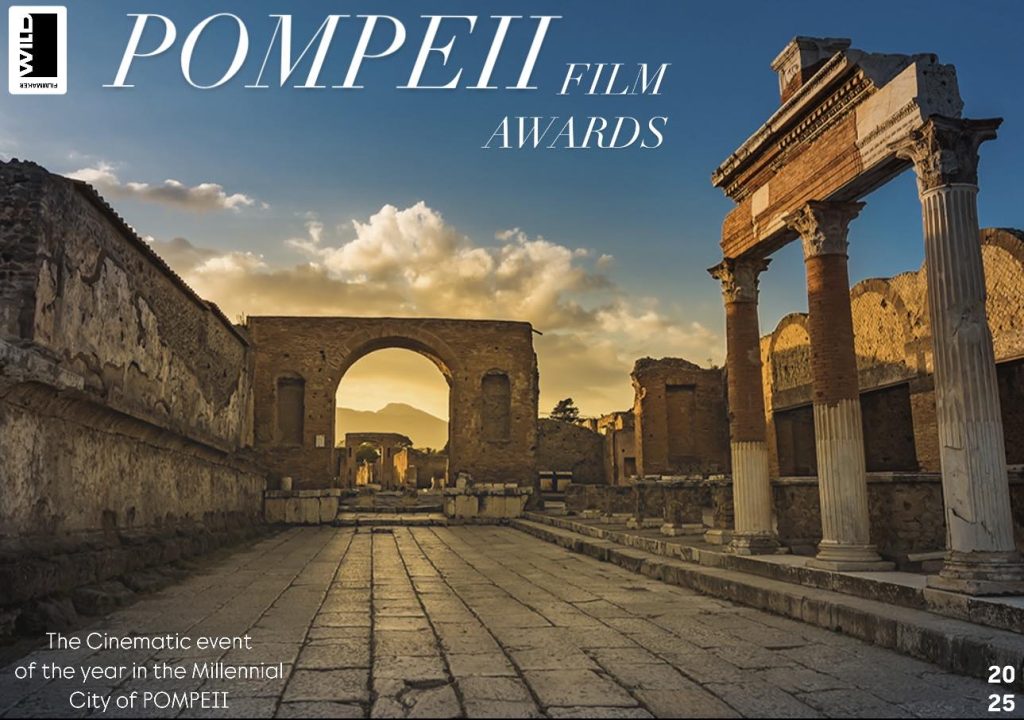
    POMPEII FILM AWARDS 2025

    Homeless Street Artist

    BEST INTERNATIONAL DOCUMENTARY SHORT 2025

    A Mystery Woman: The Message – The main one, in the STORM Trilogy

    BEST INTERNATIONAL NARRATIVE FEATURE (Category: Drama) 2025

    The Assassin’s Apprentice 2: Silbadores of the Canary Islands

    BEST AMERICAN ORIGINAL SHORT FILM, BEST DIRECTOR, BEST SCREENPLAY SHORT & BEST CASTING DIRECTOR

    Routine

    BEST ARTHOUSE SHORT FILM 2025, BEST EDITING, BEST CINEMATOGRAPHY, BEST EDITING & BEST ORIGINAL IDEA (Category: Narrative Short)

    Museum, or The Marble Statue

    BEST INDIE EUROPEAN FILMMAKER

    Wave Man

    BEST ITALIAN FEATURE SCRIP 2025

    Something ain’t right

    BEST DIRECTOR 2025 & BEST ORIGINAL IDEA (Category: Documentary)

    Sundown In Beaver Creek

    BEST INTERNATIONAL PILOT/TV & BEST ORIGINAL WRITING STYLE

    Sonnets (Words in despair)

    BEST ORIGINAL IDEA 2025

    Monument to Love

    BEST ORIGINAL DIRECTOR & BEST DOCUMENTARY FEATURE 2025

    Am I a painter?/Czy jestem malarzem?

    BEST ANIMATED SHORT FILM 2025

    Prodigio

    BEST INTERNATIONAL SONG WRITER, BEST INDIE SINGER & BEST SOUND DESIGN
    Katabasis

    BEST FILM 2025 & BEST INTERNATIONAL ACTRESS

    The Days of Knight: Chapter 3

    BEST INTERNATIONAL NARRATIVE SHORT, BEST DIRECTOR (Category: Arthouse Short Film), BEST MOVIEMAKER & BEST INDIE PRODUCTION COMPANY

    The Arcangel Of Death

    BEST INTERNATIONAL ACTOR 2025
    The Demon

    BEST EUROPEAN EXPERIMENTAL SHORT FILM

    Thankful

    BEST INTERNATIONAL FEATURE SCRIP 2025

    Le disubbidienti del San Zaccaria

    BEST EUROPEAN SCRIPT 2025

    The Duchess

    BEST INTERNATIONAL DRAMA 2025

    Doctor Hyphoteses

    BEST INTERNATIONAL COMEDIAN & BEST ARTHOUSE SCREENWRITER

    Alta California

    BEST AMERICAN FEATURE SCRIPT & BEST HISTORICAL SCRIPT

    Pirandello’s Wife

    BEST BIOGRAPHICAL SCRIPT

    Ghost Town, N.M.

    BEST ORIGINAL SCREENWRITER

    Eye of the Storm

    BEST BIOGRAPHICAL DOCUMENTARY 2025

    The Stones of Rome

    BEST INTERNATIONAL HISTORICAL SHORT FILM

    The Pathos of Hamlet

    BEST SCREENPLAY SHORT 2025 & BEST ORIGINAL ACTING

    Planetary Rebellion

    BEST DIRECTOR (Category: Music Video) & BEST EUROPEAN MUSIC VIDEO 2025

    Hummel

    BEST INTERNATIONAL SHORT SCRIPT 2025

    Only in Malibu

    BEST INTERNATIONAL ARTHOUSE FEATURE SCRIPT

    Gold Glory & Nobility

    BEST AMERICAN SCREENWRITER

    Malibu Madam

    BEST INTERNATIONAL ORIGINAL IDEA

    K Bender (The Bloody Benders)

    BEST ARTHOUSE SCREENWRITER 2025

    Adelaide’s Magic Sunglasses

    BEST ORIGINAL IDEA (Category: Short Script)

    The Insomnia Experiment

    BEST ORIGINAL WRITER OF THE YEAR (Category: Short Script)

    The Mint

    BEST AMERICAN WRITER

    Sheldon Mashugana gets Stooged

    BEST COMEDY 2025 & BEST SCREENPLAY (Category: Comedy)

    Not Without Gloves

    BEST EXPERIMENTAL DIRECTOR 2025  

    The Rorschach Test

    BEST INTERNATIONAL ARTHOUSE INSPIRATIONAL FILM

    Mind over Matter

    BEST SUPER SHORT FILM 2025

    Omnipotent Resolution

    BEST DANCE FILM 2025, BEST DIRECTOR & BEST POETRY SHORT FILM