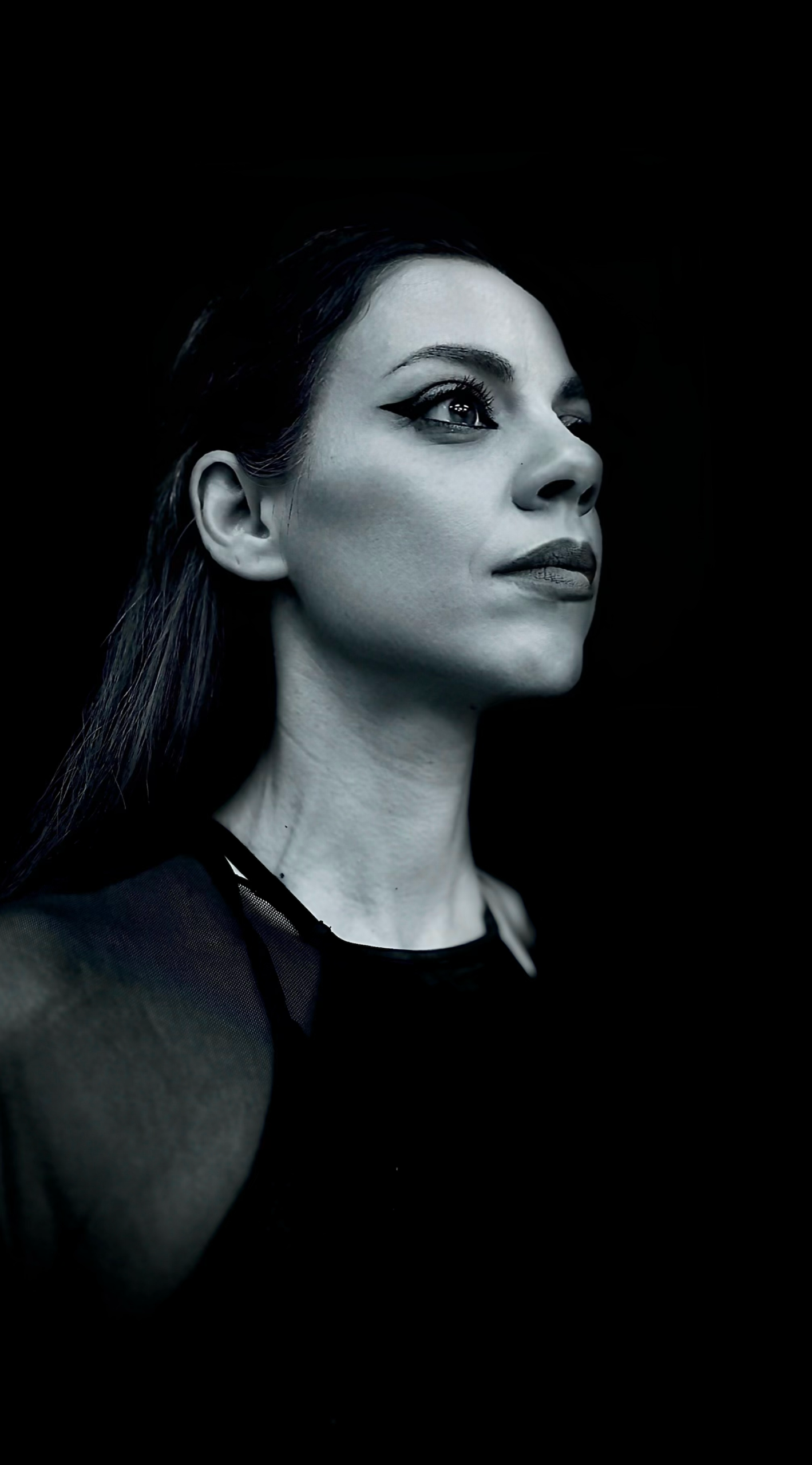
Who is Theodora Kotsi-Felici?
Theodora Kotsi-Felici is a Greek-Dutch multidisciplinary artist based between Rotterdam and Strasbourg. For over fifteen years, she has developed an interdisciplinary practice at the intersection of contemporary art, architecture, science, sound, and film. Through site-specific installations, documentaries, and spatial interventions, she investigates the relationships between space, power, memory, and lived experience. Her research-driven work explores trauma as a collective and systemic phenomenon, creating immersive environments that invite reflection, dialogue, and healing while offering new perspectives on the social and political dimensions of public space.
Do you remember the exact moment you fell in love with cinema?
I don’t think there was a single defining moment. Cinema gradually became part of my artistic language as I discovered its extraordinary ability to unite image, sound, time, memory, and emotion into a single experience. What fascinates me most is that film doesn’t simply tell a story—it creates a space that the viewer inhabits.
Coming from a background in site-specific installations, I realized that cinema could extend my work beyond the physical boundaries of an exhibition. It allows me to build immersive worlds that reach people across cultures and geographies while preserving the intimacy of a deeply personal experience. For me, cinema is not just a medium; it is another form of spatial intervention—one that invites audiences to see, feel, and question the invisible structures that shape our lives.
Tell us about your project “The Circle”
The Circle is an interdisciplinary installation and film project that investigates trauma as a collective and systemic condition embedded within social, political, and spatial structures. Combining site-specific installation, moving image, sound, and embodied participation, the work transforms invisible mechanisms of power, exclusion, and resilience into lived experience. Rather than presenting trauma as an individual narrative, The Circle invites audiences to physically navigate shared environments where personal and collective histories intersect. By activating the body as a site of knowledge, the project creates space for reflection, dialogue, and healing, while questioning how we inhabit, remember, and transform the spaces we share.
Which director inspires you the most?
Lars von Trier. I admire his uncompromising approach to cinema and his ability to explore the deepest layers of the human psyche alongside the spiritual and emotional dimensions of the human condition. His films transcend conventional storytelling, confronting existential questions of faith, suffering, vulnerability, and the complexity of existence. He creates emotionally intense worlds that invite the viewer to embrace ambiguity rather than certainty. His artistic courage, emotional honesty, and willingness to challenge both cinematic conventions and the audience have profoundly influenced my own artistic practice.
What do you dislike about the world and what would you change?
I am deeply concerned by the growing polarization, fear, and ignorance that divide people and fuel conflict. If I could change one thing, it would be to create more spaces for healing, compassion, dialogue, and mutual understanding—places where people can reconnect with themselves and with one another, and where differences become opportunities for growth rather than division.
How do you imagine cinema in 100 years?
I believe artificial intelligence will make filmmaking far more accessible, allowing many more voices to tell their stories. While technology will continue to evolve, I hope cinema will never lose its human essence—the ability to move us, connect us, and help us better understand ourselves and one another.
What is your impression of WILD FILMMAKER?
WILD FILMMAKER is an inspiring platform that gives both emerging and established filmmakers the opportunity to present their work to an international audience. It encourages artistic diversity, creates meaningful visibility for independent cinema, and helps connect filmmakers across cultures and disciplines.