Isaac Lawrence

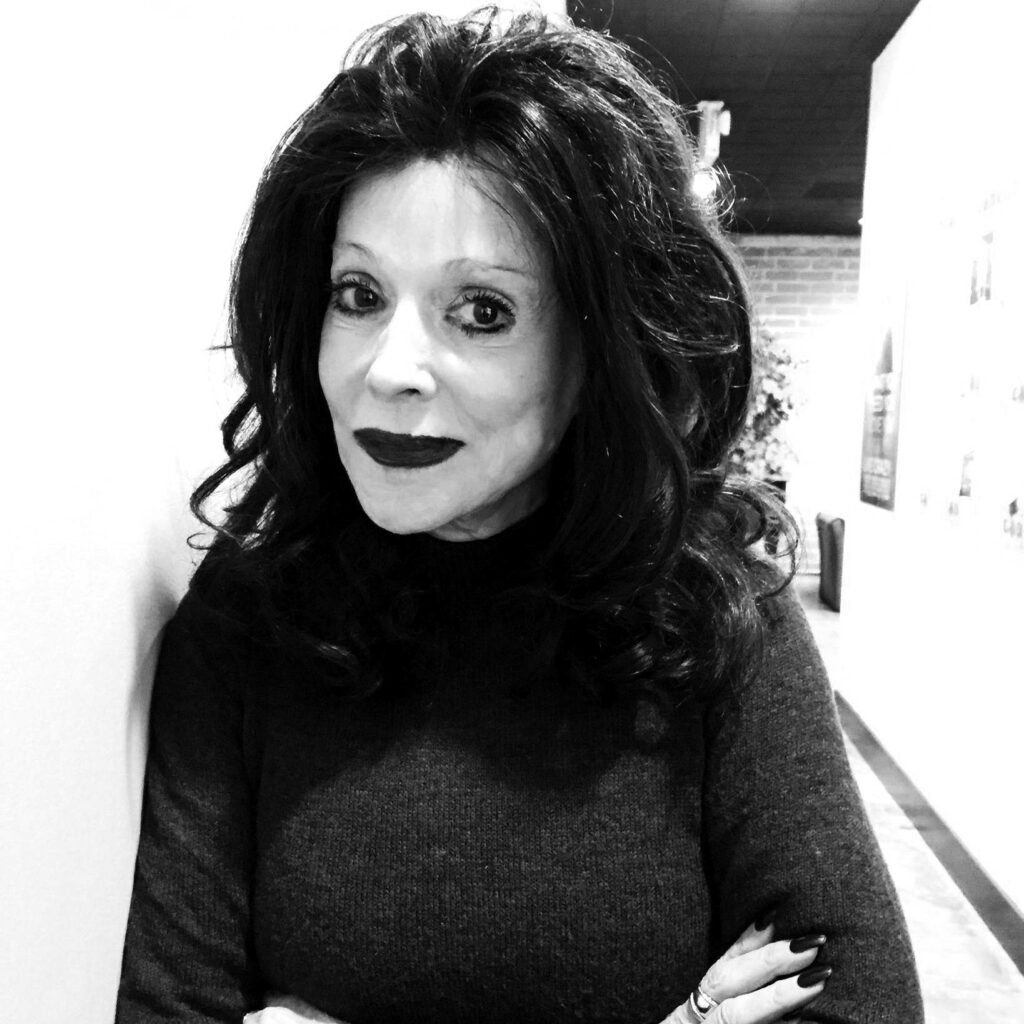
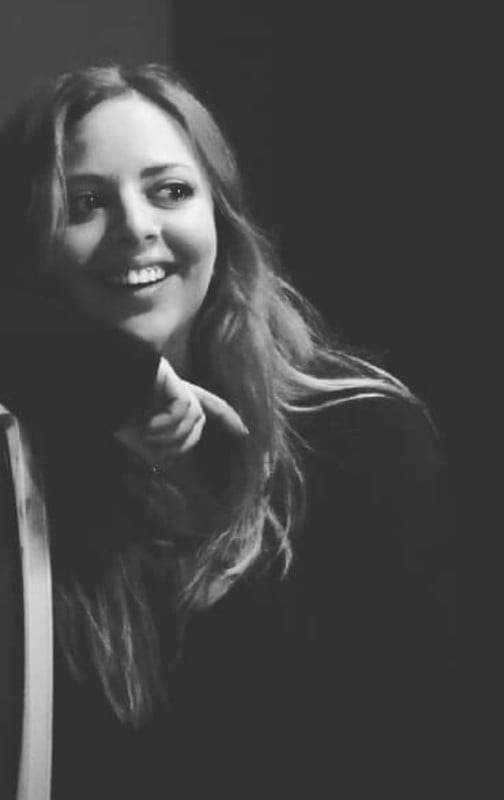
-Who is Isaac Lawrence?

I am an award-winning British writer/director specialising in low-budget short films.

In 2020, during my graduate year in Film Production at the University of Portsmouth, I wrote and directed ‘The Village’, a horror film collaboration with the amazing Prop Box Youth Theatre, which went on to win Best Horror Short in London, Ottawa and Campania, Italy and Best Male Director in Berlin. ‘The Village’ has since gone on to become a trilogy.

My day job is editing and assisting in the production of TV shows for Ustreme, a small streaming site started by comedian Jim Davidson, specialising in comedy programmes and military Veteran chat shows. I also run Prop Box’s weekly filmmaking academy with regular cameraman and sound recordist on my films, Charlie Lubbock.

Other ventures of mine outside the horror genre include comedy, drama and experimental films, all of which can be viewed for free on my YouTube channel: Isaac Lawrence Films or website: isaaclawrencefilms.co.uk.

-What inspired you to become a filmmaker?

As cliché as it may be, I’ve wanted to make my own movies since I was a child. I was really into model trains and would use a home camcorder to make my own Thomas & Friends-style films, so it’s something I’ve been destined to do as far back as I can remember really. Then, in the early teenage years, myself and Hayden Davey, who now works with me on many projects in the sound and music departments, made our own comedy web series we both starred in way before we knew what we were doing, but that’s how I learned to edit. My dad was a great sport at that time – we’d always rope him into giving some over-the-top performance the minute he’d get in from work when all he’d want to do is nap.

As I grew from a boy into a man, I began to watch a larger variety of films spanning numerous genres. I always knew I was going to make films, but it was the art of constructing a powerful narrative, atmosphere and often message in so many different ways that made me realise what it was I was going to put on the screen. There were serious hard-hitting films that really made me think about things we take for granted – the last line in Ruggero Deodato’s ‘Cannibal Holocaust’ has and always will stick with me. On the other end of the spectrum, there’s Edgar Wright’s ‘Shaun of the Dead’, which I remember made me belly laugh for hours, but also brought up some great points about horror tropes – why do we never use the term zombie? Those two films are very different, but they both get messages across and both tell a good story with very emotional moments – it’s this craft that inspired me to put my own imagination and thoughts on screen.

I am also hugely grateful to my parents and late grandparents for contiually giving me the inspiration to pursue my dream as a filmmaker and to never quit in times of uncertainty. Also to Prop Box’s Caroline, Sarah and their phenomenal young actors and actresses who if they hadn’t trusted me with some of the crazy ideas I bring to them, we never would have been able to pull off the award-winning films we created together – they inspire me everyday.

-Do you think the cinema can bring a change in society?

Absolutely, one hundred percent cinema can bring changes in society. With technology at our fingertips our attention spans are diminishing and cinema’s a unique and entertaining form of delivering and hearing out issues and ideas of how we can improve upon society, let one know they aren’t alone or just allow one to get the healthy dosage of escapism we all need.

It’s also really interesting to see the reactions of an audience – we can understand what makes certain people excited, scared, tense, sad and compare that to real world situations. The invention of cinema really is extremely powerful.

-What would you change in the world?

As a night owl, I wouldn’t mind coffee shops staying open later. I get caught up writing late into the night and they’d probably make the budget of a short film out of me in just one evening.

On a more serious note, I think the rise of social media has made it a little too easy for people to take sides on various issues without much room for debate. We’re long past the days of only a few channels on television where everyone saw everything, everyone saw the political debate on the six o’clock news and everyone came to their own conclusion based on that information. I don’t think it’s unfair to say that people are rather militant with their views these days and, as a young filmmaker, it can be difficult to suggest an alternative viewpoint without a lot of backlash, but I don’t blame the people themselves. Nowadays, people might see another’s one-sided ideal online, agree with it and pay little to no mind about alternative ideas and solutions or whether or not there are downsides. There’s a great documentary on Netflix called ‘The Social Dilemma’ that demonstrates the issues really well. So I think if I could change one thing about the world, it’d be that people would be less idealistic and more open to debate. Perhaps I’d close down social media sites for a day a week or something – it’s a difficult solution.

One of my upcoming projects will be delving deep into topics like these such as cancel culture and free speech in a rather unconventional way, so it will be interesting to see how those who watch it react when it’s eventually out.

-Where do you see the film industry going in the next 100 years?

There was a little panic during the pandemic when it looked like people were never going to return to the cinema. Thankfully, we’ve seen recently that cinema is still in demand with major hits like ‘Top Gun: Maverick’, which has grossed over a billion dollars at the box office so far or the latest ‘Scream’ film, which had a much lower budget but made a profit of over one hundred million dollars. So, luckily I don’t think the big screen is going away anytime soon, but it certainly has given way to more home entertainment releases, which may be really good for indie filmmakers since streaming services are much more likely to pay attention to projects that are fantastic and unique, but their low budget may show a bit too much to go onto a cinema screen.

I think we’re going to start seeing more independent films and shows on on demand services, especially since almost everyone can make a movie with a six inch mobile phone they carry around everywhere in their pocket. Perhaps that will make it more difficult to stand out from the crowd, but on the plus side it wouldn’t surprise me if it created more jobs and therefore more opportunities for up-and-coming filmmakers in this very competitive industry.

It wouldn’t shock me to see virtual reality films becoming more common too, which would be great considering how easy it is to be distracted by a phone or other such item; removing the option to get distracted and actually in the film’s world will bring back the immersion it’s too easy to break out of nowadays.

Whatever the case, cinema isn’t going anywhere and people will always be starving for more.

Takaaki Watanabe

-Who is Takaaki Watanabe?

Sometimes he is a Japanese film maker, sometimes a university employee, sometimes a common husband celebrating anniversaries, and sometimes a kind father of two young children. In short, he is one man everywhere.

-What inspired you to become a filmmaker?

When I was a student, I saw Federico Fellini’s “La Strada”. It was a wonderful cinematic experience. It was my first exposure to the magic of cinema. It was the moment I first became aware of filmmakers.

-Do you think the cinema can bring a change in the society?

I think that today’s films have become content and their influence has diminished. However, I believe that films can be a “place” for people.

Films can empower you by being there for you. Then we may be able to create a healthy world.

-What would you change in the world?

I want a world without war. Japan is the only nation to have been hit by nuclear bombs.

Japanese people must always show their strong will to oppose war.

-Where do you see the film industry going in the next 100 years?

I am particularly concerned about Japanese films. The current situation in the Japanese film industry is very bad. Poor working environment, power harassment, sexual harassment…

Film actors are an endangered species, major films are not being made, there is a continuing labor shortage because people cannot make money from films, and the number of mini-theaters with artistic programming is decreasing.

Unfortunately, the film industry in Japan is no longer in the shape it once was. It is no longer possible to produce directors like Ozu, Kurosawa, Mizoguchi, and Naruse.

Numerous films are still being made, but most of them are low-budget. To begin with, the government lacks understanding of the arts. There is little environment for young people to grow up. If this situation continues, 100 years from now, Japanese cinema may perish. We must prevent that from happening.

Lucia Edwards

-Who is Lucia Edwards ?

That’s a very interesting question. I guess people are all the  sum of many things, our perception of ourselves and how others see us. You could say we’re all shaped by our environment and  childhood, and perhaps also by  our destiny and purpose to name a few. I’d like to think I’m thoughtful , honest, with the strong sense of humour and super curious.

-What inspired you to become a filmmaker ?

I’ve always enjoyed telling stories. My mum is a writer and I grew up in a very artistic, although academic environment. I was obsessed with observing and telling the truth about human conditions and our own psyche, what makes people who they are . Film and theatre had a huge influence,  saw it as a rather cathartic experience . But I was mainly a dreamer.  All the characters from the literature were very visual to me. So I guess  being focused on the story telling and bringing something from my head to the screen answers your question.

I’ve collaborated on many artistic projetcs , from co-writing to producing and acting.

To name one was” The Power of love “ , directed by Ilmar Taska and eventually put on by The courtyard theatre. It was very exciting  coming up with the concept and plot and then being lucky  premiere it  in the theatre. I felt super blessed Ilmar came on board as a director and a co-producer.

To become a filmaker never came natural to me, until I co-wrote “The red painted shoes”.  Since everything was so live in my imagination, from the interior to the atmosphere , to the lines being delivered, I’ve decided to direct it.

-Do you think a cinema can bring a change in the society?

Cinema has the power to inspire people and people have the power to change themselves, they’re society so yes.

-What would you change in the world ?

I would like the film industry to make timeless films and stop trying to be trendy.

To tell beautiful and moving stories.

-Where do you see the industry going in the next 100 years ?

I think 3D and VR will make more immersive experiences and they will add to cinema, but hopefully add to it, not replace it.

Josh McCausland

-Who is Josh McCausland?

Josh McCausland is a multiple award-winning filmmaker and composer based in San Diego, California. He started his journey into art at a very young age through painting and drawing. But, after he picked up a camera he knew he wanted to pursue filmmaking as a career.

-What inspired you to become a filmmaker?

I grew up around photography. My mother was always taking photos and I loved the idea of capturing real life into a frame. I became really interested in film as a medium pretty young when watching movies. I never wanted them to end. So, I started drawing and learning composition. I started making small videos in high school and then the rest was history. 

-Do you think the cinema can bring a change in the society?

Definitely. I think getting people together in a room to listen to something that ties them together can open the conversation up to talk. There’s a lot that separates us these days, and I believe cinema is something we can all agree is something that is necessary.

-What would you change in the world?

I think it’s easier to say what I wouldn’t change in the world, since the world we live in is an absolute dumpster fire. (Sorry that’s not at all helpful, but it’s unfortunately true.) If I had to choose one thing, it would be empathy. I wish more people had empathy in all seats of power. If we had basic respect and decency towards people of all walks of life, things might be a bit better. 


-Where do you see the film industry going in the next 100 years?

I feel like it will only become more sought after as a medium. People will continue to share their personal stories as a way to open the conversation for people to connect. 

Nina Kazè

-Who is Nina Kazè?

I am a world citizen born in Iran & residing in Los Angeles for the biggest portion of my life – pursuing my dreams & passion for acting and story telling which by default has lead me to become a musician & a filmmaker.  

 -What inspired you to become a filmmaker? 

I’ve made two short films so far and both were sprung about by a sense of urgency and a need to speak about my humanity. To say something I felt deeply about at the time & had to share with others. And it had to be made through an abstract medium like film.

-Do you think that cinema can bring change to society?

Absolutely.  Cinema throughout its history and from its inception has been a political and social platform to effectively share real opinions or fictional magical type of story tellings that spark genius and movement in others.

It is one of the most important tools in bringing change to society and connecting us as people.

-What would you change in the world? 

Inequality and injustice which comes from all kinds of ism’s such as sexism, racism, classism, ageism etc etc..

The most dangerous thing is when good intended people are divided because of their sex, race, age and even political views.

We now more than ever as a world need to unite.  

The past two and half years has proven that on a global scale.

-Where do you see the film industry going in the next 100 years?

I think with technological advances and visual capabilities like 3D screenings and such that there will be films you could partake in as in feel you are physically in each scene and stuff like that ..

Wild animations & who knows even actual aliens starring in movies!  

But I also think there will always be an art house movement to preserve the classic movie theater experience.   The deep character driven stories and films & film makers like “John Cassavetes” addressing an intimate honest look into peoples lives.

A world where there will still be 35MM films and projectors with packed theaters..

As I mentioned I am a dreamer and like John Lennon said I know “I’m not the only one”.

Jeff Blyth

-Who is Jeff Blyth?

I have been making films and telling stories since I was a young teen. Over the years I have gained experience in many different aspects of filmmaking. Much of my career was spent working as a writer-director, most notably on entertainment films for Disney Theme Parks, such as Disneyland Paris and Tokyo Disneyland. My first big project for Disney was the Circle-Vision production of “Wonders of China” for EPCOT, the first of many. I have also directed a feature film and worked in episodic television as a director. The last few years I have mainly worked in computer animation and visual effects.

-What inspired you to become a filmmaker?

There is no question that I was influenced by the 16mm home movies my father took of our family on vacation. I desperately wanted my own camera so that I could tell stories of my own and I worked hard to earn enough money to purchase a very simple 8mm camera. While this camera couldn’t focus or zoom, by my second camera I knew exactly what I wanted and needed. The lesson was to make the best of what you have, to experiment, to find other ways to accomplish what you wish to create. Growing up in the 1960s and 70s, I was very much influenced by European films much more so than American movies and it was a real thrill to eventually have an opportunity to meet and work with some of the directors and stars I’d long admired. These days I find inspiration everywhere. There is so much good work going on in cinema right now, despite the limits of the pandemic, that I feel this era will be looked upon in history as a very special time.

Do you think the cinema can bring a change in the society?

Generally I think cinema is a reflection of society and its changes, not necessarily bringing about change by itself. The real strength of cinema is in holding up a mirror to who we are. The recognition and realization that perhaps we are not who we think we are is what fosters real change.

-What would you change in the world?

Unlike the 1960s, one feels powerless to effect change by oneself these days. It’s not a despair that change cannot happen, but a sadness that society has broken down along tribal lines, making meaningless the previous divisions and boundaries. Change is coming and it isn’t necessarily for the better, but my small part in it is the same as it has always been: to entertain and create a little pleasure for audiences in my storytelling. 

-Where do you see the film industry going in the next 100 years?

I have worked with a lot of modern and sophisticated camera and projection systems over the years but I have never felt that technology itself is an answer to anything. At the end of the day, or the end of the century, audiences crave the darkness of a communal room where we tell human stories that reflect our world and which inspire and entertain us. It doesn’t matter if the story is about robots – projected as flickering images on a bed sheet or inside an augmented reality headset – we recognize ourselves in their desires and dilemmas. Humans are at our best at problem-solving and most storytelling throughout the ages has been about that very subject. When we see others, human or human-like, struggling to find solutions, it gives us hope for resolving our own problems.

Maria Pronin

-Who is Maria Pronin?
I’m a film director from Russia, filming music videos, features, documentaries and commercials. Actually In the past I’m also a ballet dancer and a journalist.

-What inspired you to become a filmmaker?

I think that it was rather not an inspiration, but an unconscious need.  My parents had many friends, and they in their turn had many children, and I was the oldest among them, and I had to figure out how to entertain them when they came to visit us, rather frequently.  Since I have been dancing for as long as I can remember, I started doing plays and musicals with them.  All summer we prepared the play, my cousin wrote the script, we made scenery, sewed costumes, and at the end of the summer we put on a show on the volleyball court.  I didn’t know that I was a director, it’s just that everyone called me that, аnd one day I told my mother: «I think I want to be a director”. But she answered: “Masha, it’s difficult to be a woman director, you won’t earn any respect or money,” my dad died, and I decided that I need a serious profession. I did not know what I wanted, but I studied well and entered the Faculty of Journalism at Moscow State University.  After graduation, I still did not know what to do, and I had to remember what I did all day long, for which no one paid me money and I was happy.  In general, this is what I’m doing now (although sometimes after all producers pay me), directing is something that helps me to be alive, and it inspires me.

-Do you think the cinema can bring a change in the society?

I think yes, but these are not radical changes. But they are still very important for the cultural level of a society which is being brought up on a good, important cinema, can make these changes on its own.  Through cinema we live out many emotions, many lives and experiences, and we can determine for ourselves with the help of a director and screenwriter, what we would like to see in our own lives and what – not.  It’s like a dream, after which you wake up and understand that this is what you’ll never do, and sometimes you wake up and understand that this is your dream life and you want to strive for it.

-What would you change in the world?

It seems to me that there is a lot of hate in the world. People in completely different countries, regardless of the standard of living, on a subconscious level are afraid to be alone and not to survive. So they unite against each other, bull the weak and different.  I would like the world to be kinder, I dream about the world where people understand themselves and their inner world better, and not live like blind kittens.  With my films, I would like to talk more about insights with people, to give people a better understanding of themselves and ability to make choices based on the best part of their personality. I’m dreaming about peace!

-Where do you see the film industry going in the next 100 years?

I can’t say what will happen to me next week, and you ask me for a forecast for 100 years!  I don’t know, but I’m sure it will be something we couldn’t even imagine.

Corey Davis

-Who is Corey Davis?

I am a young man currently studying film at Clayton State University in Morrow, GA. I have always aspired to become a writer, director, actor, and producer. Ever since I was a young boy, it has always been a passion of mine to tell thought provoking stories that will leave the audience with something to think about. As a night owl, I tend to stay up pretty late because my brain is always fishing for some creative ideas for new stories. I tend to feel more creative at night. I always thought that film would be a way for me to express certain messages about the world we live in such a way that I never could in person with anyone.

-What inspired you to become a filmmaker

I have been into film since a very young age (six years old to be exact). The early part of my childhood was a little rough. I was told that I had Asperger’s Syndrome, which made it hard for me to socially connect with people and communicate effectively in a sense that people could understand. I even had to ride on the bus with Special Ed students because I was seen as different from other kids. Instead, I always resorted to using my imagination to communicate, and that imagination was based on shows and movies I watched at the time. As a kid, I used to always have these wild imaginations of escaping my reality and inserting myself into these different [film] worlds. I have always wanted to express my thoughts and views on the world in ways that I never could in real life, and film to me has always been the appropriate medium to use to accomplish such feat. Whenever I would see the names of different people working on a film in the credits, I would always tell myself that one day my name will be scrolling up on the screen. 

Do you think the cinema can bring a change in the society?

I definitely believe that cinema is one of the best ways to bring a change in society because you every film has a symptomatic meaning to it in a sense that it can either get the audience to question reality, bend it, or just simply accept it. I believe cinema is a way to bring people together and allow for people to connect with real-life issues that can be seen conveyed by fictional, or even nonfictional, characters. Poison, for instance, is one of those films that takes a coin and flips it to the other side that is not looked at much. In this case, we have the male protagonist, Darnell (portrayed by Corey Davis), who has been abused and tormented by his sadistic girlfriend, Donna, who pledges to make sure he never “forgets” about her. Normally in everyday society, we are preconditioned to be more sympathetic towards a woman being abused by a man as opposed to the other way around, and I wanted to bring into fruition a subject matter that is not talked about much, you know, flip the other side of that coin I mentioned earlier. 

Color also plays as an important element in this as it serves as a double entendre: one side of the coin illustrating the bipolar disorder that Donna has and the politics behind abuse and the double standards that surround them. In other words, how it is easier to accept a woman’s cry for help and negate a man’s problems in the process. The film touches on the hardships of not just abuse, but the effects toxic masculinity may have on a man, preconditioning him to “suck it up” and be tough, leave the emotions and the cries for help at the door. Those situations are what make Poisonunique and interesting to explore. That is the power of cinema: allowing moviegoers and everyday people to challenge and look at everyday society from a different perspective, and when we all learn from each other’s different perspectives, that can definitely bring forth a change. 

What would you change in the world?

There are two things I would change in the world. Firstly, I would change the ways in how human beings get heavily influenced by the power of the media to believe in false rhetorics and biases. I want my future films to inspire people to look at certain issues in a different sense and develop their own interpretations and assertions from what they have been exposed to rather than forcing or brainwashing them to believe in what the masses believe in. Secondly, I would change the science of social interactions people have with one another. In other words, how we as people treat other. I would want racism to end and promote peace, love, unity, respect, and kindness worldwide. 

Where do you see the film industry going in the next 100 years?

After bring in a worldwide pandemic for two years now, I can honestly say that I see the film industry in a recovery stage, striving to pick itself back up from lack of congregation in theaters, the high demand for content on streaming platforms, and the threat of box office failures generating low performances. We are living in a digital era, which means the cinematic experience we once had in the past is gradually faltering, causing people to want to enjoy entertainment within the confines of their own homes rather than going out on a journey to be immersed with big-screen entertainment. Technological innovations will definitely become more advance to the point where our homes will become theaters in of themselves. I am not saying the industry will be pulling on its last leg. I am saying, however, that cinema will advance itself while trying to recover from traditional cinematic methods to make a film that we will diminish the true purpose of going to the theaters: to congregate and share a cinematic experience with one another based on a common taste we have in this medium that is so-called cinema. 

Jay Pennington

-Who is Jay Pennington?

All my life my biggest desire was to either contribute a great performance in a film that later became a classic or to make great films that would become classics. I’ve been a right brain & left brain person throughout life – I am a career software developer (a few years at NASA) but at the same time always a lover of film and acting. My college degree was in Computer Science with a minor in Film Study. I will always continue in filmmaking & acting to hopefully be successful enough that it becomes my final chapter and make that classic film that will be studied in school later. Contact me. Let’s make that classic film together!

-What inspired you to become a filmmaker?

This may seem so bizarre but when I was 6 years old I was changing channels on the TV and came across the PBS channel Friday night Classic Film Series. The film was Fellini’s “La Strada”. Again I was 6 years old but I had never seen any film like “La Strada”. And every Friday I would watch films like “The Cabinet of Dr Caligari”, “M”, “The 400 Blows”, “La Belle et Le Bete”, and “Mon Oncle”. At 6 years old I was hooked on great films!!! Throughout my life I would prefer great writing in great films and tend to ignore the light entertainment films. These days I tend to follow the steps of a “film auteur” – I write the screenplay with the sole intention of making a film from my writing. Even with my first film which was a Western but with a Rashomon and Hitchcock twist, my film partner Gerry Olert and I made the film with a no money budget and we won 17 awards around the globe. Because I credit my start of loving film and filmmaking to “La Strada” it is a great honor and thrill to me for my film “Heart Cycles” to win at the Fellini tribute festival 8 1/2 .

A few of my favorite films – “Le Enfants du Paradis”, “Joyeux Noel”, “Citizen Kane”, “The 3rd Man”, “The Seven Samurai”, and of course “La Strada”.

-Do you think the cinema can bring a change in the society?

Absolutly..for better or worse. Film and media have always been very powerful for change. Froom films that change society’s daily fashion. To documentaries that enlighten the viewer. To great films that stay in your mind for years. To films like “Triumph des Willens” to change the views of a country.
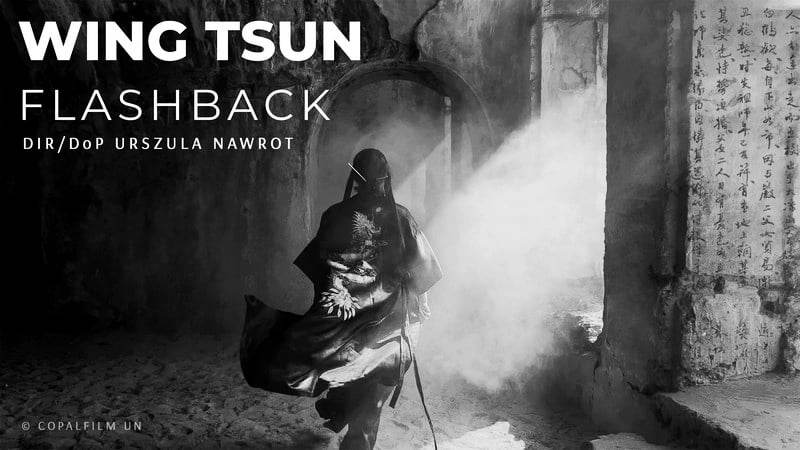
-What would you change in the world?

As you ask above about the cinema bringing a change, my previous film “SENIOR DISCOUNT’d” is a docu-drama I made to raise awareness about our current society ignoring people especially in business after they pass a certain age. “SENIOR DISCOUT’d” was made to show how the world sees someone differently once they are considered “old”. I hope that “SENIOR DISCOUNT’d” in some way will change that stigma.

On a lighter note, one of the many reasons I made “Heart Cycles” was to show that an older person can also be a male romantic lead in a big film.

-Where do you see the film industry going in the next 100 years?

There is constant change. Silent movies shot on film to then talkies. Then more recently from film to digital. And now with the Internet – streaming films from any source to any type of “screen”. There used to be a definite separation between the Oscars for film and the Emmys for television. Now that television has morphed into streaming films there is not so much a distinction. An also with the Internet digital age communications the Oscars do not distinguish between a US made film and a “foreign” film. What is next? Hard to say but I still enjoy seeing a very well written very well acted film on a huge screen in a dark quiet comfortable theater.
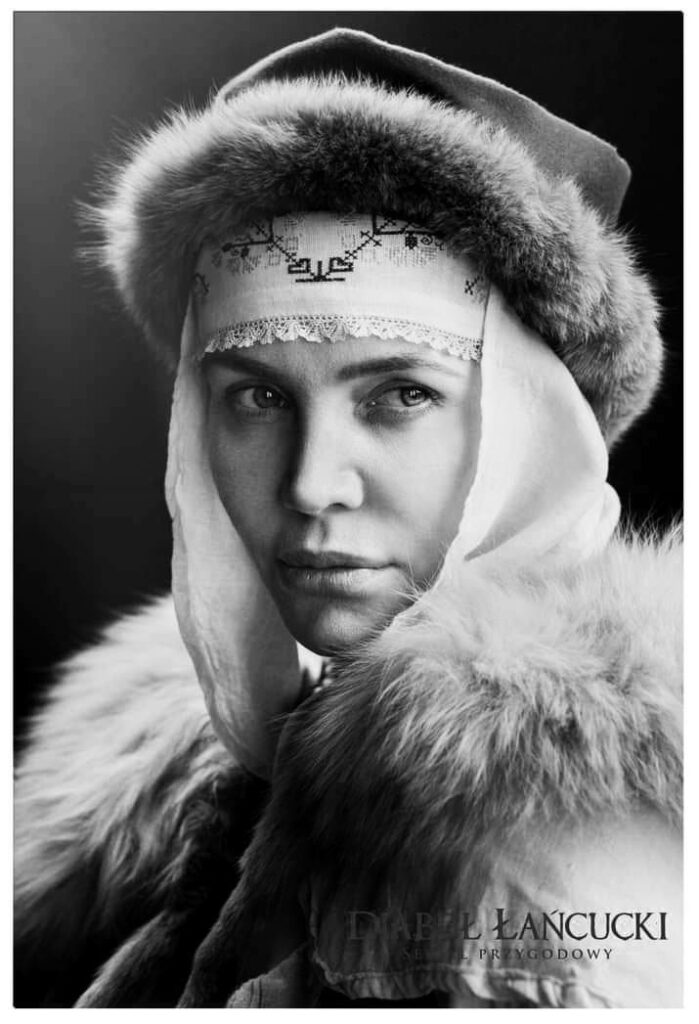
Adèle Vincenti-Crasson

-Who is Adèle Vincenti-Crasson?

I’m a young screenwriter and filmmaker graduated from La Fémis, a cinema school in Paris in 2021. I have also studied 2D animation and stop motion at Atelier de Sèvres, and computing and microelectronics at Mines de Saint- Etienne, a french engineering school. I have directed several short-films, the last one, King Max is about self-acceptance and Drag King community. 

Currently, I’m developing a documentary about a young person who’s looking for his indemnity and I’m writing King Max as a feature film.

-What inspired you to become a filmmaker?

I have always loved filming and telling stories. I discovered cinema by practicing. Since my childhood, I film or animate stories, often alone. Quickly, I brought my family and friends to take part in my short films. And when I understood that the cinema could help people and myself too, I decided to be a filmmaker. –
Do you think the cinema can bring a change in the society?

For me, the cinema is political and as a director you have a mission.

Indeed, you can change mentality of people by giving portrayal and visibility for discriminated and invisibility communities. And for concerned people, you can help them to feel not alone. And this is very necessary. Portrayal in movies can save lives. 

What would you change in the world?

I dream of a society where you can be who you want and who you are without discrimination, violence, judgment. Just a society where you can be yourself. 

Where do you see the film industry going in the next 100 years?

I don’t really know but I hope there will be more female directors or more queer directors. I hope the cinema will be more diversified. Diversified by the subjects it deals with but also by the people who create it. And I hope people will keep in mind that  cinema is essential and it could save people.