“Tumorrou” (EXCLUSIVE) Interview with Alek Garcia

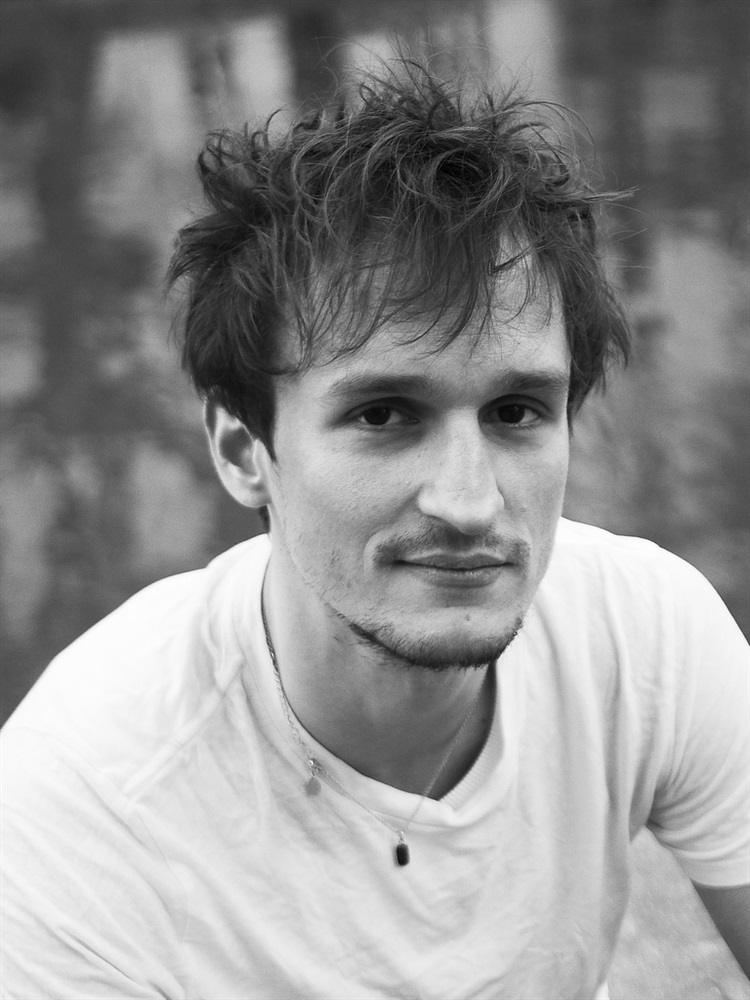
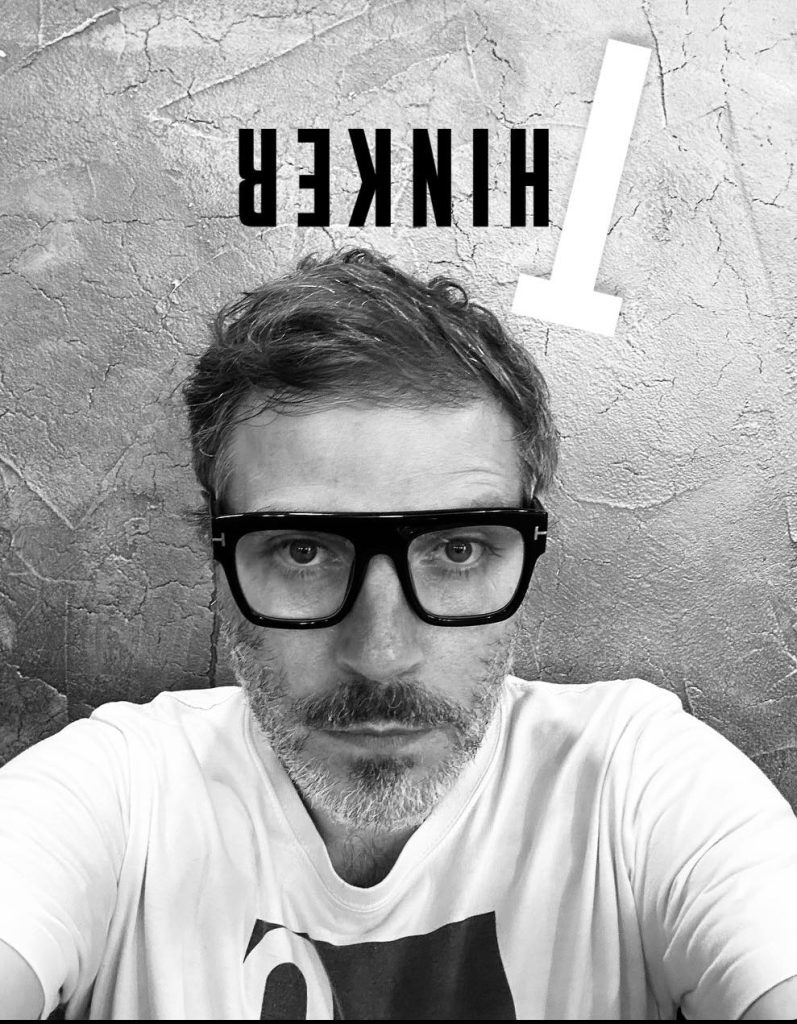
-Who is Alek García?

I’m a filmmaker based in Guadalajara, Mexico, passionate about bold storytelling, emotional depth, and crafting a distinct visual style. As a director, producer, and screenwriter, I’ve worked to position myself as a strong voice in independent cinema, telling stories that live at the intersection of realism, psychological tension, and poetic symbolism.

I trained in Filmmaking at Imaginary Spirit Films, studied Film Production at the Cinematographic Studies Center, and honed my skills in Screenwriting at the University of Audiovisual Media. Through these experiences, I developed a creative language that blends cinematic precision with narrative experimentation.

I directed the feature film Tumorrou and the documentary Echoes of History for the Mexican Film Institute. My short films Cristal, Maybe Tomorrow, and Camila allowed me to explore human complexity through minimalist storytelling and emotional clarity.

Right now, I’m directing Roses Street, a psychological thriller designed to engage audiences through suspense and emotional intensity. I find myself constantly moving between post-production and new creative developments—always searching for new ways to deepen character exploration and enhance narrative structure.

My writing lives in scenes, my mind edits through emotion, and my heart is present in every frame. Whether I’m portraying the mystique of a shadowy neighborhood or the claustrophobia of a cabin full of secrets, I strive to capture human truth in its rawest and most cinematic form.

I don’t just tell stories, I live them. And with every new project, I aim to redefine what independent cinema can be.

-Do you remember the exact moment you fell in love with cinema?

The first time I ever went to the movies, I watched Jurassic Park, and honestly, it blew my mind. I remember being totally amazed by the magic of it all. Everything felt so real, fascinating, terrifying, and magical all at once. I laughed, I got scared, and I kept thinking, how the hell did they make this?

Funny thing is, I didn’t start out in film. My first steps in the arts were actually in musical theatre, as an actor. It wasn’t until I started acting in film and TV projects that I realized I didn’t just want to perform stories—I wanted to create them.

My first real experience with filmmaking was as a director. And from that moment on, I was hooked. I was completely captivated by the cinematic language. Filmmaking became more than just a job or a passion, it turned into the way I process the world. A way of expressing what I feel, what I see, and what I want to say. It became a way of seeing, of understanding the world, and of transforming it.

-Tell us about your project “Tumorrou”.

This film takes us into the world of a group of incredibly talented teenage actors who have joined a theatre company preparing to represent Mexico at an international festival in Canada. The story unfolds over the course of their final day of rehearsals, a day that, after so much work and dedication, becomes a turning point. The characters are forced to face their inner conflicts, personal realities, and unresolved traumas, leading them to question what comes next in their lives.

In Mexican cinema, we often see the harshness of society portrayed through the eyes of adults or marginalized communities. With Tumorrou, we wanted to shift the focus and explore how young people deal with their own demons, challenges, and the weight of their circumstances. Some manage to overcome them, some don’t. And that contrast, that truth, is at the heart of what this film wants to show.

One of the most special parts of the creative process was how involved the cast was in shaping their characters. Over the course of two months, the young actors worked closely on rewriting dialogue to make it feel more real, more reflective of their own experiences and perspectives.

We wanted them to truly own their characters, to read the script, recognize the issues, and adapt the language in a way that made sense to them, in their own voice.

So while Tumorrou is deeply rooted in fiction, it’s also a mirror. A mirror held up to a generation that’s often overlooked, yet full of complexity, resilience, and heart.

-Which Director inspires you the most?

I’ve always been inspired by both Guillermo del Toro and Darren Aronofsky, not just for their cinematic mastery but for how deeply personal their styles feel.

With Del Toro, there’s a special connection, not only because we’re both Mexican, but because he’s shown the world that fantasy and folklore can be powerful vehicles for emotional truth. I admire how he crafts intricate, poetic worlds filled with monsters that often reflect human pain more than horror. His attention to visual detail, his use of color, texture, atmosphere… reminds me that every frame is a chance to build meaning.

Aronofsky, on the other hand, pushes psychological storytelling to its edge. His films are intense, visceral, and unafraid to make the viewer uncomfortable. I’m drawn to how he uses rhythm, close-ups, and sound to pull us inside his characters’ minds.

What I take from both is the courage to be bold. Del Toro teaches me to embrace imagination without losing emotional depth, and Aronofsky shows me how to strip a moment down to its rawest feeling. Their influence lives in my work, where I try to balance visual storytelling with emotional truth, always aiming to create something that resonates beyond the screen.

-What do you dislike about the world and what would you change?

What I dislike the most is how deeply normalized injustice has become, especially inequality and systemic discrimination. In Mexico, and in many parts of the world, your birthplace, skin color, last name, or background still determine how far you’re allowed to go. Sometimes talent isn’t enough. Passion isn’t enough. The system is rigged from the start, and those who are born outside the margins are told to either “work harder” or stay silent.

And it’s not just economic, it’s racial, cultural, even spiritual. We still live in a world where people are judged, feared, or hated because of their race, nationality, religion, or language. There’s still a global sickness that makes it easier to divide than to connect. And the worst part is how often this hatred is institutionalized, how often it’s dressed up as policy, tradition, or patriotism.

What would I change? I’d challenge the idea that some lives matter more than others, just because of where they come from or how they look. I’d dismantle the narratives that glorify suffering for the sake of art, or that pretend diversity is a marketing tool instead of a human reality. I’d fight for a world where telling your story doesn’t feel like an act of resistance, but a right.

I don’t believe in romanticizing adversity. Adversity doesn’t just build character; it also destroys people. And we lose too many voices to that silence. If I can do anything through my work, it’s to make space for the ones who’ve been kept out, erased, or told they don’t belong. Because they do.

-How do you imagine cinema in 100 years?

I imagine cinema becoming something radically immersive, less about watching a story, and more about living it. I can see a future where storytelling is deeply interactive, where the audience becomes the protagonist, stepping into complex narrative worlds through advanced virtual reality or technologies we can’t even fully conceive yet. You’ll put on a pair of goggles or maybe something more integrated, neural even, and the story will unfold around you, not in front of you. It’ll feel personal, alive, and reactive. Something like “Total Recall”.

But as exciting as that sounds, I also have concerns. I hope that, a hundred years from now, we haven’t replaced everything with code and simulations. I still want to see real actors portraying real emotions. There’s something irreplaceable about the human face, the imperfections, the subtle gestures that no AI or motion-capture model can truly replicate. Cinema, at its core, is about human connection, and I fear that could get lost in a race for hyperrealism or algorithm-driven narratives.

What I hope is that the future of cinema finds balance. That we don’t abandon the essence of performance, storytelling, and authorship, but instead expand it. Technology should be a tool, not the storyteller. Directors, writers, actors, and cinematographers should still be at the heart of the process, even if the formats evolve.

I also believe that ethical questions will become central. Who controls these interactive narratives? Who programs the choices? What biases are embedded in those systems? Cinema in 100 years will not only entertain, it will raise questions about identity, agency, and truth in ways we haven’t yet begun to imagine.

In the best-case scenario, cinema will be more democratic, more inclusive, and more immersive, but only if we protect its soul while embracing the tools of tomorrow.

-What is your impression of WILD FILMMAKER?

I think it’s a bold and much-needed platform, one that really embraces the raw, independent spirit of filmmaking today. I appreciate how it gives space to diverse voices, from first-time filmmakers to experimental creators, without trying to fit them into commercial molds. It feels like a space where cinema is allowed to be bold, weird, imperfect, and personal.

What I like most is that it doesn’t just focus on finished films, but on the people behind them, their processes, their obsessions, their reasons for telling stories. That makes it feel more human and more relevant.

I also think it reflects the times we’re living in: fast-moving, decentralized, more accessible but also more saturated. WILD FILMMAKER leans into that chaos, and instead of trying to control it, it celebrates the creativity that comes from it.

Inside the Shadows: Exploring “The Curse of Hotel Morgue” a Homage to Edgar Allan Poe

-Francesco, let’s start by talking about The PlayGroup. Could you introduce the company to our readers, telling us how it was founded and what artistic vision guides it?

The Play Group was founded in 1989 by Eddie Roberts and Simon Edmonds, with Johnny, Eddie’s father, among the founders, after their experience at the British Council in Naples. In just a few years, the company grew into a national reality, also thanks to decisive collaborations with Le Nuvole and Casa del Contemporaneo. Our goal is clear: not to teach English, but to make it alive and desirable through theatre, combining emotion, playfulness, and stage discipline.

-How did the idea for The Curse of Hotel Morgue, freely inspired by The Murders in the Rue Morgue by Edgar Allan Poe, come about, and what makes this project so important for your company?

After Shakespeare, Conan Doyle, Stevenson and many others, we felt the need to explore a new author. Poe seemed perfect to us for blending mystery and visual suggestion. The Curse of Hotel Morgue merges theatrical and cinematic language: short projections become an integral part of the stage and guide comprehension. For us, it’s a natural evolution: more atmosphere, more rhythm, more engagement for a young audience.

-The production is performed in Italy and across Europe for middle and high schools, with adaptations for different educational levels. What are the challenges and rewards of bringing this story to a young audience?

The main challenge is finding the right balance between linguistic authenticity and comprehensibility: we adapt levels and pace without impoverishing the language. The greatest satisfaction is seeing students walk in timid and leave enthusiastic, running to the stage to talk to us and realizing that “English isn’t so difficult after all.” When a class asks us to return to their city, we know that theatre has hit the mark.

-On stage you share the scene with Eddie Roberts and Simon Edmonds. What is it like working as an Italian actor with two English colleagues, and how would you describe the chemistry and collaboration among the three of you during the production?

I have been with Eddie and Simon since 1998: first as assistant director to Enzo Musico, and then, since 2000, also as an actor. On stage and off we have become a true artistic family. Their experience is a constant strength, while my being Italian often works as a bridge for the young audience. We are practical: as Simon often repeats, “we don’t write anything in stone until all three of us agree.” Constant dialogue and the joy of having fun together remain our secret.

-The show, produced by The PlayGroup in collaboration with Casa del Contemporaneo, is distributed in Italy by WeTheatre of Cristina Liberatore and other distributors. How does this network of Italian distributors expand its reach and impact?

The co-production with Casa del Contemporaneo has lasted for over 25 years and represents a cornerstone of our activity. For over 10 years we have also collaborated with WeTheatre by Cristina Liberatore, which, together with other distributors, enables us to reach schools and theatres in different regions of Italy. This network greatly expands the scope and impact of our work: it supports us in logistics, promotion, and the preparation of educational materials linked to the show. Thanks to this synergy, we can consolidate our distribution in Italy and open new opportunities in Europe, increasing the visibility and educational effectiveness of our theatre projects.

-Looking to the future, what do you hope students and audiences will take away after seeing The Curse of Hotel Morgue, and how will this project influence your artistic journey?

I would like students to leave the theatre with a smile and with the awareness that they can understand and communicate in English, taking home curiosity and confidence in their own abilities. For me, each production is a living creature that grows with us: The Curse of Hotel Morgue too will influence our future choices, pushing us towards new blends of theatre and images, and towards pathways that always keep young audiences at the centre.

“THE GIANT” (EXCLUSIVE) Interview with Kevin B Ploth

Who is Kevin B Ploth?

Kevin B. Ploth — the thunderclap of the Bronx, a colossus forged in the unyielding fires of New York grit, where skyscrapers bow to the unbreakable spirit of the streets. Picture this: a multi-generational titan of the concrete jungle, born and raised in the heart-pounding pulse of the Big Apple, where his parents, the luminous artists Liz and Bruce M. Ploth, didn’t just hand him a paintbrush or a script — they etched the soul of creation into his very bones from boyhood. In a city that devours dreamers, they raised a legend, a man whose lineage isn’t mere bloodline but a sacred tribe of storytellers, performers, and visionaries, passing the torch of artistic rebellion like an eternal flame through generations.

But Kevin? He’s no heir to a throne — he stormed it, sword in one hand, camera in the other. A proud father of three extraordinary souls, he embodies the tribal elder’s vow: to nurture, protect, and inspire a legacy that echoes beyond lifetimes. His hearth isn’t just a home; it’s a fortress of fierce love, where family isn’t a footnote but the thunderous bassline of every epic he crafts. And oh, the service! This isn’t the whisper of duty — it’s the roar of a US Army veteran, a battle-hardened guardian who traded fatigues for film reels, channeling the raw discipline of foxholes into the alchemy of art. Thirty-five years deep in the trenches of entertainment, food, security, and beyond, Kevin’s no mere soldier of the screen; he’s the general commanding an army of indie rebels, proving that true service means arming the next wave of creators with unbreakable resolve.

Larger than life? Kevin B. Ploth is life, amplified to seismic proportions — a bombastic force of nature who’s directed, produced, written, performed, and chef’d his way through a cinematic odyssey that could humble Hollywood’s heavyweights. SAG-AFTRA and Equity badge gleaming like a medal of valor, he’s the maestro behind masterpieces like The GIANT, This Stitching Will Last and Shadow Docket. At the helm of veteran-owned Artimis Entertainment, he doesn’t just make movies — he forges empires, blending fine art with ferocious narratives, even cooking up cookbooks like EAT ME… A Tell-All.

From the chorus of his peers comes a symphony of reverence. Filmmakers hail him as “the stunning force behind The GIANT,” saluting his unyielding leadership. Festival circuits buzz with his name — finalists and wins piling up — while indie warriors proclaim his networking prowess “a must for new filmmakers.” Bold Journey Magazine crowns him the self-reliant sage, while CanvasRebel echoes the chorus: Kevin’s gravitational pull turns solo sparks into supernova collaborations.

In a world of flickering shadows, Kevin B. Ploth is the unrelenting light — a legend who doesn’t chase immortality; he carves it, frame by frame, bite by bite, service by seismic service.


Do you remember the exact moment you fell in love with cinema?

It’s not one moment, but a vivid tapestry woven from a few unforgettable threads of my childhood. At four years old, I was sprawled on the living room floor, mesmerized by The Good, the Bad and the Ugly. The haunting, sweeping notes of Ennio Morricone’s score — those iconic “wah-wah-wah” sounds I gleefully called “Bip Bum” as a toddler — hit me like a lightning bolt.

Then there was the time I saw a documentary about Tutankhamun’s treasures at the Metropolitan Museum. The golden mask, the ancient mysteries, the way the camera lingered on those artifacts — it felt like I was unearthing secrets from a lost world. And the Sesame Street Yip Yips — those goofy, wide-eyed aliens — taught me that cinema could be pure joy too.

Those moments, from Morricone’s “Bip Bum” to mummies to Muppets, planted the seed: cinema wasn’t just moving pictures. It was a way to feel the world — its beauty, its mystery, its humor — all at once.


Tell us about your project “THE GIANT”.

The GIANT has been burning in my soul since my family member Robert LeBlanc gave me the idea back in 2013. Drawing from my U.S. Army service, I created this half-hour crime drama series to shine a raw, unflinching light on the heroes among us: sheriffs, deputies, and everyday guardians who wrestle their demons while keeping the line between order and anarchy intact.

Set in a tight-knit town gripped by a surge of brutal crimes, it follows Sheriff Clay “Giant” Walker — played by me — a towering lawman haunted by his past. This isn’t just a badge-and-gun story; it’s a journey of redemption, where Giant and his diverse team confront external threats and systemic biases, uncovering a tragic truth that hits close to home.

Our priority is building a team of veterans, first responders, and their families — because who better to tell these stories than those who’ve lived them? Seventy percent of our cast and crew bring that lived experience, infusing every scene with authenticity you can’t fake.

The cast includes Jake Busey, Jeremy Miller, Joseph D’Onofrio, Anthony De Longis, Vanessa Thorpe, Eli Jane, Kelley Poling, Jackie McCarthy, Eddy Rich, Vinny Gomez, Ed Truco, Diego Aguirre, Cody Cowell, Errol Greaves, Johny “Utah” Muligan, J. Neilson, Jon-Paul Gates, Michael Sean McGuiness, Tuesday Knight, Sara Touijer, Carla Perez, Susan Spano, Susanne Case Sulby, Leila Sbitani, Thiago Santos, Brett Azar, Richard Ryan, and Doug Marcaida.

Behind the lens: Larry Gress (DP), Alfonso “Fonz” Trinidad, Emily Roos, Juan Pablo Reinoso, Amanda Terry, Charlie Parish, Jordan and Jessica Bennett, Shawn Parsons (“Hell if I Know”), and PM/PC JD Wesly. Sponsors include Patriot Tactical, 51/50 Rifles, Everyday Armor, PROPPER Uniforms, Cigar Saver, Marathon Watch, Moake Candles, Penman Hats, and Battle Box.

We’ve already earned semi-finalist nods at Berlin Shorts and Cine Vista Oasis for our pilot script, poster art, and trailer — plus a Bronze Telly Award for Best Script TV Pilot. THE GIANT isn’t coming to save the day — it’s here to remind us that giants aren’t born; they’re forged.


Which director inspires you the most?

Sergio Leone’s operatic showdowns make my pulse race; David Lynch’s Mulholland Drive warps reality in ways that haunt me; Rod Serling’s Twilight Zone parables punch us in the gut with truth disguised as fiction. Lois Weber tackled taboos like abortion and addiction in silent epics, wielding cinema as a weapon for social change.

But if I had to crown one who ignites my core, it’s Alice Guy-Blaché. She didn’t just direct — she pioneered. In an era when women were footnotes, she cranked out over a thousand films, proving that bold voices could shape worlds from scratch. Her fearless innovation inspires me to push boundaries and craft stories that aren’t afraid to dream big or speak uncomfortable truths.


What do you dislike about the world and what would you change?

I dislike the pervasive hidden agendas that poison trust in institutions, where transparency is sacrificed for power plays and profit. Trade restrictions stifle creativity and access. The grotesque overpayment of talent and athletes, while essential workers scrape by, feels absurd.

On guns: The issue isn’t hardware; it’s ammo. Restrict ammunition purchases with age limits like alcohol or cigarettes and watch impulsive violence plummet.

Most infuriating is the vilification of the vulnerable: sex workers shamed, addicts demonized, and those with mental health struggles stigmatized. We’re all one bad day from needing help — why punish humanity’s frailties?

What would I change? Radical transparency. Abolish unnecessary trade barriers. Cap exorbitant salaries in entertainment and sports, redirecting funds to public goods. Implement ammo controls. Decriminalize and destigmatize sex work, addiction, and mental health. Build a world where fairness isn’t a slogan and vulnerability isn’t a crime.


How do you imagine cinema in 100 years?

Cinema will evolve into a fragmented, hyper-personalized ecosystem. Traditional theaters will be relics, replaced by vertical, short-form media — 1–5 minute stories optimized for holographic displays or neural implants.

Star power will fade, replaced by algorithm-curated “micro-celebrities.” Big budgets will give way to democratized production via AI. Revenue will come from micro-transactions or ad integrations woven seamlessly into stories.

But this isn’t dystopia; it’s liberation. Cinema will be everywhere and for everyone, blending reality with fiction in augmented worlds where you don’t watch a story, you live it.


What is your impression of WILD FILMMAKER?

WILD FILMMAKER is a groundbreaking platform revolutionizing indie cinema — a true hub for passionate storytellers to connect, innovate, and thrive. It embodies the essence of collaboration I champion: “There is no ‘me’ without the ‘we’!”

This community fosters worldly connections, diving deep into experiences that yield the best outcomes, whether through exclusive interviews or events celebrating authenticity and resilience. It’s not just a magazine; it’s a cultural force empowering filmmakers to create timeless narratives that outlast trends, echoing my mantra: “This Stitching Will Last.”

(EXCLUSIVE) Interview with Frédéric Bonnaud, Director of the Cinémathèque française

By Michele Diomà

Today is a truly special day for WILD FILMMAKER, as we are exclusively presenting an interview with Frédéric Bonnaud, director of the Cinémathèque française in Paris, the most important film institution in the world. Founded in 1936 by Henri Langlois and Georges Franju, it is an essential place for anyone who loves the history of cinema.

I first visited the Cinémathèque française when I was 11 years old, after an adventurous train journey from southern Italy. At that time, it was still located in the Palais de Chaillot, Place du Trocadéro, while it is now situated on Rue de Bercy. It was a place that fascinated me deeply, and I truly felt like Antoine Doinel, an experience I will also recount in the next film produced by WILD FILMMAKER.

Over the years, I have returned many times to the Cinémathèque française, which, with its magnificent exhibitions dedicated to the great figures of cinema history, has contributed to my growth as both a cinephile and filmmaker. I will return again in the coming weeks to see the exhibition dedicated to Orson Welles, which will open on October 8th and remain on view until January 11th, 2026.

-) Who is Frédéric Bonnaud?

A film critic in the written press and a radio and television journalist who became General Director of the Cinémathèque française in 2016. A cinephile, a lover of museums and cultural institutions. I had already worked at the Cinémathèque a long time ago and had been a regular visitor.

-) What is the first memory you associate with your passion for cinema?

Westerns dubbed in French on television. And Citizen Kane at my high school film club…

-) We read that starting October 8, the Cinémathèque française will host an exhibition dedicated to the great Orson Welles. Can you tell us a little more about it?

This exhibition takes the form of a small Xanadu, a miniature Xanadu, dedicated to a genius with countless talents: intellectual and interpreter of Shakespeare, radio, theater, film and television actor, producer, adapter of classics and screenwriter, professional magician, filmmaker, theater director and troupe leader, illustrator and sculptor. Welles embodies a multitude, and our exhibition is both a modest reflection of all his talents and an introduction to his exceptional body of cinematic work.

-) What are the other major initiatives that the Cinémathèque française will organize this fall?

YOU JUST NEED TO VISIT OUR WEBSITE: https://www.cinematheque.fr/ But let’s just point out that the Orson Welles retrospective accompanying the exhibition is undoubtedly the most comprehensive ever organized.

-) Among the missions of institutions like the Cinémathèque française is also that of introducing the history of cinema to younger generations. Today, with social media and the increasingly limited attention span of audiences, it is not easy to introduce them to the great classics of cinema. What has been your experience in this regard?

Our mission is to tirelessly show ALL of cinema—not just the great classics and not only for young people. But 20% of our audience is under 26 years old, so clearly it is possible…

-) Are you also working on projects outside those of the Cinémathèque française? If so, could you tell us about them?

From time to time, I write documentaries about cinema, devoted to Jean-Luc Godard or Jacques Demy.

“Nice To Meet You” (EXCLUSIVE) Interview with Noah Kara

-Who is Noah Kara?

He is a man who came to Sweden as a boy all alone without his parents from the Kurdish part of Turkey. I lived for 5 years as a hidden refugee and struggled to get a fresh start in the new country.  During my time as a hidden refugee, my best friends had the loneliness, the fear, the panic of doubts and uncertainty that taught me to dream that one day I will be a moviemaker. 

-Do you remember the exact moment you fell in love with cinema?

I was 9 years old started playing on the streets together with a friend. I fell more in love being an actor, then after I start writing and shared roles to my childhood friends who were as old as me . I started directing them , it’s was a feeling that I overcame to make all the children do what is I want to say and all this did in front of my parents and adults who were curious what we do. The sad thing is neither of my parents didn’t see I had talent while they were having fun watching us. Dem never thought to send me to a movie line school.

-Tell us about your project “Nice To Meet You”.

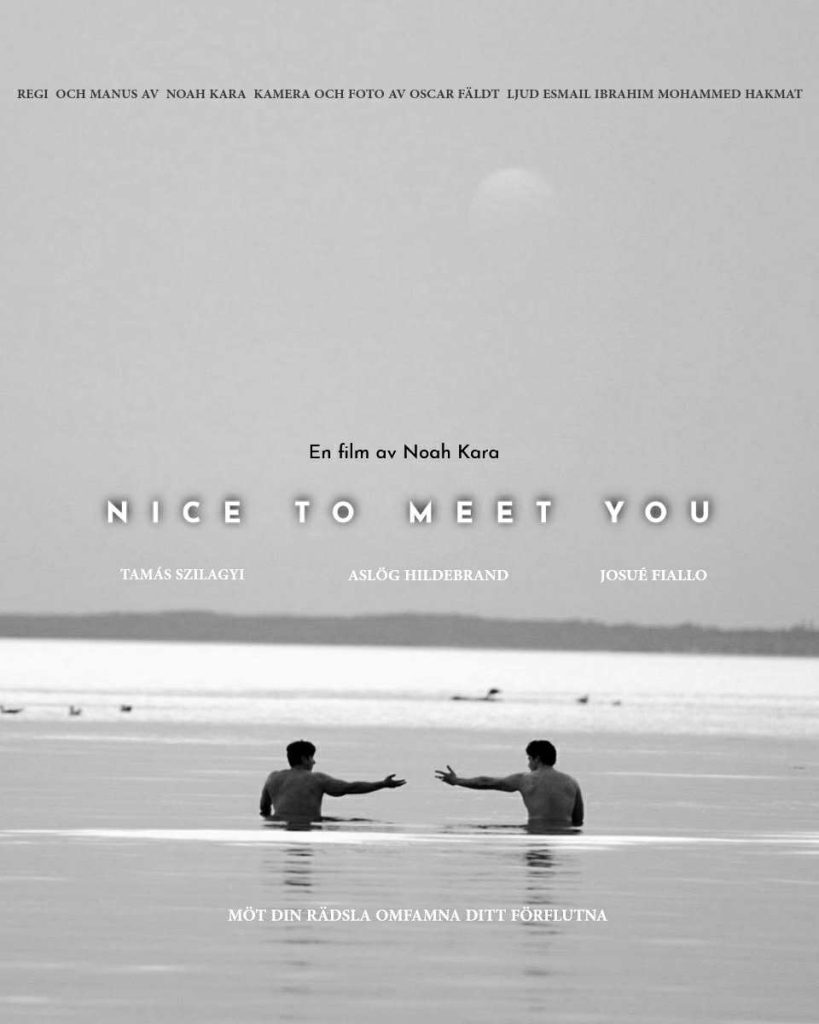
“Nice To Meet you” is a short film project about Emilio and Mikas, two men in their 30s who have never known true love or embrace from their parents as children. One night in a park, when Mikas is on the verge of taking his life, Emilio sees him and intervenes in an impulsive act. This becomes the starting point of their first meeting. During that night, as they share their wounded memories, an unlikely and deep connection develops between them. They explore their feelings and desires, leading to an unexpected intimate experience. When they wake up the next day, they face questions about their feelings and how this night will affect their lives going forward. The film aims to raise awareness around topics such as mental health, the complexity of love and the importance of overcoming childhood trauma. By portraying an authentic and vulnerable story, we hope to inspire conversations about these important issues and show that love can be found in the most unexpected places.

-Which Director inspires you the most?

Stanley Kubrick , Ingmar Bergman , Christopher Nolan and Fatih Akin.

-What do you dislike about the world and what would you change?

Politics and Religion I do not like . I would purge both of them from our planet. Without them two we would have lived much happier.

-How do you imagine cinema in 100 years?

Since everything is becoming digitized , cinema in 100 years will become a nostalgia for us all.

-What is your impression of WILD FILMMAKER?

I’m so grateful that I got to be there first, I want to say. Helping filmmakers to be heard around the world is incredibly important for those of us who want to tell our story. And you are part of that for us.

NEW HOLLYWOOD NETWORK PROJECT (EXCLUSIVE) Interview with Vivian Tsang

Where does your desire to express yourself through art come from? 

My desire to express myself through art comes from both my own life and the experiences of others. I’m often inspired by documentary films and non-fiction books, which encourage me to explore different perspectives in order to create and present meaningful messages to the audience.

What are your goals as an artist?

My goals are to become a filmmaker who can direct films filled with infectious energy and impact, working with lovely people.

What is your opinion on the cultural industry?

I think mainstream films dominate the entire film market. For example, Hollywood films often lack creativity, and the standardization of storytelling can make them feel boring and predictable. They mainly focus on whether a film will be profitable and appeal to the largest possible audience, putting commercial success above artistic originality.

There are pros and cons to mass production in the cultural industry. On one hand, it can reach a wide audience and produce profit; on the other hand, it may not be the most interesting way to promote artistic work and can feel like an old-fashioned approach to engaging viewers.

In conclusion, I think that a healthy cultural industry will combine popular appeal with fresh ideas while also supporting smaller, creative works in the future, much like what film streaming platforms such as Netflix are beginning to do.

Do you think independent artists today have enough opportunities to share their creativity?

Yes, I believe independent artists today have more opportunities to share their creativity than before. There are many online platforms and portfolios such as artist webpages, Behance, YouTube, and Vimeo that allow them to showcase their work. In addition, sharing and promoting trailers on social media platforms like Facebook and Instagram provides further ways to reach wider audiences. Independent artists can also use film festival platforms such as FilmFreeway or Click For Festivals to submit their projects to festivals worldwide. Moreover, they have the possibility to collaborate with media platforms such as Vice, where they can pitch ideas by sending proposals via email. This gives independent filmmakers the chance and freedom to explore different approaches in developing their ideas and stories, and to present them to audiences in more creative and original ways.

What new project are you currently working on?

I’m still working on what to do with my next project. I’m thinking of documenting local communities in UK. I am considering creating a documentary about pole dancing, fitness, and well-being in the UK, inspired by the Netflix film Strip Down, Rise Up. Another idea I have is to document the deaf community in Manchester. I am thinking of inviting a deaf friend named Helen to share her experiences and thoughts, telling her story as part of the documentary.

Alix Bénézech Stars in “Nouvelle Vague” by Richard Linklater and Clint Eastwood’s “The 15:17 to Paris” (EXCLUSIVE) Interview

  • Who is Alix Bénézech?

I try to learn a little more about who she is every day, haha.

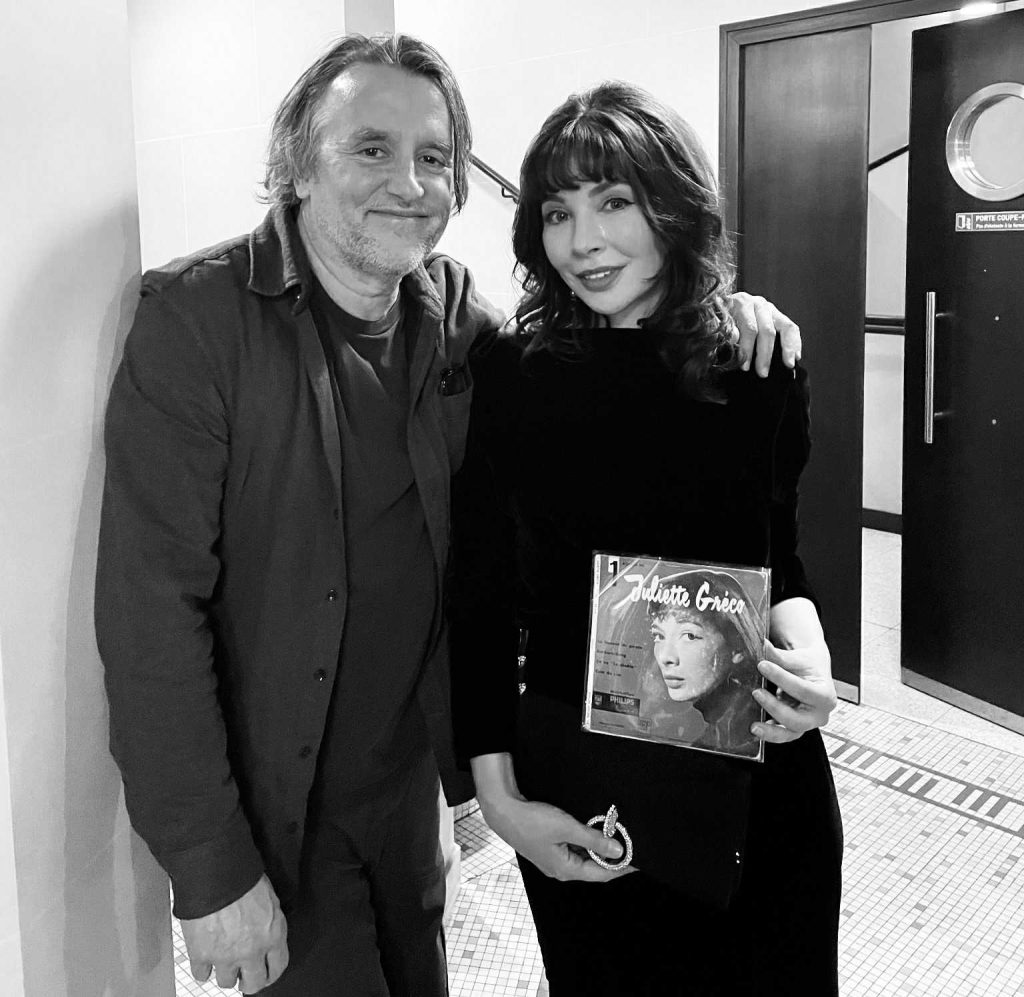
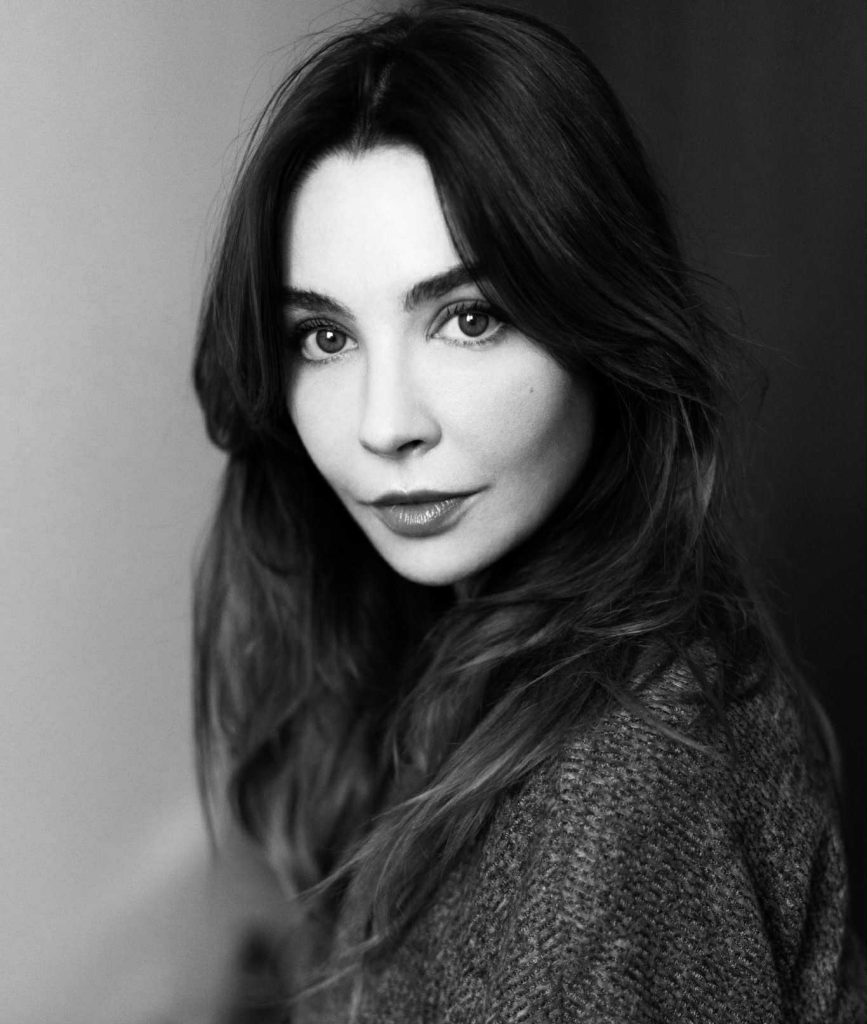
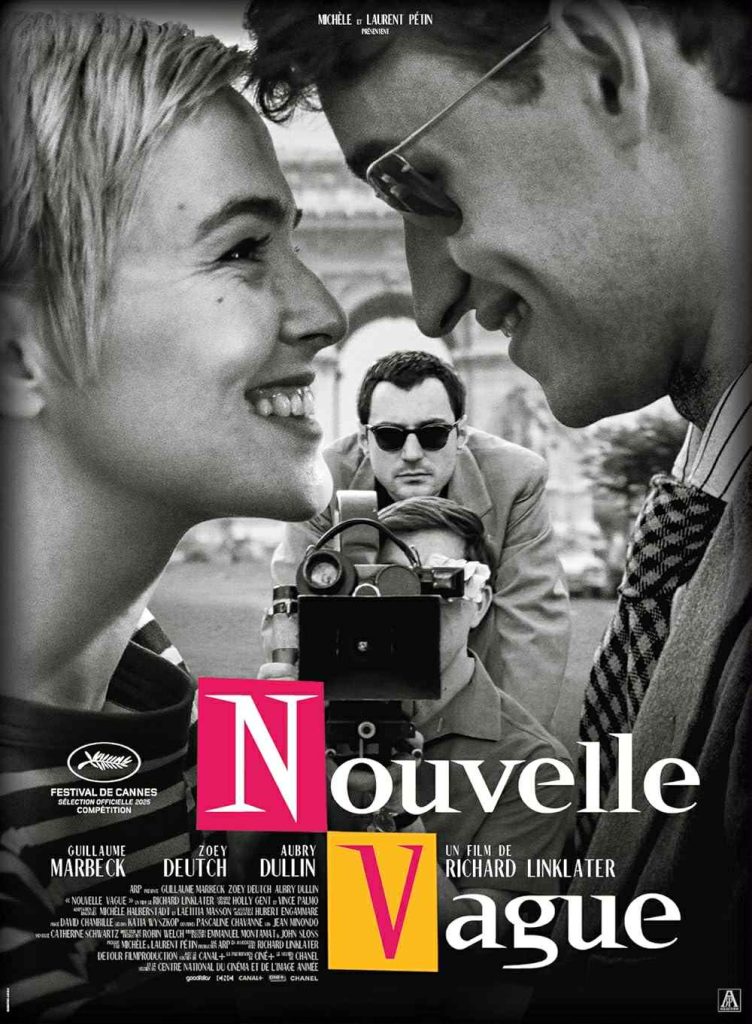
I asked the internet and apparently: Alix Bénézech is a French actress, seen in theater, in cinema (Mission: Impossible – Fallout directed by Richard Linklater with Tom Cruise, The 15:17 to Paris directed by Clint Eastwood, BIS directed by Dominique Farrugia) and in series (Nina, Emily in Paris, Whiskey Cavalier). Winner of several acting awards, she pursues an international career between Paris and Hollywood. Soon to appear in Nouvelle Vague, directed by Richard Linklater, releasing in theaters in France on October 8 and later on Netflix, in the role of Juliette Gréco.

I can also add that I am passionate about 19th-century literature, especially Marcel Proust, an author I studied for my Master’s in Modern Literature. I can also say that after spending time with me every day, my character is absolutely similar to that of a cat.


  • How did you approach the role of Juliette Gréco in Richard Linklater’s Nouvelle Vague?

I knew Juliette Gréco by name, but I knew little about her life. So I investigated, as I like to do for each role entrusted to me. I discovered an exceptional woman who had an extraordinary life, marked by war, silent for a long period until meeting Boris Vian—a visionary woman, a woman who created an artistic movement, who was the muse of Saint-Germain-des-Prés, who worked with Sartre and all the existentialists (such a beautiful word, existentialist), ahead of her time, a feminist before the Me Too era, an inspiring and free artist with a key word: LOVE, whether it was love for the men she loved, notably Miles Davis, but also love in every gesture of her art and life—a woman of faith, without referring to any particular religion, even though she liked to say “may God hear you” and associated with priests. By reading her books, listening to all her interviews, listening to all her songs, and her singular voice, again and again, I found many points of resonance, soul connections.

Without going into details of my personal life, as I am quite private about it, Juliette became like a big sister, a best friend, and very quickly, already at the first casting, beyond the physical resemblance I had already been told about, I had become Juliette Gréco—not as an imitation, but simply by letting her live through me as if I were a new Juliette Gréco.

Juliette did me a lot of good at that moment in my life; I really needed to have this imaginary yet so real encounter for me.

Then I met Richard Linklater at the callback with Guillaume Marbeck, and it was magical. I saw Jean-Luc Godard in person, I just had to improvise, live, be Juliette—everything was fluid. I remember a moment when Guillaume Marbeck, who was very generous, said something that resonated both for Juliette Gréco and for me: he said, “I think French cinema underestimates you.” I remember containing my emotion because if I cried, it would no longer have been Juliette Gréco. And it truly resonated, because at that moment I felt a little like an outsider in France. Since then, I have returned to film sets and feel the wind at my back—I believe that’s cinema: waves. I’m happy to have learned to surf and to ride this new wave joyfully.

At the end of the improv, Richard Linklater, who had remained very discreet, observing and listening, with great gentleness said to me, “Bravo.” At that moment I thought he said it just to please me, out of politeness for the work accomplished. I left the casting and cried in the street, taking off Juliette’s retro heels and putting my sneakers back on—I cried because I felt like I was saying goodbye to an entire world of cinema and creativity that I wanted to continue exploring. Then I got the call from Stéphane Batut, the casting director, in January 2024, and I felt immense gratitude, exactly the same as when my agent had told me I was cast in MISSION: IMPOSSIBLE – FALLOUT. I thought, “You did a good job, you are on the right track.” And I immediately went back to work to prepare for filming.

Then there was a moment I remember before shooting, during costume fittings. I met costume designer Pascaline Chavanne, her entire team, Elsa Heizmann, and all the CHANEL teams to try on Juliette Gréco’s costumes. I went to the legendary Gabrielle Chanel apartment on Rue Cambon in Paris, and I remember the awe I felt climbing the stairs of this iconic place. And the emotion I felt trying on the authentic CHANEL suit that Juliette Gréco had worn. I thought everything was aligned, and that I was about to be part of a cinematic adventure that would likely go very far. I had a vision at that moment, and everything has been confirmed since.


  • Nouvelle Vague is a film much loved by cinephiles. Which cinema from this historical period do you love the most?

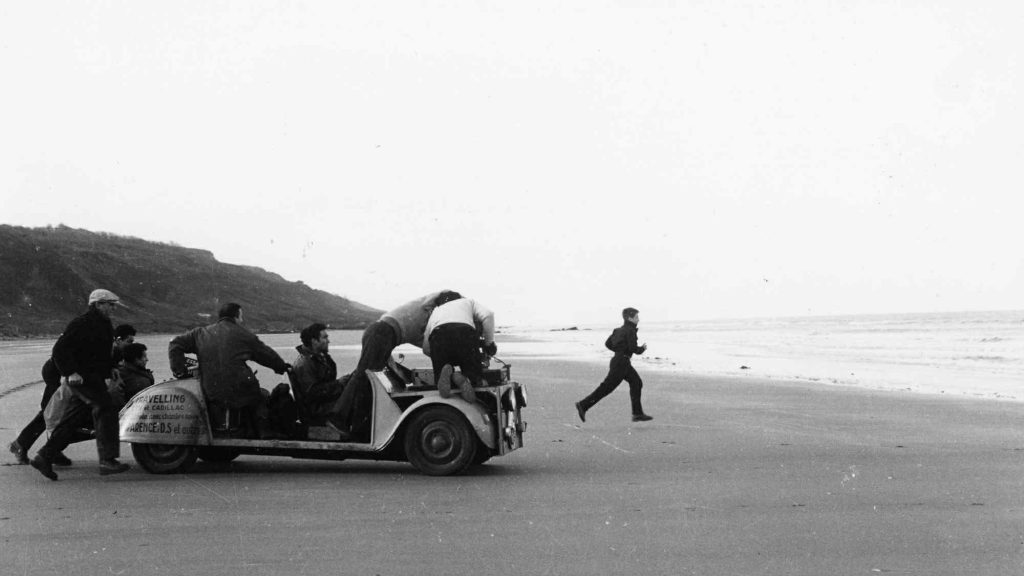
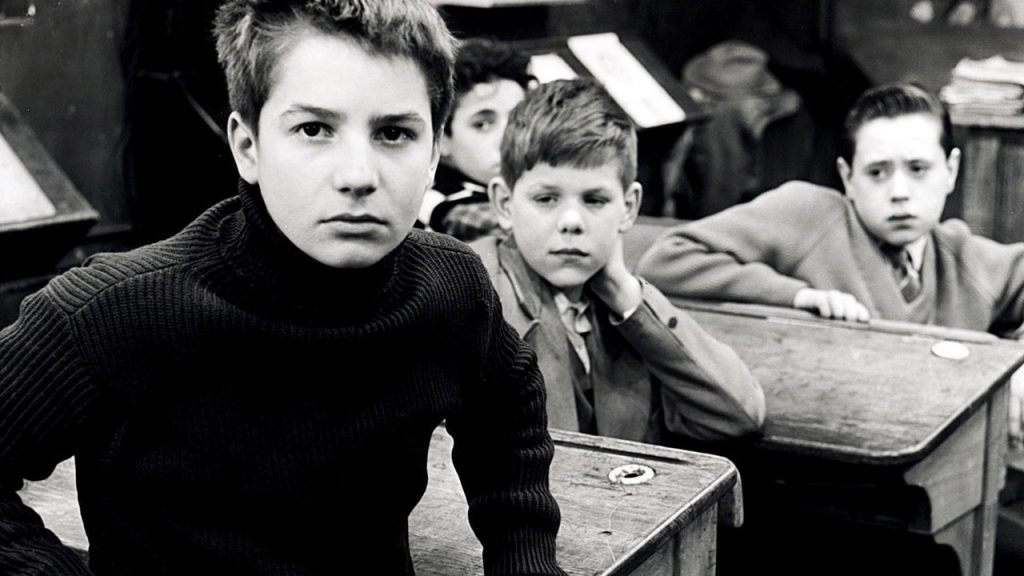
Yes, it’s wonderful—all the magic around this film, it’s a love letter to cinema, and it’s amazing that so many cinephiles love it. It’s a film that unites. And I think that’s important today. I wholeheartedly love François Truffaut’s LES 400 COUPS; this is the work I mentioned in my self-tape for the casting. It’s a kaleidoscopic work, which I actually discovered at Cannes. As a child, I had won a contest to attend the Cannes Festival for a week to discover films; Les 400 Coups was screened on the beach, and I took a photo. I found this photo in my diaries—it felt like a beautiful sign, and I gave it to Richard Linklater at the end of shooting.

I also watched BONJOUR TRISTESSE a lot, and I was amazed discovering Richard Linklater’s film, and witnessing Zoey Deutch’s nuanced and sensitive performance—she recreated so accurately the truth of Jean Seberg, an actress who has always deeply moved me.


  • You also had other prestigious professional experiences, like your role in The 15:17 to Paris. What was it like being directed by Clint Eastwood?

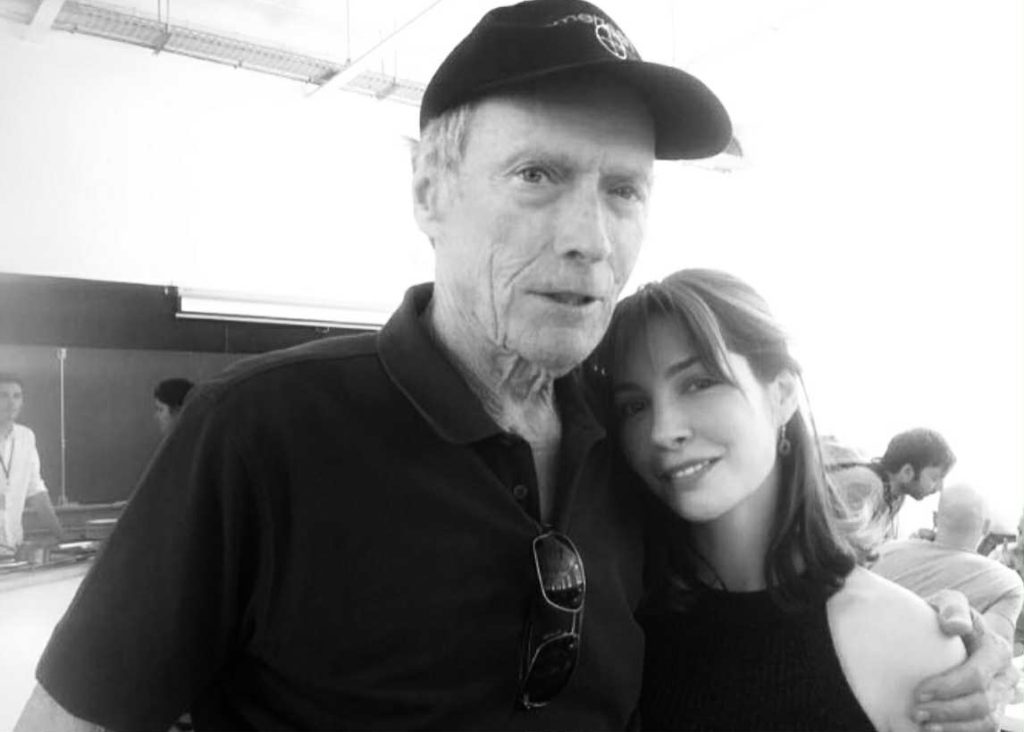
Thank you. I loved meeting Clint Eastwood—he is so funny and works with great gentleness. I only had one day of filming, but I remember every moment. He thought I was German because I played a small barmaid in a Berlin pub, and it’s true that I lived in Germany for 10 years—I barely have an accent. He gives a lot of freedom and space, which is why I think his films feel so human. He had lunch with us, all the actors, and we talked about many subjects—it was fabulous. Seeing a living legend, one of my favorite directors and greatest inspirations, simply talking about our favorite dishes, jazz, sports, and cinema—it was fantastic.


  • What projects are you currently working on?

I just finished filming BERLIN BERLIN directed by Olivier Van Hoofstadt with Didier Bourdon—I had a lot of fun; it’s going to be funny. I also filmed L’INFILTRÉE directed by Ahmed Sylla, where I act alongside him, and the TV movie PAPA MALGRÉ LUI for TF1, where I act with Arnaud Ducret. I’ve also done a lot of work for France Télévisions, in the series TOM ET LOLA season 2, ASTRID ET RAPHAËLLE season 6, and the TV movie MEURTRE EN PÉRIGORD VERT. I have also appeared in several short films by Swann Dupont, Gil Gharbi, and was a finalist for the 2025 INTERPRETATION LABELS for my role in the short film DE CELLES QUI GUÉRISSENT, aired this summer on TF1. I have other upcoming projects that I can’t wait to talk about.

“NOUVELLE VAGUE” – The most beautiful film at the latest Cannes Film Festival deserves an Oscar! (EXCLUSIVE) on WILD FILMMAKER: Adrien Rouyard, the actor who portrayed François Truffaut.

by Michele Diomà

For my work as a film producer, I have been attending the Cannes Film Festival for more than 20 years. When I was young, I used to watch many films, but in recent years what was once a passion has become a job, and I rarely have the time to watch films during the Festival. However, the moment I saw the poster for Nouvelle Vague by Richard Linklater, I was immediately transported back to my teenage self — in love with the cinema of François Truffaut, Jean-Luc Godard, and all the directors of that wonderful historical period, defined by courage, recklessness, and passion, that filmmakers poured into their work and which we call the Nouvelle Vague.

I stepped away from my production meetings at the Cannes Market for a few hours and went to see Nouvelle Vague. My review can be summed up in one word: HAPPINESS!

This film was a powerful aspirin for my cinephile soul! Nouvelle Vague deserves to win the Oscar, so that above all the younger generations can discover what cinema once was — and what it could once again become.

WILD FILMMAKER was born five years ago, inspired precisely by the idea of creating a global contemporary Nouvelle Vague. That is why I am so happy to welcome Adrien Rouyard — who portrayed François Truffaut in the poetic Nouvelle Vague — into the WILD FILMMAKER Community!

– Who is Adrien Rouyard?


I was born in 1992 and grew up in a small town called Marignier in Haute-Savoie, very close to Mont-Blanc. At the age of 20, I moved to Paris to try to become an actor. I first joined a drama school, Cours Florent, where I studied for three years. Then, in 2015, I entered the École du Nord, a higher school of dramatic arts located in Lille, in northern France, where I studied for another three years. Since then, I’ve been living again in Paris. My main activity remains the theater, which I consider “my home,” but I also work in cinema and television.
Being an actor is very important to me, but I also have other passions. I am a big tennis fan, I enjoy gastronomy, and I am also very interested in oenology. And whenever possible, I love to return to my childhood homeland to go into the mountains.

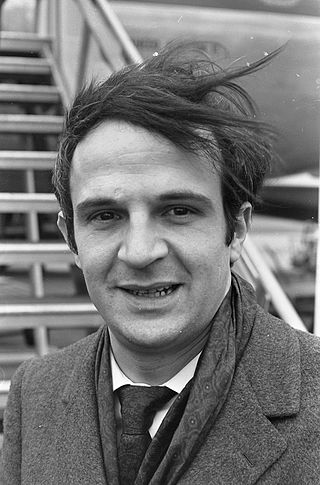
– You played François Truffaut in the film Nouvelle Vague, which I consider the best presented at the last Cannes Film Festival. How did you build this character?


Since the end of my teenage years, I have felt a special affection for the Nouvelle Vague and for François Truffaut. Even before knowing that I would portray him, I was familiar with his interviews and his writings. So I imagine something must have already seeped into me. Then, before shooting, I immersed myself again in all the archives I could find on the internet. My work consisted of finding the right balance — getting closer to his gestures, rediscovering his smile and his gaze, while still allowing my own personality to come through.

– Which Nouvelle Vague films do you love the most?


The 400 Blows remains the most important for me. It was the first one I discovered and the one I cherish the most. I watch it at least once a year. James Gray once said it has one of the most beautiful endings in cinema, and I agree with him.
Otherwise, I would also mention The Soft Skin, another Truffaut film, Pierrot le Fou by Godard, Cléo from 5 to 7 by Agnès Varda, and Elevator to the Gallows by Louis Malle.

– What projects are you currently working on?


I am preparing to shoot in the next film by Robert Guédiguian, titled Une Femme Aujourd’hui, and I will soon resume rehearsals for a play directed by Tiphaine Raffier, which will premiere in 2026 and whose theme is illness, inspired by Thomas Mann’s The Magic Mountain.

– What kind of role would you like to play in a film?


A schoolteacher or a priest.

NEW HOLLYWOOD NETWORK PROJECT (EXCLUSIVE) Interview with Olaf Lenz

Where does your desire to express yourself through art come from?

All of my life I was wondering about what is going on in this world. How can people be interested in things that are so obviously superficial? For example, why do people watch television every evening? Or why do they believe in figures who have nothing to say, if you really listen to them?
Of course it’s of no use to fall into desperation. So I had to find my way through. That’s why I made a decision for art. Maybe I would get in touch with people who have similar ideas… And I am glad to say that it led me to the discovery that the world isn’t so bad – and that people are much more likable than I’d thought before.


What are your goals as an artist?

My one goal is to achieve a better life – or to say it correctly a life worth living. And I guess that actually is a quite demanding task. Because we are so used to know everything. We assume to know the purpose of life and how to achieve happiness and such things… But that isn’t correct if you really think about it.


What is your opinion on the cultural industry?

I would say that time is running faster than ever. The contents change before you can get a clear thought on them. Maybe like in the mind of a person who can’t focus on one thing. Or you may compare it to a newsfeed. I think that is a most difficult position for us today.


Do you think independent artists today have enough opportunities to share their creativity?

It’s never easy for an artist to get recognition. But artistic ideas have a chance if the artist truly believe in them. It is an advantage of our time that i.e. the means to make a film are available for more persons than in former times.


What new project are you currently working on?

Since I started making short films I did all parts by myself. For example, if I wanted to use some guitar sounds, I played the guitar myself even though I didn’t know the notes… That’s why I want to change one or two things in my next projects, including working with other professionals.

“A Long Journey” (EXCLUSIVE) Interview with Mira Kim

Who is Mira Kim?

(Instead of a self-written statement, this is a reprint of a media article introducing Director Mira Kim)


“AI is My Creative Partner” — The AI Film Director Who Captivated the World

“AI is not simply a tool, but a creative partner and companion with infinite possibilities.”

We met with Director Mira Kim, who recently swept the top awards in the AI category at prestigious international film festivals, including the New York International Film Festival. Her representative work The Long Journey showcases a new aesthetic born from AI–human collaboration and has received critical acclaim in the global AI film industry.

Director Kim, who always loved writing, drawing, and watching films, decided later in life to study AI at university. Immersing herself in this rapidly changing field, she encountered a turning point in 2023 with the release of generative AI—where her creative spirit could soar through AI art.

“When generative AI was released to the public, it felt like being struck by lightning. I was so excited by the infinite possibilities unfolding before my eyes that my whole body trembled.”

Despite lacking technical expertise in design tools and facing early difficulties with AI platforms, she overcame challenges with pure passion. Eventually, she launched an AI-focused YouTube channel and built a considerable following.

Her experimental pursuits were widely recognized: she won awards at the Korea Expressway Corporation Contest with 2040 Future Highway: South Korea’s Green Innovation, and distinguished herself in the Ministry of Unification’s AI Art Challenge. Today, her works are exhibited in the United States and Germany.

“The competitions were both challenges and learning opportunities. Through countless setbacks, I was able to refine my creative process and develop my own unique approach.”


Achievements at Global Film Festivals

Her latest work, The Long Journey, won Best AI Film at numerous international film festivals, including:

  • New York International Film Festival (NYIFA)
  • Oneiros Film Festival
  • Symbiotic Film Festival
  • Amsterdam New Cinema Film Festival
  • Berlin Independent Film Festival
  • CineParis Film Festival
  • Rome Prisma Film Festival

The film is a deeply personal story inspired by her late father-in-law. It depicts life during the Japanese colonial period, war, and poverty—illuminating the resilience of a generation that transformed Korea into a prosperous nation.

“I wanted to express respect and awe for my parents’ generation who endured hardships and created today’s South Korea.”

Initially rejected by Korean AI film festivals, she submitted instead to international ones, motivated to share Korea’s history, language, and emotions with the world. Her persistence was rewarded with multiple awards.

“This experience reaffirmed the universal truth that ‘what is most Korean is most global.’”


Knowledge Sharing Through YouTube

Today, Mira Kim shares her expertise on her channel Fly Candy TV.

“We are at the starting point of exploring the infinite possibilities created by the combination of AI and art. My focus is on telling stories about us, about the human world, and finding ways to present them impactfully with AI.”

Her journey is far from over. The horizon of AI–human collaborative cinema continues to expand with each of her works.


Mira Kim – AI Film Director

Filmography & Achievements

  1. A Long Journey
    https://youtu.be/MWMCkTgZIKM
    • Winner of 15 awards at global AI film festivals
    • A touching family story showcasing collaboration between AI and humanity
  2. Click or Truth: The Trap of Fake News
    https://youtu.be/LF55QW85kh0
    • Awarded the EBS Broadcasting President’s Award
    • Winner of the Clean Personality Content Contest in South Korea
  3. 2040 AI-Driven Highways: South Korea’s Green Innovation
    https://youtu.be/WfV_lgHbtlM
    • Bronze Prize, Korea Expressway Corporation Contest
  4. Journey with AI in Suncheon
    https://youtu.be/n1qX6op1ybI
    • Submitted for the Suncheon City Contest, theme of coexistence between nature and AI
  5. Our Uijeongbu
    https://youtu.be/51dBSjgSjus
    • Presented at the 2024 Autumn Academic Conference of the Korean Society for Culture and Economics
  6. Luka and Cookie’s Adventure Journey
    https://youtu.be/z8BOdSQB-WQ
    • Submitted to the 2024 Yecheon AI Film Festival
    • Trailer available on YouTube
  7. Glimmer of Hope
    • Bronze Prize, Unification Art Challenge (Ministry of Unification)
    • Awarded for impactful imagery and exploration of hope in the context of unification

Interview with Mira Kim

Do you remember the exact moment you fell in love with cinema?

I was thirteen when I watched Gone with the Wind, starring Clark Gable and Vivien Leigh. That experience changed me. From then on, going to the cinema alone became one of my greatest joys.

At the time, my family was struggling financially. My father was an unknown film director and screenwriter who never gave up on his artistic dreams. We didn’t even have a television, so the cinema became my only window into stories. In old neighborhood theaters, I could watch three movies in a row for just a few coins. Looking back, I believe those experiences shaped who I am today.


Tell us about your project A Long Journey.

A Long Journey is both a family story and a meditation on Korean modern history. It portrays an 89-year-old man’s extraordinary life through the nation’s most turbulent times—from colonial occupation to post-war reconstruction.

The film’s most powerful scenes include:

  • a young father writing letters while working abroad in the desert,
  • an elderly husband refusing to send his wife with dementia to a care facility,
  • his spirit comforting her with the promise of preparing their eternal home.

Created with innovative AI, the film demonstrates how technology can serve as a partner in telling deeply human stories.


Which Director inspires you the most?

As a Korean filmmaker, I have been deeply inspired by Bong Joon-ho and Park Chan-wook. Their storytelling and bold aesthetics shaped modern Korean cinema.

Beyond Korea, I found resonance in the work of Hirokazu Kore-eda, especially in Nobody Knows.

Both Bong and Kore-eda compel us to confront uncomfortable truths:

  • Parasite visualizes the scent of class.
  • Nobody Knows voices the silence of abandonment.

These films ask us difficult but necessary questions about who we are in society.

Having grown up in a modest household, many of my stories are rooted in memory—often seen through a child’s eyes. Family, to me, is the universe from which all narratives emerge. I am drawn to quiet, human-centered stories that revisit unspoken moments and create spaces for reflection.


What do you dislike about the world, and what would you change?

What I dislike most is “a world that erases memories.”

Today’s world feels too clean, too neatly organized—stripping away the scents, sounds, wounds, and imperfections that make life real. What I long for instead is a world where traces remain:

  • where neighbors laugh together even at shameful moments,
  • where children’s laughter, church bells, and the scent of candles flow across generations,
  • where memories, even painful ones, are preserved and respected.

How do you imagine cinema in 100 years?

Cinema will evolve beyond entertainment into a tool that expands human experience. AI will democratize filmmaking, making everyone a potential creator. Real-time translation may allow all cultures to be shared freely.

Yet, no matter how much technology advances, the essence of storytelling and human emotion will remain unchanged.


What is your impression of WILD FILMMAKER?

I see WILD FILMMAKER as a space that embraces the post-cinema era—where anyone with a smartphone can create and share films. Unlike commercial magazines, it values experimental voices, emerging directors, and fields like AI filmmaking.

I sincerely hope it continues to grow as a platform that supports new talent worldwide.