“My screenplays imitate life with cinematic value added.” (EXCLUSIVE) Interview with Janet Walker

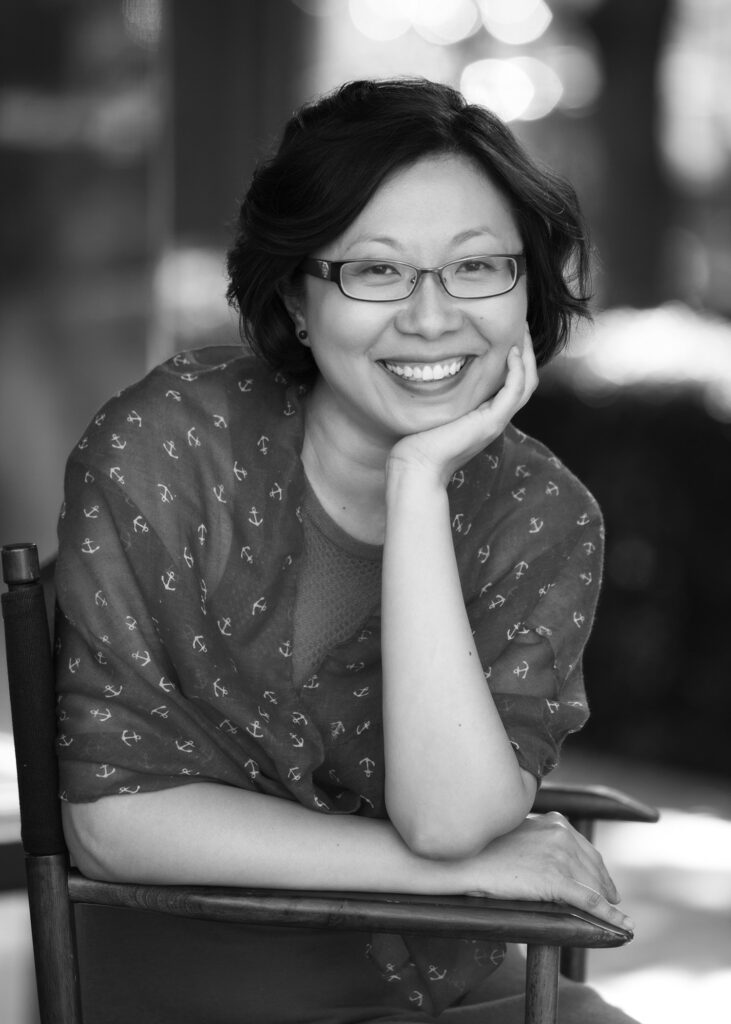
-Who is Janet Walker?

Janet is a writer, a creative, screenwriter, journalist, publisher, scholar, historian, pursuer of justice, someone who is hopeful; hopeful that through her experiences she can become a voice for change and strength, just as women throughout history who were victimized became brave, embolden, and determined to seek justice and force the system to change.

-What inspired you to become a screenwriter?

My journey to becoming a screenwriter began with my desire to be a great American novelist. For about two years I explained to my sister, Debbie Walker, that I was a writer. And finally, she explained, gently, “writer’s write.” So, my journey from pen to paper began then. For many years that followed my writing was abbreviated creative shorts, ideas that just didn’t become fully fleshed out. I decided to take a college creative writing course, which led to a journalism pursuit and where I began pursuing other writing genres, from creative writing to journalistic pursuits to poetry and journals, movie reviews, and now screenplays.

For me, the pandemic provided the missing element needed to concentrate fully on screenwriting. The lockdown allowed me to devote 100% of my time to developing an idea that had been simmering for about for a decade. I took an online class and it helped clarify the specifics of what I felt were areas of weakness.

I often joke that my first screenplay, “The Six Sides of Truth,” took 10 years and three months to complete. After that, as I felt like anyone can write one screenplay, I felt personally challenged to write a second screenplay, which is “The Wednesday Killer,” and then felt more secure in my writing, so I wrote “The Manhattan Project.”

-Do you think the cinema can bring a change in the society?

I am hopeful that my screenplays and others like it will expose those who believe they can commit violent crimes without concern over the consequence and more than simply expose, can change the system. I hope screenplays, documentaries, and true crime can all cause and create change, become the catalyst for change in the judicial system, become what investigative reporting was in the 1970s and without fear follow the story and expose individuals even to the highest levels.

My screenplays imitate life with cinematic value added. Obviously, there is not an exactness to what I write, however, I did live and work in Manhattan, and experienced victimization and severe repercussions for seeking justice which became a source of inspiration. The screenplays are my way of exposing the individuals for the heinous criminal actions and the system for its coverup.

I developed a television series “Justice Watch Investigates,” which focuses on true crimes and reexamining cold case crimes through a different lens, without bias, using advanced science, and field savvy experts may possibly bring closure to families and expose weakness in an overwhelmed system which I hope can change society.

-What would you change in the world?

That’s a big question with many answers. I would change the double standard which even for women who are educated, talented, and successful, confront. These women will tell stories of times, or seasons,

when they confronted challenges to career advancement or faced obvious discrimination. I would ensure women had a level playing field, not simply in the entertainment business but across society uniformly. So many ideas and input are lost because women are shutout and silenced. And don’t get me wrong, I’m not a feminist, I just believe in equality, equality in work, equality in justice, equality without favouritism or nepotism or other generational or learned behaviours.

-Where do you see the film industry going in the next 100 years?

That’s a great question. I suppose looking to the future means looking to the past first. 100 years ago, the film industry was in its infancy and introducing innovation that would transform silent films. With the introduction of high-tech advancement in filmmaking, CGI, animation, and IMAX-3D, in 100 years, I’m sure the developments in science, technology, and sound will create clearer, crisper, images and greater opportunities for more realistic presentation, even now, film technology companies are creating 3-D clothing software for filmmaking and digital reimaging software for archival purposes.

For the filmmaker the idea to go where no filmmaker has gone before . . . and as much as the film industry has projected the advancement of society, the truth is that I see the film industry serving audiences much in the same ways as our current cinematic opportunities.

Filmmaking may become easier, and there are young budding filmmakers all over the world sitting in darkened theatres, or watching on any device, dreaming of recreating something they’ve seen and immediately using a cell phone to record some event and creating mini-home movies.

So, where will the film industry be in 100 years? When one thinks about 100 years from now and matches that with young filmmakers who are in their 20s, 30s or 40s that’s at least half a century of filmmaking from filmmakers who have learned from those who have created culturally defining films and genres.

And one day, our most advanced and culturally significant films will be studied, which they are now, and film studies professors or experts will remark on the dated tools, which of course will be readily available and common in 100 years, that were used to create the iconic, genre defining, pictures or how these standard bearers in the industry changed the world of cinema and challenged their colleagues who challenged their pupils who felt compelled to move the bar forward. I guess the idea is everyone helps one, whether they are aware or not, each director influences someone, every screenwriter the same, and the industry evolves and advances.

“Only Eden” (EXCLUSIVE) Interview with Andrea Plamondon

Who is Andrea Plamondon?

I was not always at peace with my aptitudes. Starting out, I received
early acceptance and a full scholarship to Massachusetts College of Art
and Design, but was also told I had a voice that would land me leading
roles in the Metropolitan Opera. Since childhood, I had been involved
in the theater; a highlight of which was playing the ‘Toad’ in A.A.
Milnes’ ‘The Toad of Toad Hall’.
Finding it difficult to choose a collegiate path, I had decided to take a
year off; when an unexpected family tragedy compelled me to set off
“thumbing”, across the US, Canada, and as far north as Inuvik above
the Arctic Circle. Montreal (The Paris of the North) became a favorite
haunt, where I hung out with musicians and jugglers who frequented the
fair grounds of the nascent ‘Cirque Du Soleil’. After many adventures, I
settled in San Francisco, began training operatically, and earned a
Bachelors of Poetics from New College of California. I also fronted a
series of bands ranging from rock to Middle Eastern, and starred in a
local opera.
More recently, one of my collaborations with rapper Terblelos of Ghana
(Dreams) was awarded BWH Music Group’s ‘Best Songs of the Year
2019’, and I was selected for ‘BWH’s 2020 Women to Watch’. In 2022,
’Songs for Forever’ was released, proceeded in Dec. 2021 by the music
video, (and my first foray into film) ’Only Eden’, which has been winning
awards in IMDb qualifying film festivals internationally.


-What inspired you to become a filmmaker?

Since childhood, I have been an avid movie buff, reveling especially in
the glamour and depth of early 35 mm cinema. In 2018, I bought my
first camera, the Black Magic (16 mm) Pocket Cinema camera, a
beautiful little beast. In film, I am able to bring together all my loves;
art, music, writing, directing and acting. You really can’t ask for more
than that.

-Do you think the cinema can bring a change in society?

I think film is deeply personal for both the viewer and the creator, and
touches people on many levels. Like magic it transports to visionary
realms, yet also has the power to plumb the depths of human darkness
and despair. Indeed it is a mechanism for change, but as to what kind of
change, that may well depend upon who is behind the camera.

-What would you change in the world?

Today, we have all but lost the ability to debate controversial ideas
openly without fear of condemnation and ridicule. Perhaps film,
especially independent film, can help bridge that gap, and restore
integrity to our national and global conversation.

Where do you see the film industry going in the next 100 years?

I doubt anyone can divine the future direction of film, or of humanity,
but it does seem self evident that AI will play an important role. As to
how much of a role, that will probably depend on who controls the purse
strings. It will be a great loss if technology supplants the primary role of
‘live actors’, just as digital special effects have frequently replaced ‘good
story telling’ in many movies of recent history.

“The White Rose” (EXCLUSIVE) Interview with Christodoulos Kigmalis

-Who is Christodoulos Kigmalis?

I am a screenwriter and director from Greece with a passion for creating new worlds through writing.

I was born and raised in Athens. I come from Mytilini but for the last 10 years I have been living with my family in Corfu. I studied marketing but worked in music as a DJ and producer for 27 years. I loved music from the bottom of my soul but as a music producer I felt trapped within 7 notes. In writing I found the absolute freedom to create without limits. I’m also the father of Konstantinos.

-What inspired you to become a screenwriter?

What inspired me to become a screenwriter was more my concern for the future and the sadness from the loss of my parents. That’s how I felt the need to talk to them through writing. I would wake up at night, go out on the balcony and write down on paper what I wanted to say to them. So all this led me to write a theatrical monologue entitled “Wrong Era”. After the presentation of the monologue in a theater and the applause it received, the idea was born to turn it into a short film in which the same man who performed the monologue, Manos Bartis, stars and performs exceptionally well. I had the good fortune to work with a unique cinematographer, Nikos Psaros and an experienced sound designer, Yannis Androulakakis who gave a lot to the final result. The puzzle is completed with the multi-experienced Vasilis Kamitsis, who was a great honor to me that he agreed to participate and he is riveting with his words at the end of the film! So THE WHITE ROSE began to blossom and at this moment it has won 14 awards in the first month of its premiere at festivals in Greece, Italy, India, France, South Korea, America, Kuwait, Sri Lanka, Singapore & Belgium! And this is only the beginning, since in the space of 3 years I have written 5 scripts for feature films and a children’s fairy tale dedicated to my son!

-Do you think cinema can bring a change in society?

Of course it can. We, cinema workers ihave a duty to bring about change and to become the change we would like to see in the world through our stories.

-What would you change in the world?

If I could, I would change the bad way of thinking that leads to wrong decisions, which can prove to be disastrous for each of us and for society as a whole. Even our jealousy for something, if we work it properly in our mind, it can lead us to progress.

-Where do you see the film industry going in the next 100 years?

If the film industry in 2123 will have been affected by even 10% of the previous 100 years in the inspiration, creation and passion with which the older filmmakers worked, with the help of technology, I believe that it will be able to reach the highest level quality at all levels! This.-

“Flores Ciegas – Blind Flowers” (EXCLUSIVE) Interview with Rosa Delgado Leyva

-Who is Rosa Delgado Leyva?

Multidisciplinary artist, teacher, writer and director of cinema. She was born in Barcelona and lives in the city of El Prat de Llobregat. She grew up in her mother’s hairdresser and learned the job helping her mother on Saturdays. From the age of 18 she combines too her studies with other jobs, as stewardess. Her passion for arts, painting and photography led her to a degree in Fine Arts, specializing in photography, cinema and video at the University of Barcelona. She doctored in Audiovisual Image and is author of the cinema book “The Futuristic Screen (Méliès-Chomón)” ed. Cátedra. Madrid 2012, focusing her thesis on the futurist imaginary represented in primitive and classic cinema. She is a high school teacher of draw, audiovisuals… since 2000 and film director of two main short films, the second Blind Flowers (2022) is now circulating around festivals, and the previous one, Oh the Chacho well he knows (2017) won numerous awards and recognitions in Latin America, Cannes, Berlin, Austria…, and especially in Italy. She hopes one day can get a feature script out of the drawer.

-What inspired you to become a filmmaker?

When I was studying the second year of technical architecture in Barcelona, there was in the same building a dark room for developing black and white photography. The director of architecture asked us if we wanted to learn it. A group of students enrolled in the course. But we needed a reflex camera. It coincided that I received my first salary and I spent it entirely to buy one. I enjoyed that experience so much that I decided to change studies to Fine Arts to specialize in photography, cinema, and video. So, the origin of to become a filmmaker comes from my passion of the analogy photography in black and white.

-Do you think the cinema can bring a change in the society?

The relationship between art and society has always gone in both directions throughout history. Cinema offers the possibility of uniting, in a certain way, all the arts in a global and choral format, which makes it to have a power of communication and excite more directly and expanded to the public. The themes in cinema drink from society constantly, welcoming arguments from it and turning them again from subjective perspectives that are then interpreted freely by audience. I believe that cinema contributes to changes through these multiple individual interpretations that when they interfere together can be reflected, besides to the posterior cinema, in many other areas of humanity, such as education, the environment, immigration, the economy …, cinema can influence even music, fashion, other arts and stiles of life… They are small individual changes that, as if by contagion, are going defining the general changes in the society. And the independent cinema, here, has their own words to express, own visions since the free individual’s perspective out the frame, without the contamination of the interests of the markets that focus their investments, forcing a corseted way of creating, thought only on generating box office sales. In my opinion, the independent cinema is the most capable of changing the course of things.

-What would you change in the world?

I would change too many things. In this sense it is easy to give up out of helplessness. I value all those who strive to express themselves in this medium without help. If we don’t enter festivals everything stays at home, but we must not get frustrated, we must keep trying. There is a premise superior to everything, respect for the other, it doesn’t main wherever the person is born, whatever their family, our society must be able to give the same opportunities to everyone.

When I was a child, my teachers told me that in the past civilizations fought for territories and wealth of others, they entered wars to reach them, but all that was already part of the past, at less in occident world, because we had evolved. Apparently, they never thought, and I less that in the twenty-first century we had to revive the barbarism. I recommend you to watch the movie “Things to come” by William Cameron Menzies (London, 1936), written by H. G. Wells, if they woke up now…!!! Or pay attention to the final scene of 2001, where the protagonist character is in a bed in his last moments of live contemplating classic art in a cosmic room; perhaps our wise people of the past have something to announce to the future, seems that we have done something wrong, and for this the main character turn to born again, to bring a better world, to give another opportunity to the civilization. But we haven’t learned. So difficult is live in peace? So, I would create a world government that would be responsible for preventing any war and maintaining peace in all the planet. Surely, they were going to have a lot of work!!

Where do you see the film industry going in the next 100 years?

Cinema can unite all the diversity and multiplicity of civilizations from end to end of the world, today, thanks to new globalizing technologies. There is a barrier to break, the south cannot continue to look at the northern hemisphere as paradise, because it is not. And the North cannot continue to look at the southern hemisphere as poor submissives to an uncertain future that leads them to emigrate through seas of death following the false dreams that the northern screens sell them. I see a future where the cinema independent and territorial cinema can show their visions and individual perspectives to the world. After covid the festivals have survive thanks to online platforms, and now they try to return to alive screenings where the physical experience allows meet people again. The contact, to meet people of all parts of the planet and live this experience can’t bellow only to the elite festivals… We have a mission, to be possible people around world who make independent cinema can the option to express, meet togethers, learn one’s to the others. When the industry of music arrives to the houses by internet, alive concerts had a success explosion. With the cinema, the future will be, by one hand, the technology immersive, including touch and smell in movie theatres, this is what the industry of Hollywood I think will follow to persist. But by other hand, the future will be in the meeting festivals alive, the same has successes with the concerts. Physical events where the culture of cinema offers knowledge that foster rich relationships between people. While the commercial industry will invest to offer an increasingly immersive cinema, trying to practically copy real life, perhaps public administrations, even, will join in offering a live cinema culture with more creativity. I think the organizing members of all kinds of festivals, independent filmmakers, producers, technicians, actors, actresses…, it will play an important role in the future society. Because the path of television platforms is already conquered, it has become a video store and does not have much more to go, it will continue to live with other roads that will still walk. The humanity of the future, in my opinion, can get tired of so much individual screens and virtual world, and there will come a time when sharing real encounters will be greatly appreciated. And the opportunity to live these experiences should not belong only to the famous elite of cinema.

“Raok” (EXCLUSIVE) Interview with Anaya Kunst

Who is Anaya Kunst?

 Anaya Kunst is a timeless composer, ethereal vocalist and filmmaker passionate about elevating the human spirit through the power of music, image and the universal vibration of love and peace.

-What inspired you to become a filmmaker?

Since childhood I used to tell people that I would be a Hollywood Artist and filmmaker. My father used to make pictures and films with a Canon camera.And I was delighted to watch and to perform as an actress. In fact I did Drama School besides my education in music, lyric singing, computers, ballet dancing and Olympic gymnastics.My other field of interest is cosmo history, philosophy and galactic subjects.And one day I was filming my colleagues at Midem festival in Cannes, and they asked me why I was doing that and I simply answered: “ I am training to be a movie Director “. And it happened!

-Do you think the cinema can bring a change in the society?

Cinema is an integrated art and can change people for better or not.

Universe moves, perception of this movement and vibration in the impermanence is desirable to connect and the heart chakra shows that connection. When people watch a movie they almost live all what is  there. When people watch a movie they almost live all what is there. And Cinema for me is a powerful art to support people in change.

-What would you change in the world?

 I would love if people would develop the ability of perception of the universe and their surroundings and other people around them, so they would not be blind anymore and they would be an enlightened being living in love and sharing love. That’s what we are: Love.

-Where do you see the film industry going in the next 100 years?

With the advance of artificial intelligence and other sofisticated techs, I think it will be much easier to direct and to produce a film with lots of resources that we still not have for the moment. As the universe is infinite, so is our imagination and ability to create too. I believe that wonderful things and opportunities of creation will happen in the  next few years. What is 100 years in front of Eternity!!!

“I see the film industry becoming more independent-focused” (EXCLUSIVE) Interview with Colin Denhart

-Who is Colin Denhart?

Colin Denhart is an award-winning independent filmmaker and television producer based in
Indianapolis, Indiana, USA. His debut feature film Sister has been in film festivals worldwide
including countries such as the United States, Spain, India, Italy, and France, receiving accolades for Best Independent Film, Best Director, and Best Actress (Vasudha Krishnamoorthy)
among others. Sister is a black-and-white spiritual horror film about a nun haunted by evil
spirits and incorporates real-life haunted locations in the production. Outside of Sister (and its
sequels in post-production), Denhart has produced several short films and music videos. He
recently has delved into songwriting, collaborating with the R&B artist Shakeeda on the song
“Black Widow,” which just won the Gold Awards for Music Video and Original Song at the International Gold Awards in New York.

-What inspired you to become a filmmaker?

I have been fascinated with film and filmmaking’s creative aspects from a young age. Growing
up, my family and I watched many great movies, and I saw them as the ultimate audio-visual
medium for experiencing a narrative story. I would play with my action figures as a kid like I
was the director and the toys were my actors. When DVDs were the popular medium for
watching films, I would study the behind-the-scenes features to learn how movies are made
and listen to audio commentaries to learn the advice filmmakers and actors would give on the
audio tracks. On “future career” day in middle school, I dressed up as Steven Spielberg and
explained his film work and my desire to be a successful filmmaker just like him when I grew
up. I studied filmmaking and photography in high school and college where I developed my
artistic skills and made some of my earliest film projects, some of which won awards at student film festivals.
After graduation, I got my first job at a TV station in Indianapolis, and when I wasn’t working, I
made music videos with my close friends Jordan and Adrian for their rock band Borracho
Caddies in their garage (kind of like how Steve Jobs started out with computers). I went on to
make indie short films including a counterculture drama called “Double Cloud Nine” (2016), a
sci-fi mystery “Caïssa” (2017), a sci-fi thriller “The Girl in the White Room” (2017), and an animated short “Halloween Cat” (2018). These shorts were featured in various film festivals to
great success. Around this time, I became friends with the folk-rock band Ross Hollow and
produced several music videos for their songs. I also became reacquainted with my film
school classmate Anza, who has become an internationally successful pop singer-songwriter,
and the two of us have collaborated together on projects, and she has become one of my
closest friends.
Once I had several short films and music videos under my belt, I felt it was time to expand my
filmography to feature-length films which led to the development of my first full-length spiritual
horror film Sister, which has had more success than I could ever imagine. I was going through
a theological program at the time of writing the script for Sister in the summer of 2019, so I
incorporated some of the biblical ideas and concepts I was studying at the time into the story.
I also was undergoing the Transcendental Meditation Sidhi program at this time as well, so
the creative ideas that came about through meditation also were key in the development.
Every night in the middle of the night (I worked a late shift), I would go jogging and listen to
scary songs to put me into the appropriate mindset for writing a horror film. I also was re-
searching the haunted history of Indianapolis, such as murderous cult leader Jim Jones, serial
killer H. H. Holmes, and murder victim Sylvia Likens, and I incorporated some of the real-life
locations related to these people into the film, which proved to be quite haunting during filming, especially a ghostly experience outside Jim Jones’ former church as window curtains
were moving when no one was present in the building.
I met actress Vasudha Krishnamoorthy when casting the film and wrote the main character
Sister Jowi to better fit her Indian background. Vasudha is an incredible actress, and I enjoyed
her warm, positive presence on the set. She always would come up with creative suggestions
while filming and showed me how I can be a better director to get the best performance out of
her and the other actors. Other actors include my Freemasons Lodge brothers Matthew Davis
and Jody Fedor, local Indianapolis talent Katie Harbridge, Joshua Scantland, Jada Bueller,
and Mauricia Cortez, and most prominently, pop star Anza in the role of the deity Sophia.
We started filming at the beginning of 2020, but the COVID-19 pandemic put a halt on production for some months. We initially thought we would have to cancel production or edit what
we had already shot as just a short film or demo film, but luckily we were able to continue filming that fall once health conditions were safer. We completed principal photography in November 2020, and then I spent most of 2021 editing the film and adding special effects, with
the demon creature designed by my former high school classmate Derrick Childers who
makes props professionally in Hollywood. We shot and edited the demon sequences in a similar way to how George Lucas did the spaceship and alien effects in the original Star Wars. I
also recruited music composer Kunda Yu to score the film, and his spectacular soundtrack
definitely adds to the eeriness of the film. The film first screened in November 2021 at the
Madrid International Film Festival where it won best independent feature film and has since
performed well at film festivals around the world. Sister has been my greatest film accomplishment thus far!
Since completing Sister, I have collaborated closely with Vasudha on multiple short films and
an indie-comedy feature film currently in production called Frieda from Attica. We also have
shot a sequel to Sister and a third film, both in various stages of post-production, with talented
up-and-coming stars Andi E. and Gabrielle Bousum joining the main cast as new nun characters. They all have been an absolute pleasure to collaborate with, and I am beyond excited for
the prospects of these films and our future projects to come!


Do you think cinema can bring a change in the society?

Cinema absolutely can bring about change in society, especially in the medium’s ability to
move and reach viewers on a deeper level. A film can make audiences feel one way or another about a subject matter and influence how they perceive that subject in real life or get
them interested in exploring it further. One of my hopes with the Sister films is that they will
inspire viewers to explore the deeper spiritual themes of the series much like how The Exorcist got audiences interested in the esoteric aspects of Catholicism or Jurassic Park got audiences interested in dinosaurs. A good movie also can uplift an individual making him or her a
better person. One of the overall themes of Sister is how inner light can overcome outer darkness, and I really hope audiences take that message with them when they see the film.


What would you change in the world?

What I would change in the world is the overall state of happiness and the creative abilities of
individuals. Society is filled with too much divisiveness and hate for one another, making it difficult to solve problems or build up creative endeavors. It is necessary that we as a people
strive to uplift humanity by creating as much love and happiness as possible. In terms of the
film world, mainstream movies seem to conform too much to the trends of the time instead of
being original works. The film industry needs to focus on the independent works of creative
individuals or small groups rather than the output of big corporations/film studios (i.e. factory
filmmaking).

-Where do you see the film industry going in the next 100 years?

The film industry is constantly changing and evolving. Look back 100 years ago, and see how
far the film industry has advanced! Audiences and filmmakers in 1923 likely would never
dream movies would get to the state they are in today. Advances in filmmaking technologies
definitely have allowed low-budget independent creators the ability to make high-quality films
that used to be made only by big Hollywood studios just a few years ago. I see the film industry becoming more independent-focused with it being easier than ever for indie artists to get
their work created and shared with the world. Regardless of what happens to the film industry
over the next 100 years, I hope my close collaborators and myself are positive contributors to
the medium. I see us as part of a greater movement in the film industry to put quality feature
films in the hands of independent creatives instead of the Hollywood system. I am excited to
see where our filmography goes and what other creative indie filmmakers make as we revolutionize the concept of what filmmaking can be. The possibility are endless!

“Where Do We Go From Here” (EXCLUSIVE) Interview with Darion Trotman

-Who is Darion Trotman?

This is both a daunting and exciting question. Darion Trotman is a work in progress. He is an artist, a husband, a son, an uncle, a friend, and a brother. He is a person full of flaws, but also of great beauty. He is quiet but learning the power of his voice. He is driven by curiosity and the desire to understand himself and those who live on this earth with him. He is appalled and utterly in love with the world he lives in. Every day, I discover or rediscover something new or old about myself and the world around me. That’s what I hope to do as a filmmaker – share these findings through my films, like puzzle pieces forming and putting myself together piece by piece, film by film.

-What inspired you to become a filmmaker?

I’ve always watched films since I was a kid. I have fond memories of spending hours with my mum watching countless films of all varieties, being ensnared by the escapism of the moving frame. I followed the characters and their choices religiously. Films were my books, my great teachers about the world. I always wanted to be a storyteller in some facet, and films have been the main window through which I see that possibility.

-Do you think cinema can bring a change in society?

I believe humans and the choices we make will bring the only change in society. Films do an incredible job of highlighting a path or possibility that we could take while showing us our past mistakes and triumphs. So while I don’t believe they will specifically change society, I do believe they have great power in showing us a way to make that change we seek a reality.

-What would you change in the world?

I would change our individual comfort. I would make it so that we feel and understand the discomfort of others. Maybe then we would want to be a part of the necessary global changes to truly see peace in our time. Our desire to remain comfortable in our own lives only protects “us” and blocks us from truths right in front of our view. We need to get uncomfortable so that we can find communal well-being that we can all share and experience equally.

-Where do you see the film industry going in the next 100 years?

Film is art, and art is the archiving of the entire human experience. This is an essential element for us as a species. So, in 100 years, I still see it being an integral part of our lives, but perhaps the way in which we consume it will be different. I just hope that in 100 years, we can get away from being so worried about how much capital films will bring us over a weekend and get back to expressing ourselves, starting conversations with one another about this life through the form of cinema, and adding our individual experiences to the collective pot.

“Manifesto” (EXCLUSIVE) Interview with Elena D. Clark

-Who is Elena D. Clark?

Actress, independent filmmaker and entrepreneur. I came to the States to entertain people after I sold my law firm in Russia. I’m a winner of the “Best actress” award in Sweet Democracy Film Awards in 2023, and “Best Female Actor” in Manhattan Rep’s Stories Film Festival in 2021, both for the role of Marianne in a short film “Manifesto“. 

-What inspired you to become a filmmaker?

My objective is to share my story and historical insights, which I learned growing up in communist Russia, with the rest of the world through motion picture, so we all can learn from those who lived before. 

I’m on a mission to inform people through the film how to avoid the worst mistakes in life management and be financially free, and how the wealthiest men on our planet use their knowledge about Marxism and Communism to remain rich. 

With this, I interview people who succeeded in artistic expression and finance, on my podcast “Boost your creativity and bank account with Elena”, which is a two-time winner of the “Best Podcast” award in 8 & Halfilm Awards and Morgana Film Festival in 2023. 

-Do you think the cinema can bring a change in society?

If more people find their voice and share their stories with others with honesty, then yes. Cinema is an audio-visual tool that can stimulate the masses. Cinema shares invaluable experiences and priceless  historical lessons, whilst entertaining people at the same time.

-What would you change in the world?

My hope is to witness a true development of the free market economy, free speech, and the fundamental freedoms and rights that we are all born with.

-Where do you see the film industry going in the next 100 years?

Independent film and personalized cinematic work are becoming more popular, and more independent platforms are sharing that work. I see a segregation in the film industry versus monopolization in the film industry. Technology, increased access to high-quality cinema equipment, and education on how to make a professional film, are all factors that encourage people to express themselves, their passions and their messages through this incredibly powerful and provocative medium. 

It is my view that smaller groups of independent filmmakers will eventually take over the attention of a broad audience, because audiences will have more options and be able to join networks of independent filmmakers. Filmmakers will speak with their own voices and share real stories of ordinary people as opposed to a controlled narrative to the mainstream and made up stories about unreal heros created by Hollywood in the name of profit and power, rather than with love and passion. 

I see a greater level of honesty and diversity in the film industry, unless the global elite attempts to monopolize it. I see that more individuals will speak their truth through independent visual platforms for the good, or at least the stimulation of all. I put my heart into the work I love, with a sincere wish for the good of all, as we choose that the goodness of history repeats itself – and we learn from the rest. 

“I would make the world a kinder place” (EXCLUSIVE) Interview with Nahyr Galaz Ruiz

Who is Nahyr Galaz Ruiz? 

I am a multi-hyphenate filmmaker whose short films and scripts have been steadily causing ripples in the festival circuit. I am known for writing characters who reflect the duality in my bi-cultural experience as a Latina raised in sunny San Diego, interwoven with dramatic storylines pertaining to impossible love or family dynamics. I believe that art is the vehicle by which we convey truth and it is my mission to convey truth as I see it through my films and scripts. 

My debut feature screenplay, Dancing with Plato, achieved recognition at numerous film festivals including “Best Drama Screenplay,” “Best First Time Screenwriter,” and “Best Screenplay.” Additionally, I have received numerous awards including “Best Actress in Short,” “Best Director,” “Best First Time Director,” and “Best Student Short,” for my debut short film Everything I Never Said. My sophomore short film, El Encuentro, received “Best Original Story,” “Best Actress,” “Best Actor,” and “Best Script in Short.” My most recent film, Platonic Love, was recently submitted for this year’s round of film festivals and has already received awards for “Best Actress,” “Best Supporting Actor,” and “Best Supporting Actress.” It has also been nominated for “Best Original Score,” “Best Original Music,” and “Best Director.”

I am the recipient of the National Association of Latino Independent Producers’ Emerging Content Creators Scholarship for two consecutive years and have been one of nine writers selected for the Script Development program at the Female Eye Film Festival in Toronto 2022 and 2023.

In addition to being a filmmaker, I am also a dance educator and choreographer, and advocate of dance education. It is my calling to use storytelling and filmmaking to elevate Latinx voices and representation in every facet of the industry.

-What inspired you to become a filmmaker?

I’ve always had a heart for storytelling and I believe I was sort of born a director.  When I was little, I would rewrite fairytales with my own spin on them, especially if I didn’t find the ending to my satisfaction. My grandmother worked for a daycare facility and I would help manage the children by organizing everyone into elaborate “productions” of Beauty and the Beast and The Lion King. As I got older and I found dance, I wasn’t satisfied with simply dancing, I wanted to create my own dances. So I began experimenting with choreography as a teenager. Eventually, that led me to found a dance company and I took that experience to film. Storytelling and directing to serve the story have always been at the forefront of my artistic pursuits. 

-Do you think the cinema can bring a change in the society?

Absolutely. I believe with cinema we have a unique medium through which we can communicate with our audience. Because cinema can entertain and most people go to see films to escape, be entertained, or feel something; our audience places themselves in our hands completely open to receive. Because of this, cinema has the ability to stir emotions in the viewer, to spark thought, to catalyze a more profound relationship with the message the filmmaker wants to express.  That message, that thought, that emotion; those stay with the audience and can change society. As a filmmaker, I feel the weight of that responsibility. 

What would you change in the world?

I would make the world a kinder place. I wish for a world in which we recognize our common humanity over our differences; where the lines and borders we’ve drawn become obsolete because we recognize our shared humanity and so we want to lift each other up.I often look at how children play in a park; it doesn’t matter whether they know each other or not; they just play together, problem-solve together, and work toward something together… without ego. I wish as adults we could do that. I wish we were kinder to each other. 


-Where do you see the film industry going in the next 100 years?

I don’t know that I can accurately predict where the film industry is headed in the next 100 years. What I do know is that we’re currently at a crossroads in film. Especially in mainstream Hollywood; there is a shift happening.                    In regards to representation and inclusivity in film, while we have a long way to go, it is exciting to see more of ourselves on the screen. I’m excited to see more of my gente represented on screen; to see our stories told. To see more BIPOC people, more LGBTQIA people, more talent over 40 represented… Those stories matter. To see the industry making strides to get these stories out in the world; stories that reflect the diversity that lives in society…. that matters. Representation matters. So, I hope that these strides mean the film industry will grow to a place where inclusivity and positive representation of marginalized communities are just a given in the next 100 years!

“가인” (EXCLUSIVE) Interview with 원성호 Seongho Won

-Who is 원성호 Seongho Won?

Born in 2001, Daejeon, South Korea. the eldest of two sons of family. I’ve been holding a camera and taking pictures and videos since I couldn’t even remember. I liked this job, so I studied Visuals at Gongju National University’s Department of Visual Studies and chose cinematography as my sub major. Now I’m a 22-year-old cinematographer and director holding a pan bar and shouting, “Camera is Rolling!” I like classical music, so I listen to classical music more than watching movies and have been playing the flute for 10 years as a hobby. I won the Best short film category, best drama & arthouse film with my short film Gain.

-What inspired you to become a filmmaker?

I imagine becoming more successful in the future and becoming a cinematographer who have a request by many Hollywood directors like Roger Deakins. With that imagination, I imagine that I later get the title or nickname like Roger Deakins, or Rembrandt who uses light and shadow well. Imagining such a successful future allows me to continue making movies.

And this moment also inspires me to do a filmmaking. The experience of being able to win awards, conduct interviews, and let the world know about me allows me to continue this journey. I hope more moments like this will come.

-Do you think the cinema can bring a change in the society?

Just as books have changed the world, I believe movies can change the world.

What would you change in the world?

I want to eliminate discrimination from ignorance. Everyone deserves dignity and respect.

Where do you see the film industry going in the next 100 years?

The film industry will continue to develop. More and more great works by directors will come out. And in the future, it will become a film industry that makes immersion and representation more realistic with the development of technology.