“Luke and Oscar” (EXCLUSIVE) Interview with Antoine Priou

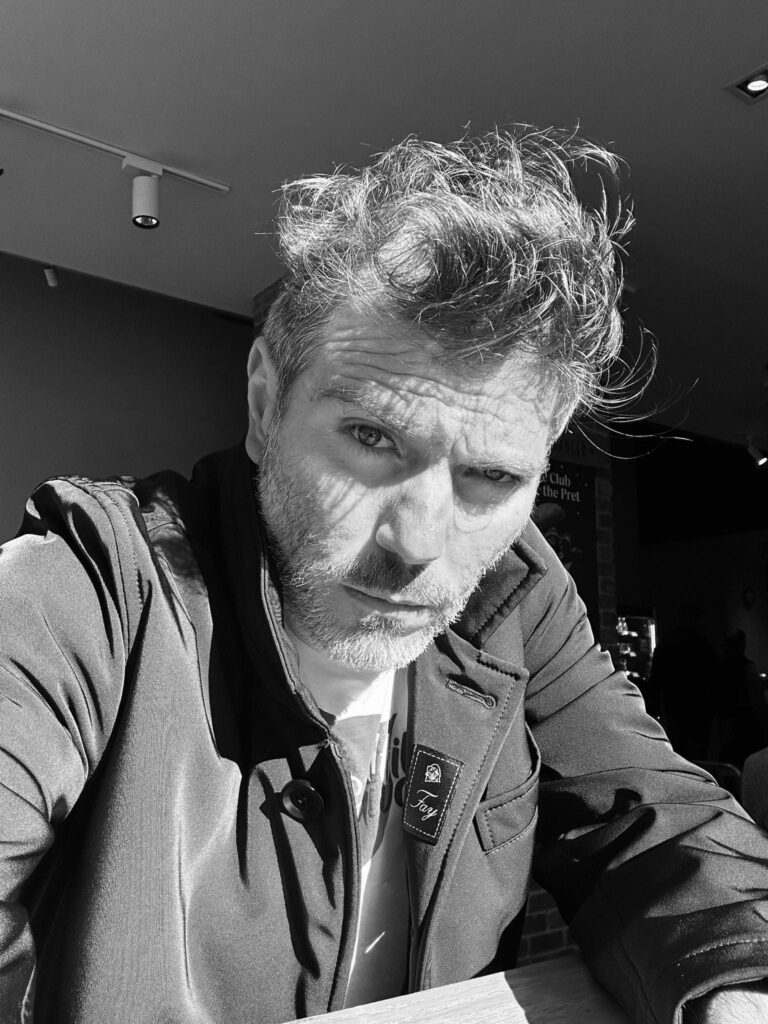
-Who is Antoine Priou?

I am a full time dreamer. I spend practically all my time in my mind imaginating things, creating worlds, stories and inventing. After studying 5 years in Paris in a filmschool studying to become an assistant director and an editor/special effect artist. I worked in a first company in Paris as an assistant director on a french tv show called “Lazy company” and worked on corporate editing projects for different kind of companies. After one year and a half, I became an assistant editor as well as an editor for a sci fi French tv show called Metal Hurlant Chronicles sold in a lot of countries in the world. It was an adaptation of the French comic book “Métal hurlant” which help to launch a lot of talented reknown such as Moebius and Alejandro Jodorowski. For the anecdote it was adapted into a magazine and an animated film in the US in the eighties. I did learn a lot during this experience as I managed a lot of different role and had to supervise a team as well.

After this massive experience I travelled to Canada for a year as I wanted to discover and get inspired by new stuff. I spent eight months in Montréal working for a production company that created mostly commercial spot videos. It gave me the opportunity to confront myself to a bilingual and multicultural environment. I moved for a short time to Toronto where I had the chance to meet so many people that wanted to help me grow and especially in this industry. I felt really lucky to see all those arms opened just wanting to give me a hand. This short travel made me move to Vancouver where I did work as an editor on an animation movie. When I met the producer the project was in part realized but had no real direction. He gave me the free opportunity to cut the movie the way I felt it and finally he was glad to see the result. That was a huge achievement for me and really I’m honored to have received it.

As a dreamer and really curious guy, alongside all these experiences I put myself into writing and learning animation especially 3d animation. I think I am the kind of guy that’s driven by challenges that’s why it took me nearly four years to learn 3d just by myself. And believe me the challenge presented itself as I did my first short film entirely by myself with the help of a great friend for the sound design and the music. I tried to present it to some festivals and the projects finally received eight selections, which was kind of crazy. I didn’t expect this kind of attention.

Beside this project I published my first book which was a poetry book called “Méli mélo poétique”. The following years I really put myself into writing trying to develop as many stories and concept as I could.

A second book was born called “Fantastic stories from here and there” (Mora-Mora editorial) published in Spain in three languages: french, spanish, english for each stories inside of the same book. It took me about three years to release it with the editors.

Since then I wanted to push the boundaries more and more and be a little more ambitious. I travelled to Mexico for few weeks where I discovered a nest of wonderful artists which gave me tons of inspirations and the crazy idea of creating my own production company. That’s where the project “Luke and Oscar” appears. It took me three months to write and storyboard it. Then the project took another three months to be realized entirely. The objective was to see that if it could be appreciated by the public and the festivals. Rich of the success that it received (at the time it has passed the 39 selections in different countries and received 46 awards like Best short film, best cartoon, best director), I am starting to develop my own structure which is called Atom Studios which is located in Paris France and soon I hope in Mexico as well. Another exciting projects are coming through in the next few months which start with a short documentary called “The Chestnut House” that already earned a great welcome and permited me to receive 3 awards. A huge documentary project is building itself and will be realized in Mexico.

-What inspired you to become a filmmaker?

Since I am a child, I have always watched all kind of movies and shows. The first shock I had being a child was to watch the Batman Animated Series who impressed me by his maturity even if it was more a child/family program. The narration of each episode was so efficient and well written. I spent my time analizing the structure of how it was built. I was always amazed to watch an episode and still now sometimes it happens that I watch one sometimes and it still dazzles me.

Maybe that were the first “symptoms” of me being attracted by animation and by this industry. Of course like any other kids I had watch most of the Walt Disney movies but the impact wasn’t as strong as it was for this series.

But the biggest cinematographic shock I received was when at the age of ten I saw Luc Besson’s “The Professional” that’s when I knew I really wanted to get into this industry. Making art would be a way to give back and transmit the feeling I had felt with these “shocks” through my movies and my stories so that people can dream, be amazed and be dragged into another dimension which could give them another sense or perspective about life.

-Do you think the cinema can bring a change in the society?

I think cinema can help bring a change into society because there are tons of subjects you can speak about and some which are kind of “taboo” and I think in that way it’s a great way of putting our society and the people in front of the problem we are going through.

Moreover the cinema is a great way of communicating emotions and maybe bring more humanity into the world we live now. With all the technologies and the way the society consume humans, I think it can help forge another perspective and maybe create a wave of change and rebellion against those models. Some films like for example “Easy Rider” reinvented something and helped see life in a different way, just living and experiencing life in all these aspects and his simple and best ways.

That kind of films have a big impact on the public and help shape new models and change mentality. I think seeing a movie is like learning a lesson that your family, your environment and even school will teach you during your life. And in that way I really think cinema can make a big difference to realize that change.

-What would you change in the world?

Probably the shaped society we lived in that controls everything and everyone. People have lost the way of what is it to accomplish a dream and I am not sure what the word “dream” means no more for a majority of people in the world. The other is building things that matter not just for the society but for everyone we cruelly missed that. You ask someone what he wants it will probably tell you being famous, have a lot of money and be an icon or what so ever. But in a lot of cases you don’t hear the word passion, love, excitement, humanity. So this is time we recover a bit of our humanity.

-Where do you see the film industry going in the next 100 years?

The film industry will keep reinventing itself by all means. But the way I see it with all the superheroes movies that are invading the cinemas these days and in the future. I think people will be tired and the industry will be gain by some sort of nostalgia. I’m not saying it will go backward but it will be nourish by old and traditional way of making movies. You can see now some big filmmakers like Martin Scorsese or Christopher Nolan complaining about the model used by Hollywood and the merchandising that’s gaining the film industry which in my opinion is quite sad. Cinema is an object of debate and entertainment so why not continuing combine them.

Another new model could be use with technologies is using avatar models of ancient actors to play in movies, like they did on one Star Wars movies. So that would the appearance or even the resurrection of old famous actors digitalized. The subject is quite used and well explained in the movie Ari Folman’s“The Congress” which tells the story of an actress that let the studios use her digital image to make a movie. Maybe that will be a way of making movies in the future. I don’t know if it will succeed but it’s a possibility.

“Dojo” (EXCLUSIVE) Interview with Jon Paul

-Who is Jon Paul? 

Jon Paul is an elite martial artist and filmmaker who enjoys the process of performance and creativity. He is a two-time Judo national champion, a Bronze Pan-American medalist, and a two-time world team member for USA Judo. He found passion for film and storytelling during his time training and competing in Judo while traveling to many international countries such as Japan, China, Korea, Germany, Italy, and Morocco to name a few countries. He is currently working on his next film project, which is a feature film to cover the full story of our short film “Dojo” in greater depth.

-What inspired you to become a filmmaker?

What inspired me to become a filmmaker was being able to write down and express my ideas of different stories through filmmaking. Many of my creativeness came from traveling and competing throughout the world, staying in many places and learning about different cultures, about different people, with their many different backgrounds and stories, and learning my own story with my own raw experiences throughout the way.

-Do you think the cinema can bring a change in society?

Yes, cinema can most definitely change society in many ways through expression of ideas and messages. Film has a way to capture what emotions our audience is relating to at the time they watch a particular film as well as learn the complexity of open interpretation when it comes to storytelling and filmmaking.

-What would you change in the world?

I would change how people see how everything is approached and for people to be open minded when it comes to perception and reality. 

-Where do you see the film industry going in the next 100 years?

I see the film industry having both those who want to continue with original filmmaking, with pure storytelling, and no CGI effects or very minimal and I see the otherside of the film industry where everything is used with CGI and AI has taken many roles when it comes to filmmaking.

“Laid to Rest” (EXCLUSIVE) Interview with Isabelle Pandora Byrne

Who is Isabelle Pandora Byrne?

I am a published poet and mixed media artist from Manchester, U.K. My work focuses upon ruined identity and mental illness recovery. 

-What inspired you to become a filmmaker?

My writing is what inspires my films. I started writing when my mental health declined I began to write about my experiences of hospitalisation and my experience of electro convulsive therapy at aged 26. Last year at aged 29 I had my debut poetry collection published and began combining my love for film to create visual poetry. 

As many people I found validation in the alternative narrative international film and art house cinema has always explored. The French new wave, the  nihilist nature that is explored and the everyday ideology it questioned. I was so invested in film being a way to see the world as someone else and made the ugly parts of life tolerable. That film taught me how to be comfortable with being uncomfortable. It became a tool to question my social conditioning and to distant myself from the discord of what I was and what I shouldn’t be. I, like many other artist are constantly looking for answers wether it be in art, music, literature or film. We begin to align ourselves with the freedom of a creative brain, a brain that needs to be fed with possibilities of what could be different and holds the power of being an observer. It brings a feeling of control to our own lives and stories. 

-Do you think the cinema can bring a change in the society?

I think cinema has already changed society so much so that it has and still is used as a tool to change the norm. Cinema has on so many occasions changed the way we see, it has the power to question, it has the power to alter the narrative, to highlight areas of everyday life that are bound in subjectivity. That the more diverse our societies have become can very much be seen within the art world. A place where normality and reality is bent and moulded into something more fitting as the world around us expands. That human right movements have long used the medium of film to express the inadequacy and the areas shadowed in outdated ways. 

-What would you change in the world?

Freedom of expression should be celebrated and protected. That equality comes from listening and learning from others. That film has the power to transform every viewer into an empath to those you have never met and may never meet. Film has the power to turn our gaze and alter our perspective in such a powerful way. Someone of the artist I find most inspiring are those who deal with the taboo and darker sides of life. I hope that my work can offer an alternative vision on societal issues, identity crisis and mental health. The stigma around mental illness it’s past, present and future and how those in recovery see themselves.

-Where do you see the film industry going in the next 100 years?

I hope film continues to be used as a tool to bring positive change, to continue to diversify and expand the voices it gives power to. That freedom should always win over censorship. Film needs to be protected as a form of expression and an important way of challenging what we know to be true. 

“A good film can reach deep and illuminate in ways no other medium can” (EXCLUSIVE) Interview with Clarke Stallworth

-Who is Clarke Stallworth?

I have always identified as a maker, using my hands since childhood to make and fashion all kinds of things. I am a photographer and cinematographer thanks to my father, and a writer and storyteller thanks to my mother. I understand cinema thanks to both. I am a beekeeper. I am a lifelong progressive focused on justice. I am an environmentalist who wants to see the Earth survive. I am a teacher and mentor. But, most importantly, I am a brother, uncle, and husband. I am a father to my amazing nine-year-old son.

-What inspired you to become a filmmaker?

I have been making short films since childhood and had always dreamed of being involved in big budget filmmaking. Even though life choices led me in other directions, film, cinematography, and modelmaking remained important to my artistic frame, and to my understanding of narrative. This identified how I thought of artistic expression generally. My parents educated my sister and I indirectly through immersion in Depression era black and white filmmaking, as well as the Hollywood Golden Age classics of the late thirties and forties. Growing up, we spent most of our time together in the theatre, watching the great American films of the 20th Century. This was my film school.

Though I consider myself a digital animator today, it is the language of film that defines how I see story, character, composition, color, and light. I am far more versed in the language and conventions of live-action filmmaking, and of the visual effects that populate those films (what I teach), than I am in the history and technique of historical animation. Consequently, my work is influenced more by the likes of Deakins and Trumbull, than Landreth, Miyazaki or Disney. I am inspired by the works of directors around the world, but most especially Kubrick, Kazan, Spielberg, and Mann, as well as Villeneuve, Denis, Bigelow, and Nolan.

-Do you think the cinema can bring a change in the society?

Movies most certainly can and have helped to change societies for the better. Given human reliance on sight and hearing, a skillfully produced film has the potential to reach someone on a level beyond what the written word may be capable of. Films can transport the viewer to a place of empathy and understanding, connecting on an emotional level. A good film can reach deep and illuminate in ways no other medium can. Film history is replete with examples of this, including influential and powerful films like The Grapes of Wrath, An Inconvenient Truth, Philadelphia, Hotel Rwanda, Schindler’s List, Bowling for Columbine, Norma Rae, The White Tiger, and Do the Right Thing. These films made a difference, and many other less high-profile films from around the world did as well.

-What would you change in the world?

I would break the grip that corporations have on democracy. Mindless corporate greed can be traced to most of the ills of the Earth, and until their behaviour is truly regulated and controlled, a more just world will remain out of reach.

-Where do you see the film industry going in the next 100 years?

My hope is that cinema will incorporate new technologies as they emerge, pushing the quality and capabilities of the film medium farther. This has happened with the transition away from physical film to digital cinematography, as well as with the development of photorealistic visual effects. My fear, of course, is that AI, and unrestrained use of automated techniques, will result in the abandonment of the craft and artistry of filmmaking.

“Grab and Go” (EXCLUSIVE) Interview with Janna Jones

-Who is Janna Jones?

I am a professor, a writer, and an equestrian. I have been been a professor of communication and film for many years. I teach screenwriting, which is really how I learned how to write screenplays. I write books, essays, and screenplays. I have published three books about art and culture, dozens of essays and about film, architecture and design, and nine screenplays. My screenplays have won more than 90 awards in the last two years. One of my screenplays is in post production right now, and another one will be going into preproduction soon. I am also an equestrian. I spend time with my horses and mule everyday. They keep me grounded, strong, and healthy. 

-What inspired you to become a screenwriter?

I was a film scholar long before I started screenwriting. I had already published two books and many essays about film culture before it occured to me that I could write screenplays. I believe having such a background has been quite helpful for my screenplay writing. My most recent scripts, Grab and Go and Dump It feature a profoundly autistic main character. This main character is based on a real person, Danny, a son of one of my dearest friends. I am excited about these scripts because I have been able to channel his energies and translate how he makes sense of his world. I believe I can bring his world to the screen. This representation is an important step for the autistic community. It also makes Danny’s family very happy!

-Do you think the cinema can bring a change in the society?

Cinema has changed society in a million different ways, both good and bad. As a film scholar, I could spend the next month explaining this! But let’s just say for now, yes, it has reinforced debilitating stereotypes for women and minorities. But it also has the power to reverse those stereotypes. It has changed the way we spend our leisure time, and I suspect it has even changed the way we make sense of our dreams at night. It has also changed the way we understand history–particularly the twentieth century. My book The Past is a Moving Picture: Preserving the Twentieth Century on Film goes into great detail about how cinema shapes our understanding of the past. 

-What would you change in the world?

I would love it if people could accept the realities of climate change and change their habits accordingly. 

-Where do you see the film industry going in the next 100 years?

The platforms will necessarily change, as culture changes. Each big shift will bring about anxiety and concern that cinema is dying. But I don’t believe it will. As a historian of the twentieth century, I have written and taught about the various stages of cinematic culture. Each one is significant and meaningful, but each stage passes, as society changes. But this is the great thing about cinema, it can adapt and shift along with our culture. 

“Chat Room” (EXCLUSIVE) Interview with Sabrina Monno

-Who is Sabrina Monno?

That’s quite a question. I’m just a curious girl from south Italy (Puglia). I am an observer, trying to capture all the nuances of reality. reality is the greatest film we will ever see. That is why I am constantly trying to create projects that can reflect it.

-What Inspired you to become a filmmaker?

Cinema has always been a staple in the family. However, when I think of cinema, a specific moment always comes to mind. I was lucky enough to have a teacher in elementary school who never considered children too young to discover certain things. Thanks to her I saw Rome, Open City for the first time. At that moment I felt like I was inside a romantic comedy, at the instant when the protagonist meets her great love.

-Do you think that cinema can bring a change in the society?

Yes, cinema could change society. Multimedia is the most powerful tool we have nowadays. For better or worse, cinema can influence the masses like few other art forms. In order to effect real change, however, cinema, which is part of society, would almost have to detach itself from it. Detach itself in order to have a complete and objective overview. In this way, cinema could really give viewers a unique view of what surrounds us and perhaps, thus it could push people to change their lives and society itself.

-What would you change in the world?

I would try to get people to listen to each other more. Today we are all absorbed in our personal commitments or our ghosts. At the same time, we impose on ourselves to show others the best and winning version of ourselves. I would probably invite people to wear a sign that says “look closer” like the well-known sign that appears in the movie American Beauty.

-Where do you see the film industry going in the next 100 years?

Tough question. Cinema is changing fast, sometimes with blind haste. The only common thread remains the desire to tell stories. Probably in 100 years cinema will no longer be seen as an experience related to sharing. I am particularly referring to the experience of the movie theater. There will be more technologies, some roles may be replaced by special softwares. In this more technological and, perhaps, more lonely future, I hope that that famous red thread will always remain: let’s remember that we are here to tell stories and to create closeness between us human beings.

“My artistic goal is to create the most profound possible piece of Art that can bring the audience a meaningful experience” (EXCLUSIVE) Interview with Arild Remmereit

Who is Arild Remmereit?

Growing up in Norway, my life has from I was very little been about the Arts; studying piano from age six; having a singing career as a boy soprano; playing the trumpet; performing in children Theatres; being allowed to buy myself an electric guitar at around 12 years old; playing keyboards in rock and jazz bands; studying music, singing, piano, composition…basically everything, also sports; performing in musicals and opera; assisting Leonard Bernstein in Vienna at the very end of his life, where everything he did became a film. I assisted both Lennie and the film Director, Humpfrey Burton on several concert films; participated, acted as an extra, observed during the making of Adrian Flicker’s film, “Halbe Welt” in Vienna, where I lived for 24 years. 

From then on I was fully occupied following a career as a music conductor of orchestras and Opera companies around the world.

Twelve years ago I became father for the first and only time. This changed my life entirely, to the better, of course:) Travelling, which had happened together with my wife, was now on my own. I lost the spirit of pursuing the conductor jet setting life stile, and engaged in my sincere love for film. Over the last decade I made several Documentary films. Over the last six years I have completed my first feature film, COMMONHEART. From a childish mind.

-What inspired you to become a filmmaker?

Being passionate about several Art forms, I always had a special love for film. Only during the last decade have I found time to commit myself, engaging more profoundly in the film making process.

-Do you think the cinema can bring a change in the society?

Artistic expression in its deepest and most ideal shape can through the Art form Cinema be immensely powerful.

My artistic goal is always the same, as a musician, composer, conductor or a filmmaker; to create the most profound possible piece of Art that can bring the audience a meaningful experience, ideally to improve their world, our world, the world…

COMMONHEART. From a Childish Mind is a very personal film. Becoming a father is an important aspect of it. Having enjoyed my childhood in and around wild nature it became important for me that our son should be allowed to get a nature bound upbringing too. Then I observed, having returned- much for this purpose- to where I grew up on the Western Norwegian countryside after 36 years away, that children were not using our incredible nature as a playground anymore. It was only my son and I out there. People have in many ways lost their natural bound to nature. 

And here we are at the very essence of the film. There used to be a connection which is so fundamental on a deeper philosophical basis in understanding -or at least feeling- our place as a part of nature, and we seem to be moving away from it…There was a connection which isn’t there anymore. 

The child’s voice at the very beginning of the film says:”There was a time when Mother Earth hummed children to sleep.” and ” There came a time when the people didn’t hear the song anymore”… We have moved away from listening to our planet and what is fundamentally natural. 

The wild nature just outside our door is a perfect set for filmmaking.

-What would you change in the world?

We urgently need to change our habit of destroying the source of life, to start living with nature instead of against it. My film introduces as an example the hope of “animal rights”. This is something existing only on a philosophical level, if at all. When we think about rights for animals, it is only on a religious level, or seen from a perspective of human needs. Never “animal needs”.

-Where do you see the film industry going in the next 100 years?

The technical development would lead me to fantasies about images being reproduced in more dimensions. The world as we know it has three dimensions of space—length, width and depth—and one dimension of time, but it seems to be more dimensions out there to discover. String Theory counts so far 10 dimensions in our universe. Anyhow, the need for profound artistic experiences will always- and more and more so- be important.

“Company of Prophets” (EXCLUSIVE) Interview with Malcolm Carter

Who is Malcolm Carter?

I’m a filmmaker. I write, direct, produce, and edit films. Company of Prophets, my first feature film is currently on the festival circuit.  Myself, the cast and crew have been very blessed to have our premiere of both Company of Prophets and My Sci Fi Short film Sleepers premiere at the historic Chinese theatre, as well as being nominated and winning awards in numerous film festivals across the globe.

-What inspired you to become a filmmaker?

Sitting in a large theatre with the lights down and being transported into another world and I absolutely love it! And I hope I can transport others into another world with my films. This is the catalyst of everything I do in the film industry, full stop.

-Do you think the cinema can bring a change in the society?

Absolutely! Cinema can change society. We’ve seen cinema do it throughout its illustrious history. From socially conscious movies to politically charged movies have moved groups, even great individuals to spark change for the better. As long as filmmakers are allowed to speak on subjects that need a spotlight on, we shall always have cinema that can change the world for the better.

-What would you change in the world?

Love, hope, faith and patience. These 4 principles are what we definitely need a lot more of in the world, in my humble opinion. I know it will be difficult but damn, how much better off would this place be if everyone was at even 75% of these principals?

-Where do you see the film industry going in the next 100 years? 

Unfortunately, I don’t see a big golden age type  of explosion in the next 100 years like some have predicted. Yet, I do see a “Broadway-like” experience in the cinemas for the next 100 years. I think the film industry can be more concentrated, that each cinema experience can be an event, not necessarily a blockbuster movie experience but almost a spiritual, close-knit family, welcoming connection for those that have an absolute love and passion for film, movies and cinema. And I’d love it! Those are the types of stories and movies I’m trying to create.

“Our Triumphant Holy Day” (EXCLUSIVE) Interview with Greg Di Roma

-Who is Greg Di Roma?

Greg Di Roma is an American filmmaker, amateur hockey player and church ministry leader from Peekskill, NY. He is known for his cinema verite style films and videos most especially, Our Triumphant Holy Day. Greg has many passions and is always integrating them together in some sort of way with his films, from hockey to faith to music and so forth.

-What inspired you to become a filmmaker?

When I was in college, I decided to explore digital arts, graphic designing, web design, video editing, animation etc. I was into graphic design more than anything else and a lot of times I was making a lot of things inspired by movies. During my first semester at SUNY Purchase I took a screenwriting class and that was a huge inspiration for me to start going into film, then that summer I got an internship at this digital arts school called the Digital Arts Experience and we did a lot of video production there and that’s when I realized I wanted to go into film. I was also watching a lot of movies that summer and that made want to go into it even more. Eventually I ended up going to film school at Pace University and that was just an amazing program, it taught me so much about production and gave me opportunities to create a lot of projects, most especially a documentary going into Cuba. The film we created is titled, Cuba’s Crossroads: Hope, Rock and Revolution.

-Do you think the cinema can bring a change in the society?

I think it brings a lot of change as it is. There’s a lot of films that inspire many different things, from the way we view society to technology etc.

What would you change in the world?

Haha, a lot of things. The way we treat each other and our outlooks on life. Also the way we use our resources and take care of the planet. I would also make sure people have a better chance at getting opportunities of any sort. Everyone is trying to find their niche, and it’s only gotten harder for people to figure out what that is. Everyone needs a chance to find their purpose in life.

Where do you see the film industry going in the next 100 years?

It’s tough to say, God knows what kind of technology will be developed in the next century. A.I. is going to do a lot, that’s for sure. With that and a lot of the technology developed, I think a lot more of us will be making movies especially in the comfort of our own homes. A lot of us have more tools at our disposal as it is, so many of us are content creators, there’s going to be so many more films out there like there are now. Indie film along with streaming is growing, I think the industry is going to make a more equal platform for everyone to showcase themselves. The new media is continuing on the rise, there’s going to be a new Hollywood out there, what exactly that’ll be remains to be seen.

“Fallen: The Search of A Broken Angel” (EXCLUSIVE) Interview with Alex Kruz & Christalo Castro

-Who is Christalo Castro?

Christalo Castro: I am just a guy trying to make God proud.

-Who is Alex Kruz?

Alex Kruz: I read this and just shook my head, and said – how characteristically Talo. The lead actor often sets the tone of the film, it’s who you watch from beginning to end. It’s the reason why you grow close to a show and stop watching when they leave. 

I knew I had to pick someone for it who was NOT an actor! This process for all of us was going to be a physical journey, a spiritual journey, and an artistic journey. I needed a fighter, someone who was physical enough to take the art to another level. Someone who was afraid of nothing, like me, and like his answer, it is simple like a ring, but infinite like the night. 

In this time period of #METOO, I have to say my relationship with Talo was completely physical before we started this project. In one of my many down and out periods, when I left with nothing but the shirt on my back I ended up living in the same building as Talo and seeing him training for fights, I would train with him. I had the pleasure of training in many parts of the world, and getting my nose busted so many times even my twin flame Ewa had to get a nose operation to breathe clearly! (Lost track at #37) You could say our training was unorthodox, but that’s who I was as well. Get it done, think outside of the box, keep moving, keep fighting. 

Also you can call this crazy, but once you get to a certain level in your own self-knowledge you begin to see past the layers in others. Talo I saw had actually studied acting before in his last life, lived in New York City and was a starving artist who didn’t do anything with it. I don’t believe in accidents. He was reluctant AF, but I fed him well, gave him the occasional mojito/margarita, let him go to his fight training while we were on travel, and we were in business. We had the perfect lead for the project. 

-What inspired you to become an actor?

Christalo Castro: I guess I always wanted to be “a creative”. Growing up I would watch a lot of YouTube, so that made me think of different ways of telling a story in different mediums. I was also really into things that sparked my imagination, like Zelda, anime, and comics. So I’ve always enjoyed things that were kind of otherworldly. What inspired me to be an entrepreneur is the fact my brain just works differently than most people; not better, just differently. I’ve always thought I was competent enough to pave my own paths and I prefer to do my own thing. 

-What inspired you to become a Filmmaker?

Alex Kruz:  He totally did his own thing! In some scenes his own thing was brilliant! For which he doesn’t give himself credit for. With that boundless energy of wanting to do many things at once, he would get lost while we were traveling, at one point he didn’t want to be an actor any more, at another he didn’t want to learn his lines. I literally had to tell him I would send his ass back on a plane, and hire this other actor who looked like him but could barely string together sentences to play the rest of his scenes! If I told him to climb a mountain, or run back and forth that was easy, but Talo is very much his own person – like a James Dean or a Marlon Brando. Courageous, fearless, but not a dancing monkey. I respect that fire.

-Do you think the cinema can bring a change in society?

Actor – Christalo Castro: Cinema in the long-form movie sense has changed society. It affected pop culture significantly throughout the 20th century. I love film because it is an art that builds on itself. There’s nothing quite like it in that sense. We look at something that was shocking in 1960 is now commonplace in today’s moviescape. I am starting to see the decline in people wanting to watch movies. I think it is starting to take something special to make someone want to go out and watch a movie since we now have all these streaming services and other methods of keeping ourselves entertained. Long-format movies have changed society a lot, but I think it is starting to dwindle in its effectiveness. 

Director – Alex Kruz: I like this about Christalo, he always has one foot here and another in timelessness and pulse of change.

-What would you change in the world?

Actor – Christalo Castro: The school system. It’s made to brainwash and design worker ants. There’s no emphasis on critical thinking. 

Director – Alex Kruz: I forgot to mention, Talo was in school while we were shooting. He had me write him a Dear Sally Teacher letter, I’m stealing your student for three weeks please don’t fail him letter. Anyway having 3 masters and a doctorate I have to agree with him. 

-Where do you see the film industry going in the next 100 years?

Actor – Christalo Castro: I think it is dying. I don’t see much innovation. In a lot of ways that’s why I respect what our director was trying to do with this film. He was trying to make something different, that wasn’t so standard. How many times can someone play the same song on repeat and we still clap with the same excitement? I think that short-form content is the future. However, there is a lot that can be done in terms of shows and the medium of telling a story. I think that that will be very promising for a while. But 100 years from now the content will be extremely short and attention-grabbing to get the most attention for the least effort. 

Director – Alex Kruz: He might be onto something – attention span. It’s getting smaller and smaller in our fast food convenience society. Even in the military we use the 8 second and 18 minute rules for presentations.