On Friday, June 16, Giuseppe Verdi’s “Aida” premiere was held at the Arena di Verona, the city that theater lovers remember for the tragedy “Romeo and Juliet”, the immortal masterpiece by William Shakespeare.
The show opened the season that celebrates the 100th anniversary of the most prestigious opera festival in the world.
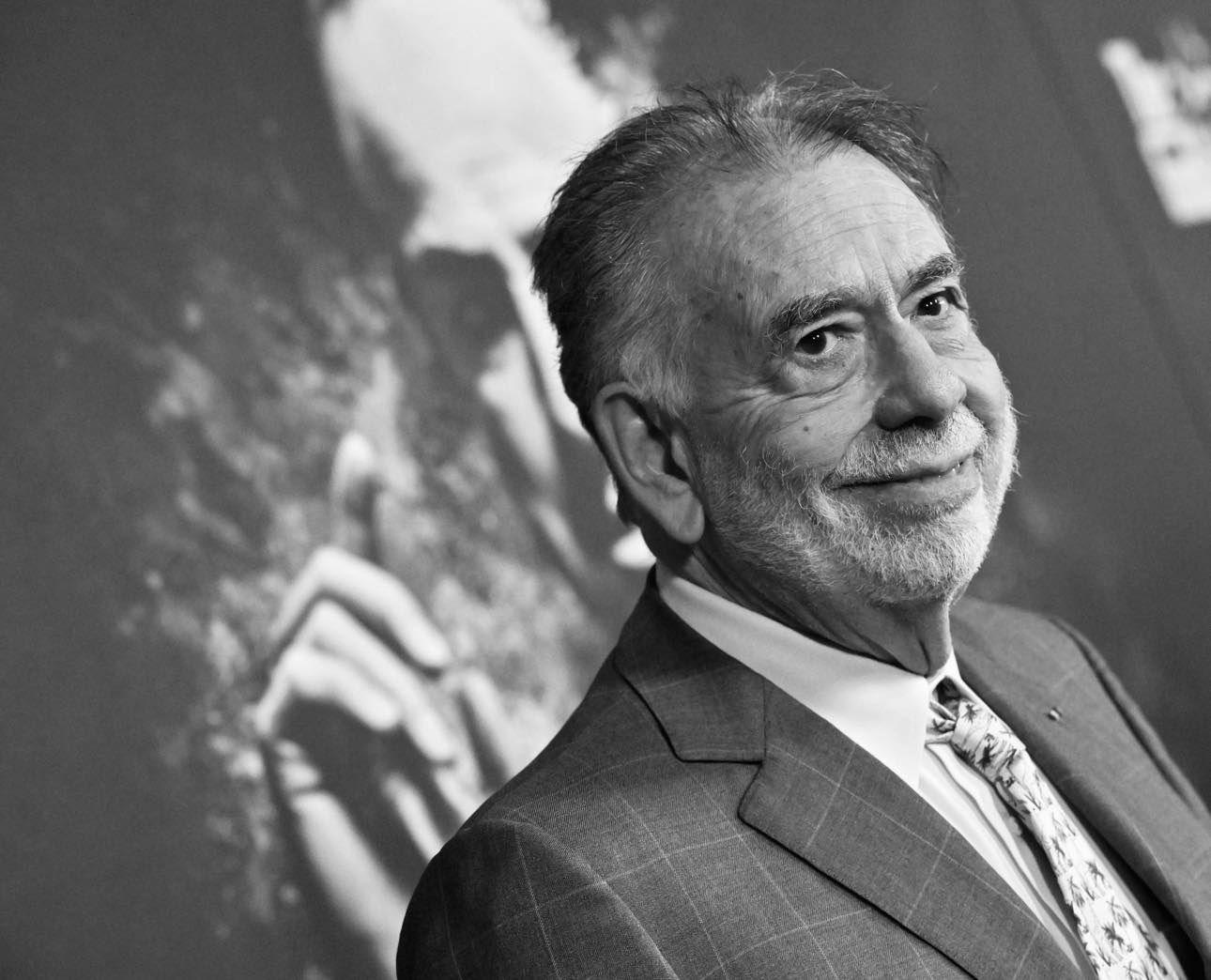
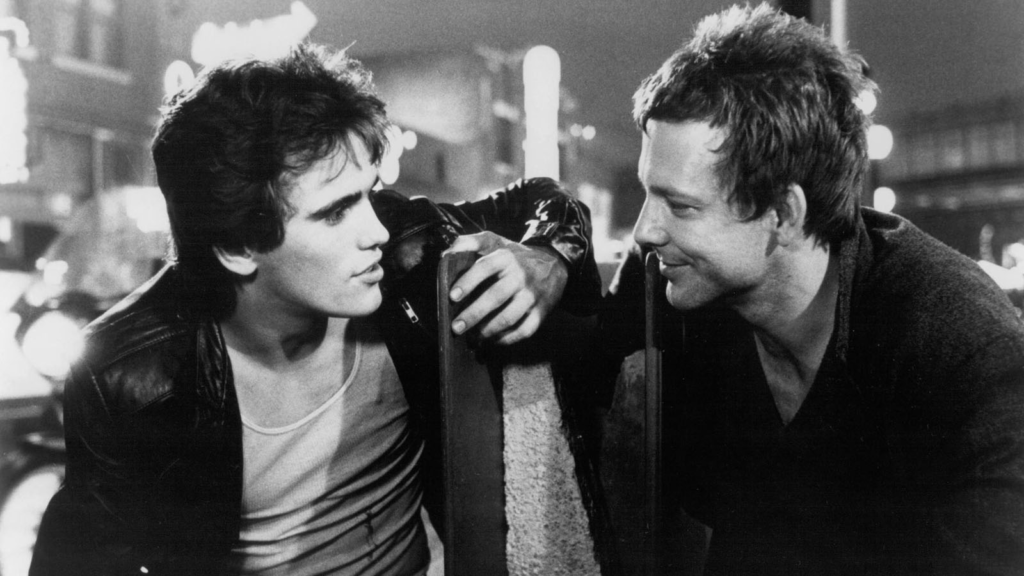
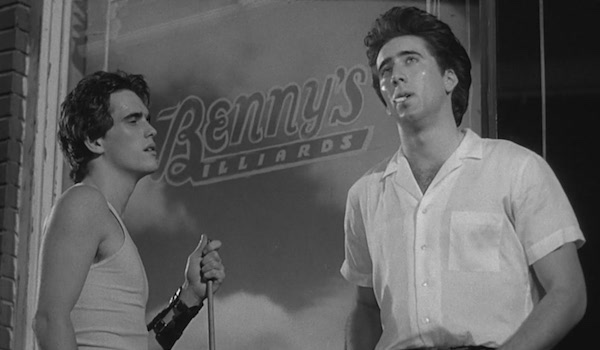
Among the audience were the Oscar-winning Sofia Loren, also the godmother of the evening, and Matt Dillon, the main character of “Rumble Fish” directed by Francis Ford Coppola, to which WILD FILMMAKER, in collaboration with Christopher Coppola, will dedicate a Webinar.
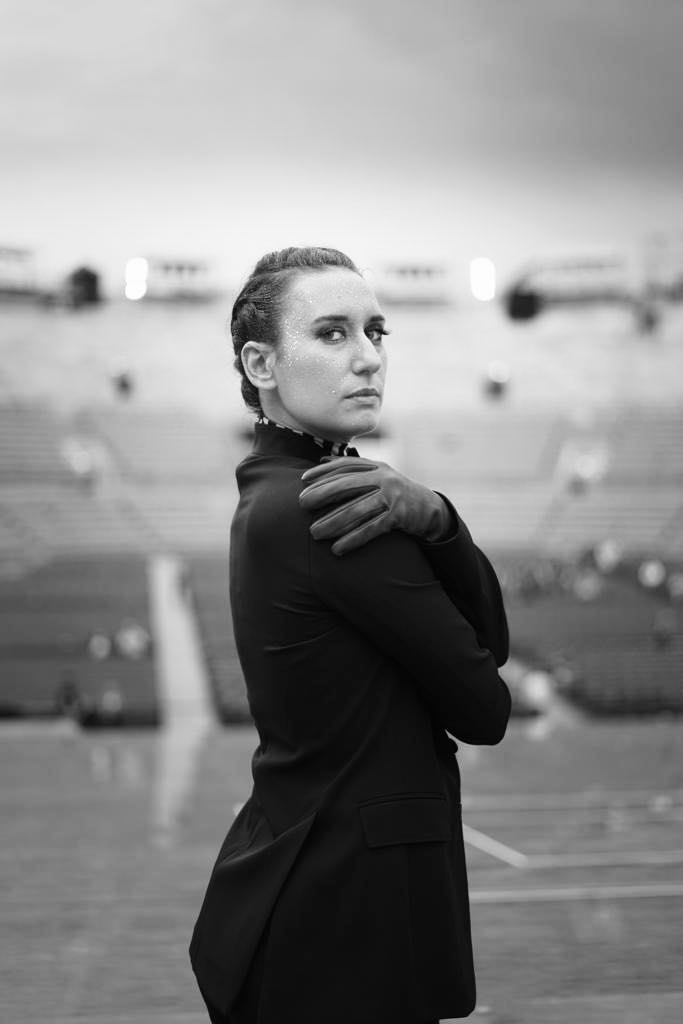
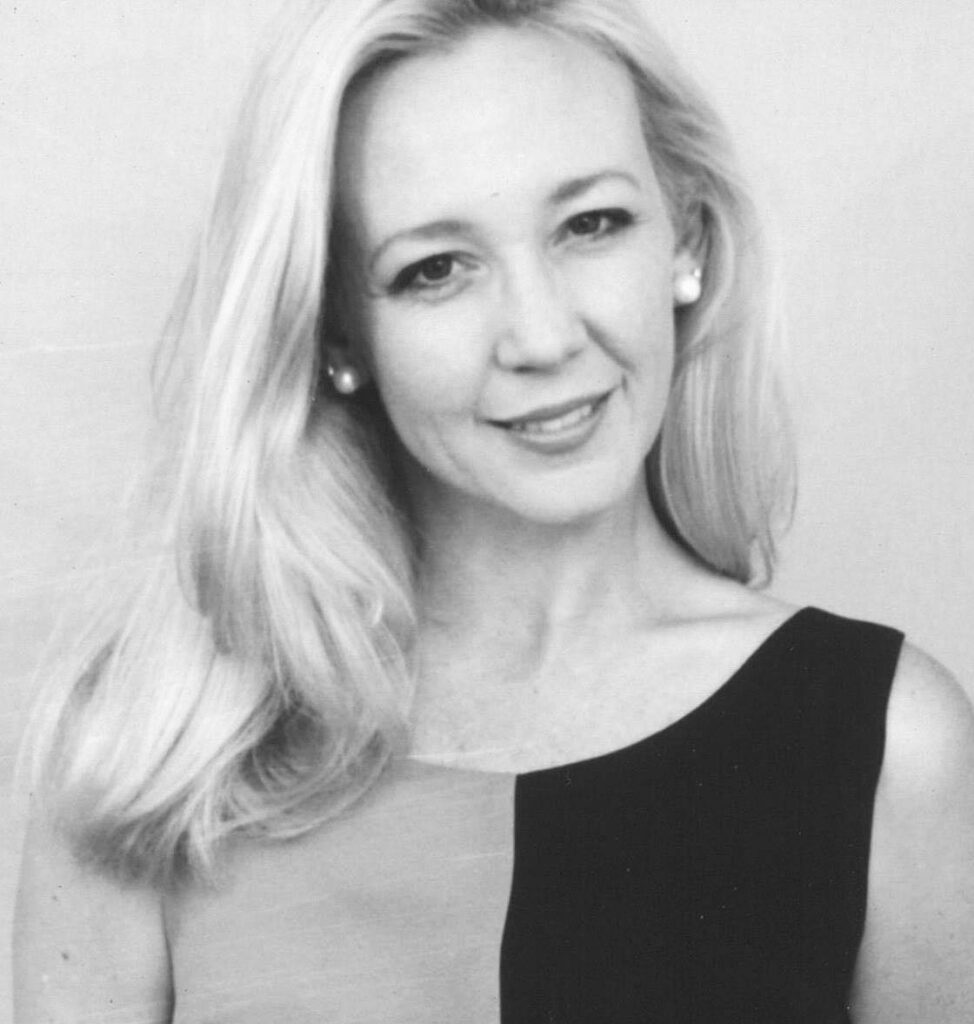
Anna Laura Miszerak, the production assistant of WILD FILMMAKER, has dedicated herself to dance and opera and performed at the premiere of the Arena of Verona, which compared to sports, is like for a basketball player to play in the NBA.
In two words, the great Orson had grasped the deep meaning of Fellini’s art. Cinema can be a dance and the steps are made of editing.
Therefore, we are proud to have an artist like Anna Laura Miszerak in the WILD FILMMAKER Team, who has created a perfect symbiosis between dance, opera and our innovative way of storytelling and making cinema.All this confirms the philosophy adopted by WILD FILMMAKER, namely that to change the present, it is necessary to know the past sincerely.
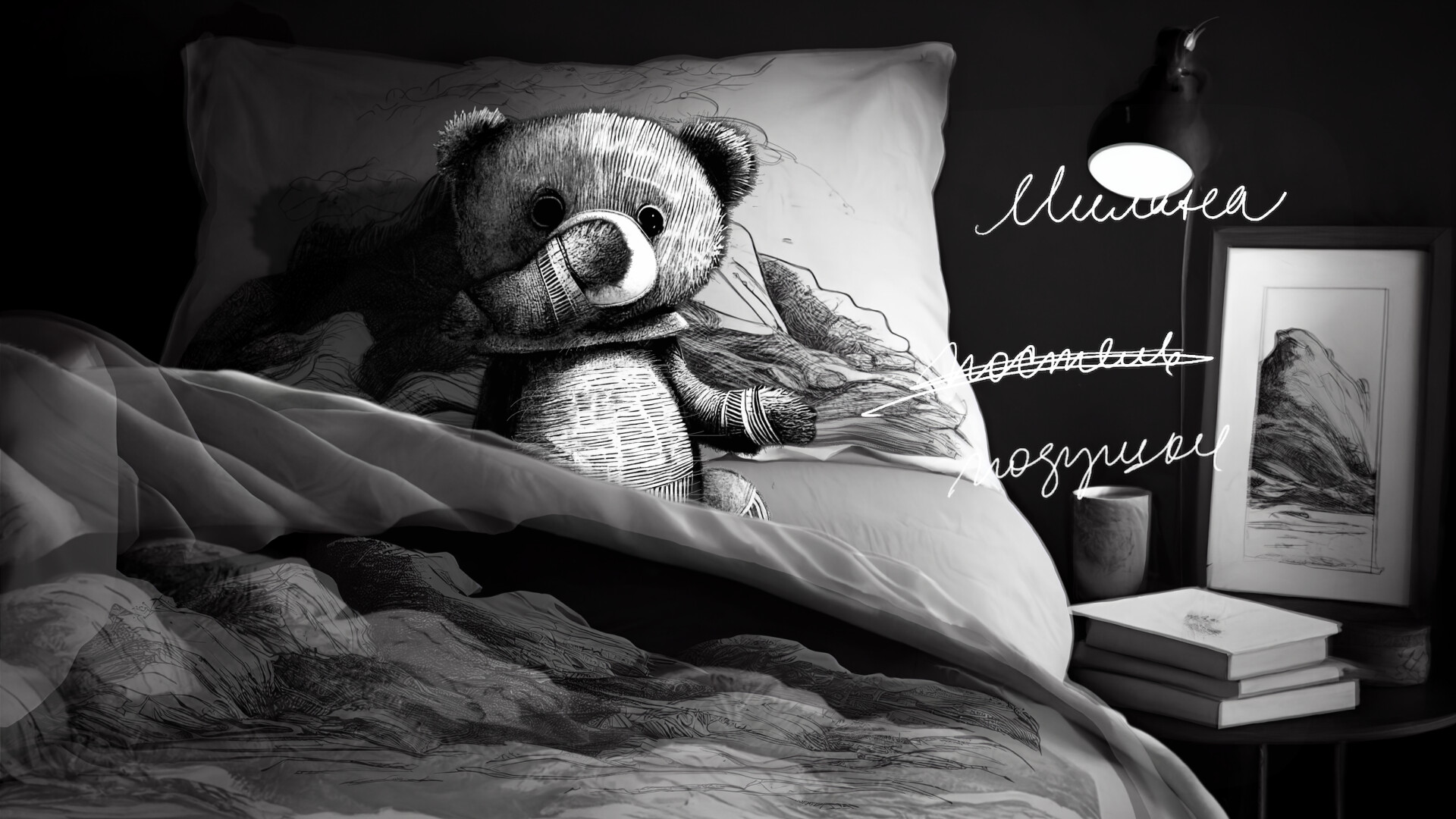
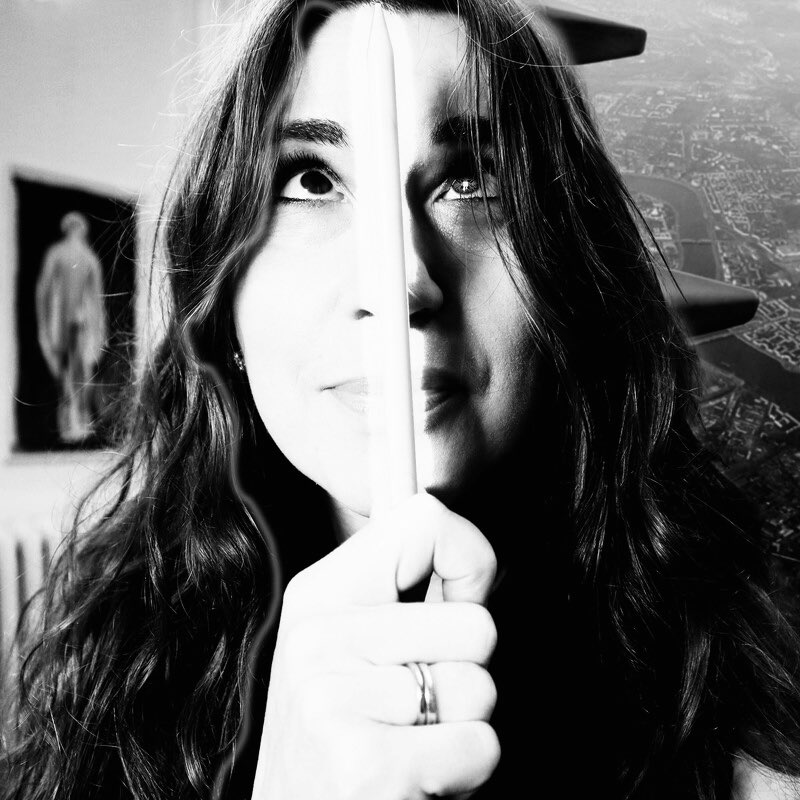
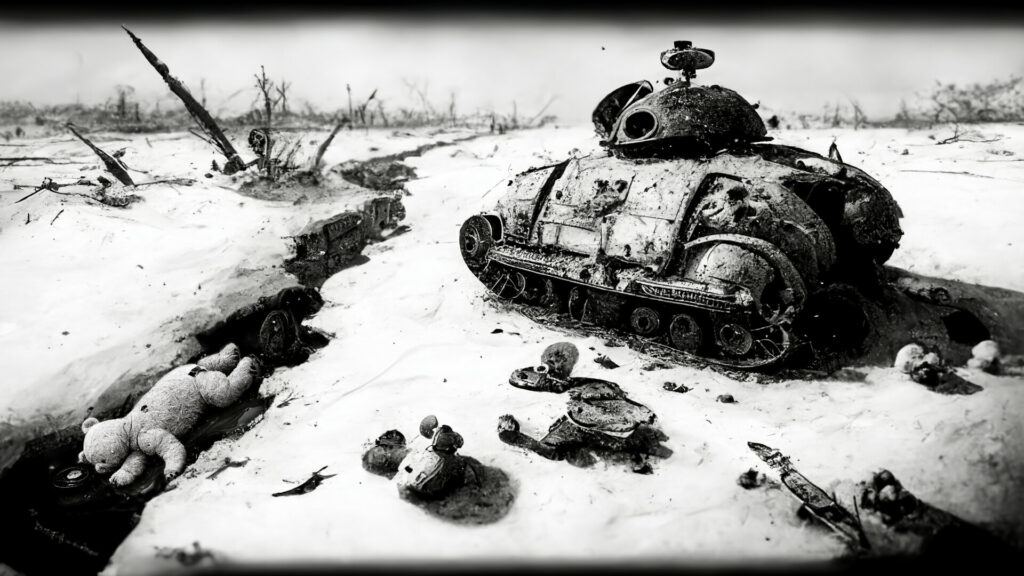
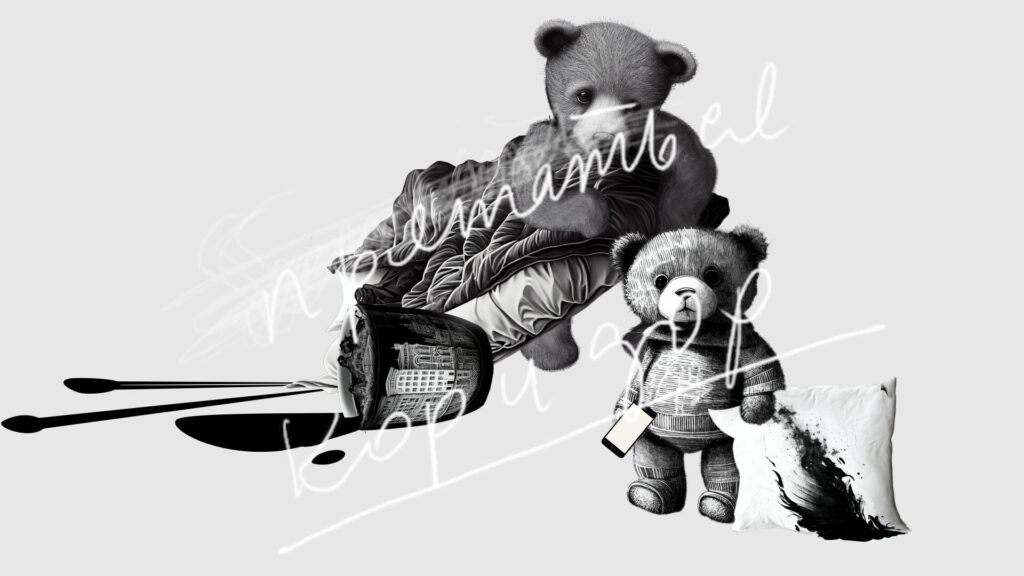
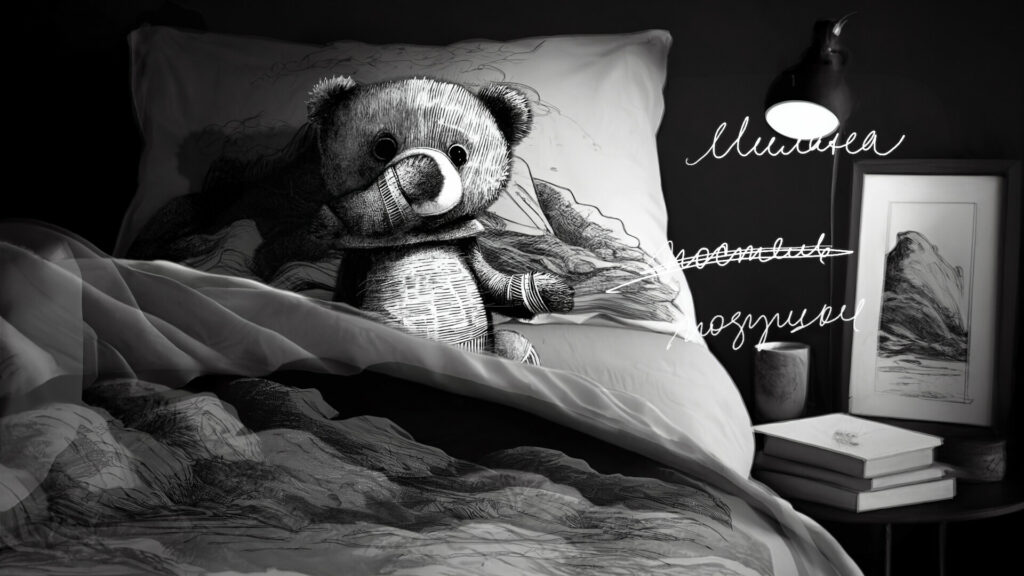
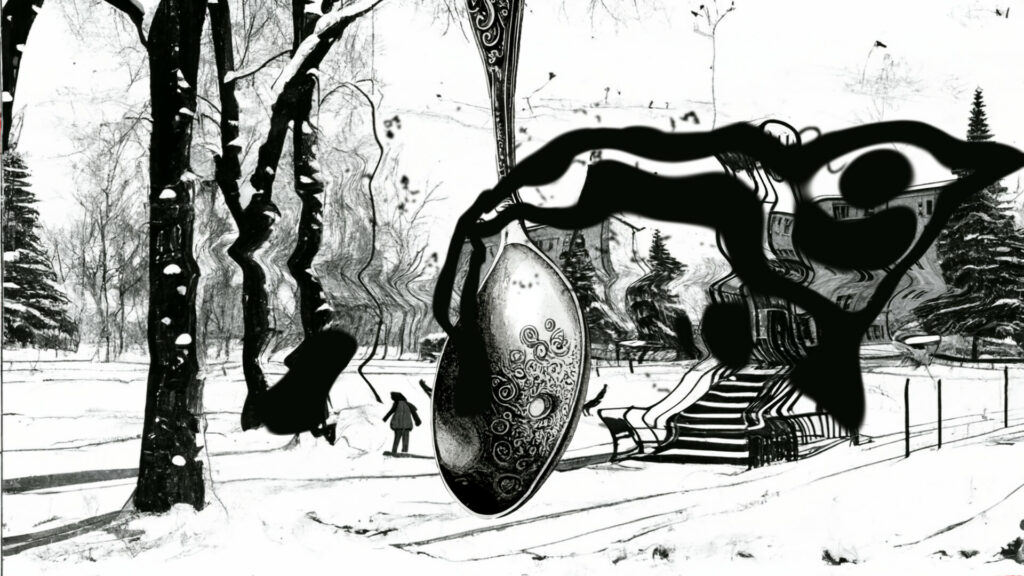
I usually sign my animations as KORNIENKO コニンコー I like how my name begins and ends with “KO” (“little” in Japanese), a cherished symbol of the inner child that I strive to preserve within me.
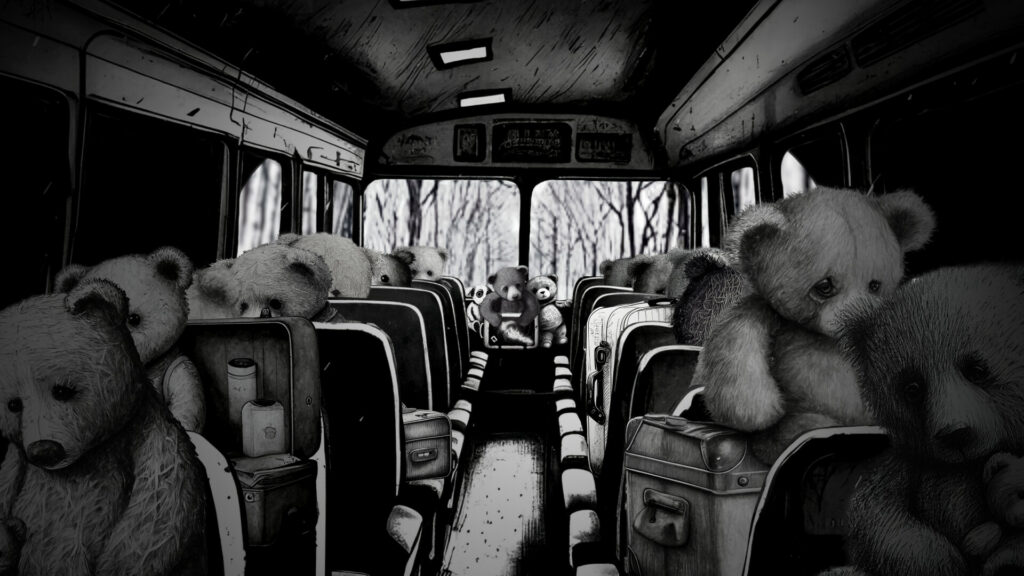
In my adult life, I’m a professional radio journalist and animated film director, using the medium of animation to tell real stories. I’m trying to look at current events from a timeless perspective and I believe animation can provide that lens, partially because we mentally associate it with our childhood — a timeless dimension that connects all humans.
-What inspired you to become a filmmaker?
I have always wanted to preserve the fleeting moments. I studied film and wanted to become a documentary filmmaker, but found it too invasive on people’s lives when I tried it. Animation based on original stories is a more gentle genre, also for the viewer, who may have become weary of the raw newsreel imagery. In my work, I’m trying to preserve testimonials as works of art.
Having moved countries several times, we are a trilingual family. As a journalist and as a migrant, I have become aware of the limitations of verbal language. I have turned to animation in search of a means of non-verbal communication that embraces visual communication and rhythm.
-Do you think the cinema can bring a change in the society?
Anything can bring a change in the society. The gentle flapping of a butterfly’s wings could bring about a tornado somewhere else on the planet. It’s called the butterfly effect. Chaos theory founder Edward Lorenz discovered that a tiny shift in the initial conditions (such as the perturbations created by a butterfly) can lead to significant changes along the way. His original research was based on studying weather patterns, but we have come to realize that such sensitive dependence on initial conditions is actually a property of any complex dynamical system, including a human or the human society.
I like to think of my films and writings as butterflies, fluttering to bring about change.
-What would you change in the world?
I want the bloody war in the heart of Europe to end, I want Ukraine to regain its freedom and I want Russia (where I originally come from) or what will become of today’s Russia to stop living in the past and and undertake a sincere phase of self-reflection, akin to Germany and Japan post-WWII.
On a more fundamental level, what I want most is a paradigm shift in terms of how much control we want to exert on other beings. I believe children and kids are the most discriminated group in the society today. It’s a crucial unresolved supremacy bias: the persistent belief that children aren’t people, that they can’t think and that their struggle isn’t serious. In today’s public discourse, it’s more acceptable to speak of training kids (positive and negative reinforcement) than actually listening to them and building human relationships with them. I think this distrust, disrespect and suppression of children’s will and autonomy is the origin of a lot of violence and mental health problems in the world.
I want to see a less authoritarian world. I want to see a world based on horizontal relationships.
-Where do you see the film industry going in the next 100 years?
The term “film industry” may not even be relevant a century from now. Ultimately, film is just one method of storytelling. I envision a future where digital storytelling converges, creating immersive and individualized experiences, as opposed to the collective theatrical ones we are accustomed to. When creating my animated short films, I keep this vision in mind, aiming for an intimate conversation with my viewer, who I assume will be watching on a personal device, alone. It’s an intimate conversation.
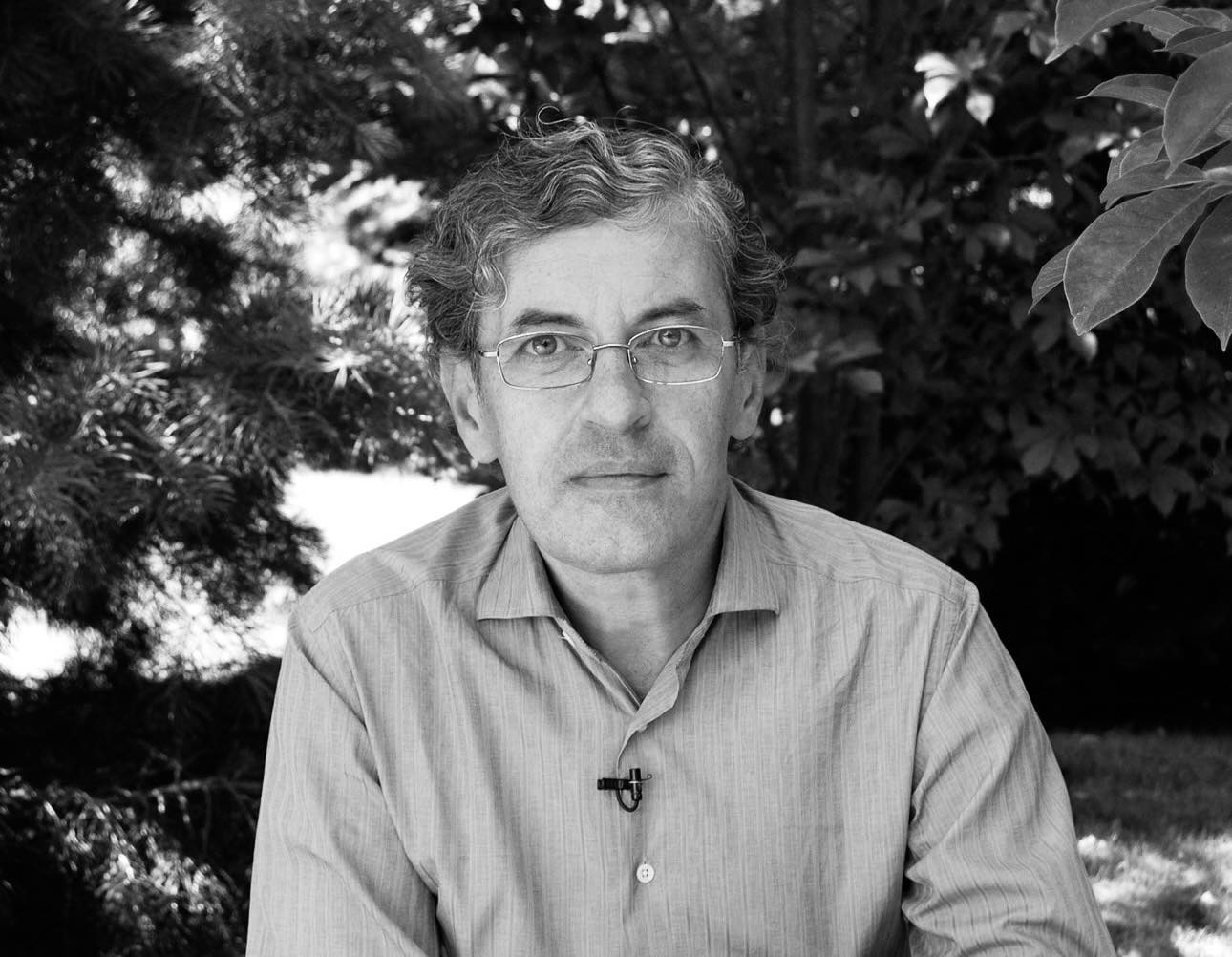
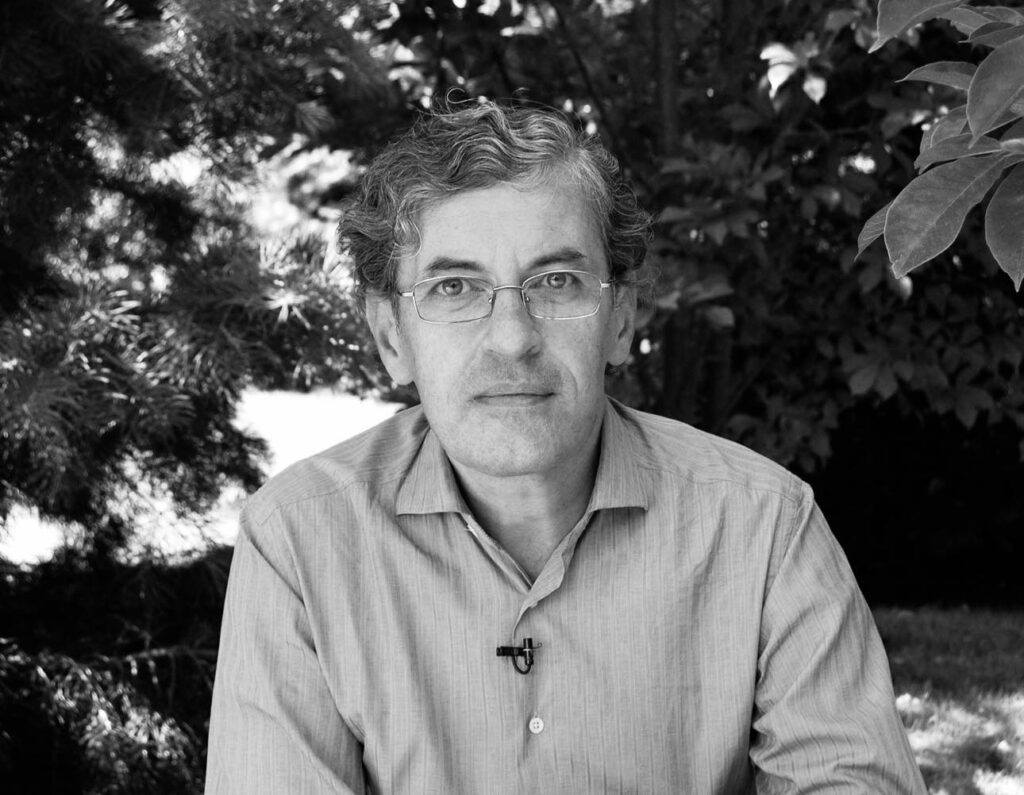
I am a Transylvanian born science documentary filmmaker, a Hungarian living in Sydney, Australia.
After finishing university I became a high school teacher, teaching biology, geography and philosophy. I was given the opportunity to teach freely and used that freedom to introduce my students to the intricate ways of how the world works. It was a lot less about lexical knowledge and much more about connections.
-What inspired you to become a filmmaker?
As much as I loved teaching, I saw a great opportunity in broadcast television by extending the classroom first to my country and later internationally.The medium was the inspiration and not just because it’s potential of reaching the minds and hearts of many millions but because of the powerful toolkit we get to work with: sound, vision, colours, moods, pacing, music, effects. Before becoming a dedicated science communicator, I saw myself becoming a painter or a designer. By making science films, in a way I get to live in both worlds.
-Do you think the cinema can bring a change in the society?
I love cinema. It can be magical. You walk into a movie theatre, you watch a film and if the film was doing its job, you come as a better person. So, yes, movies have the power of changing the world.
-What would you change in the world?
I would like to see a world where cooperation prevails, where we are driven by the desire of understanding each other, society and nature. A world, where young people don’t have to think twice about bringing children into. A world without out of fear of ecological and economical disasters. A world without war.
-Where do you see the film industry going in the next 100 years?
The future is stubbornly unpredictable. But one thing is sure, AI will have a huge impact for our industry as well. It will be both good and bad.
I am a 32 year old filmmaker from Belgium. More precisely from East Belgium, I grew up in the village Crombach. Since then I live not far from there in a small town called St.Vith.
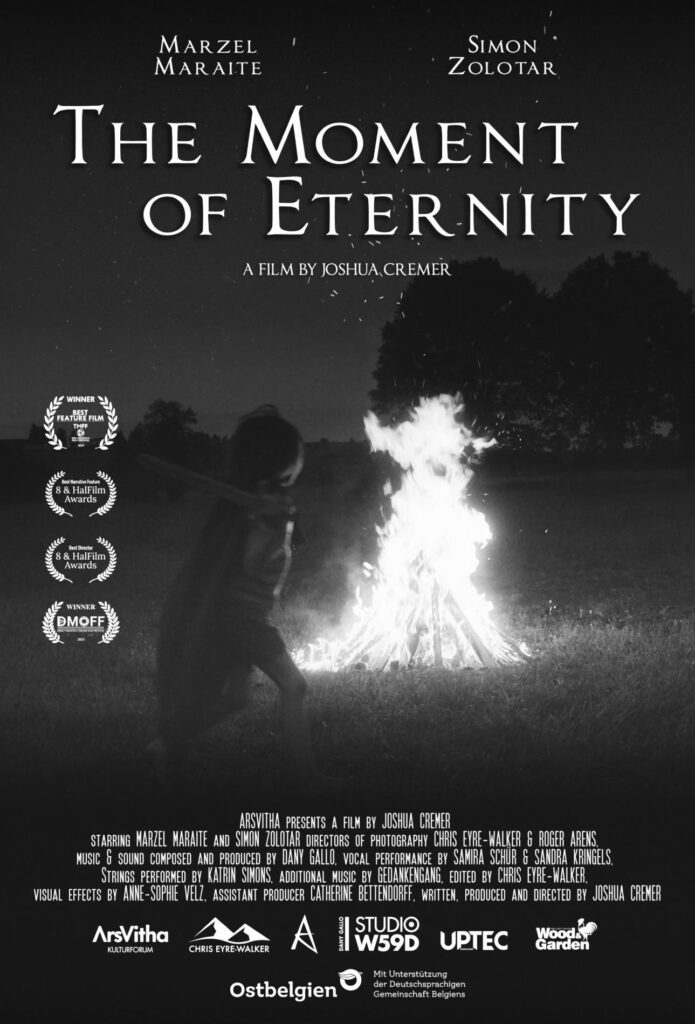
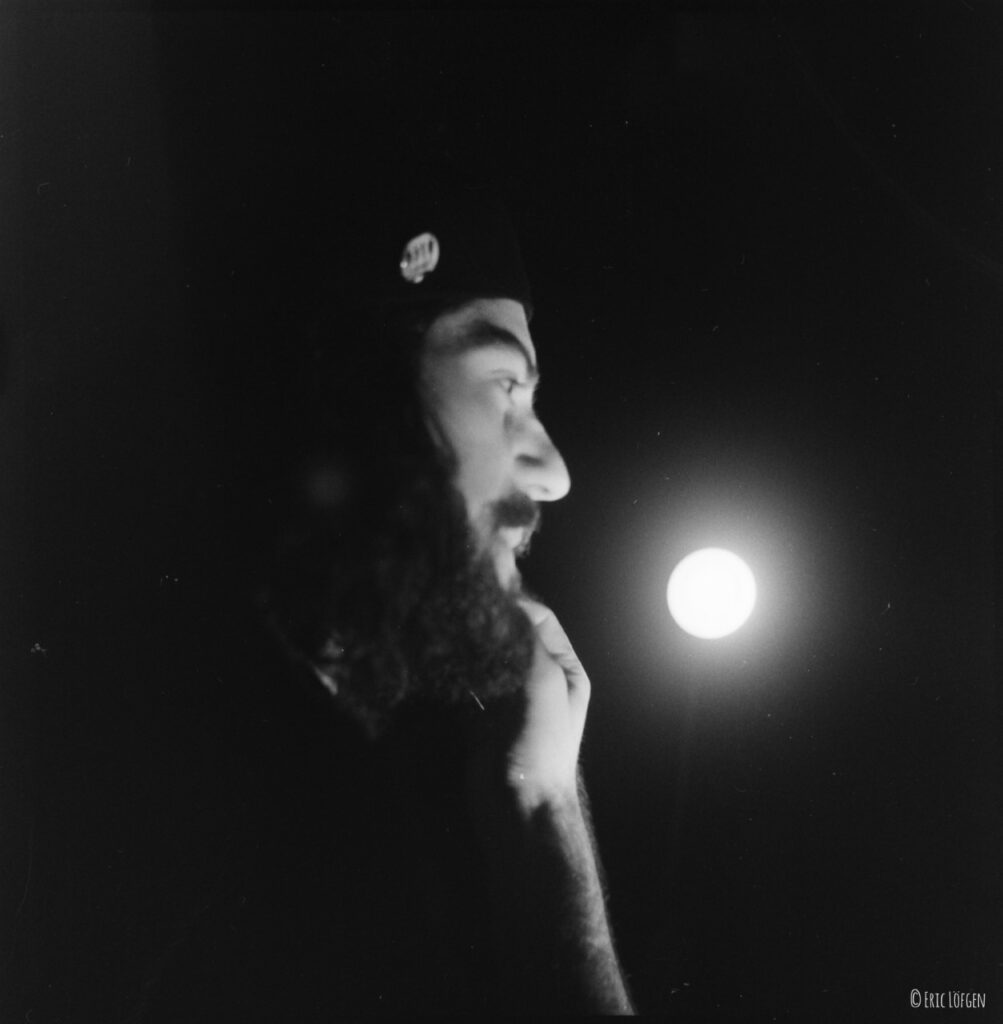
After 6 years of clarinet lessons in my childhood, I played drums for another 14 years in different bands (mainly punk, metal and experimental rock). But towards the end I realized that drums and music alone were not enough as a means of expression for me and the hunger for filmmaking grew. And so, over the next few years, band and film projects mixed until 2021 and 2023, when I made my first completely self-produced films called “The Repairer” and “The Moment of Eternity“, where I am responsible for writing, producing and directing.
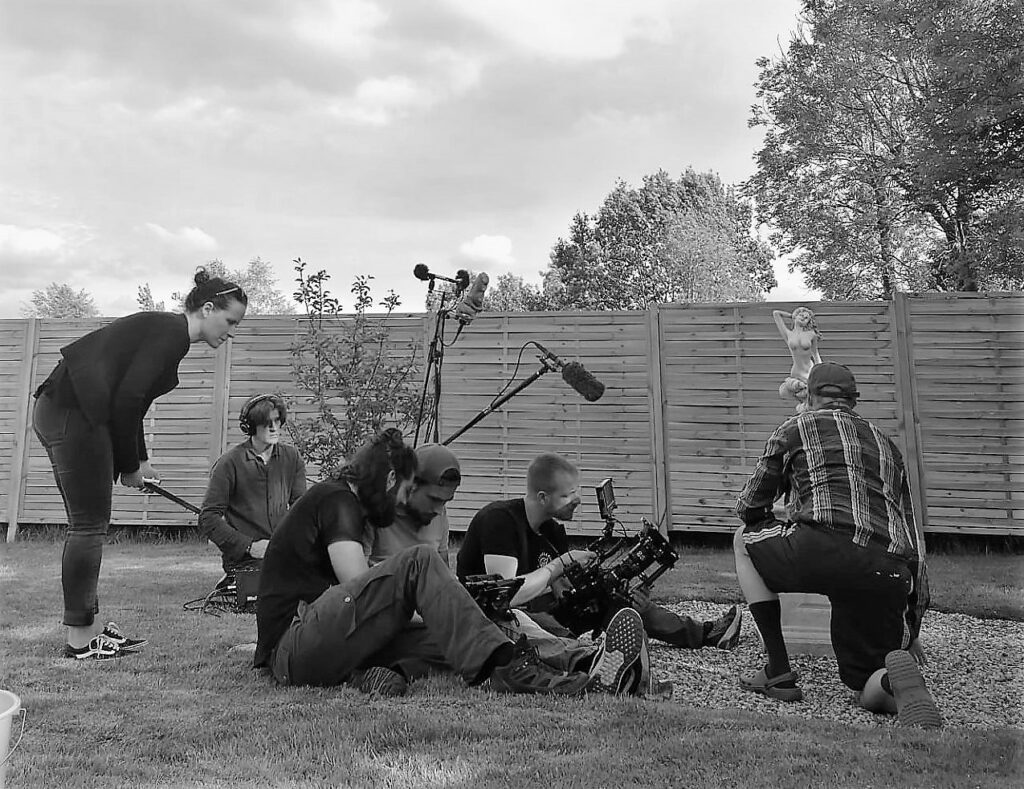
I have had the privilege and honor of working with the most wonderful team on these films:
Chris Eyre-Walker and Roger Arens behind the camera, music composer Dany Gallo, Anne-Sophie Velz for visual effects, my girlfriend Catherine Bettendorff in production, Marzel Maraite and Simon Zolotar as actors…..just to name a few.
The journey continues and we are now in the casting process for the next project.
-What inspired you to become a filmmaker?
I grew up with my father’s plays. I was allowed to see films with him which I was actually still too young for and afterwards there was always an exchange or a quiz about the film we had seen. That was wonderful and my love for film developed very early. At the same time, it was also the reason why my grades in school were bad, because daydreaming was more important and exciting than math and homework. My mother is also active in theater. Both of them are my first inspirations and shape me a lot until today.
I love writing stories, to drawing, making music and working in a team to create something new. All of that comes together in filmmaking.
For me, filmmaking, and art in general, is about constantly reinventing myself with each project, feeling new, and not putting limits on myself in my creative work. Because that’s what it’s all about in my opinion: Freedom !
To be vigile and listening deeply to your inner self and the world and not being afraid to let it out in a new form. And of course to keep the inner child always alive. Art is the fuel for freedom and catharsis. It all started with this feeling and desire and I couldn’t imagine working in any other way.
-Do you think the cinema can bring a change in the society?
Absolutely. I hardly know anyone who doesn’t watch movies.
The films we grow up with in our childhood consciously and unconsciously shape us throughout our lives.
Movies have tremendous power on so many different levels.
I’ll never forget the first time I saw “Jurassic Park” or “Alien” as a child. What an experience!
It was a total game changer. Movies changed my life and opened new gates, they were a refuge in dark times and will always give me strength.
Movies can be a lifeboat and a lighthouse at the same time.
A world without movies would be a damn bleak world…
-What would you change in the world?
Wow, that’s a big question. I think it’s quite a lot. And the current times we live in give us more than enough reasons again to constantly want to question and change everything. I often feel very ashamed of the behavior of our own species….
However, I’ve never been a big fan of just being upset all the time about what’s going wrong on our planet. It just eats up a lot of energy, and I don’t want to let the people who have too much power and are responsible for the bad things on our planet get control over me through that
I think every person should start with themselves first and think about what they can do concretely with their abilities in themselves and in their environment to save our “still” blue ball.
In a world that is becoming more and more disturbing and seems to be losing control, I prefer to create new worlds through films, where it can also be disturbing and painful, but I myself am in control of what and how it happens.
Filmmaking is my personal weapon to fight against our inner and outer demons.
I want to create places of retreat, but at the same time confront people with their deepest inner longings, fears and also with the beauty of the moment.
-Where do you see the film industry going in the next 100 years?
It’s sad that in current mainstream cinema or on the big streaming services, there’s always more emphasis on quantity than quality. The effects and the pictures are often insane, but a good, brave story is often missing…
A lot of things are unfortunately often not thought through to the end, too hectic and only designed for mass success.
I’m also annoyed by the constant remakes of old masterpieces that simply can’t be filmed any better. Unfortunately, this will probably continue in the coming years….
Fortunately, however, there are wonderful streaming services like MUBI and also more and more cinemas that offer worth seeing and courageous films by great and also often unknown independent filmmakers.
And of course, the screenings and the experiences in the cinemas themselves are the most important and cannot be replaced. There is no better evening than having a good dinner in a restaurant and then watching a good movie in the theater and talking about it all night afterwards.
That is the title of the first series produced by WILD FILMMAKER, which in less than a year became the biggest independent filmmaker and screenwriter community worldwide. You gave us so much and our way of thanking you is to make you even more protagonists!
’eleveN fiftY’ will be a series open to your collaborations and suggestions. We will not tell you: “Here’s the series, watch it! Stop!” as many platforms usually do. You will not only be spectators, but our mission will be to make the series by listening to your suggestions and accepting your candidacies for the various roles.
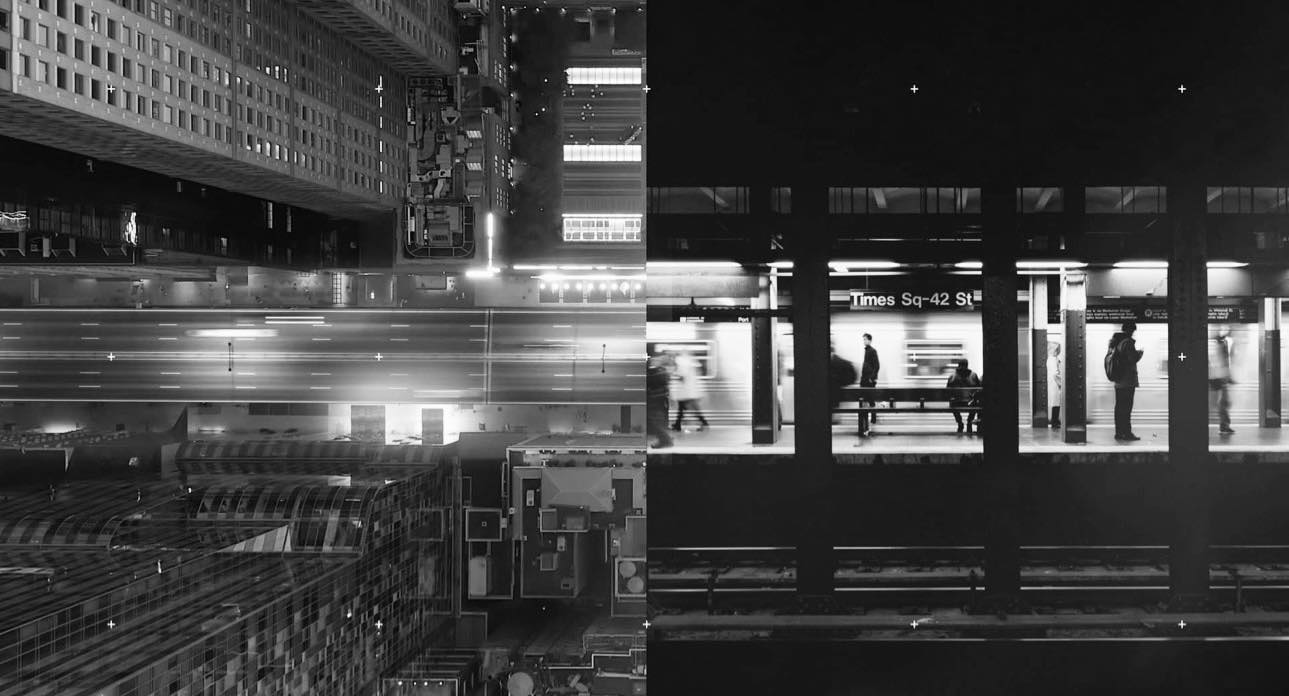
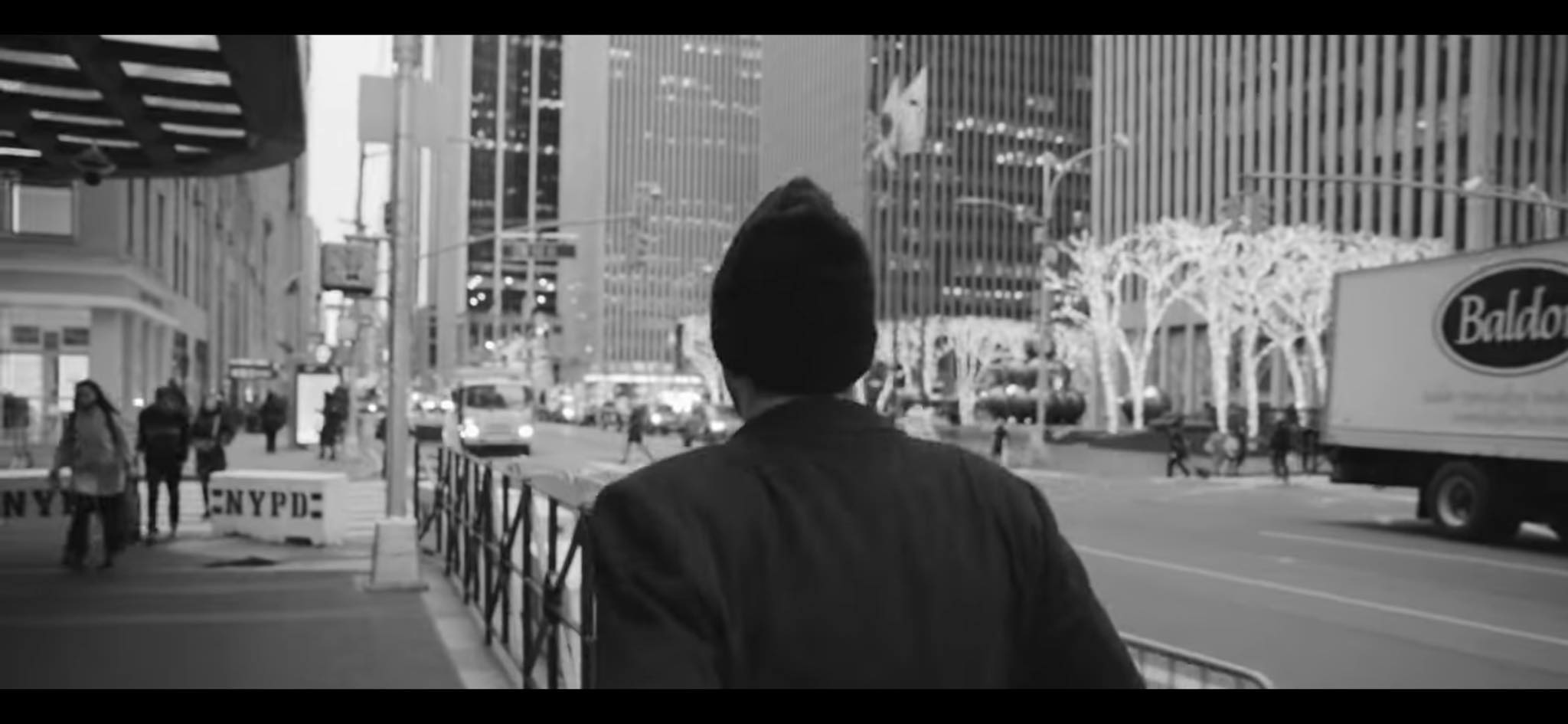
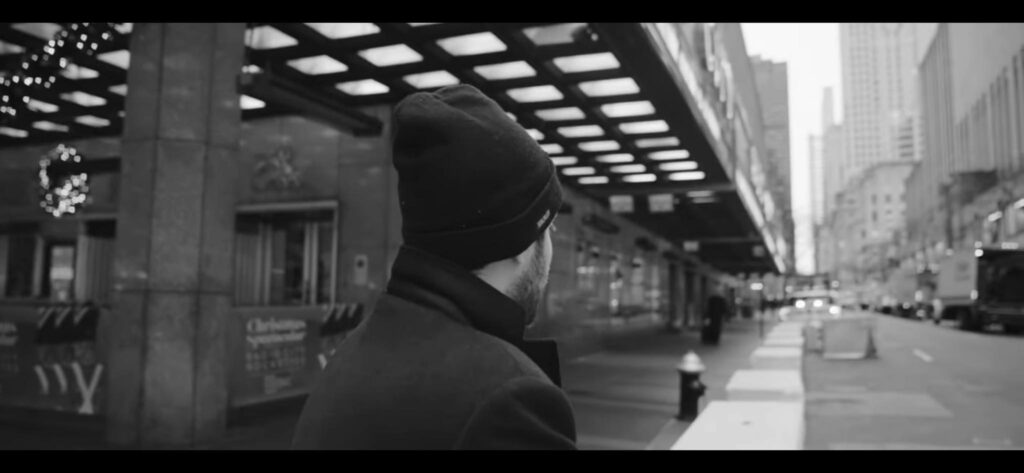
‘eleveN fiftY’ will be set in New York.
We chose the Big Apple because we love its dimension, which still is the greatest cultural cocktail between archaic and modern. Chapter zero of the series is in the making.
Produced by Michele Diomà
and directed by Darius Rubin
selected thanks to “The Fool” among thousands of nominees, directed with Yoshima Yamamoto and winner at several festivals, including the 8 & Halfilm Awards.
More news soon.
For now, we can only tell you that this series will be a breakthrough project in cinema history, as its strength will be the ‘we’ instead of the ‘I’.
Our motto is “WILD FILMMAKER – Cinema not Propaganda. Poetry not Marketing“.
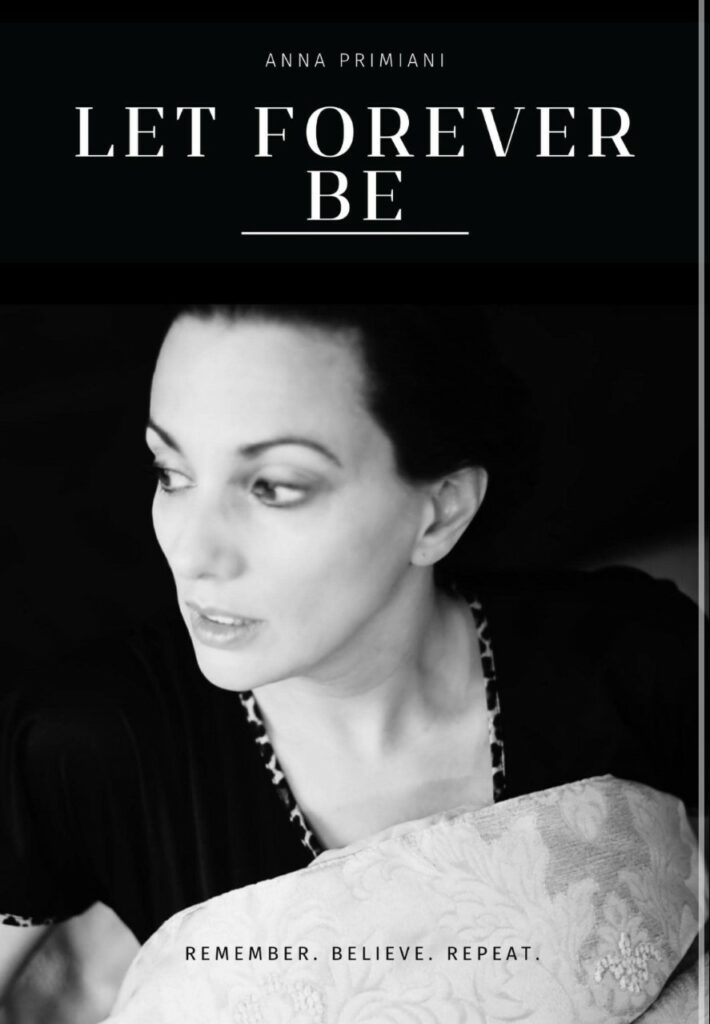
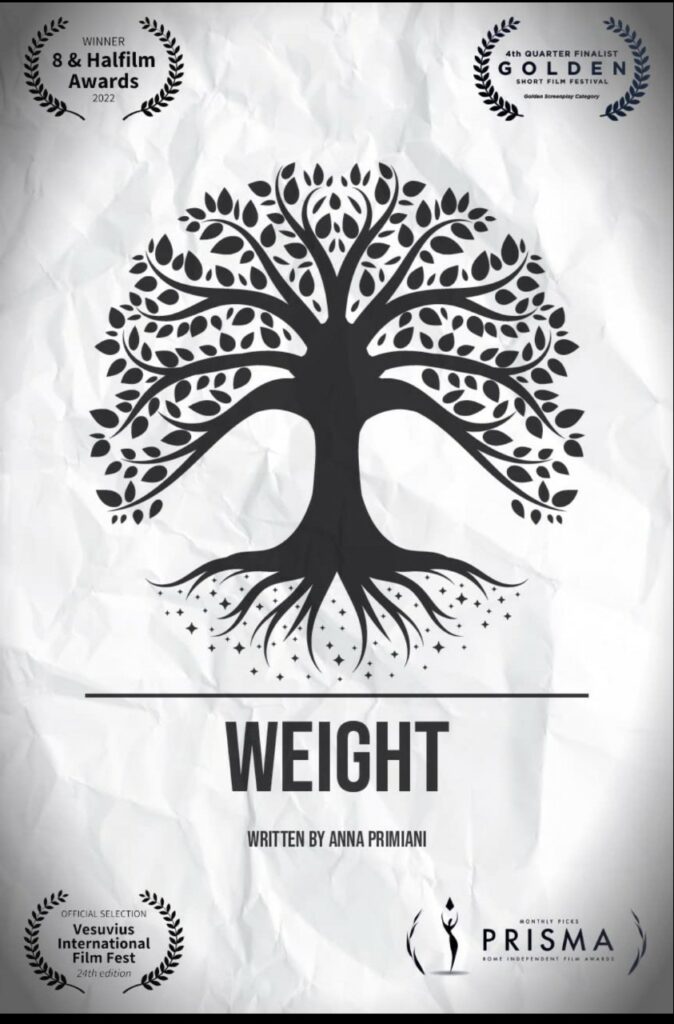
Anna Primiani is an award-winning actress, writer and emerging filmmaker. She trained as a ballet dancer, studied classical music and in University she trained in theatre before moving on to acting for television and film. She has trained as an actress across Canada and in the USA. As an actress, she continues to embrace opportunities to play diverse characters from Cleopatra in Disney’s “Treasure Buddies” and Kathy, in the emotionally charged, “She could be you“, about a mother whose child goes missing in the True Story of missing Tampa girl Jennifer Marteliz. This year her micro short film, that she co-wrote and starred in, “Let Forever Be” was screened at the MLC awards in Arkansas and won her several awards for best actress. Her short film “The Choice” that she co-produced, wrote and starred in is premiering at the 56th annual Worldfest in Houston in April 2023. She will be seen this year in Hallmark’s “Team Bride” and Castle Rock Entertainment’s” Wind River: The Next Chapter.” She is in pre-production of her short film, “Weight”, that has won multiple awards in festivals this year including 8 & Halfilm Awards. She is also embarking on writing her first feature film, “Redemption”about a woman trying to escape a criminal organization that is trafficking young women. Anna believes in being a life long learner and taking the opportunites to grow and evolve as an artist. There are some exciting announcements coming soon so be sure to visit www.annaprimiani.com and support and follow Anna on Instagram- www.instagram.com/annaprimiani
-What inspired you to become a screenwriter/ filmmaker?
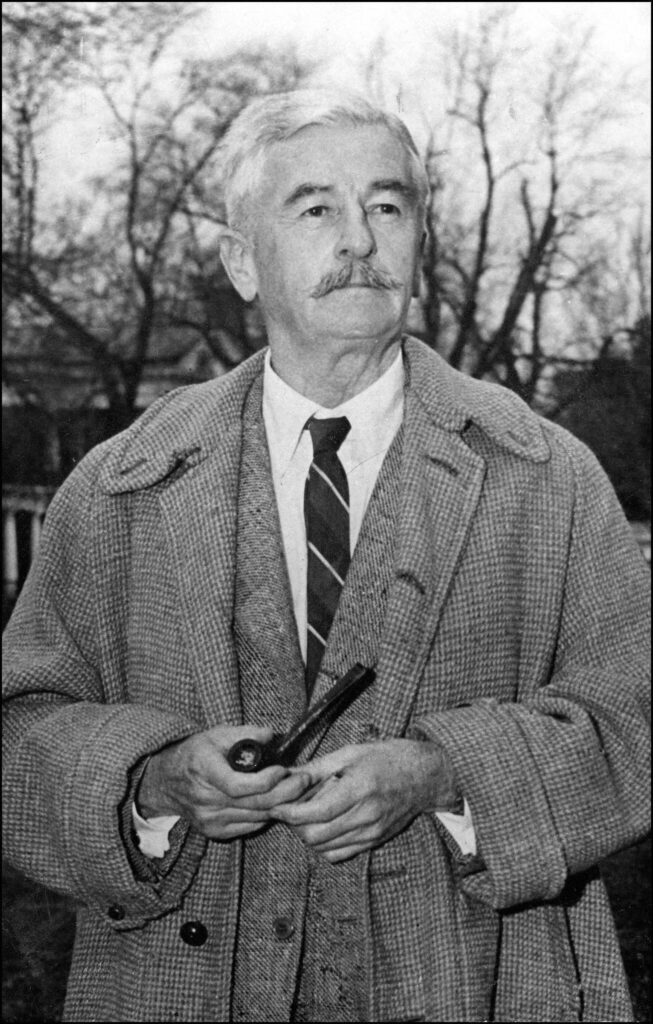
Inspiration comes from experience, moments in life and ultimately needs to come from within. As an actress, I breathe life into someone else’s words, make the character my own to drive the director’s vision. I am inspired to bring truth to the words. However, sometimes as an actor, we are not given the opportunity to play a character we would like. So comes the desire to write. As a writer there are moments, stories, memories in my life that resonate with me and begin to formulate into a story that I want to tell and characters I want to portray. Writer William Faulker said “the only thing worth writing about is the human heart in conflict with itself.”
This has driven me as an actor, writer and filmmaker. I have also said this before but, Kurt Sutter, creator of Sons of Anarchy, inspired me to have confidence to write what I want. During the pandemic he would share insights into his process saying “Don’t worry about what’s gonna sell or what’s popular…write from pain write from shame write from places that scare you.”
I believe stories from the heart are universal and bind us to one another. I am drawn to heartfelt stories that encapsulate that feeling. From there I crafted the short story for my film “The Choice“, dealing with sisterly love and devotion intertwined with illness and intricate end of life discussions. “Weight” about a woman who returns home after the death of her father to face her past. Now as I embark on writing my first feature “Redemption“, it is a world out of my realm so it involves a lot of research and challenging myself to learn things that are unknown, uncomfortable and true. I like the challange. As a writer I can cultivate characters and a story I feel are worth telling and as a filmmaker, my goal is to bring these visions to life.
-Do you think the cinema can bring a change in the society?
I do! I think we have already been witness to the power of cinema, as well as social media and celebrities have on society both good and bad. I believe that films can be a powerful conduit to reach people worldwide. It can convey emotions and compelling messages, at times even if we do not speak the language the film is in, the message can be powerful. A film that comes to mind is “Good Will Hunting” not only is the acting stellar from Williams, Affleck and Damon as well as the writing, however it is the message that still stands the test of time. That on the surface some people might come across as violent or hateful, but if we take a moment to really listen, give people a chance if we care about one another, we can find that there is something deeper to all of us. I feel that there are films like this that reach an audience and have the power to change lives.
-What would you change in the world?
These days it’s hard to read the news. The violence and hatred that floods the media. I wish that we could learn how to respect and appreciate one another both in our personal lives and on a global scale. So many family and friends are divided by anger or inability to want to change, it would be nice for them unite in love, understanding and kindness. Again, like inspiration, change has to happen from within. Globally, I’m saddened by the hate, violence and war. It’s a human flaw to be driven by fear and hate.
-Where do you see the film industry going in the next 100 years?
Filmmaking has already evolved immensly in the last 100 years so I feel like the next 100 hold inifinate potential. I believe that The Volume, an immersive soundstage by Lucas Film has and will continue to radically revolutionize the future of the film industry. Northern Gateway Films, the Produciton company for Team Bride, located in Edmonton, Alberta also has a virtual stage. They are doing some really amazing things with their current films. Filmmaking is becoming more fluid with the ability to use a stage to create some extraordinary virtual settings, controlling how a filmmaker can shoot and the scope of storytelling. Making some things more accessible to filmmakers to be able to shoot things on a stage rather than on location. That said, I hope that the magic ofd movie making does not dissipate all together. I also hope, post pandemic, that the experience of going to a theatre remains alive for the next generation of moviegoers. To immerse themselves in the story and the world that the filmmaker seeks to create. My kids are starting to experience this the magic of movies!!
I have worked in a research institute, got my Ph.D. in Geography, then worked for an American chemical company, and altogether 17 years in the plastic processing and recycling industry – all that time practicing my language, writing, and drawing skills till I made all these kinds of creativity my profession. For about 13 years, I am a writer, screenplay writer, artist, and language specialist with a nice portfolio of really good projects, and certainly, many more to come. But later. Not now.
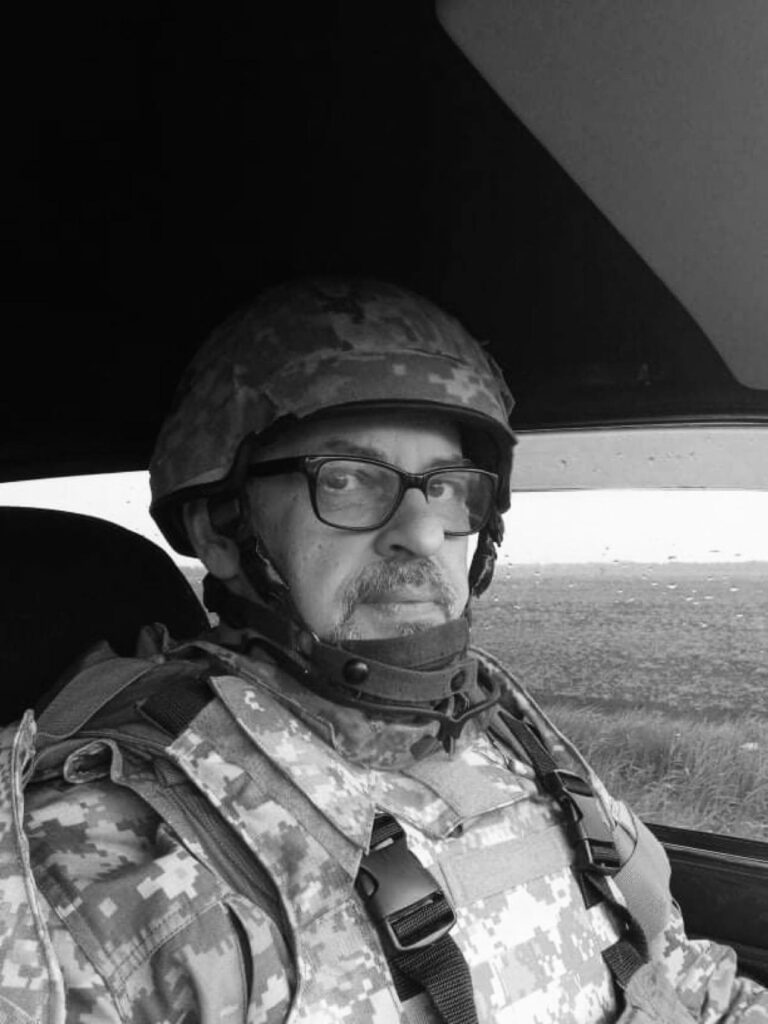
When I studied at Kyiv Shevchenko University in the 80ies, I attended the military department and finished my training as a First Lieutenant, with no practical experience of military service from then on. When the Russians invaded Donbas in 2014, I was enrolled in a reserve battalion but had never been conscripted till the 24th of February, 2022.
That day, the air in Kyiv was shaking because of the air defense work since 04 a.m., and the gunshots from automatic rifles were heard where the enemy’s sabotage & reconnaissance groups were trying to spread havoc. The exit roads were jammed. Subway stations have turned into bomb shelters. And all that was not a movie. It was for real, although, still hard to believe.
I just could not stay aside. I came to my local military enlistment office and enjoyed the shortest job interview I ever had in life. “Ready to go?”, a tired colonel asked. “Yes”, I said. That was it. For the two first months, I was a machine gunner in a new infantry battalion, and then transferred to artillery where I am a deputy battery commander. Still at the frontline. Still alive.
I took several strange things along with me to this war – pencils, albums, paints, brushes, and even a flute. I have been making sketches and watercolor etudes. Last summer’s rains and the incredible mud we were sinking in made me think of soil and clay from the trenches as new artistic means. Indeed, these materials, although quite difficult to handle, are very expressive and demonstrate good adhesion properties. Later on, I learned that ashes from the firewood can also be added to the restricted palette. Now I have got a series of interesting war etudes in this style and think about exhibiting them.
I also kept on working on some screenplays, expanding my portfolio, and collecting laurels. I wrote a couple of analytic articles and made blog videos about the war, its reasons, and its roots. I am perfectly certain that this war is one of the turning points in the world’s history – however, it is a separate topic.
Writing and drawing at war is not a problem. Concentration is. It is difficult to collect yourself and concentrate on this. There are too many things to think about in the first place, and certainly not enough convenience. The Internet is scarce, and the generators only work a couple of hours a day. But we try to keep ourselves civilized as much as possible under the circumstances. In our battery, we have got a shower, a kitchen, and even a washing machine. However, it takes a lot of effort to keep this civilized life running if you live in a forest line or in abandoned barns in the middle of nowhere, with too many things to be done in too little time, the enemy is close and artillery duels never cease.
We have been lucky so far. In our battery, we have only one dead and several wounded.
We are grateful to those who help and support us in our fight. I think we are going to win. We fight for our freedom and our future, while the enemy fights for their past – for the grandeur of their once-great empire. But we all know the winner when the future fights against the past. The future always wins because time is the strongest force in the Universe. But how much time do we have? That is what nobody can tell.
After the great success of the co-production meetings held during the Cannes Film Festival by WILD FILMMAKER in collaboration with the 8 & Halfilm Awards, we are honored to announce a project that will surely make all those who love the art of cinema happy.
The Wild Filmmaker Academy is the first international institution dedicated to those who wrote cinema history by breaking the production and aesthetic rules.
Our workshops will be dedicated to the artists that fought against everything and everyone, listening to their own Wild souls and not to the rules imposed by the market.
Each workshop will consist of 3 intensive lessons.
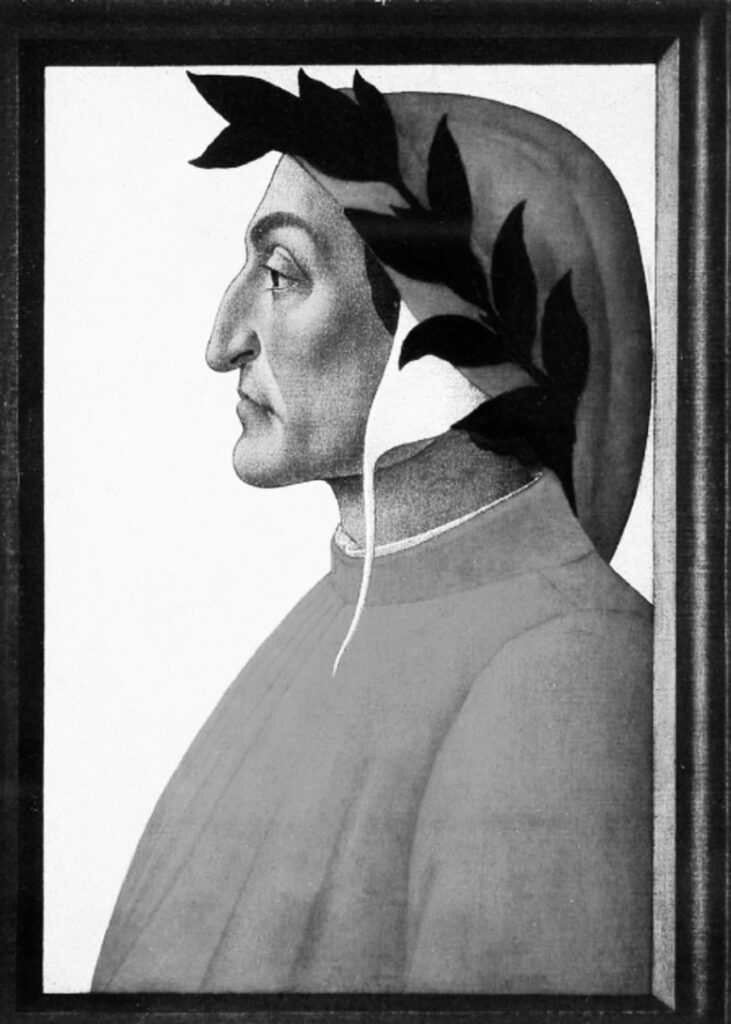
Inspired by Dante Alighieri, in the 3 lessons, we will delve into the ‘Hell, Purgatory and Paradise‘ that those artists faced and let cinema advance as an art form.
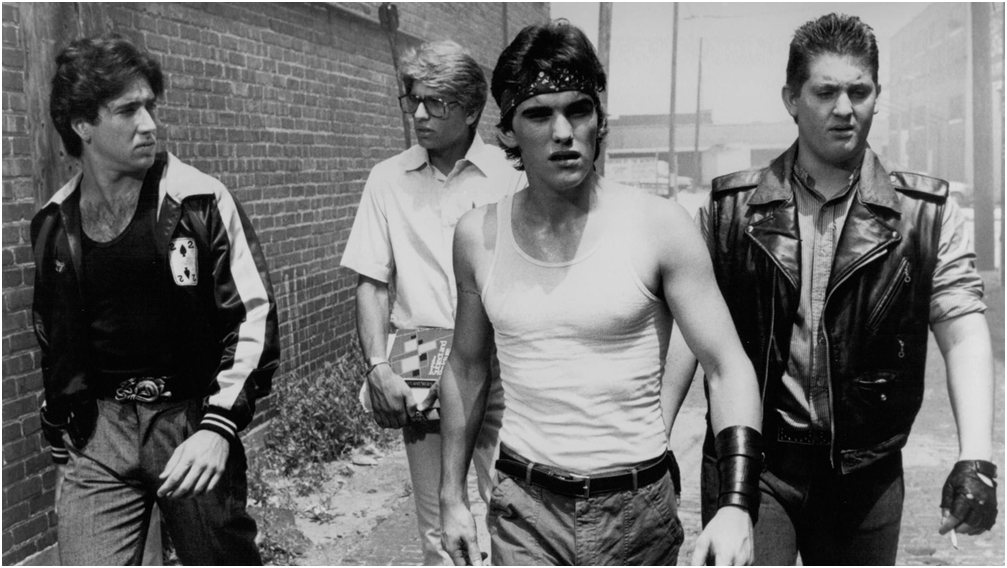
Our first workshop will be dedicated to an experimental and poetic masterpiece. The main character is a boy with a sensitive, wild-looking soul named Rusty James.
Based on the novel by Susan Eloise Hinton, “Rumble Fish” byFrancis Ford Coppola is one of the movies to see if you want to understand what a truly independent film is, a Wild film compared to the rules of marketing often imposed on those who make cinema.
Director and Professor Christopher Coppola will lead the lessons.
He is very close to “Rumble Fish” also because the movie is dedicated to his father, Professor August Coppola, brother of the director Francis Ford Coppola and father of Nicolas Cage, who was part of the movie cast.
At the end of the workshop, you will receive a certificate signed by the course teacher Christopher Coppola and the founder of the WILD FILMMAKER ACADEMY Michele Diomà.
If you’d like to get on board our Noah’s Ark because you feel like a wild animal among so many animals, contact us at [email protected]
Most think of the glamour of Monaco when they think of that sparkling gem of a Principality along the French Riviera — the history of their Formula One auto race, grand casinos, magnificent museums perched high on cliffs, Michelin-starred dining and designer boutiques. No denying that exists. My trip there took a different turn.
It actually started while living in Southern California. I was invited to attend an advertising client’s event at the Newport Beach Bayshore Marina docks. We’d only spoken on the phone before that. As soon as we met, I knew this was not your ordinary boat party.
Whether it was his swagger that was as titillating as his yacht company’s size or his dashing looks that kept our conversation flowing as fast as the Champagne, is beyond me. Our paperwork business was handled in record time. Then it was on to fancy hors’ d’oeuvres and a lasting memory of his sparkling smile and waving from a yacht stern as he drifted out to sea at sunset.
Being an Indianapolis native in the United States, I always thought it was our Indy “500” auto racing connection that made me dream of a trip to Monte Carlo someday. Now I had another incentive. The annual Monaco Yacht Show was in September that year and so was that man’s company. The plans began.
At first it was simply buying a flight to NYC’s LaGuardia Airport. Then it was getting a flight to Paris. Next paycheck was the next leg, another flight to Southern France. Surprisingly, by purchasing individual tickets, I could get better airfare overall.
Once in Nice the adventures really started. Of course the language barrier proved challenging, and being a young woman traveling alone added to it. Still the excitement of being on foreign soil soothed any worries.
The mood lighting at my first hotel was so dim I stumbled over a chair leg and landed flat onto the marble floor — not nice! I’d forgotten how the French prioritize romance. Note to bring candles for extra light next time.
I awakened to children’s laughter through a cracked window from the school grounds below the hill and wondered if they were becoming bilingual. Scratched rest for taking in the sights.
A taxi took me to the charming Juan-les-Pins Hotel Belles Rives for a drink by the bay on the Cap d’Antibes between Cannes and Nice. This is where the famous F. Scott Fitzgerald rented a villa and wrote TENDER IS THE NIGHT.
Afterwards, I decided strolling to the Musée Picasso (formerly a Grimaldi Castle built in the 14th century) would be ideal. After all, it was only a short walk and I could better learn their culture on foot. Except I took the wrong way and landed at the famous Hotel du Cap-Eden-Roc built in 1869 for writers. Flip the numbers and scenes from UNDER THE CHERRY MOON were filmed there in 1986 by its Director Prince.
A vintage motorcycle zoomed by, returned, and circled around me. Had it been a man, I might have resisted from fear, but it was a cheery young Italian girl who asked if I needed a lift. I hopped on the back and the two of us, with our long black and blonde hair blowing in the wind, zoomed towards Pablo Picasso’s current museum and his former home for 6 months. It was closed for extensive renovation when we arrived. I jumped off her bike anyway not wanting to obligate her to take me elsewhere.
Even roaming the grounds and observing their signage provided a glimpse of this famous artist’s life next to the Mediterranean Sea. A taxi pulled up beside me an hour later and asked if I needed a ride. Merci…except he wanted to stop several times to have others join us. Those passengers later tried to stiff for their share of the journey, but I made it back to my humble hotel in Nice.
The Monaco Touism Office had run a full page ad in a fashion magazine years prior which promoted a free helicopter ride from Nice. I’d snipped it out to save in my wallet for years. Despite the offer had expired, the next day I convinced a travel clerk to honor it.
Decked up in a crisp brown pleated cotton dress with silk blue scarf, I felt ready for the high life. Actors Juliette Binoche and Johnny Depp’s film CHOCOLAT’s impact lingered for me past box office sales. So did the lavendar-smelling liquid soap from the ladies room at the heliport which landed down my pressed attire. No time nor ability to change or else I’d miss my flight.
I scurried to the helipad and as my scarf flew up, I screamed thinking it would mix with the spinning helicopter blades. Had a Cinematographer been available, the composition would have been strategically aligned. Lady in heels running to a helicopter with scarf flying inches from the blades. I yanked the silk around my neck tighter and jumped in.
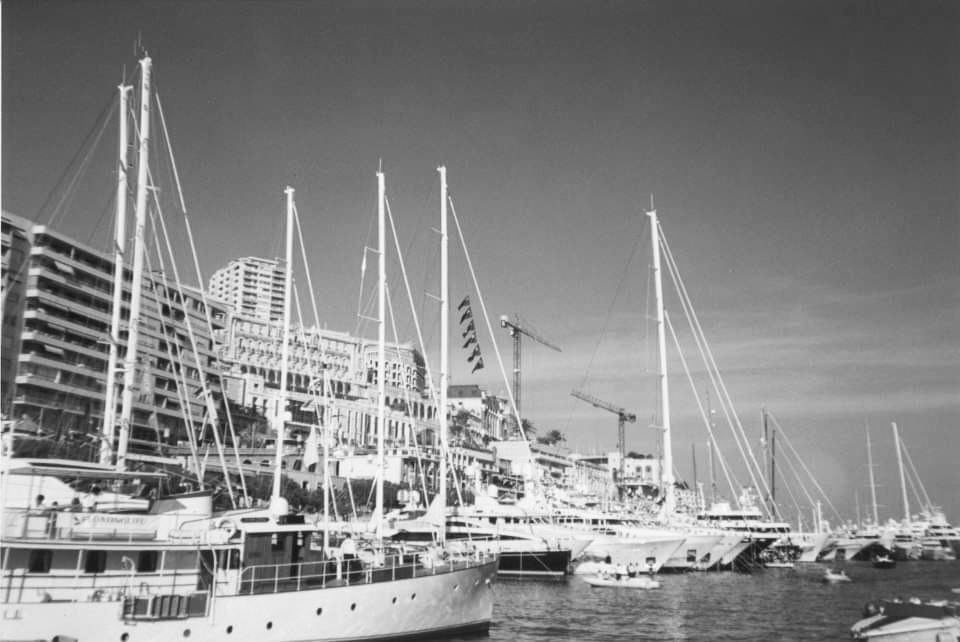
Later using the scarf to cover vertical soap stains, I tried to be as graceful as possible stepping toward the Monaco Yacht Show amongst 24,000 visitors from 40 different countries. Heavy accents and cigar smoke filled the air.
Brand new Lamborghinis and Ferraris were on display at the MYS entrance. Gently admiring one, a man yelled at me with a camera. It appeared he wanted my photo, so I placed my hand on the sportscar. “Nooooo, no!” he shouted and motioned me to move over. Money over matter, got it!
With that I showed my credentials and entered into a kingdom of superyachts from around the world. Port Hercules had never seen the likes. Although my new client friend and I had been in touch, he didn’t expect me there of all places. I wanted it to be a surprise like my new cherry lipstick found on the counter of the heliport.
Suppose he did not want it to be a surprise as his eyes lit up in shock to see me across from him at his trade booth. After exchanging pleasantries, he reached out his hand to shake mine. That is, his left hand which was adorned with a wedding ring about the size of a bicycle tire!
Funny how he wasn’t wearing it when we met, nor did he ever mention a wife, and I assumed she did not exist. But she poked her lovely fair head around the corner and I quickly disappeared. That was the last time we spoke or saw each other.
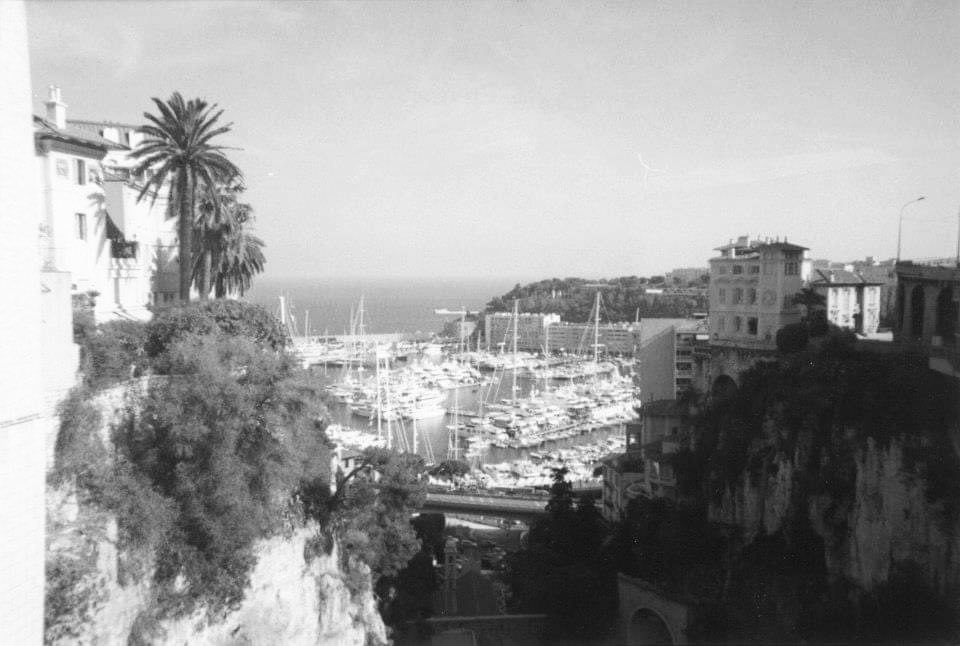
Moving on, I wandered around Monaco checking in at Sainte-Devote Chapel which honors the patron saint of Monaco. Relaxing outside on a park bench, suddenly a bus pulled up beside me and opened its doors. The potbellied driver didn’t say anything and I simply hopped on. I had no idea where the bus load was going, yet I wanted to see more.
As we traversed around steep cliffs, at one point my bus window was an inch from the rock. How he could navigate so closely to the cliff walls on those curvy old roads was miraculous. The bus emptied at the next stop. Out of terror was my guess.
That stop just happened to be the entrance to the exhibition hall for the 25th Anniversary of the passing of Her Serene Highness Princess Grace at the Grimaldi Forum. What a delightful surprise since I had no clue it existed!
Seeing film costumes from this Oscar-winning Actress turned real Princess of Monaco was as educational as tracing her life with framed magazine covers or viewing her household artifacts. A mesmerized crowd roamed the numerous halls and I eventually roamed out to nearby gardens.
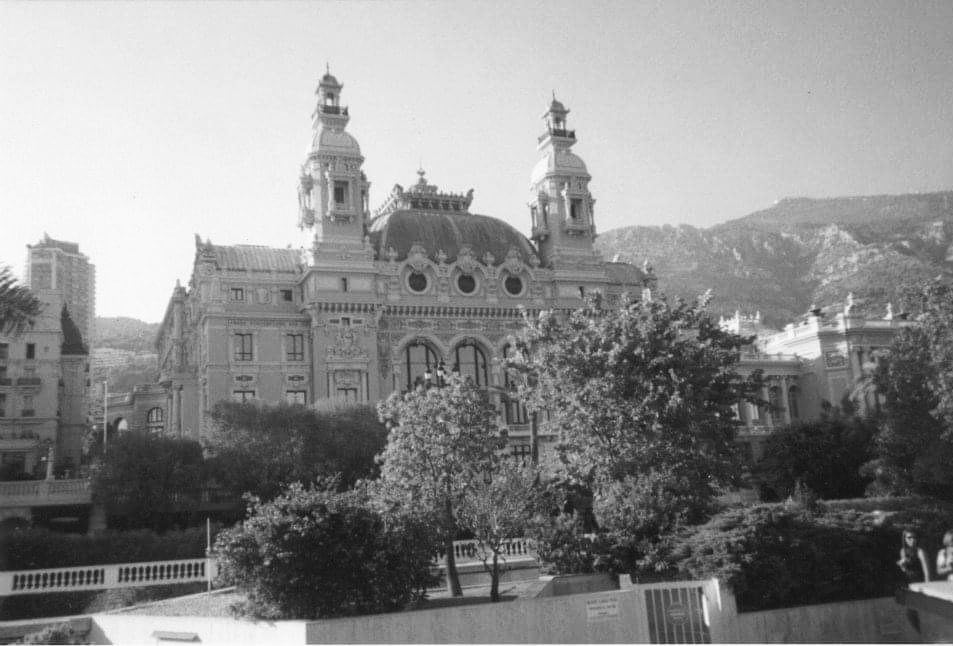
Those paths ultimately delivered me in 10 minutes, like a fairy flitting through vines, to be smack in front of the Place du Casino.
I’m not a gambler, but I’d say the adventures I encountered on this trip were some of the most significant of my lifetime. Look forward to returning someday.
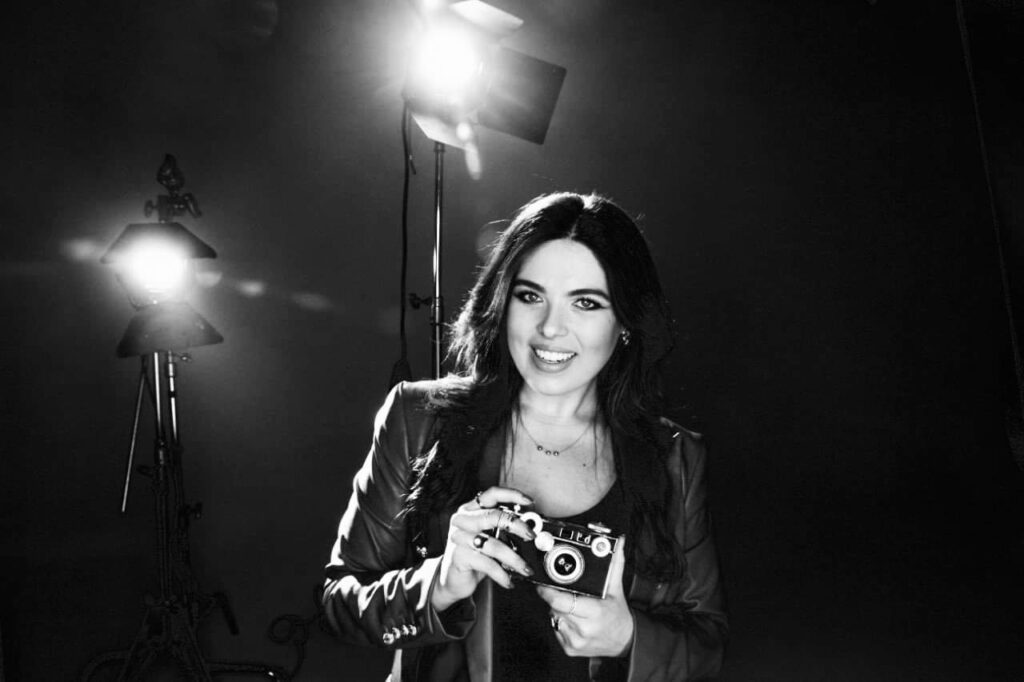
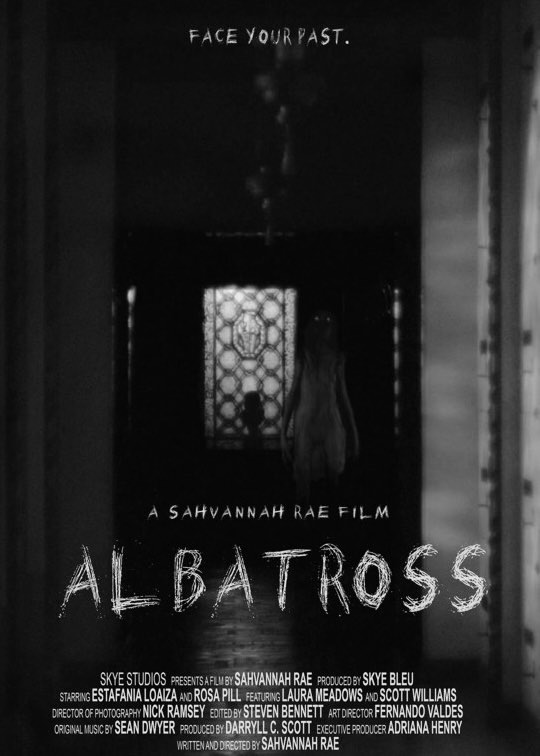
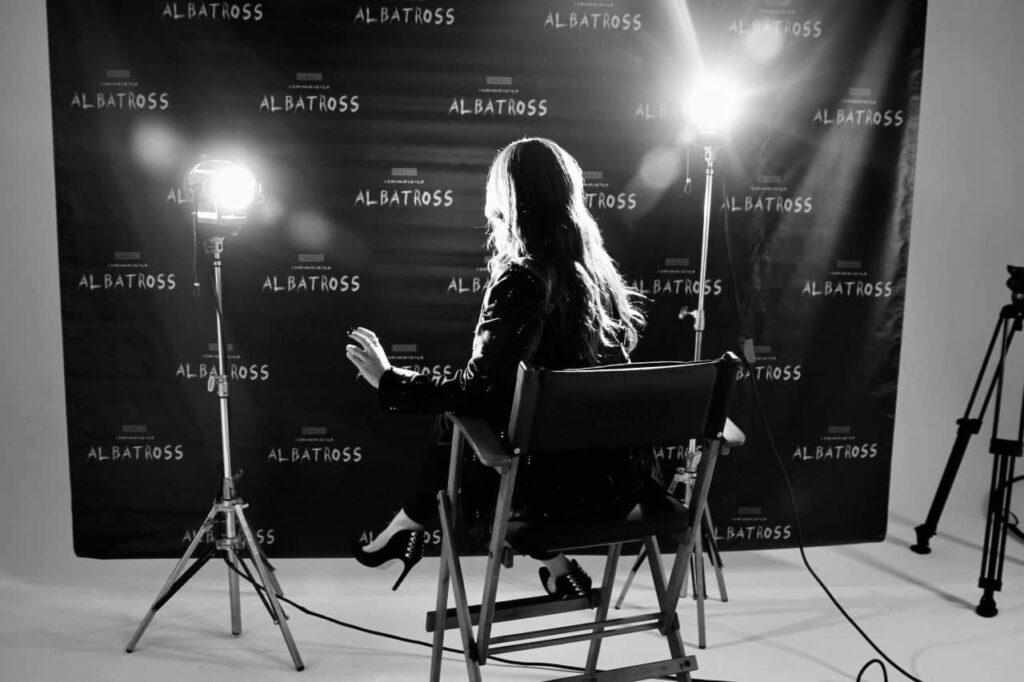
I am a second generation Mexican American screenwriter and director. As a filmmaker, I aim to focus on raw, unique, and female character-driven films. I strive to create thought provoking content that pushes the mind and challenges perspectives. I made my directorial debut in 2018 with my short film “Ava,” and after 5 years of establishing myself in the industry I created my production company, Skye Film Studios, alongside my sister and producing partner Skye Bleu. Skye Film Studios just wrapped our first feature film that will premiere in November of 2023. Through Skye Studios we have created a platform that will leave behind a legacy of films that prioritize showcasing the worst and best parts of the human experience in the most genuine way.
-What inspired you to become a filmmaker?
I believe stories are an extension of ourselves and the most important thing we can do in this life is share that undeniable extension with others. My inspiration to become a filmmaker always derived from my love of storytelling. Stories are an entity in themselves and they come alive when they are told. I have alway been fascinated in the idea that anything I can imagine, I can make real through filmmaking. The films I create always begin with a story that is a mirror of my own fears, traumas, angers, or happinesses. Through filmmaking I have discovered the process of witnessing a concept of mine slowly become its own kind of embodiment with a personality and perspective. The stories I tell oftentimes end up surprising me on where they end up going and what they end up teaching me about myself. Filmmaking is much bigger than one singular person and every film that has ever been created was a compilation of countless individuals and their original ideas. I am constantly inspired by how film brings people together. My drive is centered in those opportunities to collaborate with other professionals on something as personal as my own story. Filmmaking has taught me how to be inspired by everything around me, whether it’s my inner abrasions or the strangers I see on the street. My films have become so deeply impeded in me that they often unveil a part of myself I had no idea was there. I feel privileged to make filmmaking a career and storytelling a priority for my life.
-Do you think the cinema can bring a change in the society?
I think cinema has always and will always hold a high place in society. Films have been known to shape perspectives, bring awareness to issues, and create a necessary sense of empathy that is widely lacking in today’s population. Films open our mind to new ideas, original thoughts, and can make us care for characters we have never met. It will never cease to amaze me how something as simple as cinema can expand a person’s emotional spectrum and make them better than they were in a matter of minutes. Stories are the legacy left behind by those brave enough to share their deepest secrets with the world, and film is the vessel in which they are told. Cinema inspires society to be honest and unique because when an artist is honest in their art, countless others are able to relate and create a community of authenticity. Cinema brings people together unlike anything else I have ever seen. When people discuss their favorite film, they light up in such a way that makes me believe there is nothing more personal than a story you feel has been written just for you. Cinema makes many people one, and that one is better in every way.
-What would you change in the world?
If I could, I would coat the world with more curiosity. As we grow older, adults begin to lose their curious nature and with that their sense of awe. The world is filled with so much wonder and we should spend our lives discovering it. Having a sense of curiosity for other cultures, for the nature around us, for different kinds of art, and for the people we have yet to meet will serve us more than any amount of realism. Keep being curious, and you’ll never stop falling in love with the world around you.
-Where do you see the film industry going in the next 100 years?
In 100 years I see the film industry becoming more inclusive, more experimental, and more authentic, or at least that is my hope. I see classic films remaining classics and film students 100 years from now studying the cinema that makes me cry today. I hope the future brings new ideas and evolves shallow perspectives. In a century I see a world where film is no less important than it is today and even more impactful to those who need it the most.