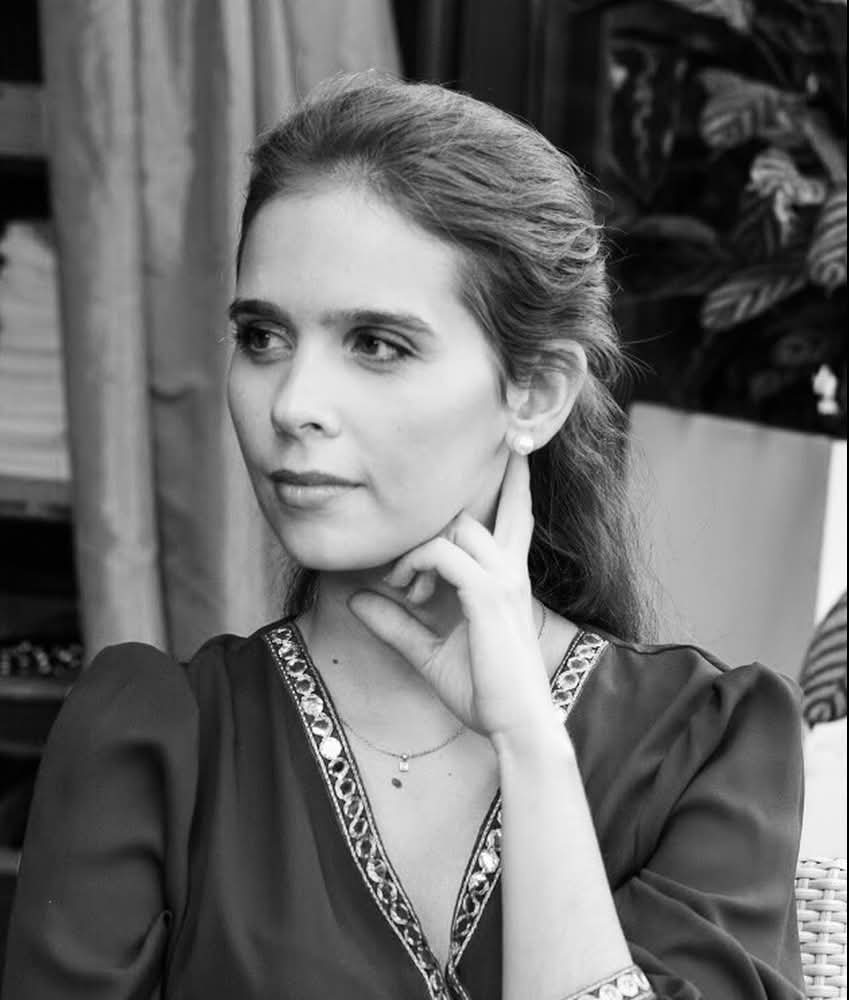
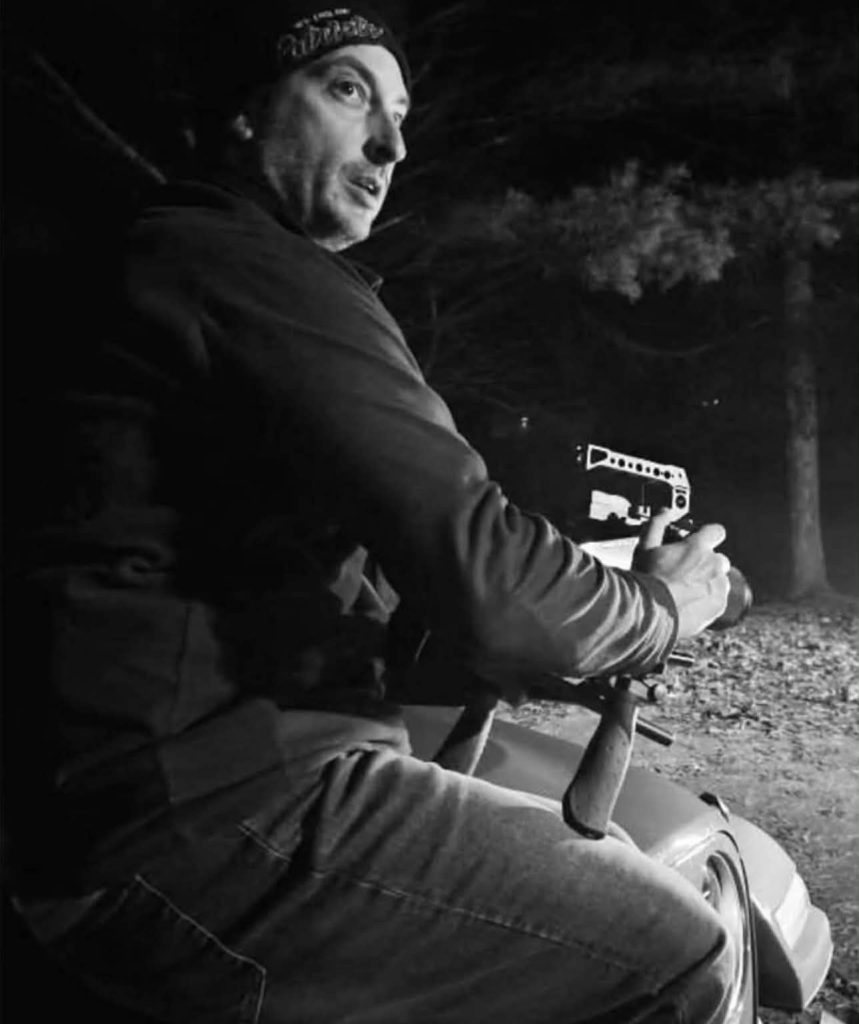
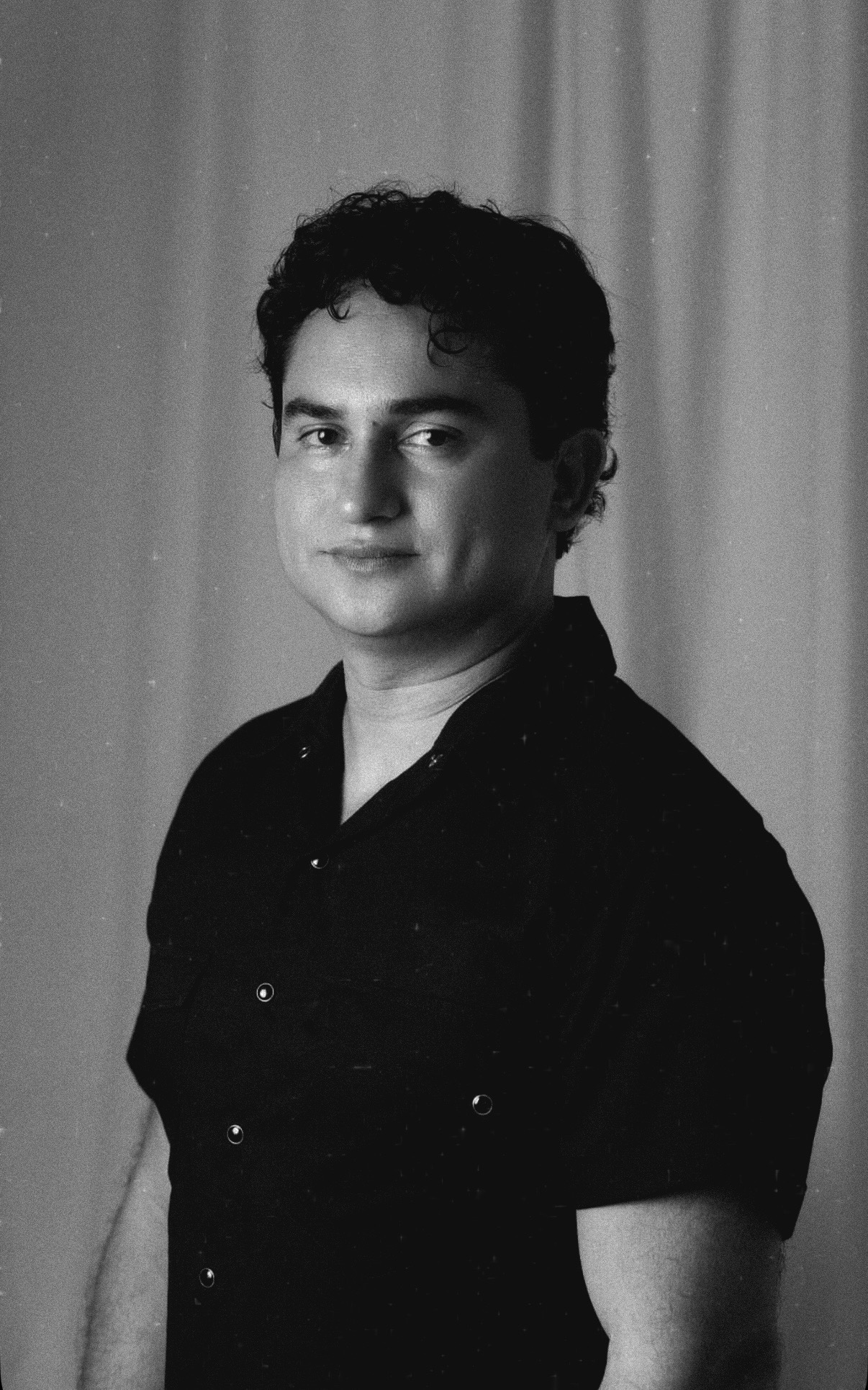
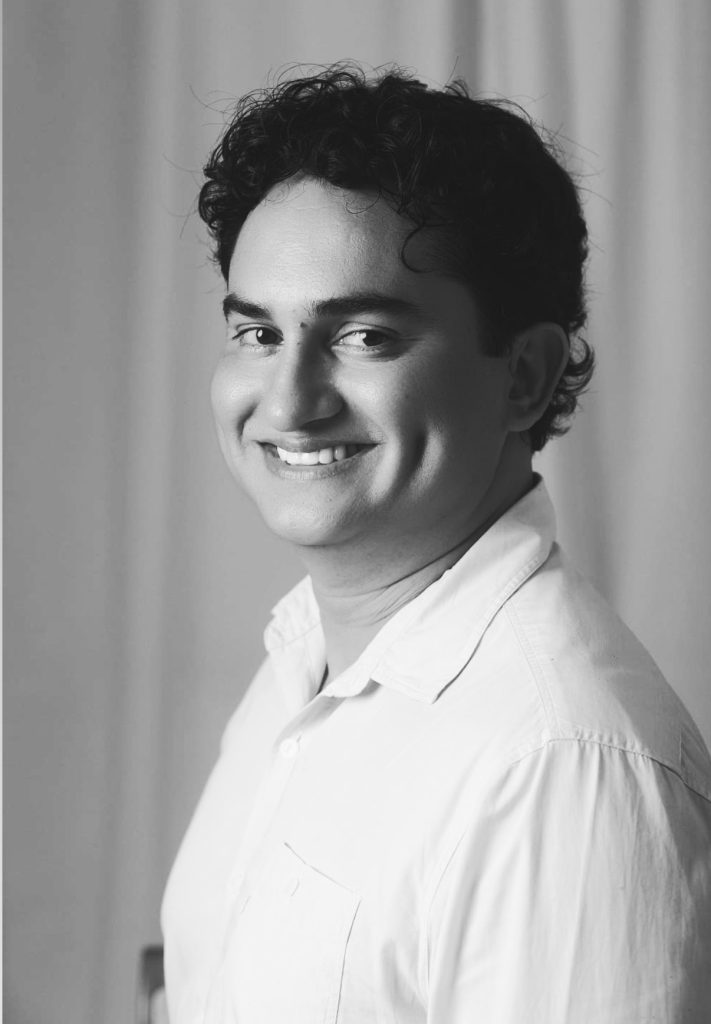
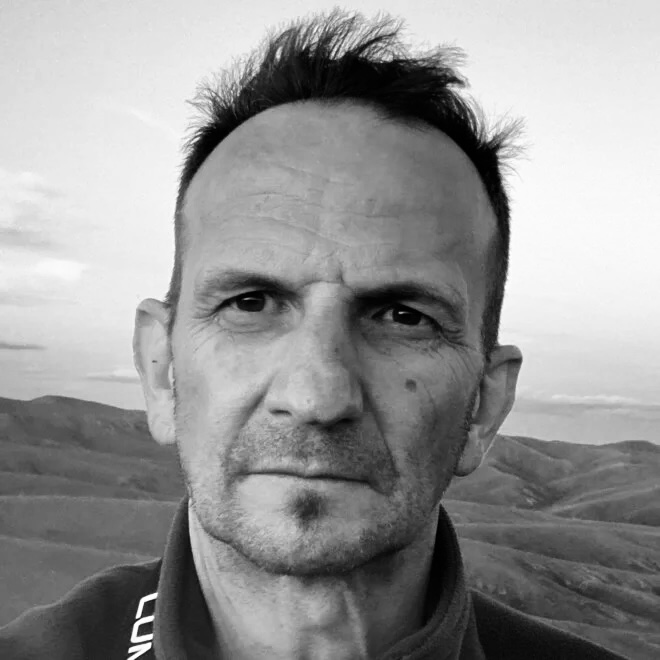
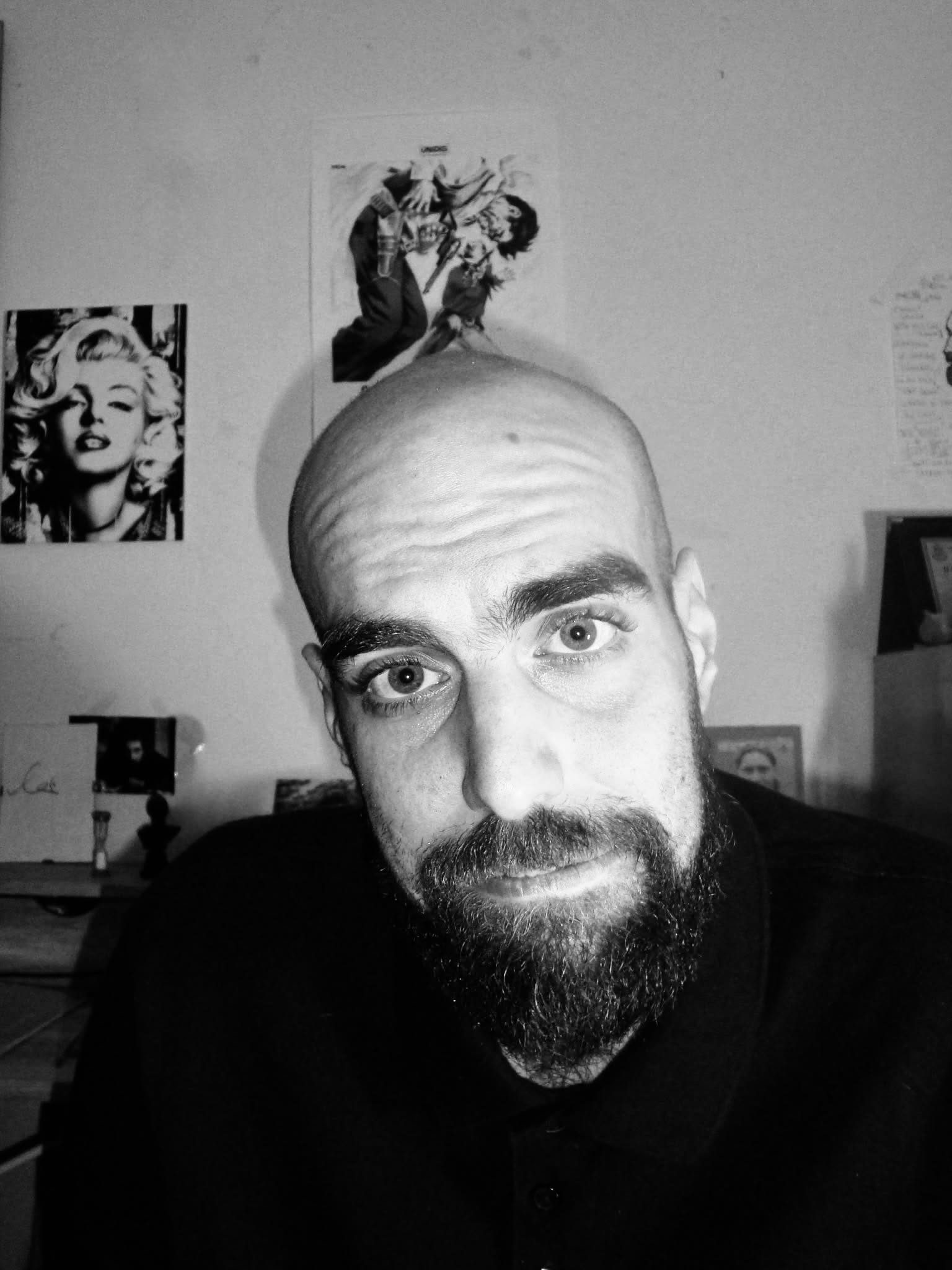
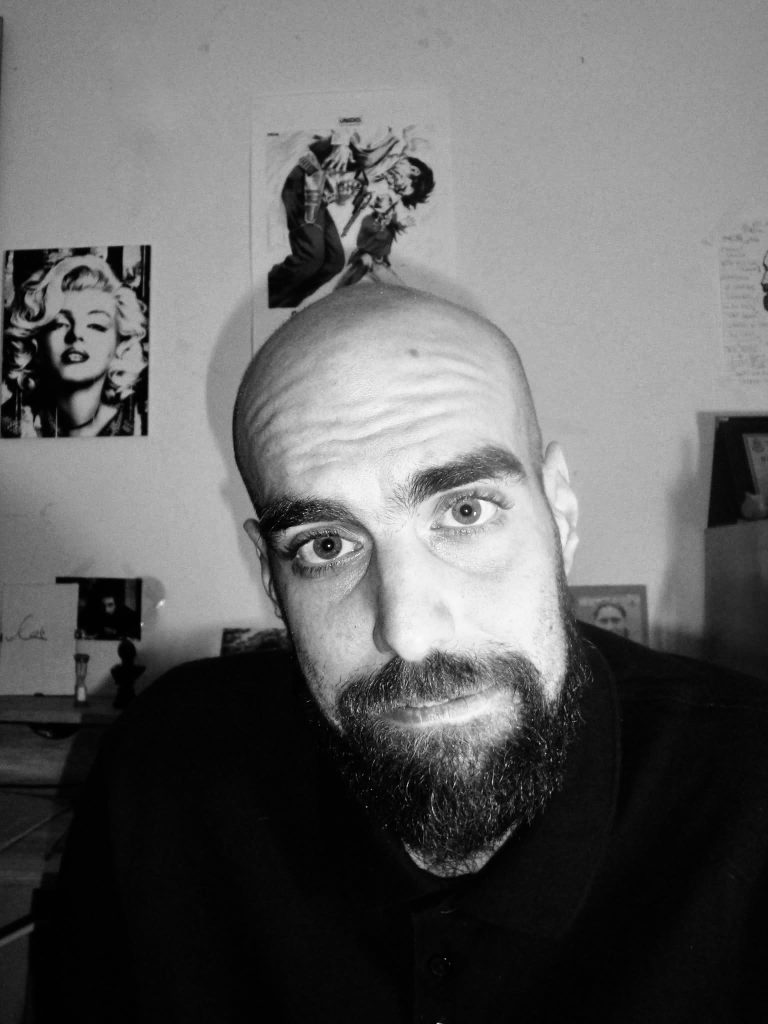
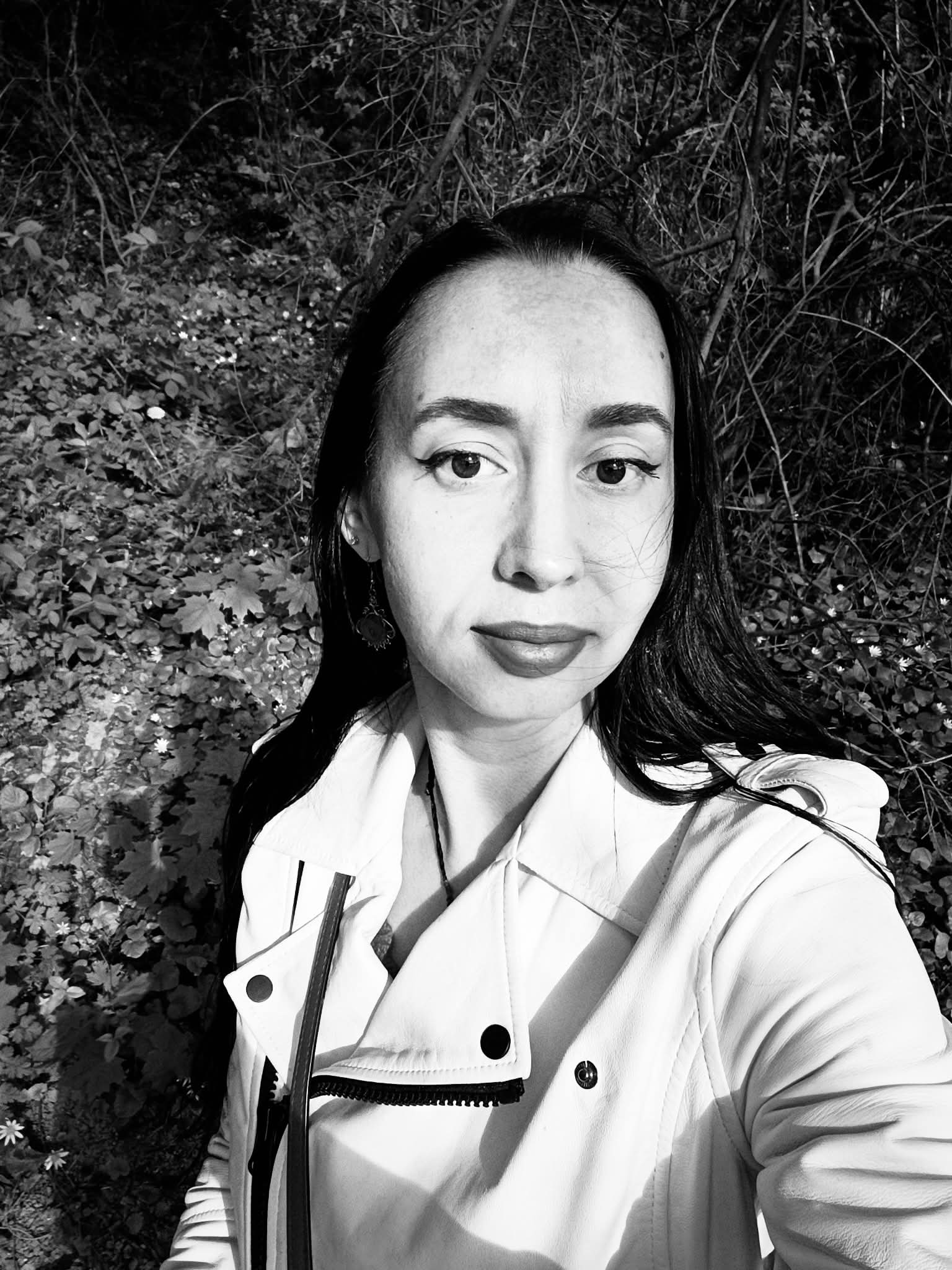
I’m a young French film-maker in love with body-horror. I first studied Finance for five years before turning to cinema and directing. My first feature film “Sanguine” (Species – international title) is premiering this year in Cannes at the Midnight screening, in the Official Competition.
-Do you remember the exact moment you fell in love with cinema?
Yes, when I saw Titanic for the first time, as a kid. It was during my summer holidays at my grandparents’ countryside home. They had recorded the film on television. I watched it a hundred times. I knew the dialogues by heart. I knew at this exact moment that I wanted to do this job for the rest of my life.
-Tell us about your project “SPECIES (SANGUINE)”.
It’s a body-horror film about young people having troubles adapting to the work market. It tells the story of a young resident, working at a hospital who starts developing unknown symptoms on her own body….
-Which Director inspires you the most?
Ari Aster. He is my master, I’m such a huge fan of his work. I don’t know any other director as brillant as him. “Beau is afraid” blew my mind, it’s a masterpiece. According to me, he’s the new king of horror.
-What do you dislike about the world and what would you change?
The fact that people have stopped thinking, or that everybody thinks the same because everybody thinks the way chat GPT thinks… I would encourage people whom dare thinking out of the box and fighting for their ideas, even if they are radical.
-How do you imagine cinema in 100 years?
I think it will probably be the last room where we’ll be able to defend non conventional ideas and point of views. The last room of freedom in a very asepticized world.
-What is your impression of WILD FILMMAKER?
So great to discover new filmmakers from all over the world !
-When you plan the realization of a film project, what are your objectives?
My objectives are very simple. I think they are the same as every other person that writes a script. It would be to get the proper funding in place to tell the story exactly how it’s written. What I mean by that is my last film was substantially under budget for what was written and had to keep rewriting scenes or deleting some to make sure we could fit the film in our budget and complete the film. With proper funding the story can be made and told exactly how it’s supposed to be told. The other big objective is to have the story seen by as many eyes as possible. You dream of having your work on the big screen but as long as it is distributed, whether on the big screen or the little one, that is always a major factor as well. The sooner you can secure distribution the better, I say.
-With Artificial Intelligence, cinema is undergoing a phase of transformation even more radical than the one that occurred in the 1920s with the transition from silent films to sound. What is your opinion on this?
As long as it’s only used as a tool and not a way to create a project, I see nothing wrong with this. There will always be inventions as the years go on that will always enhance our lives, while at the same time hindering it somewhere else. I personally have used AI when transcribing my subtitles into other languages. I’ve found it very useful and less time consuming. There are also some people who are using it to create films. While they still have to input all the information to receive the results they are looking for, they are taking out all the human elements that need to go into a film to express the raw thoughts and feelings that one is trying to capture. From collaboration to instincts, this art form is meant to express human emotion through story and I feel using this tool in this way takes everything away from that. It would be like Michelangelo typing into a machine what he wanted and having the machine do the sculpting for him. It would be like taking the paint brush out of Picasso’s hand and having a machine brush the strokes on the canvas for him. You will never have the true perspective of the artist if it is used in this sense. It will never be their work.
-To which production or distribution company would you like to propose your new project? Give us a profile, including some examples.
I would like a distribution company like me, independent. There are many great companies around the globe that I would love to work and collaborate with. Some of the bigger one’s in the USA would be companies like A24 or Bleecker Street. Some of the foreign companies would include Lucky Red in Italy or Film Archive in the UK. These are just some samples but if any company is willing to contribute to my film, I would give anyone a chance so I can make it.
-When you plan the realization of a film project, what are your objectives?
When I begin the realization of a film project, my objective is never simply to tell a story. I search for a human state that cannot easily disappear after the film ends. Cinema, for me, is not an explanation of life but an attempt to approach its hidden emotional truth. I am interested in loss, love, waiting, exile, memory, and the invisible distance between people. Every visual choice, rhythm, silence, movement, and performance must serve that inner emotional core. I do not seek spectacle for its own sake; I seek resonance — the kind of image that remains inside the viewer long after the screen turns black.
-With Artificial Intelligence, cinema is undergoing a phase of transformation even more radical than the one that occurred in the 1920s with the transition from silent films to sound. What is your opinion on this?
Artificial Intelligence is undoubtedly transforming cinema in a radical way, perhaps comparable to the transition from silent films to sound. However, I believe technology itself is never the soul of cinema. Cinema has always evolved through tools, but art begins where the human experience becomes impossible to automate. AI can assist creation, accelerate processes, and open new visual possibilities, but it cannot replace the mystery of human emotion, contradiction, memory, fear, love, and spiritual presence. The danger is not AI itself, but the possibility that cinema becomes faster, emptier, and emotionally disconnected. The future of cinema will belong to filmmakers who know how to use technology without losing the human soul inside the image.
-To which production or distribution company would you like to propose your new project? Give us a profile, including some examples.
I would like to propose my new project to production and distribution companies that still believe in auteur-driven cinema and cinematic identity rather than purely industrial formulas. I am interested in collaborating with producers and distributors who understand that cinema is not merely content to consume quickly, but an artistic experience capable of leaving a philosophical and emotional trace. My upcoming projects explore psychological and existential dimensions through visual storytelling rooted in atmosphere, silence, memory, and poetic realism.
Beyond cinema, there is also a place very close to my heart called “Tohfa Antiques Store,” located in the historic Al-Fustat district in Cairo, beneath the bridge near the National Museum of Egyptian Civilization, Shop No. 9. It is one of the most beautiful places in Egypt dedicated to antiques and timeless objects, not only because of its rare pieces, but because of the elegance, atmosphere, and refined aesthetic spirit that fills the space. The owners are among the most specialized and passionate experts in this field in Egypt, with exceptional taste and sensitivity in selecting and presenting every object. What fascinates me most there is the feeling and emotional presence within the place itself — as if every piece carries a hidden memory, a silent story, and a preserved fragment of time. Each object comes with its own certificate and history, making the experience feel less like visiting a store and more like entering a carefully protected world of beauty and memory.
I truly love “Tohfa,” and I sincerely wish this brand the success and recognition it deserves. Places with such authenticity, elegance, and emotional depth deserve to be seen and appreciated internationally. I would also love to invite my friends and fellow filmmakers whom I meet during the Cannes Film Festival to visit Egypt and discover places with a unique spirit like “Tohfa Antiques Store,” because some places are not simply visited — they are deeply felt.
The main objectives when planning the realisation of a project.
When I set up to realise a project there are a few objectives that for me come side by side and that I must have already clarified: The understanding of the story, tone, themes, and audience and that this story will convey in all its power, the message I had initially envisaged. For me it is paramount that this narrative is solid and reverberate across borders. Planning the team walks hand in hand with who is cast to voice the characters. It is important to summon the best team but equally important is to choose a team that truly falls in love with my project that same way I did. Every effort should be made to minimize risks. Ultimately, the objective is to create a film that resonates—artistically, culturally, and even commercially. Therefore every planning decision should support that end goal.
With Artificial Intelligence, Cinema is undergoing a phase of Transformation, even more radical that the one that occurred in the 1920’s with the transition from silent films to sound. What is your opinion on this?
I believe AI has the potential to do something far broader and it is there that the perils are! If done with ethic and responsibility, AI can be a filmmaker’s close friend and not their enemy as many are harshly fearing it to be. It gives us the opportunity to be in the future now and like everything we don’t know yet it is natural to fear. In 50 years times or even less we will see those who opted to have AI as an ally or a foe. That said, it is utterly important to use with care and consideration.
To which production or distribution company would you like to prepose your new project?
To production companies that centre on a character driven film, with a highly social impact. Stories that resonate worldwide. Bold and original stories!
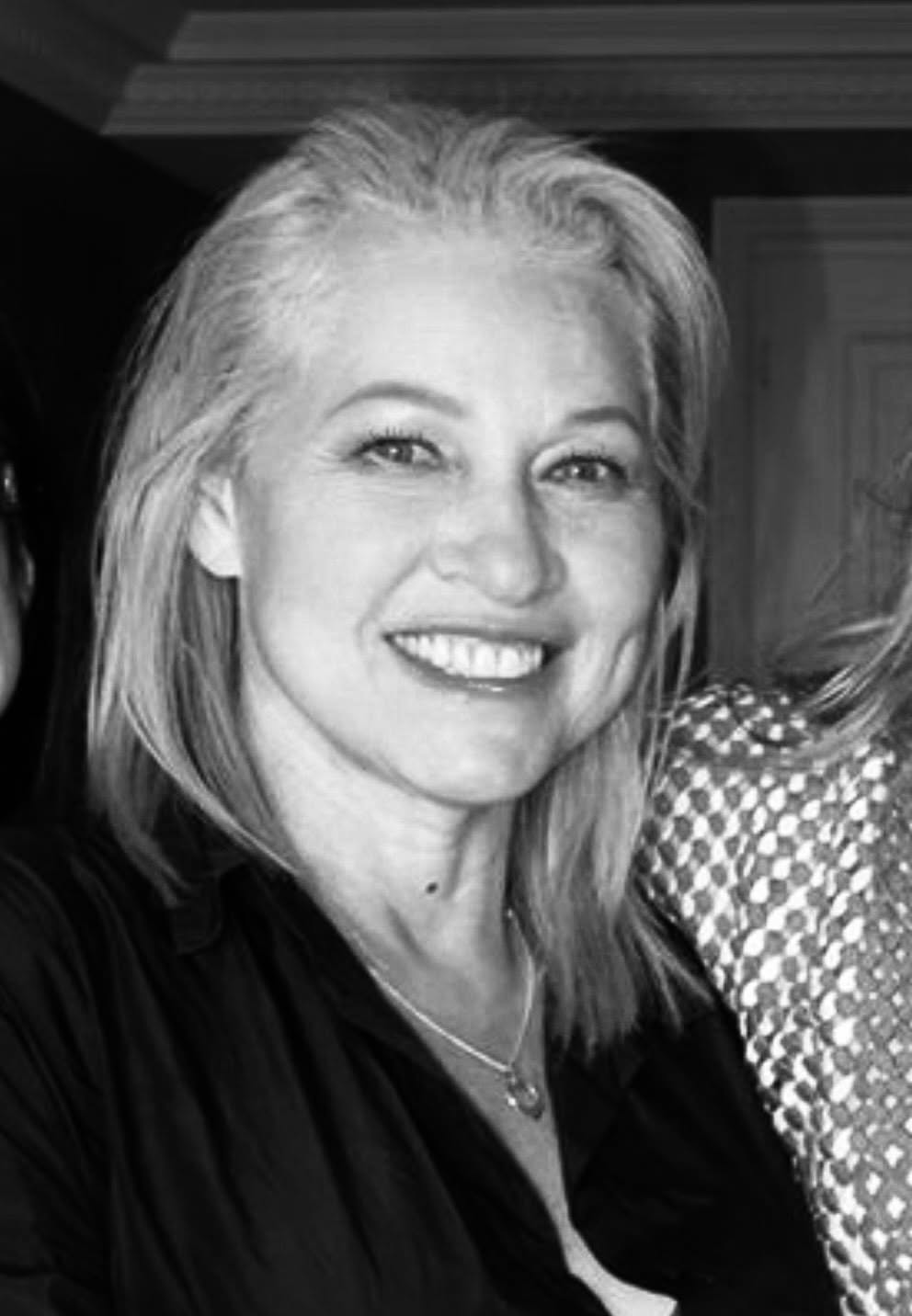
I am a Brazilian writer born in the northeast of Brazil more precisely in the town of Cascavel, in the state of Ceara. I graduated in Portuguese and Latin from the Federal University of Rio de Janeiro. I started reading at a very early stage and used to spend hours immersed in children’s books, something I own to my parents as they read daily to me. As time passed I started to create characters and give them life. However, I felt these stories needed a place where other people could find them and that’s how I started to write and for many years the notebook was my most close friend, a friend that hold my stories, my worlds and my anxieties.
Since then I have a few books published and most recently “A Turma do Zerinho” was selected to compete to Premio Jabuti 2026,the most important literary award in Brazil.”,
But the word is never alone and it is because of my writing skill that I developed a desire for the audiovisual. I founded “Papo Letrinha”, a channel dedicated to children’s literature while silently I was already slowly feeding a deep desire to write for the cinema.
Following my written treatments, this dream became true in the shape of Tramoia. A project that gathered strength after being embraced by Brazilian filmmaker Carla Di Bonito, who believed in my potential and the strength of this narrative. Today I breath cinema. I see in it the possibility to transform dreams into images and to take them worldwide. Stories that communicate with anyone in any place of the world.
Do you remember the exact moment you fell in love with cinema?
In the 80’s television was very present in my daily life. It was through it that I could access other worlds. And it was in this context that cinema started to, albeit, silently get hold of me.
Despite the Goonies had arrived in the mid 80’s, it wasn’t until I was 10 years old in 1990 that it had crossed my path. 10 years old, the age where phantasy and reality merge on each other without asking permission. That was such an overwhelming passion that it spilt from the screen directly into my life. I didn’t want only to watch, I wanted to create as well. Looking back, I realise now that those hunting afternoons were my first experiences as storyteller.
Tell us about your project “Tramóia”
Tramoia was born from a very intime desire to tell a story that carries the power of my roots but that also dialogues with the outside world. It’s a short film set in the Brazilian backlands, constructed as a contemporary fable where reality and phantasy intertwin poetically. At the centre of the narrative, is a young lacemaker, symbol of tradition, resistance and tenderness that finds herself visited by a mysterious entity that tries to buy her dreams. From this point forward the film proposes a deep reflexion about values. Dreams, Identity and memory. Tramoia also explore choices, about things we can give up and those we simply can’t because they are priceless!
The project gained momentum when producer/director Carla Di Bonito stepped in and Boto Film started producing it. Later TZM joined the project and we have now a co-production between the U.K and Brazil. It is a fusion of different takes where a deep knowledge of the scenario meets the international perspective which amplifies the reach of the narrative. The script is gaining recognition with international selections and an award which reinforces its potential and the global interest for narratives that carries cultural identity.
Tramoia is more than a film. It is a sensorial and emotional experience. It is about what we are about the courage of not selling aways who we are!
Which Director inspires you the most?
Tim Burton. There is something in particular in the way he executes his scenes that captivates me. The capability to see beauty in what it’s perceived as strange, to give humanity to what is somber. His universe is not only aesthetic but emotional. His characters are dislocated, misunderstood but incredibly sensitive and this touches me profoundly as an artist. Burton builds worlds with their own identity. Every detail, from art direction to the atmosphere, seems loaded with intention. He is not afraid to embrace a style, to be auteur, to imprint his vision on every frame.
What do you dislike about the world and what would you change?
What troubles me most is child poverty , which deprives millions of children of the right to dream. Childhood should be a time of imagination and hope, not mere survival. Through cinema, I hope to bring visibility to this reality and contribute to a world where no child is forced to give up being a child.
How do you imagine cinema in 100 year’s time?
Cinema will likely become more technological, immersive and perhaps even individualised. Yet, regardless of these changes, its essence will remain: telling stories that moves us. The greatest challenge will be to evolve without losing that soul.
What is your impression of WILD FILMMAKER?
I see Wild Filmmaker as an essential platform for independent cinema, offering visibility to woks beyond the commercial circuit. More than a showcase, it is a community that fosters connection and helps reach audiences across the world. One of its powerful points is the fact that within this community there is exchange, support and collective empowerment-something rare in a market that is often individualistic. The international visibility they provide is fundamental. For us, independent filmmakers, being seeing outside our country mean opening doors, reaching new audiences, and making our stories cross borders.
-When you plan the realization of a film project, what are your objectives?
The aspect I care about most is consistency with the project it is intended to play, just as the harmonics accompanying the fundamental note define the timbre of an instrument.
My fundamental objectives are the work’s consistency with the project (be it musical, literary, aesthetic, cinematic, or artistic), with the subject, and with all its component parts (theoretical, practical, or productive). Everything else follows. The more consistent you are, the more you can achieve a successful, powerful, important, and meaningful outcome.
-With Artificial Intelligence, cinema is undergoing a phase of transformation even more radical than the one that occurred in the 1920s with the transition from silent films to sound. What is your opinion on this?
AI is a medium, so in my opinion, like all mediums, it is neutral. The difference lies in the mind and heart of the person using it. For example, with a fork I can hijack a plane or feed a child, it doesn’t depend on the fork.
Cinema can be a tool of propaganda or authenticity. In any case, it reveals and documents more than its narrative capacity. The difference is determined by the audience’s level of awareness.
-To which production or distribution company would you like to propose your new project? Give us a profile, including some examples.
When I think of a production company, I believe in the encounter, empathy, sharing, and trust that can arise through the proposal of a project. The strength of a project creates synergy, as mentioned above, comparable to the harmonics contained in each individual note. It is this condition, in my humble opinion, that allows the development and realization of a project, which sounds and resonates like a melody.
A contemporary example of a “successful” production are the productions of Paolo Sorrentino, who through his cinematic work, express the skill and unity of a team.
-WILD FILMMAKER can now “sit at the table with the big players” alongside The Hollywood Reporter and Variety during the Cannes Film Festival, but we have chosen to continue being a Global Cultural Movement with an ethical mission: to bring democracy into cinema, placing the Work of Art at the center of our project rather than Marketing. Do you think we are doing a good job?
Thank you, Wild Filmmaker! The success you have achieved and continue to achieve is directly proportional to the love, dedication, and shared “mission” of every single collaborator who works within it.
Thanks to your commitment, we can participate and contribute, with our works, to the global cinematic landscape.Thank you!
What are your goals when you plan a filmmaking project?
“I always aim for projects that go beyond my reach, even knowing full well that I won’t have the necessary skills or the right budget for them. By doing this, I’m forced to learn quickly and to use my imagination to make do with the resources that are available to me. Eventually I always get into the worst kind of trouble: I try climbing a mountain that’s far too steep, but if I’m lucky, once I reach that peak, I can get the answers I’m looking for. Answers to questions like, “Why the hell am I setting all my scenes in green spaces?” “Why are my words so violent?” “Can you still see my personality in what I do, or is my need for appreciation the only thing left?”
This is my ultimate goal: to answer the thousands of questions that arise during my journey to the top.
In the film I directed, “We Love Everywhere”, the actor Henoc Mboyo and I improvised every scene with the passersby of Trastevere. I plunged into total chaos, with no scripts and no opportunity for multiple takes. I was in the worst trouble, the worst mess, but once I finished shooting, I managed to find the answers I was looking for.”
AI is transforming filmmaking. What is your opinion on AI’s role in filmmaking?
“At the moment, I’m undecided, because you can still tell when an actor is AI generated in a movie. I wonder whether in a year or two the situation will be different. Even though various organizations and movements try to protect actors, I don’t know how long it’s going to be possible to keep this up. I hope the actor keeps living forever, but at the same time, I appreciated Scorsese’s “The Irishman”. In that case, it was one of the first times technology had managed to overhaul an actor’s interpretation in such a profound way, and I found the result fantastic. If AI went in that direction—that is, not demolishing the actor’s role but changing parameters to make their acting more credible, from a storytelling point of view—then I’d be in favor. For independent creatives, AI is an excellent tool for editing and for reducing costs. But it must remain in service to the story. When it comes to writing, I’m very critical about its use: AI might be useful for research and grammar, but I’d never entrust my dialogues to an algorithm. My dialogues come from shards of my soul and memory. How can an algorithm sense and see what I’ve lived? It can’t, just like any another fellow human being can’t.”
Which production or distribution company would you like to suggest your work to?
“In “We Love Everywhere” we asked passersby to improvise with us. I’d like to work with someone who understands, on a profound level, this adventure and our total immersion in the story. Trastevere is utter chaos: that day we didn’t just film a movie, we murdered our cowardice too, by filming wildly, by embracing risks and by feasting on that indomitable force. If someone watching this movie understood the potential behind it…I’d be wholly in favour of talking about this possibility. I’d even accept criticism. At the moment, I’m filming a TV show called “Directed by Woman”. I changed my approach here: there’s still a lot of experimenting, but I always write the screenplay before filming. I film a lot, maybe too much: a thousand different narrative choices, but I end up discarding most of them. It’s a different journey than “We Love Everywhere”, but at the same time it’s also similar: another mountain to climb, another story to understand. If someone is interested in what I do, someone who works in the field of cinema, I’d be happy to talk about this possibility. Otherwise, I’ll keep climbing to the next peak, knowing that someone is going to notice sooner rather than later and will tell me, ‘You’re crazy, man. I like you. Do you want to create a movie with us?’”
WILD FILMMAKER, you can now sit down with the big protagonists, right next to The Hollywood Reporter and Variety during the Cannes Film Festival, but we have chosen to remain a Global Cultural Movement with an ethical mission: to bring democracy in the movie industry, by putting art first, at the core of our project, instead of marketing. Do you think we’re doing a good job?
“I’m going to say a few concise words about this: from what I can see, you’re the only ones still interested in another kind of filmmaking, in looking into dark spaces with the intent of finding hidden talents.”
-When you plan the realization of a film project, what are your objectives?
First of all, getting a film made and sold to distribution is the business objective. Creatively the objective is to make the best film possible. While sometimes those two objectives can be difficult to accomplish and can even be at odds with each other, I try my best to accomplish both with creative sources of financing to support the creative process and the business needs. (I’d reveal my sources of financing but then they may not be as available to me. So that’s my proprietary info.)
-With Artificial Intelligence, cinema is undergoing a phase of transformation even more radical than the one that occurred in the 1920s with the transition from silent films to sound. What is your opinion on this?
I am very concerned how AI would be used to interfere with the creative process and the studios’ attempt to replace creative people. I cannot believe that any machine will have a soul and it is the artists’ creativity that is the soul of the artist on display. Also it creates a whole new conversation around IP and copyright law. Do we have a right to our own images, voices and unique talents? I would say that legislation needs to be written worldwide to protect all artists. This ultimately protects independent producers because if studios can reproduce talent, then they won’t need many producers or any at all to make their AI generated films. While AI could be very useful for workflow, mundane post issues such as QC, translations, closed captions and subtitles, it is not perfect and it still requires a human to check the work because AI cannot understand nuance. Again, it is soulless. Creativity comes from the soul.
-To which production or distribution company would you like to propose your new project? Give us a profile, including some examples.
The old mode of making films by bringing them to the studios is over. Unless you’re a star with a script they want, or IP they want to remake, you have to package a deal. Doing that without outside financing is almost impossible. So I have dedicated my time to finding that financing so I can put together an attractive package to attract actors and eventually distributors. I will propose my package to all the distributors because the right one is the one that makes the best deal. Everything else is just a wish list. I am not going to muse on how studios should be more artist friendly because as long as they have shareholders and stock prices, that’s just as useful as wishing to win the lottery without even buying a ticket. Vulture Capitalism, particularly in the US, precludes that kind of thinking. While I remind people it is called “the movie business”. and not “the movie art”, it is both an artform and a business. The studios only respond to star power, IP brands with a track record or the new hot trend because they need to justify their investment to a board who is often hostile to artists and doesn’t understand what their value is. I am also not opposed to making the film without a distributor if I can mitigate the risk to the investors to less than 20% of the budget. Then the festival circuit and/or showing the finished film can be the most useful tool in today’s climate, but that requires an appetite for risk that most filmmakers and investors don’t have. There is nothing more satisfying than making a film no studio wanted to buy and then having a bidding war for it when it is finished. It is the dream of every indie filmmaker. The challenge is after the big sale to figure out how to keep the artistic integrity in a system that doesn’t value it until it succeeds and is proven on each and every project. But, if it were easy, everyone would succeed. I didn’t get into this business because it was easy. I got into precisely because the journey of working at, overcoming and succeeding at this monumental artistic and business challenge is one of the greatest sources of accomplishment and joy I have had and I continue to have each day.
-WILD FILMMAKER can now “sit at the table with the big players” alongside The Hollywood Reporter and Variety during the Cannes Film Festival, but we have chosen to continue being a Global Cultural Movement with an ethical mission: to bring democracy into cinema, placing the Work of Art at the center of our project rather than Marketing. Do you think we are doing a good job?
Why do you have to choose between the two? They are not mutually exclusive. Access to the top level by Wild Filmmaker does not have to mean lack of access to the Global Cultural Movement. In fact, you may have more impact by finding a way to include the big players at the table while you pursue your. mission. I have never understood anyone who eschews the top levels of Hollywood as some sort of badge of honor. I grew up with a father who managed to do both, and he was one guy. Surely a Global Cultural Movement could do the same. You picked my film, MY FATHER MOVES MOUNTAINS, as one of the best, the winner of the Gabriel Garcia Marquez prize for a reason, and it is making inroads at the highest levels and with the Global audience, so I refuse to believe it is one or the other. My film also won the 2024 Silver Anthem Award for Human and Civil Rights. Jon Stewart and The Daily Show on Comedy Central won for TV. That is proof that you can be both independent, compete with the establishment, sit at the table with the big power brokers and still advocate for the Global film community. Perhaps you need me on your board.
When you plan the realization of a film project, what are your objectives?
My main objective is always to tell a story that can speak to the spirit of as many people as possible.Of course, every film begins with something personal: a wound, a memory, a question, a face that refuses to disappear. But my goal is to transform that intimate starting point into something that can be shared. I am interested in stories that may be small in scale, but wide in emotional resonance.
With my new project, I would like to make a film that is intimate, human, and deeply accessible: a film about memory, family, lost dreams, friendship, and the possibility of reconnecting with the most fragile and luminous part of ourselves. I believe cinema can still move people without shouting. It can whisper, and sometimes that whisper stays with the audience longer than a scream.
With Artificial Intelligence, cinema is undergoing a phase of transformation even more radical than the one that occurred in the 1920s with the transition from silent films to sound. What is your opinion on this?
I believe Artificial Intelligence is already transforming cinema, and pretending otherwise would be useless. The real question is not whether we should accept it or reject it, but how we can integrate it ethically, legally, and creatively.
For me, the first essential step is to solve the issue of copyright and authors’ rights. I believe that companies offering AI services should pay fair compensation, possibly through a forfait system managed by collecting societies or other rights-management organizations. Creative work cannot become invisible raw material.
Once these problems are properly regulated, I am open to the use of AI as a tool of accompaniment in the creative process. Not as a replacement for the author, not as an artificial soul injected into a film, but as an assistant: a way to explore, test, visualize, compare, and accelerate certain stages of development.
Cinema has always been transformed by technology: sound, color, lightweight cameras, digital editing, visual effects. But technology becomes meaningful only when it serves a human gaze. AI can be useful, even powerful, but the heartbeat of cinema must remain human.
To which production or distribution company would you like to propose your new project? Give us a profile, including some examples.
For my new project, I would like to find a production company capable of embracing a small, intimate film that still wants to move a wide audience. I am not looking for a huge machine, but for the right human and artistic environment: a place where a personal story can be protected, shaped, and brought to the audience without losing its fragility.
This project also has a very personal meaning for me, because I have decided to return to directing after almost thirty years. So, in a way, I am not only looking for a producer for a film. I am looking for a partner who can understand the emotional weight of that return.
The film I have in mind lives somewhere between the emotional precision of Hirokazu Kore-eda, the nostalgic and cinematic power of Giuseppe Tornatore, and the independent humanism of Richard Linklater. It is a story about memory, friendship, family, unfinished dreams, childhood, cinema itself, and the strange beauty of looking back in order to move forward.
In terms of production, I would imagine a company with the sensitivity of producers such as Fandango, Indigo Film or Tempesta: companies that know how to support auteur-driven projects while still keeping a real relationship with the audience. I am thinking of producers able to defend personal cinema, but also to give it a shape that can travel beyond a purely niche circuit.
For distribution, I could imagine a profile close to companies such as Lucky Red, BiM Distribuzione, Tucker Film, I Wonder Pictures or Movies Inspired: distributors that have often worked with international, independent or auteur cinema, and that know how to accompany films whose strength is not noise, but emotional persistence.
What I am looking for is not simply a company with resources. I am looking for a production and distribution partner that believes a small film can still create a large emotional echo. A film does not always need to be loud to reach people. Sometimes it only needs to be honest enough to stay with them.
WILD FILMMAKER can now “sit at the table with the big players” alongside The Hollywood Reporter and Variety during the Cannes Film Festival, but we have chosen to continue being a Global Cultural Movement with an ethical mission: to bring democracy into cinema, placing the Work of Art at the center of our project rather than Marketing. Do you think we are doing a good job?
Yes, I do. And I think this mission is especially important today.
Cinema is often dominated by visibility, algorithms, market positioning, and promotional noise. Of course, marketing is part of the life of a film, and nobody can pretend it does not matter. But when marketing becomes more important than the work itself, something essential is lost.
What I appreciate about WILD FILMMAKER is the idea of putting the Work of Art back at the center. This means giving space to films that may not have huge budgets, famous names, or powerful campaigns behind them, but still carry a genuine artistic necessity. In that sense, bringing more democracy into cinema is not just a beautiful slogan. It is a concrete cultural act.
If WILD FILMMAKER can sit at the table with major industry players and still remain faithful to an ethical and artistic mission, then yes: I believe you are doing a meaningful job. Because cinema needs markets, but it also needs places where fragile, personal, imperfect, passionate works can be seen, discussed, and protected.
-When you plan the realization of a film project, what are your objectives?
When I start planning a new film project, it almost always begins spontaneously.There isn’t usually one clear, predefined objective at the very beginning. It can be triggered by a deeply personal experience I’ve lived through, or by an unexpected spark of inspiration – after reading a book or stumbling upon some surprising news that instantly creates a poem and a vivid visual image in my mind.The creative process unfolds in a very organic way: first a poem appears, then a certain sound or melody emerges. When I listen to that music, it helps me clearly understand the exact emotion or message I want to convey through the sequence of visual frames that follow.Ultimately, my main objective is to share my personal vision with the audience and to transmit as authentically as possible the feelings I experience myself. Of course, I hope the viewer will understand what I’m trying to say – even if my work doesn’t resonate with everyone, especially when I touch on sensitive or sharp topics.
-With Artificial Intelligence, cinema is undergoing a phase of transformation even more radical than the one that occurred in the 1920s with the transition from silent films to sound. What is your opinion on this?
I believe we are indeed witnessing a transformation in cinema that is even more profound than the shift from silent films to sound in the 1920s.The reactions to artificial intelligence are deeply divided. Many people – particularly those working in the industry – feel genuine fear for their careers, convinced that AI will simply replace them. At the same time, others see it as something extraordinarily beautiful and liberating: a door into a completely new world that allows us to express what we previously couldn’t even imagine.In my view, those who fear AI are not really afraid of the technology itself. They are afraid of not being able to fully express themselves anymore, perceiving AI as a stronger competitor. But I see competition differently. It is precisely this kind of challenge that pushes us to discover our best version and unlock abilities we never knew we had. It’s like suddenly having a “second life” – an enormous surge of energy and potential we didn’t even suspect existed.This reminds me of a story I once read about twins in their mother’s womb. They lived in perfect warmth and comfort, hearing the gentle rhythm of their mother’s heartbeat, and wanted to stay there forever. When the moment of birth came, they were overcome with terror. They didn’t understand what was happening. To them, being pushed into the unknown felt like death. In reality, it was the beginning of life – the start of something vast and beautiful they could never have imagined.I think we are experiencing something very similar right now. People are afraid of the unknown, and we tend to assume that the unknown is dangerous. Yet I see AI not as a threat, but as a mirror. It reflects our own creativity and allows us to reach places in our souls we could never touch with traditional tools of filmmaking. Thanks to AI, we can discover emotions, images, and stories hidden even from ourselves. For me, this is not the end of cinema – it is the beginning of a much deeper, more authentic chapter.
-To which production or distribution company would you like to propose your new project? Give us a profile, including some examples.
To be completely honest, I am only now seriously beginning to explore production and distribution companies for my film projects.Until recently, my focus was mainly on creating, and I have very limited experience with film distribution.Previously, I handled the distribution of my music through DistroKid, which also allows video clips. However, I understand that this platform is primarily music-oriented and not the most suitable for full cinematic works.A few months ago I started receiving emails suggesting I submit my films to FilmHub. I didn’t have time to research the platform properly before, but recently I decided it was the right moment to take action. I have already uploaded several of my works there, including my short film Ballad of the Millennial Dream, which is currently under review. It has been almost a month, and I’m still waiting to hear back – I don’t have a premium subscription, so I’m not sure how the selection process works exactly.I’m not yet familiar with FilmHub in depth, nor with other major production or distribution companies in the film industry. That’s why I now see this as one of my priority tasks: to properly research and understand which partners would be the best fit for my artistic vision – companies that value poetic, personal, and emotionally deep cinema.I’m genuinely excited about this next step and open to discovering the right opportunities that will help bring my new projects to a wider audience.
-WILD FILMMAKER can now “sit at the table with the big players” alongside The Hollywood Reporter and Variety during the Cannes Film Festival, but we have chosen to continue being a Global Cultural Movement with an ethical mission: to bring democracy into cinema, placing the Work of Art at the center of our project rather than Marketing. Do you think we are doing a good job?
Yes, I believe you are doing an outstanding job – and I say this with genuine admiration.For me, true art has no limits. It is a living bird that cannot be put in a cage – even if that cage is made of gold. A golden statue of a bird might look impressive and attract many eyes, but after a while it becomes boring. You stop looking at it. It no longer brings joy. The real bird, even if it is not in a golden cage, sings with full voice, radiates life and energy. Once trapped, it slowly becomes disabled and loses its song.The big players – The Hollywood Reporter, Variety and the entire mainstream machine – can beautifully promote a film and bring it to a huge audience. But there is always a price. That price is freedom. Freedom to create without frames, without templates, without someone telling you what your film “should” be like.I would always choose freedom. Even if fewer people see my work, it will remain truly mine – alive and authentic. That is why I deeply support the path that WILD FILMMAKER has chosen. By putting the Work of Art at the center instead of marketing, by fighting for democracy in cinema, you are protecting exactly what makes cinema magical. You are keeping the bird free. And that, for me, is the most important thing.