“Anything You Lose” (EXCLUSIVE) Interview with Irina Vodar

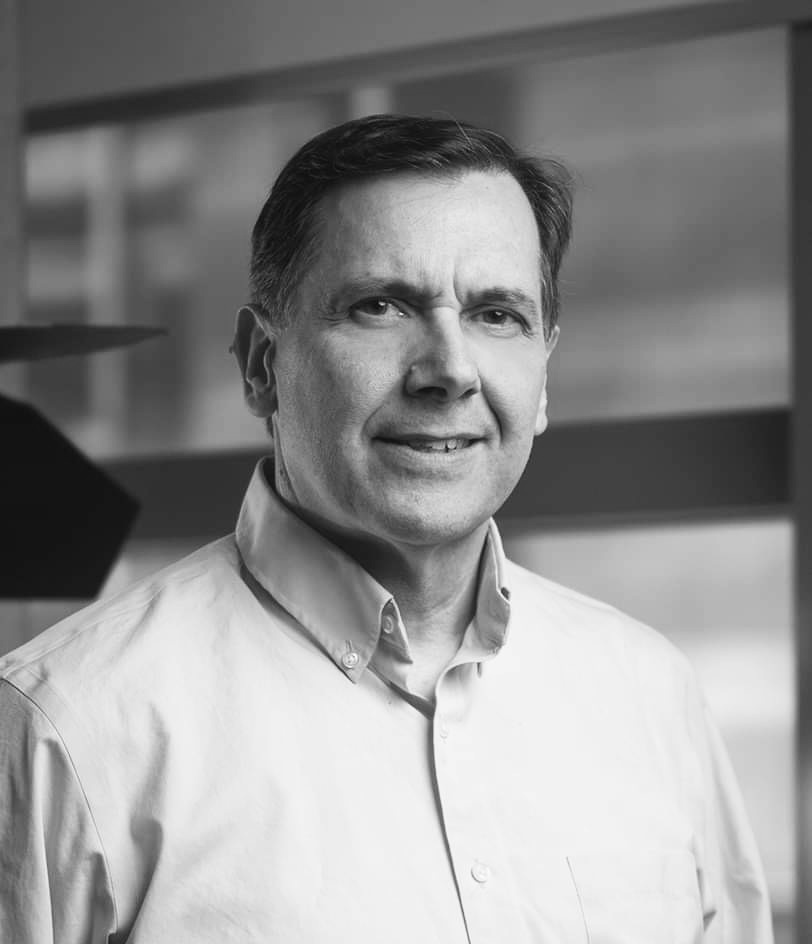
-Who is Irina Vodar?

I like to think of myself as a storyteller. When I was a kid, I liked to tell scary bedtime stories. It was a gift that made me friends in any setting. I am a film graduate of VGIK (Russian National Film School) and Columbia College, Chicago, U.S. Film Department. My path in entertainment began with Runandgun! Inc. startup in Chicago IL, developing “Duelin’ Firemen!” videogame for 3DO platform in exchange for food and shelter.

At Runandgun! I met a pleiad of iconic American stars; Mark Mothersbaugh of Devo, Nancye Ferguson, Timothy Leary, Rev. Ivan Stang of the Church of the SubGenius and Rudy Ray Moore, the father of modern rap. My first music video 3D collab “I’ll stick around” was for Dave Grohl’s Foo Fighters, following the dissolution of Nirvana at Kurt Cobain’s passing. My newfound set of skills landed me a job in TV advertising in New York City, and shortly after started my career with ABC News.

I am a filmmaker, art director, graphic designer and a former 3D artist, with over twenty years’ experience in film and Broadcast Design. Distinctions range from the 30th Daytime Emmy Award Nomination, to The George Foster Peabody Award, and others.

I always had a passion for filmmaking. I’ve written, produced and directed two indie full-length documentary films during the span of my TV career. My debut doc feature Miss GULAG, produced in association with Neihausen-Yatskova Films on a beauty pageant in a Russian prison for women, premiered at Berlinale 2007 (available on Amazon Prime). The film was praised for its humanistic and compassionate portrayal of the women, as well as its insight into contemporary Russian society.

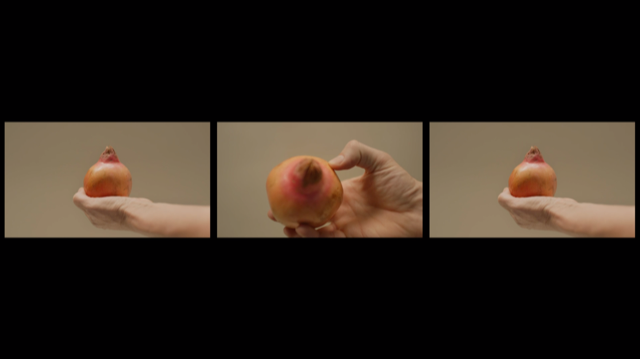
My second feature doc Anything You Lose, premiered in Los Angeles and New York City in the Fall 2023, and has already garnered 37 awards from 41 international film competitions, and just as many nominations. This breakthrough came as a phenomenal surprise. Anything you Lose has been in the works for 14 years, and is my most difficult, personal, and beloved film. It is a contemporary tale for grownups in a documentary film genre, shot verité style for seven years, and digested and edited in another seven. Once upon a time, there lived Eddie & Irina, and they didn’t have children…

An insight into hopes and dreams, addiction and isolation of ReproTech-enmeshed reality, Anything You Lose is an action-packed adventure of two individuals on the road to finding happiness, meaning of life, and joining in matrimony through a child conceived via ReproTech.

Anything You Lose is funded in part by the New York State Council on the Arts (NYSCA), a recipient of Best Feature Documentary and Best Educational Film Awards from the 8 And HALFilm Awards, among others.

-What inspired you to become a Filmmaker?

I loved the spirit of movie making since I was six years old, when I first saw a film crew working on location. They were filming a period action scene on a rooftop of a house in my courtyard, in the historical city center of Moscow.

…I was sitting by the window looking out at the courtyard. Suddenly, I noticed a man running across a rooftop, balancing on the ledge. He got to the middle of the roof, stopped, took out a revolver and pointed it to the right, then to the left, and then directly at me. I slowly slid below the windowsill for safety and hid there till my parents found me and sent me playing outside in the courtyard.

I stayed close to my building entrance, concerned about the gunman. There, a beautiful blond lady approached me and asked if I saw the film crew. The film crew!!! At that moment, a thousand bells rang in my head. I was spellbound. The next day, they filmed in my building on the staircase landing, and I stayed enchanted for what seemed like an entire 8-hour shift. With every new take they filmed, I took another little step towards the landing. When I was finally right in front of them, I was invited to play in the scene, and ran away. It would have been so blissful, life could end. The act of filmmaking became my secret passion.

Years later, when circumstances made me take up the camera and set it as a shield collecting data of my daily existence, I wrote with that original zeal of a child about bitter aspects of my grown-up life, sustaining leverage, addressing issues and sharing highlights I found to be most valuable, eye-opening, and helpful, things that I thought would resonate.

-Do you think the cinema can bring a change in the society?

All arts come from storytelling by the campfire. It is emotional communication that activates both intellect and visceral receptors. The best storytelling archetype of all times is the journey of A Hero with a Thousand Faces by Joseph Campbell. Anything You Lose follows that storytelling structure into the underbelly of the Whale, survives, and comes back stronger and wiser to tell the tale, truthfully, and with some street credit.

The beauty of humanity is that we are spontaneity inclined. Ideas penetrate our minds and shift the way we see the world. Each generation chooses to uphold the liberties of progress or fall into conservative retention. Collectively, we see and understand the world, collectively we shift awareness by recognizing a relatable experience that’s binding. All great works of art elicit an emotional reaction and therefore shape the viewer’s world, expanding understanding of ourselves and the place we live in. So, in that sense, every work of art perceived creates the world anew for each exploring individual. And we are many.

-What would you change in the world?

I have great reverence for the mechanics of the universe and would consider notes to the Creator as a form of hubris. But addressing people, I would share a message of unity and perseverance. We are at a boiling point in history where polarities are once again clearly defined, and battles rage over the values of the new millennium. Is it going to be a one-size fits all, or is it going to be a multi-polar world? I believe both individuals and countries have the right to exercise the freedom to choose. I promote establishing connection with the living source in each and every one of us, the source of joy and perseverance that sees us through the trying times, and balances the light and dark within, accepting who we are and moving forward. It is a process that is taking place right now in many, particularly since the COVID-19 period of isolation. There are new voices in the indie film community now leaning towards daily spiritual practice. It takes being honest with yourself and clearing out outdated programming that does not serve us or limits us in any way, granting dignity to every human effort.

…”re-examine all you have been told in school or church or in any book, and dismiss whatever insults your own soul; and your very flesh shall be a great poem, and have the richest fluency, not only in its words, but in the silent lines of its lips and face, and between the lashes of your eyes, and in every motion and joint of your body.” -Walt Whitman.

-Where do you see the film industry going in the next 100 years?

I think in essence it will always be the Hero with a Thousand Faces. We need the stories that can teach us how to overcome the challenges we face in life, achieve success, and enjoy a lifetime of merit.

Technically, I’m sure it will take new forms. It may be the cerebral experience of uploading programs that will look and feel like guided interactive dreams, similar to my childhood stories, with tactile elements build in or simulated directly into the prefrontal cortex. The merge of Science and Biology has just begun.

Wild Filmmaker will attend the upcoming Berlin Festival with the film ‘The Family Whistle,’ produced by Francis Ford Coppola’s American Zoetrope (EXCLUSIVE)

By Michele Diomà

“Apocalypse Now,” “The Godfather,” “Rumble Fish,” and the highly anticipated film of 2024, “Megalopolis,” are just a few of the titles that have made Francis Ford Coppola one of the most beloved directors of all time.

While his cinema is admired worldwide, few know the origins of the Oscar-winning founder of American Zoetrope, the company that produced “The Family Whistle.”

With this documentary/confession of exceptional historical value, everyone can now discover the cultural references that inspired Francis Ford Coppola and allowed him to create his masterpieces.

“The Family Whistle” takes viewers on a journey into memory with unpublished testimonies from Francis Ford Coppola himself, his daughter, the director Sofia, the highly successful actress Talia Shire, sister of the director of “The Godfather,” his nephew Christopher Coppola, and other personalities who have played central roles in the life and formation of the great director.

Why is “The Family Whistle” a necessary project to see for anyone who loves great cinema?

Throughout history, from the times of Georges Méliès, the artists who have written fundamental pages in cinema history were those who dared to experiment and had the ambition to create an original style.

This innate trait has always belonged to Francis Ford Coppola, who, multiple times in his career, risked bankruptcy to create films without betraying his inspiration.

Ideas that have generated myths of pop culture, such as the characters portrayed by Marlon Brando and Al Pacino in “The Godfather,” actors whom Coppola found difficult to cast in 1972, given the production’s reluctance to have them in those roles.

Thanks to the rare nature of the director as a fighter, today, at 84, Francis Ford Coppola, personally investing around $120 million, is ready to return to the forefront of contemporary cinema with “Megalopolis.”

Only by watching “The Family Whistle” can we understand which man Francis Ford Coppola was inspired by to always risk everything to achieve his cinematic ventures.

Without the example of Agostino Coppola, an immigrant from southern Italy in the early 1900s, we would not have the masterpieces signed by Francis.

Who was Agostino Coppola?

Agostino’s story begins like many others, a man searching for a better life who emigrates to the United States, the land of opportunities.Creative, courageous, and with a strong desire for redemption, Agostino Coppola, despite coming from a disadvantaged economic condition and speaking English poorly, managed to integrate into American society and give rise to a true dynasty of artists. This dynasty includes the Oscar-winning composer Carmine Coppola, Francis’ father, the Oscar-winning actor Nicolas Cage, the professor August Coppola, the radio speaker Marc Coppola, the producer Roman Coppola, the director Gia Coppola, as well as the already mentioned Talia Shire, Sofia Coppola, Christopher Coppola, all protagonists of the international cinematic scene.

The story of Agostino Coppola bears many similarities to the fable of The Little Prince, the literary masterpiece by Antoine de Saint-Exupéry. The dream of flying higher and higher is common to both stories, teaching us how important it is to always have the courage to be honest with oneself before being honest with others.

You cannot lie to yourself if you want to create a great work of art. As the Little Prince says, “The essential is invisible to the eyes.

Every true artist tries to tell “that essential,” their soul, which the camera has the magical power to capture.

How did “The Family Whistle” come to life?

“The Family Whistle” is directed by Michele Salfi Russo, an Italian filmmaker and actor who discovered at a very young age that he was related to Francis Ford Coppola.Michele spent several years trying to get in touch with the great American director, a feat he achieved after various difficulties.

A great friendship was born first, followed by an artistic collaboration, which allowed Michele Salfi Russo to become part of the prestigious cast of “The Godfather Part III.” A partnership that years later gave birth to “The Family Whistle,” a documentary that begins in the small town of Bernalda, from which Agostino Coppola left in the early 1900s and culminates in Hollywood.

Selected at the Cannes Film Festival, in the history of cinema documentaries section, “The Family Whistle” continues to win awards worldwide, like the very recent 8 & Halfilm Award, awarded in January 2024, a prize dedicated to the Indie scene whose name is inspired by the masterpiece directed by Federico Fellini.

“If you love great cinema, watching “The Family Whistle” will make you feel like part of that Family.”

“K I L L E R” (EXCLUSIVE) Interview with Melanie Belmonte

-Who is Melanie Belmonte?

I could define myself as a multifaceted artist who constantly seeks to train. Having studied two Degrees, two Masters and four Specializations, in my day to day, I continue to expand my knowledge.As a producer, director, screenwriter, editor and film editor, I have 19 multi-award-winning films to date, with some of them proudly included in the American film book “Short Films: A Non-Exhaustive List of Highly Creative Short” (Orlando-Florida, USA, 2023).As a writer with several international first prizes, my works have been published in more than 65 international collective anthologies, and in 2022, my latest book ‘Catarsis’ was published by Editorial Amarante.As a painter and digital artist, I have exhibited in the USA (New York and Miami) and in Europe (Switzerland, Italy, and Spain). Art is life and my life is art. For more information about my work: https://linktr.ee/melaniebelmonte

-What inspired you to become a filmmaker?

Undoubtedly, the need to transfer my own concept of art to the language of the moving image. I like to work outside the conventional and address a demanding minority audience in order to awaken interest in new situations of perception impossible to pigeonhole and difficult to digest. I enjoy experimenting with technical resources and film editing, in order to explore the possibilities offered by art. Generating, observing and reflecting on new creative proposals is fundamental to continue creating and showing a cinema beyond our gaze, our thoughts and feelings, and our reality, in an effort to expand artistic perception and awareness.

-Do you think the cinema can bring a change in the society?

Of course. From a sociological point of view, since the first film projection in 1895, cinema has had a great influence on the way we see the world and the actions of the “masses”. As an agent of change and a reflection of society, whether as artistic or commercial cinema, it is a powerful double-edged tool that feeds on reality to influence it with the aim of raising awareness, sensitizing and reflecting people. Making groups visible, denouncing problems, or educating (informally) by promoting diversity and transmitting intercultural values to the spectator in order to carry out subsequent social changes or revolutions, confirm the capacity of cinema to have an impact on personal values, customs, consumption or reference archetypes by transferring life models or ideals of conduct in the pedagogy of society.

It promotes success, failure, the difference between good and evil… fulfilling a socialization function in the cultural map of the perception and interpretation of reality about, for example, living together as a couple, family breakdown or homosexuality, seeking to authenticate thoughts and behaviors that will be assumed as reasonably valid. However, it cannot be ignored that it is also possible to find negative consequences derived from its influence. An example can be the manipulation and emotional impact -which each individual experiences in a unique way- self-identifying, imitating and projecting harmful situations; developing prejudices generated towards certain mental pathologies; or the use that governments can give to cinema as a gigantic advertising tool that has the power to spread their ideology.

-What would you change in the world?

Rather than responding to what I would change in the world, I think it is more interesting to focus on the need for a highly qualified education, not only to respond to the demands of capitalist production, but to respond to the ability to reflect, question and rebel against the servitude of a system model that is imposed, and by which we seem to have been incapacitated in the field of building the collective imaginary from a democratic, equitable and solidary position in order to materialize a horizon of social and environmental justice, equity and sustainability.

Under the umbrella of education, a greater and more forceful linkage of agents and social movements should be demanded to provoke a sustainable and global change of citizenship in order to transform and improve -with a firm will-, the social, environmental, economic, political and cultural conditions of the world in which we live.

-Where do you see the film industry going in the next 100 years?

In a world where technology is advancing by leaps and bounds, Artificial Intelligence (AI), which will revolutionize every social aspect of our lives and has the potential to automate many of the processes involved in the creation of a film, has become a tangible reality in the film industry, shaking its foundations by redefining it from screenwriting to post-production. And this is just the beginning.

Although it is difficult to predict with certainty where the film industry will be heading in the next 100 years, in the short and medium term, it is clear that “movies will be able to adapt to tastes and emotions in real time, changing their plots, characters or even their genre to offer the perfect unique cinematic experience for each viewer. Production processes will become more efficient, there will be new forms of acting (digital actors) and storytelling, and all this could threaten jobs in the film industry and raise ethical questions about authorship and creativity” (Thirtyfive, 2023).In fact, the first film to be made entirely with AI has already been shot, which is a serious warning about the future of cinema.

The film “Maharaja in Denim” (adapted from Khushwant Singh’s bestseller) -created by the India-based startup Intelliflicks Studios, and expected to be released in 2025-, “represents a revolutionary technical leap, as well as the ethical and moral questions it raises about copyright infringement and intellectual property” (Mansilla, 2024). And the fact is that all the elements of the production, from the characters to the locations (with the exception of the script), are generated by artificial intelligence algorithms. On the other hand, I firmly believe that the spectator will play a fundamental role in the future of cinema through inverse experiences that allow him or her to interact with the characters, and by making decisions that affect the development of the plot itself thanks to the use of virtual reality devices. In short, the future of cinema is yet to be written, and everything that seems impossible or science fiction in the present, can undoubtedly become a future reality.

“The Journeymen” (EXCLUSIVE) Interview with Travis Andrew Campbell

-Who is Travis Andrew Campbell?

I am originally an Actor, as well as an Artist and Athlete in the sport of Boxing. I began Screenwriting shortly after I began acting.

– What inspired you to become a screenwriter?


Like most, I love an “Underdog” story. I had never written a Screenplay before, and after countless auditions and reading hundreds of scripts I had the story for, The Journeymen. Once I began writing it I couldn’t stop until the last line. Since then, screenwriting has been a passion I didn’t know I had.

-Do you think the cinema can bring a change in the society?

Powerful cinema has changed my life. The Film “Stand By Me “ along with others have been a large inspiration for everything I do in the Arts. So If cinema had the power to change my societal view, I’m positive it’ll do the same for others.

-What would you change in the world?

I believe change starts with the individual. If everyone’s day is a little brighter after having spoken to, or just meeting you. That’s a better world because of you. We can all help make a change to the world together.

-Where do you see the film industry going in the next 100 years?


I see a growing demand and need for independent and unrecognized filmmakers along with creenwriters and others. With the acceptance of all walks of life and with the world changing as quickly as it is, I see a lot of new ideas we have yet to see and am honored to be part of it.

“But I Want to Leave the Party” (EXCLUSIVE) Interview with Tiffany Lauren Bennicke

-Who is Tiffany Lauren Bennicke?

Funny you should ask…that would be me! 🙂 I was born and raised in Jamaica, and between then and now, I’ve lived in the United States, England, spent months in Denmark and France, and now I’m happily living in Canada. I LOVE traveling and being surrounded by culture and languages that aren’t my own. I love, love, love, history, and I try to go to as many museums as possible when I visit a new country. I really enjoy learning about a country’s history, what happened there, understanding why the people there are the way they are, and how their culture manifested. I drink copious amounts of green tea, I’m vegan, and I am the proud guardian to a Bengal kitten. I relish spa days, showers, and baths – feeling clean and seeing my house clean are easily some of my favorite feelings. Some of my favorite TV Shows are: Succession, The Crown, Handmaids Tale, The Expanse, The Great, Game of Thrones (and I’m excited for all the prequels and sequels to G.O.T.!)

I habitually watch John Oliver, Seth Meyers, Jimmy Kimmel, Jon Stewart and Trevor Noah (when he was on The Daily Show) I have no knowledge of sports cars (a Hybrid SUV is perfectly sufficient for me!) and I am clueless about sports – you don’t want me on your sports team! Haha!

However, I take great pleasure in free-diving (it feels a bit like bird-watching to me, but underwater with sea-life and corals) and just swimming in general…swimming in lakes, oceans, and naturally occurring bodies of water makes me very happy.

-What inspired you to become a screenwriter and an actress?

I never imagined I’d be a screenwriter to be honest, but after some gentle persuasion from my husband and a friend of ours, I realized I have stories to tell. From my childhood in Jamaica to who I am today, I feel as if I’ve lived many different lives. Those closest to me have seen multiple and varied versions of me. At the heart of it, I’ve always been me, but in different professions, different cultures, different friend groups, different languages – I have friends I physically spent every day with for months, where entire conversations were facilitated through Google Translate on our phones. I write because of life experience, and because I have something to say.

I feel the same way with acting – I act, because I have something to say and stories to tell.

Telling important stories will always be my highest priority, and I can only hope that I’ll be able to portray them as respectfully, authentically and honestly as possible.

-Do you think the cinema can bring a change in the society?

Yes and no. It was once thought that illiteracy and inaccessibility to books, encyclopedias and information, was the only cause for ignorance. Literacy rates worldwide have increased in the last hundred years, and education levels have improved with it. But today, even with all the worlds information at our fingertips and attainable by smart phone, misinformation and lack of good sense and judgement still flourish. I do believe cinema can inspire change for good, and bring awareness to issues we’d otherwise not be aware of. Controversial cinema does a great job of this, as suddenly the film or tv show in question, gets mainstream publicity as well. So, can cinema bring about change in society? Awareness, absolutely. Change? Yes, but not always.

-What would you change in the world?

Ha! That’s a fully loaded question. If I were to try and name everything, this paragraph would turn into a library. I would love to see an end to wars, mass shootings and world hunger. The gender wage gap closed and women with equal rights internationally. Accessible healthcare, as well as clean air, water, and shelter for everyone. I would love to see racism eradicated, a positive change in perception around mental health, and the idea that you can’t love or marry the person you love, extinguished. The world we live in is an incredibly beautiful, and diverse place. We as a species have defied the odds, walked on the moon, eradicated what once were incurable diseases, and are capable of many more awe-inspiring things…but we have SO much work to do as far as positive changes in the world and our international community.

-Where do you see the film industry going in the next 100 years?

So many compelling things enter my mind when thinking of this question…but I believe we are on the brink of an exciting new frontier. Filmmakers may increasingly begin to use Virtual Reality technology for immersive, cinematic experiences. Audiences might be able to be fully immersed and interact with the story. The traditional flat screen that we’re used to, might be replaced with holographs or 3D projections, with some hyper-realistic CGI. Re-enactments of historical events could be recreated in an entirely new, sophisticated way. The film industry today is already beginning to prioritize diversity and inclusive talent, and I feel that as filmmaking becomes more globalized, this will continue well into the future. I feel that streaming would continue to dominate – we may see the emergence of new streaming platforms, and more specified platforms. All of this of course is speculation, but we’re already seeing glimpses of what’s to come. Whether any of this of openly embraced or not, I feel that it is all inevitable and it’s coming, and the best thing that we can do, is adapt.

“The Asifa Bano Story” (EXCLUSIVE) Interview with Mina JafriMalik


-Who is Mina JafriMalik?

I am a former model and actor who decided to take a turn on the other side of the camera in order to tell stories that truly matter. I come from a family of journalists, and as such, it is my calling.

-What inspired you to become a Filmmaker?

There is a great need to share the harsh realities of the world and its dangers so that we can work to create a better, safer world for future generations. Film and raising awareness is one of the chief ways we can achieve this.

-Do you think the cinema can bring a change in the society?

Absolutely. Media consumption is a huge part of our everyday life. If we read about tragedies and horrors happening both in our country and abroad, we can take the requisite steps to stop them from happening again.

What would you change in the world?

I would make it so that war and all of its consequences did not exist. I would also make sure everyone exercised clean, sustainable options when it comes to energy and free higher education and healthcare for all.


-Where do you see the film industry going in the next 100 years?

Hopefully we will see more storytellers bringing important issues and causes to the table, making this world a better and more well-informed place.

“The Stones of Rome & The Pathos of Hamlet” (EXCLUSIVE) Interview with Sean Gregory Tansey

Who is Sean Gregory Tansey?

Sean Gregory Tansey is an artist, a fool, and a fool for love. For the most part, he is a fool for love. That is the only explanation as to why he continues to do what he does.

What inspired you to become a Fillmmaker?

My love of acting. When I started out, I held the assumption that the film industry, at the very least, would “let me wet my beak,” if I may steal a line from a great film. Well, my expectations did not exactly manifest as I had envisioned. Nonetheless, I kept on with my craft. And over time, I worked to enhance and nourish my technique in ways that go beyond the immediate obligations of an actor. I studied the art of story, the art of cinematography, the art of editing, poetry, spirituality, and on and on. So when the tools of the filmmaker became available to me, I was ready.

Do you think the cinema can bring a change in the society?

I feel all forms of artistic expression effect and affect society. But cinema is a comprehensive art form. This gives her a very special and powerful dynamic range. Cinema has this unique way of sneaking past an individual’s personal filters and barriers. Great cinema stays with you. If I may steal another line, “to make a very good film is a miracle.”

-What would you change in the world?

Lethargy.

Where do you see the film industry going in the next 100 years?

Ebb and flow. Devolution, evolution, revolution. For some time now, much of the cinema has devolved. Unless of course you value big explosions and special effects. But out there, somewhere, there are these dungeons. And there are artists in these dungeons. They are bleeding and sweating in there. And they are hungry. And they want to come out. And also out there is this audience. This audience is hungry too. It has a voracious appetite. And so these bloody, sweaty, hungry artists are going to come out. And this audience is going to have them over for dinner. And a sort of quiet evolution is taking place between the two of them. And after this evolution is complete, … well, you know what comes next.

“Lurid Woman” (EXCLUSIVE) Interview with Lance Hensley

Who is Lance Hensley?

I, Lance Hensley, am a passionate musician, composer, and artist turned filmmaker. As a Writer, Director, and Producer I aim to tell dramatic, emotional stories through a blending of genres and styles while maintaining an elevated visual identity. I also want to write and create self motivated female characters as I grew up around powerful, interesting, self-engaged, complicated, intelligent, emotional, women in my real life. Female characters that don’t simply react or reply to male characters, but create their own impetus.

What inspired you to become a filmmaker?

I have written novels and poetry as well as composed music so screenwriting was my step into bring a story to the camera. My 6th grade English teacher, Mrs. Stockinger, was from Oxford University and moved to my home town and taught in our elementary school. I learned classical writing from her and have never stopped writing since.

Do you think the cinema can bring a change in the society?

I think cinema absolutely changes society but I think the subversive things it teaches are far more wide reaching than overt actions. Again, speaking about female characters, it’s subtextual language and actions that influence ingrained prejudices like misogyny into viewers and this teaches boys and men how to act poorly in real life. I want to use subtext and subconscious cues to change and challenge societal norms.

What would you change in the world?

I would change people’s inability to leave each other alone, in peace. All human prejudice would end if people could worry about themselves and their own lives and just treat everyone else with basic human decency. Not simply tolerance, but true acceptance of people’s differences without imposing wars and hate and rules. But this is merely a dream; a dream we filmmakers can help support and drive forward in our stories and characters.

Where do you see the film industry going in the next 100 years?

I see film becoming more experimental and broader. I think “Fine Art” films will move away from the common “entertainment industry” films and there will be a greater divide and maybe more shades of grey in that since, or at least I hope it will. I think film is still highly reserved now, compared to the future.

“Wave Man” (EXCLUSIVE) Interview with Anna Morelli

-Who is Anna Morelli?

Anna Morelli is a reunion of various things. In short and in terms of education, I can say that I was born in Pisa in 1977 with an Artistic High School diploma and other subsequent specializations in Editing, Ecdl, Photography, Videomaker, Set Design and various others. In 2005 I began my professional career: as a TAU VISUAL Photographer I have worked for many important international brands and presented many important photographic projects for fashion and marketing, I sell digital shots on Italian-American platforms Shutterstock & Pixtury and I have published in Editorials such as “Il Fotografo”, “Dark Beauty Magazine”, “Cerimonie.it”. As a Videomaker I have developed experiences in Television and have collaborated on productions with various artists such as Andrea Balestri actor in the film “The Adventures of Pinocchio” by Luigi Comencini, Pietro Fornaciari actor in the film “Ovosodo” by Paolo Virzì & “Pinocchio” by Matteo Garrone, Paolo Giommarelli actor in the film “The First Beautiful Thing” by Paolo Virzì, and others…. A twenty-year journey that has matured me until I was able to present myself in the Cinema with my debut in 2018 as Director and Screenwriter for the feature film “Cybernetic Genesis – the war between the two worlds”, a three-hour work of science fiction action genre, awarded in many foreign countries and which has received good media success, registered SIAE, distributed in theaters and soon on VOD and available on Blu-Ray Disc. Also since 2018 I have collaborated on post-production and S-VFX special effects, working over time with professional programs and becoming a member of AnimeCorp.it. In November of the same year I founded “Genesis Media Film”, an independent Italian production house for which I am currently President and listed on the best platforms dedicated to Cinema including MUBI and the same organizer of the “Italy Red Carpet Fantastic IFF” Festival proposed on FilmFreeway and WFCN America which aims to bring out new talents in particular in the science fiction, fantasy, action.

Currently (2024) I have full rights as Director and Screenwriter on two multi-award winning international cinema titles/feature films registered with SIAE and I have 3 subjects ready but I am continuously working on both writing and directing to expand my credits and my international partnerships with major companies in the entertainment sector.

Speaking about myself, I can say that I grew up in an artistic context. My father is passionate about video shooting and photography and my mother is a painter/makeup artist backstage at shows in my country. They both gave me a love for art and educated me with an eye for the camera or the lens. I went from painting, to sculpture, to scenography, to photography and video camera… but I can say that since I was a child, at the cinema, I asked myself questions about the production and the directors rather than enjoying the film as an end in itself like everyone else.

I can define myself as very determined and ambitious, a dreamer, very creative and imaginative and I can easily write screenplays in the fantasy-science fiction-fantasy-action genre although thanks to my eclecticism, I can also write good content in other genres such as comedy, horror or actuality. Cinema makes me feel at home because I can imagine without limits a world that I would like or realities that don’t exist. I can shape subjects according to the nuances of my soul and mind, I can enter unknown spaces and I can access places of the collective imagination that others cannot even see. I like to bring the viewer to see and understand stories that arise from the originality of my being. I like to lead the viewer’s soul to reflect on social messages that I love to include in my screenplays even if proposed in a light and different form than usual. Cinema is a complex world, not for everyone, but I believe that those who make cinema are endowed with their own internal world which is worth making visible to everyone, whatever happens.

-What inspired you to become a Filmmaker?

I have always had the feeling of being “tight” in this world and I felt the need to express my interiority on a large scale, a dream come true. Speaking of “way of seeing things”, I don’t have the mood that conforms to the vast majority of society but as far as I’m concerned I consider it a positive side that has allowed me to have that eccentricity, singularity, sixth sense or seventh art aspect that is successful for a good opening words as a Director. I waited for the moment of my debut with patience and perseverance and to become this, I was inspired by the Victories at the Film Festivals, the appreciation received from Juries and Producers, the comparison with Bodies and Institutions dedicated to Cinema and the esteem for my work received sincerely, from all over the world and from other already known Directors or Production Companies. Now, I can only continue this beautiful work. I like to think that something pleasant about me may remain in the future, that I may provide good entertainment, that someone may dream or “navigate” through my films. I like to think that I have contributed to enriching art and culture and have done something great for everyone.

Do you think the cinema can bring a change in the society?

He’s already brought it so far. Man is a set of senses and perceptions and the visual and sound ones are both the most powerful. Since the Lumières, the world of cinema in terms of image, style and technology has evolved together with the technological and cultural development of man, already automatically channeling the spectator or society to process messages, behaviors and thoughts in an increasingly advanced and different way. and imaginations contained in those products and therefore involuntarily starting to shape the behavioral and psychological way of people. This continued with Sergio Leone, Comencini and subsequently Spielberg, Coppola, Argento and other gurus of those times who continued to develop imagination in people. Imagination enriched in turn by greater sensitivity for music (which in turn triggers emotions) and much more. I personally attribute the true unstoppable incipit of creative development to the second half of the 80s onwards with the advent of digital and the first productions containing special visual effects… until today. In short, Cinema has brought about a change in societies, the problem is to discuss the quality of this change. I think that Cinema is a positive refined art but I also believe that since it is in fact a very powerful means of communication, we must sometimes think better about the methods of development of the contents that are produced both from the point of view of idea and writing and both from the processing/post-production point of view. The excessive use of virtual reality, special effects or “strong” content can be interpreted in an extreme or incorrect way by the new generations absorbed by this system and therefore sometimes be harmful. 3D, stop motion, motion capture and the large VFX business are welcome but the simplest special effects are also welcome. An important and fundamental change in the system would be for this sector which in general should be easier both from an economic and production point of view. Instead, there is a lot of closure around the entertainment giants, leaving difficulties for emerging talents who are sometimes very capable and creative and who, in my opinion, could only increase the quality of the already established companies. And furthermore, considering filmmaking, an art as it actually is, reducing costs for everyone. These two final aspects, if they began to change, would certainly be a notable change in society as they represent not only technological development but also human and social development. This would be the great change that Cinema could bring to today’s society.

What would you change in the world?

I would remove cynicism, “social cold” and eliminate money, which has always been the cause of all evil. It led to the loss of healthy values. It’s all about money. Often we are not willing to do anything for anyone if there is no personal gain. How many would work for free just out of true love for their profession? There is no altruism. Often so much envy and for what? For fear that the other will assert himself more economically. There is frost in human relationships, mistrust and indifference. Obviously and fortunately it is not a concept for everyone and there are still good people in the world, so still hope. I always try to see in color and find the positive side but, in general, I would reverse the direction of this cynical social current that sometimes spoils even good things. Finally, I would modify some political systems around which, alas, too many things often revolve.

Where do you see the film industry going in the next 100 years?

There are questions that I ask myself every day regarding VOD platforms in relation to cinema theaters and as long as the theater remains an experience with a unique flavour, the strength of digital distribution is impressive. The productions are increasingly engaging, similar to sensorial journeys. I repeat that everything is evolving at considerable speed and in anticipation of the new entry of AI, my question is not so much where the film industry will arrive but rather who will arrive. We will certainly have the opportunity to experience spectacular films at 360° in supersonic and digitalized environments (whatever environment it is), perhaps there will be a real revenge of the rooms made sensorial in 6D but who will produce the films? Talented directors, screenwriters with superlative minds, excellent actors or will they be productions and performances by refined cyber humanoids? Maybe a director, a screenwriter, an actor, an operator will transform into engineers of their own digital avatar? A good question that can only be answered by living another 100 years because this is certainly the current projection. In the meantime, we will continue to offer our best fighting against our future AI rivals.

“E40S” (EXCLUSIVE) Interview with Chong Kim

Who is Chong Kim?

I am a writer, poet, author, speaker and a filmmaker, I decided to share my own pain and experience of the underground world of Trafficking to the rest of the world through the lens of a film. Many times, when I speak the translation gets lost for those who are unable to relate to our (survivors) pain, but through film and through visual arts, I can express that into cinematography.

-What inspired you to become a Filmmaker?

When my movie, Eden was made in 2013, I wasn’t aware that my story can inspire change and impact laws in countries all over. E40S is about our girls and boys that are being trafficked in our own countries, but we label them as ‘defiant, unruly, at risk youth and runaways; also in the US, many of the victims of Human Trafficking are not given the same benefit as those in a higher social class or of certain ethnic background. Many African American kids and Indigenous women and girls are trafficked, but our media refuse to acknowledge them. While the general public knows that ‘Human Trafficking’ is a bad thing and a serious problem, there still lies a massive disconnect between what it is, what it means and how it impacts each of us on a visceral level and through filmmaking we can do that.

-Do you think the cinema can bring a change in the society?

Absolutely it can. When films like JFK, Birth of a Nation, the documentary called, “Blackfish’ and so many more that not only creates change, but also creates a national conversations of topics that we need to discuss like: racism, hate, inequality, love loss, mental health and so much more.

-What would you change in the world?

How Film/TV can do so much more than just tell stories. My goal is to utilize my films to collaborate with survivor led programs, to support grassroots charities and to build a studio to hire survivors to write, learn about cinematography and so much more.

-Where do you see the film industry going in the next 100 years?

Films have made a huge impact in transparency and finding relatable topics like: mental health, LGBTQIA and bringing education on cultural difference and also a way to escape from our own daily exhaustion.