“Meeting Director Sam Peckinpah” (EXCLUSIVE) Interview with Nanceé LaFayette

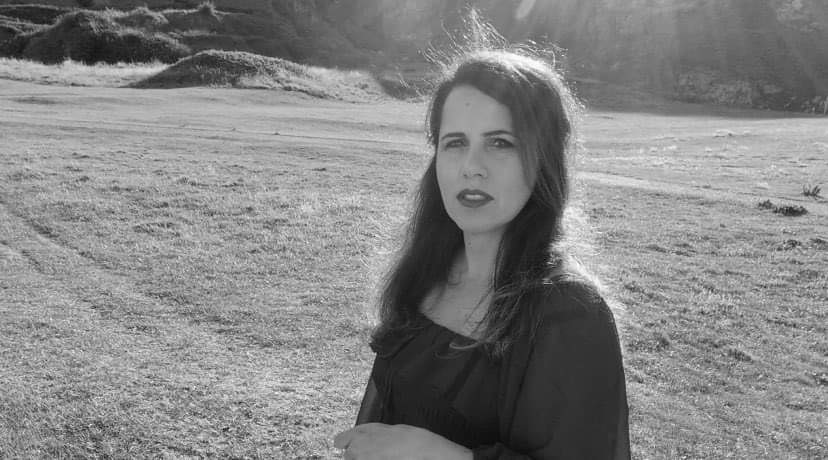
-Who is Nanceé LaFayette?

I have been fortunate to work and observe many people during my Hollywood days and before that moving around the United States with my father and crazy mother. I’ve lived in poverty and now with my husband in a wonderful house and my car, my dad would have loved a new car that didn’t break down every time he drove it. As for what keeps me going, I’m not dead yet and have a few more stories to tell.

-What inspired you to become a screenwriter?

A desire to tell good stories. I have too many ideas and have to focus on one or two, then I set out to do research on the stories, example: traveling to Japan for ‘Last Stop Toyo’, riding along with police and interviewing detectives here and in Japan. Some of my stories are based on my life’s adventures. I write at least twenty to forty drafts, or more until I feel that the story flows and has surprises that the audience will like.

-Do you think the cinema can bring a change in the society?

Absolutly!!!

-What would you change in the world?

Tolerance, change the me society, to how can I help my fellowman and all living creatures.

-Where do you see the film industry going in the next 100 years?

How many times can they remake great films that underwhelm and disappoint. Mundania rules, shark stories, what’s next, halfman/shark? My time is coming to end, every now and then I catch wonderful stories, TV and movies that give me hope. Hollywood needs to look at new talent in writing, directing, acting and producing.

“Shenanigans” (EXCLUSIVE) Interview with Breanne Nicole Wilson

-Who is Breanne Nicole Wilson?

Who is that? No idea! Haha, well…I am a writer, actor, producer and director who loves telling stories, and I am the owner and founder of Leaky Skylight Pictures. I was born in 1996 and grew up in Castle Rock, Colorado, USA. It’s funny, as a kid I wanted to be a paleontologist, but I ended up a filmmaker! I studied Film and TV Production at the University of Colorado Denver and specialized in writing and producing. From there, I’ve since worked for Starz, Truce Media Collective, The Edge Ziplines and Adventures (that was a hoot), and NBC Universal. I’m also a photographer, fencer, voracious reader, convention attendee, and avid traveler.

-What inspired you to become a screenwriter?

I’ve always loved writing, even as a kid. Growing up, I was always writing stories and making up characters. I knew I wanted to write as part of my career for a long time, but I wasn’t sure what capacity it would be. When I went to college, screenwriting came very naturally, and I dove in head-first. I have yet to resurface. I don’t want to.

-Do you think the cinema can bring a change in the society?

I do. 

-What would you change in the world?

Well, in the Bible, it tells us to love our neighbors as ourselves. That’s regardless of our differences. And I think that’s something a lot of people have forgotten and need to remember again. 

Where do you see the film industry going in the next 100 years?

Yikes, that’s a big question. It’s hard to say. We live in a world where technology is changing fast, and so is storytelling. It can be both exciting and terrifying. In terms of technical aspects, I could see virtual reality becoming a much bigger component of the film industry in 100 years. However, in terms of stories, I think they’ll be much broader. If you look at platforms like Tik Tok and Youtube, anyone with a camera can tell a story, make a film, create content. I will say, I think comedy is going to always be a popular component. In fact, I’d say it might even become more so. People want to laugh. They need to. 

“/demo_n” (EXCLUSIVE) Interview with Gary Francis Roche

-Who is Gary Francis Roche?

I am an animator, storyboard artist, editor, actor, author, and independent filmmaker set on becoming a film director.

-What inspired you to become a Filmmaker?

It all started when I was a professional actor while working as a barista at Starbucks Coffee, I was in a place in my life where the path I took in my career wasn’t taking off, until one day during one of my days off work when I watched Ridley Scott’s cult classic sci-fi film, Blade Runner. I had such an interesting viewing experience, a viewing experience I had never had before with a movie, and made me see what film can be and still can be: appreciating this medium as an art form as well as just a form of entertainment. This movie made me see the possibilities of what can be achieved with the array of skills that I had other than just acting, such as drawing, and photography, and later self-taught in editing. I felt that having watched that movie ignited that second spark that set me off on that path of wanting to become a filmmaker, using the skills and knowledge I had at the time, reutilising them all into one basket, and began putting them into practice making short documentaries, short films, and even getting work experience on professional film sets, applying to workshops and collaborating with other like-minded artists, and building up that network. And the rest is history.

-Do you think the cinema can bring a change in the society?

A: The true definition and purpose of art is that it imitates life, and life can be inspired by the art based on how one perceives it, and cinema to this day is an art form that is such an important staple to our tradition as storytellers that can touch people emotionally, mentally, and even physically at a universal scale. The idea of bringing together communities into one room and escape from our everyday problems and be immersed by a world happening in front of us on a silver screen and leave feeling inspired, or leaving an impact to motivate someone like me to go out and set their sights in wanting to be involved in the filmmaking process, or attempt to make movies just like the one they saw at that screening. No matter how much entertainment changes with technology, whether it was the invention of television, watching a movie on a streaming service, or watching something on a handheld device, the experience shared still stands the test of time as a powerful medium yet to be beaten. Human beings are social creatures, we like to go out and catch up with friends, and we like to create, read, or watch movies or TV shows to alleviate the emotional baggage we may be carrying and give us not what we as audience members want but what audience members need. From what I’ve seen so far in how the movie-going experience is looking post-lockdown it seems to still be alive and kicking and not going anywhere any time soon.

-What would you change in the world?

A: I’m not too sure that it is my responsibility to use my work to change the world per se, but what I hope to offer with what I can give people is providing them entertainment and that the work I create can leave them feeling fulfilled or happy, or maybe inspire the next generation of filmmakers after me. It is sure better than putting people down and leaving them in misery from the problems we face today.

-Where do you see the film industry going in the next 100 years?

Pretty much relating to your third question, I see the film industry still going. The entire planet needs entertainment, even for those who don’t know it. Every day we seek stories, and we always told stories since the beginning of time, from the Stone Age days when everyone sat around a fire and shared their own experiences, to drawing or painting on cave walls, to piecing together a series of still images moving 24 frames a second which bleeds inspiration and innovation to push the limits of technology through the human potential that continuously evolves and never stops evolving, and will not stop for the next 100 years, or even the next 100 years after that. As long as the human population still exists there are always new stories to tell, whether it is from our past, or something current, or predicting what the future may look like. Or maybe we just want to make people laugh or scare the living hell out of them for a living.

“Space Odessey Adventures” (EXCLUSIVE) Interview with Antoine M. Dillard

-Who is Antoine M. Dillard?

First I want to say that It is an absolute pleasure to be here at Wild Filmmaker. Thank you for having me. My name is Antoine M Dillard, I am an independent filmmaker with a Master of Fine Arts degree in Visual Effects. I’m originally from New Castle, Delaware but I’ve lived all over the United States. I’ve lived in Delaware, Philadelphia, Phoenix, Florida, Colorado and now Georgia. Which has definitely helped me gain a wider perspective on life, which in turn has helped my storytelling. I’ve been working in independent film since 2010, first as a VFX artist then eventually as a filmmaker.

-What inspired you to become a filmmaker?

I’ve always been a storyteller, ever since I was a kid creating comic books on lined paper and crayons [laughs]. It was really more of a journey to find my medium as opposed to one particular event that made me want to be a filmmaker. Coming out of college I just wanted to create cool visual effects. I landed my first gig as one of many VFX artists for a film called The Otherworld. After a few more projects like Hecate and Inner Dimension (TV Series) I had some down time. So, I decided to give filmmaking a try and tell a short story based on a story I created when I was 8yrs old.

I had been refining this story from 6th grade until my sophomore year of high school and always wanted to tell it. It was extremely ambitious so I decided the best way to go about it was to create a short film that would introduce one character from my story, establish the world, and focus on just two characters on screen. It was a sci-fi detective film noir called Rise of the Avalanche. After I finished that film, I just knew this is what I wanted to do.

-Do you think the cinema can bring a change in the society?

ABSOLUTELY! I mean, it already has, you see it today. Little kids that grew up watching Star Trek became inspired and are now astronauts and engineers for NASA. Kids in the 80’s and 90’s who watched The Sandlot became baseball players BECAUSE of that movie. Cinema has done that since it’s existence for generations and continues to do so today. This is why it’s so important to put out quality films, films that inspire, films that ignite the flames of imagination. Hopeful films, adventures and stories that bring us wonder.  

-What would you change in the world?

I would just really like people to slow down and enjoy things more like I did when I was a kid. Revel in film, life around them and the people closest to them. I would love for the world to put greed aside and start enjoying the little things again.

-Where do you see the film industry going in the next 100 years?

That’s a GREAT question! I actually don’t know. How you view film has changed so drastically in my lifetime alone. From theaters only, to VHS, to DVD, Blu Ray and now streaming. No matter how it’s viewed in the future, I hope that the film industry gets back to its roots in 100 years and focuses on the story instead of the dollar bill. 

“Bonding” (EXCLUSIVE) Interview with Luke Rex

Who is Luke Rex?

Straight to the good stuff eh? Very existential of you lol! Well this is a deep question and could be answered on multiple levels but I’ll say Luke Rex was born in Sydney, Australia in 1975 and moved to the USA in 2006 at the tender age of 31 to pursue an acting career. I moved out to LA in 2009 to pursue a film acting career, however,3 years into my Los Angeles stint, my acting aspirations hadn’t materialized as envisaged. The glittering promise of starring alongside Robert De Niro or Meryl Streep in the Big Apple remained elusive. I enrolled in community college to study psychology in 2011, studied hard, and transferred to UCLA pre-psychology in 2013, did my MA in Psychology in 2016 and graduated with my Doctorate in Clinical Psychology in 2022. I am now about to become a licensed clinical psychologist! What a journey! Luke Rex is also a certified Reiki Master & Teacher, and loves playing golf and playing classical/Spanish guitar!

What inspired you to become a filmmaker?

I was put on the artistic path by a former mentor/drama teacher from my high school in Sydney. Together, we co-directed some very fine productions at St Aloysius College. After my formal theatre/acting studies, I made some indie films with friends, TV pilots, but I was focused on pursuing an acting career. Bonding, which won Best International Song and Best Thriller Short at 8 & Halfilm Awards was actually the first short film I have ever directed. I was inspired to exercise the courage required to make a short film. I had enough experience from the work I had done as an actor, and decided to bite the bullet and just do it after my psychology doctorate graduation last year. It was an amazing experience! I wrote, directed, produced, acted, and even co-composed the music! We have over 70 Official Selections, 30 Award Wins and as many nominations!

Do you think the cinema can bring a change in the society?

100% yes – I mean I think straight away of what Lucas and Spielberg have done to help humanity feel more attuned to a universe bigger than our own planet and solar system. Cinema, like any art form, can elevate our level of consciousness and enhance connectivity to others. Film is a very powerful medium. The moving image: being in a dark, shared space and seeing that giant image up there on the screen – it magnifies our follies and illuminates our potential. It can make us laugh and move us to tears. It is a wonderful vehicle for human transformation. We even use it as a form of therapy! So yes – it can definitely bring change to society for sure! But we have to be careful. Like anything powerful, it can also be used in such a way to lower our level of consciousness and influence and impact us in negative ways.

What would you change in the world?

The way wealth is distributed. We need not live in a world juxtaposed by multi-billionaires a hundred times over versus people starving to death. Doesn’t make sense to me. Perhaps we need to develop greater compassion and tolerance for one other. Also, no more fighting each other. War. Such a tragedy to see human beings at their worst – usually to attain some form of power, greed, control, ego. And for what?! We are only here a short time in this human embodiment. The true joys of life are in connecting with one another and ultimately, Source.

Finally, lobbying governments in politics. Ban it. I feel like the whole political system is set up to unfortunately not serve the people, but the politicians. I don’t want to take away from the fine work some politicians do, but part of the system has failed before it has even begun.

Where do you see the film industry going in the next 100 years?

What a great question! In the next 100 years, film could be a completely immersive experience such that you would not know the difference between your waking life and being at, or rather, in, the movies. Rather than the film being on a 2-D screen in a cinema, the audience will instead feel like they are really there – like the holodeck from Star Trek. It seems to me we have become immersed in special effects but I hope we never lose the good old-fashioned story to watch. People need good stories. In 100 years, perhaps in less than 10, even 5, we will have our first AI film – sadly it will break box office records because people will be curious to see it. There will also be films with actors that have died decades ago, acting with one another e.g. James Dean and Robert De Niro in a film with Sophia Loren, and maybe even Luke Rex! Live theatre will have a renaissance because people will be seeking aliveness and immediacy.

“Confessions of Carlo Gambino” (EXCLUSIVE) Interview with Michael Cipiti

Who is Michael Cipiti?

Michael hails from The Land, Cleveland. I consider myself to be a creative with a sarcastic sense of humor, a fitness enthusiast, and borderline vegan. I don’t eat meat or dairy. (I know, as an Italian/American, I’ll probably burn in hell for this.) I managed to get by on a recent trip to Italy/Sicily. I lost 8 lbs in 6 days. It’s my new Italian diet. I grew up in an Italian/American family, with very loving and supportive parents.

I have a very close extended family. I am very strict with diet and exercise, an ex-athlete, and I love to kayak. And I would also like to think that I am loyal to my family and friends.

-What inspired you to become a filmmaker?

Although I have dabbled in filmmaking/writing in the past, I consider myself to be more of an actor. This particular project, ‘Confessions of Carlo Gambino’ was a passion project of mine. I had the opportunity to play Gambino in the movie ‘Gotti’ with John Travolta and Stacy Keach. I loved the character, and did extensive research. From that, I developed a couple of monologues and posted them on social media. Multiple people had reached out to me saying I should do a one man show, but I really wanted to do a film first. This particular script was born from those monologues. After some script collaboration with Edward Lee Cornett, an incredible musical score by Michele Josia, and the addition of the talented Larry Di Bartolomeo, this project grew wings.

-Do you think the cinema can bring a change in the society?

I’m know I’m not alone in this, but there have been many times where I’ve either cried, laughed, was angry…along with a variety of other emotions, while watching a cinematic event. How can you not be changed by an experience that creates such emotional passion. Yes, I think the cinema can have an effect on society. Whether that be positive or negative is another story.

-What would you change in the world?

I feel like a Miss Universe contestant. “I would eliminate all change, especially pennies.” Seriously, there’s not one person that can change the world. There’s too much hate, inequality, homelessness, hunger and a host of other things that plague society. But I would certainly like to start with eliminating all of the things I just mentioned, and then some. But that would certainly take the efforts of more than just one man, more than one nation. I would like to make the changes necessary for that to happen.

-Where do you see the film industry going in the next 100 years?

I like to think I have good genes, but somehow I don’t think I’ll be around. After a slew of strikes this year, from writers, actors and directors, with a lot of discussion about AI, my hope is that the industry stays in the minds of men and or women. I certainly think technology will continue to grow, and will have an enormous impact in the years to come. But I certainly hope that there is another little Martin Scorsese, whose parents and older brother will take him to the theater, and allow him to develop a passion for cinema.

“The forgotten” (EXCLUSIVE) Interview with Maxime Lefebvre

-Who is Ignacio Maxime Lefebvre?

Maxime Lefebvre is a young Director/Editor born in Toulouse. After graduating with a degree in sound and image technology, he won the diamond clap in the season 13 competition “Je filme le métier qui me plaît” (I film the job I like) broadcast at the Grand Rex in Paris…

Afterwards, he directed several short films with the help of a group of people from the film industry.

In 2019, he directed his first short film, Roi de cœur. In 2020, the third short film, Spirit, was selected for the New Delhi Film Festival. In addition, in 2021, he directed the animated short film “On the rails”, selected at 5 festivals in France, Romania and Portugal.

Following these numerous successes in short films, and in order to take a new step in cinema, he decided to make a more audacious short film, whose theme cannot leave anyone indifferent

What inspired you to become a filmmaker?

What inspired me was the fact that I was immersed in the culture and environment from a very early age, growing up in the countryside.

-Do you think the cinema can bring a change in the society?

Cinema has the potential to influence and shape society by tackling important issues, raising awareness and inspiring change through a clear message.

-What would you change in the world?

What someone would change in the world is a highly personal matter and can vary greatly from person to person. It could be related to social issues, environmental concerns, or other aspects of global change.

-Where do you see the film industry going in the next 100 years?

Predicting the future of the film industry is speculative, but it’s likely that technology will develop and change our businesses considerably, thanks in particular to AI and distribution methods.

“The Donbass Children” (EXCLUSIVE) Interview with Lubomir Dankov

-Who is Lubomir Dankov? What inspired you to become a filmmaker?

I was born and I live in Bulgaria. I would describe myself as an amateur journalist and an amateur filmmaker, as my work is related to specific causes and I am not working for pay. My activity as a civil activist started in 2014, and journalism and filmmaking are part of it. The Donbass Children is my first film. It is a part of an information project about the war on the territory of Ukraine, which I started in 2016. Now I am working on several more films, some of which are on the same subject.

-What prompted you to make your film?

I first went to Ukraine at the beginning of 2016. I knew that there was a war in the eastern part of the country, of course, but my information about this war was too superficial, at that time there was little talk about it in the media. After that first visit, my interest in the country intensified, I started looking for information about the conflict. I saw that there were many conflicting opinions and positions on this topic on the one hand, and a strange silence in the mainstream on the other. I don’t know why, but I got some strong urge to go there and try as a journalist to find out what exactly is the truth about the events in Donbass.

You know, recently and now there are many armed conflicts in the world. People usually accept these conflicts as a fact, as something that happens far away from them and that they cannot influence them, so they do not engage strongly with them. It is quite different when you get to the scene of the conflict and see everything with your own eyes. Then you can hardly remain indifferent.

After my first visit to Donetsk, where I stayed for a week, I already felt strongly involved in the fate of the people living in the war zone and decided to do everything possible to reach at least my compatriots with truthful information about this armed conflict.

If I had to tell you now in a few sentences what was happening in Donbass before the involvement of Russia in the war, it would be the following:

There were forces in Ukraine that wanted the country to become part of the European Union. There was also external pressure for this. In 2013, Yanukovych’s government postponed the signing of the association agreement with the union, due to the latter’s refusal to negotiate a more clearly defined economic part of the agreement. Then began protests by supporters of European integration, known as “Maidan”. These protests crossed the boundaries of legality, the center of Kyiv became a real battlefield. In February 2014, an agreement was reached between the opposition supporting the protests and the authorities for early elections and an end to the riots. But literally hours after the signing of the agreement, supporters of European integration seized the government buildings with weapons, President Yanukovych fled to the eastern part of the country, and the opposition, which took power this way, appointed a new president. This was practically a classic armed coup.

After the coup, the country was thrown into chaos, protests and counter-protests started, people were turned against each other by the media. A beginning of a civil war was visible. The culmination of this opposition was the tragedy in Odessa, where crowds of supporters of European integration burned with Molotov cocktails dozens of opponents of the counter-protest, amid “aggressive apathy” of the authorities. Interventions along geopolitical lines were also not long in coming, with the USA and the EU on one side and Russia on the other taking opposite positions regarding what is happening in the country.

Meanwhile, Russia, spurred by the prospect of the strategic naval base falling under US control, helped organize a referendum in Crimea and returned the peninsula to its fold. In two of the country’s eastern regions, Donetsk and Lugansk, where dissent from the coup in Kiev was the greatest, activists followed the example of the capital, seized power and declared independent republics.

The Kyiv authorities decided to take back the two breakaway regions by force and sent heavy military equipment to the area. But instead of heading to the activists of the new republics, they began indiscriminate shelling and mass slaughter of civilians. Familiar, right? Israel is doing the same now in Gaza.

After that, two peace agreements were signed, the first – completely unsuccessful, the second, Minsk-2, partially successful, because it ended the hottest phase of the civil war in the country, but did not end the conflict, which continued in a positional phase.

Then, when I was making this film, it was already clear that the peace agreement would not be implemented because none of the warring parties wanted it. But none of the guarantors and supporters of Ukraine sought or offered another solution.

Now back to my motivations for making this film… As I mentioned before, it’s much harder to remain indifferent to the plight of people suffering from war when you go to them and immerse yourself in their tragedy. I wanted to show people in our country and in Europe the terrorism to which the peaceful inhabitants of Donbas were subjected and what suffering their silence and unprincipled support for the Ukrainian authorities bring them.

The US and the European Union have a huge responsibility for the growth of this conflict, because they provided media comfort for all the crimes of the Kyiv regime against their own citizens and because they supported it financially. The European Union alone has given over €16 billion to the Ukrainian authorities until Russia joins the war in 2022.

At that time, I had some illusions that such a film could break through the information blockade, help inform the societies of Europe about the real situation in the conflict area and push politicians to help find a lasting peaceful solution.

I must have been too naive. The West was simply looking for reasons for sanctions against Russia and ways to weaken the country, so this conflict and the use of Ukraine as a tool in the confrontation with Russia were sought and desired. It was clear that Russia would get involved in this war near its borders and in which ethnic Russians were victims. And when that happened, all this hysteria started in the US and Europe that you’re very familiar with.

-What did you achieve and what did you fail to achieve with this film?

The film failed to reach the general public. It was simply ignored and stifled. I offered it completely free to the mainstream media in our country, to no avail. I distribute it

mainly through Facebook. As I mentioned, my main idea was to urge the politicians in our country and in Europe to cooperate for a peaceful solution to the conflict. I have repeatedly suggested to our leading politicians to invite the parties to a new round of peace negotiations in our country, in Sofia. But the West achieved what it wanted – the war went beyond the borders of Donbass, and Russia was brought into it.

My film had a good reception at film festivals, so far it has won awards from 135 festivals. This was not the end in itself, I used the festivals so that the film could reach some audience after all.

The film didn’t live up to its goals, but I tried my best. Others have their hands stained with blood. I hope the whole truth about this war will one day become available to all.

-Do you think the cinema can bring a change in the society?

Of course, the cinema can have a great influence on the formation of a child, of a person. A human is built as a person through the example of others. Imitation is an important element for all mammals, including humans. A role model can be taken not only from the people who surround us, but also from characters on the screen. But for the cinema to have any influence, it must occupy a sufficient place in the life of the young person concerned. In modern society, parents have less and less time to communicate with their children, which opens the possibility for this influence of the cinematography, but I am not sure that today’s children fall under the influence of good and quality films. Great competition of the cinematography for the time of teenagers is also funny, as well as low-quality productions of various vloggers and influencers, as well as low-quality television productions.

I can give you an example from our country. Back in the days when there were controls on film distribution and no internet, some of the things that are happening now were unthinkable. I’m talking, for example, about aggression, including the one between girls. When the market entered art, it produced bad results. There was some kind of mass simplification, in my opinion.

On the other hand, if we talk about documentary cinema, I think it can have a great influence on society with the information it gives to people. Here the influence can also be in different directions. If certain points of view are hidden and propaganda (in the bad sense of the word) is encouraged and tolerated, the influence can be strong but negative.

-What would you change in the world?

It’s a complicated question. The whole world (I’m talking about our planet) is built on antagonism. From the lowest organisms to the highest – everyone survives in a struggle with others, the stronger eats the weaker. This has been carried over into human society. For some, war is suffering, for others – a source of profits. Why is it that a small number of people, pursuing some personal gain, can force huge masses of people to fight each other, without realizing that they are mere puppets or tools in the hands of others? And how can this be changed? How can we live together without someone “eating” the weaker one? I’m not sure I have the answer for this neither that I know what needs to be done. And the worst thing is that any idea can be misused and its effect turned 180 degrees.

Maybe I would change something in people’s “chip”. I would make the people who fight for good more aggressive, more assertive, but also more cooperative, more inclined to unite. Well, it can’t just happen, unfortunately.

-Where do you see the film industry going in the next 100 years?

I recently watched a cartoon. It featured an impactful story, a tale for grown-ups. The film is called “Florentine Night” and it is by a Bulgarian author. The film was painstakingly made, if it weren’t for the characters that were deliberately created “as if painted”, I might have mistaken it for a feature film. I wondered if the film would have had more of an impact if it had been shot with actors. I think not. It would most likely be worse, even with serious money put into it. I think this is the future of cinematography, for better or for worse. One author and one computer, possibly with the help of a small team of painters and cameramen. With the advancement of artificial intelligence, such a computer-generated film will be indistinguishable from current feature films.

This may sound like fantasy to many, but that’s what the idea of the videophone sounded like 40 years ago. And now everyone can talk and see their interlocutor on their phone, and this does not surprise anyone.

The positive thing about this development is the opportunity for everyone to show their potential and make a quality feature film without the need for colossal funds. This gives freedom to the creator. After all, what matters in a film is the idea, the message, the impact. Not so much in what technical way it was produced. With the help of the many film festivals, such a film can be noticed and reach a wide audience if it has merit, even if it is made by a completely unknown author with modest means.

There is a lot of theorizing here, of course, I do not deny the possibility of favoritism to certain projects due to someone’s interference. I would even be surprised if this is avoided, but this is already another topic.

Feature films being made in the present way are likely to follow the fate of film photography. Now there are still people who shoot a film, I do it too, but it remains more of an elitist activity without mass practical value.

And as for documentary cinematography… Yes, here there is rather a danger of manipulations and creation of a false reality for all kinds of events. How this problem will be solved… remains to be seen. All of this will probably make it to the cinematography long before the 100 years are up.

“The Hypnotizer” (EXCLUSIVE) Interview with Ignacio Marín Aedo

-Who is Ignacio Marín Aedo?

I want to believe that I’m a 27-year-old Chilean filmmaker with a lot of potential, but the truth is that
I consider myself a little kid playing movies with his friends. I’m the father of a beautiful 6-year-old
girl named Isabella. I hate waiting in lines for too long, and I can’t live without eating fruit.

What inspired you to become a filmmaker?

I’ve always been passionate about the world of communications. In cinema, I found a way to connect
with others and communicate my vision of the world without saying a single word.
I like to think that anyone in the world can be an inspiration.

-Do you think the cinema can bring a change in the society?

I think of cinema as one of the most powerful tools in all of human history, and I like to
believe that I feel the weight of that responsibility. Undoubtedly, cinema can be a driver of
social change, and it already is. Every story we choose to tell brings visibility to a group of
individuals with realities we were previously unaware of. I believe that’s where the art of
this discipline resides

-What would you change in the world?

The influence of social media in our daily lives. I don’t have Instagram, and I hope to soon be
able to quit Facebook. Don’t even get me started on TikTok. I have a pessimistic view of this
aspect of our lives, as I don’t like how it affects relationships and human communication. I
believe that a part of our essence is online all the time, and we spend the other part offline,
on the way somewhere or waiting for another moment. Besides, my neck hurts a lot when I
use the phone. Why do we have to look down?

-Where do you see the film industry going in the next 100 years?

It’s a tough question; I struggle to project my life into the future, let alone the film industry.
However, I believe that the part of technology I like the least will have the most influence on
the industry. I dare to say that we will transition from the film industry to the content
industry. It will be content tailored to each individual’s preferences, probably generated
instantly by some kind of super processor. I’ve never been good at science fiction.

“Tumble Weave” (EXCLUSIVE) Interview with Andreia Solomon Burke

-Who is Andreia Solomon Burke?

This is a difficult question only because I am still learning who I am. When I have private talks with myself, I never feel like I have accomplished anything, but when I hear what other people think of me, I’m like … wow, I don’t give myself enough credit. I’m so complex yet simple at the same time. Complex in the sense that I’m never fully satisfied with where I’m at because I know that there is so much more to life and I’m constantly trying to get there, but simple in a way that sitting by the sea in my favourite café with a coffee and my thoughts is so satisfying.

However, I must say, that after my husband was deported to the UK, his birth country, I realised how much inner strength I had. My head swirled every day from different dilemmas, my husband was in a country that he hasn’t lived in for over thirty-years; our daughters were traumatised, but I had to keep moving as if nothing happened.

Eventually, we joined my husband in the UK, and this afforded me the opportunity to delve into my creative side. Since living in the UK, I have written two novels, five scripts and directed two award-winning short films under my family’s production company, A Fave Five Films Ltd.

But the true essence of who Andreia Solomon Burke is… I love my family and extended family tremendously, and although it may sound cliché, everything I do is for them.

-What inspired you to become a filmmaker?

After writing my first novel, Relay-tionships, the thirst was on for me to become a filmmaker. I have such a vivid imagination that every page I wrote I saw the scenery, the characters, and at times even fell in and out of love with the characters. From then I was on a mission to get the film made. I wrote the screenplay and have never given up on that dream.

-Do you think the cinema can bring a change in the society?

Being completely honest… if the major studios keep churning out films with the repetitive car chase, shootout in the middle of the street, and massive explosion type films, I’m afraid the answer is no. There was a time when going to the cinema was a huge deal, the buildup of the films leading up to its release day was incredible. You saved your money because you dare not be the person who didn’t see the film.

We must return to the art of true storytelling, then, we might be hopeful that films can influence society in a positive way.

-What would you change in the world?

I’d like to take ‘I Don’t Have a Clue, for 200, Alex. But no, seriously… racism, erroneous perceptions of women of colour, paygrades for teachers, healthcare workers and finally, the retirement age for senior citizens.

-Where do you see the film industry going in the next 100 years?

I pray that it’s still around. In the era of Netflix & Chill and the multitude of steaming services it’s scary to think where cinema will be in 25 years from now, let alone 100. This isn’t to say that most steaming services don’t have anything to offer, but it’s changed the industry tremendously.

Live action films have become preposterously expensive to make, even with animation films grossing vastly more than live action films. We have moved away from the beauty of films and how they used to make us feel and it would be amazing to go back to those times.