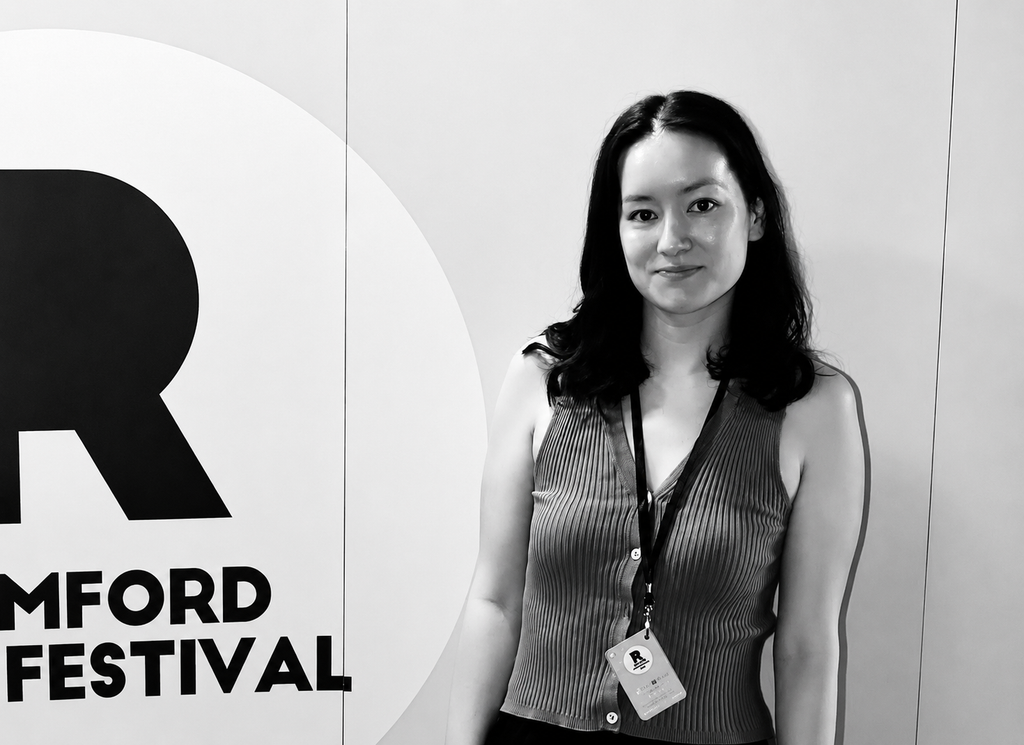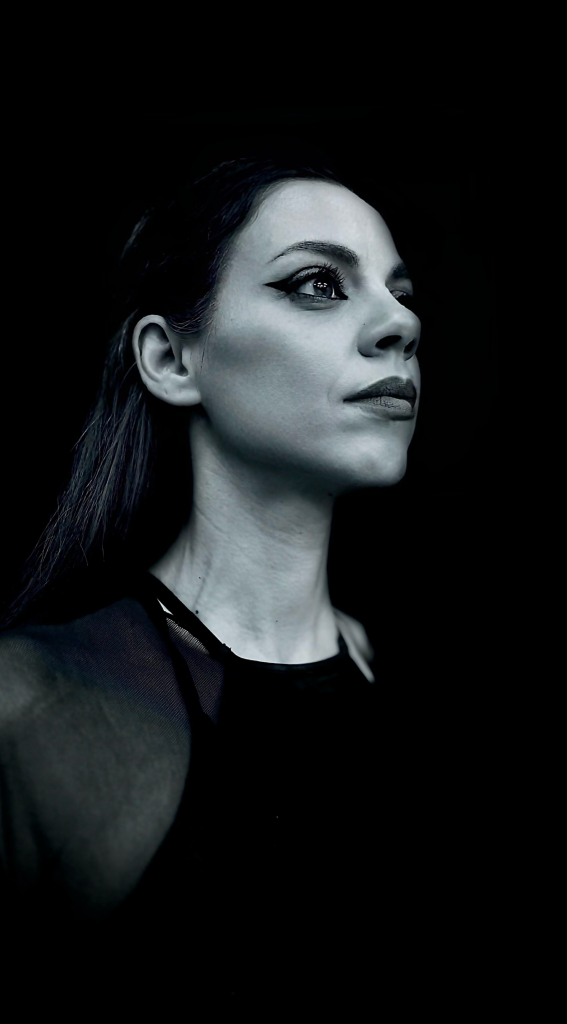
“PATH” (EXCLUSIVE) Interview with Firouz FarmanFarmaian

-Who is Firouz FarmanFarmaian?

I’m an Iranian-born diasporic contemporary artist, filmmaker and musician. My family’s displacement following the 1979 Iranian Revolution, and our presence today across several continents, have shaped a very fluid idea of identity in my work.

At the same time, our roots reach back toward Central Asia and a nomadic heritage to which I have always felt connected — perhaps partly historically, partly mythologically, through imagination. That search has become an important territory in my work and led to projects such as Gates of Turan, developed for Kyrgyzstan at the 59th Venice Biennale.

My education in Paris moved between art, architecture and film. Two important influences also shaped me: Monir Shahroudy Farmanfarmaian, who showed me how tradition could become a radically contemporary language, and my grandfather, one of Iran’s important modern architects, who transmitted to me a fascination for the dialogue between classical culture and the avant-garde.

That intersection — displacement, memory, nomadism and experimentation — continues to connect everything I do across cinema, visual art and music. It is also what led me to co-found We R The Nomads, an independent creative platform through which we develop projects across these disciplines and increasingly produce our own films.

-Do you remember the exact moment you fell in love with cinema?

I owe my love of cinema completely to my father. From a very young age, he introduced me to Italian post-war neorealism and then to the extraordinary generation that followed — Antonioni, particularly Blow-Up and later The Passenger, Visconti, with The Leopard still one of my favorite films, and above all Fellini.

Fellini taught me something that has stayed with me ever since: that the frontier between imagination and reality doesn’t really exist. Somewhere along that very fine line between reality and fiction lies poetry, and that is still one of the territories I am constantly searching for in my own work.

Later, as a teenager and in my early twenties in Paris, that foundation opened onto the city’s cinéphile culture — Godard, Truffaut, Cassavetes, and the late-night screenings in the small cinemas of the Latin Quarter around Saint-André-des-Arts. From there came the discovery of the new cinemas of Asia and Iran, particularly Abbas Kiarostami and Wong Kar-wai, which opened another door entirely.

So there wasn’t really one precise moment when I fell in love with cinema. It was a language my father gave me very early, and one that I am still building.
-Tell us about your project “PATH”.

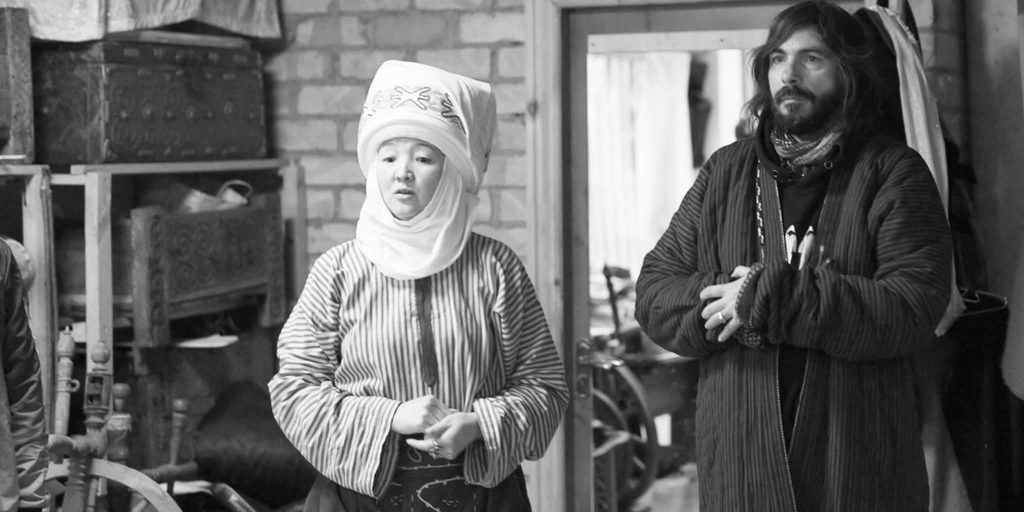
PATH began with a very specific adventure. I was invited to Kyrgyzstan as a cultural Ambassador to develop the country’s first national pavilion for the 59th Venice Biennale in 2022. What began as an artistic and cultural mission became an extraordinary journey through Kyrgyzstan, its landscapes, communities and contemporary identity, leading eventually to the installation of the pavilion in Venice.

The film grew out of that journey. Formally, it sits somewhere between documentary, road movie and visual poem, allowing encounters, landscapes, accidents and music to shape its narrative. Music is fundamental to my practice, and in PATH it isn’t simply a soundtrack added to the images; it became part of the architecture and emotional language of the film.It was particularly meaningful to see that dimension recognized with the Best Original Soundtrack award in Rotterdam.

What fascinates me most is what happened after Venice. Once the original mission and installation were completed, PATH somehow took flight on its own. Over the following years, the film became a way of giving the original project another life and a much broader reach — continuing through cinema the same ideas and values we had tried to communicate through contemporary art in Venice.

That fluidity between forms is extremely important to me: the idea that a contemporary art installation can become a film, and that the film can then travel independently and encounter completely different audiences.

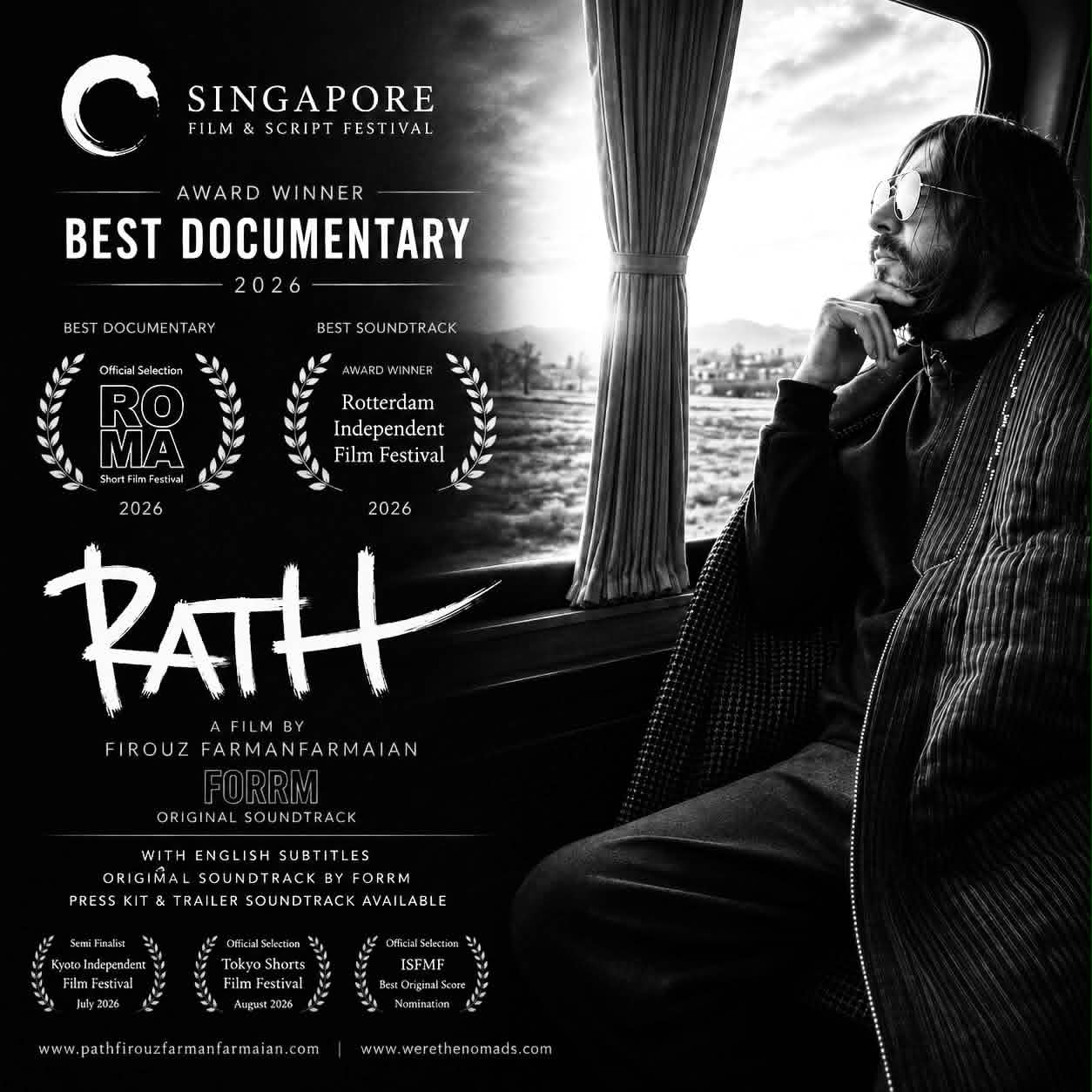
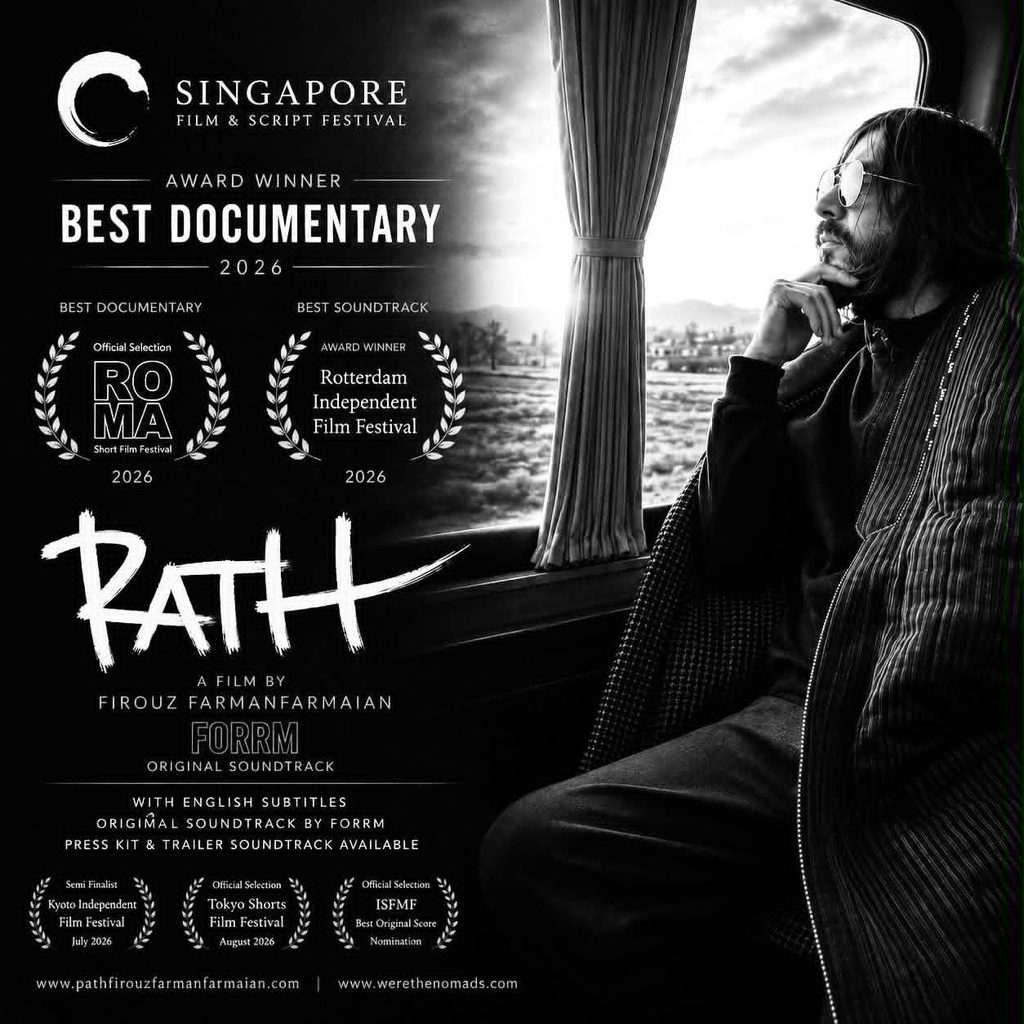
Since its completion, PATH has received international recognition across Europe and Asia, including wins in Rome and Rotterdam and, most recently, Singapore. That momentum is now opening another chapter, with international distribution conversations developing across Europe, Asia and the United States.

For me, seeing a project travel from Central Asia to an installation in Venice, and from there into an independent film with its own international trajectory, is perhaps the most exciting expression of what PATH was about in the first place.

-Which director inspires you the most?

It changes with different periods of my life. In my first films in the late 1990s, when I was working extensively with Super 8 and in a much more avant-garde language, Cassavetes and Godard were probably my two strongest references. They represented a certain freedom — the possibility of breaking the rules and allowing cinema to remain raw and instinctive.

Later, Tarantino, Wong Kar-wai and Jafar Panahi became important in developing the kind of East-West visual language I was searching for — something that could move freely between different cinematic cultures without necessarily belonging entirely to either.

But if I return to the roots, Fellini remains fundamental for his poetic approach to cinema, alongside Antonioni — particularly the Antonioni of Blow-Up and Zabriskie Point.

Interestingly, those influences are very present again today as I prepare my next feature after PATHSeason of the Witch, which we are shooting in Morocco this winter. Fellini’s poetic freedom and Antonioni’s relationship to image, space, youth and the cultural transformations of the late 1960s are very much in dialogue with the film I am making now.

So I don’t think I have one definitive influence. Cinema has accompanied different phases of my life, and the filmmakers I return to tend to change with the films I need to make.

-What do you dislike about the world and what would you change?

What troubles me is that we live in an extraordinarily interconnected world, yet we seem increasingly obsessed with separation — borders, nationalities, ideologies, fixed definitions of identity. I have always experienced identity as something fluid, something that travels, transforms and absorbs.

For me, the sparks happen precisely in the interaction between cultures. Wherever that tension and exchange exist, that is where the real avant-garde lies, whether we want it or not.

I was discussing this recently with a New York gallerist: the cultural scene is no longer as city-centric as it once was — New York in the Basquiat era, or Paris before the Second World War. Culture has become horizontal. The most interesting scene can emerge anywhere, at any moment, wherever different worlds collide and create something new.

My greater anxiety is that our lack of communication is preventing us from confronting threats that can only be addressed collectively. Climate change is perhaps the most obvious one. We have created an interconnected planet without necessarily learning how to act as an interconnected civilization.

The planet is on fire, guys. At some point we have to learn to talk to one another.

-How do you imagine cinema in 100 years?

I’ve been very interested for years in the evolution of mixed reality. I’ve experimented with successive generations of Oculus, tested Apple’s mixed-reality systems, and followed the way companies such as Meta and Ray-Ban are beginning to integrate technology much more invisibly into everyday objects. Obviously, we’re not there yet.

But I’ve always wanted to work at that juncture. There is an extraordinarily creative territory somewhere in the interconnectedness between technology and physical reality. I already tried to develop an experimental mixed-reality component for Gates of Turan at the Venice Biennale in 2022, but perhaps I was a little early, and ultimately we didn’t have the time or resources to take it where I wanted.

I believe that at some point technology will become increasingly immaterial — almost disappearing into our everyday environment. When that happens, our perception of storytelling will inevitably change with it. We may move much more fluidly between content and reality, rather than experiencing cinema as something contained within a screen.

So in 100 years, I’m not sure cinema will still be something we simply “watch.” It may become something we enter, inhabit and interact with, while still retaining what has always mattered: imagination, emotion and storytelling.

As Rimbaud said: “Il faut être absolument moderne.” Be absolutely modern — and keep your eyes open.

-What is your impression of WILD FILMMAKER?

This interview is actually my first direct encounter with WILD FILMMAKER, so I’m discovering the platform through this conversation.

What immediately interests me is its international perspective and its focus on independent filmmaking. Today, films need spaces that allow them to circulate beyond festivals, national borders and traditional industry structures.

That feels particularly relevant to me at this moment, as PATH is moving from its international festival journey into a new phase of distribution and reaching new audiences. Any platform that helps create bridges between independent filmmakers, audiences and the wider international film community is something I’m very happy to engage with.
“Emma” (EXCLUSIVE) Interview with Emily Y Adams

-Who is Emily Y Adams?

I am an English-Japanese director, choreographer and filmmaker from Essex, who fell in love with the power of cinematography during my contemporary dance training. Through the art of Screendance, I discovered a passion for merging movement, dance and film to create meaningful narratives, emotional storytelling and creative twists that relate and resonate with audiences. I draw from my own experiences, emotions and relationships to create stories for film. I believe the most powerful art is made from the worst pain. 

-Do you remember the exact moment you fell in love with cinema?

I grew up with a book constantly in my hand, and always lost myself into the world of stories to escape my childhood. I filled up many notebooks with story and character ideas and would write down all of my wildest nightmares and dreams. I have always been more selective with cinema and tend to see films that really draw me to watch them. Mostly films and TV shows well adapted from books. My most memorable film growing up was Matilda (1996). As a child, it was exciting to see someone like me, a shy bookworm in a helpless situation, be able to fight back against cruel adults. I related to the little girl on screen. It taught me the power of film to tell shared human experiences. It helped me feel seen and less alone in the world. 

-Tell us about your project “Emma”.

My short film “Emma” is a one-location slice of life, but there’s a quiet sense that something is not quite right. You see Emma typewriting diary entries and spending her days with Nelly. Playing Jenga, watching a film, dancing about the dining room together. [Spoiler Alert] But a knock of old entries reveals that Nelly has never been there. And Emma was alone all along. 

This story was inspired by the loss of my mum, which occurred 3 years before the film. I wanted to portray a warm female connection to reflect our familial relationship and the joyful moments of spending time together. However, I intentionally tried to keep the relationship ambiguous so audiences could relate to the characters in their own way. We all have different people we’ve lost. We all have different stories of loss. 

“Emma” is set post-covid, in a time when people were just coming out of isolation. Emma experiences the loss of Nelly a year before and covid becomes her way to not only isolate in her house, but isolate in her mind, and hide from reality. She never passes the first stage of grief – denial. And that bubble is never broken in the film. The loss of Nelly is revealed to us. But we leave Emma still believing she is there. I focused on the feeling of wanting someone who is gone, to still be here. And desperately holding onto those memories after they’ve left. 

The emotional reveal sequence was inspired by The Sixth Sense and Mr Robot. I wanted the audience to also believe that Nelly was there and emotionally shock them with the reality. I repeated scenes of Emma and Nelly together and revealed Emma alone. Nelly was only real in Emma’s mind. She was never there. 

I also played with different hints in the film. A candle – representing the loss of Nelly – is in shot for most scenes. Emma calls Nelly from the bath for a towel. But it drops into frame from the door. Nelly’s clothes never change as that’s how Emma last remembers her. And Nelly is never in shot on her own. As she only exists when Emma is there. 

-Which Director inspires you the most?

I am hugely inspired by Chloé Zhao and her visually and emotionally beautiful storytelling. I connected deeply with the intense emotion of “Hamnet” and the quiet poignancy of “Nomadland”, which both explore very human themes of loss and grief, similarly explored in my own work. She brings the actor’s truth into the story. Which is a method I resonate with and used to create “Emma”.  I learned what was true to my actors; how they deal with loss, what they would say or wear, to create characters they could connect with. Through learning who they are and bringing them into the story, I found that both actors shared the same favourite song, creating a heartwarming moment of singing and dance in the film. 

To see Zhao, a woman storyteller and director create powerful work in cinema, and become the first woman of colour and the second woman in history to win the Academy Award for Directing, gives me – a woman of Asian heritage – the courage, fire and belief that it is possible for women like us to tell our stories and be recognised for it. I feel female voices are often overlooked, overshadowed and have a tougher fight for being seen. In “Nomadland”, Zhao gave voice to an older woman’s story – another rarely seen perspective on screen – and showed the power of slow, tender, reflective cinema. 

-What do you dislike about the world and what would you change?

I dislike all the harm and suffering caused by a patriarchal society on every body across the world. The oppression, toxic culture, dehumanisation and violence, especially towards women and transgender people. Which seeps into our everyday life, cinema, TV, news and social media. I would change society to a matriarchal one. A world with more empathy, peace, and support, with a system that nurtures all people. And then certain dangerous people would not be in power…

-How do you imagine cinema in 100 years?

The huge technological developments over the past 100 years mean cinema could go anywhere in the next 100. It saddens me, but I imagine cinema will be lazy for short attention spans and AI ridden. However, I believe the power of human storytelling will always survive, as that is how we truly connect to one another. Through our human creativity, experiences and emotions. 

The accessibility and affordability of some technology has also meant that anyone can be a filmmaker. So, I hope the stories platformed in the industry will become more inclusive of marginalised voices. As I, quite frankly, am tired of the same narratives and remakes. Some of the most brilliant stories come from the most unexpected voices. 

-What is your impression of WILD FILMMAKER?

It is an amazing and important platform that gives a voice to filmmakers and provides an opportunity for them to be recognised and share their work. I appreciate the care and consideration for showcasing different artistic perspectives. It is wonderful to have this space in an industry where there is little support and platforms for independent filmmakers. Through WILD FILMMAKER we can continue to re-discover the art of cinema – through the eyes of different storytellers. 

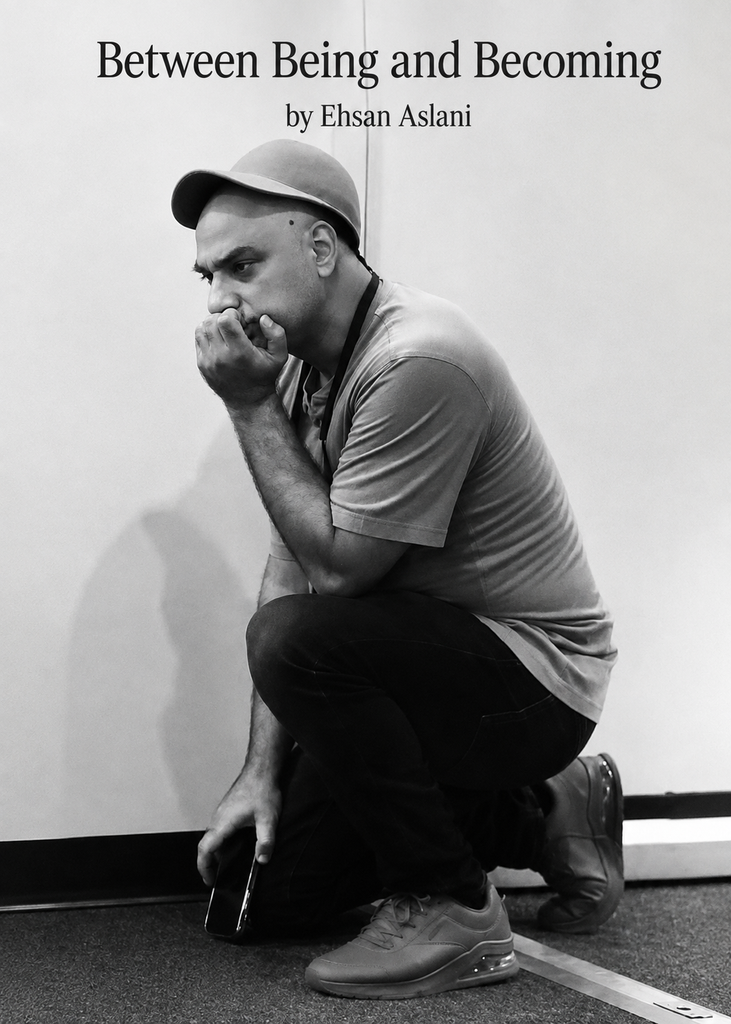
“Between Being and Becoming” (EXCLUSIVE) Interview with Ehsan Aslani

-Who is Ehsan Aslani?

Ehsan Aslani is a filmmaker, director, and visual storyteller whose work has always been driven by curiosity about people, identity, and the invisible forces that shape our lives.

Academically, I hold a Master’s degree in Architecture, which I studied in Iran, and a Bachelor’s degree in Cinema, which I studied in France. These two disciplines have profoundly shaped the way I see: architecture taught me to understand space, proportion, structure, light, and form, while cinema gave me a language through which those elements could become emotion, time, and human experience.

My background has taken me through architecture, television, documentary, broadcast production, education, and digital media. These different worlds have shaped the way I look at cinema. Architecture taught me to think about space, proportion, light, and silence. Television taught me discipline and immediacy. Documentary taught me to observe. And cinema taught me that sometimes the most important things are precisely those that cannot be explained directly.

But beyond titles, professions, or disciplines, I am, above all, a lived experience carrying millions of questions and constantly searching for answers.

If I had to define myself, I would probably say that I am a seeker: someone in pursuit of meaning, of answers, and of what exists beneath the visible surface of things.

I did not exactly choose cinema. In many ways, cinema chose me, and I had little choice but to accept it. And perhaps there could have been no better language for me than the image.

I often say that there are places in life that no word can reach. Moments when language becomes insufficient and we fall into silence. Sometimes even movement itself freezes within the passage of time. Perspective breaks apart, and everything begins to speak through form, surface, light, shape, and presence.

That is where I exist.

That is where cinema and I meet.

Beneath all of my experiences, the same search has always remained: to understand people, time, memory, identity, and the invisible forces that shape our lives.

Today, I see myself less as someone who simply makes films and more as someone who uses images, sound, time, and human presence to explore questions.

So, who is Ehsan Aslani?

A person still searching, still questioning, still becoming and someone who found in cinema the closest possible language to what words could never fully express.

Tell us about your project Between Being and Becoming?

Between Being and Becoming is a cinematic documentary about Habitat 67 in Montreal and, more specifically, about what we still do not know about it.

I have spent almost ten years researching this project. It has become far more than a film idea for me; in many ways, it is the point where my two worlds architecture and cinema finally converge.

The film begins with the extraordinary ideas of Moshe Safdie, the architect who conceived Habitat 67, but it does not stop at the iconic image of the building that most people already know. I want to explore the entire journey: from the original vision and theoretical principles, to the process of realization, and finally to the reality of what Habitat 67 has become after decades of being lived in.

There is a fascinating distance between what was imagined, what was built, and what ultimately became. And this distance is exactly where the title Between Being and Becoming comes from.

Safdie established extraordinary architectural principles ideas about density, individuality, community, light, privacy, gardens, and a different possibility for urban living. On the theoretical level, many of these ideas were remarkable. But architecture does not exist only in theory. Once architecture enters the real world, it encounters culture, climate, urban context, economics, human behaviour, political decisions, interventions, time, and everyday life.

And this is where the film begins its real investigation.

I don’t want simply to photograph Habitat 67 from the outside. We have already seen those images thousands of times. I want to understand what it means to live inside an architectural idea.

For that reason, one of the essential conditions for making this film properly would be to have access to a unit inside Habitat 67 for a period of time. I want the camera to experience daily life there morning light, silence, movement, neighbours, interior and exterior spaces, seasons, private life, communal life. Only then can we begin to understand the distance between architectural theory and lived experience.

My ten years of research have produced an enormous archive of ideas, questions, documents, observations and connections. I sometimes think of that research as a locked treasure. The material is there; the door simply needs to be opened through cinema.

But this is also an ambitious film, and ambition in cinema requires more than enthusiasm.

I am waiting for the opportunity to work with a strong Canadian or Quebec producer who genuinely understands architecture, urbanism and cinema someone who understands both cinematic technique and architectural thought, who knows why this film requires a serious production approach, where the investment needs to go, and also understands the extraordinary cultural and international potential of such a project.

For me, this film represents a kind of personal debt to both architecture and cinema.

I want it to be a dignified, thoughtful and enduring work of cinema not only a film for festivals or theatrical audiences, but something that could eventually live within universities, schools of architecture, cultural institutions, cinematheques, archives, and organizations dedicated to the preservation and understanding of modern heritage.

It is probably the film I most deeply wish to make.

There are significant obstacles between the project and its realization, and I know that I cannot cross all of them alone. It needs a producer who understands Quebec beyond its surface, who understands the cultural significance of Habitat 67, and who is willing to explore this extraordinary subject with me rather than simply package it.

Perhaps speaking about it here, through wild filmmaker, can help the project find the right person.

Perhaps this interview becomes the starting point.

Perhaps not.

But cinema has taught me that sometimes the most important journeys begin with something very small: an image, a question, a conversation or simply someone, somewhere, deciding to listen.

-Which Director inspires you the most?

It is very difficult for me to answer this with a single name.

Personally, I have a deep affection for Buster Keaton and Rainer Werner Fassbinder and I mean Fassbinder, of course, not Werner Herzog. Fassbinder is probably one of the filmmakers closest to me emotionally.

At the same time, I cannot speak about my own understanding of cinematic narrative without mentioning Abbas Kiarostami, who was my teacher and had a profound influence on the way I learned to look at storytelling, reality, silence, and the relationship between cinema and life.

But then, how can one speak about cinema and forget Last Year at Marienbad? How can I ignore Theo Angelopoulos, Sergei Parajanov, or Akira Kurosawa?

And even that would still be incomplete.

Can we really speak about cinema while overlooking Indian cinema? Chinese cinema? Soviet cinema? Vietnamese cinema? Turkish cinema? Nigerian cinema? Of course not.

They are all extraordinary in completely different ways.

So perhaps the most accurate answer is this:

Cinema itself inspires me more than any single filmmaker.

I have spent my life watching films from different countries, periods, cultures, and cinematic traditions. Every serious encounter with cinema has added something to the way I see.

Some filmmakers taught me rhythm. Some taught me silence. Some taught me framing, duration, movement, absurdity, politics, poetry, or simply how to look at a human face.

I do not want to belong to one cinematic school or imitate one master.

For me, cinema is an enormous collective memory created by thousands of filmmakers across the world.

And that entire memory inspires me.

-What do you dislike about the world and what would you change?

To be honest, the world feels very dark at the moment at least my world does.

I am not a particularly charming person. I am probably too serious, a little repellent, sometimes boring, and, like my films, rather dark. But perhaps that darkness does not come entirely from me. Perhaps it comes from the world I have experienced.

And this is exactly why I have difficulty with the question.

I am not sure there is such a thing as one world.

Each of us lives in a slightly different one, built from our memories, our upbringing, our fears, our education, our culture, our failures, our privileges, and the accidents that happened to us along the way. So when we ask, “What do you dislike about the world?”, we are already pretending that we are all standing inside the same reality.

We are not.

What I certainly dislike in some people’s worlds is a certain combination of arrogance, stupidity, and fundamentalism that wonderful human tendency to become absolutely certain about things we barely understand, and then to reorganize everybody else’s life accordingly. History has demonstrated the results rather efficiently.

But even here there is a problem.

Imagine that every one of us were suddenly given the power to keep everything we like about the world and delete everything we dislike. Within twenty-four hours, we would probably create an unbelievable catastrophe.

Because perhaps you are exactly the thing someone else would like to delete.

So what do you do then?

This is why, with respect to the question, I am not sure I want the power to change the world. That sounds dangerously close to the beginning of every bad utopia.

What we can probably change is much smaller and much less glamorous: ourselves, our behaviour, and perhaps the tiny circle of influence around us.

That may sound disappointingly modest, but we are modest creatures.

We appear for a very short time on a very small planet, make an extraordinary amount of noise, develop extremely confident opinions about everything, and then disappear.

So perhaps the first thing I would change about the world is our obsession with changing the world.

Maybe we could begin by becoming slightly less certain, slightly less arrogant, and slightly more curious about the reality of the person standing next to us.

Let us remain humble, my friend.

The universe will probably survive without our management.

-How do you imagine cinema in 100 years?

I don’t know. I don’t even know what tomorrow will look like, so I would have to be wonderfully naïve to tell you what cinema will look like in a hundred years.

The speed of change is enormous. Human beings have changed, machines have changed, the way we live has changed, and almost everything around us is radically different from what it was a century ago.

So, no I really don’t know.

Maybe in a hundred years cinema will be called “sausage,” and sausage will be called “school.” Why not? We already live in a world full of arbitrary structures, labels, and conventions that we treat as if they were eternal truths.

Much of the world we live in is shaped by systems, agreements, markets, and formulas created by people with power and money, and then the rest of us learn to live inside those formulas as though they were natural laws.

So perhaps instead of predicting what cinema will become, I can say what I hope it becomes.

I hope cinema can move toward a place where it no longer needs to obey somebody else’s formula.

Where the filmmaker is not constantly calculating what the market wants, what the algorithm wants, what the platform wants, or what a committee believes an audience should want.

I would love cinema to rediscover its own formula a formula born from the mind of a human being in the purest possible sense.

Not pure because that person is innocent or perfect, but because, for a moment, the image comes before the market, the question comes before the answer, and creation comes before calculation.

Maybe cinema in a hundred years will be completely unrecognizable.

I just hope there will still be a human being somewhere behind it, looking at the world and saying:

This is how I see it.

-What is your impression of WILD FILMMAKER?

To be honest, I have only recently become familiar with WILD FILMMAKER.

But I believe that any organization that is genuinely faithful to what it claims to represent will naturally attract independent artists. Independence is built on trust, and trust begins when words and actions remain close to one another. From what I have seen so far, I have had that impression of WILD FILMMAKER, and I congratulate you for it.

I would genuinely like to learn more about your work, your practical activities, and especially the ways in which you support independent filmmakers. These kinds of platforms are valuable because independent cinema often needs precisely this: visibility, connection, dialogue, and people willing to take filmmakers seriously outside the usual commercial structures.

Of course, supporting independent cinema may not always be the easiest or most immediately profitable path. But with the right structure, community, and long-term vision, I believe cultural value and sustainability do not necessarily have to oppose one another.

I am very happy to have had this conversation with you, and I sincerely appreciate the invitation and the opportunity to share some of my thoughts.

Thank you, humbly, for having me.

Cheers!

Indie Oscar – Director’s Cut (EXCLUSIVE) Inteview with Vivian Tsang

In your opinion, what is the relationship between cinema and truth?

The relationship between cinema and truth is fundamentally a delicate balancing act. Achieving the proper harmony between artistic film elements and authentic reality is especially difficult in documentary and live-action filmmaking. Behind the scenes, prioritizing truth over cinema is considered the necessary and right approach.

However, the nature of this relationship shifts significantly when creative considerations come into play. Creativity allows for the development of distinct stylistic elements within a film. Because different film genres—such as science fiction, drama, action, and romance—require their own unique styles and artistic tastes, the way cinema and truth are measured and valued ultimately varies from one category to another.   

What kind of change do you hope to inspire in someone who experiences your art?

I want my art to awaken curiosity and open up new pathways of exploration. My goal is not to define a specific realization or reflection, but to inspire the viewer’s imagination so they can develop their own ideas. Because everyone brings their own unique background and perspective, I choose not to set boundaries around how my work should be understood. Through my short documentary, I invite audiences to embrace a more poetic and artistic lens, remaining fully open to all reactions—including rejection—as a means to evolve and refine my creative practice.

What does the word future mean to you?

Future introduces new fashion, technology, ideas, and concepts, creating things that have never been used before or significantly improving existing ones. It covers both digital and traditional mediums, evolving traditional art into entirely new forms. A leading example is AI filmmaking, which represents a forward-looking approach to cinema. This developing digital medium has the potential to become widely adopted, fundamentally shaping how we perceive and experience art in a modern creative landscape.

Briefly describe your creative process. How do you select the ideas that eventually become a screenplay?

The process begins by gathering inspiration from artistic mediums, past projects, and real-life experiences, after which a single raw concept is selected and expanded using targeted interviews to uncover fresh angles. Once a foundation is set, the project’s feasibility is evaluated against team size, timeline, and available resources, concluding with test footage experiments to determine if the idea can be developed into a full documentary screenplay.

To select and turn an idea into a finished screenplay, you must first evaluate whether its central concept has enough power to carry a full feature, weighing practical constraints like budget, size, and writing timeline. Once confirmed through feedback from industry professionals, trim the story down into a sharp logline to test its main narrative drive. From there, use pitch materials to attach key talent or interviewees, write the full script, and transition into pre-production planning—bringing on external collaborators whenever specialized legal, financial, or technical help is required.

“Operation: Black Sphere” (EXCLUSIVE) Interview with Paul Brenno

-Who is Paul Brenno?

My story starts in Minot, North Dakota. I was a kid of the 70s and 80s, watching TV shows like Dukes of Hazzard, Knight Rider, and Riptide, soaking up the “Hollywood” feel of the local TV station through my Dad’s work as a salesman, and with my Moms education background, I grew up wanting to learn about “media” as much as I could. I fell in love with film/video as a teen, through still photography. I became known by friends/family as “the photo/video guy,”. After high school, I then served in the US Air Force, meeting legends like Emmy Winning Cinematographer Ken Lamkin (ASC), then going to film school at Montana State University, met my Cinematography hero, Oscar Winning Cinematographer Dean Semler (ASC/ACS) 

My dream was to go to LA and work on camera crews, and work my way up to Cinematographer/Director of Photography. It had to stay a dream, as I wasn’t able to relocate to LA, but found work as a Creative Services Commercial Producer/Editor then progressed to Director/Director of Photography. My first year out of film school, I was shooting/editing videos for a local business, when I did my first national shoot for the Late Show with David Letterman called “Biff Henderson’s America“. I then went on to work for several years in Houston then moved up to a senior position in Denver. When the economic recession happened in 2009, life was put on hold, then personal losses of my Moms sudden passing, then years later, my Father passed, life threw me alot of challenges and personal tragedies that I did my best to get through. 

I then began to freelance, producing videos for local clients. I began to win alot of Cinematography Awards for my work, which was amazing. When the covid lockdown of 2020 happened, I tried to stay working as best I could, then in August 2021, I was working on a documentary in Texas, when I survived a life-threatening case of COVID pneumonia. It sidelined me for several months, but yet, I still felt the need to create. After being diagnosed with Long COVID PTSD/fatigue, my desire to create is still very strong, now producing Ai film-work. I’ve been honored with over 100 festival honors including Best Cinematography to Best Documentary, I feel very honored and very humbled. Most recently in 2024, I began to channel my creative drive into AI filmmaking, and have already completed a short film spy film, “Operation Black Sphere”. This Ai short is in a trilogy, and was just honored as Official Selection at a Fusion Film Fest in London, so I’m very honored. Next is Operation Virus Strike, followed by Operation Red Alert. Remote AI video and film work is a next chapter for me, I’m very excited about this new chapter

-Do you remember the exact moment you fell in love with cinema?

Yes I do, it was the James Bond films I watched growing up, then Superman the Movie (1978). I fell in love with these characters, then years later, in January 1991, I was in the US Air Force, home on leave, when I saw “Dances with Wolves”. Superman and James Bond made me love movies, the fantasy world they created, where-as “Dances with Wolves” made me fall in love with Cinematography and Filmmaking itself. Dean Semler (ASC/ACS), the films Cinematographer, won the Oscar for his work and that film, inspired me to want to be a Cinematographer/Filmmaker, so many thanks to Dean, a true legend and master at his craft. 

-Tell us about your project “Operation: Black Sphere”.

“Operation Black Sphere” was the first AI film I created, and it was such a fun and exciting project to bring to life. The idea began when a friend of mine, who is also passionate about AI, sent me a long action sequence featuring a cargo plane being loaded, mercenaries, and an intense attack scene. I was immediately intrigued by the action and loved the visuals, but I kept asking myself: What’s the story? What is this actually about? As a huge James Bond fan, I began imagining an American take on the classic spy-film concept, and from there, Operation Black Sphere was born. I started working on the film in April 2026 and completed my first cut in August 2026. Along the way, another friend and screenwriter contributed some incredibly creative ideas that helped shape the story and take the project further. I’m incredibly proud of the finished short. It’s my first AI-generated narrative film, created with the help and inspiration of some very talented creative collaborators, and it has been an amazing learning experience. “Operation Black Sphere” was just screened in London, in August 2026, was an Official Selection at the Fusion Film Fest. This is only the beginning. The next film in the series will be Operation: Virus Strike, followed by Operation: Red Alert. I’m hoping these films will open the door to exciting new opportunities and lead to even more creative work in the future.

– Which Director inspires you the most?

Well, so many inspire me, since I’ve always been into the Cinematography side, but Kevin Costner (Dances with Wolves), Mel Gibson (Braveheart to Passion of the Christ) to Christopher Nolan (Interstellar), and Taylor Sheridan (Yellowstone). I loved the epic stories they’ve told, I hope I can be that good one day, if only in my dreams

-What do you dislike about the world and what would you change?

I try to NOT focus on the negative, but what I’ve not been a fan of is news. Seems the focus has always been the negative to get viewers, so I tend to want to be informed, but it’s like now getting the right/correct information is very difficult, due to the bias they report/publish. Seems now, you are either “un-informed” or “mis-informed”, which is troubling. I was a Photojournalist for a few years, mainly to get more experience in telling stories (documentaries), but I’m glad I went through it, but I’d want to change to more positive, more uplifting stories.

-How do you imagine cinema in 100 years?

Thats so hard to say, as I’d never imagine watching movies or TV shows on your phone, but I think movies should be seen in a theatre, I love the theatre experience, the sound to the overall experience of being at the movies. Who knows what the future holds, except for shooting huge epic films on your 4K cell phone?

-What is your impression of WILD FILMMAKER?

I think WILD Filmmaker is great, esp for highlighting and giving those filmmakers who might not have the exposure of LA or NY to give them a chance to show or talk about their work. My dream was to get an Oscar for Best Cinematography or join the ASC (American Society of Cinematographers), those artists that I greatly admire, so when WILD Filmmaker contacted me, it was an incredible honor to be involved and be a part of a great magazine, so my many thanks. 

“Tena Tyaktena Bhunjitha” (EXCLUSIVE) Interview with Neha Srivastava

Who is Neha Srivastava?

I wish I knew. She makes me work like a writer, a filmmaker, a mother, a daughter, and a wife—all at once. An erratic human being with endless whims and fancies. I simply live in her body and try to keep up.

Do you remember the exact moment you fell in love with cinema?

Yes. It was watching Roman Holiday. Princess Ann and Joe Bradley fell in love with each other, and I fell in love with the art of storytelling.

I began writing short stories when I was eight and made my first film at fifty.

I consider myself a student of cinema for life. I studied screenwriting under Carl Schoenfeld at Oxford and continue learning from Boman Irani in India.

Tell us about your project, Tena Tyaktena Bhunjitha.

The title may sound like a tongue twister, but it carries a profound meaning: “Live life fully, yet with renunciation.” It is a quote from the Isha Upanishad.

Tena Tyaktena Bhunjitha is a collection of short stories available on Amazon. Several of these stories have been adapted into award-winning short films.

The book was nominated at the Greek Eyelands Book Awards and won the Short Story category at the International Impact Book Awards in the United States.

The Short stories filmed from this book, Orange Sun, Mukti, Game, Menism, and Sabina have received numerous international film festival selections and awards, including the prestigious Remi Award. Together, my screenplays and short films have earned 54 international selections and awards.

Which director inspires you the most?

Satyajit Ray. He portrayed human emotions with extraordinary sensitivity and grace. His visual storytelling was remarkable, and his use of light and shadow remains timeless. Every frame carried both beauty and meaning.

What do you dislike about the world, and what would you change?

“Dislike” is a strong word. What worries me is the growing intolerance around us. The strange want of some humans to dominate other humans is scary. How and why are some Sapiens more relevant than others?

I don’t want to sound preachy, so I’ll simply say this: I am here on Earth as an observer, not a judge. No two people share the same fingerprints, yet everyone deserves the right to leave their own unique footprint.

How do you imagine cinema in 100 years?

I hope cinema becomes more sensitive than futuristic, more creative than AI-generated, and more human than mechanical.

As filmmakers, we have a responsibility not only to entertain but also to remind people of empathy, compassion, and the softer side of life.

What is your impression of WILD FILMMAKER?

It is a wonderful platform that gives creative voices the opportunity to share their ideas, perspectives, and passion for cinema. It is run by an efficient and empathetic team that genuinely cares about filmmakers and the growth of the art form.

Indie Oscar – Director’s Cut (EXCLUSIVE) Interview with Anaya Music

-In your opinion, what is the relationship between cinema and truth?

For me, cinema is not merely entertainment—it is a language of the soul. Truth in cinema is not always found in literal facts, but in the emotional, spiritual, and human experiences that resonate universally. Through music, imagery, silence, and storytelling, cinema has the power to reveal aspects of ourselves that words alone cannot express. My films seek an inner truth: one that invites reflection, compassion, and a deeper awareness of our shared humanity.

-What kind of change do you hope to inspire in someone who experiences your art?

I hope my work leaves people with a sense of peace, hope, and expanded consciousness. Whether through music or film, my intention is to remind audiences of the beauty that still exists within themselves and in the world. If someone finishes one of my works feeling more inspired to love, to forgive, to protect nature, or simply to see life with greater wonder, then I feel my artistic mission has been fulfilled.

-What does the word future mean to you?

The future is something we create through the choices we make today. I believe humanity is entering a period of profound transformation where technology and creativity must evolve together with wisdom, ethics, and compassion. As an artist, I see the future as an opportunity to build bridges between cultures, inspire unity, and contribute to a more conscious civilization through art that transcends borders and generations.

-Briefly describe your creative process. How do you select the ideas that eventually become a screenplay?

My creative process begins with silence. Many ideas emerge during meditation, contemplation, or while composing music, long before a screenplay is written. Music often becomes the emotional foundation from which the visual story naturally unfolds. I choose projects that carry a meaningful message—stories capable of elevating the human spirit, exploring our relationship with nature, consciousness, love, and the mystery of existence. I am drawn to ideas that continue to resonate deeply over time, because those are the stories that.

“The Circle” (EXCLUSIVE) Interview with Theodora Kotsi-Felici

Who is Theodora Kotsi-Felici?


Theodora Kotsi-Felici is a Greek-Dutch multidisciplinary artist based between Rotterdam and Strasbourg. For over fifteen years, she has developed an interdisciplinary practice at the intersection of contemporary art, architecture, science, sound, and film. Through site-specific installations, documentaries, and spatial interventions, she investigates the relationships between space, power, memory, and lived experience. Her research-driven work explores trauma as a collective and systemic phenomenon, creating immersive environments that invite reflection, dialogue, and healing while offering new perspectives on the social and political dimensions of public space.

Do you remember the exact moment you fell in love with cinema?


I don’t think there was a single defining moment. Cinema gradually became part of my artistic language as I discovered its extraordinary ability to unite image, sound, time, memory, and emotion into a single experience. What fascinates me most is that film doesn’t simply tell a story—it creates a space that the viewer inhabits.

Coming from a background in site-specific installations, I realized that cinema could extend my work beyond the physical boundaries of an exhibition. It allows me to build immersive worlds that reach people across cultures and geographies while preserving the intimacy of a deeply personal experience. For me, cinema is not just a medium; it is another form of spatial intervention—one that invites audiences to see, feel, and question the invisible structures that shape our lives.

Tell us about your project “The Circle”

The Circle is an interdisciplinary installation and film project that investigates trauma as a collective and systemic condition embedded within social, political, and spatial structures. Combining site-specific installation, moving image, sound, and embodied participation, the work transforms invisible mechanisms of power, exclusion, and resilience into lived experience. Rather than presenting trauma as an individual narrative, The Circle invites audiences to physically navigate shared environments where personal and collective histories intersect. By activating the body as a site of knowledge, the project creates space for reflection, dialogue, and healing, while questioning how we inhabit, remember, and transform the spaces we share.

Which director inspires you the most?


Lars von Trier. I admire his uncompromising approach to cinema and his ability to explore the deepest layers of the human psyche alongside the spiritual and emotional dimensions of the human condition. His films transcend conventional storytelling, confronting existential questions of faith, suffering, vulnerability, and the complexity of existence. He creates emotionally intense worlds that invite the viewer to embrace ambiguity rather than certainty. His artistic courage, emotional honesty, and willingness to challenge both cinematic conventions and the audience have profoundly influenced my own artistic practice.

What do you dislike about the world and what would you change?


I am deeply concerned by the growing polarization, fear, and ignorance that divide people and fuel conflict. If I could change one thing, it would be to create more spaces for healing, compassion, dialogue, and mutual understanding—places where people can reconnect with themselves and with one another, and where differences become opportunities for growth rather than division.

How do you imagine cinema in 100 years?


I believe artificial intelligence will make filmmaking far more accessible, allowing many more voices to tell their stories. While technology will continue to evolve, I hope cinema will never lose its human essence—the ability to move us, connect us, and help us better understand ourselves and one another.

What is your impression of WILD FILMMAKER?


WILD FILMMAKER is an inspiring platform that gives both emerging and established filmmakers the opportunity to present their work to an international audience. It encourages artistic diversity, creates meaningful visibility for independent cinema, and helps connect filmmakers across cultures and disciplines.

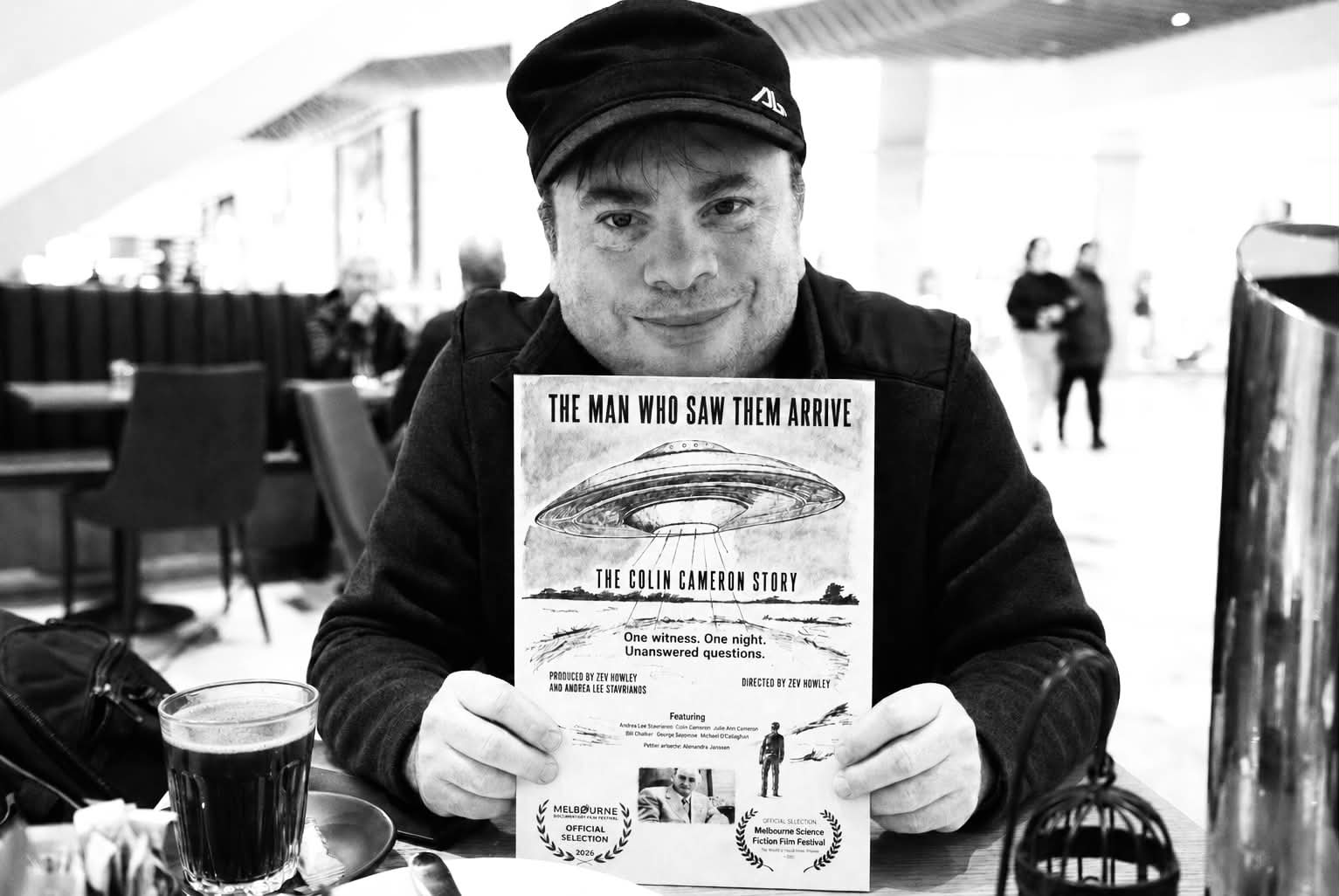
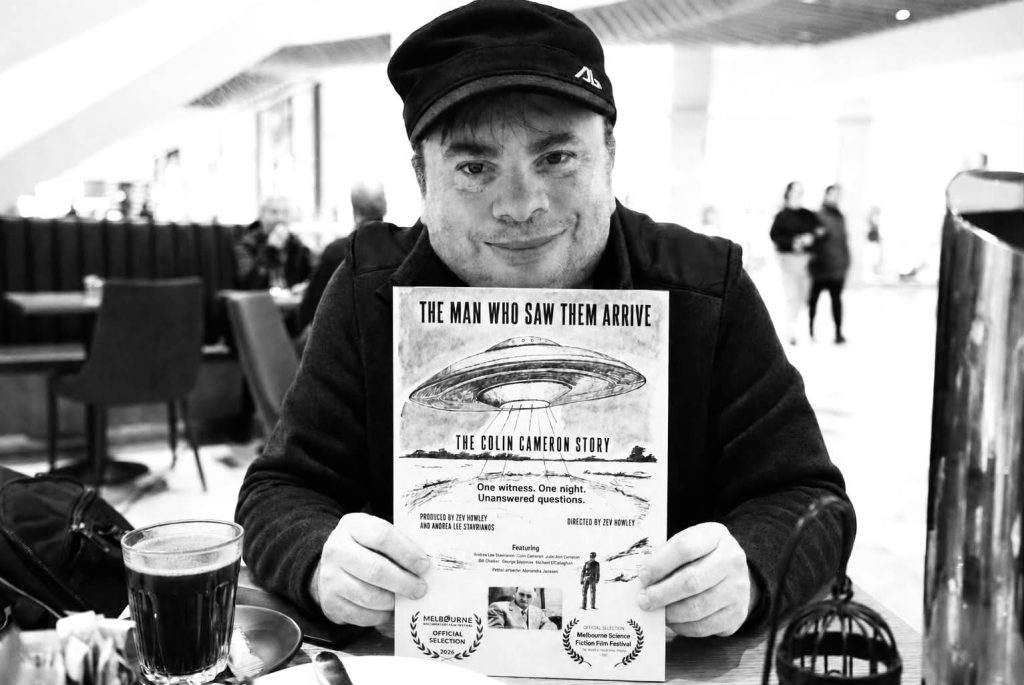
“The Man Who Saw Them Arrive” (EXCLUSIVE) Interview with Zev Howley

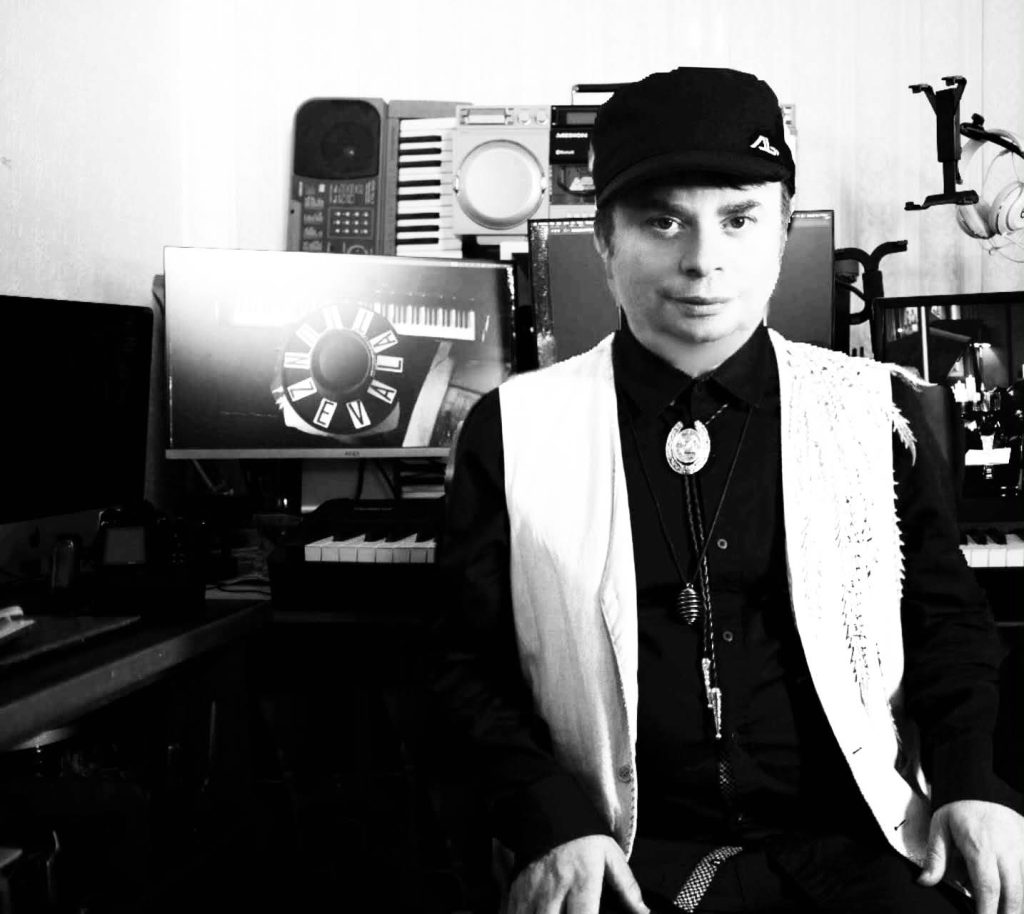
Who is Zev Howley?

I am a filmmaker, producer, director, musician, dancer, sculptor and songwriter. Having explored many different art forms, I have always gravitated toward my greatest passion: filmmaking. Whether working in short- or feature-length narrative, documentary, or music video, film remains my most powerful form of creative expression—particularly within my favourite genre, science fiction.

I was born into a world of art. My father, John Howley, was one of Australia’s most celebrated artists, while my mother, Rachell Howley, directed one of St Kilda’s earliest art galleries. Together, through the Acland Street Art Gallery, they played a pioneering role in Melbourne’s vibrant arts community during the 1980s.

My films have received numerous awards and recognition both locally and internationally. Inspired by my artistic heritage and driven by a lifelong passion for storytelling, I continue to pursue this remarkable creative journey.

Do you remember the exact moment you fell in love with cinema?

Yes, very clearly. In 1977, when I was seven years old, I saw Star Wars for the first time. It had an enormous impact on me. The scale of the story, the imaginative world, the characters and the groundbreaking visual effects opened my eyes to the extraordinary possibilities of cinema. That experience not only sparked my love of filmmaking, but also began my lifelong fascination with science fiction.

Around the same time, I also saw Jaws at the cinema. That film affected me in a very different way—I was probably far too young to see it and had nightmares for nearly three months afterwards. Looking back, both experiences demonstrated the remarkable power of cinema: one film filled me with wonder and imagination, while the other created genuine fear and suspense.

Together, they showed me how deeply films can affect an audience and inspired my enduring passion for visual storytelling.

Tell us about your project, “The Man Who Saw Them Arrive”.

The Man Who Saw Them Arrive is an Australian documentary about Colin Cameron, a man from Kew whose life changed after a mysterious encounter on Kew Boulevard. What began as a strange sighting gradually became an obsession. Colin started documenting unexplained events and sharing what was happening with the people closest to him, but over time, his experiences became more intense – and sometimes dangerous.

The story is told through Colin’s cousin, Andrea Lee Stavrianos, who made a promise to him that his story would one day be shared. Along with Andrea’s personal account, the documentary looks at some of Australia’s best-known UFO cases, including the famous Westall incident of 1966. It also features interviews with UFO researchers who help place Colin’s experience within the wider history of unexplained sightings in Australia.

At its heart, the film is a very personal story about mystery, memory and the unanswered questions that can be hiding in familiar places – sometimes right in Melbourne’s own backstreets.

The documentary had its world premiere in March 2026, when it opened the Melbourne Science Fiction Film Festival to a packed audience. A few months later, it screened at the Melbourne Documentary Film Festival and played to a sold-out cinema, which was an incredible experience.

On 7 August, the documentary will make its Queensland debut at the Australian UFO Festival in Cardwell.


Which director inspires you the most?

That’s a difficult question because so many directors have inspired me in different ways. Steven Spielberg, Stanley Kubrick, Darren Aronofsky, Akira Kurosawa, Quentin Tarantino and James Cameron are among the filmmakers whose work I greatly admire.

I naturally gravitate towards directors who work in science fiction, but I’m also drawn to films that explore important social issues and leave the audience with something meaningful to think about.

My favourite film of all time is actually  American History X, directed by Tony Kaye. It’s an incredibly powerful film about racism, hatred and the possibility of change. Its strong anti-racism message is especially important to me, and I believe it remains just as relevant in today’s world. That’s the kind of filmmaking I admire—cinema that is not only visually compelling, but also has something significant to say.

What do you dislike about the world, and what would you change?

What troubles me most about the world is that there often seems to be a lack of empathy and compassion for one another. People can be quick to judge or divide themselves into different groups rather than trying to understand each other’s experiences, struggles and points of view.

There is also far too much conflict and war. So many innocent people suffer because of decisions made by those in power, and the human cost can be devastating for generations. I believe we need to place a much greater value on peaceful communication, understanding and cooperation.

If I could change something, I would encourage people to listen to one another with greater openness and kindness. We may not always agree, but we can still treat each other with dignity and respect. I believe that if there were more empathy in the world, there would be less hatred, division and violence—and a much greater chance of creating lasting peace.

How do you imagine cinema in 100 years?

I imagine cinema in 100 years will be almost unrecognisable compared with what we experience today. Traditional cinemas and flat screens may no longer be the main way we watch films. Instead, cinema could become a fully immersive holographic or virtual experience in which the audience feels physically present inside the story.

Artificial intelligence may allow each viewer to experience a personalised version of a film. The characters could respond directly to us, and our decisions might influence how the story develops or even change its ending. Rather than simply watching a film, we could become active participants in its world.

There may also be technology that connects directly with the brain, possibly through implants or advanced wearable devices. This could allow audiences to experience a character’s emotions, sensations and memories as if they were their own. Filmmakers would no longer be working only with images and sound—they could be creating complete emotional and sensory experiences.

However advanced the technology becomes, I believe the heart of cinema will remain the same. People will always want powerful stories that make them feel something and help them understand themselves and the world around them. The way we experience cinema may completely change, but our need for meaningful storytelling will continue.

What is your impression of WILD FILMMAKER?

I think WILD FILMMAKER is a fantastic platform because it shines a light on independent filmmakers and gives their work the attention it deserves. The film industry can be extremely competitive, and talented independent filmmakers often struggle to receive the same opportunities or recognition as larger, well-funded productions.

I believe it is important to support the underdogs of the film industry—the passionate filmmakers who continue creating despite limited budgets, resources and industry connections. Independent cinema is often where we discover the most original ideas, personal stories and courageous filmmaking.

Platforms such as WILD FILMMAKER provide filmmakers with valuable exposure while also helping audiences discover exciting voices they may not otherwise encounter. I greatly appreciate its commitment to celebrating independent cinema and supporting the people who keep it alive.