THE DISARMED SOLITUDE OF THE DIRECTOR THEY WILL HATE US WHILE WE’RE ALIVE

By Luigi Pingitore

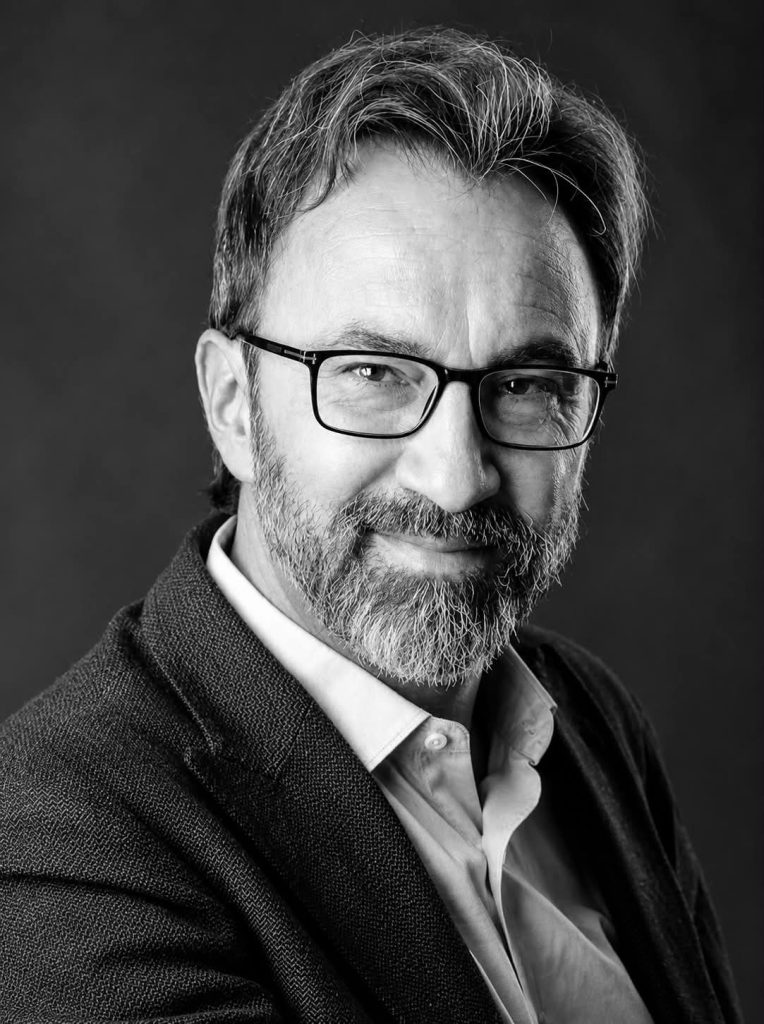
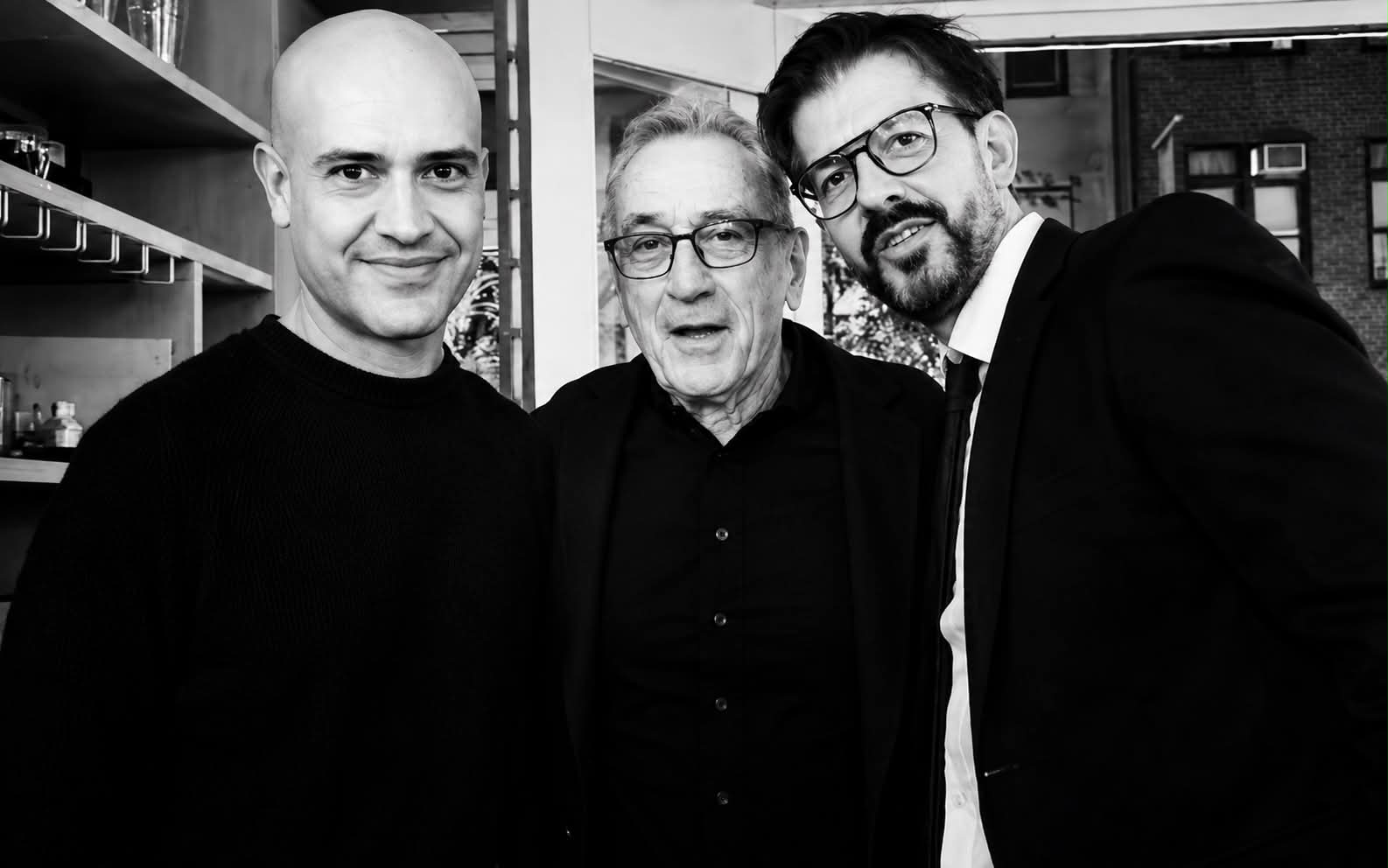
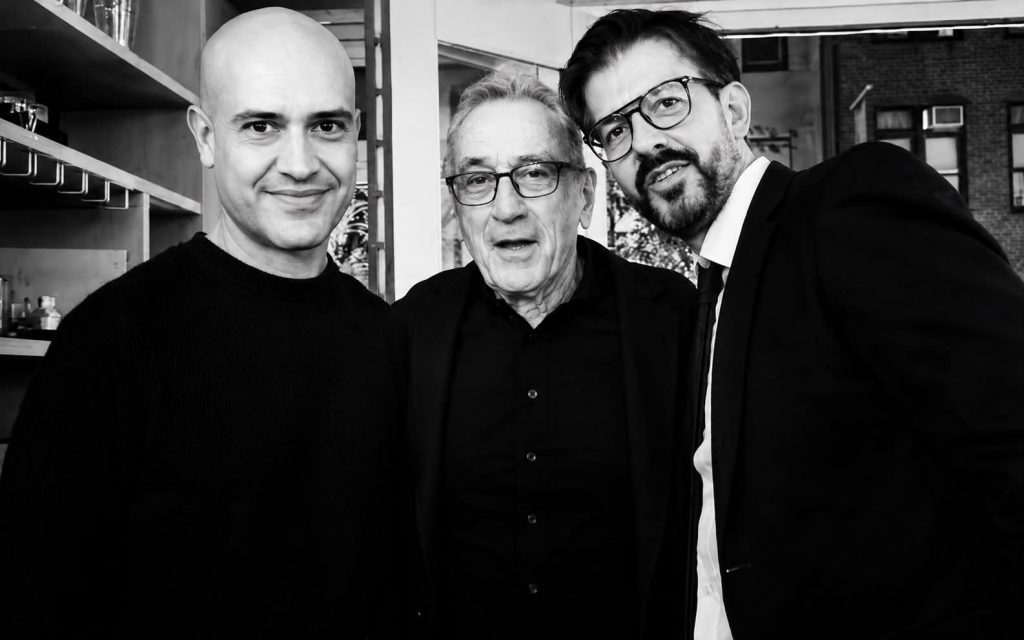
(From left: internationally acclaimed sculptor Jago; Academy Award winner Robert De Niro; and filmmaker Luigi Pingitore)

There was a moment, lasting roughly until the mid-1960s, when Cinema and Capital spoke the same language, even as they conversed from opposite frontiers. They had established a pact of mutual aid—perhaps turbulent, often conflictual, but in any case
founded on respect and a clear understanding of their respective domains: industry put up the money to buy prestige and ennoble its profit-driven mission; the artist contributed genius to ennoble the money. Each held 50% of the bargaining power. In such a scenario, even the producer’s blindness of that era, with his obsessions about commercial viability, became a vital reagent. The producer was a physical enemy, a concrete obstacle against which the director had to struggle, and in that struggle, the work of art accumulated the kinetic energy necessary to come into being. It was a fertile dialectic.
With the uncontrolled explosion of commercial television in the early 1980s, the pact between art and capital definitively broke, and for two reasons. First, because the image was no longer Sacred, since it could proliferate on every small screen at every hour of the day and night. And second, because the perpetual Schedule had transformed every representation into spectacle first, and then into entertainment. Cinema thus lost the identity-based primacy that had distinguished it from its very birth as the medium that  demonstrated the superiority of imagination over reality.
On the strength of this, one of the two ceased to consider the other a counterpart. And if many producers of the past were adventurers, sometimes megalomaniacal and a bit charlatan-like, they nevertheless seemed to retain a carnal and deeply human intuition. They knew that to make a profit, they had to bet on the unexpected, on the uniqueness of the director’s vision. Today, Capital has taken the driver’s seat—and it matters little whether it is often the fruit solely of State coffers—and has decided everything: the route, the duration, the destination, and even the driving style. But as if that were not enough, to join it in this mad race that has as its only possibility (but do they really not understand this?) the irrelevance of aesthetic experience, another even madder Totem has arrived. The stupid God of Communication. A phenomenon that in the last 10-15 years has grown
 to such an extent that it has demoted art to content—a horrifying term that equates a three-hour film with a thirty-second video on TikTok. Both are fossil fuels to be burned on the altar of the viewer’s attention.
Since Marketing and Communication are today omniscient and blind Gods who have planed down all complexity, abolished all experimentation, and immolated originality on the altar of conformism, transforming visual syntax into bait for attention, we are witnessing a truly perverse and unspeakable historical reversal. If it has always been art that educated and formed the public, flushing it out of its comfort zone to show it the unexplored, today art is expected to conform to the public—or rather, to the caricature of the public invented by marketing departments. We move within an abstract schema, governed by pseudo-experts, data analysts, and content managers convinced they hold the thermometer of people’s desires. The result is a mysticism of the banal. A counterfeit reality in which interest is schematized, differences are smoothed over, and the particular is sacrificed to be transformed into a fake, empty, repetitive, and above all elementary universal product. If everything must be immediately digestible by an increasingly fleeting attention, then everything must resemble everything else. Cinema has been
 reduced to being the decorative appendage of a permanent advertising campaign.
Federico Fellini’s observations come to mind then, worth rereading in their entirety, spoken when he himself probably sensed the first creakings, the first signs of the Pact’s rupture: “Producers are sweet prophets of the public’s intuition, and the worst part is that almost always their idea of the public, their dialogue and their nose, are inaccurate and unfortunate. They are nourished by a conception of the ‘commercial,’ of the ‘marketable,’ that is a true maniacal delusion, an abstract scheme, aggravated by a sort of plebeian intellectualism and a categorical mysticism, dominating a reality invented by themselves, nonexistent, counterfeit. They always end up making films that are not only ugly but also unmarketable, while most of the films we remember were made DESPITE the producers… This struggle against the producer to defend the film is ultimately an advantage for the film, because struggling means charging oneself with aggressive energy, and energy is a good thing, vital for creativity. Long live the producer!”
 In this scenario, the solitude of those who want to make art, who still consider cinema a language capable of surprising, moving, connecting to its own expressive urgency, experimenting with forms that demolish people’s psychic sleepwalking, is now abyssal. Because one no longer has to fight against a flesh-and-blood producer, against whom to accumulate aggressive and vital energy. One has to fight against a rubber wall made of Excel spreadsheets generated by an algorithm, engagement metrics, focus groups, and against a suffocating conformism disguised as market inclusivity. So, as in Wenders’ famous film, The Goalkeeper’s Fear of the Penalty Kick, today’s director is a man alone, anguished by the presence of a triple threat: the demands of capital, the motional
 illiteracy induced in the public, and the dictatorship of marketing that a priori excludes the unexpected, the mistake, the sacred fire of intuition that answers to no market research.
Those who still seek the particular, the scratch, the singular unrepeatable expression, find themselves isolated in a desert of standardized content.
But it would be dishonest, as well as foolish, to long for that time as a golden age. Even then, cinema betrayed, even then it produced rubble, and even then it was often in the service of ideologies and vanities. The pact between art and capital was not simply virtuous.
What we can truly miss is not so much the era itself—which, like all we have not lived, appears to us in dreams with more lights than shadows. Rather, we miss a condition. That condition in which the image still possessed a margin of the Sacred. Sacred in the most ancient sense of the term—something that escapes immediate consumption, that demands time, silence, and space within us. It asks us to let the world open a breach in the armor of our ego, an act of surrender on the part of the one who looks. Today we are
 saturated with images and precisely for this reason we have lost our hunger for them. We see thousands a day, but how many have the power to fertilize us, to instill themselves in our depths? The truth is that the more images we see, the less we imagine. Excess has anesthetized the seductive capacity of the gaze.
Yet human beings cannot live without imaginaries that cross through and transform them. They need them as they need myths, stories, symbols that do not immediately let themselves be translated into meaning. Jung said that the true Master is the one who does not explain. He accompanies us to the threshold of the unknowable and leaves us there, at the mercy of our capacity to see, feel, imagine. Cinema, when it is cinema and not content, does exactly this work. It leaves a residue that continues to work inside the viewer long after the lights have come back on—an impregnation, as the early film theorists called it, capable of silently rewriting our perception of the real.
That is why, in an era obsessed with entertainment, with the need to fill every instant of attention, to never leave a void that might resemble boredom or thought, the sacred
 dimension of visual representation is an urgent need as much as that of food or sleep. Those who continue to make images that resist explanation, that are not consumed in thirty seconds, that know how to germinate producing dreams or nightmares, are protecting the collective. They are defending the possibility of being seduced once again. And how can we love if we have not first been seduced?
 So is it all over? As in every war, signs of life and new possibilities will come only from the front of resistance, which today more than ever is not merely an aesthetic choice, but  an act of pure devotion against the disappearance of the human from the big screen.
Greek cinema of the early new millennium, the more recent Romanian cinema, the cinema of Southeast Asia, of Argentina and Lithuania (and one could cite dozens and dozens more examples) demonstrate this. There is still life in that mysterious and magical world that appears precisely when the light around us goes out. On Netflix, there is a documentary that testifies to Orson Welles’ long and stubborn battle against everyone and everything in order to make cinema. The title of the documentary: They’ll Love Me When I’m Dead. Today we should claim another possibility. To love the world and those who produce Sacred, true, and unique images while those people are alive. And if this should disturb the plans of those who only want to perpetuate the Kingdom of stupid entertainment and spectacle that produces not emotion but habituation, so be it. It will mean that they will hate us as long as we live.
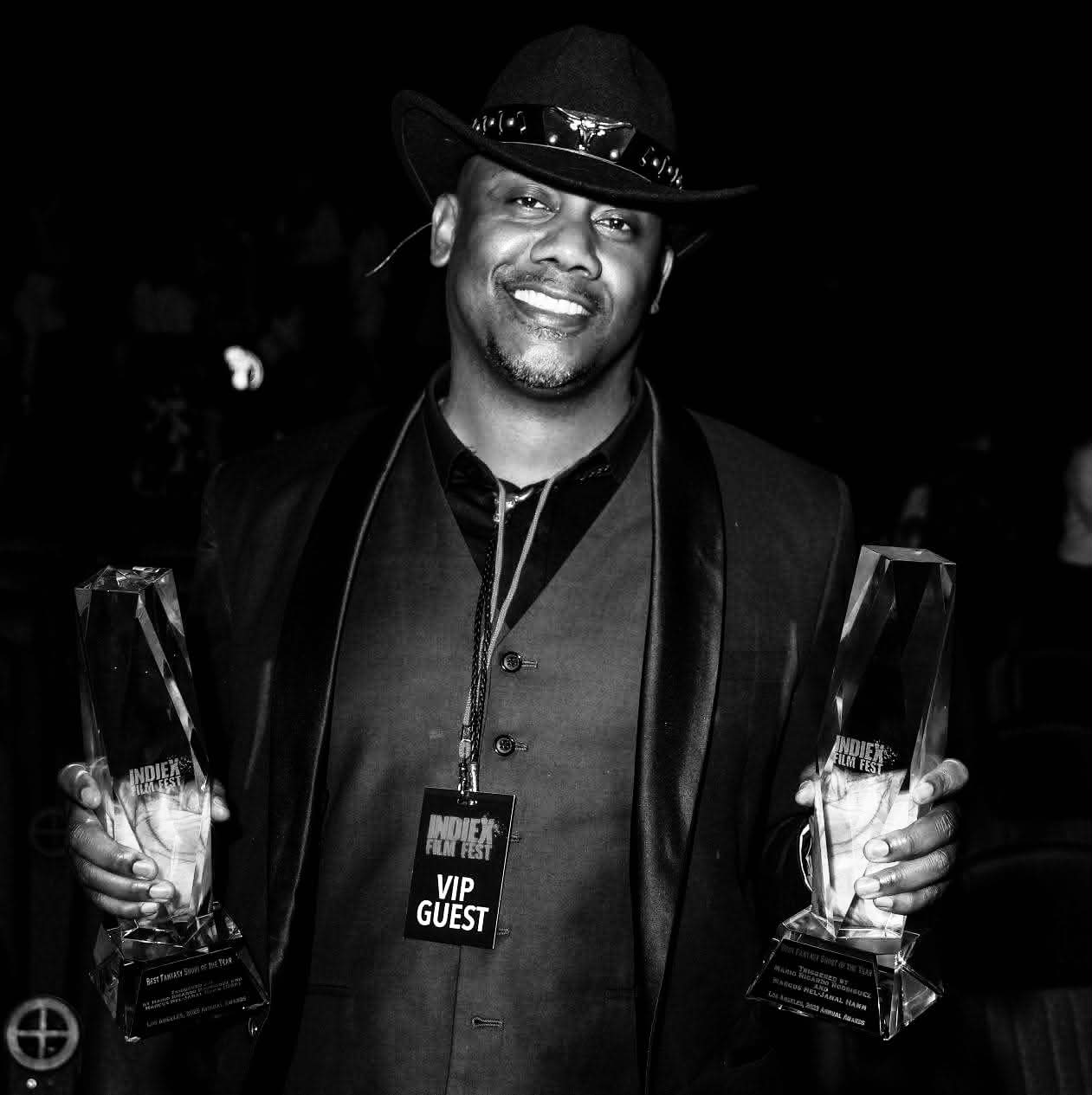
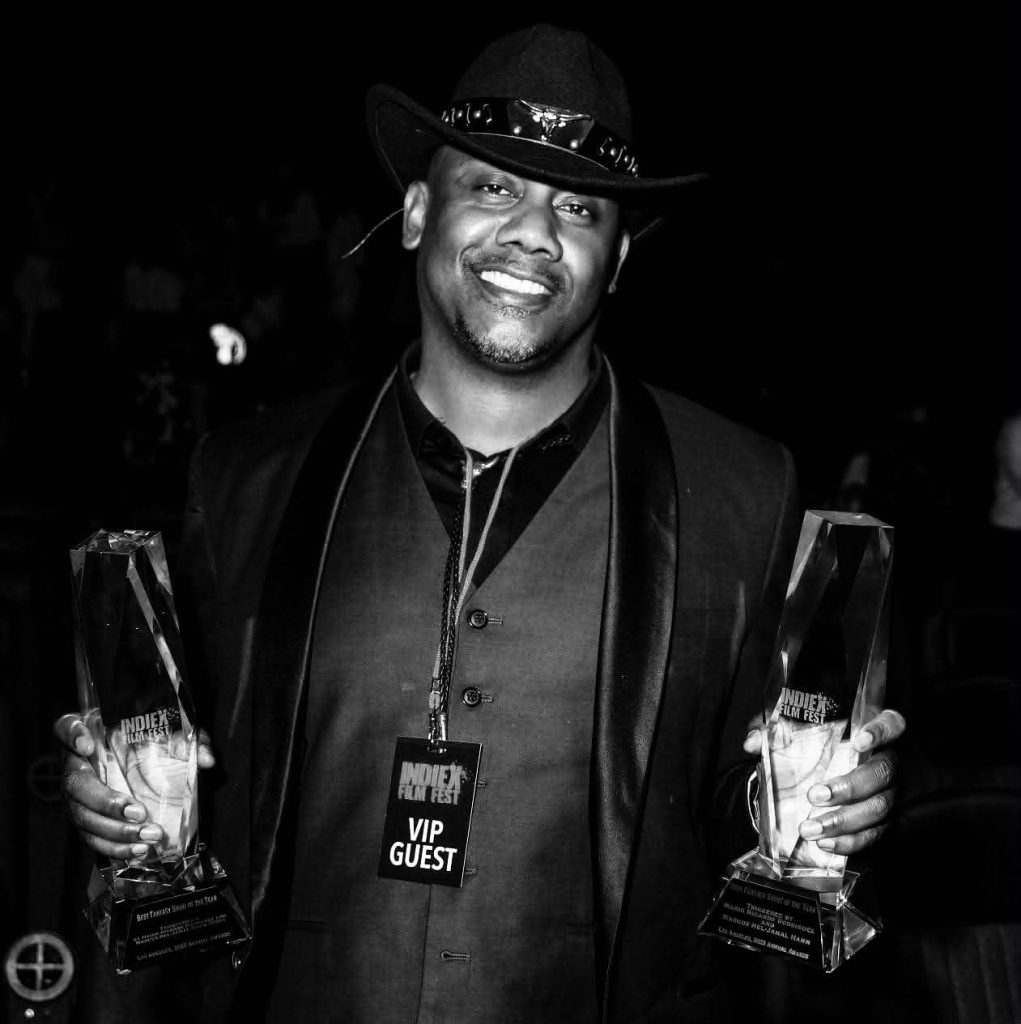
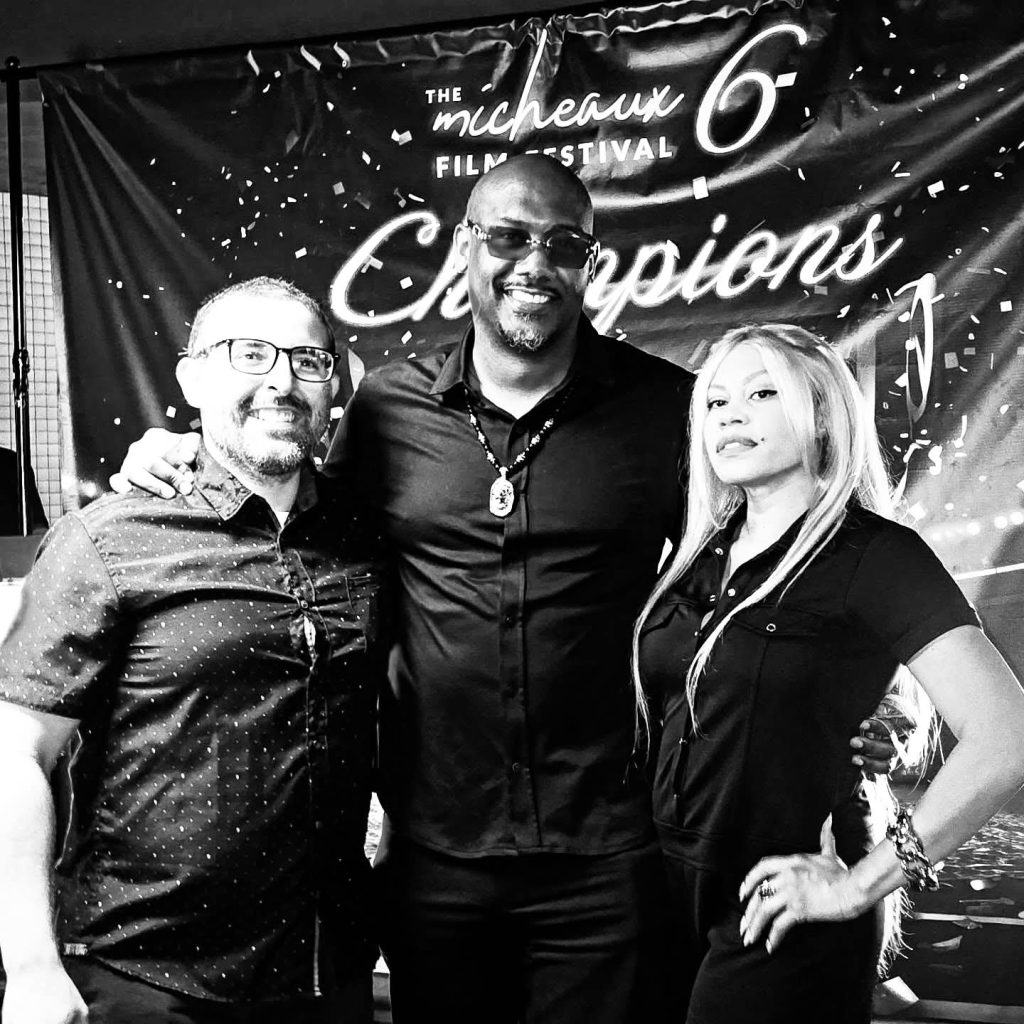
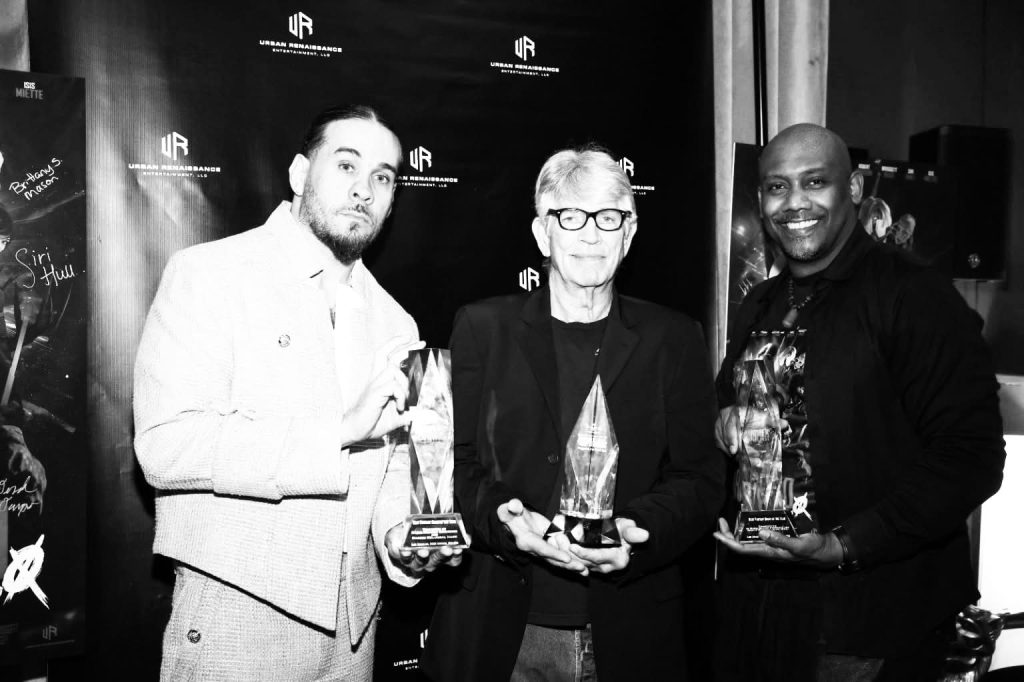
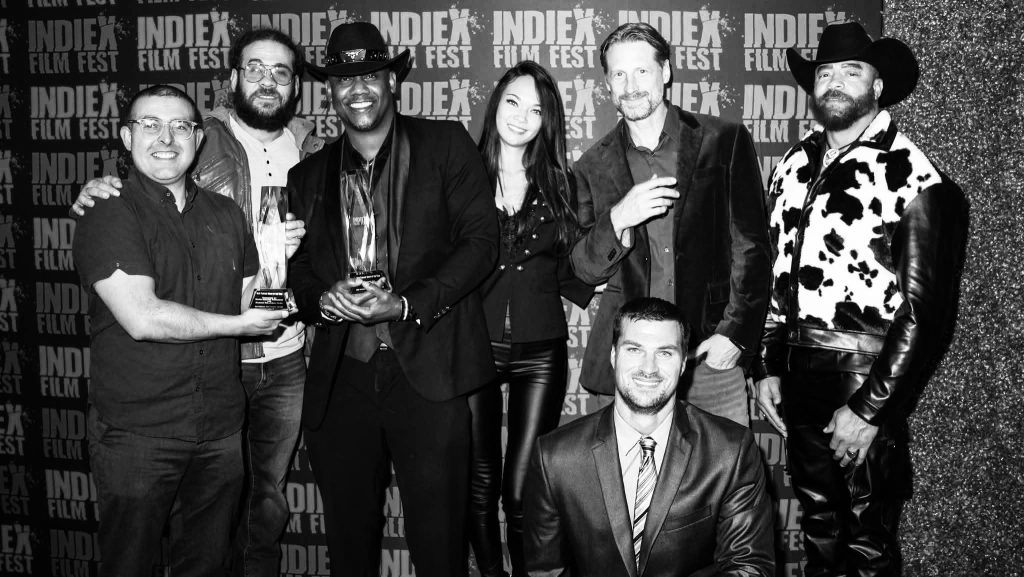
“Triggered 3.0/The Dragon King” (EXCLUSIVE) Interview with Marcus Nel-Jamal Hamm

-Who is Marcus Nel-Jamal Hamm?

Marcus has often been described as a visionary.  My loving mother and father both graduated with top honors with Master’s Degrees in Sociology, and I was raised to believe firmly that the sky was the limit.  Growing up with a vivid imagination and an early affinity for the arts and sports, I wanted to become everything from a wrestler and a bodybuilder to a stuntman and an actor.  But I also loved to write and draw, and grew up reading comic books, hundreds of which are still in my possession. In my earlier years, I believed I had to choose one direction. While in college at The University of Maryland, I simultaneously decided to sign up for a professional wrestling training program with Bonebreakers Academy.  I went in without any expectations, I had suffered a car accident a few years prior and upon recovery, I simply wanted to test my abilities. It turned out that I defied even the trainers’ expectations; a year later, I received my first contracted television role with Urban Wrestling Alliance in 2000, which aired on UPN.  While we trained and prepared for filming, legendary actor David Dunard also trained us in acting. Our wrestling trainer was Rocky Johnson, a WWE Hall of Famer and father of The Rock, Dwayne Johnson.  After the series ended, I completed my college degree with a Bachelor’s in Criminal Justice, and then moved toward acting after taking more training.  In 2007, I received my first role on a scripted television series, HBO’s *The Wire*, with a feature recurring role as Officer Marcus.  This granted me access into SAG and launched my move from Maryland, to Los Angeles, where I have since continued to perform as both a pro wrestler and actor, while writing and producing various award-winning independent films, shorts, and music videos.  

-Do you remember the exact moment you fell in love with cinema?

One of the bonding experiences I had with my father growing up was going to the movies. My favorite memories include seeing films like Return of the Jedi, Ghostbusters, ET, Gremlins, and Indiana Jones and the Temple of Doom. It always felt like each movie stayed with me in a deeper way, almost as if it were a part of me. I enjoyed discussing the storytelling and living in these fantasies and I appreciated the work it took to bring a story with such a grand spectacle to life.  The effects, the cinematography, and the score from films like these always stood out even at a young age. 

-Tell us about your project “Triggered 3.0/The Dragon King”.

Triggered 3.0, the Final Cut is the completed work of a five-year project that began with Triggered, a Cinematic Superhero Fan Film.  That first film was very special, as it was developed to help complete a dying friend’s last wish.  Steven James Tingus was a lifelong advocate for disability and diversity inclusion. I had the honor of meeting him in 2017, and our friendship led to us working together on a comic book-themed fan film where he wanted to play the antagonist.  In 2022, we completed that work and it screened at the Indie Night Film Festival where Steven had the opportunity to see himself in a lead role for the first time at the famous TCL Chinese Theater in Hollywood.  On the very same night of the screening, Steven passed away, having fulfilled his wish. We agreed to continue on with the story, leading to part 2.0, and now the final cut which has brought Academy Award nominee Eric Roberts to join a stellar cast led by Fernando Marrero, Robert Dobson, Bridgett Bess, Joshua Longfellow Wright, Masashi Ishizuka, Siri Hull, and Katrina Chiovon.  Triggered 3.0 has already won its first award for Best Action Film from the Los Angeles Stars Film Festival. It will screen as part of the Los Angeles Fantasy Fest on November 21st at the Skiptown Playhouse, followed by an awards ceremony on November 22nd.  

The follow up to Triggered is my first full feature fantasy film, titled The Dragon King.  Currently in screenplay format only, it has already received its first nomination for a Best Screenplay Award from Film Invasion L.A., which will host an awards ceremony on August 22nd. I am excited to announce that I will be co-directing The Dragon King with rising visionary filmmaker and actress Tiffany Toney, whose breakout feature film Bora has been wowing critics and audiences globally.  Before we begin with The Dragon King, our first collaborative project, Merry F’N Christmas is in post-production and will have an official release date announcement very soon. 

-Which Director inspires you the most?

I have been inspired by many directors over the years, but none more than Spike Lee.  His films feel like more than cinema to me; they are pure works of art. He often seems to break the rules of linear storytelling, taking you on a cinematic journey with a unique signature that always tells the audience that no one else could tell the story the way he does.  I feel that those qualities make a director stand out.  

-What do you dislike about the world and what would you change?

Simply put, I am anti-racism, and unfortunately this world is plagued with it.  One of the things that draws me to filmmaking is its power to inspire. Sometimes this is done directly by telling stories that address it, but also in other ways such as casting and hiring a diverse team, which is a key aspect of all of my work under my company, Urban Renaissance Entertainment.  If I could change racist mindsets across the world, that would be a greatest wish as it stands as one of the main reasons we cannot find peace. 

-How do you imagine cinema in 100 years?

I imagine in 100 years that people will be plugged into some artificial reality network, allowing them to experience film in a manner that feels like they are living out the lead roles.  Advancements are happening so rapidly that I’m honestly fearful of how far this technology will go in another century. If I’m being honest, I hope that we go backwards instead of forward and remain where we were between the 90’s and 2000’s with human actors, practical effects, and advanced CGI. 

-What is your impression of WILD FILMMAKER?

It’s not often that independent filmmakers have the opportunity to share their story with the world, so WILD FILMMAKER is greatly appreciated for seeking out and acknowledging those of us who are still building our audience and earning accolades.  

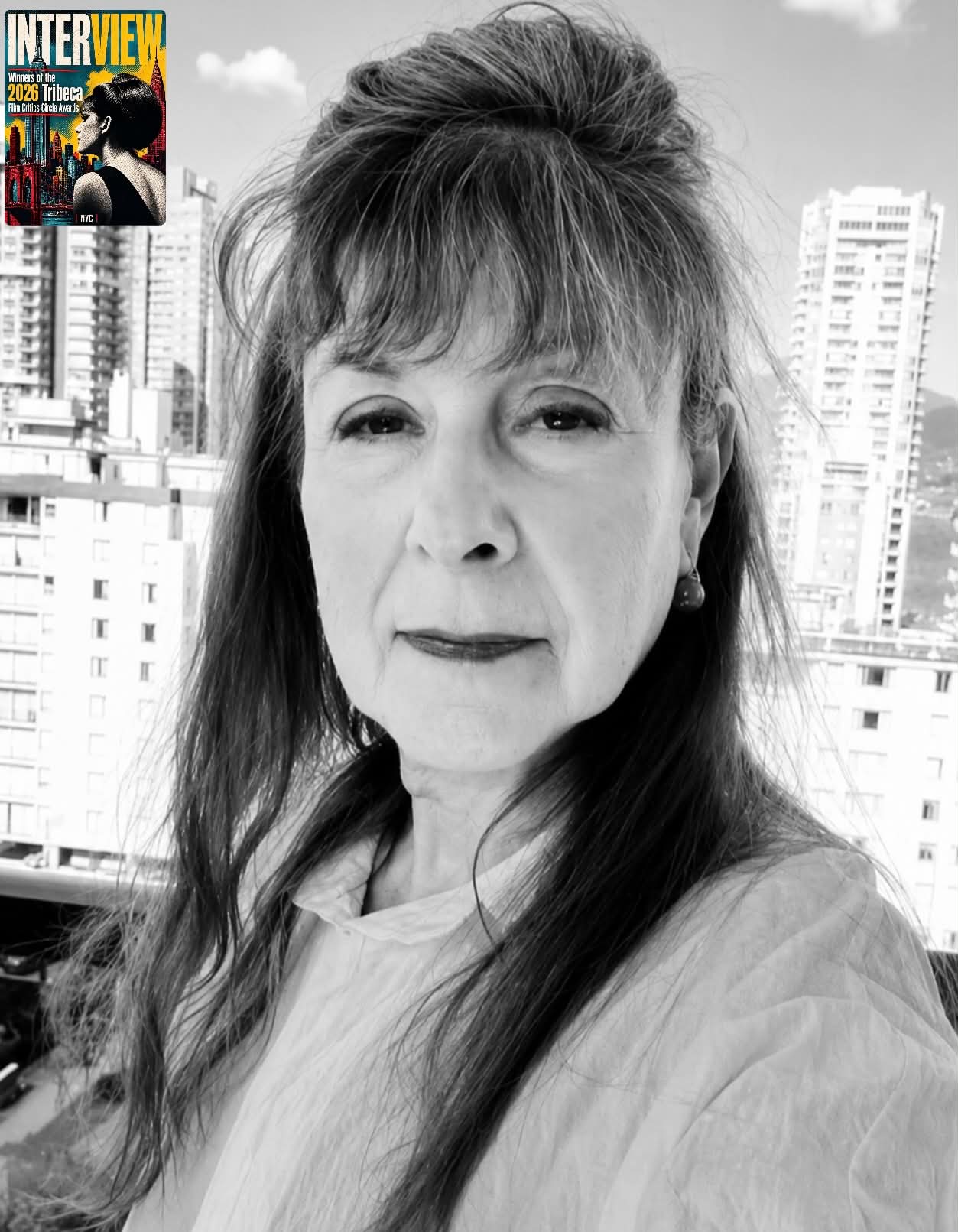
(EXCLUSIVE) Interview with Faye Fayerman

-With this victory, you have achieved an important milestone and have become an authoritative voice in international independent cinema. What are your next projects?

Receiving this distinction from the TriBeCa Film Critics Circle Awards is a tremendous honor. I am deeply grateful for this recognition, and I am humbled to be considered a respected voice within international independent cinema. My next projects naturally grow out of my background in dance, sound, and visual storytelling. I am currently writing a film that reflects on my move here and explores the emotional and psychological landscape of displacement, memory, and belonging. Another project is a highly visual work centered on the expressive language of the body and how movement can communicate emotion, history, and experience without words. I am also developing a deeply personal film inspired by a close friend. It begins with the simple act of putting on jackets as she recounts her story. Through intimate gestures and conversation, the film explores resilience, vulnerability, and the ways our bodies carry memory.

This award encourages me to continue making films that embrace experimentation while remaining deeply human. I look forward to sharing these new works with audiences and continuing to explore cinema as a space where image, movement, sound, and personal histories come together.

-Describe yourself with three adjectives that best reflect your vision of the world.

Intuitive, Daring, Visionary.

-WILD FILMMAKER is, above all, a space for freedom of thought and sharing. Who would you most like to find yourself in front of, and what would you say to them? You may include figures from the present or the past, from Julius Caesar to Marilyn Monroe, just to give an example.

I would love to find myself in front of and have long vibrant conversations with:

Lina Wertmuller, Federico Fellini, Michelangelo Antonioni, Bernardo Bertolucci, Paolo and Vittorio Taviani, Chantal Akerman, Akiro Kurosawa, Jean-Luc Godard, Pier Paolo Pasolini, Agnes Varda, Jacques Tati, Francois Truffault, Andrei Tarkovosky, Pina Bausch, Vaslav Nijinsky, Rudolf Nureyev, Martha Graham, Ohad Naharin, Meredith Monk, Leontyne Price, Maria Callas, Bidou Sayao, Jessye Norman, Charles Baudelaire, Alberto Moravia, Agnes Gund, Gordon Matta-Clark, Carolee Schneemann, Bruce Nauman, Louise Bourgeois, Robert Frank, Diane Arbus…. Soooo many more…..

-Through the WILD FILMMAKER Community, we have succeeded in bringing independent filmmakers under the same spotlight as mainstream industrial cinema. How do you evaluate our work and activities?

Cinema/Film has always been a place where different voices can meet, regardless of budget, geography, or industry. What I admire most about the WILD FILMMAKER Community is its sincere and deep commitment to creating that meeting place. By bringing independent filmmakers into the same conversation as mainstream cinema, you remind us that the true value of a film lies not in the scale of its production, but in the depth of its vision. Independent cinema is where many of the most courageous artistic risks are taken. It is where new cinematic and visual languages are born, where visual silence can speak as powerfully as dialogue, and where deeply personal stories find a universal heartbeat. Your work nurtures this creative ecosystem by giving filmmakers not only visibility, but also a sense of belonging. I believe cinema is a living art form, nourished by diversity of voices and perspectives. The WILD FILMMAKER Community has become more than a platform, it is a bridge between cultures, artists, and audiences. In a world that often celebrates the loudest voices, you create space for the quiet, the experimental, and the deeply human. That is a meaningful contribution to the future of cinema.

(EXCLUSIVE) Interview with Graciela Cassel

With this victory, you have achieved an important milestone and have become an authoritative voice in international independent cinema. What are your next projects?

My next project is a video called Young River, the river through the eyes of a child. It is a project about innocence, discovery, and the way a child can look at nature with wonder and truth.

Describe yourself with three adjectives that best reflect your vision of the world.

Hopeful, energetic, and humanistic.

WILD FILMMAKER is, above all, a space for freedom of thought and sharing. Who would you most like to find yourself in front of, and what would you say to them?

I would like to find myself in front of Marie Curie and Lina Wertmüller. I would tell them that I admire their courage, their vision, and the way they opened roads for others. I would also say that I would like to see a world without wars, with human understanding and hope for the new generations.

Through the WILD FILMMAKER Community, we have succeeded in bringing independent filmmakers under the same spotlight as mainstream industrial cinema. How do you evaluate our work and activities?

I believe that WILD FILMMAKER offers a platform where filmmakers find a resonance for their work. This is so important because, after the solitude of creating, the filmmaker can feel that their message has found a road to walk in the world.

(EXCLUSIVE) Interview with Chris Ross Leong

-With this victory, you have achieved an important milestone and have become an authoritative voice in international independent cinema. What are your next projects?

Great question! In this time of flux, I do believe in the continuing power of original storytelling, and so, creatively speaking, my other projects on the EP!C slate like “NeverWere: a Lycan Love Story”, “Deadeye”, “LoveBeats” and “Shelter: No Place to Run” continue to be developed on an ongoing basis.

-Describe yourself with three adjectives that best reflect your vision of the world.

Original. Outstanding. Excellent.

-WILD FILMMAKER is, above all, a space for freedom of thought and sharing. Who would you most like to find yourself in front of, and what would you say to them? 

You may include figures from the present or the past, from Julius Caesarto Marilyn Monroe, just to give an example.I’d love to be in front of the people who are putting the business in front of the stories, and saying to them that we do not make widgets that are efficiently making money for them. Everybody from TV stations to Marvel has found out that widgetry and art are two different products. Original art is not scalable, hedgeable, refinable. Craft is, and professionalism is. But reducing art to content and calling them the same exhibits a profound lack of perception along with a distinct myopia and atmosphere of scarcity which, although great in the world of Warren Buffet et cie, achieves little of long term value in the cinema. Yes, ’twas always thus. But as we can all plainly see today, that paradigm must change or perish.

-Through the WILD FILMMAKER Community, we have succeeded in bringing independent filmmakers under the same spotlight as mainstream industrial cinema. How do you evaluate our work and activities?

Bringing an open and frank discourse into industry is always good. Data scraping in the name of efficiency is not always good. Industrial cinema has always been about the middle way. Nothing stand-out, everything catered to the tastes of the viewers (and their pocketbooks). That’s thankfully going away, leaving the independents to find their own way to economic viability outside of industrial norms, concepts, doctrine. This is a good thing, as we are seeing increasing evidence that the industrial business models of the Age of Industry and Information are sunsetting and giving way to the Age of Communication. And the WILD FILMMAKER Community is at the vanguard of a new direction, despite what the gate-keeper pundits would have us all believe.

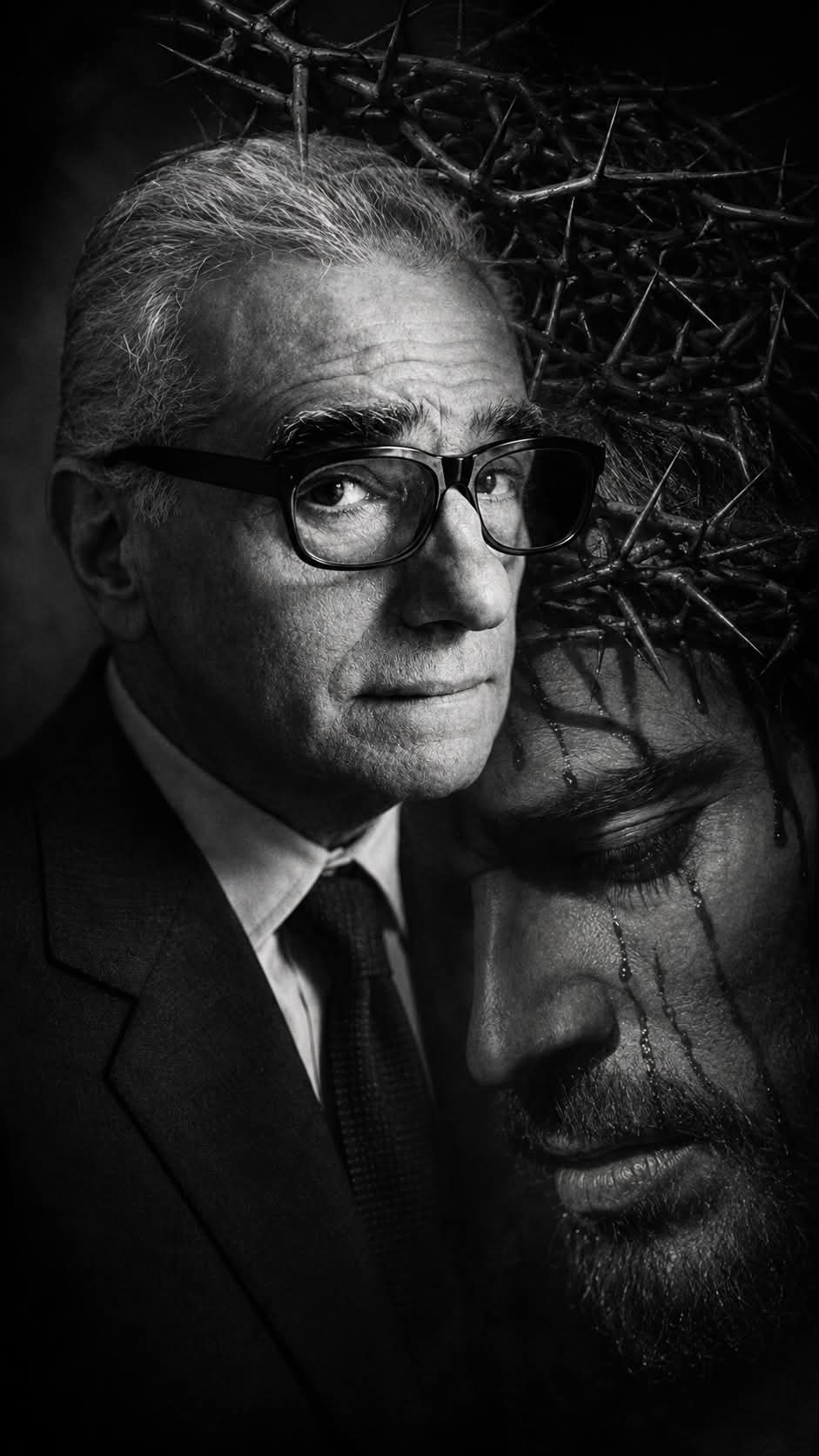
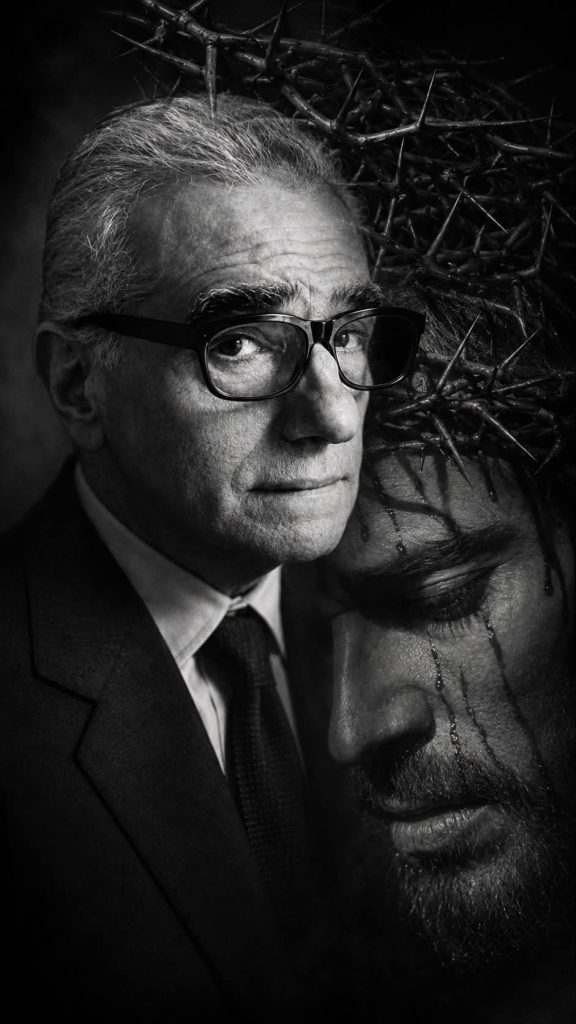
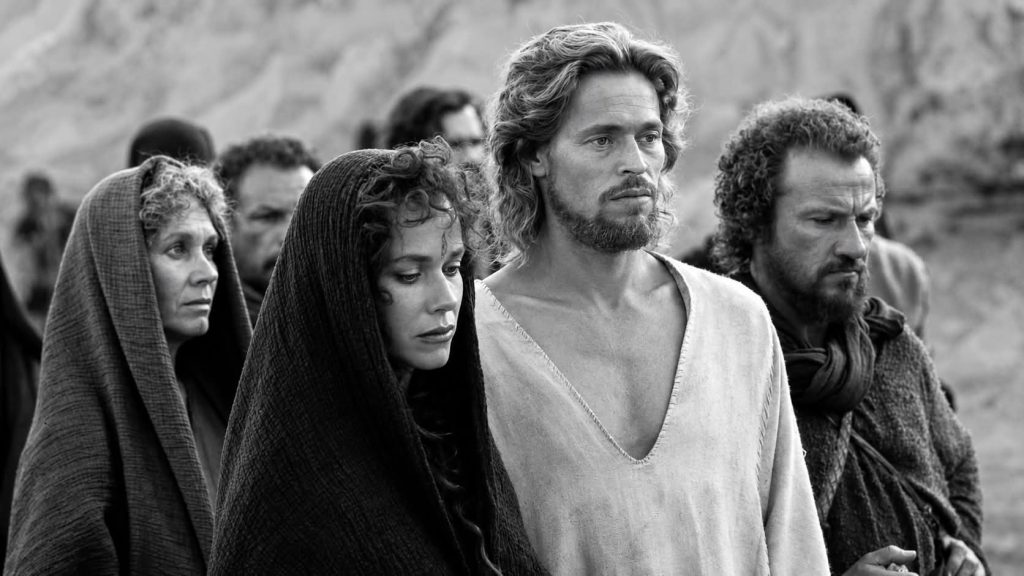
“The Last Temptation of Christ”: Censorship and Truth Behind Martin Scorsese’s Masterpiece in Pierluigi Di Pasquale’s Investigative Book. (EXCLUSIVE) Interview with the Author.

By Michele Diomà

Nearly seven years after the founding of WILD FILMMAKER, I feel a special sense of excitement in publishing this interview. Not only because it is dedicated to one of the films I love most, The Last Temptation of Christ, but also because it explores a subject that I consider to be at the very heart of our editorial identity: freedom.
Freedom of expression is the essential foundation of every genuine work of art. Yet cinema, more than most other art forms, has often had to contend with limitations imposed by its very nature. Making a film has always required significant financial resources and, as a result, has often involved compromises, constraints, and external pressures. Fortunately, this reality is changing. Technological progress and the gradual reduction of production costs are giving filmmakers ever greater creative independence. And with that comes the possibility of a truly free cinema.
In my view, The Last Temptation of Christ stands as one of the finest expressions of that freedom. It is a masterpiece of cinematic art not only for its extraordinary visual and narrative power, but also because it embodies the courage of an artist who chose to remain faithful to his vision despite the controversy it provoked. Martin Scorsese demonstrated that creative freedom is not a privilege, it is a responsibility.
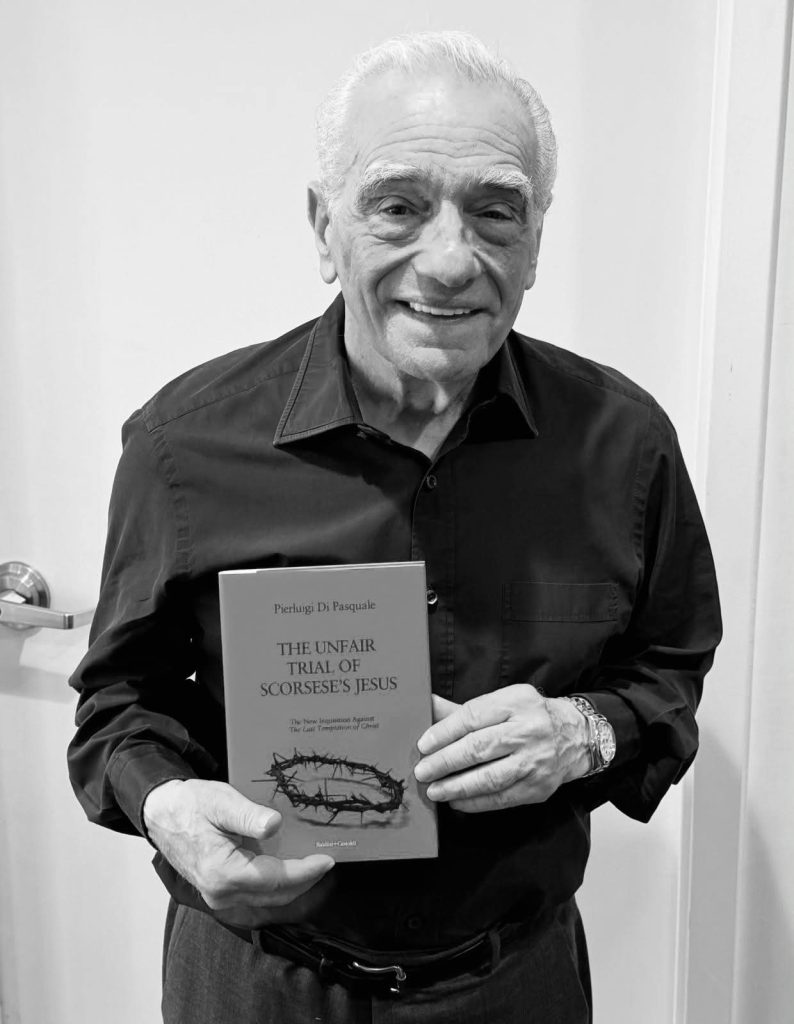
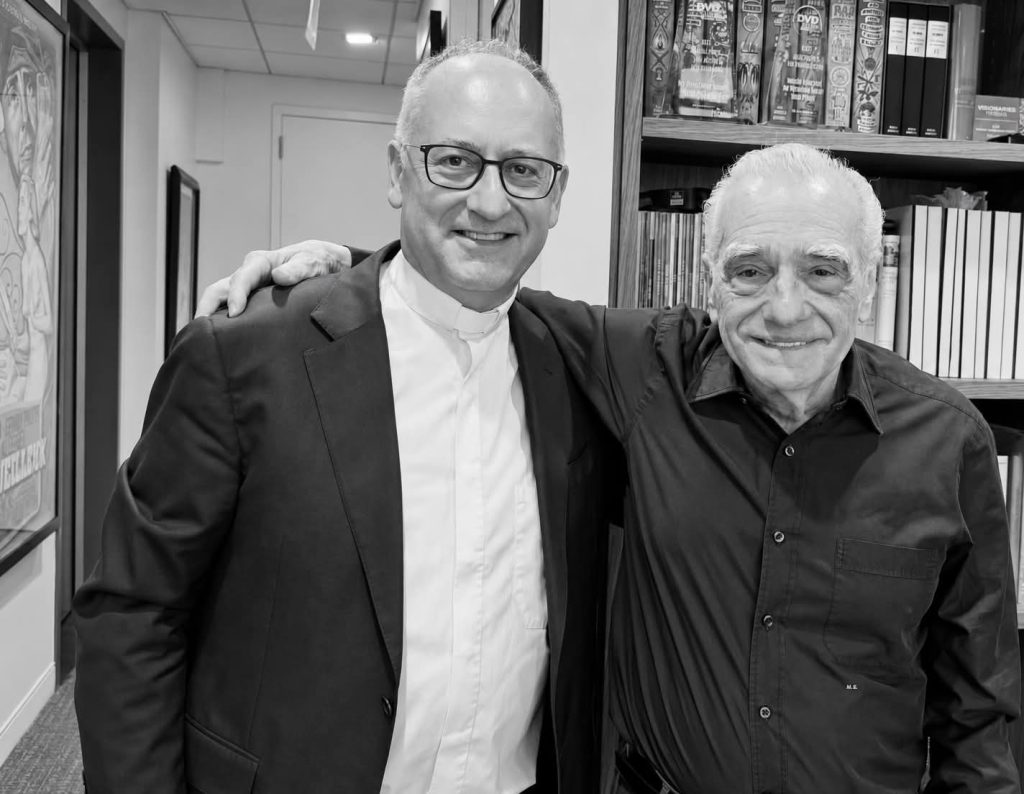
I would therefore like to thank Martin Scorsese for the courage with which he brought this remarkable work to life; all those who, often behind the scenes, believed in the film and made its existence possible; Father Antonio Spadaro, who met with Scorsese and presented him with the book at the center of this interview; and, of course, Pierluigi Di Pasquale, author of this outstanding volume devoted to The Last Temptation of Christ.
Enjoy the interview.

-What inspired you to dedicate a book to Martin Scorsese’s film The Last Temptation of Christ?

My initial idea was actually to write the screenplay for a documentary to be produced for the fortieth anniversary of The Last Temptation of Christ and its controversial presentation at the Venice Film Festival. During the research phase for the documentary, I found information about the story in many books and countless newspaper articles published at the time, but no Italian publication devoted entirely to the controversy surrounding this film. Moreover, in one of the books I consulted, I read that the film had such a complicated and convoluted history that it deserved a book of its own. In the United States, a few books were published when the film was released in theaters, but they deal only with the events that took place overseas, and I naturally cite them in my essay. Above all, however, I wanted to write a defense of Scorsese’s film, which scandalized Christian fundamentalists and sparked an intense controversy over its alleged blasphemy, ultimately becoming the subject of what was, in every respect, an unjust trial.

What new or previously undiscovered insights emerged from your research into the challenges and controversies surrounding The Last Temptation of Christ when it was released in 1988?

For The Last Temptation of Christ, Martin Scorsese endured vicious accusations and boycotts, often from people who had never even seen the film, and this began long before he was able to make it. In fact, in 1983, just four days before principal photography was due to begin, and despite five million dollars already having been spent, Paramount, intimidated by the protests and threats of Christian fundamentalists, decided to cancel the project. Even when Scorsese finally managed, five years later, to make his long-desired film about Jesus, violent demonstrations by fanatics followed: cinema screens were slashed, film prints were burned, and theaters showing the movie were even set on fire. In some countries, the film was never authorized for distribution. The controversy continued in Italy when The Last Temptation of Christ was included in the program of the Venice Film Festival by its then director, Guglielmo Biraghi, who declared that he considered it “a very Catholic film.” The uproar was further fueled by a complaint alleging contempt for the state religion, which was, of course, immediately dismissed by the public prosecutor’s office. However, the Italian Episcopal Conference (CEI) issued an official condemnation and, in an attitude reminiscent of the Holy Office, urged the faithful not to see what it described as “an unacceptable and morally offensive” film. Fortunately, many distinguished theologians, intellectuals, and film critics defended the sincerity of Scorsese’s intentions and found nothing scandalous in his work. Lino Miccichè went so far as to describe the film as one of the most incandescent acts of faith ever produced by American cinema. Tullio Kezich, writing in la Repubblica, also came to Scorsese’s defense, suggesting that even a work like this could bring people closer to faith.

-Thanks to Father Antonio Spadaro, Martin Scorsese recently received a copy of your book and expressed his appreciation for it. Do you think this could be the first step toward developing a documentary based on your book?

Now that Martin Scorsese has received a copy of my book thanks to our mutual dear friend Antonio Spadaro, and after recording a video in which the director expressed his appreciation and thanked me for writing it, I am pursuing the documentary project with even greater enthusiasm.

-As part of the reappraisal of The Last Temptation of Christ, the Church has also recognized both the artistic and theological value of the film. Could you tell us more about this important shift in perspective?

Thanks once again to Father Antonio Spadaro, Scorsese’s film has finally been rehabilitated by the Church. Spadaro, who serves as Undersecretary of the Vatican Dicastery for Culture and Education, described The Last Temptation of Christ as a Christologically sound film. He wrote this in a beautiful article published in the May issue of La Civiltà Cattolica, with the approval of the Secretariat of State of the Holy See. This represents a complete reversal of the sentence of condemnation that the Church had pronounced, even in official forms, against the film. This recognition of its Christological correctness amounts to an acquittal that comes almost forty years later. Naturally, all of this will be included in the documentary, which will recount the unjust trial the film endured in the 1980s, the reopening of the case following the publication of my book in 2024, and this rehabilitation, which has made Martin Scorsese extremely happy. Thirty-eight years later, the hope that Scorsese expressed the day after the film’s premiere in Venice has finally come true: “I continue to hope that, in time, the Catholic Church will be able to see the film in the spirit in which it was made. At first, I dreamed that the clergy would appreciate the film and that it would encourage a positive dialogue.”

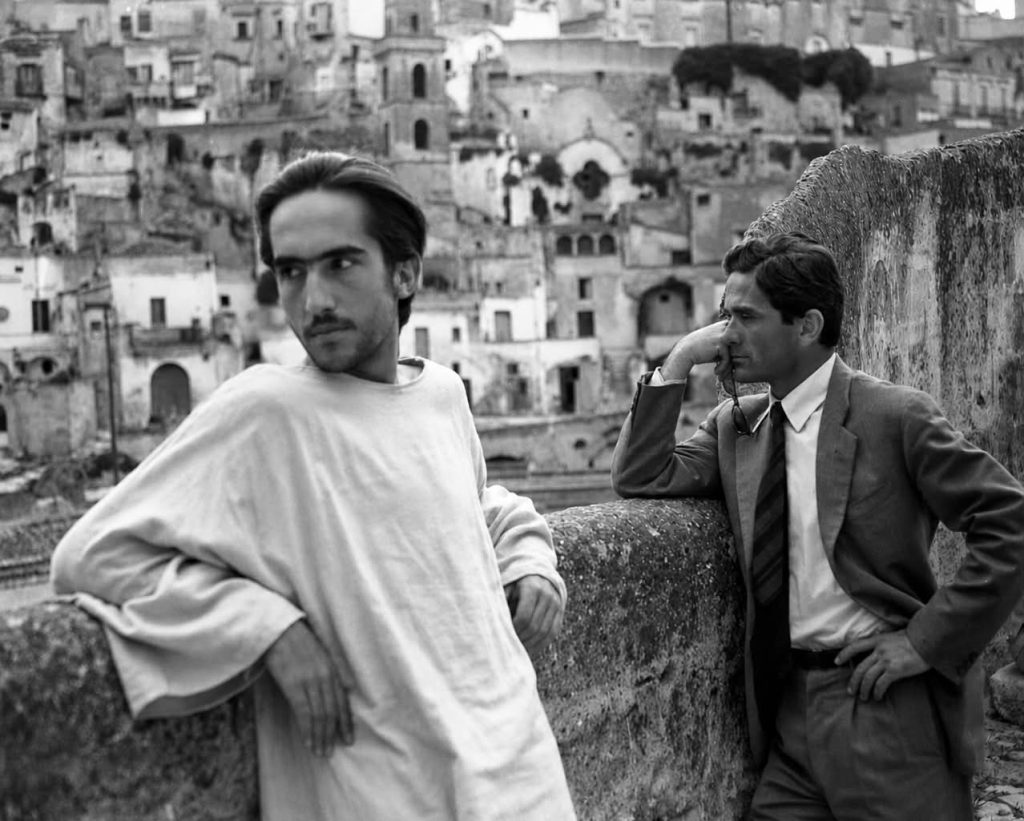
-The Last Temptation of Christ has always reminded me of the atmosphere of Pier Paolo Pasolini’s The Gospel According to St. Matthew. What similarities do you see between these two films?

In the first chapter of my book, I briefly retrace the history of films devoted to the figure of Jesus, highlighting the movies Martin Scorsese watched from childhood onward. Among all the films about Christ, the one that had the greatest impact on him was Pier Paolo Pasolini’s The Gospel According to St. Matthew. Scorsese confirmed this once again during a conversation with Antonio Spadaro at an event held in Rome last December to mark the fiftieth anniversary of Pasolini’s death. This film departs from the grandeur of Hollywood biblical epics and avoids turning the story into a spectacle. Like Scorsese’s work, it emphasizes the humanity of Jesus more than His divinity. Pasolini restores the disruptive power of Jesus’ words without the embellishments of traditional religious iconography. During the event in Rome, Scorsese repeated a statement he had already made many years earlier in an interview that I quote in my book: “Christ is the God-Man for us believers, but for everyone He is the man who gave us the most important message for the survival of our race on earth.”

-The Last Temptation of Christ has long represented a battle for freedom of expression in cinema. WILD FILMMAKER, now the world’s largest community of independent film producers, has made freedom of speech its core principle. Do you believe it is important to have an international platform where artists can express themselves freely, without constraints?

Absolutely. The freedom of expression fostered by a community such as WILD FILMMAKER is of tremendous importance. Despite the rehabilitation of Scorsese’s film, many issues still remain. This story should renew attention to the freedom to express one’s ideas and to the right to profess one’s religious faith. At the time, the only production company that refused to be intimidated by the protests and threats of Christian fundamentalism was Universal, which invoked constitutional protections. Fortunately, these freedoms are also guaranteed by our magnificent Italian Constitution, which deserves to be defended because it protects us.

“Bad Influence / Mauvaise Influence” (EXCLUSIVE) Interview with Aurélie Latona

-Who is Aurélie Latona?

To describe myself, I would say that I’m a simple person who values authenticity, honesty, and kindness. At least, I try to leave that impression on everyone I meet throughout my life. I’m a single mother raising a child with a disability, and thanks to my son, I’ve learned patience and what truly matters most in life. I’m usually my own worst critic, but if I leave a lasting impression on someone, I hope it’s a positive one. I live in France, to Grenoble.

-Do you remember the exact moment you fell in love with cinema?

The exact moment I fell in love with cinema was when I was six years old, watching Jurassic Park. That day, two passions were born: archaeology and filmmaking. Seeing dinosaurs brought to life and projected onto a giant screen for thousands of people completely amazed me. Later, I learned that dinosaurs were extinct, but my passion for cinema never disappeared. What fascinated me most was being behind the camera and writing the stories I wanted to bring to life on screen. That’s when I started writing my very first story drafts.

-Tell us about your project “Bad Influence / Mauvaise Influence”.

Bad Influence is an independent short film made with a volunteer crew. It tackles difficult subjects such as marital rape, coercive control, and the exploitation of a partner for prostitution, while also exploring the psychological hold one person can have over another. Lucie knows she could leave, that she could escape this living nightmare, but she stays because she feels trapped. As viewers, we feel just as powerless. We watch the events unfold before our eyes, unable to intervene, just like Lucie herself. During filming, one of the most memorable moments for the crew was being in the room while my actors, Camille Labrot and Méverick Graux, performed the bedroom scene. It was deeply uncomfortable and emotionally suffocating, because we experienced what Lucie was going through in the presence of this man. They both delivered extraordinary performances, and I’m incredibly proud of their work. My Director of Photography, Rachem Moyen, and I were completely in sync throughout the production. He understood my vision from the very beginning and translated even my smallest ideas into powerful images. His work was simply outstanding.This project was incredibly ambitious, with a script that was both emotionally and technically challenging to bring to the screen. Yet fifteen people believed in me and volunteered their time and talent and my co-productions too : Shaolin Shadow, la Mine Productions et Rachem Productions. I’ll never forget that incredible feeling of achieving the dream I had as a little girl. It’s truly surreal.

-Which Director inspires you the most?

I’m a huge admirer of Charlie Chaplin. His ability to express every emotion through body language alone, without saying a single word, has always fascinated me. More recently, of course, I’ve been deeply inspired by Steven Spielberg and Christopher Nolan. They have an extraordinary talent for transporting audiences into incredible worlds while still making everything feel grounded and believable. Their filmmaking relies on craft rather than excessive visual effects, and in that sense, all three directors share something in common: they’re never interested in superficiality.

-What do you dislike about the world and what would you change?

There is so much to say about a world that still isn’t functioning as it should. There are countless battles to fight if we want to build a better future where everyone has a place and can live in peace. The causes that matter most to me are the living conditions of women and children, especially issues such as violence, poverty, and disability. I hope that one day they will all be treated with the dignity and respect they deserve, rather than being used as bargaining chips or excuses to justify the destruction of countries and lives.

-How do you imagine cinema in 100 years? 

I sincerely hope there will still be real film sets filled with real people, and that human creativity will remain at the heart of filmmaking. Technology, filmmaking techniques, and cameras will undoubtedly continue to evolve, but I hope authenticity, everything that makes us human, will still shine through every story brought to the screen. I also hope cinema will continue to be a shared experience that brings people together.

-What is your impression of WILD FILMMAKER?

To be completely honest, I’m only just discovering WILD FILMMAKER, and I’m delighted to do so. As someone who’s still at the beginning of my filmmaking journey, every new encounter fills me with the same sense of wonder I had as a six-year-old child. I’m realizing that I’ve only seen the tip of the iceberg in this industry, and that there are so many opportunities waiting to be discovered. WILD FILMMAKER is one of them. You’ve given me the opportunity to talk about a project that means so much to me while giving emerging filmmakers a platform to share their voices, and I’m truly grateful for that. If the six-year-old version of myself could see what I’m doing today, giving an interview to talk about one of my films, she simply wouldn’t believe it. For that alone, thank you for giving me this unforgettable moment.

“The Iditarod Band” (EXCLUSIVE) Interview with Michael Meyers

-Who is Michael Meyers?

I’m a playwright, screenwriter, musician, and former standup comedian raising a family in the northwest of the United States. I primarily write grounded, character-driven stories that find comedy in the dramatic and seek heart where there is suffering. I think the power of friendship is underrated and the satisfaction of affluence is overrated. And I think music is a universal tonic for pain.


-Do you remember the exact moment you fell in love with cinema?

Before I was a teenager I attended a Halloween screening of the 1925 silent classic Phantom of the Opera with Lon Chaney. It was a full house, and the picture was shown in a deteriorating movie palace built in 1928. Included was a live organ accompanist playing the original score. The dynamic combination of being in the dark with a community of strangers and sharing a story, its sight and sounds in a magical setting left a powerful impression and inspired my first “film studio,” LCII productions, where I created rudimentary short stop-motion productions.

-Tell us about your project “The Iditarod Band”.

The Iditarod Band is drawn from my experience in Alaska in the 1980’s. My friends and I were young and eager to discover our places in the world. I was a fish out of water, a man who neither fished nor hunted, a cheechako with a guitar. But through music I found my people, and they were not who I expected. My female friends were pioneers, members of an early generation of women untethering themselves from matrimonial expectations. And we were witnessing a sea change in the culture when, starting in 1985, for the first time a woman won the Iditarod Sled Dog Race. They won four years in a row, and it seemed to us anything was possible. The Iditarod Band captures the hope of youth, the magic of friendships and the faithful nurturing of dreams that define who we become.


-Which Director inspires you the most?

Tough question: I love films of the 50’s and 60’s and there are half a dozen directors in particular who coaxed extraordinary performance from their talent. But if I had to choose it would be Billy Wilder. His portfolio is an extraordinary compilation of comedies, histories and dramas, a range as rich as Shakespeare’s, assembled while collaborating with the greatest acting talents and their egos for over half a century.


-What do you dislike about the world and what would you change?

I dislike how cruelty, indifference to suffering and apathy have been normalized as a creed. I believe if folks simply asked themselves “Why?” about their choices, then drilled down on the values underlying their answers, they would become more thoughtful, considerate, generous, and understanding of other living things in this world.

-How do you imagine cinema in 100 years?

The ability to create and share visual stories will likely be easier as technology simplifies filmmaking and begets a hundred million auteurs. But I hope what is sustained is the experience of going to a place, a cinema, and sharing a compelling, emotionally engaging drama, or a hilarious misadventure. The collective experience of being in the dark and sharing an unfolding event with others is a core element of cinema. It is a place and an immersive experience with strangers brought together by a common hunger. It is a modern version of tribal storytelling shared around a fire. Conversely, what we watch on TV, laptops or our phones is not, in my opinion, cinema. It is its own thing.


-What is your impression of WILD FILMMAKER?

First, it’s such an honor to be invited to share my thoughts about my work and about cinema. WILD FILMMAKER seems to celebrate both the artistic giants of the cinema as well as the aspirants using film and storytelling to chronicle our modern lives and our desperate efforts to make emotional connections with anyone in an increasingly disconnected and shrinking world. It is a forum that invites discussion of how we can tell timeless, unfiltered stories without gatekeepers collecting tickets.