-What and who has inspired you the most in your artistic career?
For sure my mum! She has always boosted me with confidence and cheered me on, embracing any form I needed to express myself.
It’s such a gift to be brought up by a mum who pushes you to be an individualist. We are all different. Why try to be like everyone else, why be a sheep as my mum says.
Find you and shine!
-Every true artist is also a revolutionary against power. Do you think there is still room today
to express one’s revolution through art?
Art has always been political. Theatre started out like that. Also when you watch movies you can kind of predict what will happen.
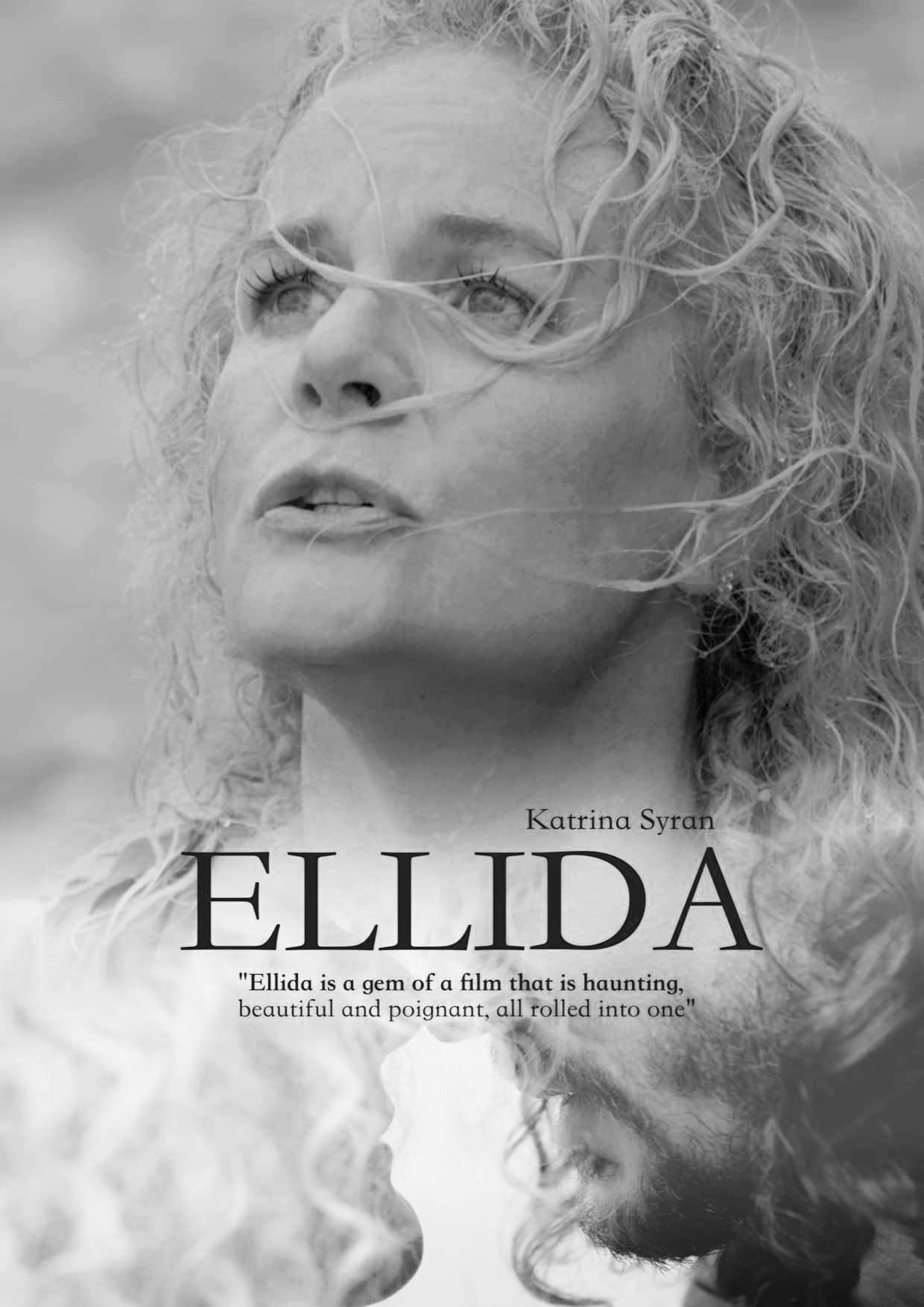
Yes, there is still room as art changes all the time with our time, and then of course there is art that is still as actual today as it was before like Norwegian famous author Henrik Ibsen. My movie ELLIDA is based upon his play The Lady From The Sea. He was a feminist in the 19th century.
-We live in a world where, unfortunately, war still exists.
Do you believe that if there were more dissemination of art through the media and social networks, the world would be a more peaceful place?
I believe art helps. I myself raise awareness through my art. If it’s music, theatre, shows , movies, art, poetry, books. Through my songs like INTIMACY which was the anthem of International Women’s Day UN in the UK , WE CAN’T GO BACK a duo with my daughter Benedicta Syran about the abortion law . Through my play BREAKING THE SILENCE spotlighting all the different issues women still have to deal with today, and of course my movie ELLIDA where she goes through natal depression and losing a child. Many of us are not aware or haven’t even thought about different issues, so yes for sure when one learns through art , when art light a torch and we see the truth, it is for sure the most powerful way to learn and hopefully react.
It brings me back to NYC where I performed my play “Breaking The Silence” at the United Nations.People came up to me afterwards saying how crucial it was, as now they felt passionate again to make those changes and work even harder. Also with my movie ” Ellida”, many women have contacted me afterwards and told me how it affected them and their lives. If you can reach people through art you have given them a gift! I believe without art we are all dead. We need “real” art. Yes fluff of reality shows and light no brainer movies is relaxing and fun to watch but the richness in depth and raising awareness is for sure on another level so yes please to ART!
-Are you working on a new project? If so, can you give us a sneak peek?
Yes, I’m working on quite a few projects. They are all very exciting and challenging.
Every project feels like a baby you get so attached so when the time comes to share it with the world it feels extremely vulnerable. I remember first time I had to perform my self written songs in front of an audience of 4 to 6 thousand people it felt like I threw myself off a cliff naked.
With “Ellida” the most nerve wrecking situation was the first screening at the Chinese Theatre in LA, I felt sick.
-What and who has inspired you the most in your artistic career?
Maya Angelou
-Every true artist is also a revolutionary against power. Do you think there is still room today to express one’s revolution through art?
Absolutely! Films that drive social change, like *Schindler’s List*, inspire us to avoid repeating past mistakes and increase our awareness. Similarly, *Blood Diamond* has highlighted the issue of trafficking in diamond mines, raising significant awareness and caution around the purchase of conflict diamonds.
-We live in a world where, unfortunately, war still exists. Do you believe that if there were more dissemination of art through the media and social networks, the world would be a more peaceful place?
I believe in the power of affirmative action through film. When stories are told well, they inspire us to think creatively, uncover corruption, and realize that political conflicts don’t define us. Films can empower us to stand up and say “No” to war, fostering inspiration and action toward positive change.
-Are you working on a new project? If so, can you give us a sneak peek?
I’m currently working on two new projects that address pressing global issues. The first, titled *IAMILLEGAL*, explores the complex realities of immigration. It follows four individuals entering the US—two legally and two illegally—with two of them harboring criminal intentions. The challenge for viewers is to identify which two are involved in criminal activities. This film aims to highlight that our borders and immigration issues are far more nuanced than political rhetoric often suggests. Having been trafficked myself, I met many victims who struggled to access resources due to a lack of education and services, and I hope this film will drive positive change. My second project is a poignant love story about my son’s father, who passed away. His unwavering love and patience helped me reclaim my humanity after trafficking and inspired me to become the woman I am today. This film will honor his legacy and the profound impact he had on my life.
I’m a Director and Cinematographer based in Rome and my projects mainly range from music videos to films and TV series. I think that my attitude and passion for both directing and cinematography allowed me to earn some credits with top quality artists and with the largest record labels such as Sony Music, Warner Music and Universal Music. In 2019 I’ve been accepted as an Associate Member by the prestigious Italian Association of Cinematographer (AIC) and i’m is still part of it. In 2021, with the experience accumulated in the audiovisual industry, I founded a production company, “Movi Production SRL” which obtained considerable feedback in the film market by producing a short film, already in the first year of life, selected for the Oscar Qualifying. And then in 2023 I shoot my first feature film, a production halfway between Cinecittà and New York where I had the immense honor of lighting Mariel Hamingway (Oscar winner with Woody Allen’s Manhattan) and Christopher Coppola. And yet I feel like my journey has yet to truly begin.
-What inspired you to become a Cinematographer?
I grew up in a family of photographers and had my first “photoshoot” at the age of 16 during a high school trip. From there I never stopped to explore the world of photography. I’ve been really lucky because I met people who believed in me right away and this gave me the opportunity to take some portraits of celebrities like Donald Sutherland, Penelepe Cruz, Javier Bardem, Matt Damon, George Clooney and others. However, something wasn’t enough for me and I felt the need to explore even more deeply so I approached Cinematography and Direction. And I still feel like my journey has just begun.
-Do you think the cinema can bring a change in the society?
Cinema, like music and more generally art, do not have a specific utility like that which a doctor or an engineer might have but they have the power to raise awareness and excite like nothing else in the world. The further I get in my career, the more my studies look to the past of the greats. I go further and further back and discover more and more wonderful things making myself and my works better day by day. Society needs great art more than ever because we are simply getting lost under the infinite mass of false information and weak interests that are characterizing recent years. So yes! We need great cinema that moves us and teaches us healthy values. We need it now.
-What would you change in the world?
There are many things I would change in the world but I think one wins above all. And it is the need that we should find, especially the new generations, to surround themselves with beauty. And I don’t mean the beautiful woman because tastes are subjective. I mean music made by musicians who have studied, I mean watching films by directors who have something important to say and have studied night and day to be able to say it, I mean the beauty of turning off the phone at the table, the beauty of sharing photos without waiting for number of likes, they took away our concerts without our phones and we now go to the concert just to record it, not to live it. These times have taken away our priorities and replaced them with surrogates of what they tell us we should like. We urgently need to get back in touch with ourselves. I would change this.
-Where do you see the film industry going in the next 100 years?
Unfortunately I don’t have good prospects for our industry. I think we will get to a point where it will collapse and finally start from scratch. But in Italy everything is more difficult, fortunately there is still a lot of quality international cinema. For posterity the arduous sentence.
-Do you remember the exact moment you fell in love with cinema?
Like many, I was taken to see Disney’s “Bambi” at an early age. Here was a wonder that transported me to another world, another way of seeing. Then, every Saturday morning, I’d go along to Saturday morning “pictures” in my hometown, Cardiff, Wales. The reality of the world outside disappeared for a few hours. In my teenage years, I attended evening movie shows at the universities. Here I witnessed some of the older, often silent, masterpieces. I have used some of those images—the “dead” woman opening her eyes in the coffin—in my own work. By now I was adding to my enjoyment of the movies, observations about the format of movies (flashbacks, voiceovers, etc.) and noting the differing structures and possibilities between them and stage plays. And so many memorable moments, flashes of genius in the movies. The famous Italian director trying to discover his creativity while an unspeaking motor cyclist ripped through the town preventing characters’ serious philosophical discussions! The huge starship coming over the top of the movie house. And on and on.
-When did you realize that the story living in your heart had to be turned into a screenplay and then into a film project?
In my academic capacity I taught the works of the great dramatists, so characters, situations, contrasts, intrusions, etc. were part of my teaching. Writing my own plays and screenplays came a little later for me. My background was, by and large, academic. But I didn’t want to add to the piles of academic papers. I was interested in transforming the challenges, physical and psychological, I faced into a “living” form. A racial murder in MY TOWN (the title of the play and screenplay) was deeply troubling to me. My central character, a newspaper reporter, can answer the who, what and where, but what about the “Why”? And the questioning continued. Why did my American history class (I was a 20-something immigrant), not talk about women, blacks, native Americans? Was the “Mission Era” of California, dominated by the figure of Padre Serra, exact or romanticized? My filmscript, ALTA CALIFORNIA, let me explore that era through the eyes of a half-breed ripped from his family and now confronted by European soldiers and padres. And then there was Antonietta Portulano, PIRANDELLO’S WIFE, who was suddenly deposited (I can think of no better word!) in an asylum for the last 40 years of her life. Why? What about her lived-life experience? And on it went—and still goes. Why, why, why? Not just skimming the surface, the accepted, but foraging deep into the live-life experiences of myself and my characters. It wasn’t simply the telling of a story. Writing movie scripts allowed me to revert back and forth through time periods as I tried to piece the modicums together to constitute, hopefully, a whole. Maybe an answer.
-Is there a person you would like to thank for helping you bring your project to life?
Critiques have varied over the years from amateurish and unseeing, to unsophisticated, to uncritical, to valuable. I really thank Wild Filmmaker for opening a world of possibilities for me to share all of my questionings, all of my potential answerings.
-Do you think the Wild Filmmaker Community is helping to turn your dream into a reality?
Wild Filmmaker has been invaluable for me. Here, my script is being judged by intelligent, industry professionals. I feel that Wild Filmmaker’s readers understand my philosophical meanderings as I attempt to understand this thing called living. Wild Filmmaker’s readers appreciate how I attempt to transport these thoughts into filmscripts. And, finally, I feel that here is a viable vehicle through which agents, directors and producers will become aware of my work and, hopefully, consider transporting it to the “big screen.”
-Do you remember the exact moment you fell in love with cinema?
For us the exact moment we fell in love with cinema. Was when the Creator of Heaven and Earth Yashiya through following the Law statutes and commandments and fasting, prayer, and supplication gave us the discernment to see all living things as physical manifestations of cinema. With individual stories and themes. And that sparked our passion to convey life’s concepts into film.
-When did you realize that the story living in your heart had to be turned into a screenplay and then into a film project?
We realized the stories living in our hearts had to be turned into a screenplays and then into a film projects. When the Most High Yashiya conveyed to us that we are His hands and feet on this plain. And we are to show His creations on earth His power using our testimonies and Uniqueness so He can inspire everyone else’s Uniqueness to flourish invoking revolution in spirit through cinematic expression music shows through us.
-Is there a person you would like to thank for helping you bring your project to life?
The person we would love to thank for bringing this project to life is the Almighty Sovereign and Father of all creation Ahayah Asher Ahayah the Father, Yashiya the Son, and the Rawach His set apart spirit. Because without Him there would be no life and nothing new to bring to our brothers and sisters. We also are so thankful to all those who donate and will in the future donate nto our cause in creating as it is a huge undertaking to bring to life what our creative minds assemble in spirit.
-Do you think the Wild Filmmaker Community is helping to turn your dream into a reality?
We absolutely know beyond a shadow of a doubt that the Wild Filmmaker Community was chosen before the beginning of time for such a time as this to be used as powerful vessels of change. Yashiya never ceases to amaze us as we watch Him move in whom He chooses and the Wild Filmmaker Community not only helped bring our dreams into reality but also is bringing Yashiya’s prophetic plan into fruition. We love you all dearly and are humbled and grateful for everything you do.
-What and who has inspired you the most in your artistic career?
Throughout my artistic career I was inspired by many people and things, but the most important thing for the start of my film career was the first Slovenian feature-length animated film “Socializacija bika?”, which was finished in 1998. Next year I finished my first animated film “Neptune – the Secret Planet” as 11-years old boy an dedicated it to the authors of the aforementioned film Milan Erič and Zvonko Čoh. Another important thing for the success of my career is that I had an access to my father’s studio, where I observed his passion for drawing illustrations, comic strips and paper-drawn animations and so I learned a lot. I also had access to watch the best animated films in the world and I watched every animated film that I got a chance watching in the analog era of television 30 years ago when the quality of their program was much better.
-Every true artist is also a revolutionary against power. Do you think there is still room today to express one’s revolution through art?
Most of so called “artists” in my country get loud and rebel only if one particular person gets into the position of power. As soon as anyone else gets into the position of power, they all get quiet. The government, which leads our country at this point in time is the worst in the history of Slovenia and I am going to explain why. English translation of the main governmental party’s name is “Freedom”. The truth is that true artists in our country don’t have freedom to express ourselves trough art anymore. My latest film “The Story of Marjan the Bunny” got censored by Slovenian national television (Radiotelevizija Slovenija), which is owned by our government. So the freedom here is fake, most of revolutions here are also fake ones and I also see most of the loudest artistic colleagues here as fake ones as well. If you want to see true artistic rebels today, you need to take a look at people who do that in their free time. Most of my artistic works were made in my free time, only a few ones got funds as I am not willing to skew my artistic expression because of some “quasy-experts”, who reject my work for political reasons.
-We live in a world where, unfortunately, war still exists. Do you believe that if there were more dissemination of art through the media and social networks, the world would be a more peaceful place?
Yes, more dissemination of art through the media and social networks could help artists receive deserved recognition and because of that the world would be more peacful place. Would Adolf Hitler need to cause the World War II, if he would be recognised as a painter?
-Are you working on a new project? If so, can you give us a sneak peek?
I made the script for my new short animated film project “Transgender Euphoria” almost a year ago, but the funding got blocked by main Slovenian agencies that fund films in my country, as they prefer to fund more infantile works. And so I am trying to get my project funded by ordinary people online. You can have a sneak peek at my crowdfunding campaign for my next film right here: https://igg.me/at/transgendereuphoria/x/37978528#/
-What and who has inspired you the most in your artistic career?
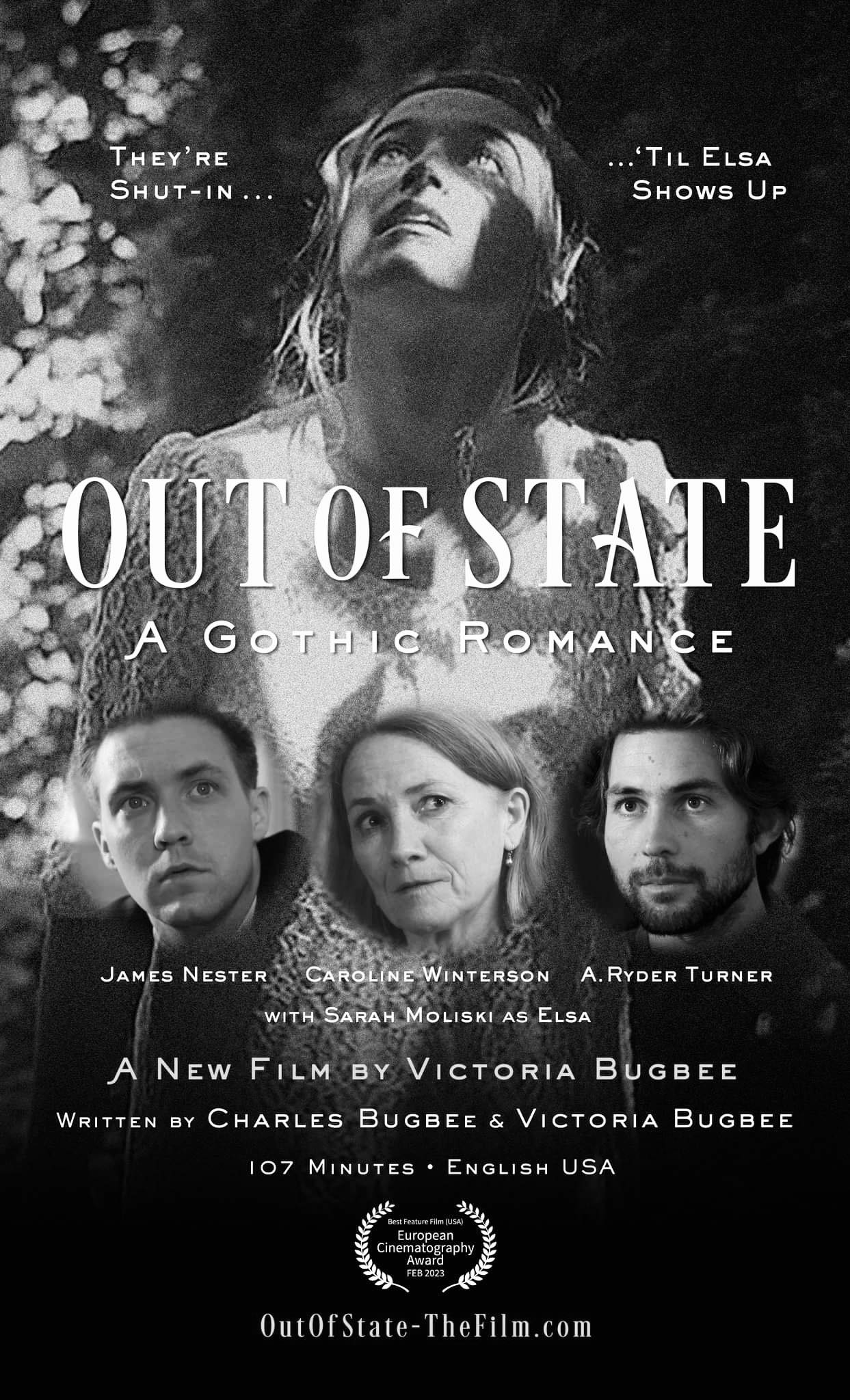
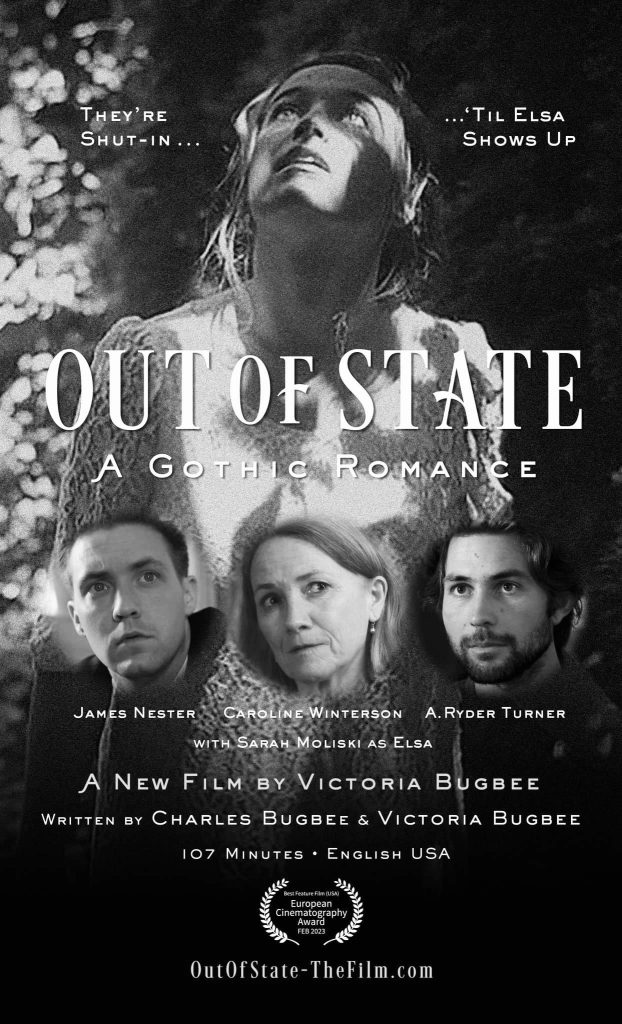
I studied visual arts in Cordoba, Argentina, then at Kutztown University where I was involved in performance art and installation. While in Argentina I was influenced by my boyfriend who was a huge film & music fan. We saw tons of European films and listened to everything from American Jazz, to Folkloric to Astor Piazzola. In Buenos Aires we saw a fashion show that was held in the second story windows as we watched from the street. I was captivated. Later when I was living in Atlanta I ran a funky old hotel called Le Pavilion. I created a series of drawing about the place and had a one woman art show. But the people were missing so I created Le Pavilion in the gallery windows and co-wrote with David Lee three scenes – A Murder, A Love Scene, and My Office. The action all happened simultaneously to New Tango by Astor Piazzola. It was very filmic and I had an ephipany – I wanted to make on-site performances that stirred strong emotions in the viewers. This led to video and then to making my first feature Out of State-A Gothic Romance.
-Every true artist is also a revolutionary against power. Do you think there is still room today to express one’s revolution through art?
Art is very powerful against tyrants, despots and charlatans who want to control people. That is why unenlightened people who are brutal dictators try to eliminate artists who speak out, write, draw, make music, films and documentaries. Think of that famous scene in “Casablanca” when the occupying German officers are singing a Third Reich song. In defiance the whole club stands to sing “Le Marsaillaise” the French National anthem.
-We live in a world where, unfortunately, war still exists. Do you believe that if there were more dissemination of art through the media and social networks, the world would be a more peaceful place?
It is unfortunate that war is still with us. Art, music, film, dance etc. are all very important in bridging the divide in the world. There was an amazing musical on Broadway a few years back call The Band’s Visit. It was based on an Israel film about an Alexandrea, Egypt band that gets stuck in Israel and makes friends with Israelis who befriend them and offer to help them out of a tight spot. It a very powerful statement of breaking down stereotypical images of someone who is from another culture and seeing the humanity it all. If it were only so simple.
-Are you working on a new project? If so, can you give us a sneak peek?
I want to adapt “The Gas Station Project” that I wrote for a feature film. The play was conceived while in an actors/writers workshop with the cast of CBS’s Soap Opera “The Guilding Light.” Set in a small town in Florida in 1999, Tammy & Chet, a 30-soemthing couple, run a gas station/automotive center. Their crumbling marriage is told through their eyes, their children and their best friends. The conceit is that two actors play the roles with a narrator who sits in a bright red convertible leading the audience through the 16 different scene setups including their home, a juice bar, a television studio, a bar in Daytona, and an emergency room. We staged a reading in OverSeas Auto Body Shop in Hastings on Hudson and my goal was to translate the play into 7 languages and work with international theater groups to stage it in car related places in their town. Naturally, for the film version the idea of two actors playing all roles is not possible. Hoping to raise funds to make this one happen. With cars as metaphor all the world is a showroom. This film is gassed up and ready to go. As you can tell I love cars.
-What and who has inspired you the most in your artistic career?
Throughout my career, the world of fantasy cinema, particularly those involving extraterrestrial life, has been an inexhaustible source of inspiration for me. For example, films like “A.I. Artificial Intelligence”, directed by Steven Spielberg, and “Contact” by Robert Zemeckis, with their imaginative worlds, have fueled my creativity and driven me to explore the infinite possibilities of visual storytelling. However, over time, I felt a growing need to move towards a more concrete and tangible dimension. This evolution has led me to passionately embrace the direction of realistic documentaries, where I can tell true stories and provide a more authentic and profound view of the world around us. For me, realism is essential: I enjoy observing and capturing protagonists during a period of their lives, allowing them to occupy the frame, much like in a theater of the big screen. In this way, I can tell real stories, enabling viewers to immerse themselves in the lives of the subjects without filters, much like in theater, but with the power of cinema. Today, in terms of imagery, I am deeply inspired by Wes Anderson, a director known for creating unique cinematic worlds through his unmistakable visual style, characterized by impeccable symmetry, a pastel color palette, and meticulous attention to detail. His storytelling approach, which blends elements of realism with a surreal aesthetic, has influenced me in finding the right balance between the concreteness of reality and visual beauty, even in my documentaries.
-Every true artist is also a revolutionary against power. Do you think there is still room today to express one’s revolution through art?
I believe so, but I also like to consider the power of the soul that resides within each of us. This artistic power not only challenges external forms of power, such as political and social structures, but also explores and confronts inner dynamics and personal power. We all possess an internal power that we can liberate, although we often face difficulties in doing so. This power represents our deepest convictions, fears, desires, and aspirations. Art has the unique ability to reflect and illuminate these inner aspects, offering a path of self-discovery and transformation. Through art, we can confront our personal challenges, explore our identity, and seek inner balance. In this context, the director plays a crucial role: they must strive to convey and express this internal power through their films and worldview. This vision can sometimes go against dominant conventions and external forces. In this way, art becomes not only a means to challenge external authorities but also a tool to reveal and manifest the beauty and truth hidden within us.
As someone once said, “Beauty will save the world”.
-We live in a world where, unfortunately, war still exists. Do you believe that if there were more dissemination of art through the media and social networks, the world would be a more peaceful place?
I do not believe that a greater dissemination of art through media and social networks would necessarily make the world a more peaceful place. True beauty, in fact, emanates from within each of us and is not merely a reflection of what we see on the outside. Confronting the harsh realities and difficulties of life can, in fact, help us rediscover and value hidden fragments of beauty within ourselves. By uniting these pieces, we can achieve a deeper and more authentic understanding of beauty, revealed through our process of introspection and inner reflection. For instance, in my work as a filmmaker, when I create documentaries that explore stories not traditionally positive, I strive to infuse them with an aesthetic dimension through the art of visual composition. My goal is to uncover and reveal intrinsic beauty even in complex and challenging contexts, seeking a balance between raw reality and its artistic representation. In this way, I hope to provide a perspective that allows us to appreciate the hidden beauty even in the most nuanced and painful situations.
-Are you working on a new project? If so, can you give us a sneak peek?
Yes, I’m working on a new project that I’m very excited about. It’s a documentary that follows the story of a young man who decides to travel the world with his dog, seeking to distance himself from his relationships and responsibilities. Initially, the journey represents an escape from reality and an opportunity to explore new horizons. However, as he moves from place to place, he gradually realizes that he was actually trying to run away from himself. The documentary delves into this journey of self-discovery, where travel becomes a metaphor for inner exploration and reconciliation with one’s past and emotions. I hope it will be ready for release in the early months of 2025. I am also working on writing an introspective short film, but I can’t reveal any more details about it at this time.
-What and who has inspired you the most in your artistic career?
Everyday life is an inspiration. I love to “people watch” and imagine what is going on in their life. A majority of my inspiration has come from David Bowie, J.R.R. Tolkien and Stephen King. I love how David Bowie would bring a concept to life, Tolkien’s creation of a world and Stephen King’s ability to find the horror and terror.
-Every true artist is also a revolutionary against power. Do you think there is still room today to express one’s revolution through art?
I think it is a necessity for artists to express their revolution. There are people who will understand and align to take action in the revolution. Expression through art, actions and words will create the connections that we need to bring about change.
-We live in a world where, unfortunately, war still exists. Do you believe that if there were more dissemination of art through the media and social networks, the world would be a more peaceful place?
I believe that the media needs to become more of a social platform that allows people to comment and interact. The world would be a more peaceful place if the “it’s over there, not here” mentality would end.
-Are you working on a new project? If so, can you give us a sneak peek?
I have written a project about the early days of the Pandemic shutdown. The short film should be ready before December 2024.
-What and who has inspired you the most in your artistic career?
As a multimedia artist and composer who works with photography, video, graphic art and music there are numerous artists who have inspired me over the years. However, there are four persons and their perspectives on art that really stand out as influences for very specific reasons. The fact that I prefer to work in minimal, neutral studio settings with flat surfaces as a décor and texture-free human figures and faces as my subject matter is most certainly a result of my early passion for the work of Kitagawa Utamaro, the 18th century Japanese ukiyo-e artist whose work with portraiture had a major impact on my work. The flat planes of activity, human forms reduced to traces devoid of volume and the absence of photographic perspective in his woodblock prints spoke to me and left an indelible mark on my approach to spatial and textural considerations. Because I began my career as a photographic artist rather late at the age of 26 with no formal or informal experience in the field, I think my lack of baggage led me to question the conventional wisdom of my new field. Two things puzzled me. The first was why everyone seemed to be trying to make their images as three-dimensional as possible? Reality was three-dimensional and I certainly wasn’t interested in creating realistic visual interpretations of the world. I was interested in finding ways to represent my intellectual, psychological and emotional relationships with those around me (including those I would never know) and it seemed to me that the semi-abstract quality of juxtaposed flat fields of graphic, detail-free forms constituted a powerful aesthetic perspective worth exploring. The second thing that puzzled me was that most subject matter was rather concrete in nature. It was concerned with situations we see around us or we hear about on the news every day. It was not that such subjects didn’t interest me, as a private citizen they obviously did, but as an artist, I wanted to explore the states of mind responsible for our views on the world and our relationships with others. I was interested in exploring more intangible subject matter such as doubt, ambiguity, shame, wonder, satisfaction and desire. I needed both a conceptual and aesthetic approach which promoted the development of such themes and it seemed to me that flat surfaces and traces, rather than voluminous forms and details were more apt to satisfy my ambitions for non-linear narratives. In both my recent digital new media work, including my films, the only textures I explore are those that represent veils covering the entire area of my work, semi-opaque barriers that separate the viewer from the universe I am exploring, positioning them as voyeurs regarding scenes that perhaps mirror their own lives. When I was starting out as a photographer, there was one photographer whose work had a profound impact on me from a compositional point of view. Ralph Gibson’s early work taught me that the edges of an image were as important as the central area and that these border areas were capable of creating unique and diverse forms of tension in an image. I realized that every point in an image space has the same potential power until we define a clear objective, after which, the points in space most apt at supporting our objective reveal themselves. His work also taught me that large grain was not a problem. In fact, it was simply another textural parameter capable of provoking different sensations of visual depth unrelated to conventional notions of volume. His work continues to inspire my new media work in both digital photography and filmmaking. I first came into contact with video art when I founded the photography department at the American Center in Paris in the early 80s. The Center was known all over Europe for its dedication to the promotion of video art as a powerful new form of artistic expression thanks to the leadership of Don Foresta, director of the institution’s Center for Media Art. It was there I discovered the works of young video artists such as Bill Viola, Gary Hill, William Wegman and Joan Logue. Joan’s work in particular, attracted me immediately. Her 30 second portraits of contemporary artists fascinated me by their power to deliver provocative messages and raise relevant questions in such a short time frame. I was hooked. I began to make my first videos in 1983. Lastly, I am not sure that I would have been able to maintain the level of excitement and enthusiasm that characterized my journey as a young artist during the 80s and 90s if it had not been for the ongoing inspiration provided by both the philosophy and works of John Cage. For me, there is no greater 20th century art philosopher than Cage. The ideas behind his development and use of chance techniques in musical composition, his revolutionary collaboration with choreographer Merce Cunningham and reprioritization of silence as an equal partner in the quartet of parameters that determine and define musical composition – sound frequency, timbre, duration of sound and silence – influenced every field of 20th century artistic creation. If chance continues to be an integral part of my creative process concerning the development of the non-linear storytelling that characterizes my films today, it is in large part thanks to the work of Cage. His thoughts and works remain close friends.
-Every true artist is also a revolutionary against power. Do you think there is still room today to express one’s revolution through art?
I agree that all true artists are rebels of one form or another. We tend to be allergic to complacency and the status quo defended by the manipulative power structures present in all societies. I do not believe that we choose to be artists. In some fundamental sense, we have no choice. It is not a profession. It is a personal mission of exploration. I believe that there is a certain inevitability about the paths we take. I believe we have an obligation to express our innermost confusion, anxiety, wonder and yes, even hope, regarding those aspects of the human condition that preoccupy us, including those directly related to the seats of reactionary power. And this brings me to an important distinction: the difference between presenting solutions to relevant challenges that confront us on social and individual levels as opposed to raising relevant questions about such issues. I personally believe that one of the most important roles of contemporary art of any kind is to raise probing questions about those challenges we perceive as relevant to improving the human condition. This involves presenting new perspectives on the issues in question. There are no genuinely new subjects, only innovative perspectives on the age-old ones that often appear clothed in new contexts. When instead of raising relevant questions, we offer solutions (often overly simple ones), we can easily drift into a form of propaganda that proports to have answers to profoundly complex questions. So, yes, artists have an obligation to promote their personal revolutionary ideas. However, I believe they are most effective when they stimulate serious reflection and debate on the subject in question rather than offering ready-made solutions about what we should think about them. I suppose what I am saying is that our art is best served when it has social, psychological and emotional relevance rather than narrow political positioning. However, I do not mean to imply that we remain neutral. I simply suggest that our artistic objectives are best served by raising questions from perspectives that prioritize our personal positioning on issues. Nor do I mean to imply that propaganda in its many diverse forms is not relevant to social and individual evolution and change. As a private citizen, I believe in the importance of taking and defending firm, clear political positions. However, I do not see my role as an artist as one that seeks to actively convince others of my views. As such, my work tends to suggest rather than affirm. It seeks to stimulate reflection and conversation on specific aspects of the contemporary human condition as I perceive them.
-We live in a world where, unfortunately, war still exists. Do you believe that if there were more dissemination of art through the media and social networks, the world would be a more peaceful place?
No, sadly, I do not believe that, in general, the increased dissemination of art through the media and social networks can make the world a more peaceful place. Although I do believe that creative work of a more commercial or accessible variety (for example graffiti artwork, well-crafted commercial movies, progressive television programs, …) can sway opinion on many issues, the people directly affected by such work are not necessarily those responsible for the decisions to engage in violent and/or anti-social behaviour. I do not believe that the general public is responsible for the types of decisions that involve a perceived need to resort to forms of physical or psychological violence on local, national and/or international levels. Perhaps over time, a shift in public positioning brought about in part by the increased dissemination of art to the general public may have a marginal impact on the outcomes of a given democratic process (on both individual and social levels), but this impact will almost inevitably be countered by the powers that require violence in some form as a tool to achieve their ends. Sadly, on a societal level, these powers tend to be made up of persons or groups whose insider political power far outreaches that of the general public, both locally and/or nationally. Does this mean we should do nothing? No, most certainly not. As I said earlier, we are not artists by chance. It is not a choice. Artists will continue to promote the exploration of challenging questions, including those relevant to peaceful co-existence. However, I think it is perhaps naïve to think that our art can, at a societal level, effectively combat the powerful disinformation machines controlled by those who ultimately pull the strings in the societies in which we live. I studied to become a development economist at some of the best universities in the world and I left my doctoral studies to become an artist because I realized that, at least for me, my ambition to affect people’s lives in a positive sense was best served by making artwork that had the power to affect society one person at a time. Some may see this as a lack of ambition. I see it as a powerful privilege.
-Are you working on a new project? If so, can you give us a sneak peek?
Yes, for the past several months I have been working on a new interactive video installation project entitled the Choir of Discontent. The theme is the illusion of social media’s capacity to serve as an effective messaging platform to help alleviate personal grievances and complaints about our daily lives. We live in a world in which expressing individual grievances about the challenges we face has perhaps never been easier and yet, it is increasingly difficult to be heard and understood because of the level of “message noise” generated by the quantity of thoughts being simultaneously expressed as a result of such ease. In today’s world of social media, literally hundreds of millions of individuals are expressing their grievances and points of view simultaneously every minute of every day. Often time, personal grievances compete online for priority treatment and it is little wonder that we sometimes feel overwhelmed by the general level of “noise” the simultaneity of our messages generates. It could be argued that never in human history have more people expressed themselves freely and publicly without being truly heard. In fact, no one is really paying attention. The Choir of Discontent aims to recontextualize this situation in the form of a multi-cultural, multilingual interactive video installation/exhibition and a single-channel video. The project involves the collaboration of artists in several countries charged with filming the grievances of citizens representing a large spectrum of socioeconomic profiles that will be presented in a multiscreen format capable of simulating the simultaneity of messaging on social media platforms. The project will involve the possibility of installation visitors to participate by airing their grievances in real time. I have already received over 20 videos from artists in four countries and am working on obtaining the results from two more countries.
I expect the project to be completed before mid-2025.