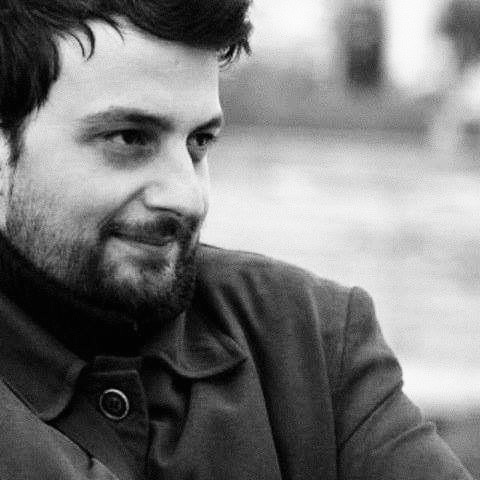
I was Born in 1988 in Trento, Italy. Interested in cinema from an early age, I qualified from high school in graphic arts. I graduated in 2012 in Expert Mass Media – Cinema and audiovisual communication studying cinema in L’aquila (Italy) at the “Accademia dell’immagine”.
After graduating I took an additional one year course in filmmaking at the London Film Academy in the UK, which enabled me to gain a deep understanding within all departments of cinema production specialising myself In directing and sound recording.
-What inspired you to become a filmmaker?
When I was little my father taught me that the camera could be used to make objects and people disappear and then visually reappear in another place. With the stop motion technique, I gave life to my toys by creating animated stories. From there I understood that cinema could create magic, could give life to everything. Also I love surrealism. At the age of seven I saw the film “The Adventures of Baron Munchausen” by Terry Gilliam, a film I fell madly in love with.
As an adult, I studied the dynamics of silent film comedies, especially those of the extraordinary Buster Keaton. I often try to blend surrealism and slapstick comedy in my films because they are two pure genres capable of subverting the reality of everyday life to propose it to us in a completely different and unexpected interpretation.
-Do you think the cinema can bring a change in the society?
I am convinced that cinema has always contributed and will continue to bring about changes in society. If a film is well done, it can make us notice things from different and unusual points of view, making us reflect on things that we find hard to notice during the daily routine.
-What would you change in the world?
I personally would like to contribute in any way to make all the narcotic substances disappear. I think they are one of the main cancers of our society. I am currently writing a story about this topic, and I hope one day I can turn it into a movie.
-Where do you see the film industry going in the next 100 years?
Over the years, thanks to digital and new technologies, making cinema has become simpler and more immediate and will be even more in the future, especially with the advent of artificial intelligence.
However, this process of simplification reduces commitment and discipline and risks decreasing the quality and innovation in the stories that are told. Once upon a time few people had the possibility of making a film because it had a high cost and therefore there was more quality selection.
Now everyone with such accessible technology and low costs can make their own film independently. This does not mean that it is wrong and that there are no more original and beautiful films but they are simply more difficult to identify and bring out.
But I am confident that by recognizing these mechanisms and applying meritocratic rules, original and meaningful stories will still emerge in the next hundred years.
I am a Czech-Swiss award-winning filmmaker based in London.
After an exchange year in illustration at the University of Applied Arts Prague, I graduated in ‘Visuelle Kommunikation’ (BA) at the HSLU Lucerne University of Applied Sciences and Arts in Switzerland, followed with a MASTER in Communication Art & Design at the Royal College of Art (London, UK). About my work: I am passionate about raising public awareness of human stories and undertaking critical reflection on social development. My films aim to view the world through different lenses. Through my creative approach to documentary filmmaking I let people share their soul with the world. Through film I aim to explore my very personal themes like identity, migration, social and ecological sustainability. I create a platform for gaining an insight of different communities.
In 1997 my short documentary idea ‘Emil Manser’ (Das Luzerner Stadtoriginal) found realisation in a collaboration, followed by a re-edited new version in 2004, (in memory of Emil’s death). Manser was a Swiss street artist and self-proclaimed mayor of Lucerne. Because of his humorous, socio-critical sayings, which he carried on cardboard signs around his neck and because of his constant presence in public space. In the 1990s, he was seen in Lucerne as a city original.
In 1998 ‘Czech It Out’ (14min) was screened at the Clermont-Ferrand International Short Film Festival.
‘Czech it Out’ is a documentary about migration and the necessity to leave a country and to settle in a new country. Every migrant has a story of hope, courage, despair, of exile and belonging.
From 2001 until 2011 my work did focus on animation mixed with live action, dealing with social critical content of ‘punky’ female subjects through surreal, dream-like imagery. My vision was to create highly intricate work inspired by various phases or moments of life. I have directed several short animated films, music videos, title sequences, including the award winning ‘Water?’, Gold at the ‘Prix Leonardo’ in Italy, ‘Lattice Award’ at the RCA and shortlisted for the BAFTA, ‘Hangover’ was screened at the L.A. Films Festival and Animadrid.
My work was shown at numerous film festivals all around the world, including CBS Jumbotron Time Square New York USA, 51st Melbourne Film Festival, BFI Southbank London, New York Film Festival, USA, Florida Film Festival, USA, Green Vision Film Festival St. Petersburg, Russia, Zaragoza World Expo, Spain, CO2penhagen Festival….. etc…. etc. In 2008 the Robbie Williams Music Promo, The 80ies ‘Skiving‘ was in the running for the British Animation Awards and screened at 48 cinemas around the United Kingdom as well as at the British Filmweek in Singapore. With my short ‘Love Notes‘, I won the Maple Leaf Award at the Canada International Film Festival in 2009.
In 2011, becoming a mother of two daughters, I began to focus on editing and moved my focus back into documentary filmmaking.
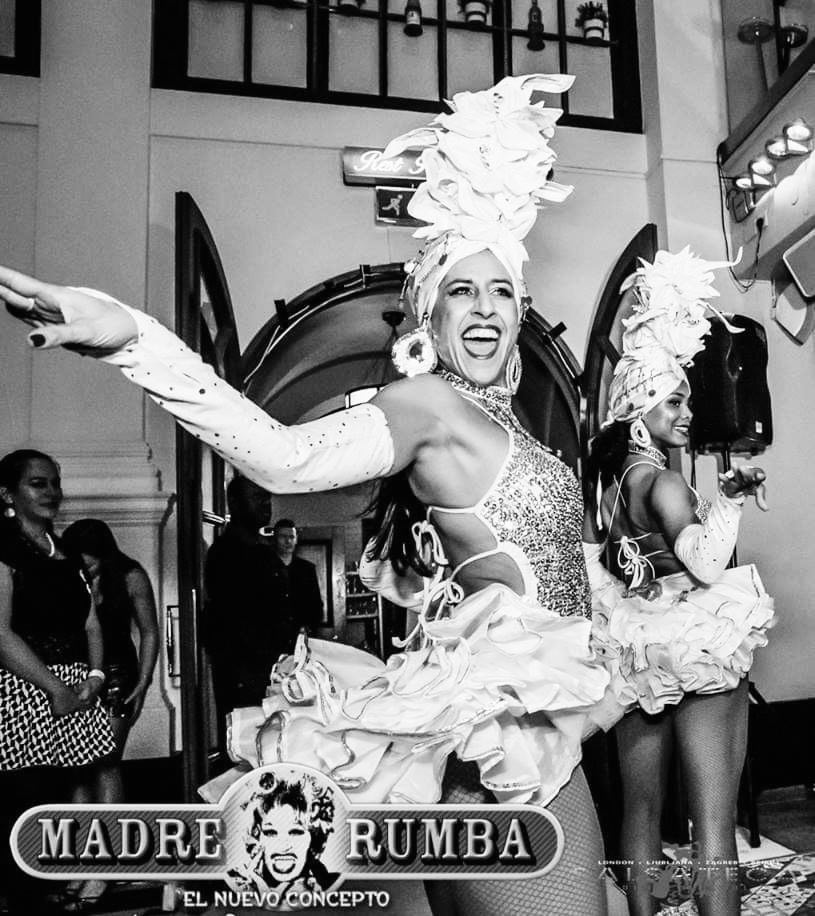
My first feature length documentary ‘Cabaret Cuba’ (65min) is built on collected film footage on numerous visits in Cuba over the last 10 years. I have collaborated with film production companies in London, Prague, Madrid, New York and Havana (Cuba).
-What inspired you to become a filmmaker?
In the 1970’s and 1980’s during my childhood years in Switzerland, I was inspired by my father Cenek Duba, an award winning Czech Film Director who fled the country together with my mother due to the Russian occupation in 1968.
I loved to hear my fathers thoughts when we were watching movies together; from ‘Apocalypse Now’ by Francis Copola, ‘Singin’ in the Rain’ to Czech filmmakers who gained worldwide fame like Miloš Forman and Jiří Menzel. We would talk about the storyline, the visual style and what it would involve to make the movie happen.
I was growing up hearing my father’s typewriter clicking while writing his film scripts, and the smell of coffee would spread around the flat. I would draw little comic stories. Drawing and painting was, and is still my passion today. When I was 9 years old, my first assisting job was to click the stop frame camera in my father’s short animation clips, during his industrial documentary productions in Switzerland. These childhood memories stay forever in my mind.
Later I became a fanatic of Wim Wenders movies. Don’t get me wrong, I also liked the blockbusters and the high end glossy film productions. However, films made by Luis Buñuel, Wim Wenders, Jim Jarmusch, Michael Winterbottom, Ken Loach or Woody Allen fascinated me with its very rich desolate imagery and observational cinema form. With themes of memory, loss, time, nostalgia, and restless movement, it embodied a new sensibility in my form of visual thinking.
-Do you think the cinema can bring a change in the society?
Definitely! Cinema can be very powerful. Throughout history, many leaders have used the power of film to help achieve their goals. During WWII, for example, both Hitler and Stalin used movies as propaganda and did so very successfully. Cinema can easily change people’s opinions and their outlooks on life.
During the Russian occupation my father’s scripts were amended by his film union, according to the national systems communistic beliefs. If my father would refuse the script changes, his films would not be produced due to suspicion of hidden contra political messages. Eventually, filled with frustration, due to this unfortunate situation made him leave his beloved country Czech Republic. His movies would still be shown in cinemas and TV, but his name was cut out, so the audience would slowly forget his existence.
Movies change society by influencing the beliefs, opinions, and behaviors of the people who see them. Nature documentaries will bring us closer to the reality of the state of our planet. Documentaries of refugees fleeing their countries would give us a reality check of what it really means to be in such a terrible situation. Through movies (moving image and sound) we are able to open up, relate and experience a subject through our emotions.
Individually, people are bound to get affected by movies given that the main goal the cinematic art form has, is exactly to impact and send a message. There are numerous ways in which movies affect society and the modern world we live in: some of them negative, some of them positive. Overall, the impact and influence that cinema has on our society is immense.
-What would you change in the world?
I wish for world peace within and among all people and nations on Planet Earth by respecting each other while maintaining different cultures, religions, philosophies, and organizations.
In the words of Dalai Lama:
‘Universal humanitarianism is essential to solve global problems;
Compassion is the pillar of world peace;
All world religions are already for world peace in this way, as are all humanitarians of whatever ideology;
Each individual has a universal responsibility to shape institutions to serve human needs’.
These are human values that unite us all as a single family on this planet.
I wish for a more friendly, more caring, and more understanding Human family on this planet.
-Where do you see the film industry going in the next 100 years?
AI is already earning comparisons to the agricultural revolution, industrial revolution and internet revolution. It is moving fast and gathering speed. The most profound effects have probably not yet been imagined.
Yes, AI will take over many industries and professions. However, what would movies be if they didn’t come from us, our emotions, what we believe in, what we feel, what we aim to communicate and change for the better?
‘From idea to output’.
At the end it is the audience ‘Us’ who decide if we are going to watch a movie or not.
However, the years will show what the future will bring.
I am my parents’ child, a child of their ideals, for sure. I’m the result of the environment I grew up in, of the important people I’ve met in my life, the ones who shaped me, like my teacher, Marco Tiburtini. I’m the result of every good or bad deed I’ve done in my life. I’m the outcome of my thoughts. But I am also every one of my ambitions and dreams, the steps I’d like to take. Ultimately, I’m everything I have lived through and everything I’d like to live through too.
-What inspired you to become a filmmaker?
Filmmakers, but specifically those who managed to destroy my mental barriers. Starting with Sergio Leone; I was 15 when I first saw “A Fistful of Dollars” and I couldn’t believe that an Italian had made such a film. And his extreme close-ups: one of Leone’s extreme close-ups is worth more than quite a few filmmakers’ entire cinematography. Certainly, one of his extreme close-ups is worth more than my entire film. The silences, the sound, the music: they’re masterpieces. In the editing phase, I always think about this phrase: “Remember that a score is never made up of only music, but also ugly noises and deafening silences.”
Another filmmaker who managed to destroy my mental barriers is Scorsese. When I first saw “Raging Bull”, I couldn’t believe that a film could star a fat, cynical, paranoid man. I hardly knew cinema then, and I thought that only a hero could be the protagonist. One of the first film analysis I did was about “Raging Bull”. By analyzing just a few minutes of the editing I was impressed by the sheer amount of work involved. And I discovered a film’s potential, and I understood the huge bulk of skills and tools that a filmmaker can and should use.
When I saw “The Godfather”, I fell in love with the actors. And to this day, the actors are probably the aspect I love the most about films. “The Godfather” is the highest peak in the history of acting. Coppola is a master at directing his actors: by watching his films and his interviews, I try to learn everything I possibly can from him. And his philosophy as a filmmaker and a producer is truly fascinating: risky, without compromise and quite crazy. This mindset of his drove me to always go beyond and made me realise that to be brave is to be wise.
Another filmmaker who made my art emerge was the great Godard. He definitely broke down all my mental barriers. Shortly before I discovered this French genius, cinema was boring me because I thought I had seen everything. But when I discovered him, I said to myself “You don’t know anything yet, friend.”
The sheer arrogance of him, changing the history of cinema through ridiculous budgets: just the thought is staggering. Actually doing it, that’s elegant terrorism. So yes, definitely Jean-Luc Godard.
Then there are other great filmmakers, like QuentinTarantino, Seijun Suzuky, Wong Kar-wai, John Cassavetes, Louis Malle, Stanley Kubrick, Orson Wells, Carol Reed, Billy Wilder, Sergio Corbucci, Enzo G Castellari, Jim Jarmusch, Michail Kalatozov, David Lynch and many others.
-Do you think the cinema can bring a change in the society?
I think that cinema can make society better: it can make people think, it can help people overcome dark moments and create sensory experiences that will last their whole lives through their memories of watching films. This most likely won’t change society in any radical way. In my opinion, in order to actually change society, actions have a bigger influence on real life. And this isn’t only about cinema, but all arts in general: Bob Dylan has improved society, but Mandela is the one who altered it.
-What would you change in the world?
If in a hypothetical universe, for some stupid reason, I was the president of a nation, I’d tell everyone to be more human. I know it’s trite, but it’s the best thing I could say, in my opinion. By being human, not only you can do good, but you can also get something out of it. If I was inhuman, my film would have ended after the first take.
-Where do you see the film industry going in the next 100 years?
I can’t say, but I hope it will be in a movie theatre. I have nothing against online platforms, because they gave lots of great artists the opportunity to emerge, and great films were made. The important thing is that movie theatres stay alive, and to do that you’d have to draw the audience there more. These days, there’s quite the excitement for the movie theatre, so I believe that with the right deal the audience has no issue watching a film in a dark room, with no pause-press option.
A passionate Actress and writer who produces and directs in her own films and loves participating as well of that of others.
-What inspired you to become a filmmaker?
On the one hand my inspiration comes from my mother and her poetical view of the the world. On the other, my Father and his passion for Italian cinema (particularly that of the sixties) is a big inspiration. My thoughts about life, death and the immortality of art are always present in my work. Charles Chaplin, is perhaps the artist, who most inspired me to do what I do. The intelligence with which he is able to touch the heart of his audience. The depth, passion and commitment displayed in his movies is something I find very compelling.
-Do you think cinema can bring a change in society?
Cinema is a political art form even when, on the surface, it may appear to be simply entertainment. It is impossible to “un-watch” something. The time spent viewing a film can sometimes influence the subconscious and therefore change any given perception.
-What would you change in the world?
I would invite people in general to be more respectful of our shared communal history (ancestors civilizations such as Indigenous, African, Hellenistic). To appreciate the millenniums it took to build up such a wealth of knowledge. To demonstrate an utmost consideration of the interconnection of all living beings. Such that that the prevailing set of patriarchic values will organically become unsustainable. We will therefore come to truly value nature, and naturally care about our environment and relationships. I would invite people to stay more present in real life also, instead of virtual interactions.
-Where do you see the film industry going in the next 100 years?
The film industry is as robust and as beautifully crafted as all of the arts. For many years now there are those who have stated (with absolute conviction) that the theatre is a “dying” art. However, it remains (and forever will remain) one of humanity’s greatest pleasures. The same is so abundantly true of the film industry. The art of story telling (through moving images and sound) will always remain relevant as long as it is able to surprise the spectator. Technology is just a tool. Life is richer than any artificial intelligence may imagine it to be. AI is good at chess but it could have never (and did not) invent the game. I will live the next 100 years playing my role in the artistic positivity.
John Johnson is an American born Filmmaker, Producer, Director, Writer, Animator, Cinematographer, Miniature Scale Building Artist, Musician, Voice-Over Artist, Internationally Published Photographer, Plasterer, Carpenter and ALL AROUND NEW AGE RENAISSANCE MAN. Oh, and I can repair screen doors as well.
-What inspired you to become a filmmaker?
As a child, I religiously watched three television shows. The Twilight Zone, The Outer Limits and Lost in Space. These shows were my mainstay growing up and my infatuation with Science Fiction continued to grow with the theatrical releases of ‘Forbidden Planet’, ‘The Day The Earth Stood Still’, ‘The War of theWorlds’ and ‘2001 A Space Odyssey’…to list a few. I shot my first film when I was twelve with a super 8 film camera. It was titled ‘On Any Friday’. It was basically a short documentary about the crazy antics of the kids in my neighborhood.
-Do you think the cinema can bring a change in the society?
I think film DOES bring change to society. I also think that because of the ridiculous amount of scrutiny placed on each and every human on this planet, many ideas (films) are never seen or even considered for screening. There has been a strange caveat forced upon our FREEDOM OF SPEECH. We have the right to say what we think until someone decides that they don’t like the message and WHAM! “SHUT IT DOWN! SHUT IT DOWN NOW!
-What would you change in the world?
My list of things to change in the world is too long to print in this interview. It is easier FOR ME to express the things I find unchangeable in this world. OVER-POPULATION, HUNGER, SELF-VICTIMIZATION, POLICE BRUTALITY, PRICE GOUGING, GOVERNMENTAL DECEIT, CRIME.
-Where do you see the film industry going in the next 100 years?
If we want to see the future we are obliged to look at the past. History repeats itself and we are in the midst of that cycle-change once again. In the late 1990s’ the entertainment industry evolved from boutique BIG STUDIO production to INDEPENDENT production. That fling lasted nearly a decade and touched not only film but commercial and industrial productions as well. BIG STUDIO slowly gained their momentum and took back the crown. Today, we see INDEPENDENT productions taking the lead once again to the point where BIG STUDIOS are shopping film festivals for the rights to INDEPENDENTLY produced films that they will try to develop into feature films. BIG STUDIOS are also developing think-tanks for the integration of ARTIFICIAL INTELLIGENCE into their productions. So, the long answer to your short question? If we are all here in 100 years, we will most likely be evolving into a struggle between INDEPENDENT productions and ARTIFICIAL INTELLIGENCE productions. Stay Tuned!
Janet is a writer, a creative, screenwriter, journalist, publisher, scholar, historian, pursuer of justice, someone who is hopeful; hopeful that through her experiences she can become a voice for change and strength, just as women throughout history who were victimized became brave, embolden, and determined to seek justice and force the system to change.
-What inspired you to become a screenwriter?
My journey to becoming a screenwriter began with my desire to be a great American novelist. For about two years I explained to my sister, Debbie Walker, that I was a writer. And finally, she explained, gently, “writer’s write.” So, my journey from pen to paper began then. For many years that followed my writing was abbreviated creative shorts, ideas that just didn’t become fully fleshed out. I decided to take a college creative writing course, which led to a journalism pursuit and where I began pursuing other writing genres, from creative writing to journalistic pursuits to poetry and journals, movie reviews, and now screenplays.
For me, the pandemic provided the missing element needed to concentrate fully on screenwriting. The lockdown allowed me to devote 100% of my time to developing an idea that had been simmering for about for a decade. I took an online class and it helped clarify the specifics of what I felt were areas of weakness.
I often joke that my first screenplay, “The Six Sides of Truth,” took 10 years and three months to complete. After that, as I felt like anyone can write one screenplay, I felt personally challenged to write a second screenplay, which is “The Wednesday Killer,” and then felt more secure in my writing, so I wrote “The Manhattan Project.”
-Do you think the cinema can bring a change in the society?
I am hopeful that my screenplays and others like it will expose those who believe they can commit violent crimes without concern over the consequence and more than simply expose, can change the system. I hope screenplays, documentaries, and true crime can all cause and create change, become the catalyst for change in the judicial system, become what investigative reporting was in the 1970s and without fear follow the story and expose individuals even to the highest levels.
My screenplays imitate life with cinematic value added. Obviously, there is not an exactness to what I write, however, I did live and work in Manhattan, and experienced victimization and severe repercussions for seeking justice which became a source of inspiration. The screenplays are my way of exposing the individuals for the heinous criminal actions and the system for its coverup.
I developed a television series “Justice Watch Investigates,” which focuses on true crimes and reexamining cold case crimes through a different lens, without bias, using advanced science, and field savvy experts may possibly bring closure to families and expose weakness in an overwhelmed system which I hope can change society.
-What would you change in the world?
That’s a big question with many answers. I would change the double standard which even for women who are educated, talented, and successful, confront. These women will tell stories of times, or seasons,
when they confronted challenges to career advancement or faced obvious discrimination. I would ensure women had a level playing field, not simply in the entertainment business but across society uniformly. So many ideas and input are lost because women are shutout and silenced. And don’t get me wrong, I’m not a feminist, I just believe in equality, equality in work, equality in justice, equality without favouritism or nepotism or other generational or learned behaviours.
-Where do you see the film industry going in the next 100 years?
That’s a great question. I suppose looking to the future means looking to the past first. 100 years ago, the film industry was in its infancy and introducing innovation that would transform silent films. With the introduction of high-tech advancement in filmmaking, CGI, animation, and IMAX-3D, in 100 years, I’m sure the developments in science, technology, and sound will create clearer, crisper, images and greater opportunities for more realistic presentation, even now, film technology companies are creating 3-D clothing software for filmmaking and digital reimaging software for archival purposes.
For the filmmaker the idea to go where no filmmaker has gone before . . . and as much as the film industry has projected the advancement of society, the truth is that I see the film industry serving audiences much in the same ways as our current cinematic opportunities.
Filmmaking may become easier, and there are young budding filmmakers all over the world sitting in darkened theatres, or watching on any device, dreaming of recreating something they’ve seen and immediately using a cell phone to record some event and creating mini-home movies.
So, where will the film industry be in 100 years? When one thinks about 100 years from now and matches that with young filmmakers who are in their 20s, 30s or 40s that’s at least half a century of filmmaking from filmmakers who have learned from those who have created culturally defining films and genres.
And one day, our most advanced and culturally significant films will be studied, which they are now, and film studies professors or experts will remark on the dated tools, which of course will be readily available and common in 100 years, that were used to create the iconic, genre defining, pictures or how these standard bearers in the industry changed the world of cinema and challenged their colleagues who challenged their pupils who felt compelled to move the bar forward. I guess the idea is everyone helps one, whether they are aware or not, each director influences someone, every screenwriter the same, and the industry evolves and advances.
I was not always at peace with my aptitudes. Starting out, I received early acceptance and a full scholarship to Massachusetts College of Art and Design, but was also told I had a voice that would land me leading roles in the Metropolitan Opera. Since childhood, I had been involved in the theater; a highlight of which was playing the ‘Toad’ in A.A. Milnes’ ‘The Toad of Toad Hall’. Finding it difficult to choose a collegiate path, I had decided to take a year off; when an unexpected family tragedy compelled me to set off “thumbing”, across the US, Canada, and as far north as Inuvik above the Arctic Circle. Montreal (The Paris of the North) became a favorite haunt, where I hung out with musicians and jugglers who frequented the fair grounds of the nascent ‘Cirque Du Soleil’. After many adventures, I settled in San Francisco, began training operatically, and earned a Bachelors of Poetics from New College of California. I also fronted a series of bands ranging from rock to Middle Eastern, and starred in a local opera. More recently, one of my collaborations with rapper Terblelos of Ghana (Dreams) was awarded BWH Music Group’s ‘Best Songs of the Year 2019’, and I was selected for ‘BWH’s 2020 Women to Watch’. In 2022, ’Songs for Forever’ was released, proceeded in Dec. 2021 by the music video, (and my first foray into film) ’Only Eden’, which has been winning awards in IMDb qualifying film festivals internationally.
-What inspired you to become a filmmaker?
Since childhood, I have been an avid movie buff, reveling especially in the glamour and depth of early 35 mm cinema. In 2018, I bought my first camera, the Black Magic (16 mm) Pocket Cinema camera, a beautiful little beast. In film, I am able to bring together all my loves; art, music, writing, directing and acting. You really can’t ask for more than that.
-Do you think the cinema can bring a change in society?
I think film is deeply personal for both the viewer and the creator, and touches people on many levels. Like magic it transports to visionary realms, yet also has the power to plumb the depths of human darkness and despair. Indeed it is a mechanism for change, but as to what kind of change, that may well depend upon who is behind the camera.
-What would you change in the world?
Today, we have all but lost the ability to debate controversial ideas openly without fear of condemnation and ridicule. Perhaps film, especially independent film, can help bridge that gap, and restore integrity to our national and global conversation.
–Where do you see the film industry going in the next 100 years?
I doubt anyone can divine the future direction of film, or of humanity, but it does seem self evident that AI will play an important role. As to how much of a role, that will probably depend on who controls the purse strings. It will be a great loss if technology supplants the primary role of ‘live actors’, just as digital special effects have frequently replaced ‘good story telling’ in many movies of recent history.
I am a screenwriter and director from Greece with a passion for creating new worlds through writing.
I was born and raised in Athens. I come from Mytilini but for the last 10 years I have been living with my family in Corfu. I studied marketing but worked in music as a DJ and producer for 27 years. I loved music from the bottom of my soul but as a music producer I felt trapped within 7 notes. In writing I found the absolute freedom to create without limits. I’m also the father of Konstantinos.
-What inspired you to become a screenwriter?
What inspired me to become a screenwriter was more my concern for the future and the sadness from the loss of my parents. That’s how I felt the need to talk to them through writing. I would wake up at night, go out on the balcony and write down on paper what I wanted to say to them. So all this led me to write a theatrical monologue entitled “Wrong Era”. After the presentation of the monologue in a theater and the applause it received, the idea was born to turn it into a short film in which the same man who performed the monologue, Manos Bartis, stars and performs exceptionally well. I had the good fortune to work with a unique cinematographer, Nikos Psaros and an experienced sound designer, Yannis Androulakakis who gave a lot to the final result. The puzzle is completed with the multi-experienced Vasilis Kamitsis, who was a great honor to me that he agreed to participate and he is riveting with his words at the end of the film! So THE WHITE ROSE began to blossom and at this moment it has won 14 awards in the first month of its premiere at festivals in Greece, Italy, India, France, South Korea, America, Kuwait, Sri Lanka, Singapore & Belgium! And this is only the beginning, since in the space of 3 years I have written 5 scripts for feature films and a children’s fairy tale dedicated to my son!
-Do you think cinema can bring a change in society?
Of course it can. We, cinema workers ihave a duty to bring about change and to become the change we would like to see in the world through our stories.
-What would you change in the world?
If I could, I would change the bad way of thinking that leads to wrong decisions, which can prove to be disastrous for each of us and for society as a whole. Even our jealousy for something, if we work it properly in our mind, it can lead us to progress.
-Where do you see the film industry going in the next 100 years?
If the film industry in 2123 will have been affected by even 10% of the previous 100 years in the inspiration, creation and passion with which the older filmmakers worked, with the help of technology, I believe that it will be able to reach the highest level quality at all levels! This.-
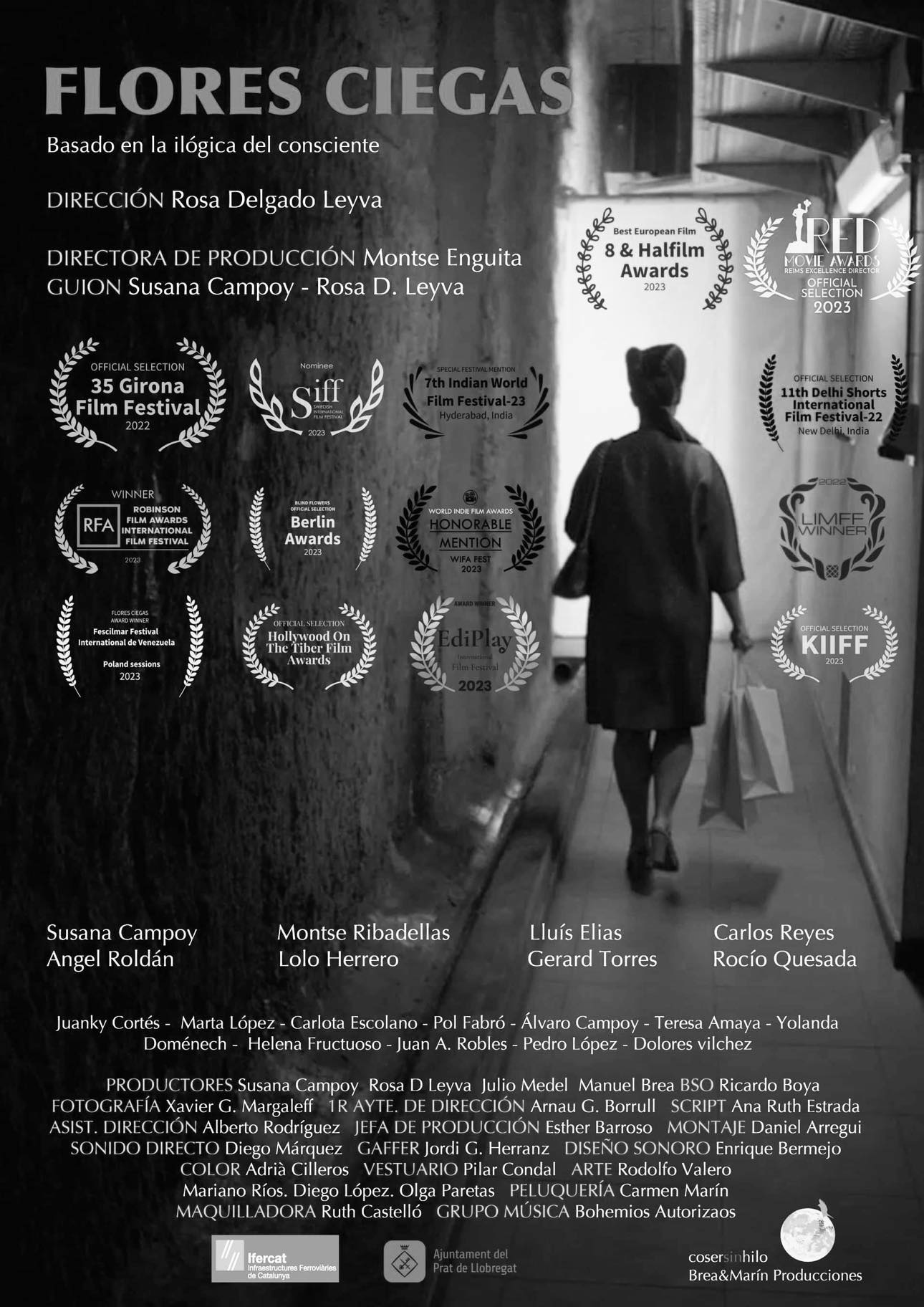
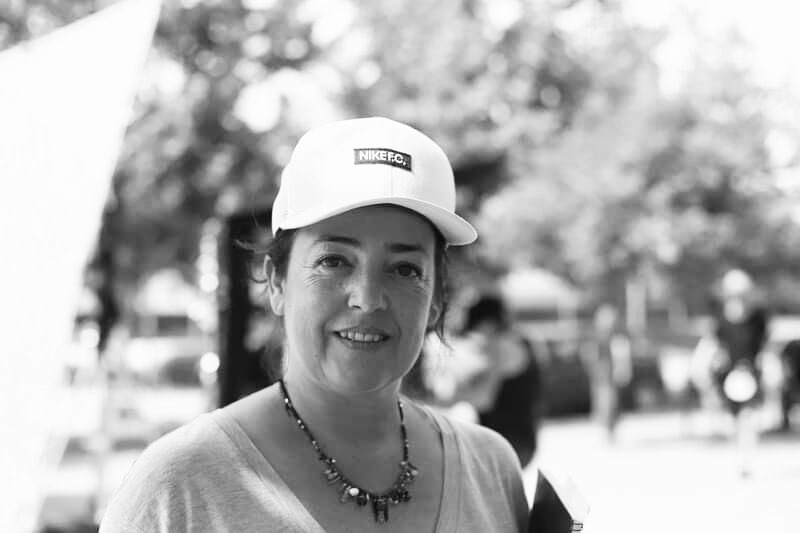
Multidisciplinary artist, teacher, writer and director of cinema. She was born in Barcelona and lives in the city of El Prat de Llobregat. She grew up in her mother’s hairdresser and learned the job helping her mother on Saturdays. From the age of 18 she combines too her studies with other jobs, as stewardess. Her passion for arts, painting and photography led her to a degree in Fine Arts, specializing in photography, cinema and video at the University of Barcelona. She doctored in Audiovisual Image and is author of the cinema book “The Futuristic Screen (Méliès-Chomón)” ed. Cátedra. Madrid 2012, focusing her thesis on the futurist imaginary represented in primitive and classic cinema. She is a high school teacher of draw, audiovisuals… since 2000 and film director of two main short films, the second Blind Flowers (2022) is now circulating around festivals, and the previous one, Oh the Chacho well he knows (2017) won numerous awards and recognitions in Latin America, Cannes, Berlin, Austria…, and especially in Italy. She hopes one day can get a feature script out of the drawer.
-What inspired you to become a filmmaker?
When I was studying the second year of technical architecture in Barcelona, there was in the same building a dark room for developing black and white photography. The director of architecture asked us if we wanted to learn it. A group of students enrolled in the course. But we needed a reflex camera. It coincided that I received my first salary and I spent it entirely to buy one. I enjoyed that experience so much that I decided to change studies to Fine Arts to specialize in photography, cinema, and video. So, the origin of to become a filmmaker comes from my passion of the analogy photography in black and white.
-Do you think the cinema can bring a change in the society?
The relationship between art and society has always gone in both directions throughout history. Cinema offers the possibility of uniting, in a certain way, all the arts in a global and choral format, which makes it to have a power of communication and excite more directly and expanded to the public. The themes in cinema drink from society constantly, welcoming arguments from it and turning them again from subjective perspectives that are then interpreted freely by audience. I believe that cinema contributes to changes through these multiple individual interpretations that when they interfere together can be reflected, besides to the posterior cinema, in many other areas of humanity, such as education, the environment, immigration, the economy …, cinema can influence even music, fashion, other arts and stiles of life… They are small individual changes that, as if by contagion, are going defining the general changes in the society. And the independent cinema, here, has their own words to express, own visions since the free individual’s perspective out the frame, without the contamination of the interests of the markets that focus their investments, forcing a corseted way of creating, thought only on generating box office sales. In my opinion, the independent cinema is the most capable of changing the course of things.
-What would you change in the world?
I would change too many things. In this sense it is easy to give up out of helplessness. I value all those who strive to express themselves in this medium without help. If we don’t enter festivals everything stays at home, but we must not get frustrated, we must keep trying. There is a premise superior to everything, respect for the other, it doesn’t main wherever the person is born, whatever their family, our society must be able to give the same opportunities to everyone.
When I was a child, my teachers told me that in the past civilizations fought for territories and wealth of others, they entered wars to reach them, but all that was already part of the past, at less in occident world, because we had evolved. Apparently, they never thought, and I less that in the twenty-first century we had to revive the barbarism. I recommend you to watch the movie “Things to come” by William Cameron Menzies (London, 1936), written by H. G. Wells, if they woke up now…!!! Or pay attention to the final scene of 2001, where the protagonist character is in a bed in his last moments of live contemplating classic art in a cosmic room; perhaps our wise people of the past have something to announce to the future, seems that we have done something wrong, and for this the main character turn to born again, to bring a better world, to give another opportunity to the civilization. But we haven’t learned. So difficult is live in peace? So, I would create a world government that would be responsible for preventing any war and maintaining peace in all the planet. Surely, they were going to have a lot of work!!
–Where do you see the film industry going in the next 100 years?
Cinema can unite all the diversity and multiplicity of civilizations from end to end of the world, today, thanks to new globalizing technologies. There is a barrier to break, the south cannot continue to look at the northern hemisphere as paradise, because it is not. And the North cannot continue to look at the southern hemisphere as poor submissives to an uncertain future that leads them to emigrate through seas of death following the false dreams that the northern screens sell them. I see a future where the cinema independent and territorial cinema can show their visions and individual perspectives to the world. After covid the festivals have survive thanks to online platforms, and now they try to return to alive screenings where the physical experience allows meet people again. The contact, to meet people of all parts of the planet and live this experience can’t bellow only to the elite festivals… We have a mission, to be possible people around world who make independent cinema can the option to express, meet togethers, learn one’s to the others. When the industry of music arrives to the houses by internet, alive concerts had a success explosion. With the cinema, the future will be, by one hand, the technology immersive, including touch and smell in movie theatres, this is what the industry of Hollywood I think will follow to persist. But by other hand, the future will be in the meeting festivals alive, the same has successes with the concerts. Physical events where the culture of cinema offers knowledge that foster rich relationships between people. While the commercial industry will invest to offer an increasingly immersive cinema, trying to practically copy real life, perhaps public administrations, even, will join in offering a live cinema culture with more creativity. I think the organizing members of all kinds of festivals, independent filmmakers, producers, technicians, actors, actresses…, it will play an important role in the future society. Because the path of television platforms is already conquered, it has become a video store and does not have much more to go, it will continue to live with other roads that will still walk. The humanity of the future, in my opinion, can get tired of so much individual screens and virtual world, and there will come a time when sharing real encounters will be greatly appreciated. And the opportunity to live these experiences should not belong only to the famous elite of cinema.
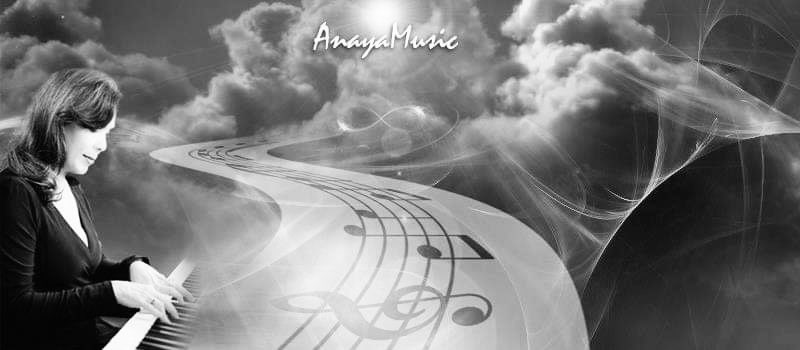
Anaya Kunst is a timeless composer, ethereal vocalist and filmmaker passionate about elevating the human spirit through the power of music, image and the universal vibration of love and peace.
-What inspired you to become a filmmaker?
Since childhood I used to tell people that I would be a Hollywood Artist and filmmaker. My father used to make pictures and films with a Canon camera.And I was delighted to watch and to perform as an actress. In fact I did Drama School besides my education in music, lyric singing, computers, ballet dancing and Olympic gymnastics.My other field of interest is cosmo history, philosophy and galactic subjects.And one day I was filming my colleagues at Midem festival in Cannes, and they asked me why I was doing that and I simply answered: “ I am training to be a movie Director “. And it happened!
-Do you think the cinema can bring a change in the society?
Cinema is an integrated art and can change people for better or not.
Universe moves, perception of this movement and vibration in the impermanence is desirable to connect and the heart chakra shows that connection. When people watch a movie they almost live all what is there. When people watch a movie they almost live all what is there. And Cinema for me is a powerful art to support people in change.
-What would you change in the world?
I would love if people would develop the ability of perception of the universe and their surroundings and other people around them, so they would not be blind anymore and they would be an enlightened being living in love and sharing love. That’s what we are: Love.
-Where do you see the film industry going in the next 100 years?
With the advance of artificial intelligence and other sofisticated techs, I think it will be much easier to direct and to produce a film with lots of resources that we still not have for the moment. As the universe is infinite, so is our imagination and ability to create too. I believe that wonderful things and opportunities of creation will happen in the next few years. What is 100 years in front of Eternity!!!